
LIGHT EMITTING DIODES LIGHT EMITTING DIODE A diode
- Slides: 13
LIGHT EMITTING DIODES
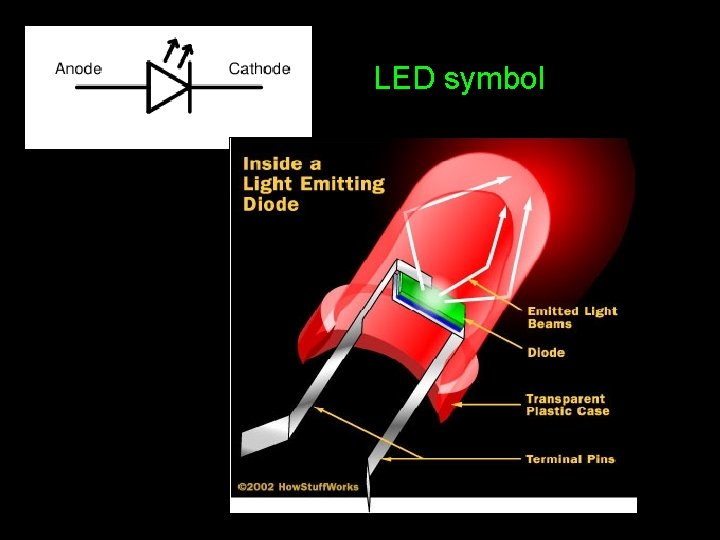
LIGHT EMITTING DIODE A diode is a device that passes current in one direction much more readily than in the other. A light emitting diode is a junction diode that emits light when a forward-biased current flows through them. The colour of light emitted by the LED depends on the material of the semiconductor.
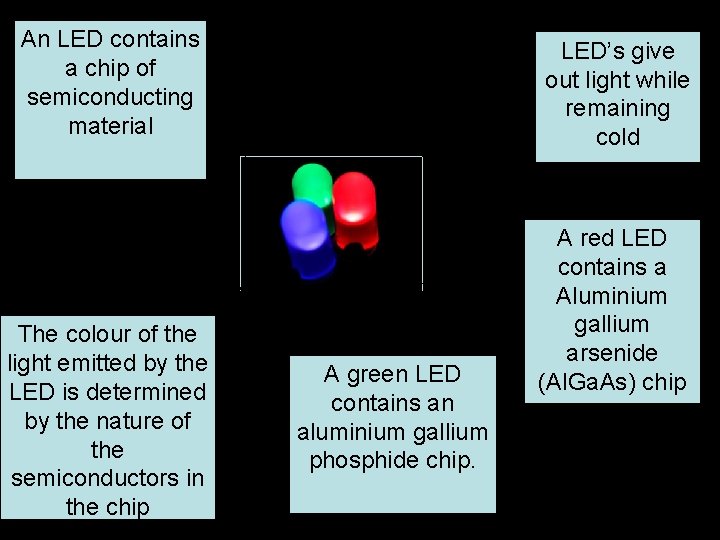
An LED contains a chip of semiconducting material The colour of the light emitted by the LED is determined by the nature of the semiconductors in the chip LED’s give out light while remaining cold A green LED contains an aluminium gallium phosphide chip. A red LED contains a Aluminium gallium arsenide (Al. Ga. As) chip
Revision – concepts you must understand: Semiconductors used in electronic components are usually silicon or germanium. Intrinsic conduction – conduction of electricity by semiconductors. Electrons are “dislodged” when a potential difference is applied across the semiconductor, and they move into “positive holes” created by other dislodged electrons, in the direction opposite to the electric field.
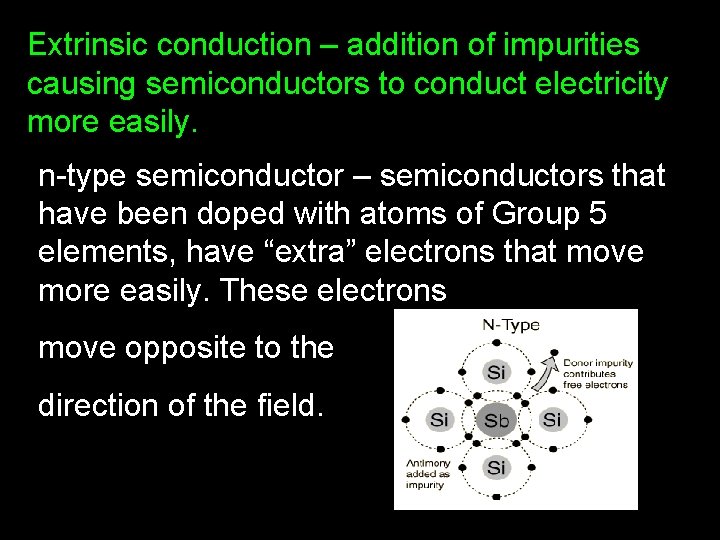
Extrinsic conduction – addition of impurities causing semiconductors to conduct electricity more easily. n-type semiconductor – semiconductors that have been doped with atoms of Group 5 elements, have “extra” electrons that move more easily. These electrons move opposite to the direction of the field.
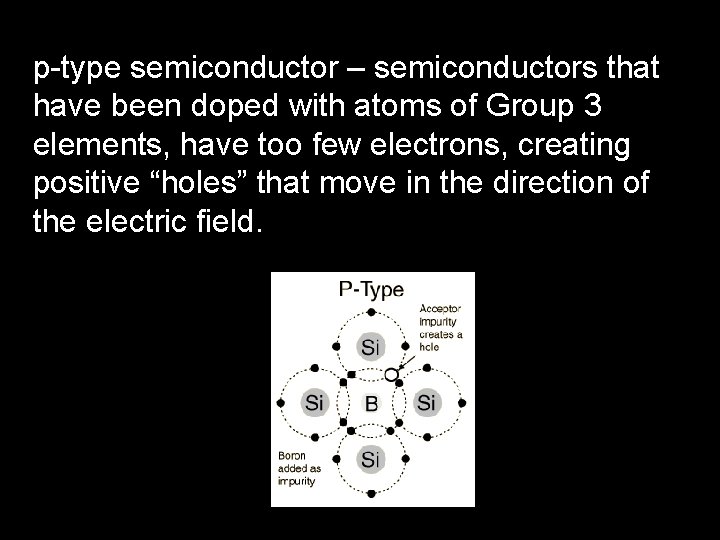
p-type semiconductor – semiconductors that have been doped with atoms of Group 3 elements, have too few electrons, creating positive “holes” that move in the direction of the electric field.
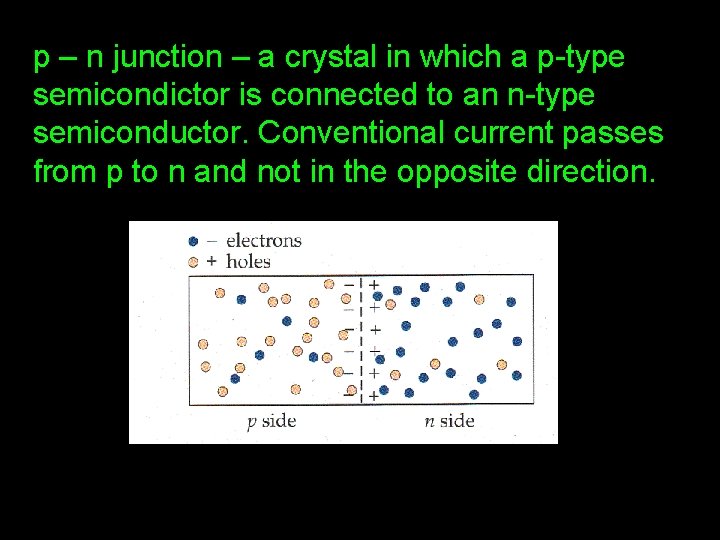
p – n junction – a crystal in which a p-type semicondictor is connected to an n-type semiconductor. Conventional current passes from p to n and not in the opposite direction.
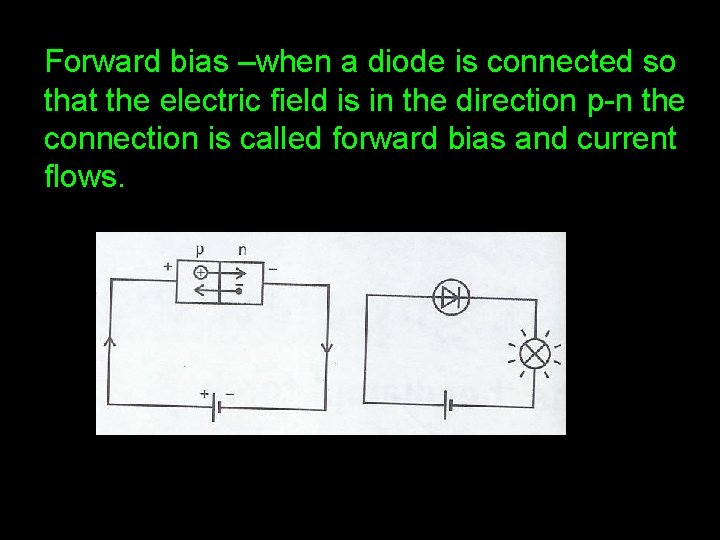
Forward bias –when a diode is connected so that the electric field is in the direction p-n the connection is called forward bias and current flows.
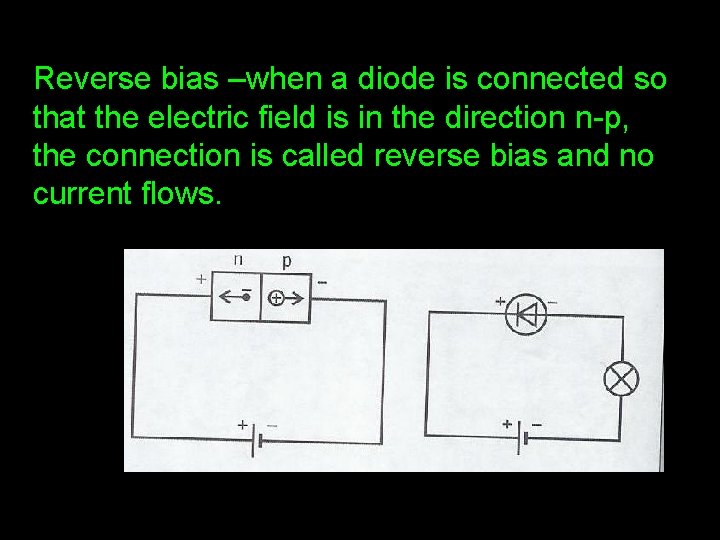
Reverse bias –when a diode is connected so that the electric field is in the direction n-p, the connection is called reverse bias and no current flows.
LED symbol
USES OF LED’s • in motion sensors. • as light sources – as in a torch. • as light sources in photographic dark rooms. • in displays where night vision must not be affected, as in aircraft cockpits. • in calculators. • in remote controls.
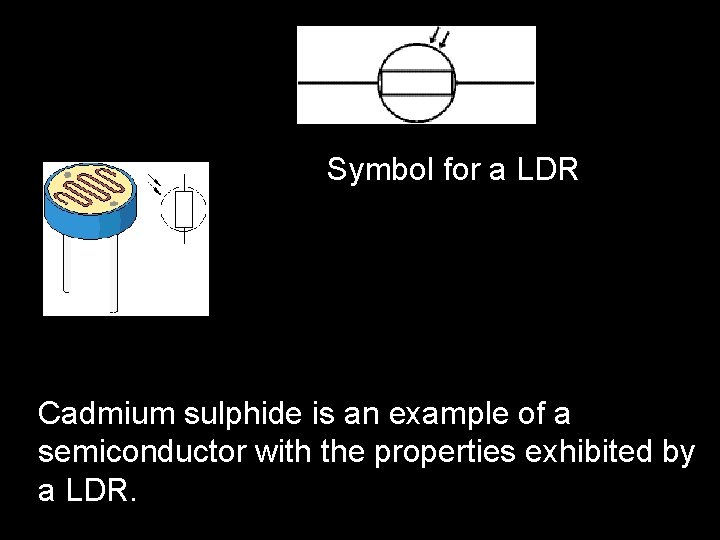
LIGHT-DEPENDENT RESISTORS These are components whose resistance varies with the amount of light falling on it. As light energy falls on the light dependent resistor both electrons and positive holes are released and are available for conduction. The brighter the light the more the substance conducts – or the smaller the resistance.
Symbol for a LDR Cadmium sulphide is an example of a semiconductor with the properties exhibited by a LDR.