
Light Emission Todays Topics Excitation Emission Spectra Incandescence
- Slides: 33
Light Emission
Today’s Topics • Excitation • Emission Spectra • Incandescence – Absorption Spectra
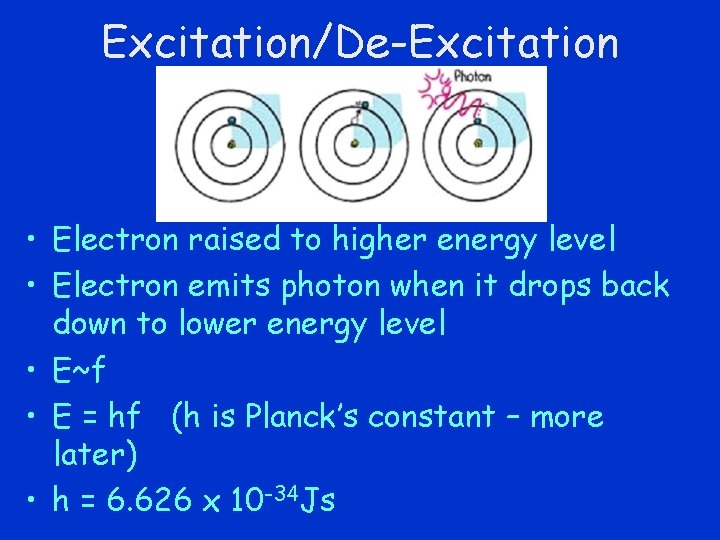
Excitation/De-Excitation • Electron raised to higher energy level • Electron emits photon when it drops back down to lower energy level • E~f • E = hf (h is Planck’s constant – more later) • h = 6. 626 x 10 -34 Js
Photon Energy • Which photon has the greater energy? – A. red or violet – B. 700 nm or 500 nm
Photon Energy • Which photon has the greater energy? – A. red or violet energy is proportional to frequency violet has higher frequency Therefore – violet is higher energy – B. 700 nm or 500 nm – Longer wavelength – higher frequency – Therefore – 500 nm is higher energy
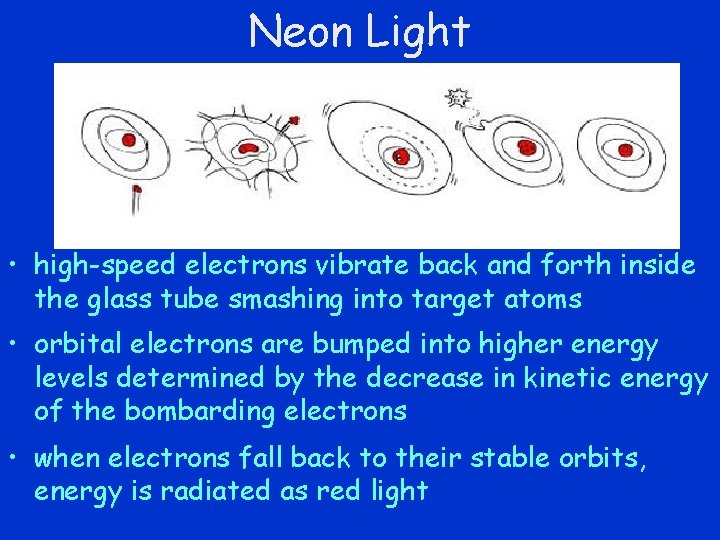
Neon Light • high-speed electrons vibrate back and forth inside the glass tube smashing into target atoms • orbital electrons are bumped into higher energy levels determined by the decrease in kinetic energy of the bombarding electrons • when electrons fall back to their stable orbits, energy is radiated as red light
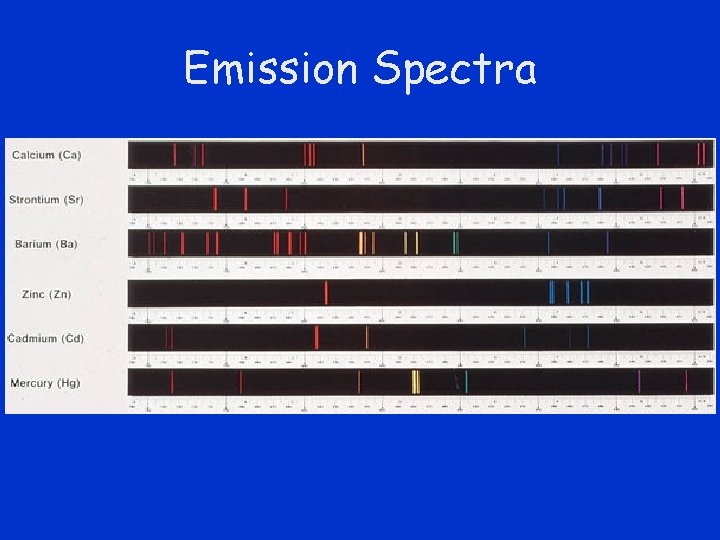
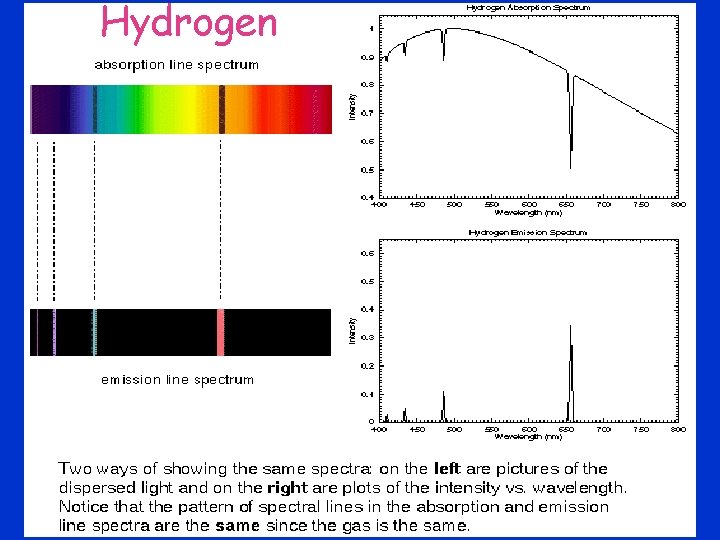
Energy Levels • Every element has characteristic pattern of electron energy levels • and emits light with its own characteristic pattern of frequencies, its emission spectrum, when excited • http: //astro. ustrasbg. fr/~koppen/discharge/ • http: //metareligion. com/Physics/Quantum_physics/int ro_to_quantum_mechanics. htm
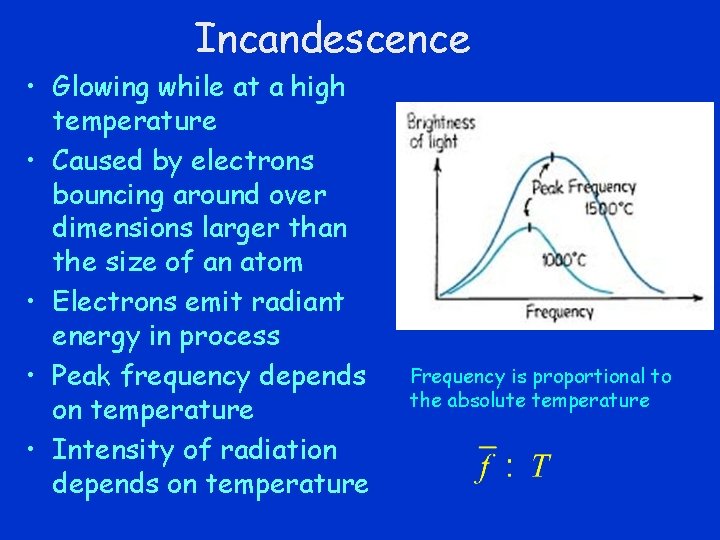
Incandescence • Glowing while at a high temperature • Caused by electrons bouncing around over dimensions larger than the size of an atom • Electrons emit radiant energy in process • Peak frequency depends on temperature • Intensity of radiation depends on temperature Frequency is proportional to the absolute temperature
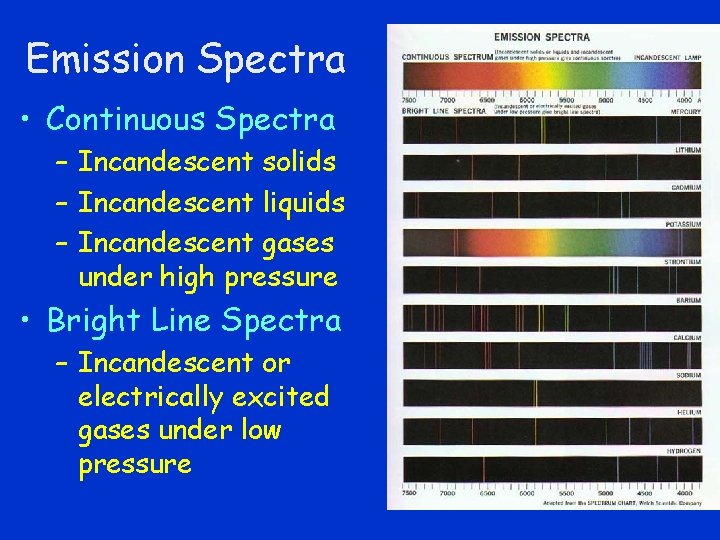
Emission Spectra • Continuous Spectra – Incandescent solids – Incandescent liquids – Incandescent gases under high pressure • Bright Line Spectra – Incandescent or electrically excited gases under low pressure
Emission Spectra
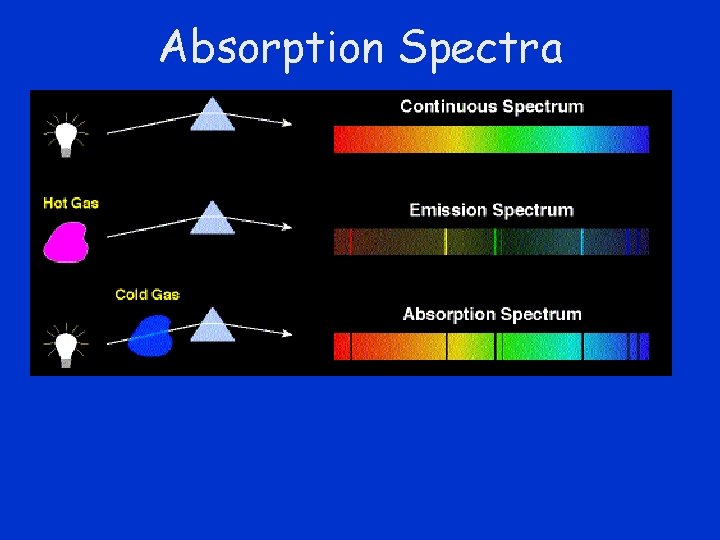
Absorption Spectra
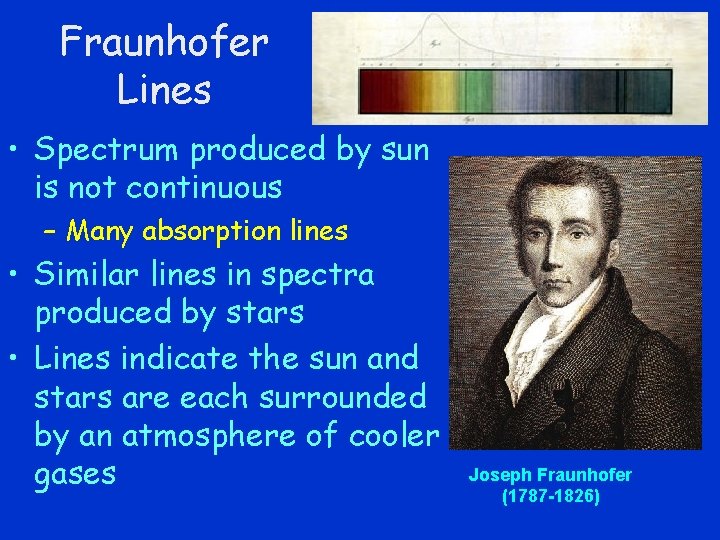
Fraunhofer Lines • Spectrum produced by sun is not continuous – Many absorption lines • Similar lines in spectra produced by stars • Lines indicate the sun and stars are each surrounded by an atmosphere of cooler gases Joseph Fraunhofer (1787 -1826)
Hydrogen
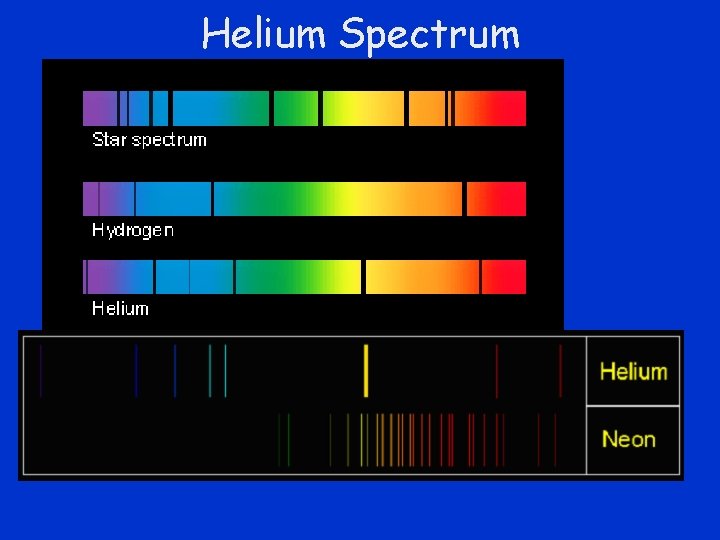
Discovery of Helium • Solar spectrum contains spectra of elements on earth • In 1868, analysis of sunlight with spectroscope identified a new element – Helium • A bright yellow emission line was observed that was shown to correspond to no known element – Named from helios – Greek for sun
Helium Spectrum
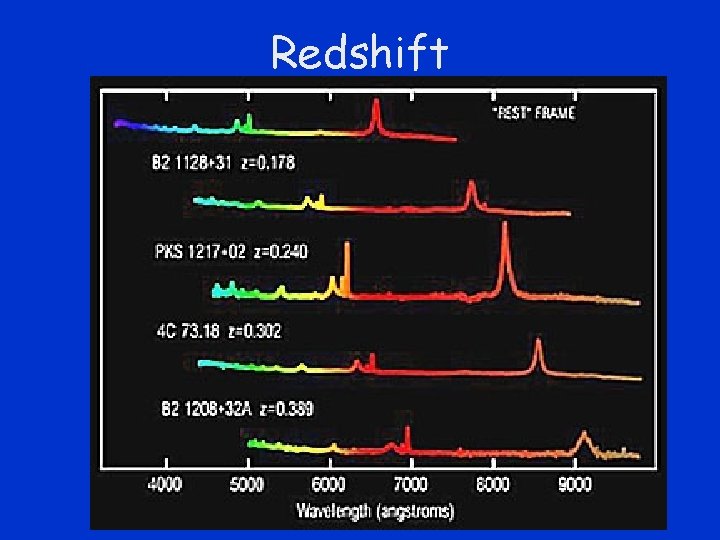
Doppler Effect • Light from stars is Doppler shifted • Expanding universe –stars are moving away from us • Light arriving from the stars is shifted to a lower frequency (longer wavelength) • Often called the redshift
Redshift
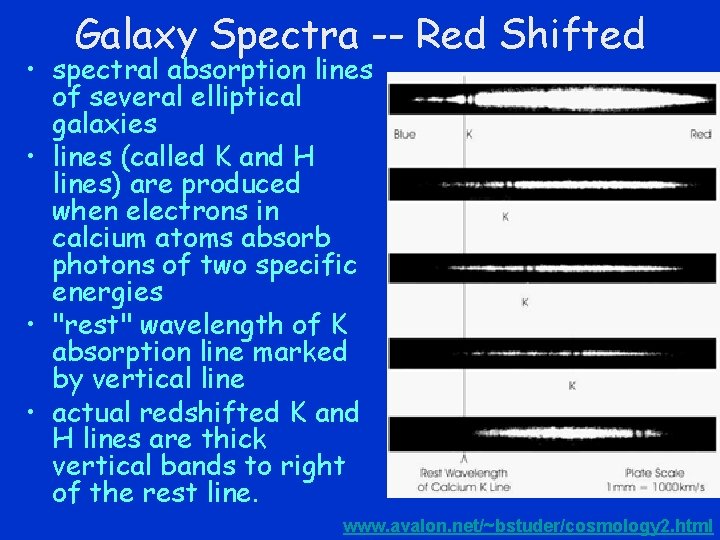
Galaxy Spectra -- Red Shifted • spectral absorption lines of several elliptical galaxies • lines (called K and H lines) are produced when electrons in calcium atoms absorb photons of two specific energies • "rest" wavelength of K absorption line marked by vertical line • actual redshifted K and H lines are thick vertical bands to right of the rest line. www. avalon. net/~bstuder/cosmology 2. html
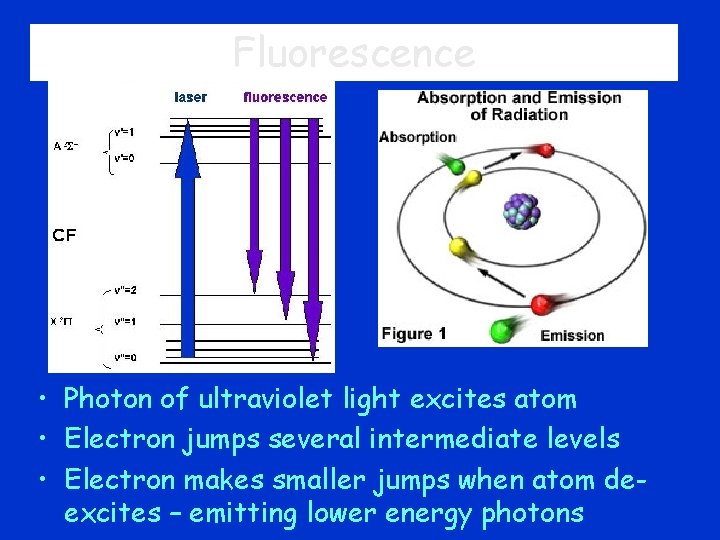
Fluorescence • Photon of ultraviolet light excites atom • Electron jumps several intermediate levels • Electron makes smaller jumps when atom deexcites – emitting lower energy photons
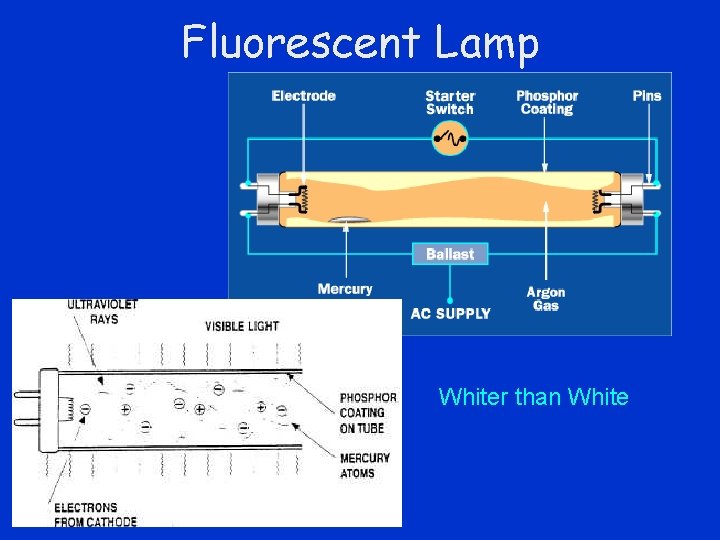
Fluorescent Lamp Whiter than White
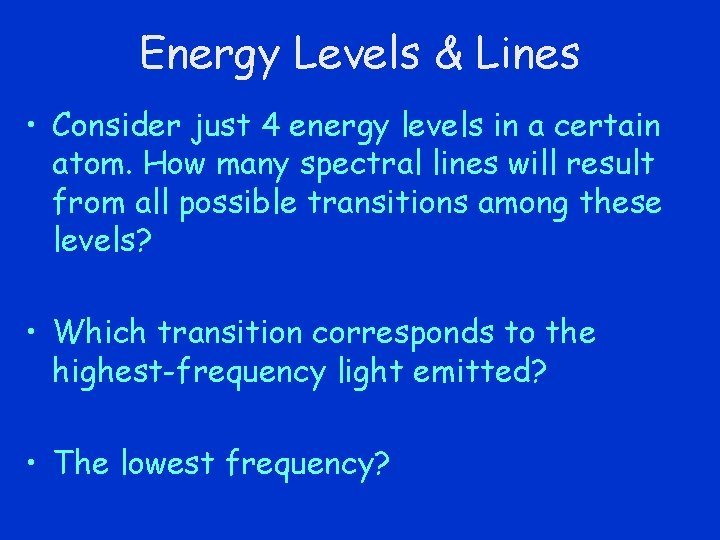
Energy Levels & Lines • Consider just 4 energy levels in a certain atom. How many spectral lines will result from all possible transitions among these levels? • Which transition corresponds to the highest-frequency light emitted? • The lowest frequency?
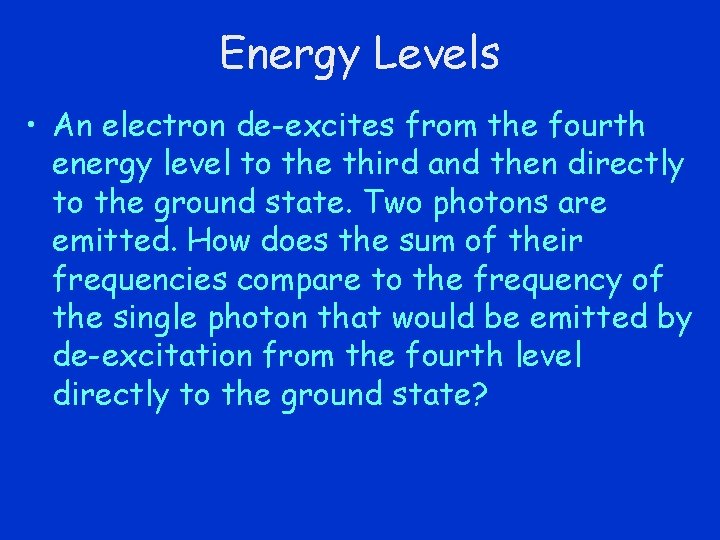
Energy Levels • An electron de-excites from the fourth energy level to the third and then directly to the ground state. Two photons are emitted. How does the sum of their frequencies compare to the frequency of the single photon that would be emitted by de-excitation from the fourth level directly to the ground state?
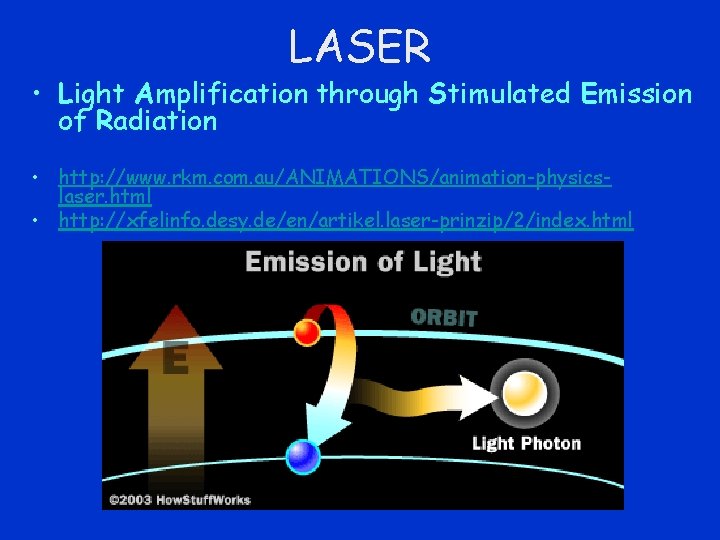
LASER • Light Amplification through Stimulated Emission of Radiation • http: //www. rkm. com. au/ANIMATIONS/animation-physicslaser. html • http: //xfelinfo. desy. de/en/artikel. laser-prinzip/2/index. html
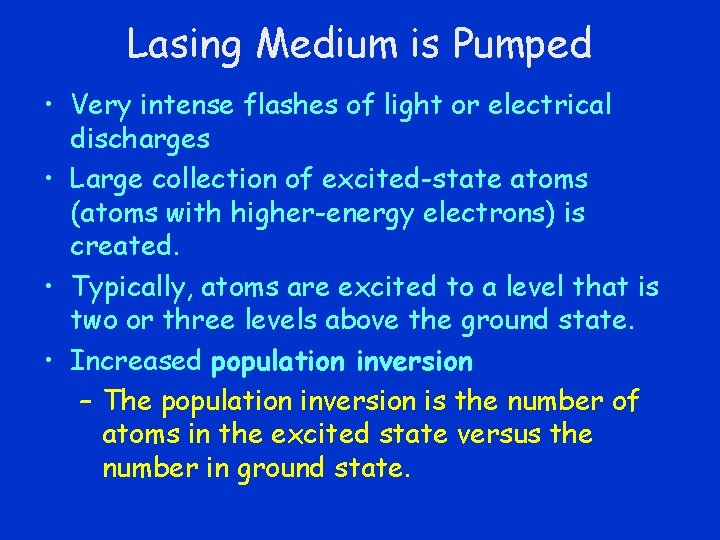
Lasing Medium is Pumped • Very intense flashes of light or electrical discharges • Large collection of excited-state atoms (atoms with higher-energy electrons) is created. • Typically, atoms are excited to a level that is two or three levels above the ground state. • Increased population inversion – The population inversion is the number of atoms in the excited state versus the number in ground state.
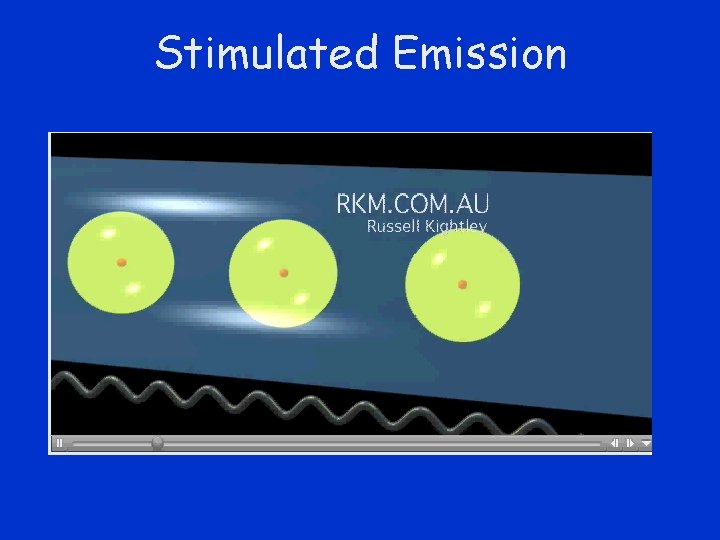
Stimulated Emission • photon whose frequency corresponds to the energy difference between the excited and ground states strikes an excited atom • atom is stimulated as it falls back to a lower energy state to emit a second photon • emitted photon has same frequency, is in phase with and in the same direction as the bombarding photon. • bombarding photon and emitted photon may then each strike other excited atoms, stimulating further emission of photons • a sudden burst of coherent radiation as all the atoms discharge in a rapid chain reaction.
Stimulated Emission
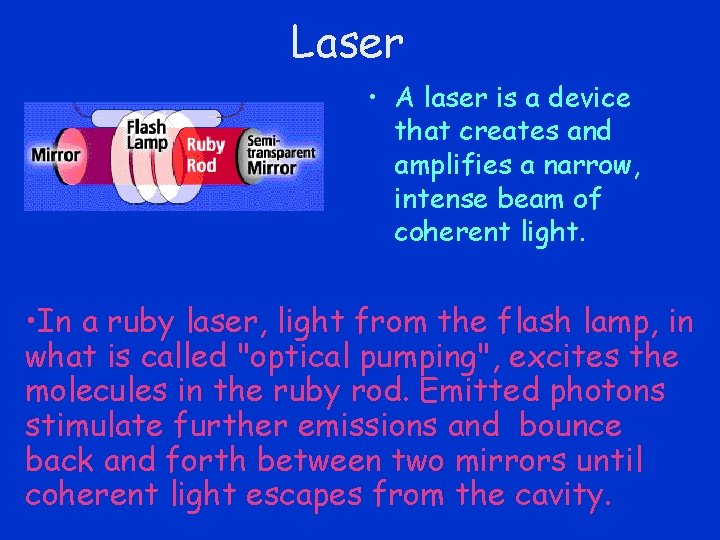
Laser • A laser is a device that creates and amplifies a narrow, intense beam of coherent light. • In a ruby laser, light from the flash lamp, in what is called "optical pumping", excites the molecules in the ruby rod. Emitted photons stimulate further emissions and bounce back and forth between two mirrors until coherent light escapes from the cavity.
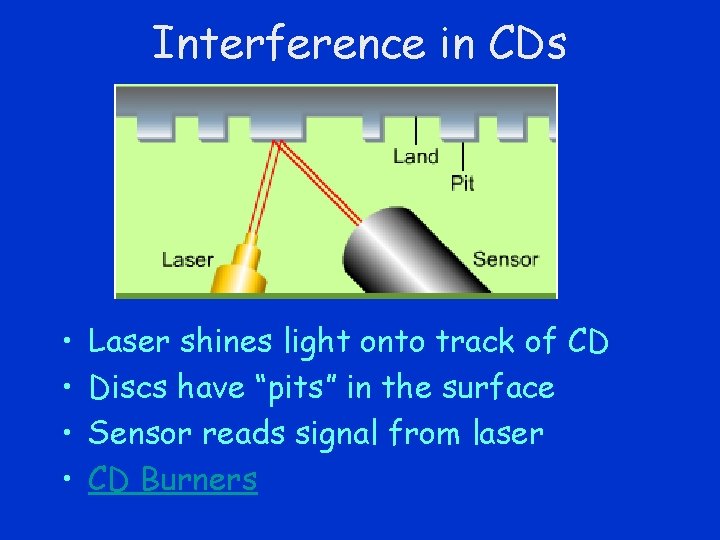
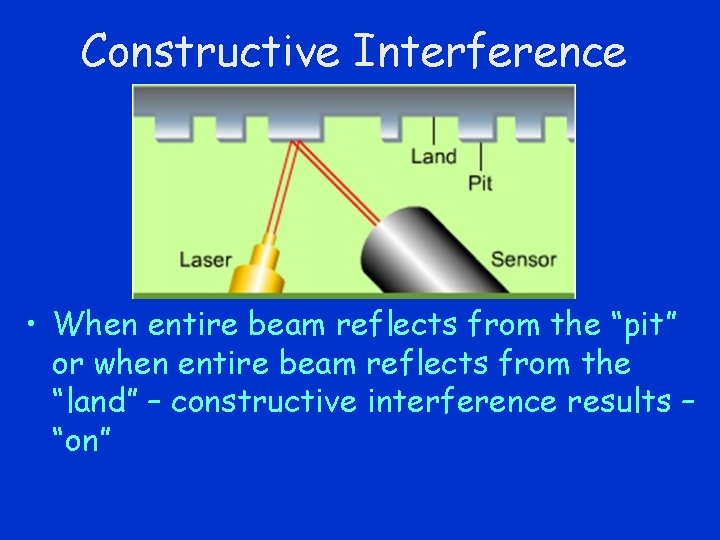
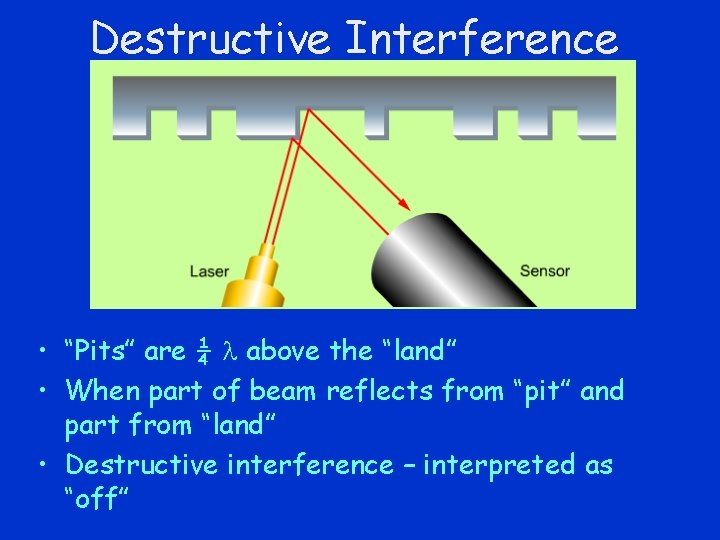
Interference in CDs • • Laser shines light onto track of CD Discs have “pits” in the surface Sensor reads signal from laser CD Burners
Constructive Interference • When entire beam reflects from the “pit” or when entire beam reflects from the “land” – constructive interference results – “on”
Destructive Interference • “Pits” are ¼ above the “land” • When part of beam reflects from “pit” and part from “land” • Destructive interference – interpreted as “off”
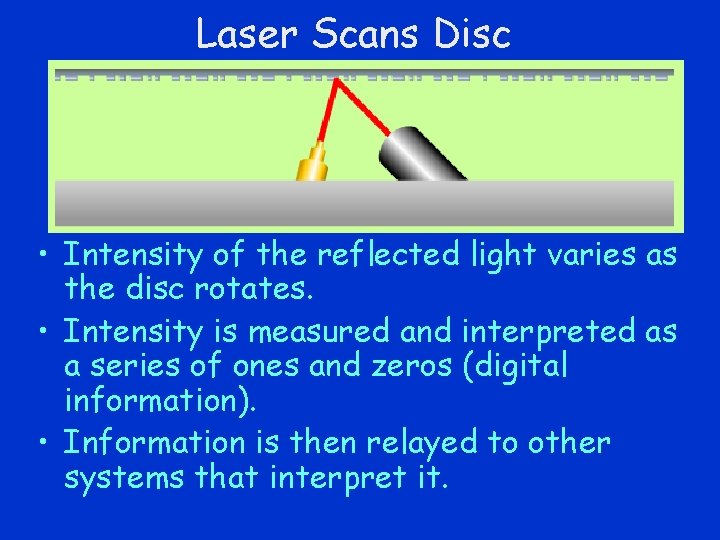
Laser Scans Disc • Intensity of the reflected light varies as the disc rotates. • Intensity is measured and interpreted as a series of ones and zeros (digital information). • Information is then relayed to other systems that interpret it.
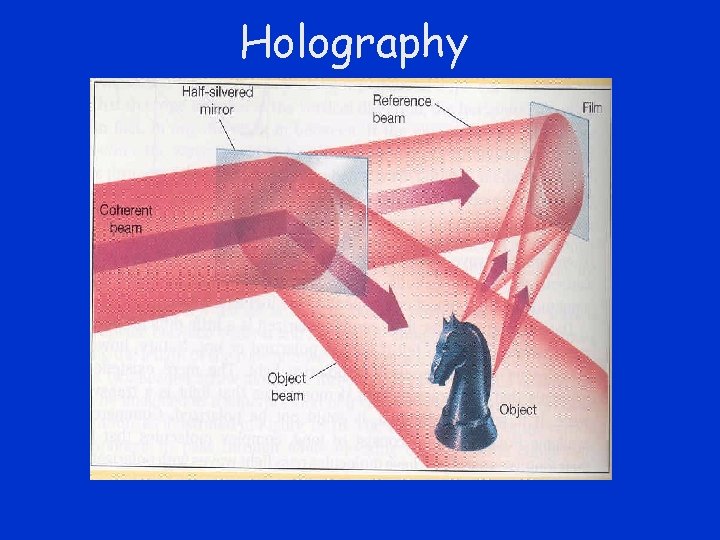
Holography
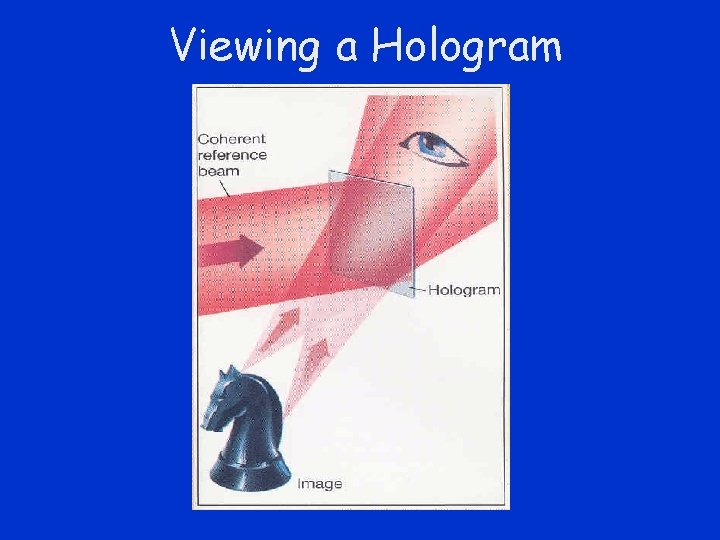
Viewing a Hologram