
Light Dependent Reactions in Photosynthesis Biology 20 21
Light Dependent Reactions in Photosynthesis Biology 20 -21
Lesson Objectives Be the end of this lesson you should be able to Outline the steps of the light dependent reaction in photosynthesis
Words to Know Adenosine diphosphate- a compound that is composed of one adenosine and two phosphate groups that is formed when the high energy phosphate bond is broken from ATP, resulting in the release of energy Adenosine triphosphate-an energy storing molecule in the cell that is composed of one adenosine molecule adenine and ribose sugar and tree phosphate groups is present in all living organisms, and is used to fuel activities within a cell Chlorophyll-the green photosynthetic pigment this is found in chloroplasts of plants an that absorbs light energy required for photosynthesis
Words To Know Photophosphorylation- the use of light energy absorbed during photosynthesis to add a phosphate molecule to ADP to form ATP Photosynthesis- the process by which green plants, algae, and some bacteria capture light energy to form simple sugars using water and carbon dioxide CO 2, the release oxygen gas as a byproduct Thylakoid-the membrane bound compartment inside the chloroplasts, which is the site of the light dependent reaction of photosynthesis
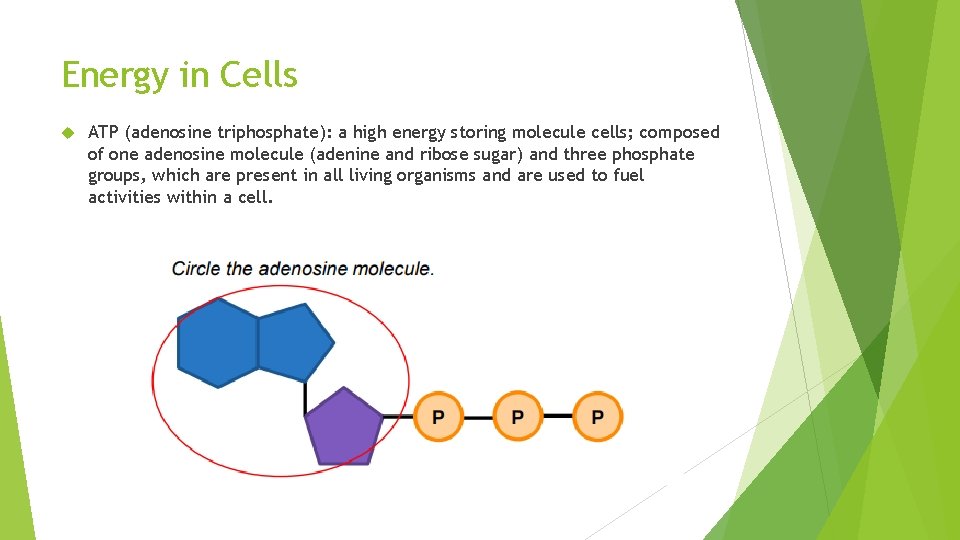
Energy in Cells ATP (adenosine triphosphate): a high energy storing molecule cells; composed of one adenosine molecule (adenine and ribose sugar) and three phosphate groups, which are present in all living organisms and are used to fuel activities within a cell.
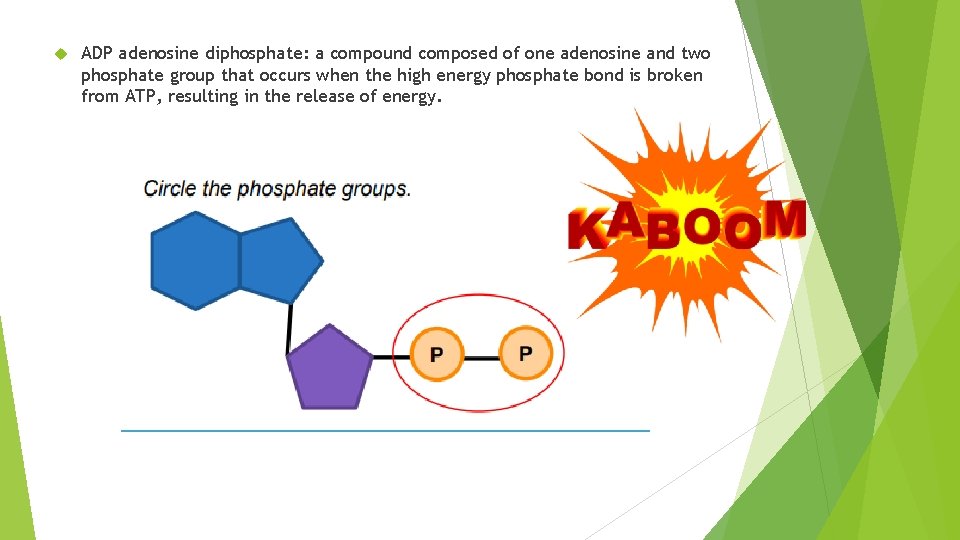
ADP adenosine diphosphate: a compound composed of one adenosine and two phosphate group that occurs when the high energy phosphate bond is broken from ATP, resulting in the release of energy.
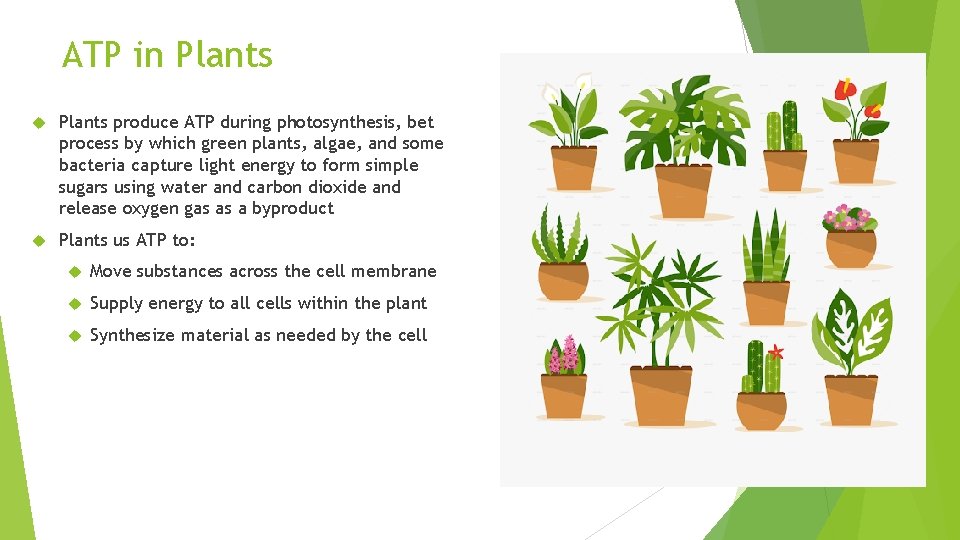
ATP in Plants produce ATP during photosynthesis, bet process by which green plants, algae, and some bacteria capture light energy to form simple sugars using water and carbon dioxide and release oxygen gas as a byproduct Plants us ATP to: Move substances across the cell membrane Supply energy to all cells within the plant Synthesize material as needed by the cell
Crash Course: Photosynthesis: 13 minutes https: //www. youtube. com/watch? v=s. QK 3 Yr 4 Sc_k Amoeba Sisters: Photosynthesis: 8 minutes https: //www. youtube. com/watch? v=uix. A 8 ZXx 0 KU

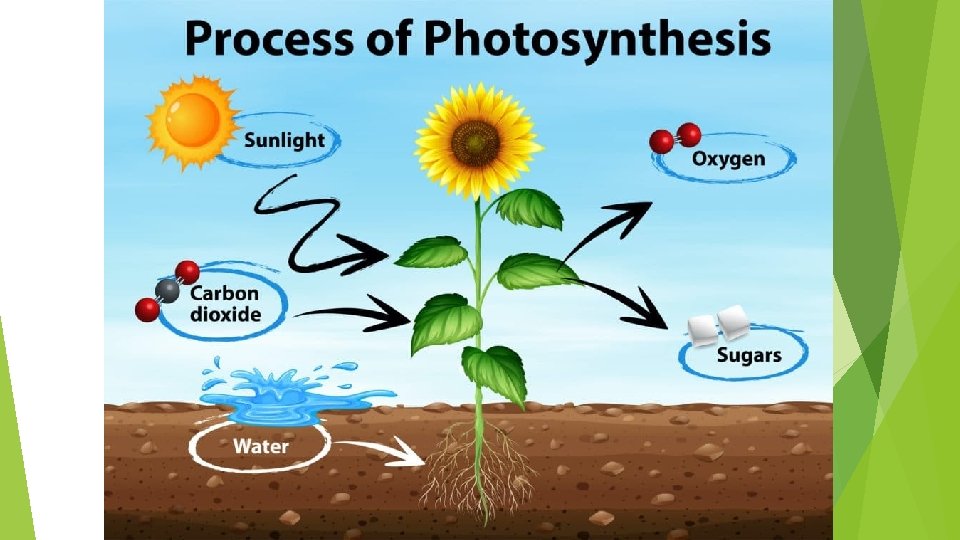
Photosynthesis Two phases Light dependent reaction light energy is absorbed and converted to chemical energy in the form of ATP and NADPH Light independent reactions ATP and NADPHG are used to make glucose
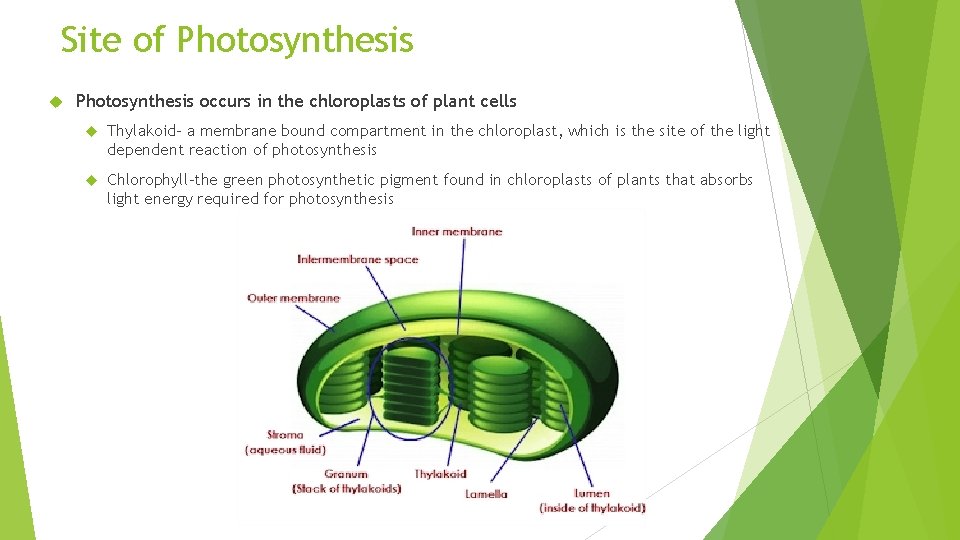
Site of Photosynthesis occurs in the chloroplasts of plant cells Thylakoid- a membrane bound compartment in the chloroplast, which is the site of the light dependent reaction of photosynthesis Chlorophyll-the green photosynthetic pigment found in chloroplasts of plants that absorbs light energy required for photosynthesis
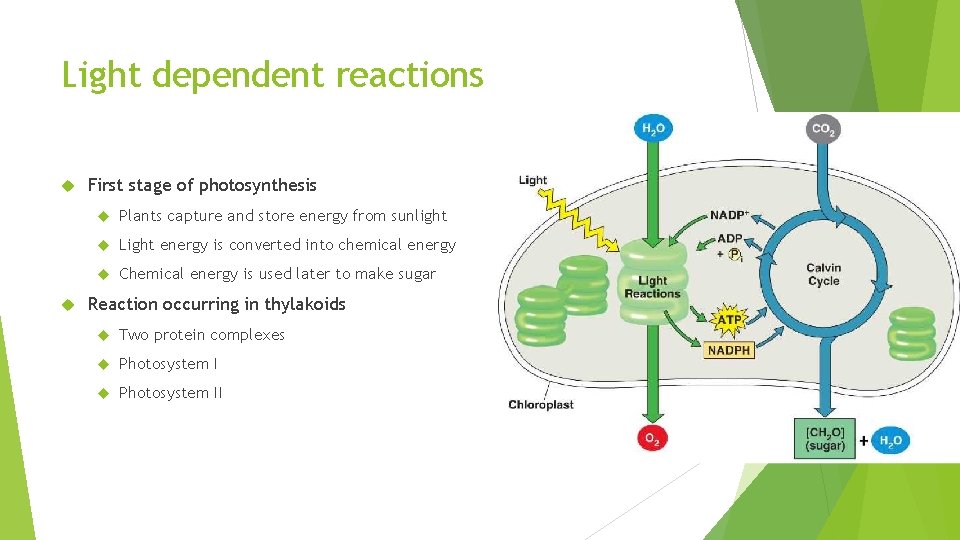
Light dependent reactions First stage of photosynthesis Plants capture and store energy from sunlight Light energy is converted into chemical energy Chemical energy is used later to make sugar Reaction occurring in thylakoids Two protein complexes Photosystem II
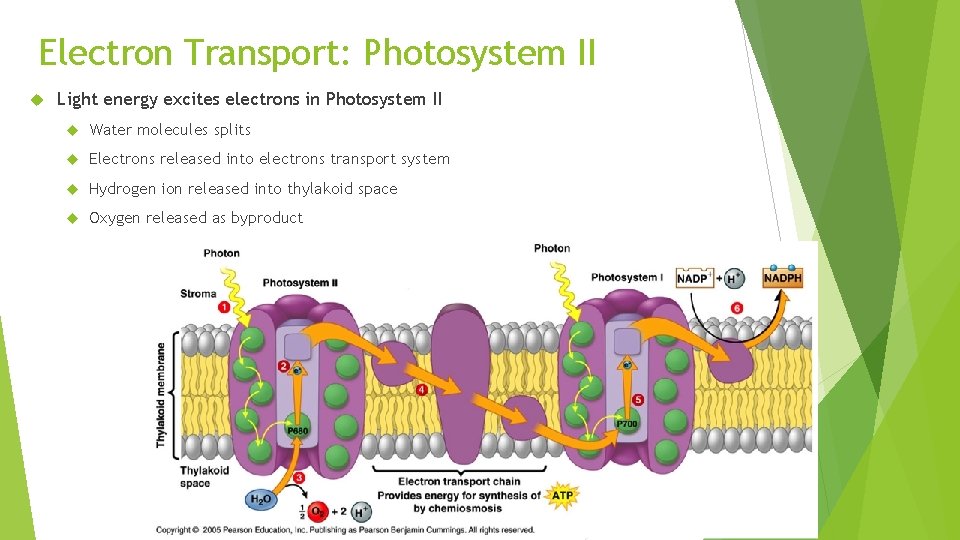
Electron Transport: Photosystem II Light energy excites electrons in Photosystem II Water molecules splits Electrons released into electrons transport system Hydrogen ion released into thylakoid space Oxygen released as byproduct
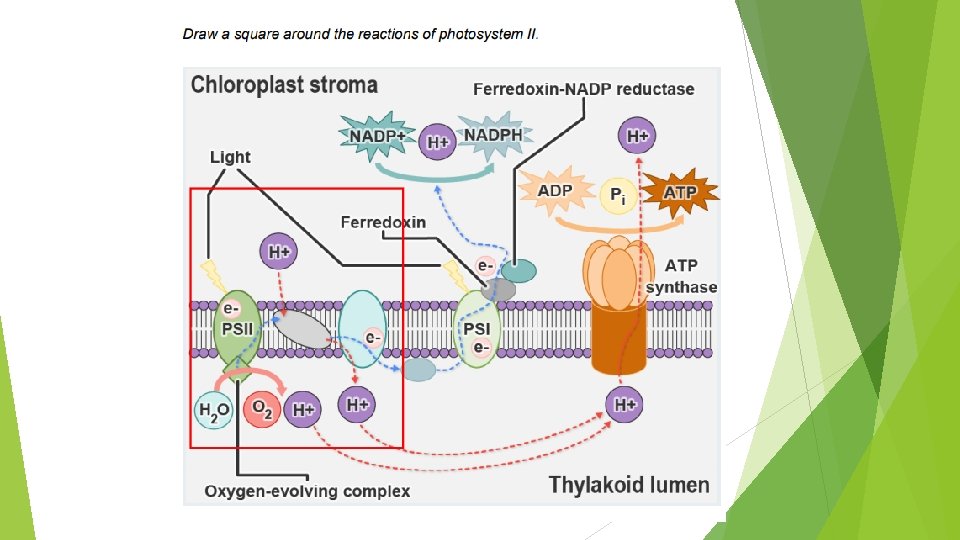
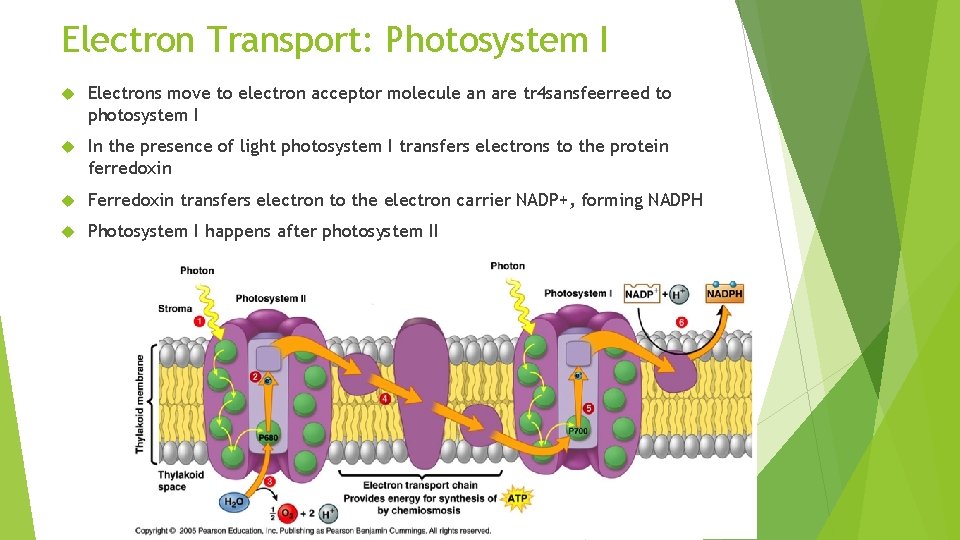
Electron Transport: Photosystem I Electrons move to electron acceptor molecule an are tr 4 sansfeerreed to photosystem I In the presence of light photosystem I transfers electrons to the protein ferredoxin Ferredoxin transfers electron to the electron carrier NADP+, forming NADPH Photosystem I happens after photosystem II
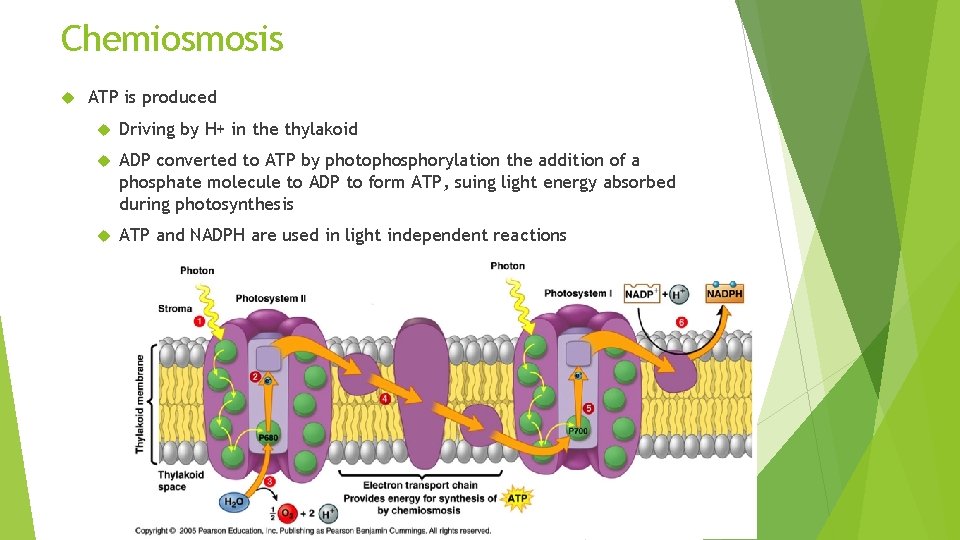
Chemiosmosis ATP is produced Driving by H+ in the thylakoid ADP converted to ATP by photophosphorylation the addition of a phosphate molecule to ADP to form ATP, suing light energy absorbed during photosynthesis ATP and NADPH are used in light independent reactions
Photosynthesis and Human Beings REAL WORLD CONNECTIONS Photosynthesis accounts for 98% of the world atmospheric oxygen Animals get energy from feeding on plants. Humans get energy from plants and animals Life on earth is not possible without photosynthesis
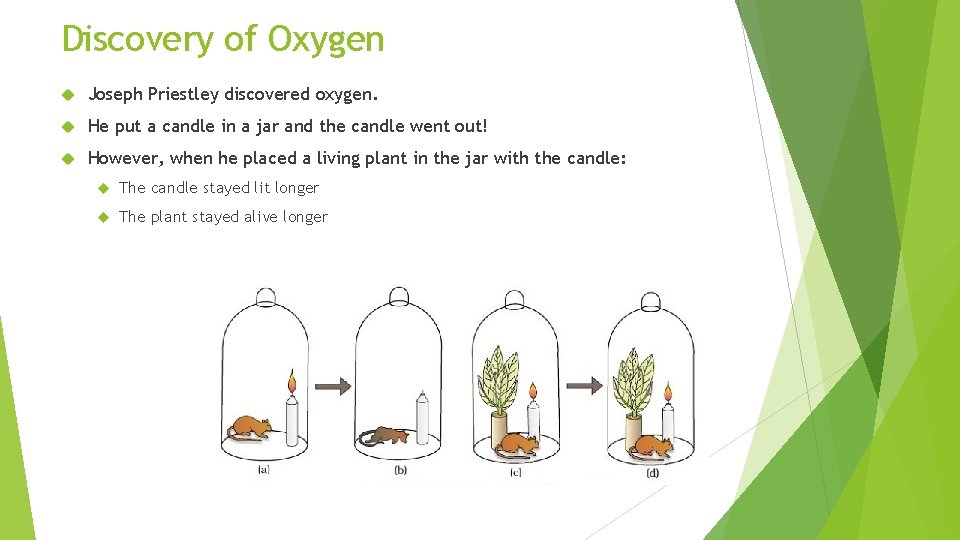
Discovery of Oxygen Joseph Priestley discovered oxygen. He put a candle in a jar and the candle went out! However, when he placed a living plant in the jar with the candle: The candle stayed lit longer The plant stayed alive longer
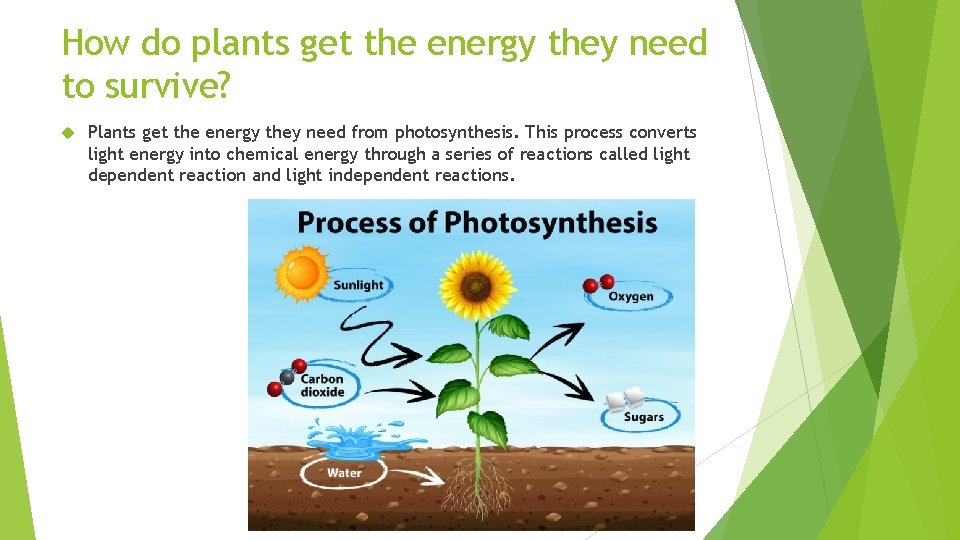
How do plants get the energy they need to survive? Plants get the energy they need from photosynthesis. This process converts light energy into chemical energy through a series of reactions called light dependent reaction and light independent reactions.
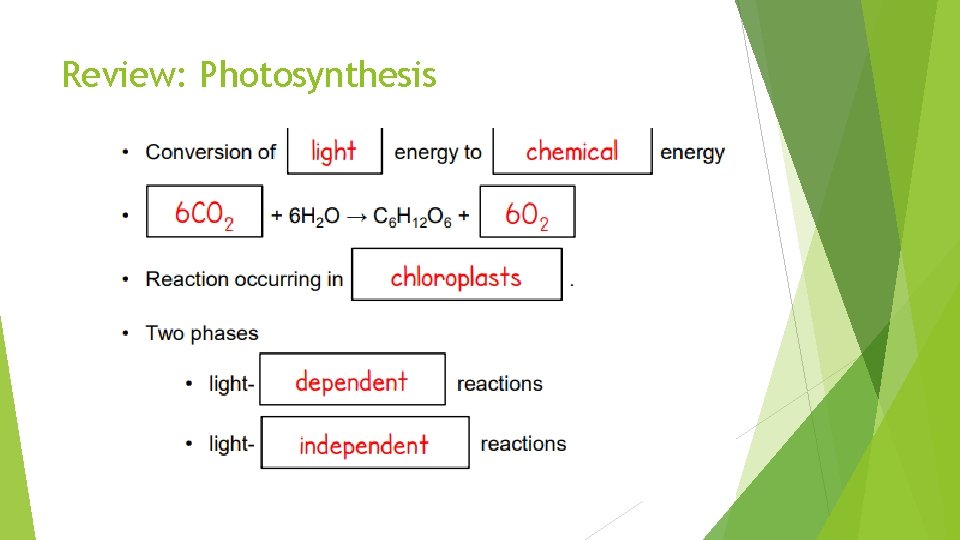
Review: Photosynthesis
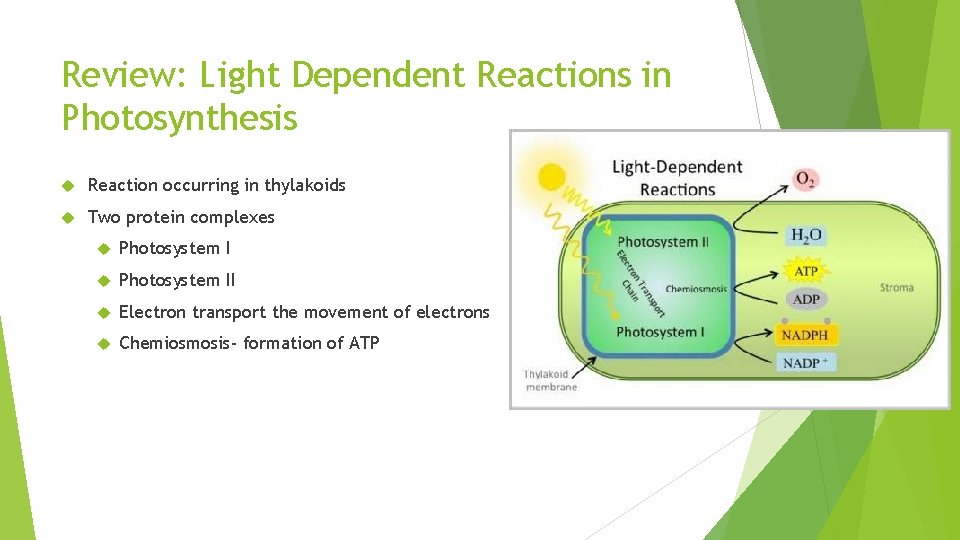
Review: Light Dependent Reactions in Photosynthesis Reaction occurring in thylakoids Two protein complexes Photosystem II Electron transport the movement of electrons Chemiosmosis- formation of ATP
Review: Photosynthesis in Human Beings Photosynthesis account for 98% of the world’s atmospheric oxygen. Life on earth is not possible without photosynthesis
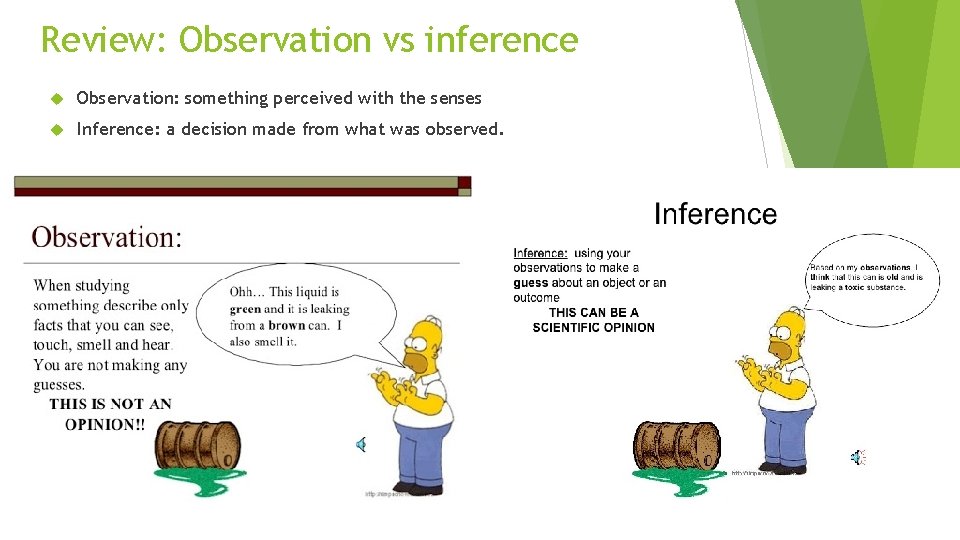
Review: Observation vs inference Observation: something perceived with the senses Inference: a decision made from what was observed.
- Slides: 23