
Light Colour Revision Booklet Form Group 8 0
Light & Colour Revision Booklet Form Group 8 0
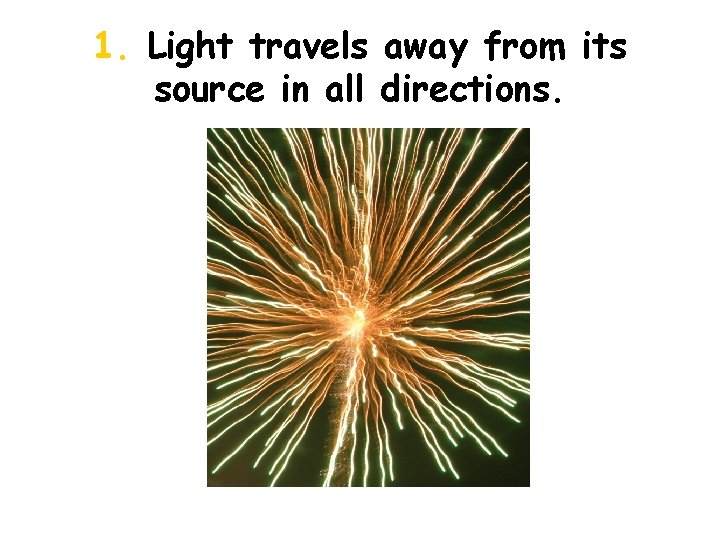
1. Light travels away from its source in all directions.
2. Light travels much faster than sound at a speed of 300, 000 m/s, which is the same as 300, 000 km/s.
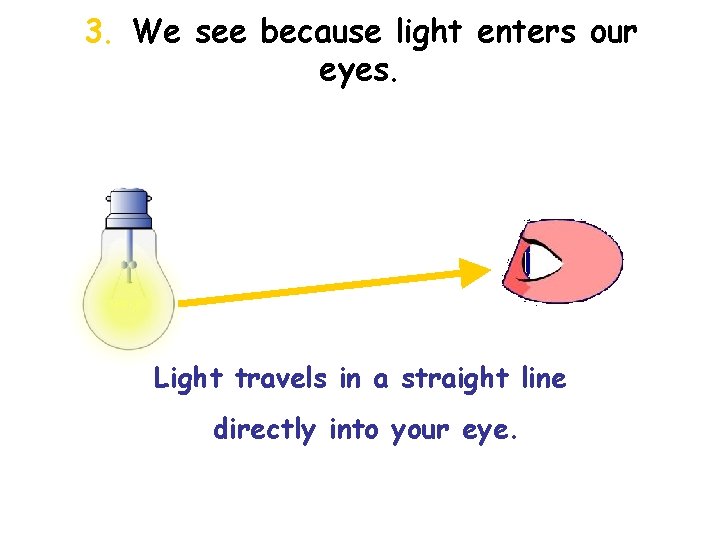
3. We see because light enters our eyes. Light travels in a straight line directly into your eye.
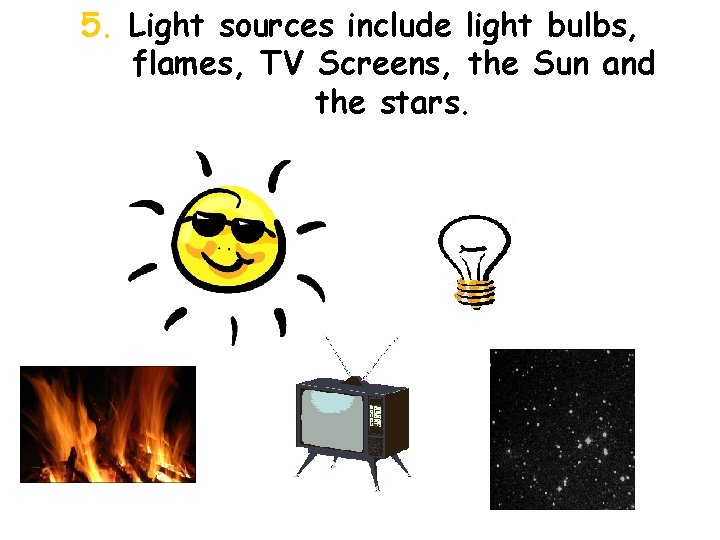
5. Light sources include light bulbs, flames, TV Screens, the Sun and the stars.
Notes. . . 1. Light travels very__quickly_ in straight lines and away 2. from its source in all directions. 2. Light travels __faster__than sound. 3. Light sources include light _bulbs___, flames, TV Screens, the Sun and the stars.
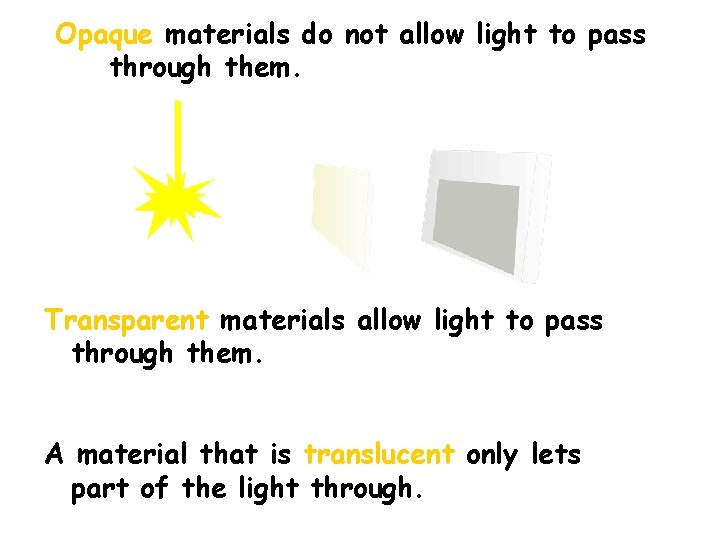
Opaque materials do not allow light to pass through them. Transparent materials allow light to pass through them. A material that is translucent only lets part of the light through.
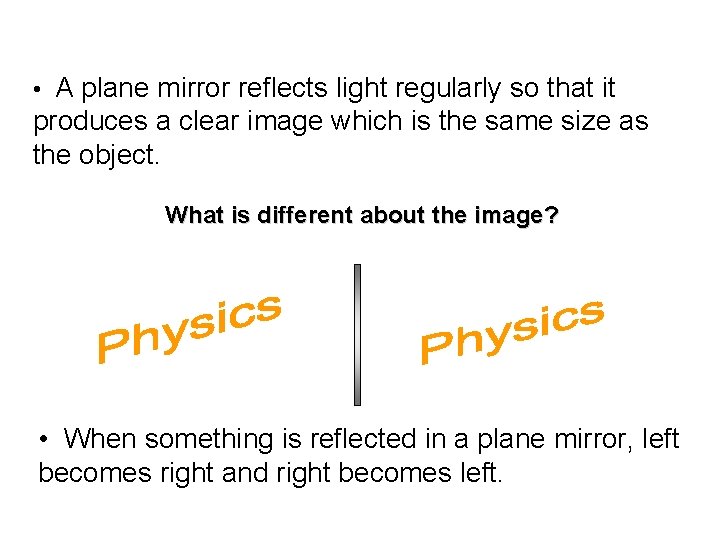
• A plane mirror reflects light regularly so that it produces a clear image which is the same size as the object. What is different about the image? • When something is reflected in a plane mirror, left becomes right and right becomes left.
Notes. . . • Light is reflected from many surfaces. • Light can be reflected and also absorbed. • Reflection is when the light bounces off most surfaces and enters in our eyes. • Light being reflected in a plane mirror, left will become right and right will become left.
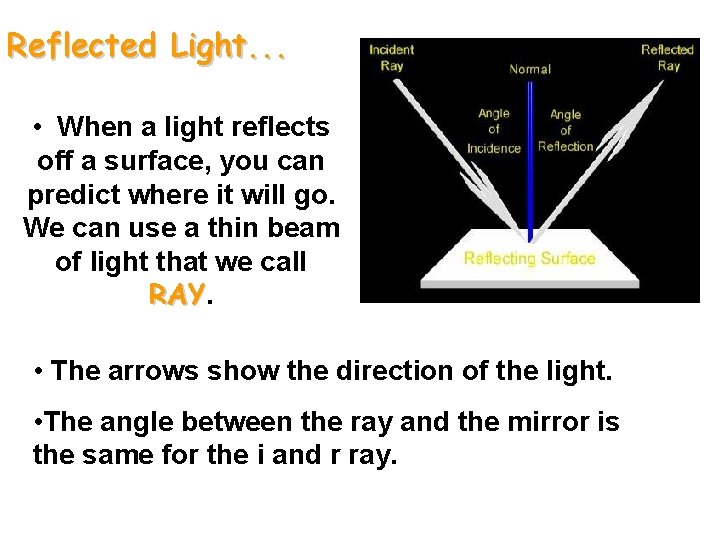
Reflected Light. . . • When a light reflects off a surface, you can predict where it will go. We can use a thin beam of light that we call RAY • The arrows show the direction of the light. • The angle between the ray and the mirror is the same for the i and r ray.
Notes. . . many 1. Light is reflected from ______surfaces. 2. The law of reflection is: angle of incidence (i) = angle of reflection (r) 3. good Pale and shiny surfaces are_______ reflectors, dark and rough surfaces are not.
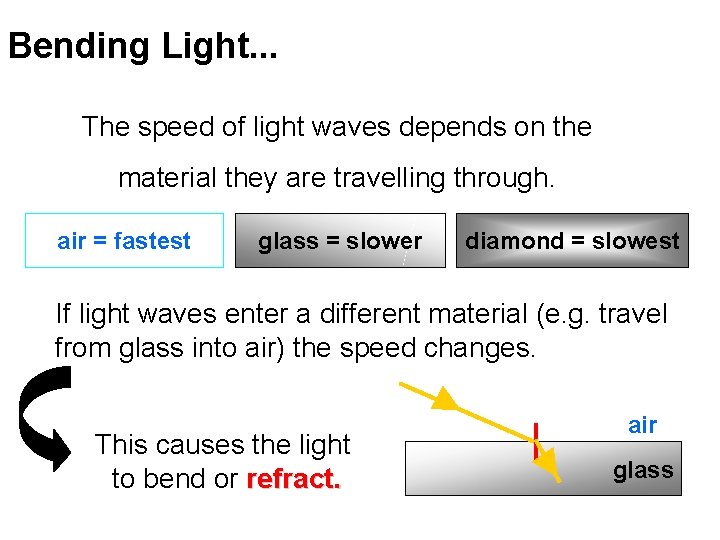
Bending Light. . . The speed of light waves depends on the material they are travelling through. air = fastest glass = slower diamond = slowest If light waves enter a different material (e. g. travel from glass into air) the speed changes. This causes the light to bend or refract. air glass
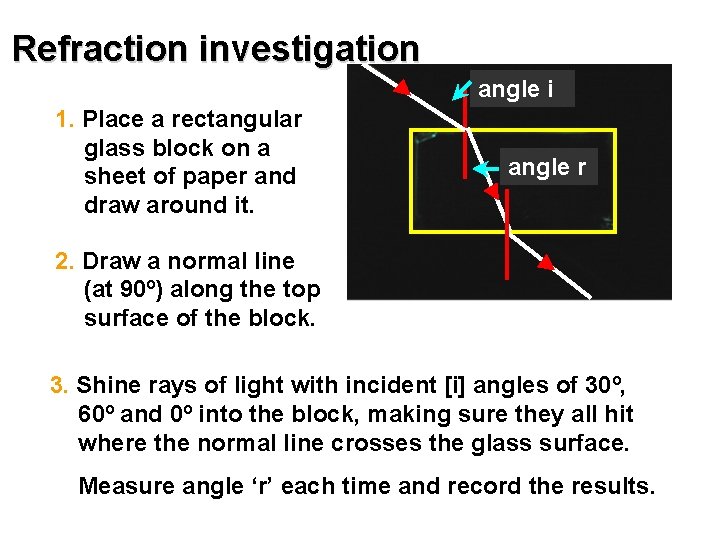
Refraction investigation angle i 1. Place a rectangular glass block on a sheet of paper and draw around it. angle r 2. Draw a normal line (at 90º) along the top surface of the block. 3. Shine rays of light with incident [i] angles of 30º, 60º and 0º into the block, making sure they all hit where the normal line crosses the glass surface. Measure angle ‘r’ each time and record the results.
Notes. . . 1. When the light goes from one transparent material to another one it may refract (bend). 2. The light must enter the new material at an angle for refraction to happen. 3. Refraction happens because the light changes speed. 4. When light enters a more dense medium (e. g. glass), it bends towards the normal.
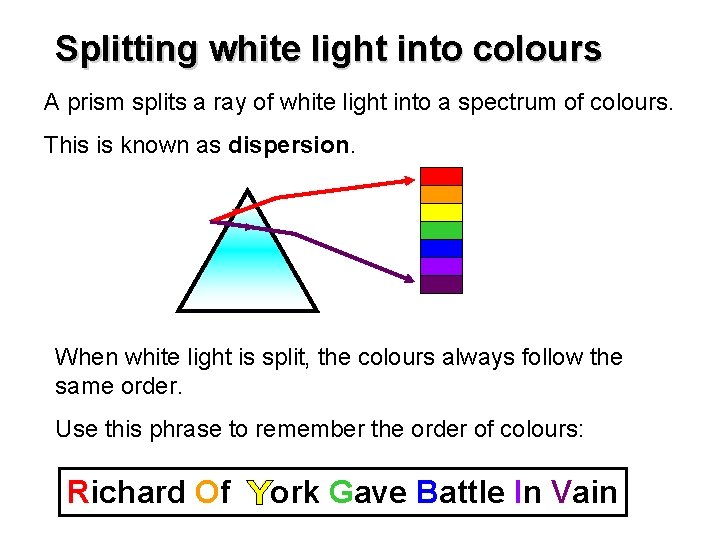
Splitting white light into colours A prism splits a ray of white light into a spectrum of colours. This is known as dispersion. When white light is split, the colours always follow the same order. Use this phrase to remember the order of colours: Richard Of York Gave Battle In Vain
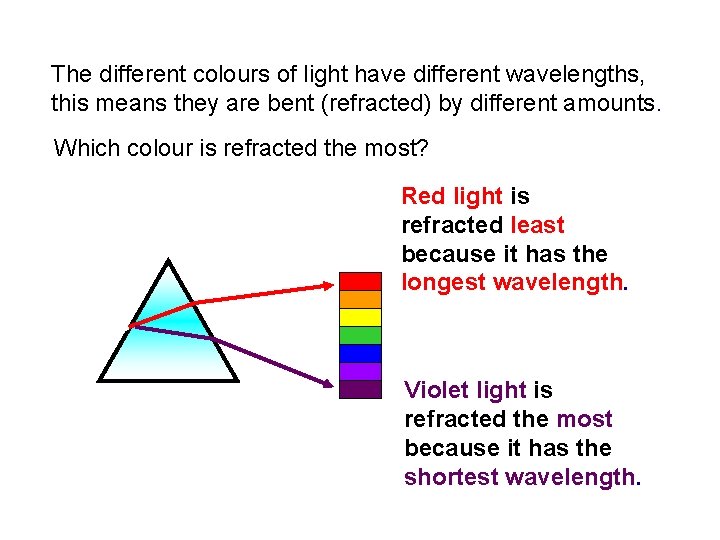
The different colours of light have different wavelengths, this means they are bent (refracted) by different amounts. Which colour is refracted the most? Red light is refracted least because it has the longest wavelength. Violet light is refracted the most because it has the shortest wavelength.
What we have learned: If a red filter is present, red light is seen and if a green light is present then green light is seen!!
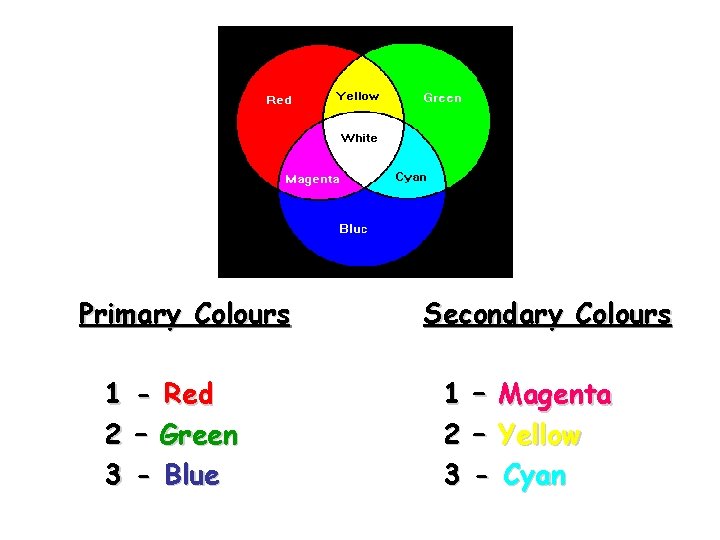
Primary Colours 1 2 3 - Red – Green - Blue Secondary Colours 1 2 3 – Magenta – Yellow - Cyan
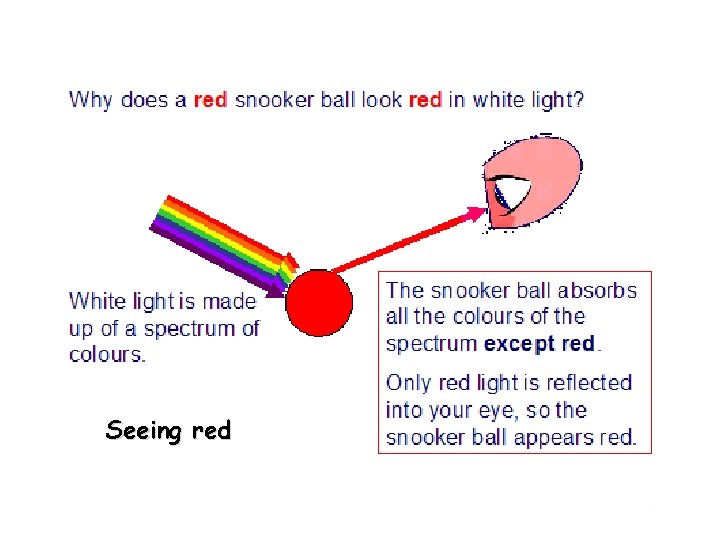
Seeing red
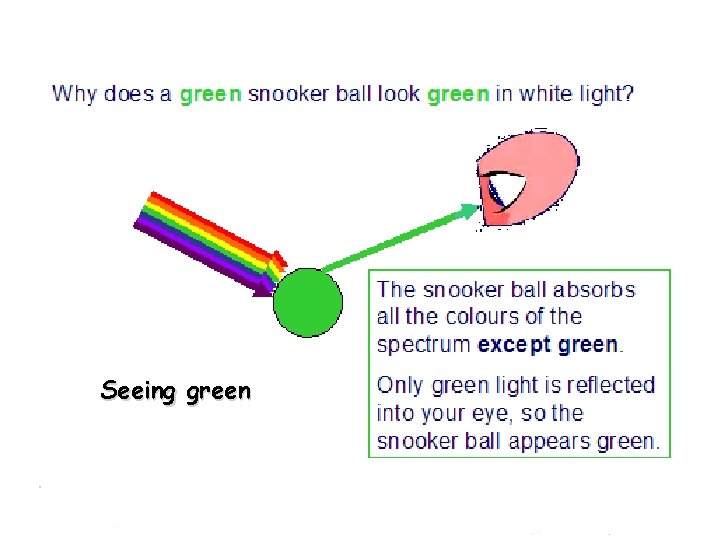
Seeing green
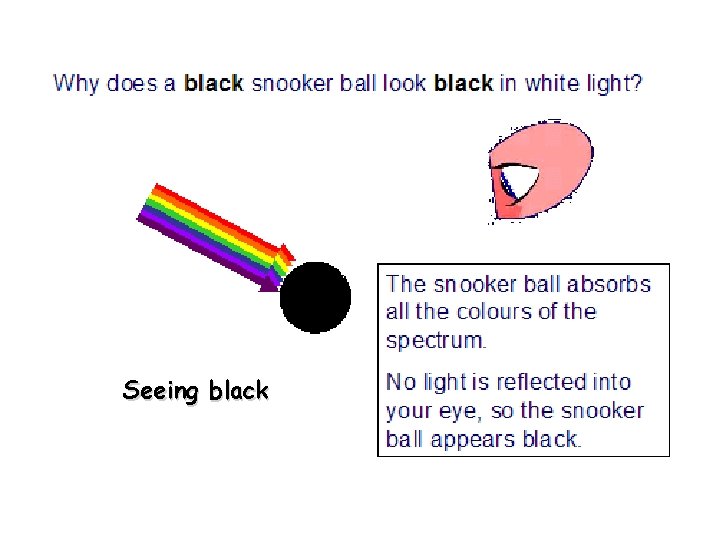
Seeing black
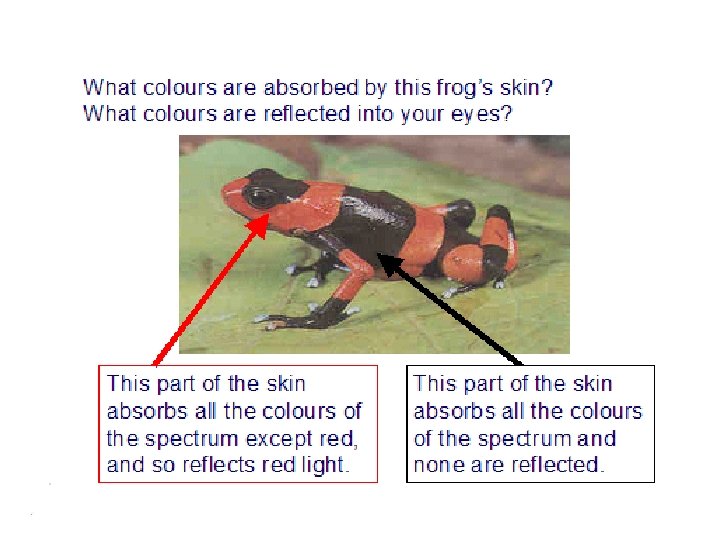
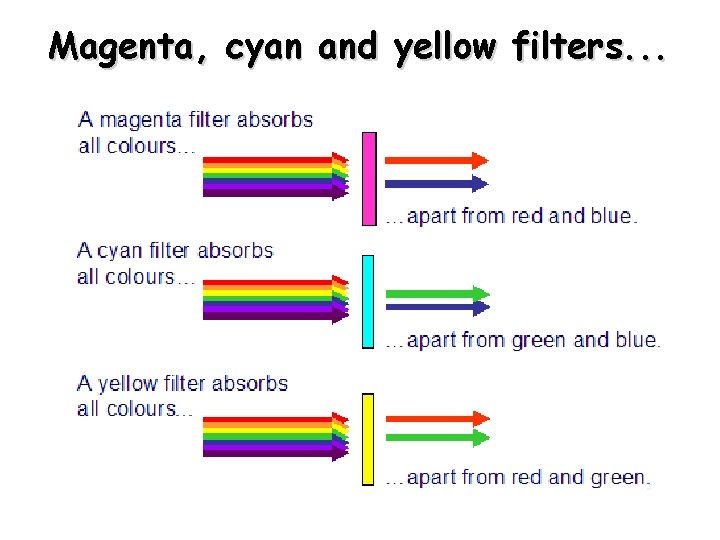
Magenta, cyan and yellow filters. . .
LIGHT QUIZ WHAT DO YOU REALLY KNOW? Hold up the correct ball colour for the right answer.
Light is reflected from many surfaces. Light don´t come from many surfaces. Light is reflected from just one surface.
Light can´t be reflected. Light can be reflected and absorbed. Light can´t be absorbed.
Richard Of York Gave Battle In Vain Richard Of York Gain Battle In Vain Richard Gave Battle In Vain
Cyan, magenta and red are the primary colours. Cyan , magenta and yellow are the secondary colours. Cyan, red and green are the secondary colours.
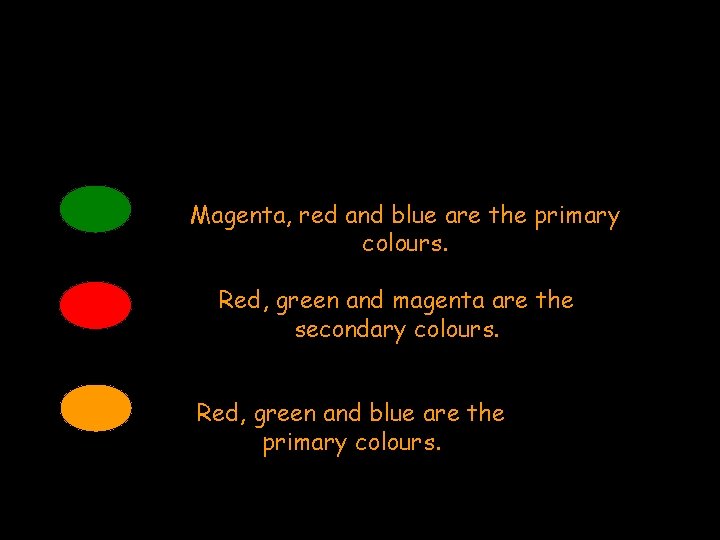
Magenta, red and blue are the primary colours. Red, green and magenta are the secondary colours. Red, green and blue are the primary colours.
- Slides: 29