
LIGHT CHAPTER 12 SECTION 2 WHAT IS LIGHT
- Slides: 22
LIGHT CHAPTER 12 SECTION 2
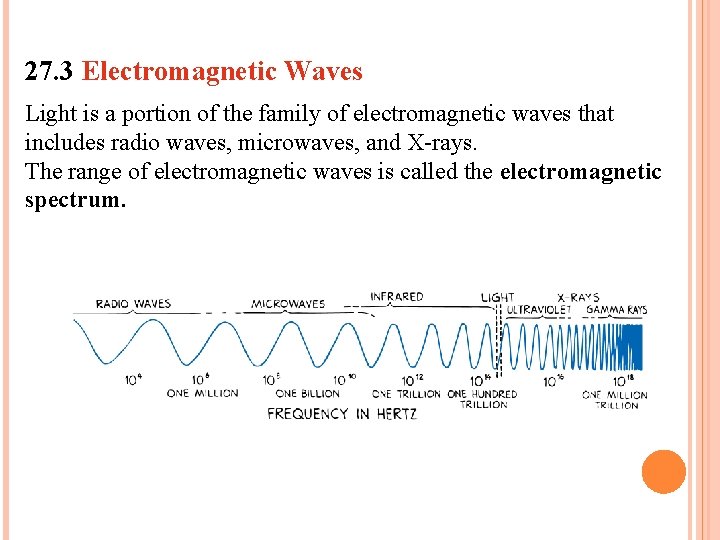
WHAT IS LIGHT? All frequencies or wavelengths of electromagnetic radiation Seven bands of electromagnetic waves, based upon differences in frequency and wavelength. http: //www. colorado. edu/physics/2000/waves_p articles/ http: //imagers. gsfc. nasa. gov/ems/waves 3. html http: //imagine. gsfc. nasa. gov/docs/science/know _l 1/emspectrum. html
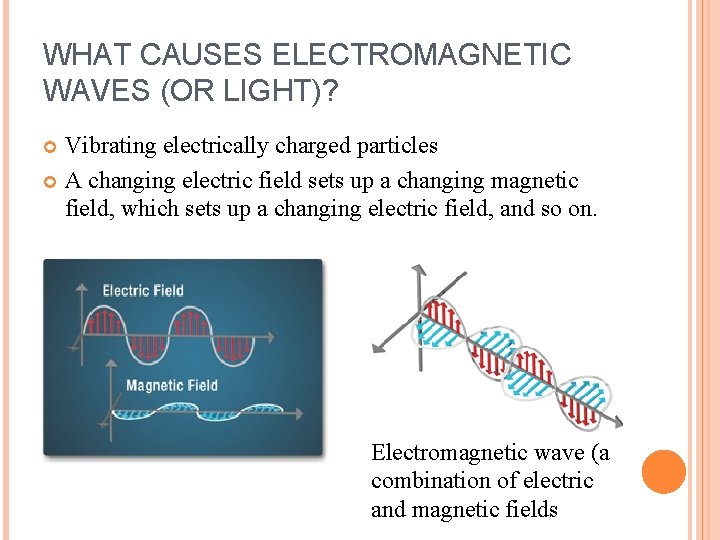
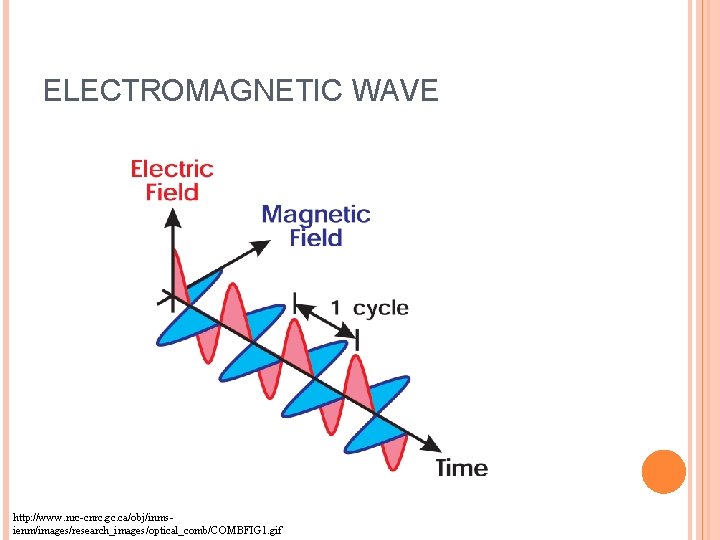
WHAT CAUSES ELECTROMAGNETIC WAVES (OR LIGHT)? Vibrating electrically charged particles A changing electric field sets up a changing magnetic field, which sets up a changing electric field, and so on. Electromagnetic wave (a combination of electric and magnetic fields
ELECTROMAGNETIC WAVE http: //www. nrc-cnrc. gc. ca/obj/inmsienm/images/research_images/optical_comb/COMBFIG 1. gif
27. 3 Electromagnetic Waves Light is a portion of the family of electromagnetic waves that includes radio waves, microwaves, and X-rays. The range of electromagnetic waves is called the electromagnetic spectrum.
HOW DO WE MODEL LIGHT? TWO MODELS Wave Model Particle Model Physicists recognize the dual nature of light (light travels like a wave, but hits like a particle). Photon: a massless particle of light (carries energy—greater the frequency, the greater the photon energy)
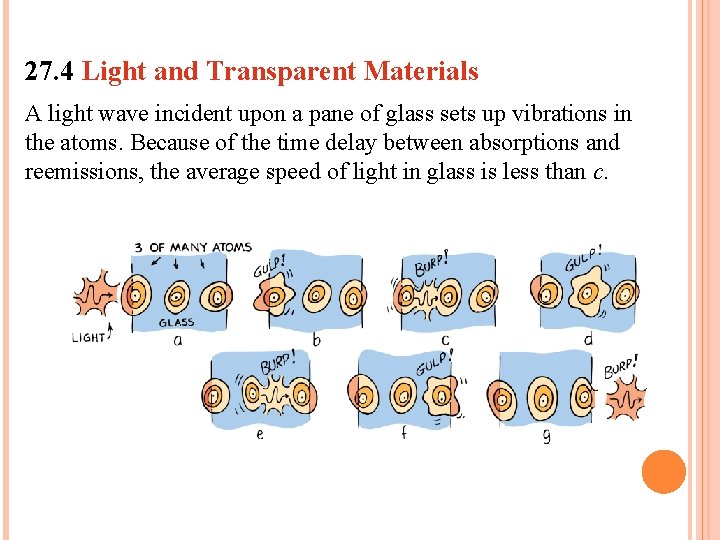
27. 4 Light and Transparent Materials A light wave incident upon a pane of glass sets up vibrations in the atoms. Because of the time delay between absorptions and reemissions, the average speed of light in glass is less than c.
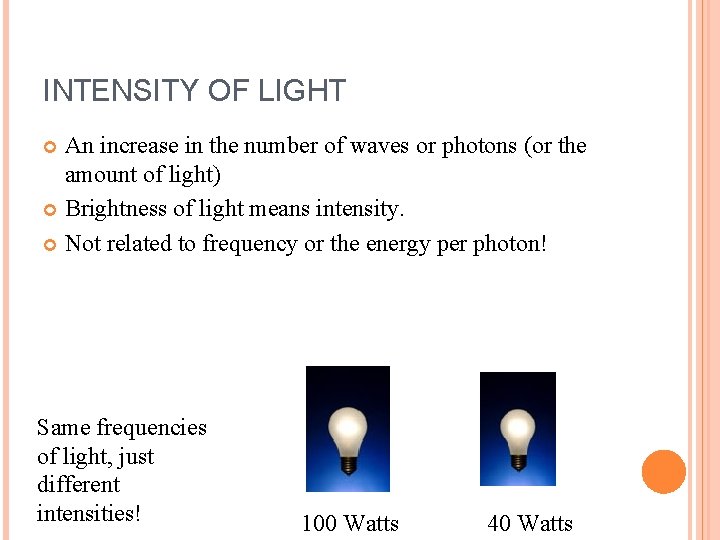
INTENSITY OF LIGHT An increase in the number of waves or photons (or the amount of light) Brightness of light means intensity. Not related to frequency or the energy per photon! Same frequencies of light, just different intensities! 100 Watts 40 Watts
SPEED OF LIGHT Nothing in the Universe travels faster than the speed of light. Speed 3 x 10⁸ m/s 300, 000 km/s 186, 000 mi/s
WHAT AFFECTS THE SPEED OF LIGHT? Speed of light is affected by the type of medium it travels through. In general, light travels fastest through a vacuum, then gases, liquids and solids. This is opposite of mechanical waves. Sound waves travel fastest through solids, not gases.
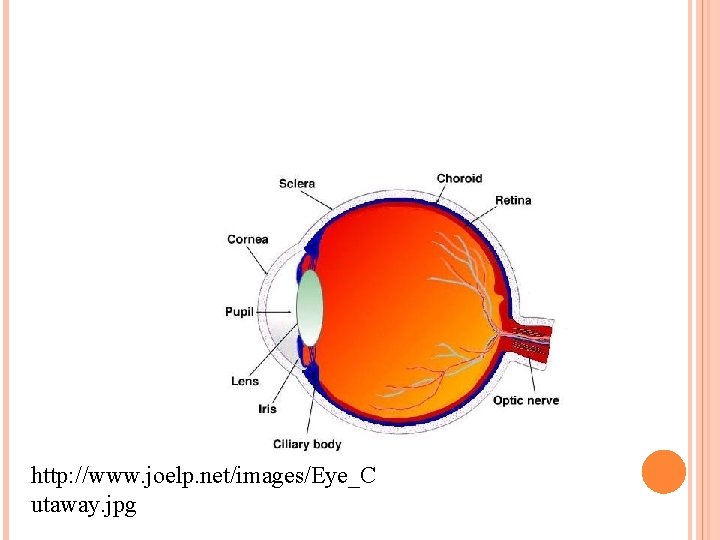
http: //www. joelp. net/images/Eye_C utaway. jpg
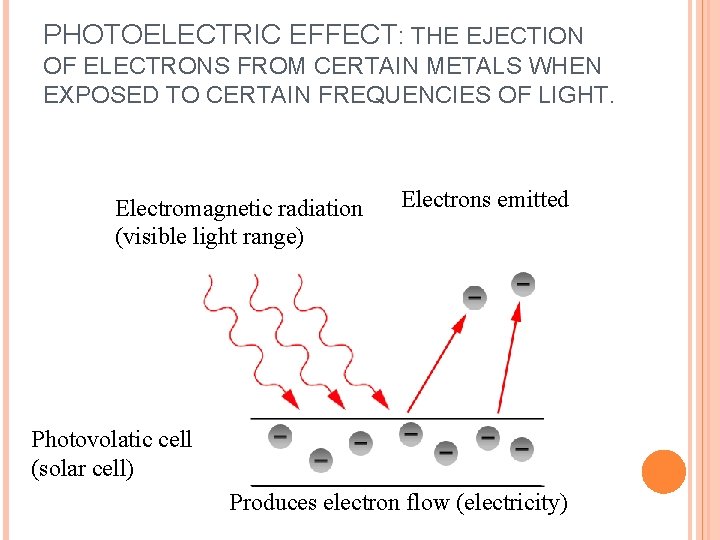
PHOTOELECTRIC EFFECT: THE EJECTION OF ELECTRONS FROM CERTAIN METALS WHEN EXPOSED TO CERTAIN FREQUENCIES OF LIGHT. Electromagnetic radiation (visible light range) Electrons emitted Photovolatic cell (solar cell) Produces electron flow (electricity)
ENERGY TRANSFORMATIONS OBSERVED WITH PHOTOVOLTAIC CELL, MOTOR AND PROPELLER Visible light absorbed by photvoltaic cell (light energy to electrical energy) Electric motor causes propeller to spin (electrical energy to mechanical energy)
LIGHT AS A WAVE Light interacts with light. Interference Light interacts with matter. Reflection Refraction Diffraction
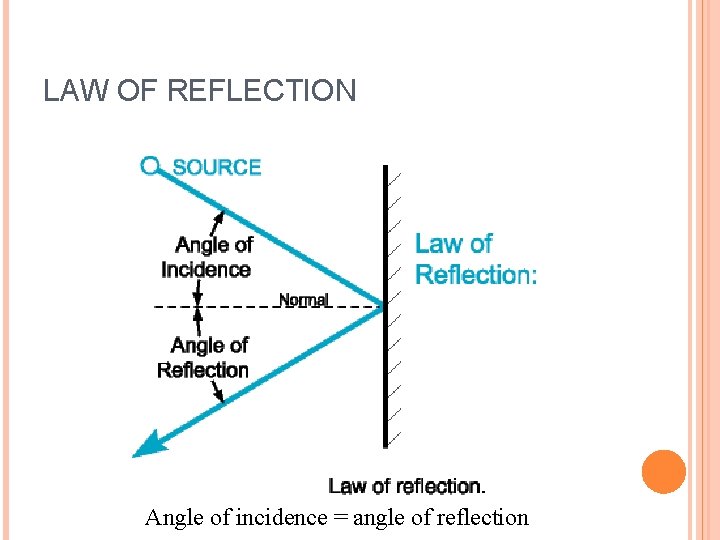
LAW OF REFLECTION Angle of incidence = angle of reflection
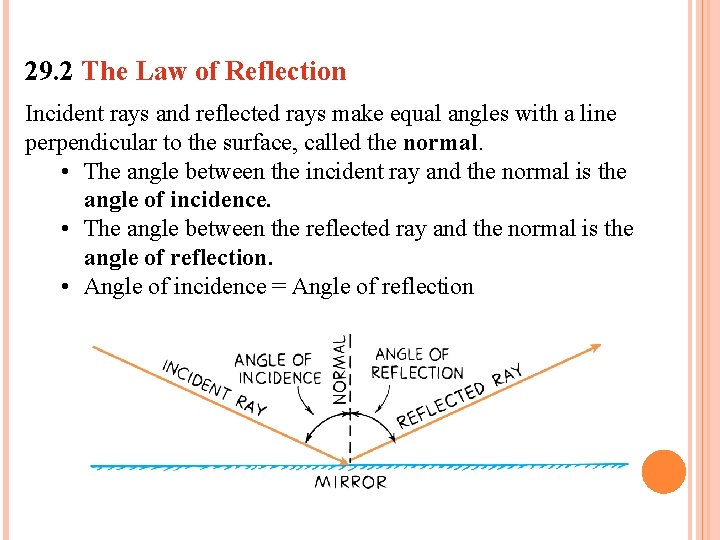
29. 2 The Law of Reflection Incident rays and reflected rays make equal angles with a line perpendicular to the surface, called the normal. • The angle between the incident ray and the normal is the angle of incidence. • The angle between the reflected ray and the normal is the angle of reflection. • Angle of incidence = Angle of reflection
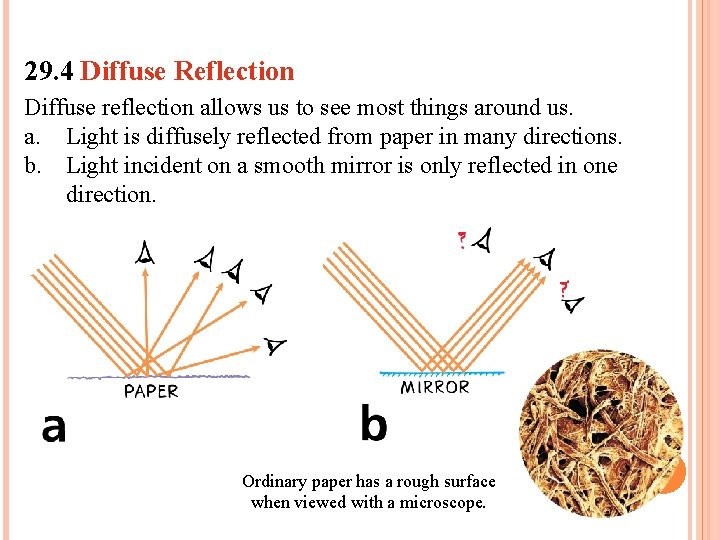
29. 4 Diffuse Reflection Diffuse reflection allows us to see most things around us. a. Light is diffusely reflected from paper in many directions. b. Light incident on a smooth mirror is only reflected in one direction. Ordinary paper has a rough surface when viewed with a microscope.
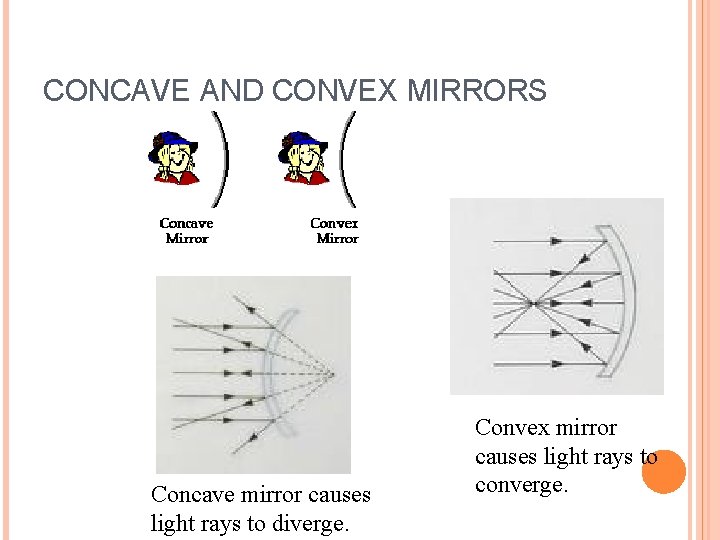
CONCAVE AND CONVEX MIRRORS Concave mirror causes light rays to diverge. Convex mirror causes light rays to converge.
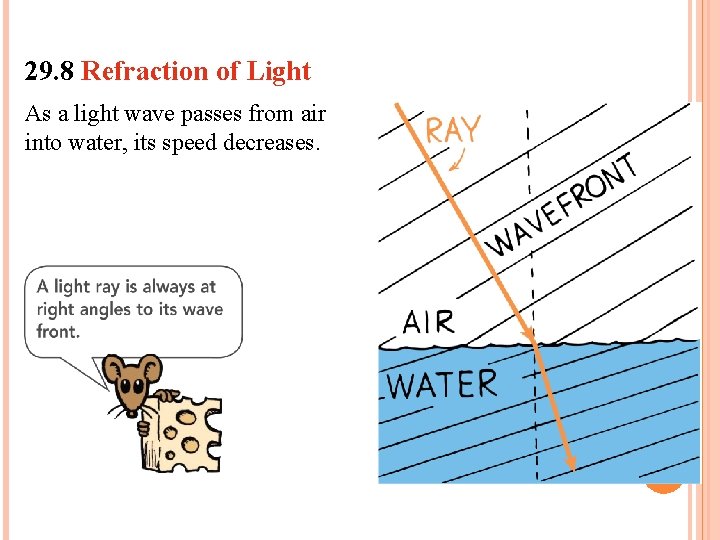
29. 8 Refraction of Light As a light wave passes from air into water, its speed decreases.
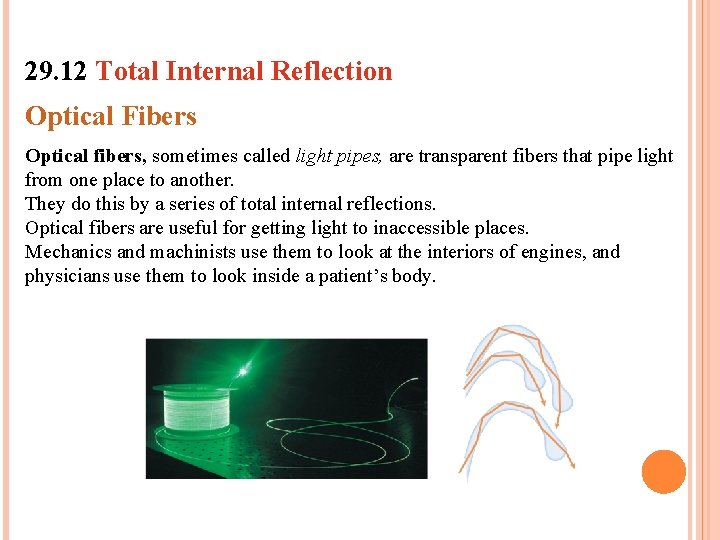
29. 12 Total Internal Reflection Optical Fibers Optical fibers, sometimes called light pipes, are transparent fibers that pipe light from one place to another. They do this by a series of total internal reflections. Optical fibers are useful for getting light to inaccessible places. Mechanics and machinists use them to look at the interiors of engines, and physicians use them to look inside a patient’s body.
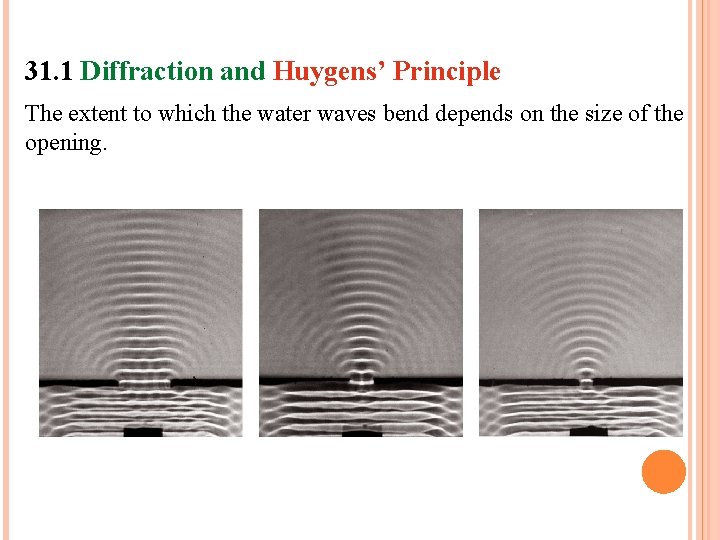
31. 1 Diffraction and Huygens’ Principle The extent to which the water waves bend depends on the size of the opening.
LIGHT ACTS AS A PARTICLE Light contains energy, and the energy is located in a particular place and can be thought of as particles. These discrete, packets of light energy are called photons. Photons have no mass. As the frequency increases, so does the energy per photon.