
Light Behavior Lab Day ESSENTIAL QUESTIONS WHAT EFFECTS
Light Behavior Lab Day ESSENTIAL QUESTIONS: -WHAT EFFECTS CAN VARIOUS LENSES/MIRRORS HAVE ON HOW WE PERCEIVE LIGHT? (LIGHT LAB) -HOW CAN PEOPLE ADAPT TO A LIFE WITHOUT SIGHT? (TED TALK VIDEO AND WS) -HOW DO WE SEE? (EYE WS)
Behaviors of Light ESSENTIAL QUESTIONS: -WHAT ARE THE DIFFERENT BEHAVIORS OF LIGHT? -WHAT ARE THE DIFFERENT TYPES OF LIGHT? -HOW CAN LIGHT EB MANIPULATED AND USED IN EVERY DAY LIFE
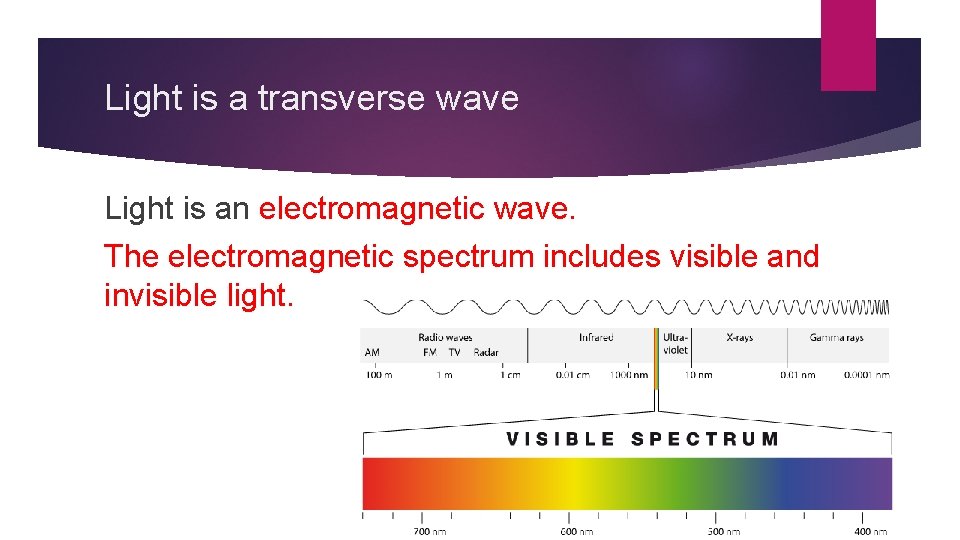
Light is a transverse wave Light is an electromagnetic wave. The electromagnetic spectrum includes visible and invisible light.
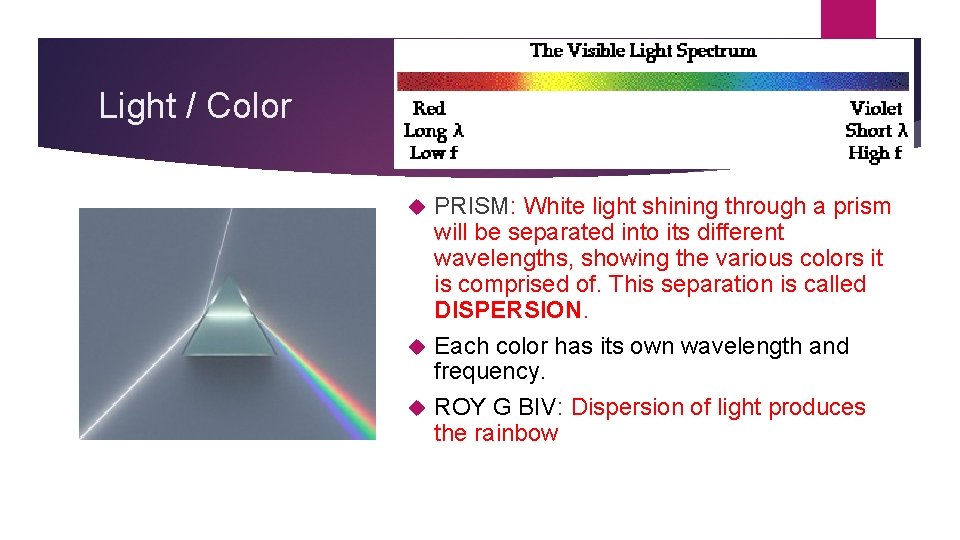
Light / Color PRISM: White light shining through a prism will be separated into its different wavelengths, showing the various colors it is comprised of. This separation is called DISPERSION. Each color has its own wavelength and frequency. ROY G BIV: Dispersion of light produces the rainbow
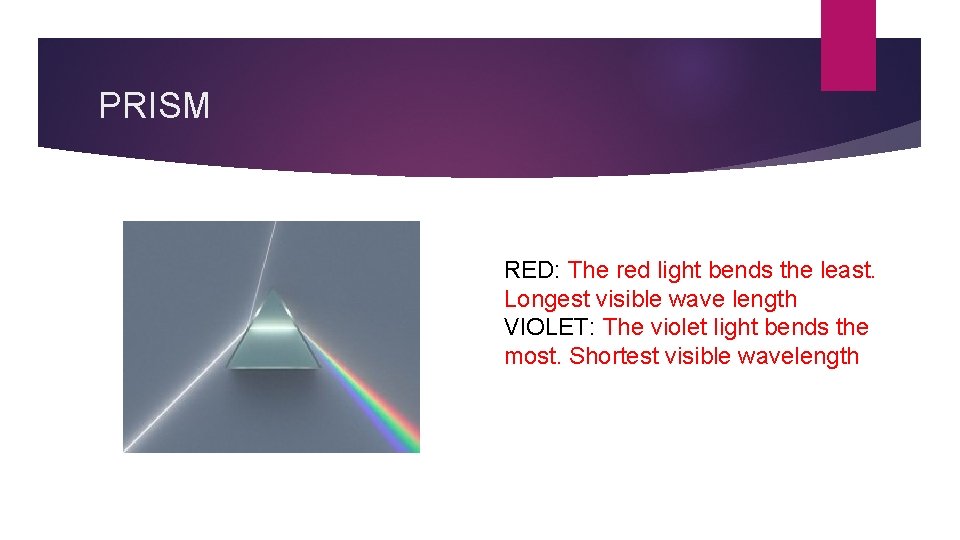
PRISM RED: The red light bends the least. Longest visible wave length VIOLET: The violet light bends the most. Shortest visible wavelength
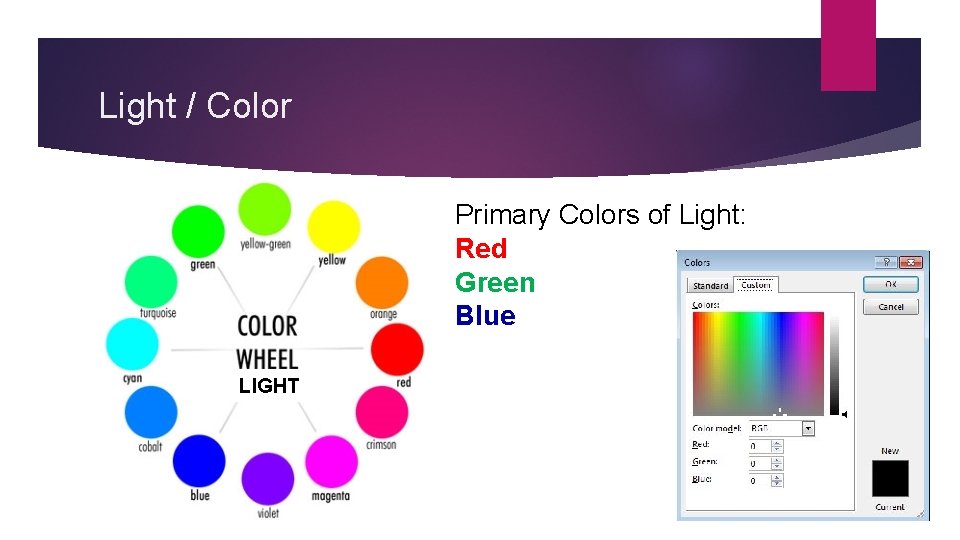
Light / Color Primary Colors of Light: Red Green Blue LIGHT
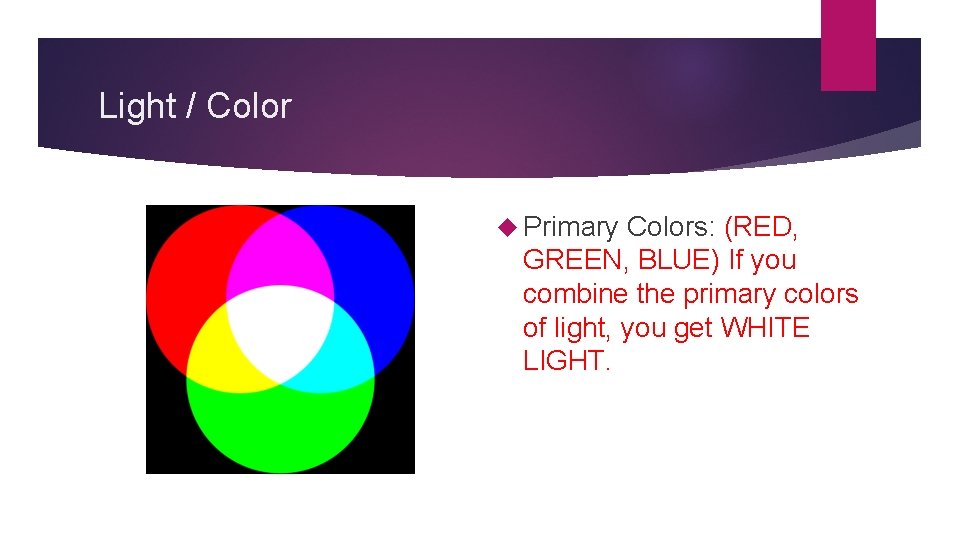
Light / Color Primary Colors: (RED, GREEN, BLUE) If you combine the primary colors of light, you get WHITE LIGHT.
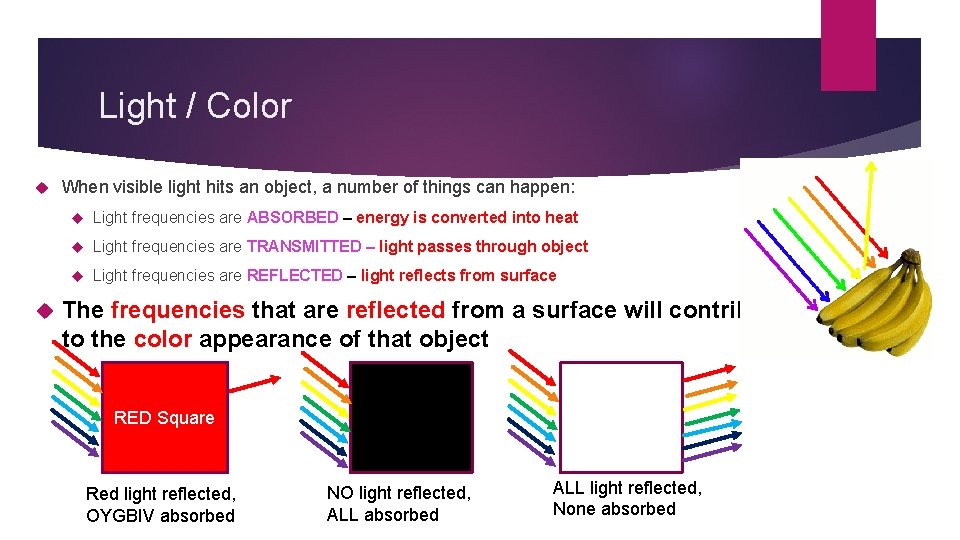
Light / Color When visible light hits an object, a number of things can happen: Light frequencies are ABSORBED – energy is converted into heat Light frequencies are TRANSMITTED – light passes through object Light frequencies are REFLECTED – light reflects from surface The frequencies that are reflected from a surface will contribute to the color appearance of that object RED Square Red light reflected, OYGBIV absorbed NO light reflected, ALL absorbed ALL light reflected, None absorbed
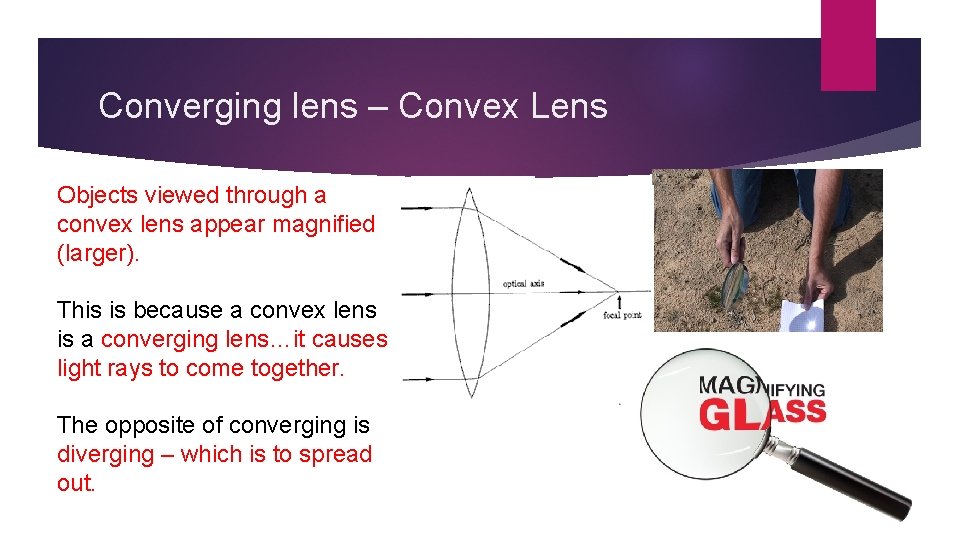
Converging lens – Convex Lens Objects viewed through a convex lens appear magnified (larger). This is because a convex lens is a converging lens…it causes light rays to come together. The opposite of converging is diverging – which is to spread out.
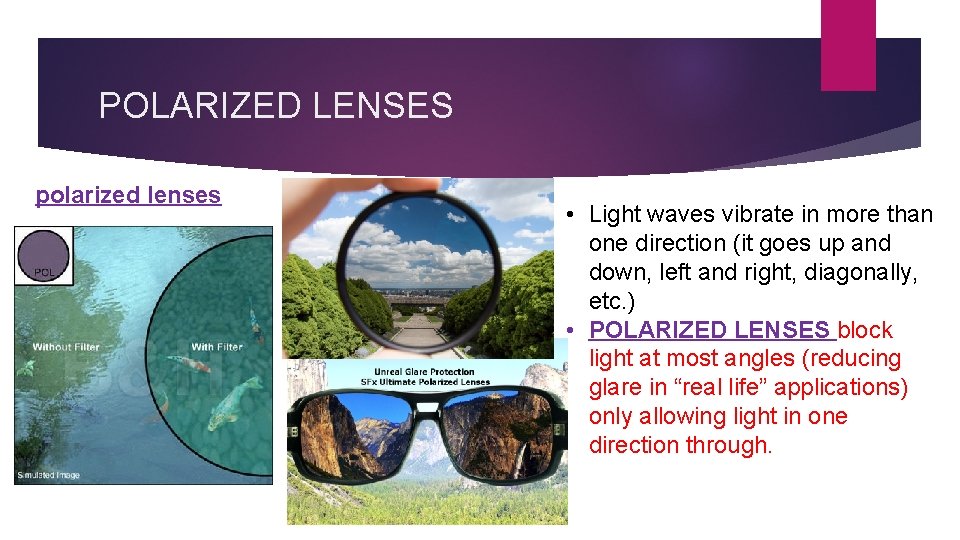
POLARIZED LENSES polarized lenses • Light waves vibrate in more than one direction (it goes up and down, left and right, diagonally, etc. ) • POLARIZED LENSES block light at most angles (reducing glare in “real life” applications) only allowing light in one direction through.
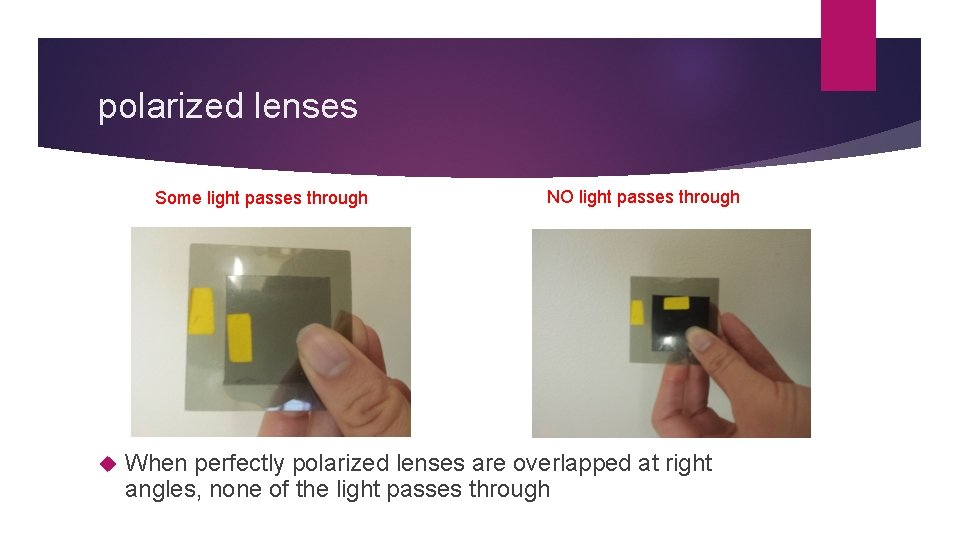
polarized lenses Some light passes through NO light passes through When perfectly polarized lenses are overlapped at right angles, none of the light passes through
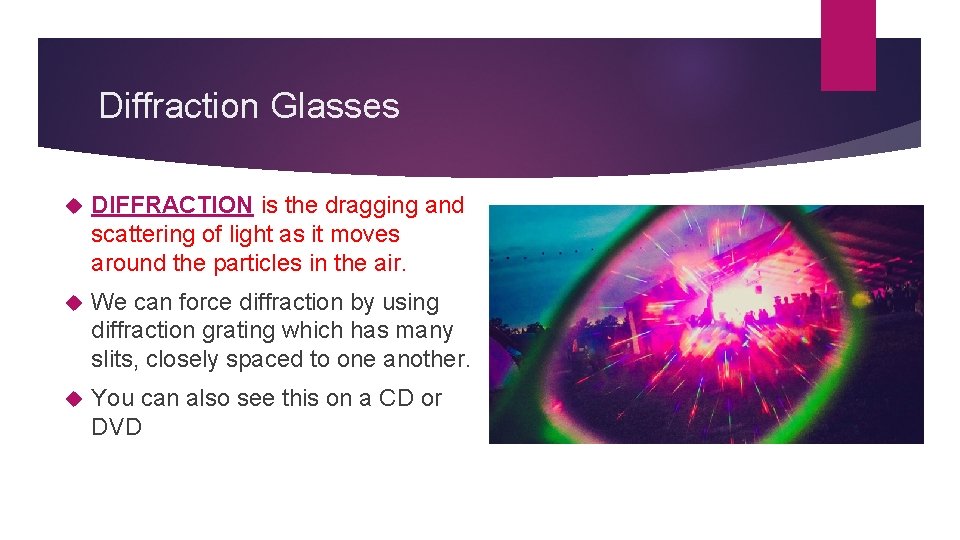
Diffraction Glasses DIFFRACTION is the dragging and scattering of light as it moves around the particles in the air. We can force diffraction by using diffraction grating which has many slits, closely spaced to one another. You can also see this on a CD or DVD
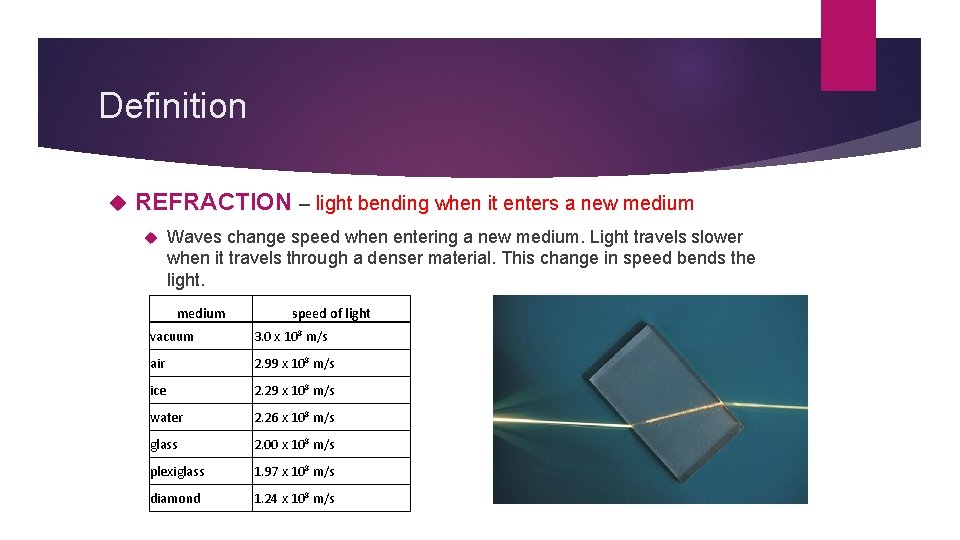
Definition REFRACTION – light bending when it enters a new medium Waves change speed when entering a new medium. Light travels slower when it travels through a denser material. This change in speed bends the light. medium speed of light vacuum 3. 0 x 108 m/s air 2. 99 x 108 m/s ice 2. 29 x 108 m/s water 2. 26 x 108 m/s glass 2. 00 x 108 m/s plexiglass 1. 97 x 108 m/s diamond 1. 24 x 108 m/s

RISING COIN
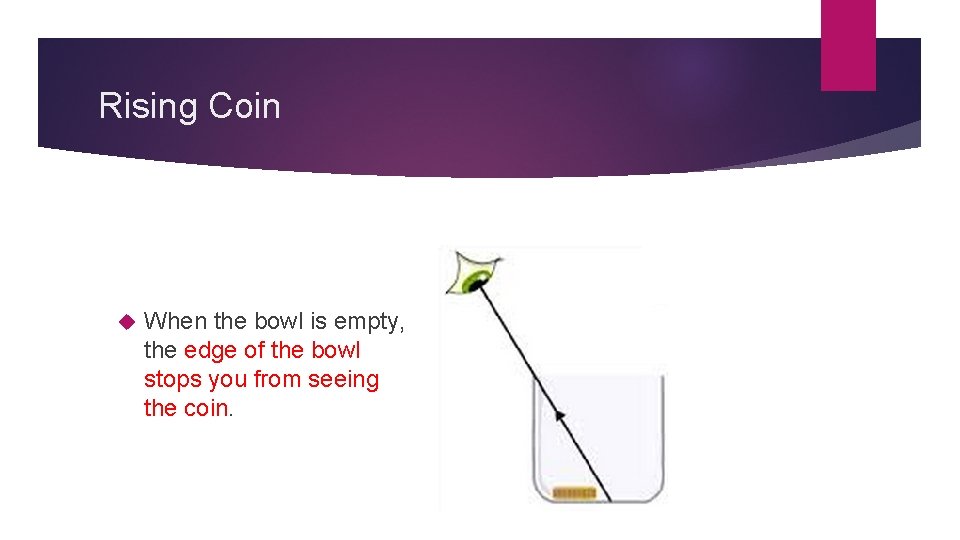
Rising Coin When the bowl is empty, the edge of the bowl stops you from seeing the coin.
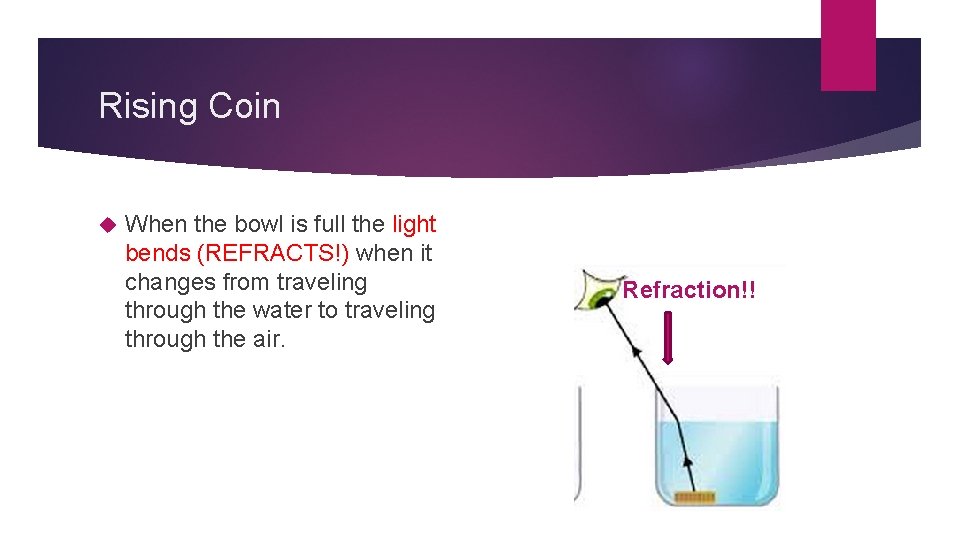
Rising Coin When the bowl is full the light bends (REFRACTS!) when it changes from traveling through the water to traveling through the air. Refraction!!
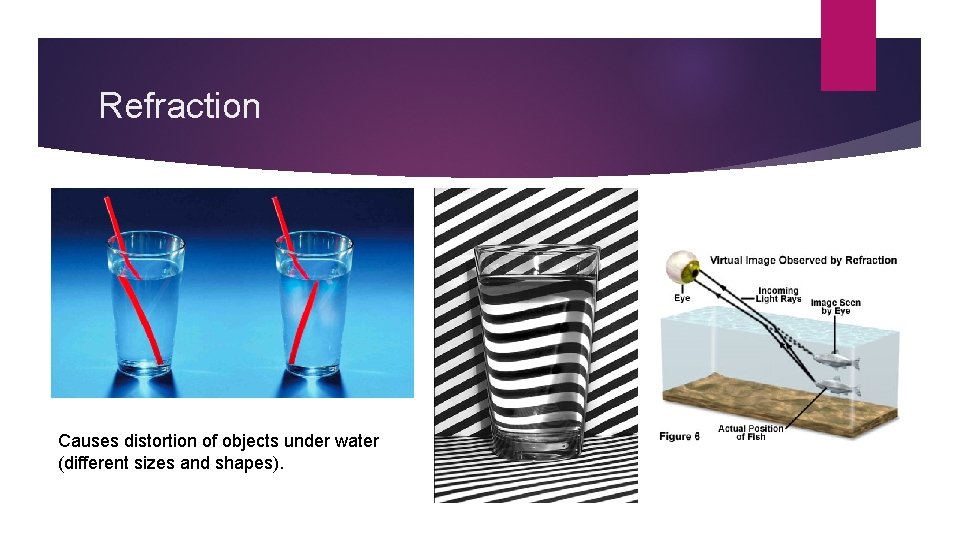
Refraction Causes distortion of objects under water (different sizes and shapes).
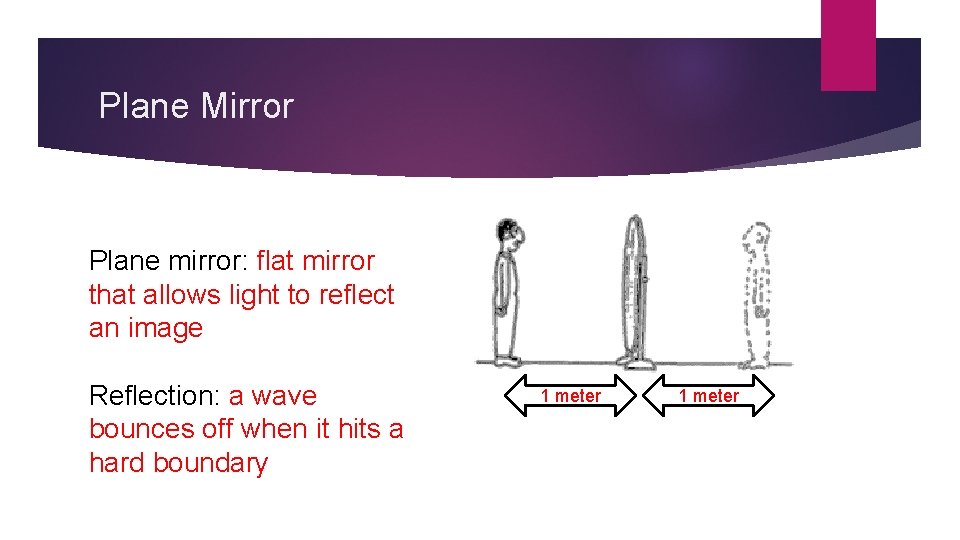
Plane Mirror Plane mirror: flat mirror that allows light to reflect an image Reflection: a wave bounces off when it hits a hard boundary 1 meter
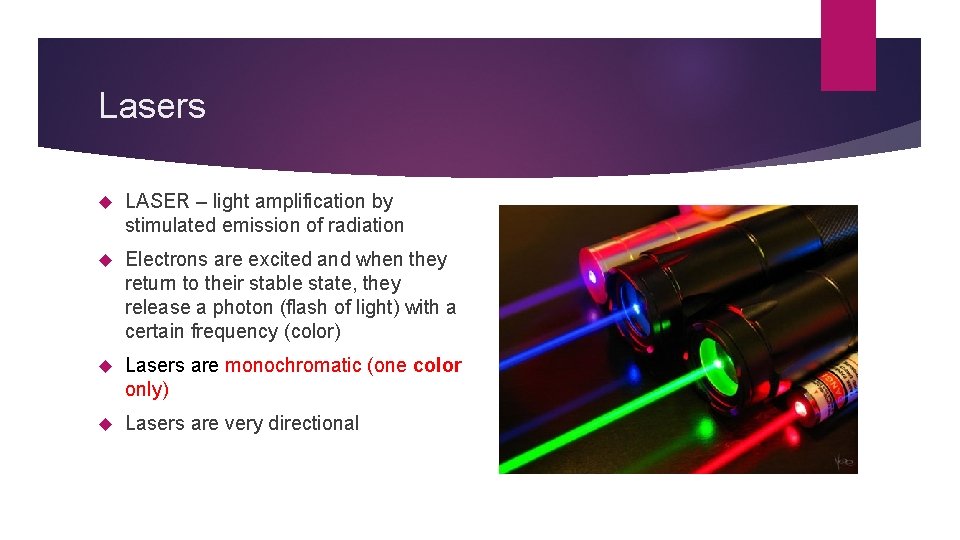
Lasers LASER – light amplification by stimulated emission of radiation Electrons are excited and when they return to their stable state, they release a photon (flash of light) with a certain frequency (color) Lasers are monochromatic (one color only) Lasers are very directional
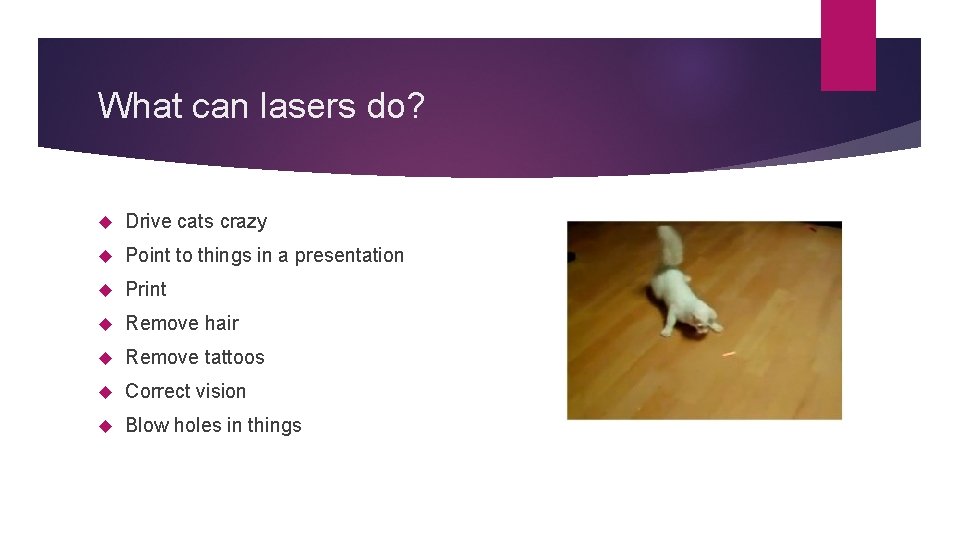
What can lasers do? Drive cats crazy Point to things in a presentation Print Remove hair Remove tattoos Correct vision Blow holes in things
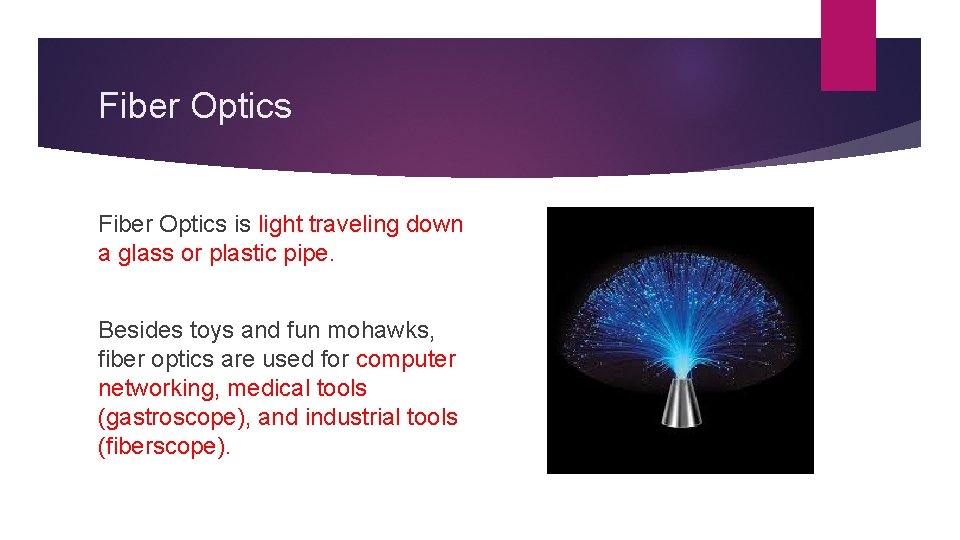
Fiber Optics is light traveling down a glass or plastic pipe. Besides toys and fun mohawks, fiber optics are used for computer networking, medical tools (gastroscope), and industrial tools (fiberscope).
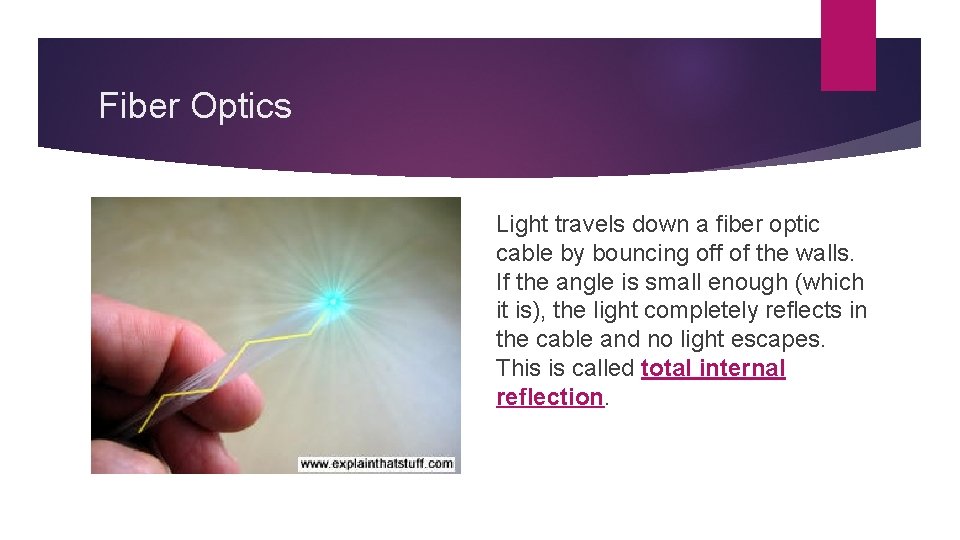
Fiber Optics Light travels down a fiber optic cable by bouncing off of the walls. If the angle is small enough (which it is), the light completely reflects in the cable and no light escapes. This is called total internal reflection.
- Slides: 22