
LIGHT AND SOUND Geology Tests Title page Homework
- Slides: 46
LIGHT AND SOUND Geology Tests Title page: Homework LIGHT! Later… Sound
Light: It travels in straight lines 16 th September 2010
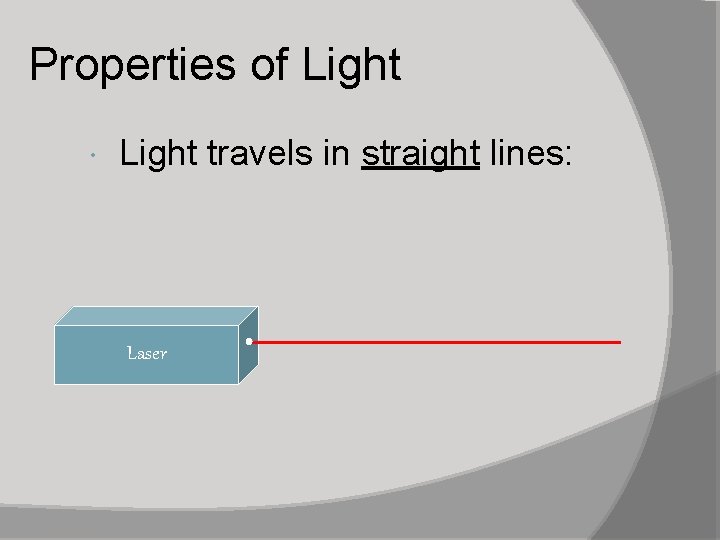
Properties of Light travels in straight lines: Laser 03/01/2022
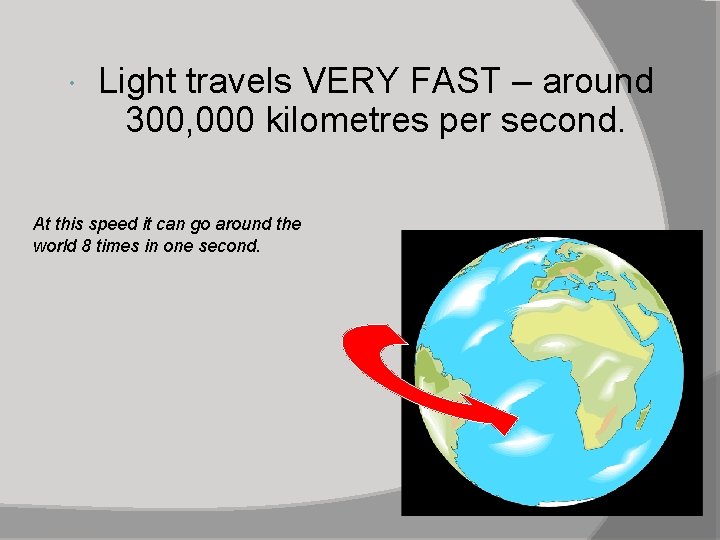
Light travels VERY FAST – around 300, 000 kilometres per second. At this speed it can go around the world 8 times in one second. 03/01/2022
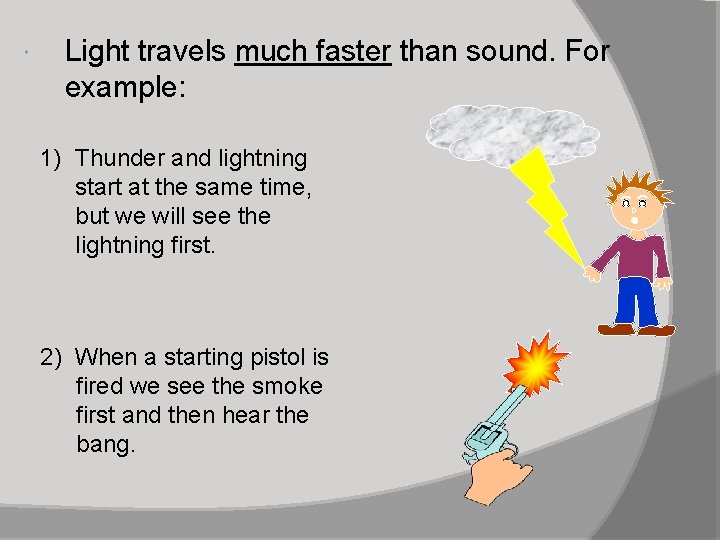
Light travels much faster than sound. For example: 1) Thunder and lightning start at the same time, but we will see the lightning first. 2) When a starting pistol is fired we see the smoke first and then hear the bang. 03/01/2022
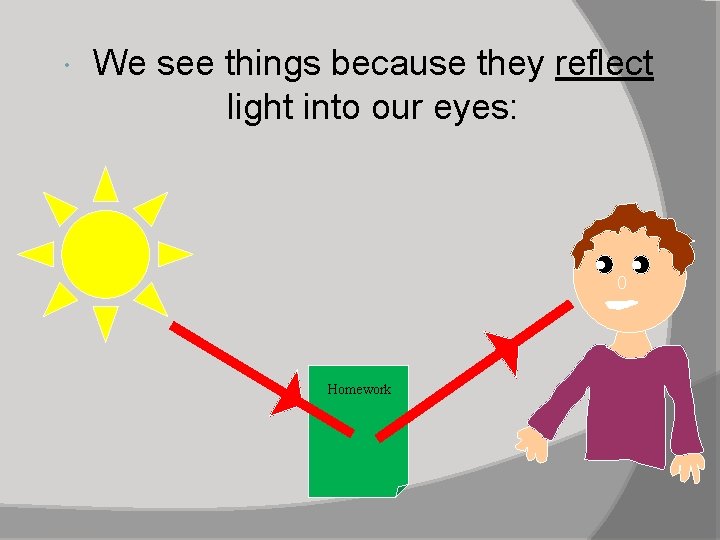
We see things because they reflect light into our eyes: Homework 03/01/2022
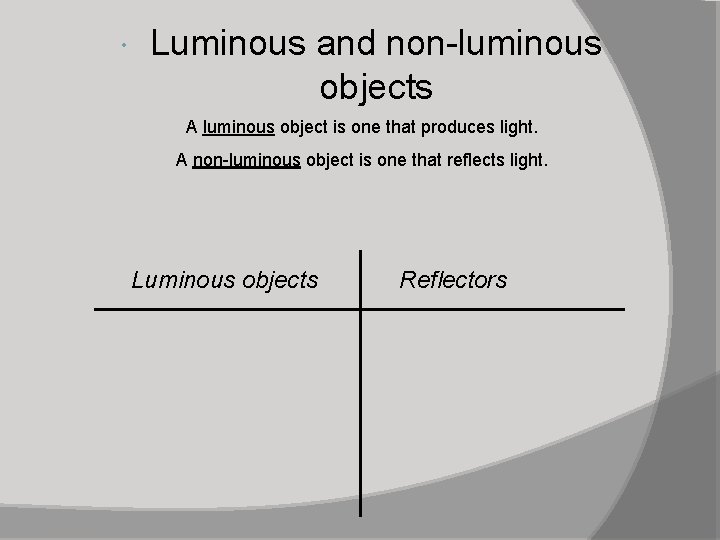
Luminous and non-luminous objects A luminous object is one that produces light. A non-luminous object is one that reflects light. Luminous objects 03/01/2022 Reflectors
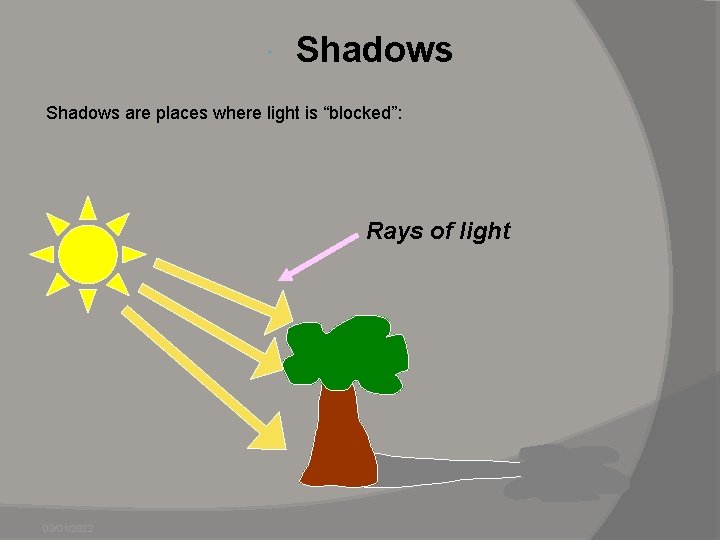
Shadows are places where light is “blocked”: Rays of light 03/01/2022
Properties of Light summary Light travels in straight lines 2) Light travels much faster than sound 3) We see things because they reflect light into our eyes 4) Shadows are formed when light is blocked by an object 1) 03/01/2022
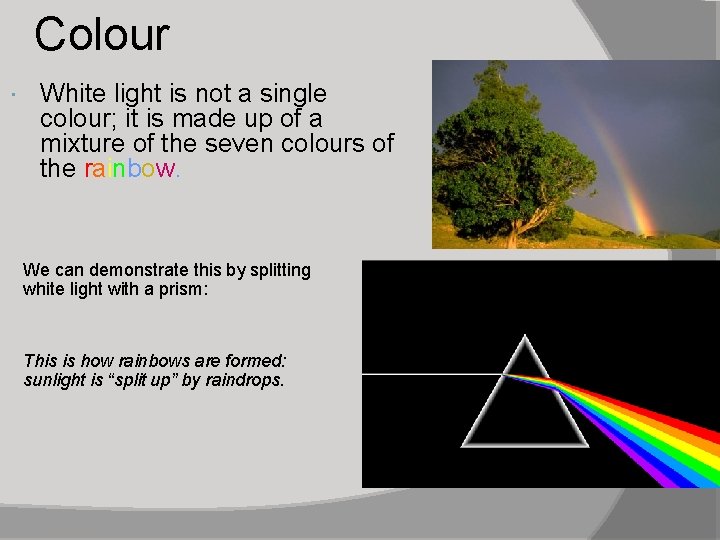
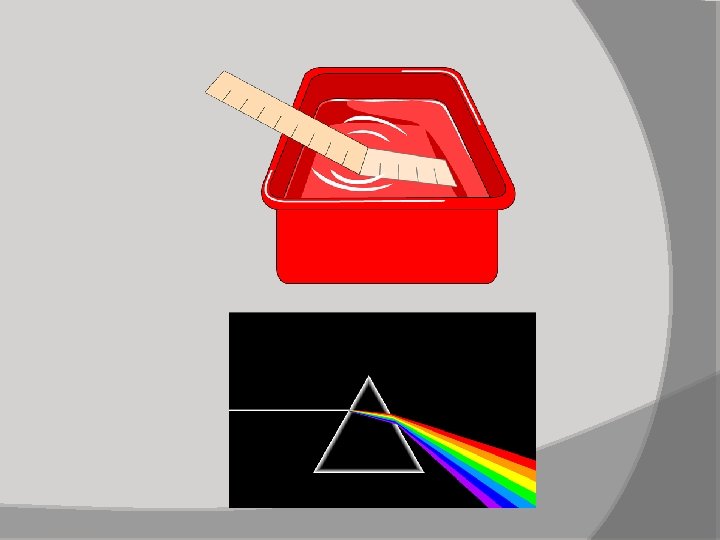
Colour White light is not a single colour; it is made up of a mixture of the seven colours of the rainbow. We can demonstrate this by splitting white light with a prism: This is how rainbows are formed: sunlight is “split up” by raindrops. 03/01/2022
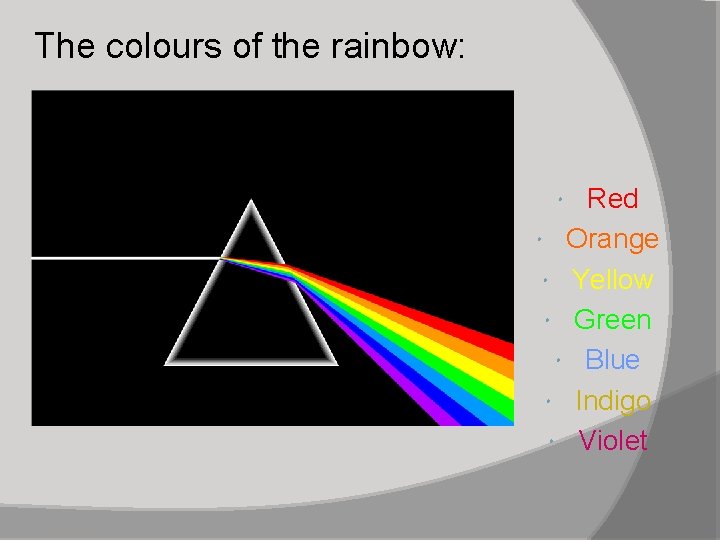
The colours of the rainbow: Red Orange Yellow Green Blue Indigo Violet 03/01/2022
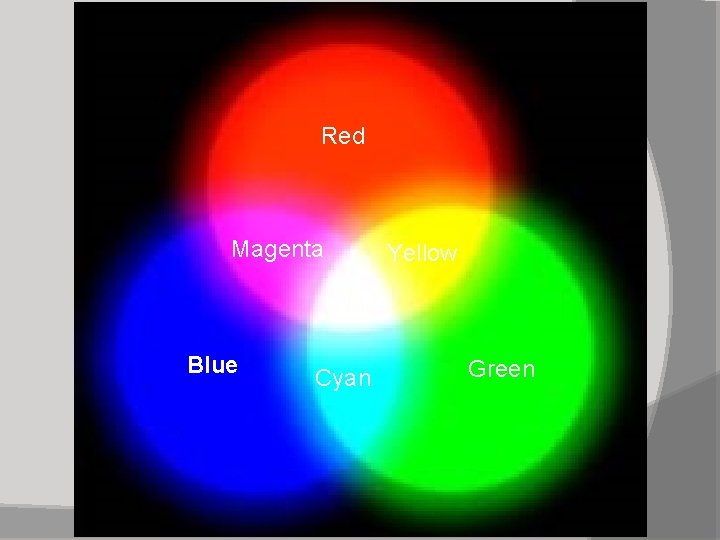
Red Magenta Yellow White Blue 03/01/2022 Cyan Green
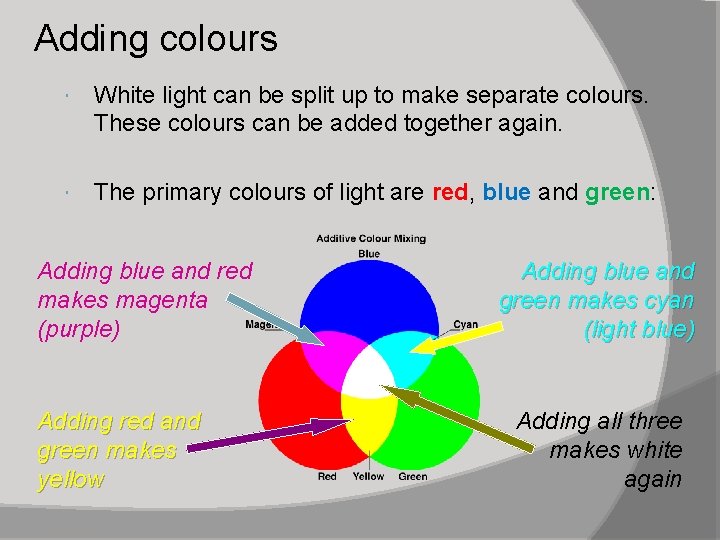
Adding colours White light can be split up to make separate colours. These colours can be added together again. The primary colours of light are red, blue and green: Adding blue and red makes magenta (purple) Adding red and green makes yellow 03/01/2022 Adding blue and green makes cyan (light blue) Adding all three makes white again
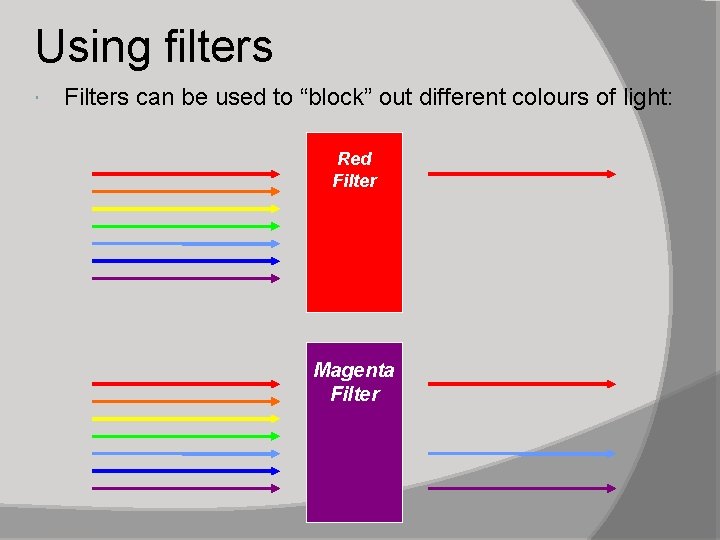
Using filters Filters can be used to “block” out different colours of light: Red Filter Magenta Filter 03/01/2022
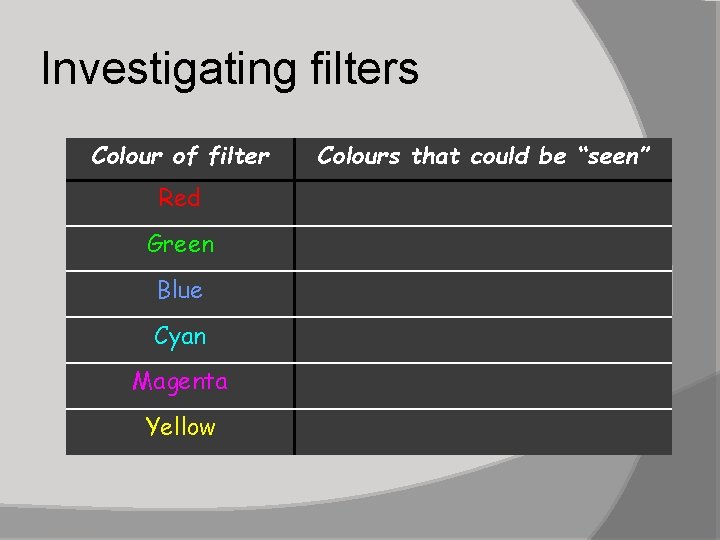
Investigating filters Colour of filter Red Green Blue Cyan Magenta Yellow 03/01/2022 Colours that could be “seen”
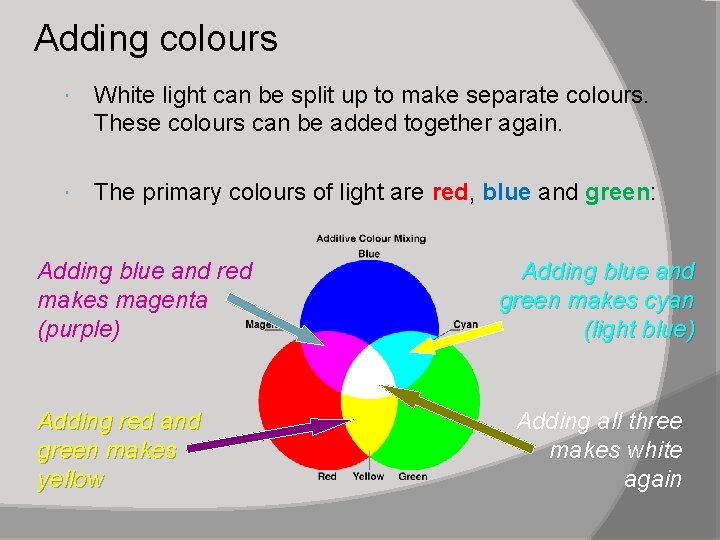
Adding colours White light can be split up to make separate colours. These colours can be added together again. The primary colours of light are red, blue and green: Adding blue and red makes magenta (purple) Adding red and green makes yellow 03/01/2022 Adding blue and green makes cyan (light blue) Adding all three makes white again
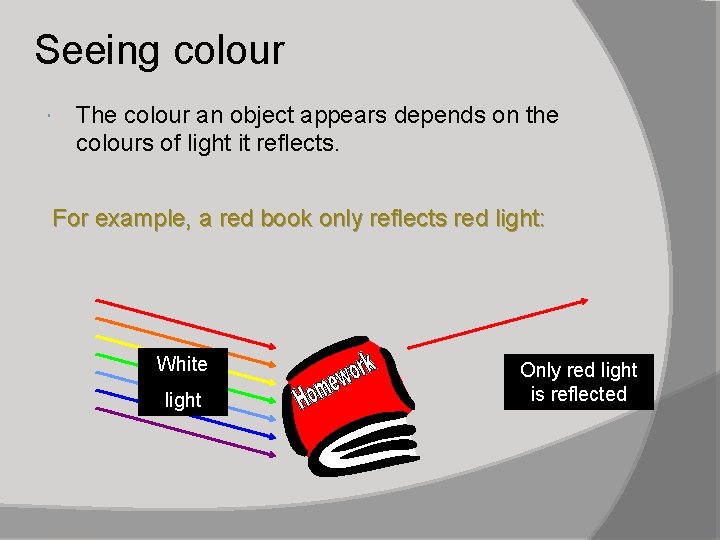
Seeing colour The colour an object appears depends on the colours of light it reflects. For example, a red book only reflects red light: White light 03/01/2022 Only red light is reflected
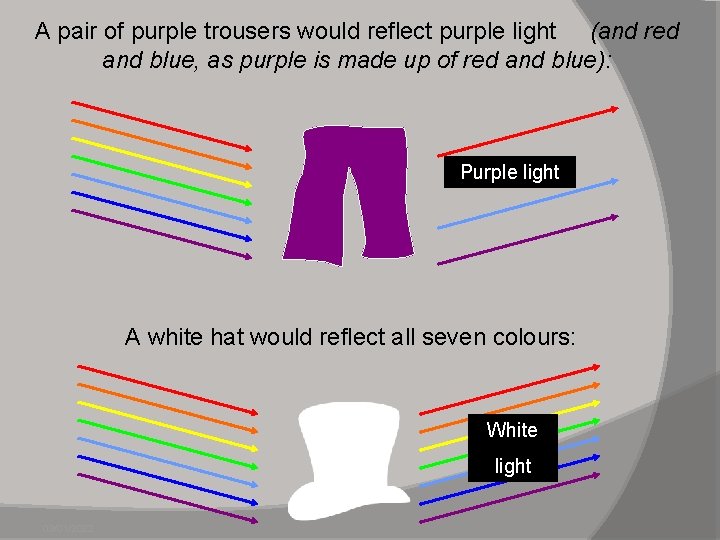
A pair of purple trousers would reflect purple light (and red and blue, as purple is made up of red and blue): Purple light A white hat would reflect all seven colours: White light 03/01/2022
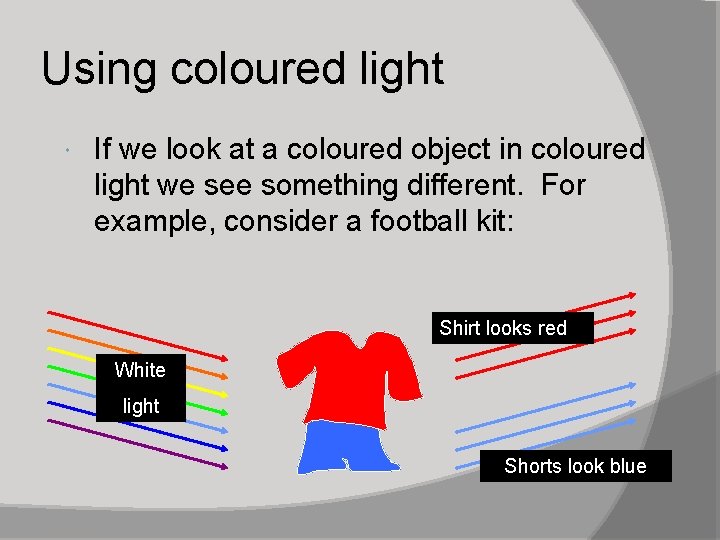
Using coloured light If we look at a coloured object in coloured light we see something different. For example, consider a football kit: Shirt looks red White light Shorts look blue 03/01/2022
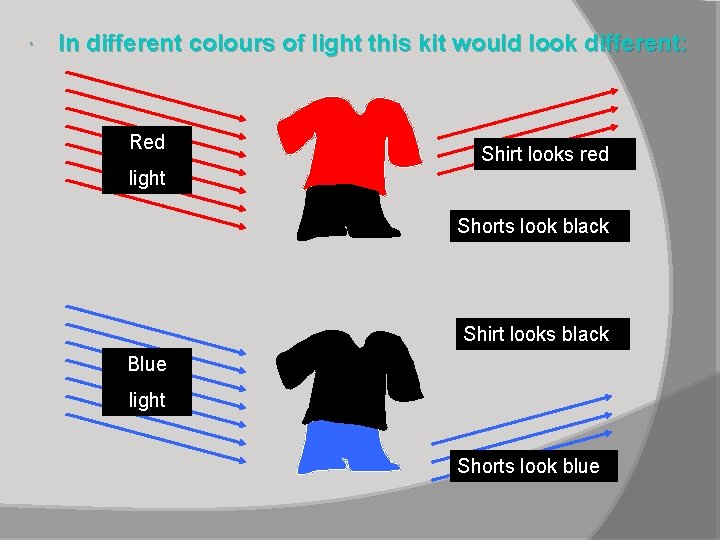
In different colours of light this kit would look different: Red Shirt looks red light Shorts look black Shirt looks black Blue light Shorts look blue 03/01/2022
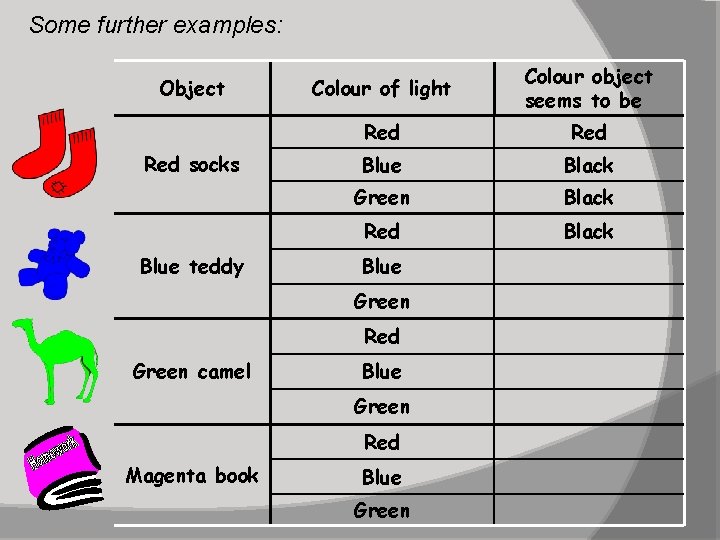
Some further examples: Object Red socks Blue teddy Colour of light Colour object seems to be Red Blue Black Green Black Red Black Blue Green Red Green camel Blue Green Red Magenta book Blue Green 03/01/2022
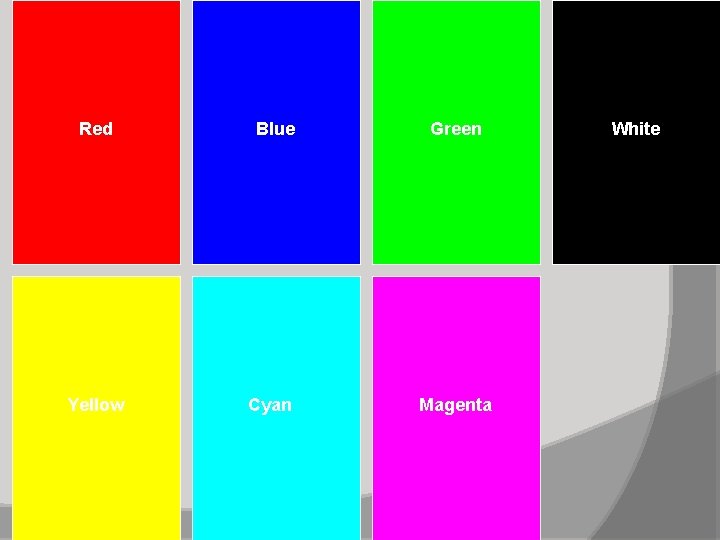
Red Yellow 03/01/2022 Blue Cyan Green Magenta White
Five QUICK Review Questions 1. The fastest time recorded to solve a rubrics cube is 6 seconds, which is held by an Australian man. ~ How many times did a single beam of light travel around the earth during this time? 2. Explain the difference between reflection and refraction
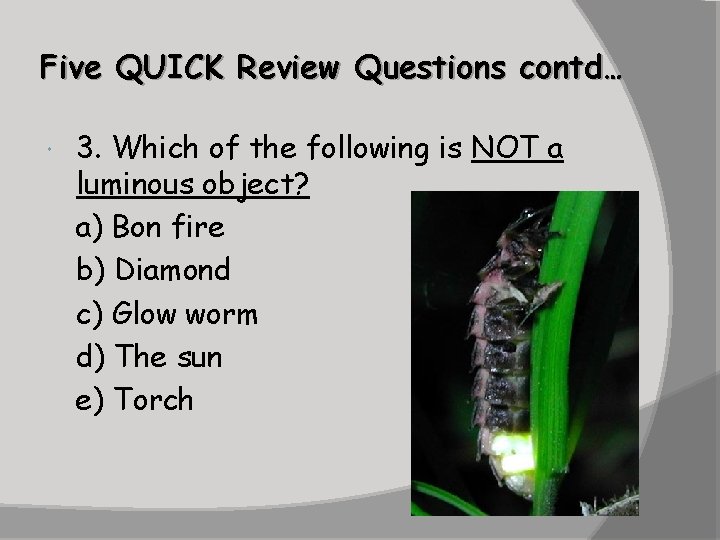
Five QUICK Review Questions contd… 3. Which of the following is NOT a luminous object? a) Bon fire b) Diamond c) Glow worm d) The sun e) Torch
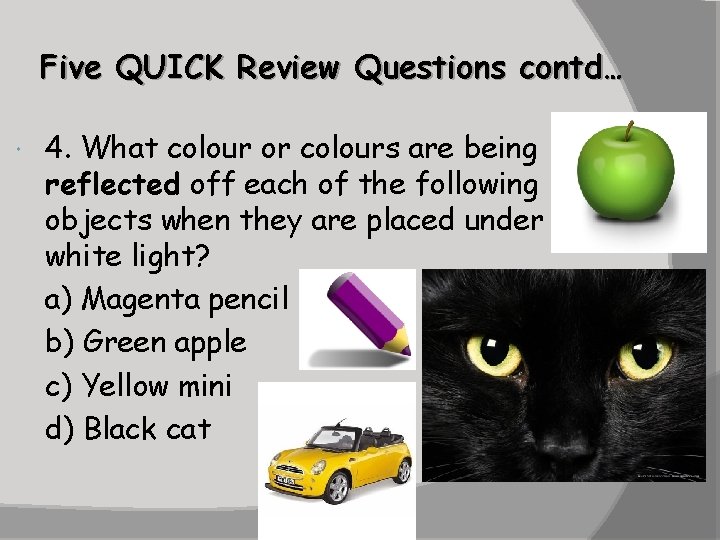
Five QUICK Review Questions contd… 4. What colour or colours are being reflected off each of the following objects when they are placed under white light? a) Magenta pencil b) Green apple c) Yellow mini d) Black cat
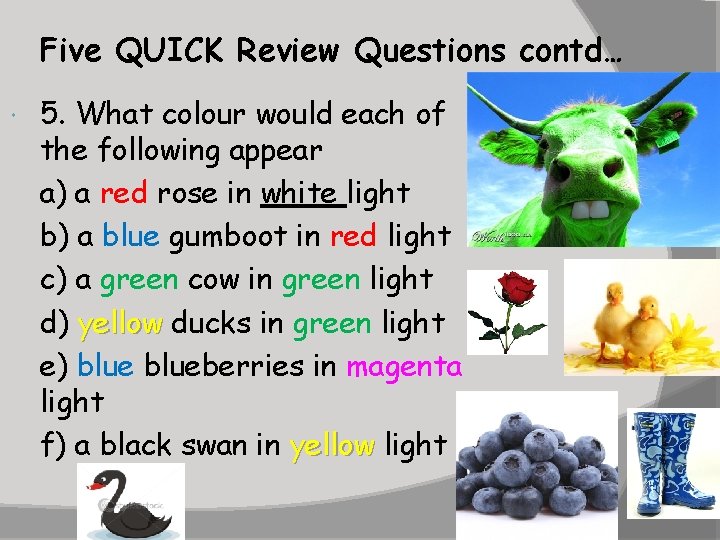
Five QUICK Review Questions contd… 5. What colour would each of the following appear a) a red rose in white light b) a blue gumboot in red light c) a green cow in green light d) yellow ducks in green light e) blueberries in magenta light f) a black swan in yellow light
Answers 1. Light travels at 300000 km every second. This is 8 times around the world. In 6 seconds it could travel 48 times around the world (6 x 8=48) 2. Reflection is the BOUNCING off of light but Refraction is the BENDING of light as it travels through different transparent (see through) mediums 3. Diamond is the NON luminous object. It is a very good reflector though: very sparkly 4. What colour or colours are being reflected off each of the following objects when they are placed under white light? a) Magenta pencil: BLUE AND RED b) Green apple: GREEN c) Yellow mini: RED AND GREEN d) Black cat: NO COLOURS- all absorbed
5. What colour would each of the following appear a) a red rose in white light: RED b) a blue gumboot in red light: BLACK c) a green cow in green light: GREEN d) yellow ducks in green light: GREEN e) blueberries in magenta light: BLUE f) a black swan in yellow light: BLACK
WORKSHEET ON SHADOWS Complete the worksheet on shadows then stick it into you workbooks
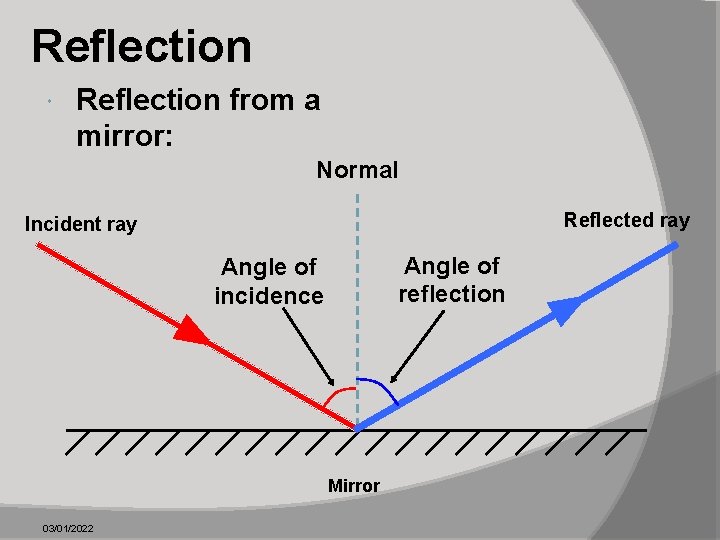
Reflection from a mirror: Normal Reflected ray Incident ray Angle of reflection Angle of incidence Mirror 03/01/2022
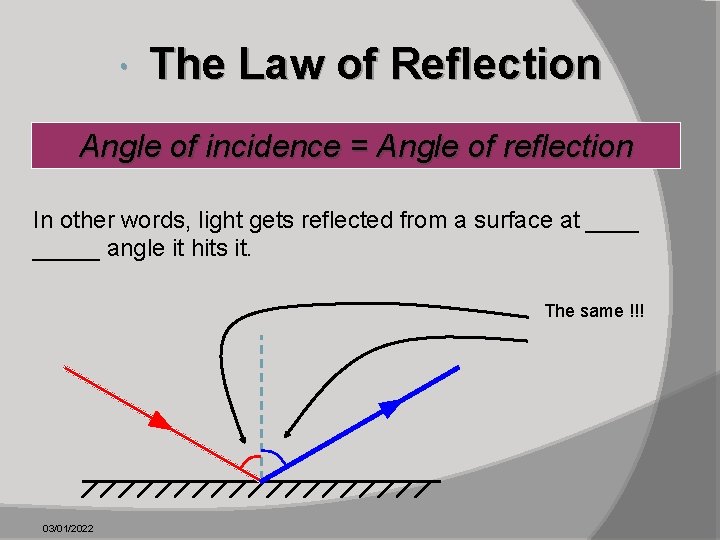
The Law of Reflection Angle of incidence = Angle of reflection In other words, light gets reflected from a surface at _____ angle it hits it. The same !!! 03/01/2022
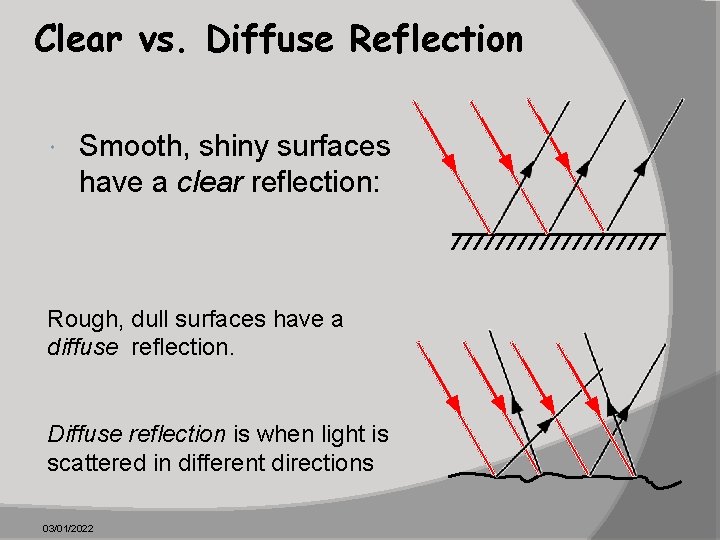
Clear vs. Diffuse Reflection Smooth, shiny surfaces have a clear reflection: Rough, dull surfaces have a diffuse reflection. Diffuse reflection is when light is scattered in different directions 03/01/2022
WORKSHEET 1. PUT YOUR NAME AT THE TOP 2. Complete the questions using your notes UP TO THE YELLOW HIGHLIGHTED QUESTION on page two
HOMEWORK! Hand to the front your light homework AND your eye diagram.
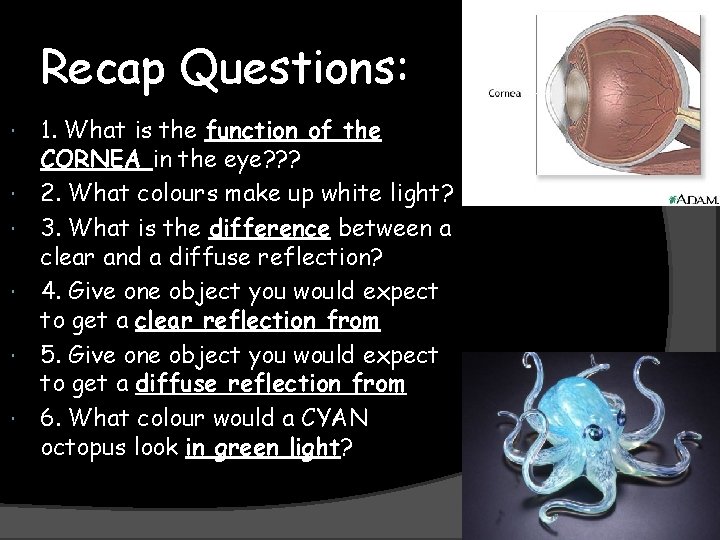
Recap Questions: 1. What is the function of the CORNEA in the eye? ? ? 2. What colours make up white light? 3. What is the difference between a clear and a diffuse reflection? 4. Give one object you would expect to get a clear reflection from 5. Give one object you would expect to get a diffuse reflection from 6. What colour would a CYAN octopus look in green light?
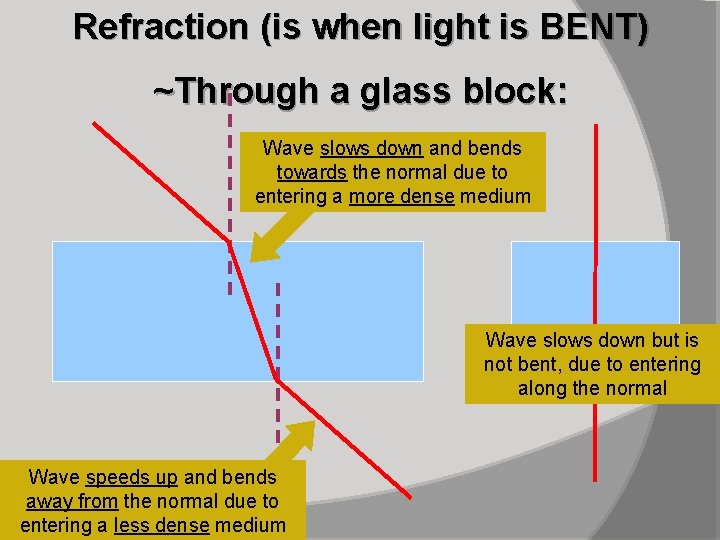
Refraction Ø Ø Ø When light travels from one transparent (see through) material to another it changes direction. We call this refraction. Refraction takes place because the speed of light is different in different materials. The ray of light bends more towards the normal in materials where it travels more slowly= more dense materials. Speed of light in; Air: 300 000 km/s Water: 225 000 km/s Diamond: 124 000 km/s Perspex: 201 000 km/s Glass: 197 000 km/s
Refraction (is when light is BENT) ~Through a glass block: Wave slows down and bends towards the normal due to entering a more dense medium Wave slows down but is not bent, due to entering along the normal Wave speeds up and bends away from the normal due to entering 03/01/2022 a less dense medium
03/01/2022
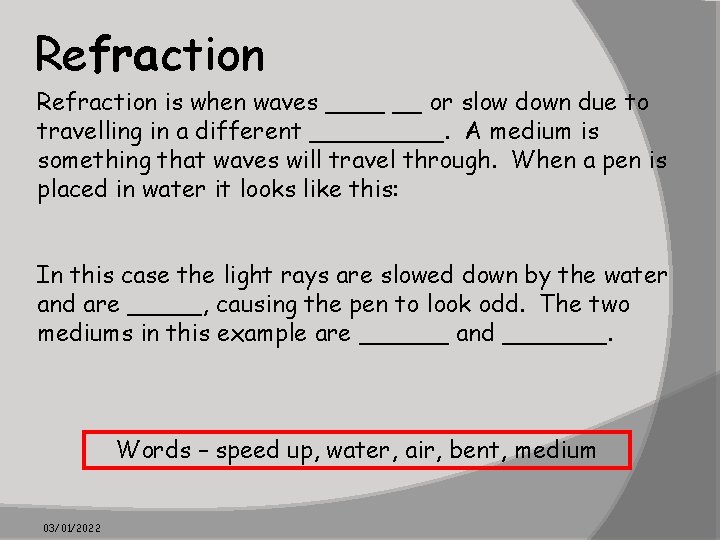
Refraction is when waves ____ __ or slow down due to travelling in a different _____. A medium is something that waves will travel through. When a pen is placed in water it looks like this: In this case the light rays are slowed down by the water and are _____, causing the pen to look odd. The two mediums in this example are ______ and _______. Words – speed up, water, air, bent, medium 03/01/2022
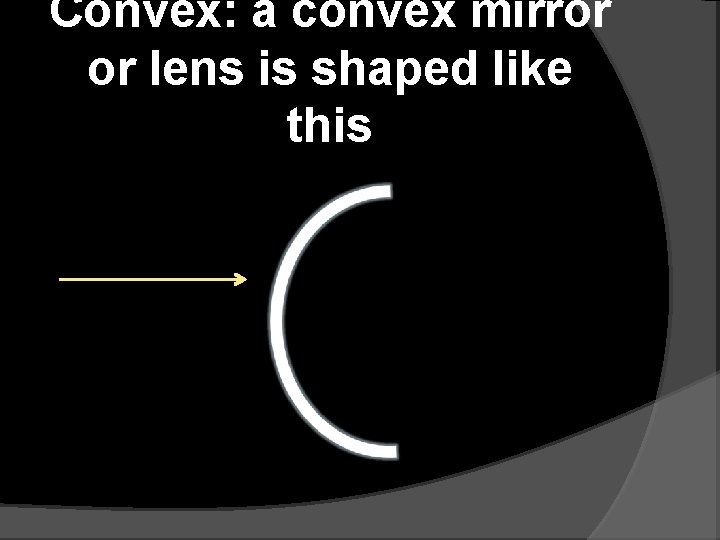
Convex: a convex mirror or lens is shaped like this
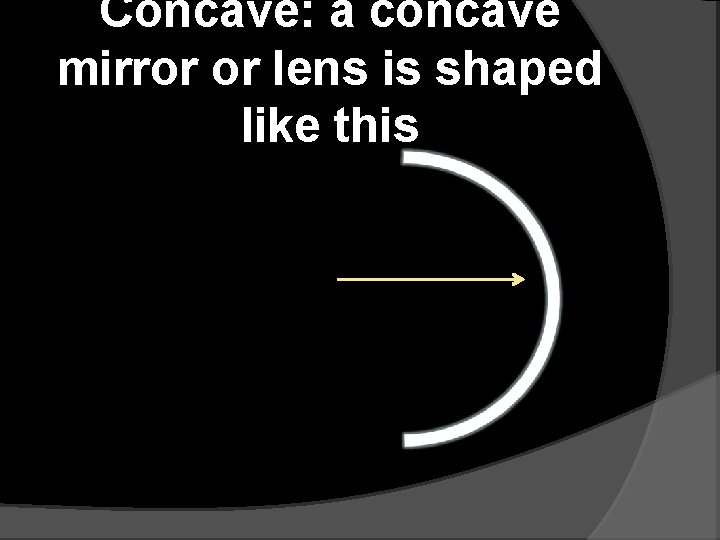
Concave: a concave mirror or lens is shaped like this
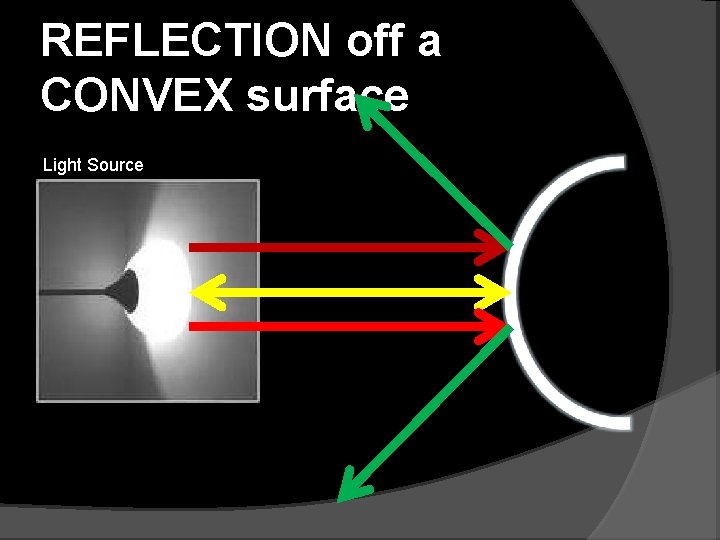
REFLECTION off a CONVEX surface Light Source
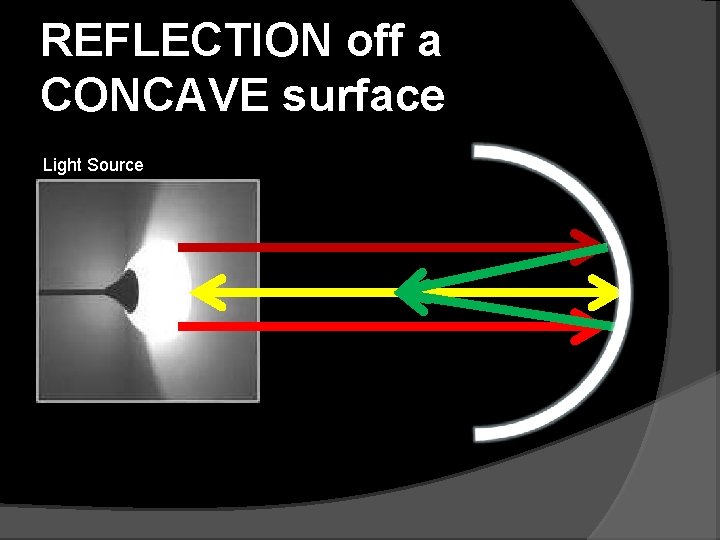
REFLECTION off a CONCAVE surface Light Source
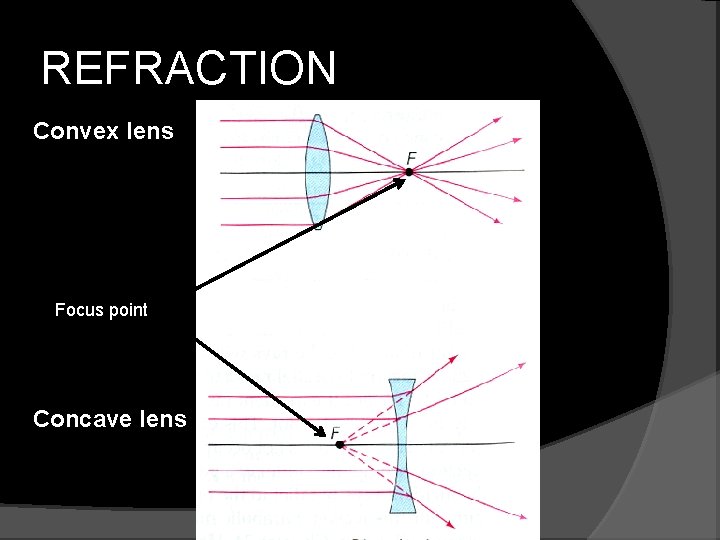
REFRACTION Convex lens Focus point Concave lens
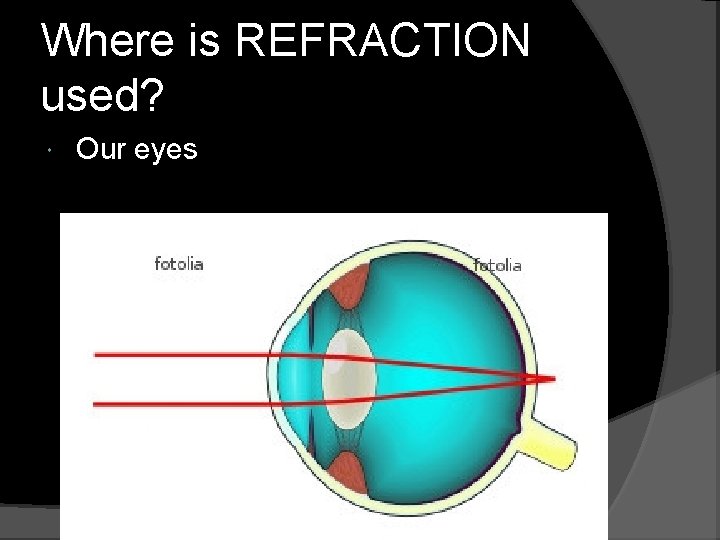
Where is REFRACTION used? Our eyes
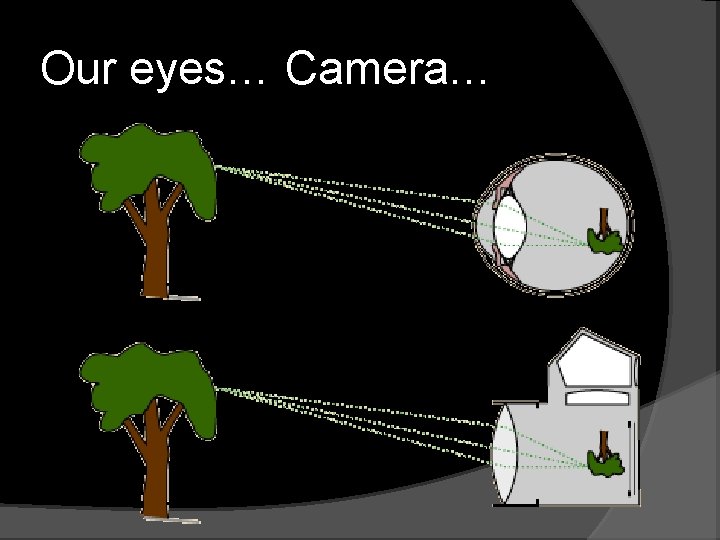
Our eyes… Camera…