
Light and Optical Systems Topic 2 Reflection Reflection
- Slides: 8
Light and Optical Systems Topic 2: Reflection
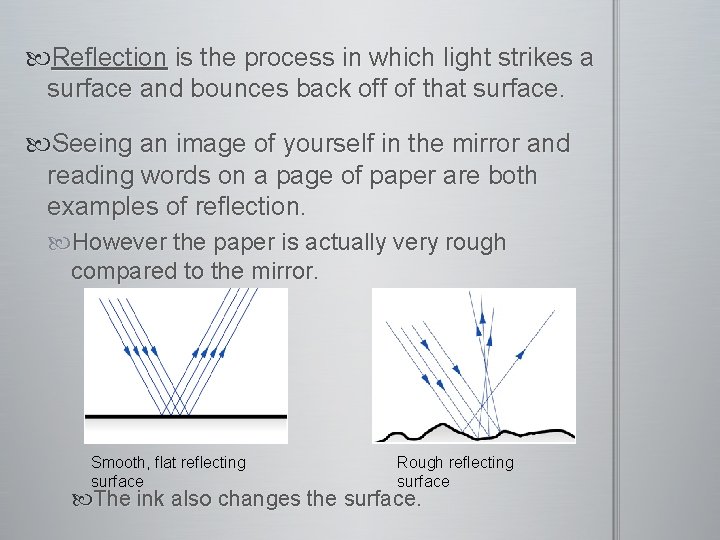
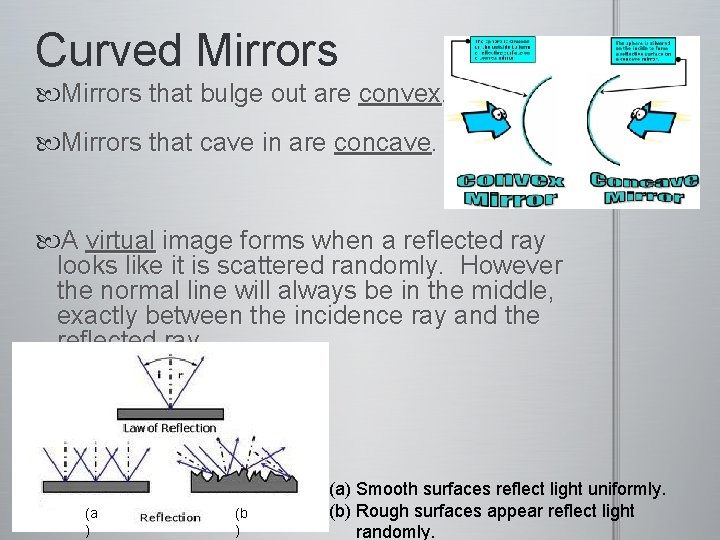
Reflection is the process in which light strikes a surface and bounces back off of that surface. Seeing an image of yourself in the mirror and reading words on a page of paper are both examples of reflection. However the paper is actually very rough compared to the mirror. Smooth, flat reflecting surface Rough reflecting surface The ink also changes the surface.
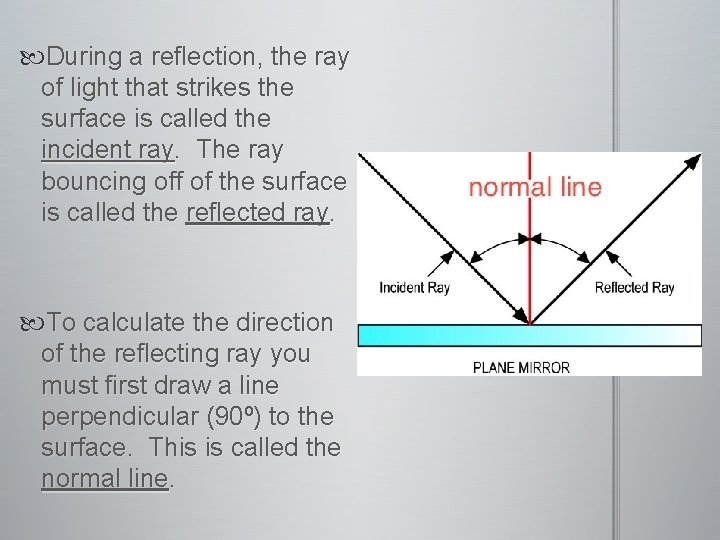
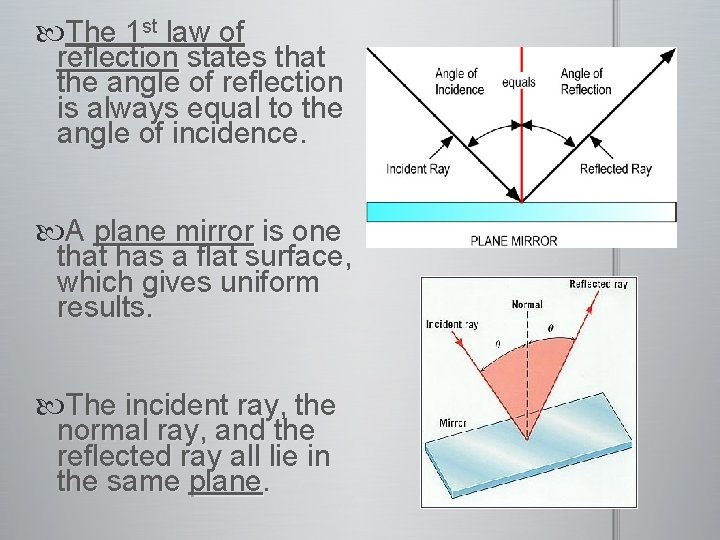
During a reflection, the ray of light that strikes the surface is called the incident ray. The ray bouncing off of the surface is called the reflected ray. To calculate the direction of the reflecting ray you must first draw a line perpendicular (90º) to the surface. This is called the normal line.
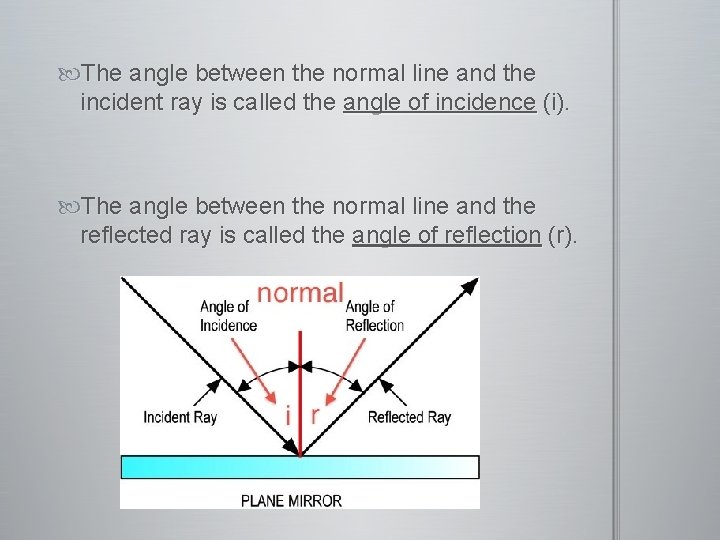
The angle between the normal line and the incident ray is called the angle of incidence (i). The angle between the normal line and the reflected ray is called the angle of reflection (r).
The 1 st law of reflection states that the angle of reflection is always equal to the angle of incidence. A plane mirror is one that has a flat surface, which gives uniform results. The incident ray, the normal ray, and the reflected ray all lie in the same plane.
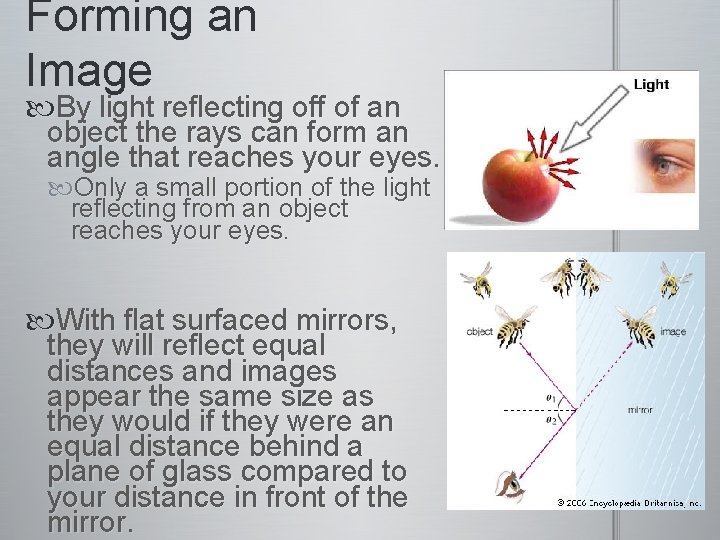
Forming an Image By light reflecting off of an object the rays can form an angle that reaches your eyes. Only a small portion of the light reflecting from an object reaches your eyes. With flat surfaced mirrors, they will reflect equal distances and images appear the same size as they would if they were an equal distance behind a plane of glass compared to your distance in front of the mirror.
Curved Mirrors that bulge out are convex. Mirrors that cave in are concave. A virtual image forms when a reflected ray looks like it is scattered randomly. However the normal line will always be in the middle, exactly between the incidence ray and the reflected ray. (a ) (b ) (a) Smooth surfaces reflect light uniformly. (b) Rough surfaces appear reflect light randomly.
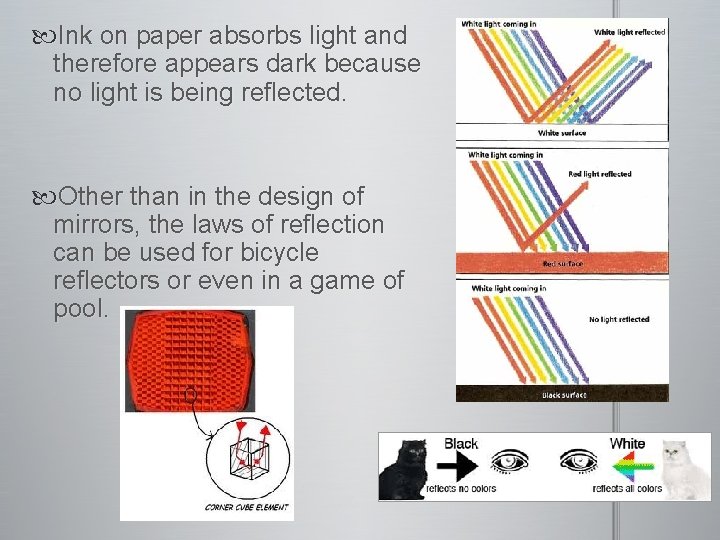
Ink on paper absorbs light and therefore appears dark because no light is being reflected. Other than in the design of mirrors, the laws of reflection can be used for bicycle reflectors or even in a game of pool.