
Light and heat different types of light bulbs

Light and heat (different types of light bulbs)
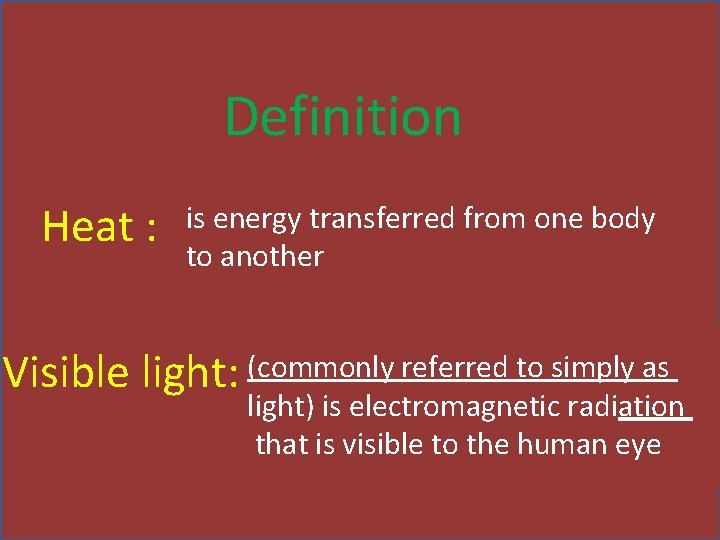
Definition Heat : is energy transferred from one body to another Visible light: (commonly referred to simply as light) is electromagnetic radiation that is visible to the human eye
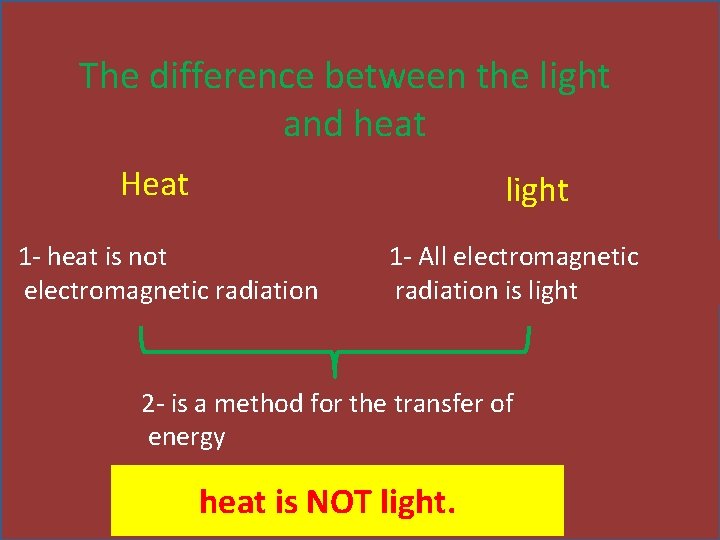
The difference between the light and heat Heat 1 - heat is not electromagnetic radiation light 1 - All electromagnetic radiation is light 2 - is a method for the transfer of energy heat is NOT light.

methods of energy transmission Heat Matter transfer Electromagne tic radiation
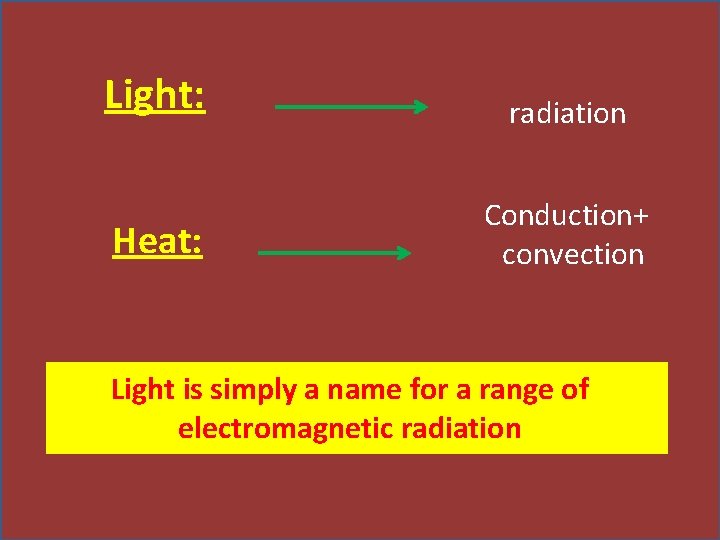
Light: radiation Heat: Conduction+ convection Light is simply a name for a range of electromagnetic radiation
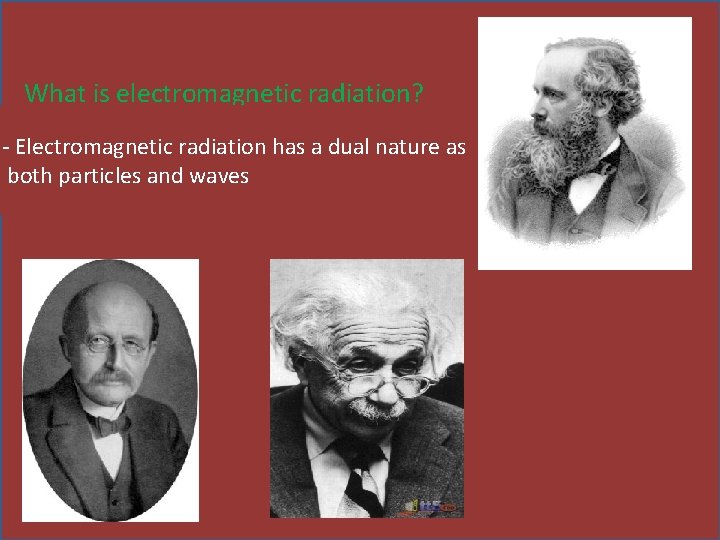
What is electromagnetic radiation? - Electromagnetic radiation has a dual nature as both particles and waves
How light is produced? All light comes from atoms, got the power, either by absorbing light from another source; either colliding with other particles. The corn that has gained this extra energy, called excited. They usually remain excited, for a short period, then landing, giving extra energy atom, or send a light, carrying excess energy. The amount of energy required to excite the atoms, and the amount of energy emitted in the form of light, depending on the atoms.

light bulbs produced by two methods: Thermal radiation of objects, by raising the body temperature so until it emits " visible" electromagnetic radiation Using other methods, such as what is happening in florescent bulbs, which produces ultraviolet in the beginning and then converted it to visible rays by using phosphorus

Low-Pressure Sodium Lamps Fluorescent High-Intensity Discharge Lamps Halogen Compact Fluorescent Lamps Incandescent Types of Light Bulbs and Their Uses:
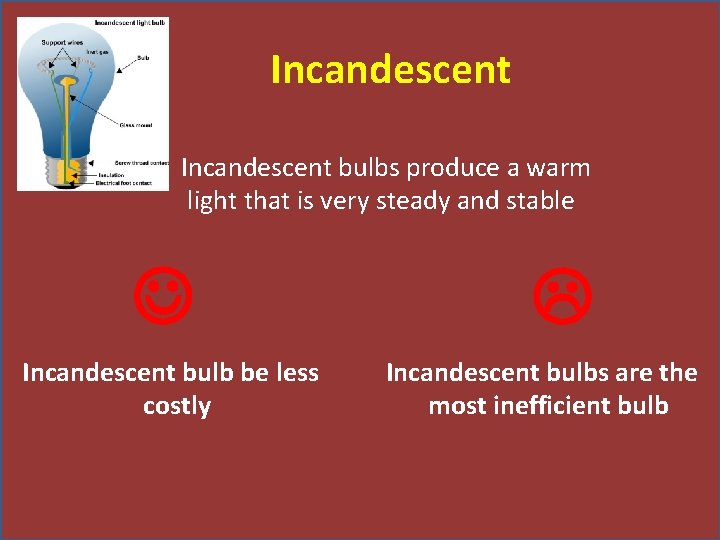
Incandescent bulbs produce a warm light that is very steady and stable Incandescent bulb be less costly Incandescent bulbs are the most inefficient bulb
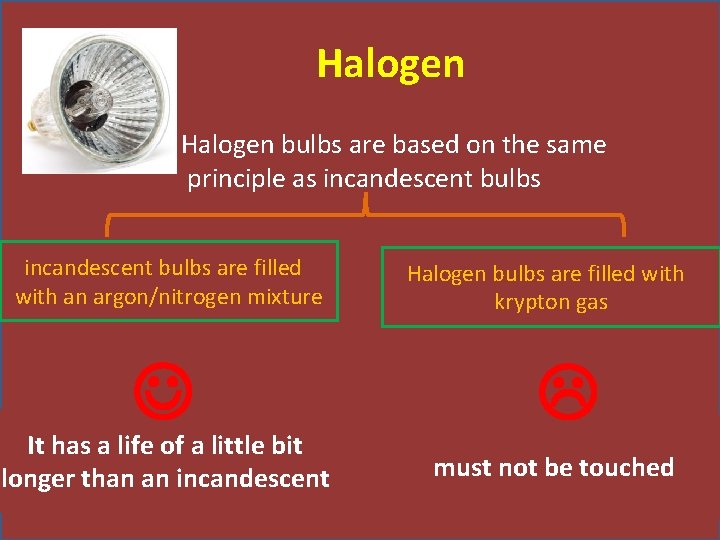
Halogen bulbs are based on the same principle as incandescent bulbs are filled with an argon/nitrogen mixture It has a life of a little bit longer than an incandescent Halogen bulbs are filled with krypton gas must not be touched
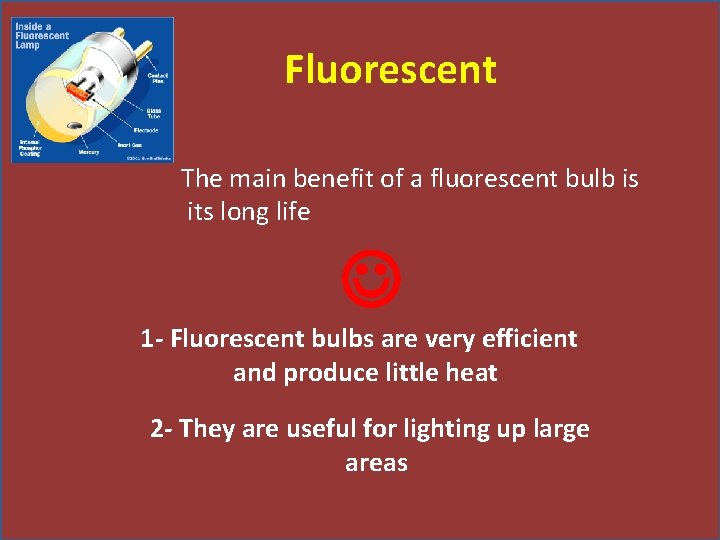
Fluorescent The main benefit of a fluorescent bulb is its long life 1 - Fluorescent bulbs are very efficient and produce little heat 2 - They are useful for lighting up large areas
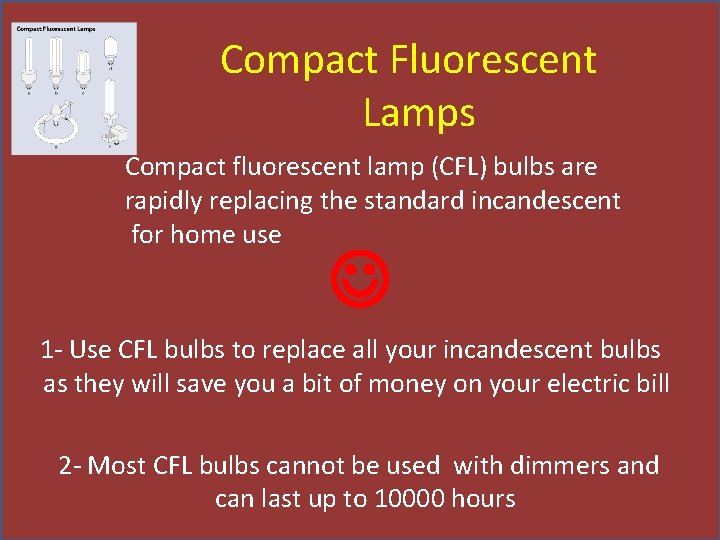
Compact Fluorescent Lamps Compact fluorescent lamp (CFL) bulbs are rapidly replacing the standard incandescent for home use 1 - Use CFL bulbs to replace all your incandescent bulbs as they will save you a bit of money on your electric bill 2 - Most CFL bulbs cannot be used with dimmers and can last up to 10000 hours
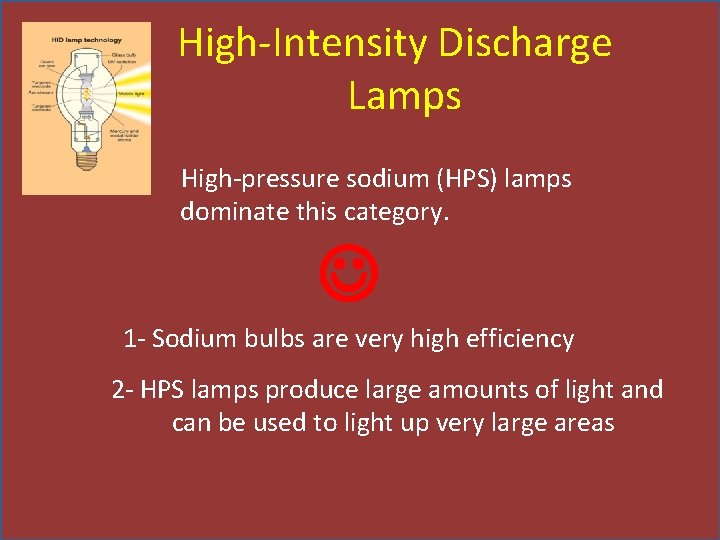
High-Intensity Discharge Lamps High-pressure sodium (HPS) lamps dominate this category. 1 - Sodium bulbs are very high efficiency 2 - HPS lamps produce large amounts of light and can be used to light up very large areas
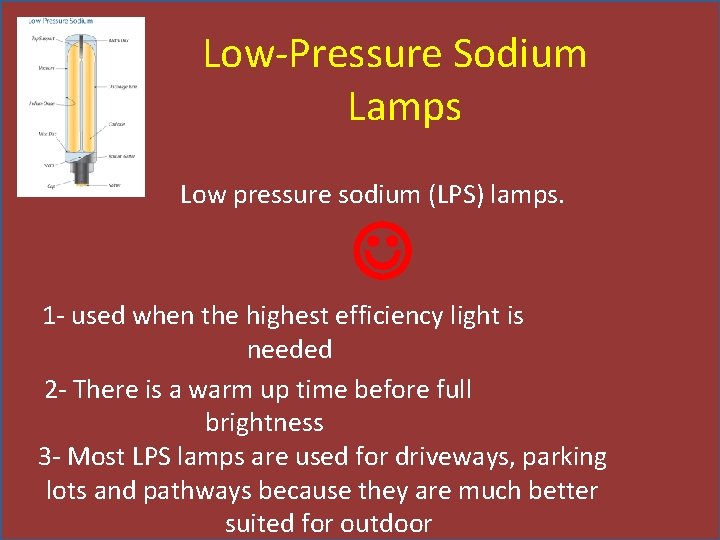
Low-Pressure Sodium Lamps Low pressure sodium (LPS) lamps. 1 - used when the highest efficiency light is needed 2 - There is a warm up time before full brightness 3 - Most LPS lamps are used for driveways, parking lots and pathways because they are much better suited for outdoor
- Slides: 16