
Light and Color Physical Science What do todays
- Slides: 24
Light and Color – Physical Science
What do today’s scientists think about light? • Light has a dual nature – it consists of particles (called photons) that travel as a type of electromagnetic wave.
The speed of light • In 1880, Michelson did an experiment to measure the speed of light. The value he came up with is very close to the accepted value that we use today.
Speed of Light, continued • We use the value of 300, 000 m/s for the speed of light in a vacuum. • 3 x 10⁸ m/s
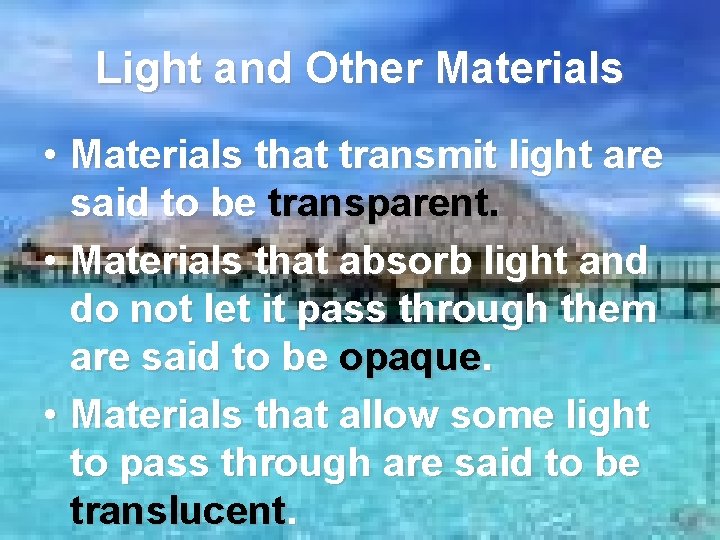
Light and Other Materials • Materials that transmit light are said to be transparent. • Materials that absorb light and do not let it pass through them are said to be opaque. • Materials that allow some light to pass through are said to be translucent.
Polarization of Light • Polarization– The aligning of vibrations in a transverse wave, usually by filtering out waves in other directions. • The best way to filter light with polarizing filters is to turn two filters at an angle that is 90 degrees to each other.
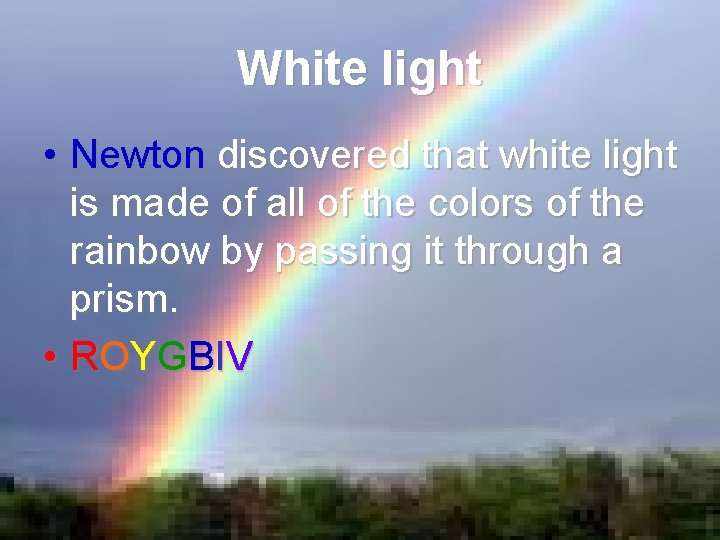
White light • Newton discovered that white light is made of all of the colors of the rainbow by passing it through a prism. • RO Y G B I V
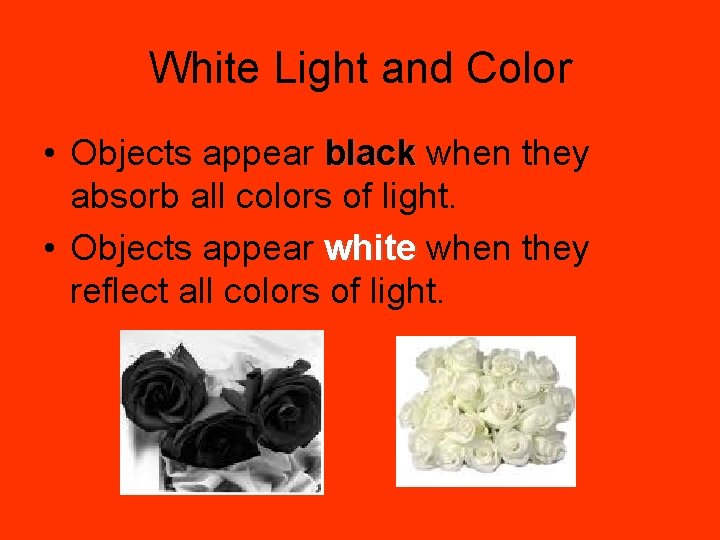
White Light and Color • Objects appear black when they absorb all colors of light. • Objects appear white when they reflect all colors of light.
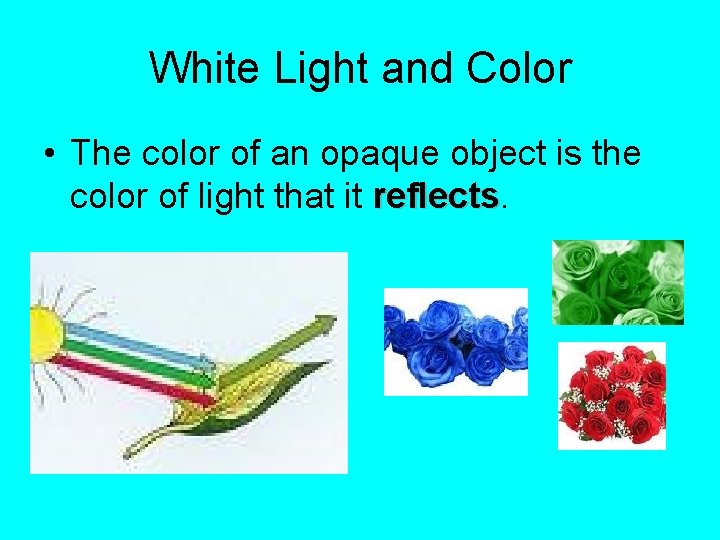
White Light and Color • The color of an opaque object is the color of light that it reflects
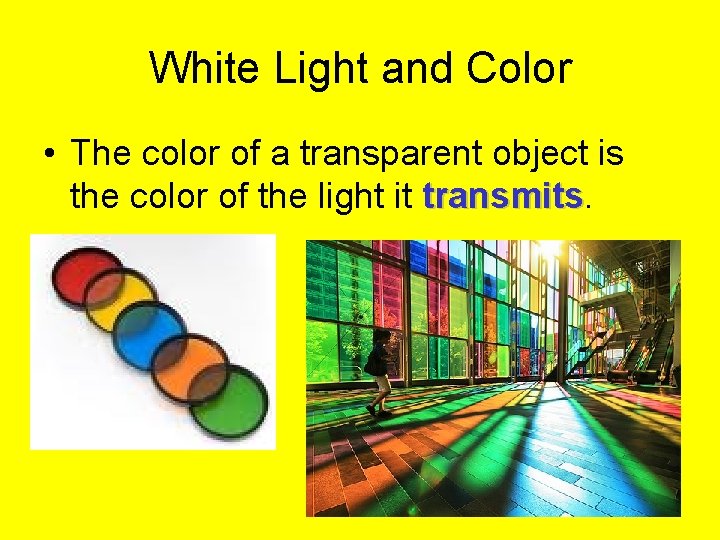
White Light and Color • The color of a transparent object is the color of the light it transmits
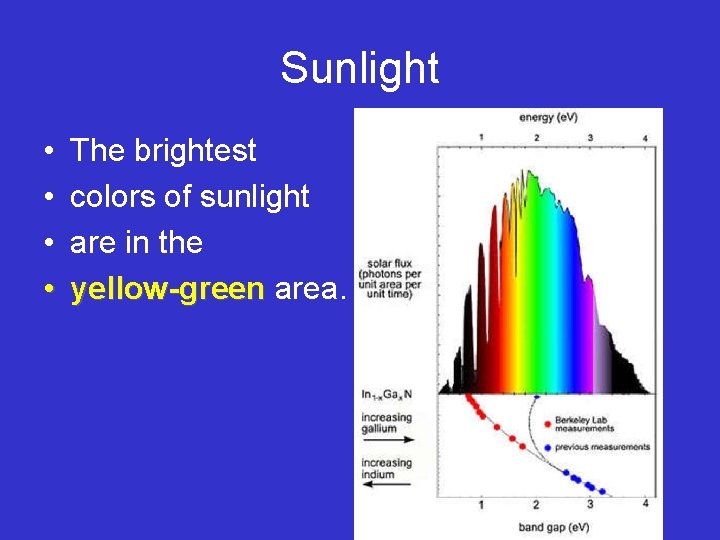
Sunlight • • The brightest colors of sunlight are in the yellow-green area.
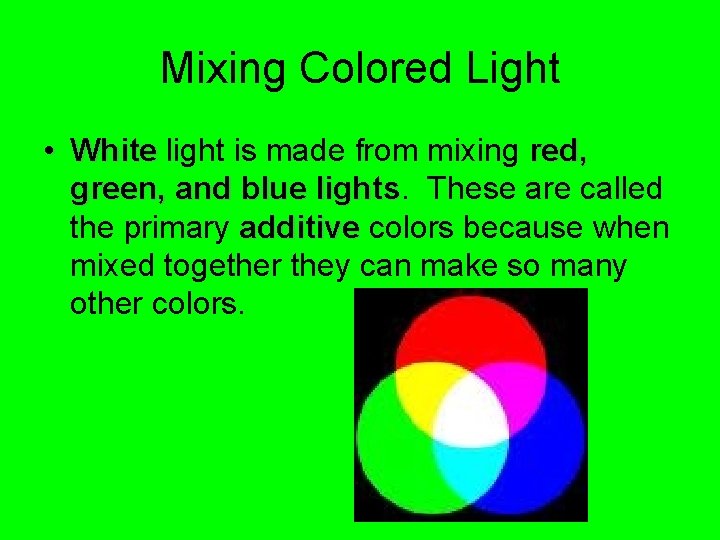
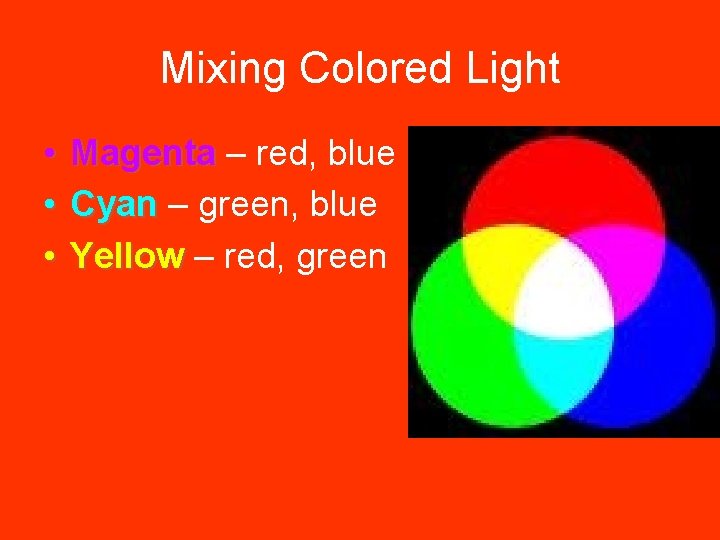
Mixing Colored Light • White light is made from mixing red, green, and blue lights These are called the primary additive colors because when mixed together they can make so many other colors.
Mixing Colored Light • Magenta – red, blue • Cyan – green, blue • Yellow – red, green
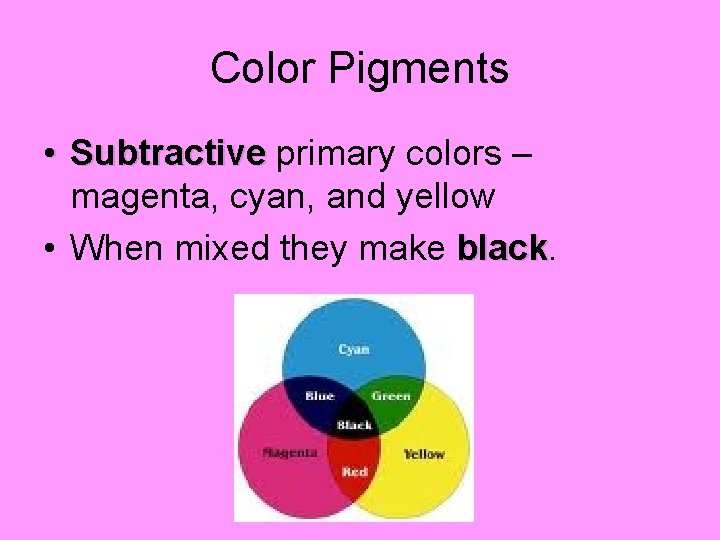
Color Pigments • Subtractive primary colors – magenta, cyan, and yellow • When mixed they make black
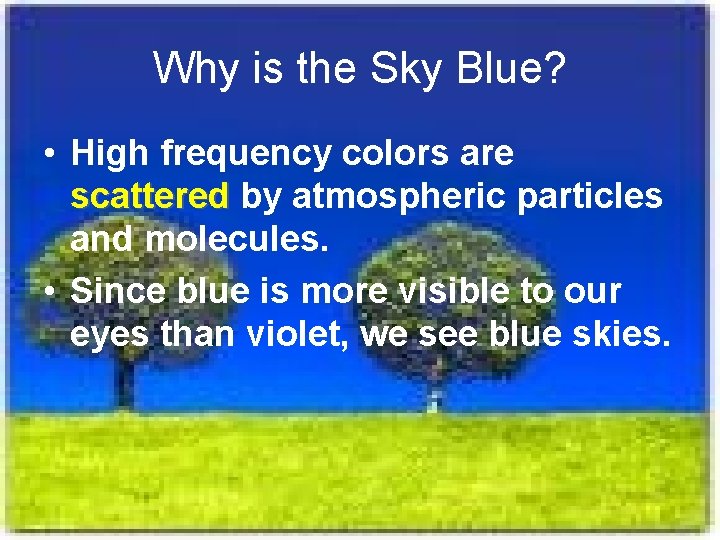
Why is the Sky Blue? • High frequency colors are scattered by atmospheric particles and molecules. • Since blue is more visible to our eyes than violet, we see blue skies.
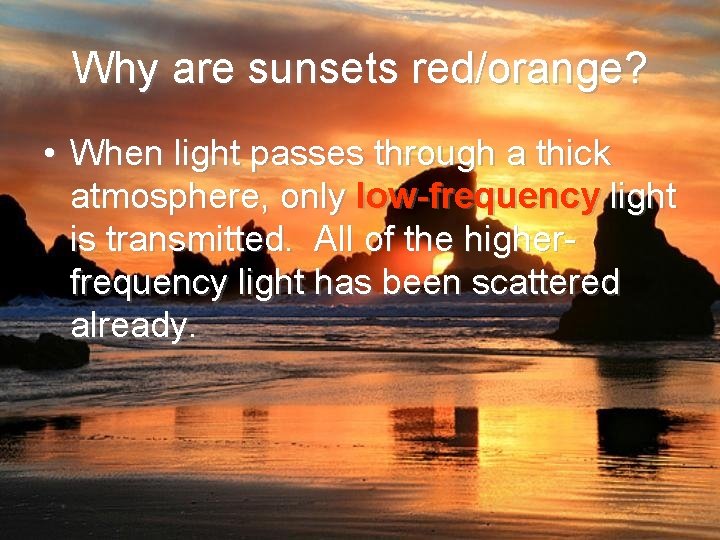
Why are sunsets red/orange? • When light passes through a thick atmosphere, only low-frequency light is transmitted. All of the higherfrequency light has been scattered already.
Why is the sea blue-green? • Water is blue-green because water molecules absorb red. When white light hits it, we see all that is left of the three primary colors. We see bluegreen.
Reflection of light (and other forms of electromagnetic radiation) occurs when the waves encounter a surface or other boundary that does not absorb the energy of the radiation and bounces the waves away from the surface.
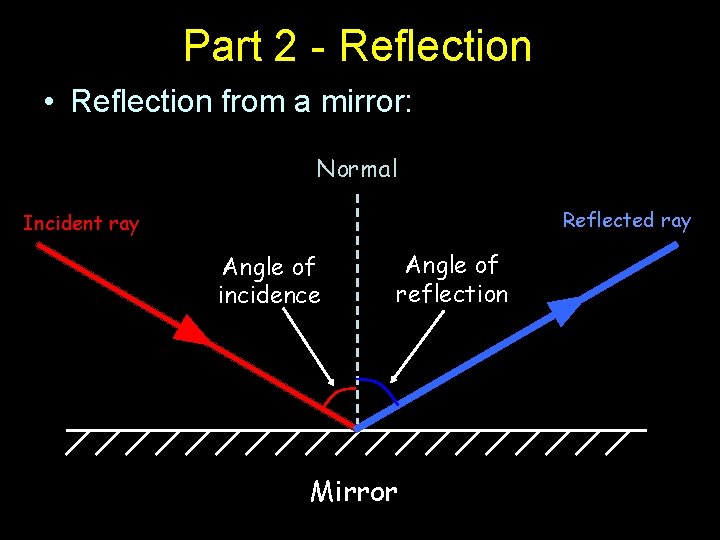
Part 2 - Reflection • Reflection from a mirror: Normal Reflected ray Incident ray Angle of incidence Angle of reflection Mirror
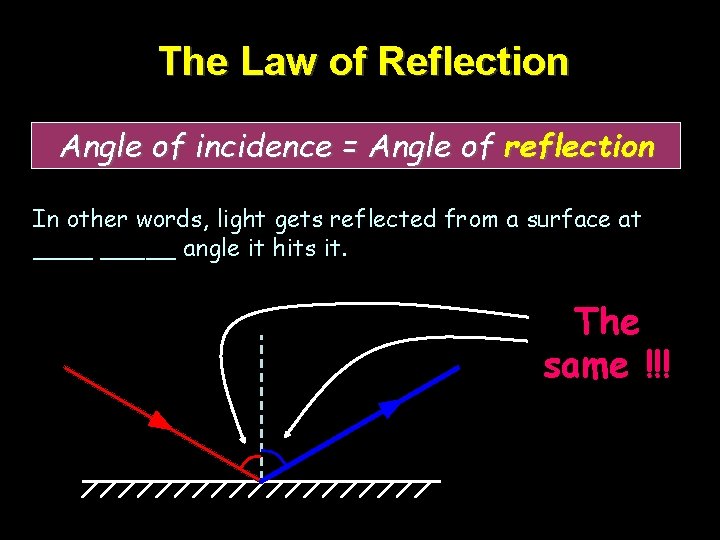
The Law of Reflection Angle of incidence = Angle of reflection In other words, light gets reflected from a surface at _____ angle it hits it. The same !!!
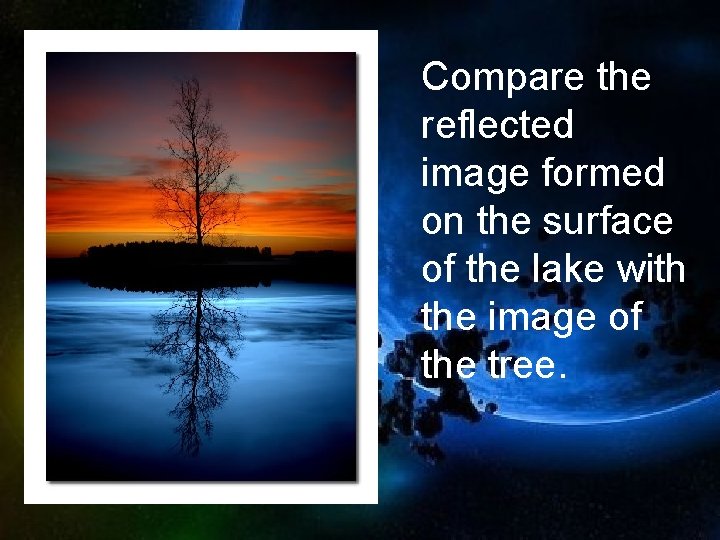
Compare the reflected image formed on the surface of the lake with the image of the tree.
Reflection in a Flat Mirror
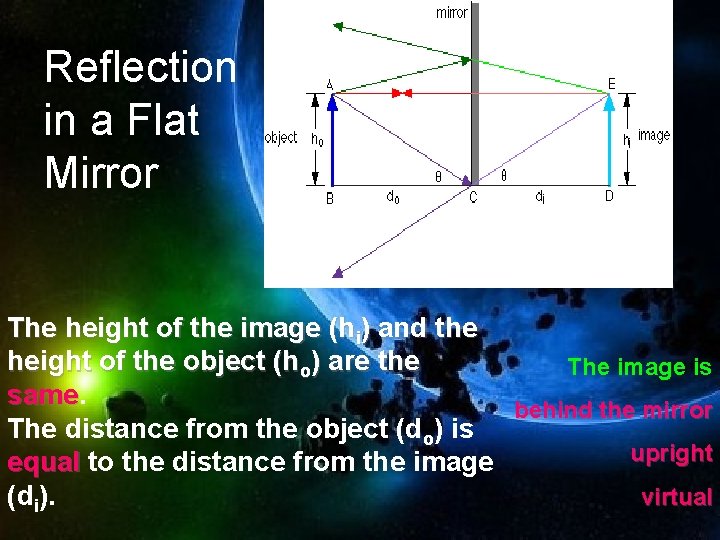
Reflection in a Flat Mirror The height of the image (hi) and the height of the object (ho) are the The image is same behind the mirror The distance from the object (do) is upright equal to the distance from the image virtual (di).
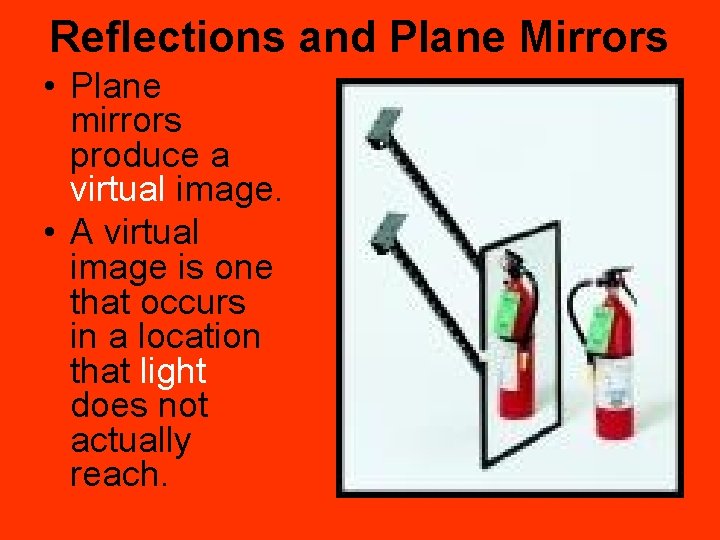
Reflections and Plane Mirrors • Plane mirrors produce a virtual image. • A virtual image is one that occurs in a location that light does not actually reach.