
Light and Color Computational Photography Derek Hoiem University

- Slides: 51
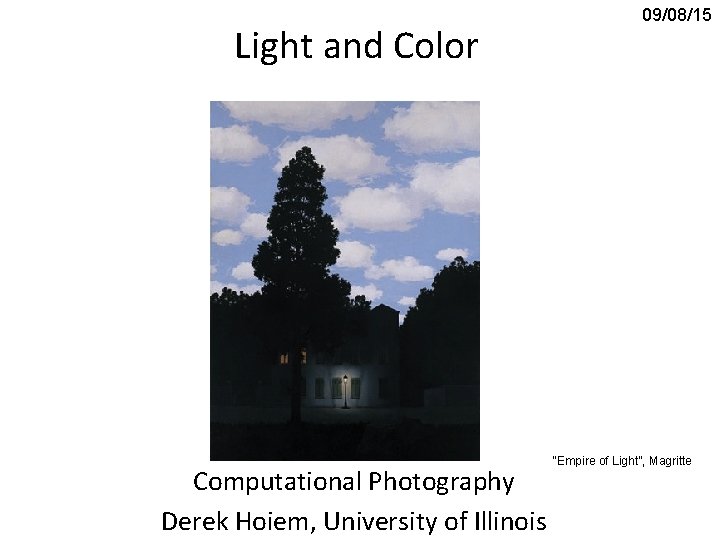
Light and Color Computational Photography Derek Hoiem, University of Illinois 09/08/15 “Empire of Light”, Magritte
Announcements • Project 1 due next Mon (9/14), 11: 59 pm – Choosing cutoff: sigma > 1 – Remember to convert images to double or single – Don’t use built-in code for pyramids, contrast equalization etc. , ask if not sure
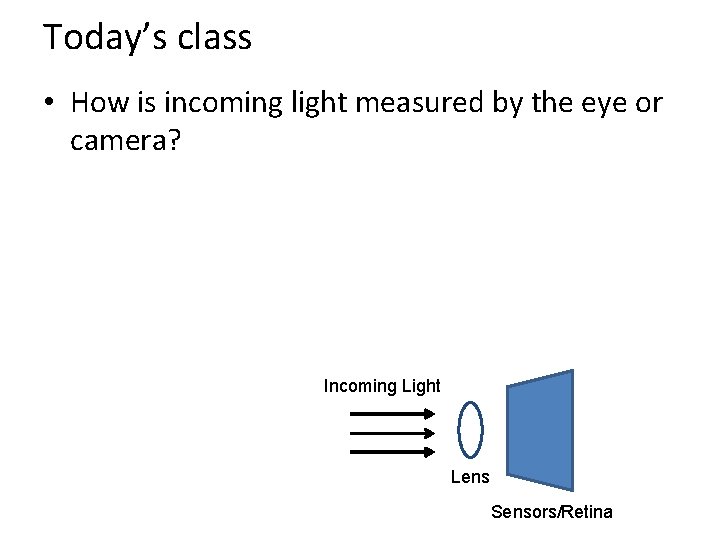
Today’s class • How is incoming light measured by the eye or camera? Incoming Light Lens Sensors/Retina
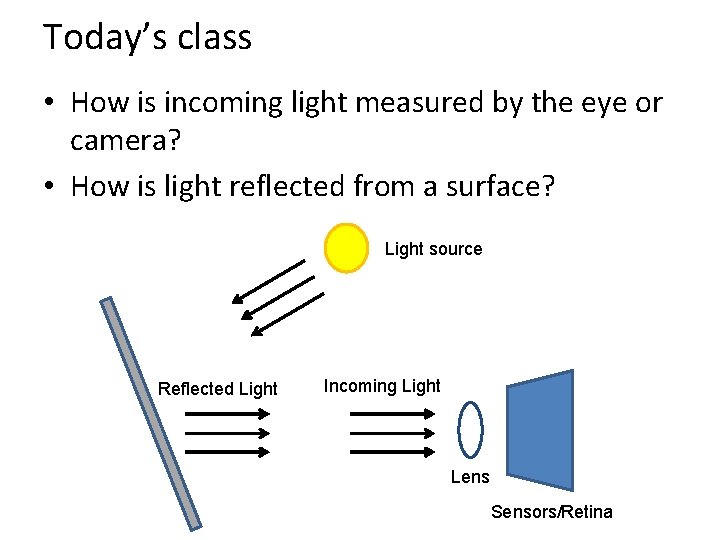
Today’s class • How is incoming light measured by the eye or camera? • How is light reflected from a surface? Light source Reflected Light Incoming Light Lens Sensors/Retina
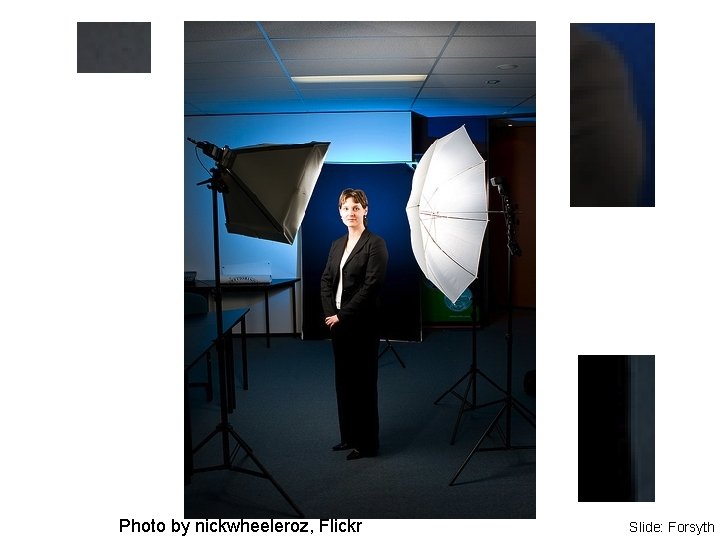
Photo by nickwheeleroz, Flickr Slide: Forsyth
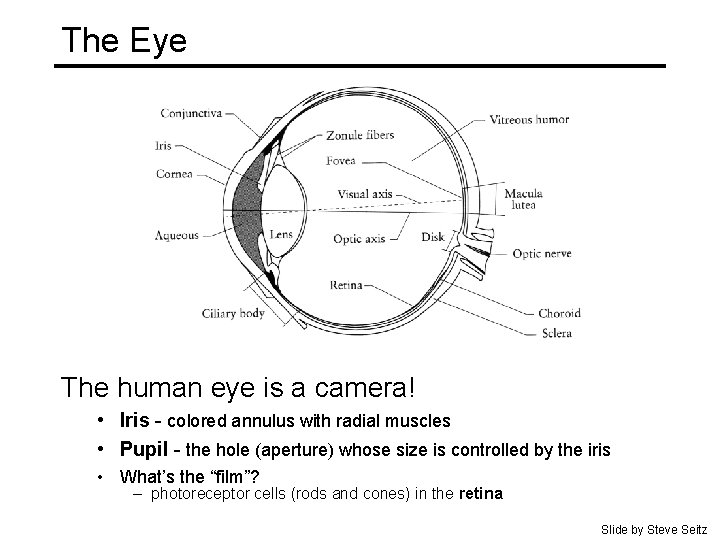
The Eye The human eye is a camera! • Iris - colored annulus with radial muscles • Pupil - the hole (aperture) whose size is controlled by the iris • What’s the “film”? – photoreceptor cells (rods and cones) in the retina Slide by Steve Seitz
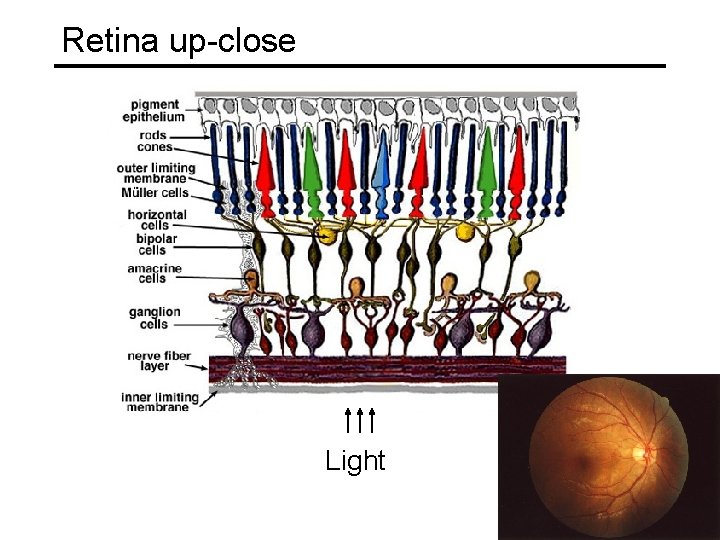
Retina up-close Light
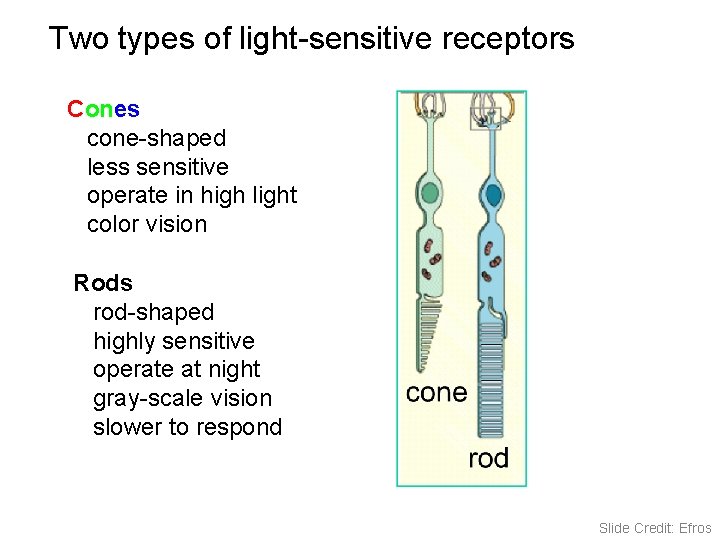
Two types of light-sensitive receptors Cones cone-shaped less sensitive operate in high light color vision Rods rod-shaped highly sensitive operate at night gray-scale vision slower to respond © Stephen E. Palmer, 2002 Slide Credit: Efros
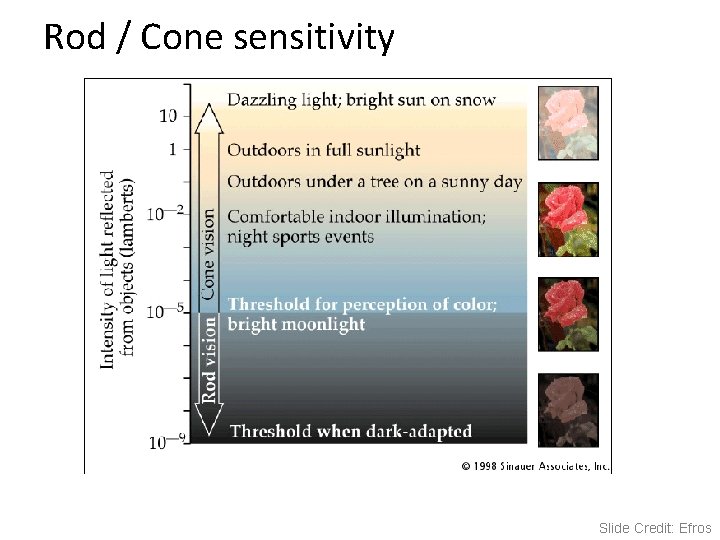
Rod / Cone sensitivity Slide Credit: Efros
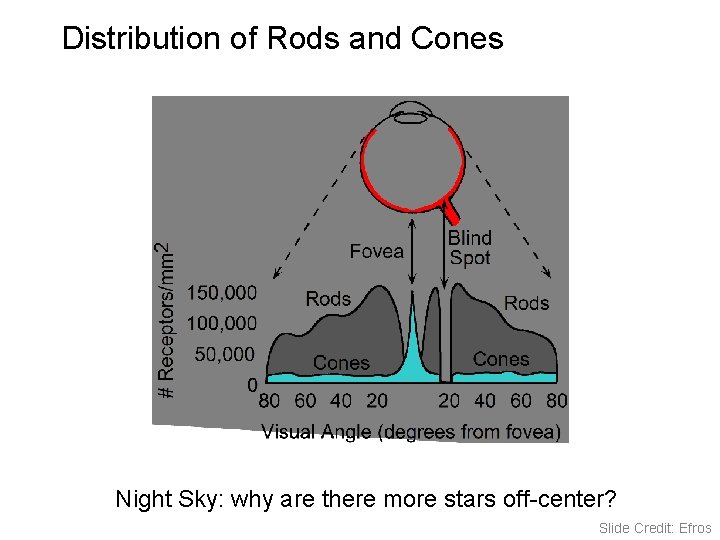
Distribution of Rods and Cones Night Sky: why are there more stars off-center? © Stephen E. Palmer, 2002 Slide Credit: Efros
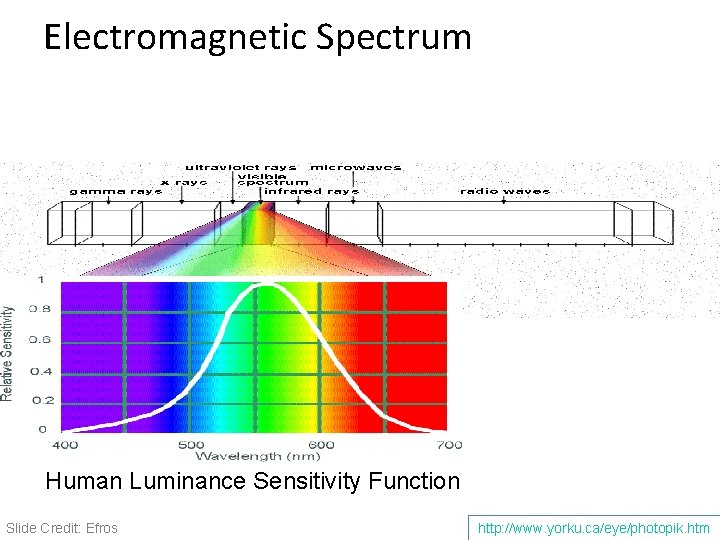
Electromagnetic Spectrum Human Luminance Sensitivity Function Slide Credit: Efros http: //www. yorku. ca/eye/photopik. htm
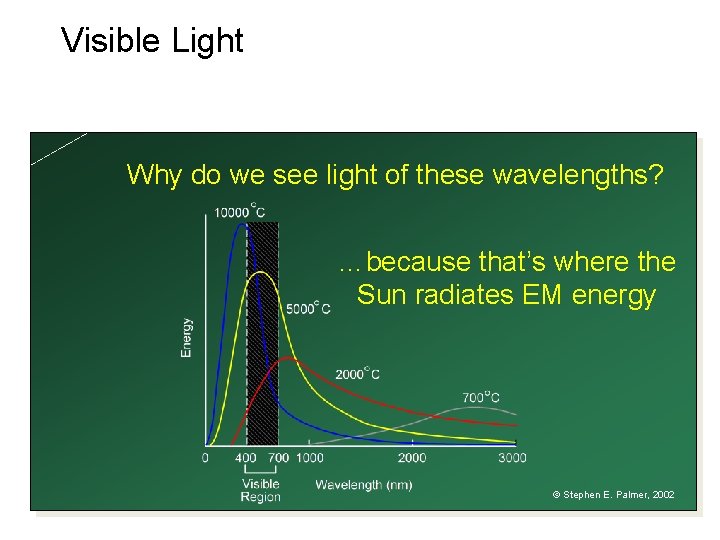
Visible Light Why do we see light of these wavelengths? …because that’s where the Sun radiates EM energy © Stephen E. Palmer, 2002
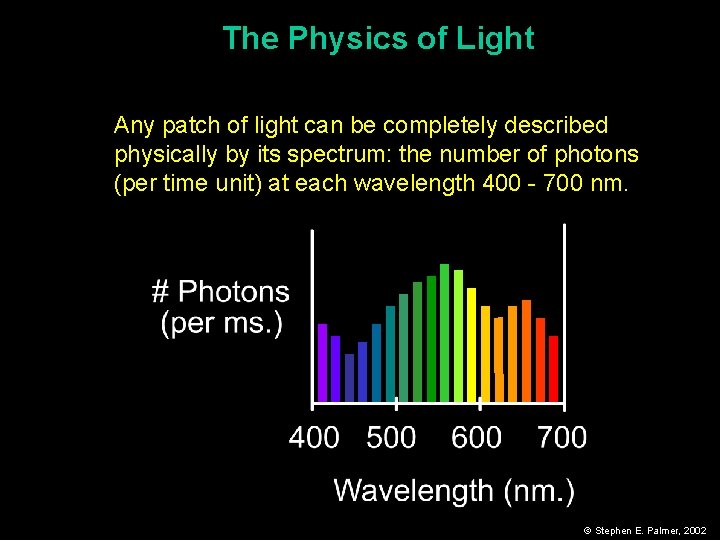
The Physics of Light Any patch of light can be completely described physically by its spectrum: the number of photons (per time unit) at each wavelength 400 - 700 nm. © Stephen E. Palmer, 2002
The Physics of Light Some examples of the spectra of light sources © Stephen E. Palmer, 2002
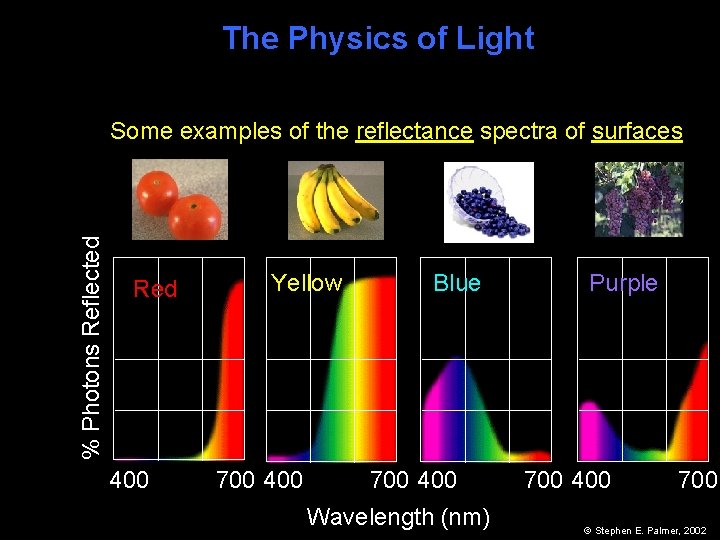
The Physics of Light % Photons Reflected Some examples of the reflectance spectra of surfaces Red Yellow Blue Purple 400 700 Wavelength (nm) © Stephen E. Palmer, 2002
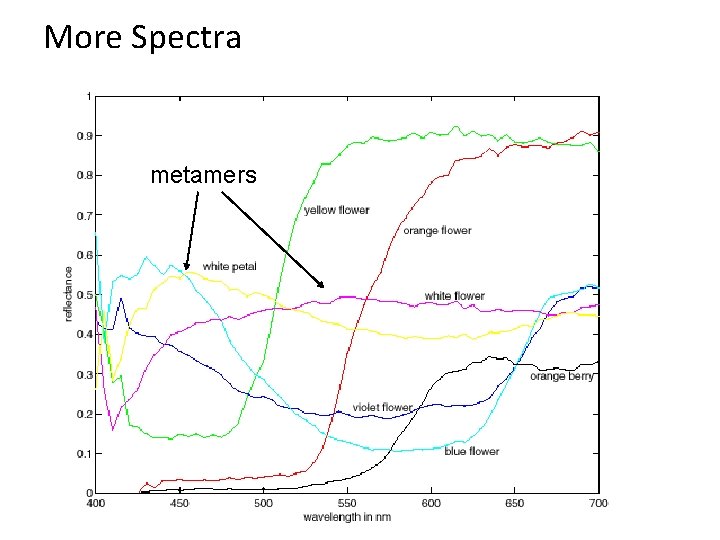
More Spectra metamers
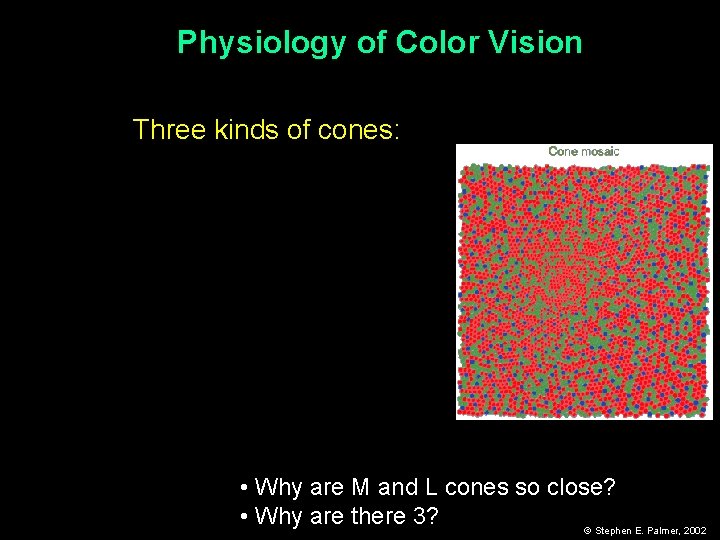
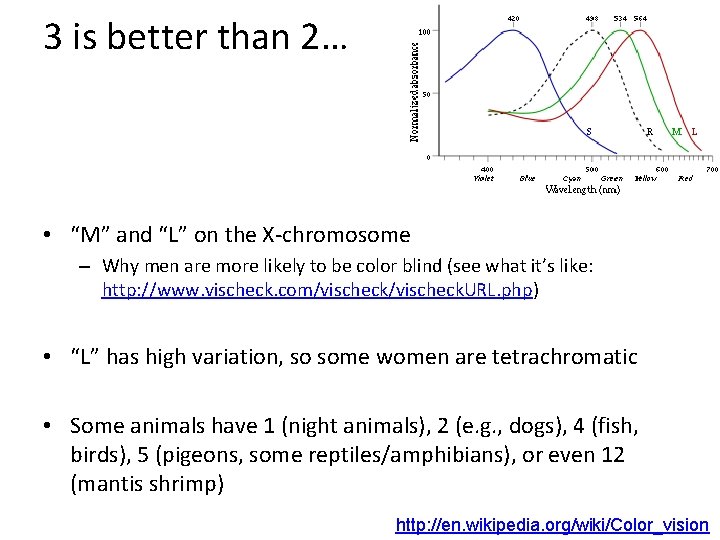
Physiology of Color Vision Three kinds of cones: • Why are M and L cones so close? • Why are there 3? © Stephen E. Palmer, 2002
3 is better than 2… • “M” and “L” on the X-chromosome – Why men are more likely to be color blind (see what it’s like: http: //www. vischeck. com/vischeck. URL. php) • “L” has high variation, so some women are tetrachromatic • Some animals have 1 (night animals), 2 (e. g. , dogs), 4 (fish, birds), 5 (pigeons, some reptiles/amphibians), or even 12 (mantis shrimp) http: //en. wikipedia. org/wiki/Color_vision
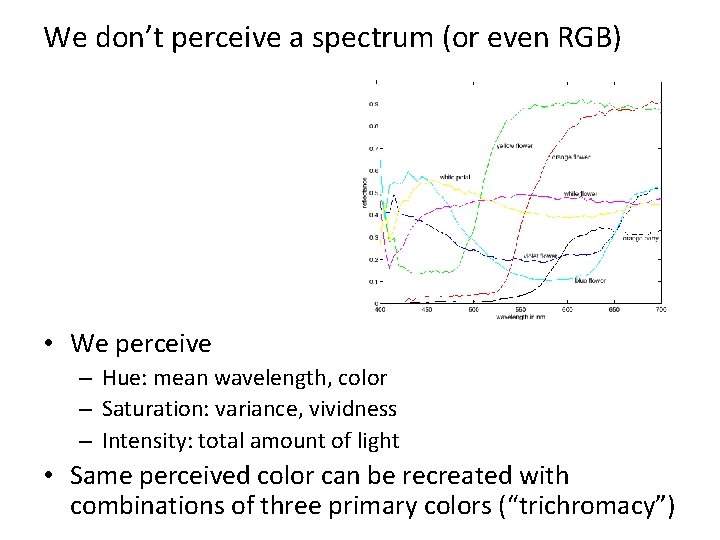
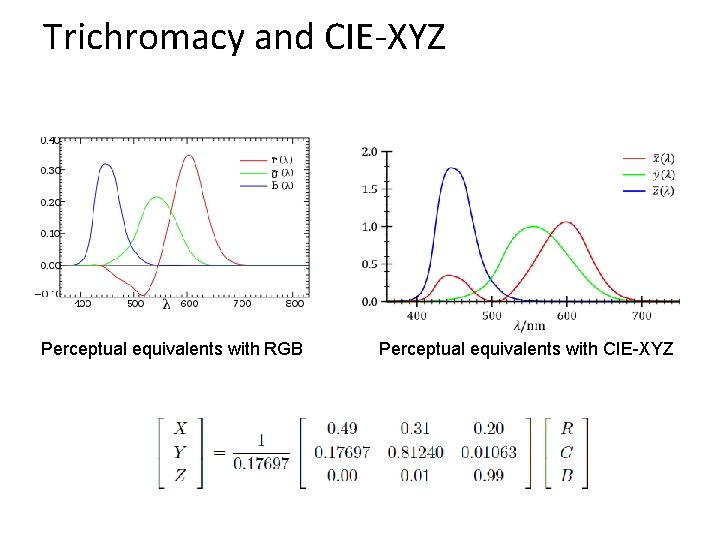
We don’t perceive a spectrum (or even RGB) • We perceive – Hue: mean wavelength, color – Saturation: variance, vividness – Intensity: total amount of light • Same perceived color can be recreated with combinations of three primary colors (“trichromacy”)
Trichromacy and CIE-XYZ Perceptual equivalents with RGB Perceptual equivalents with CIE-XYZ
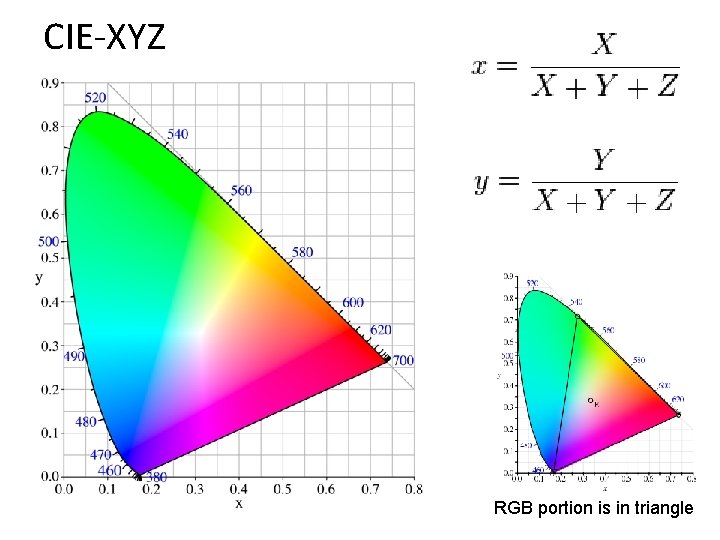
CIE-XYZ RGB portion is in triangle
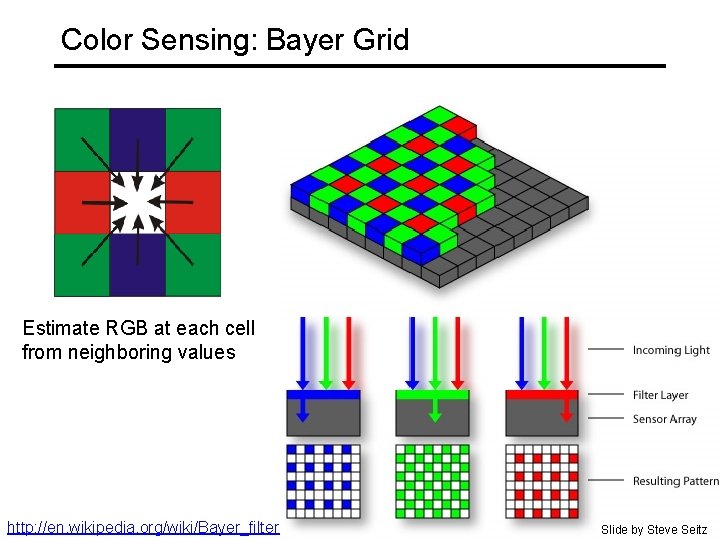
Color Sensing: Bayer Grid Estimate RGB at each cell from neighboring values http: //en. wikipedia. org/wiki/Bayer_filter Slide by Steve Seitz
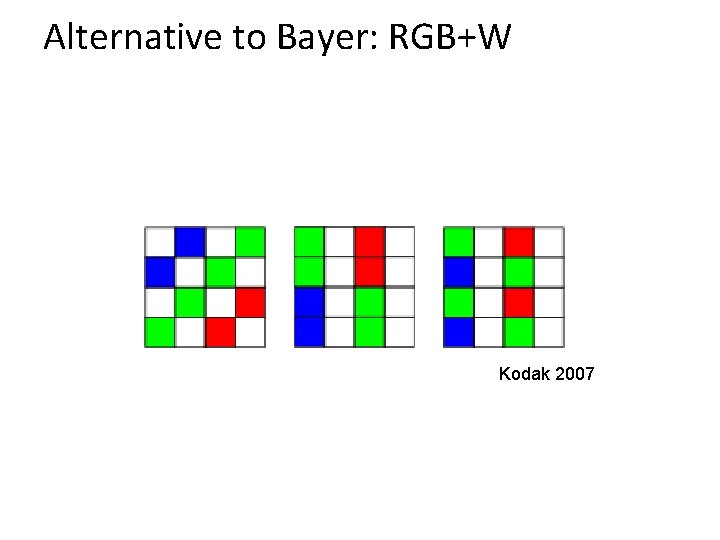
Alternative to Bayer: RGB+W Kodak 2007
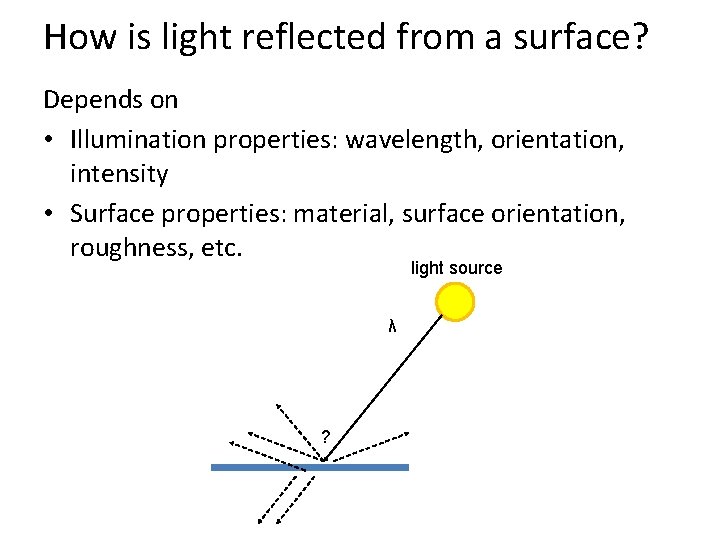
How is light reflected from a surface? Depends on • Illumination properties: wavelength, orientation, intensity • Surface properties: material, surface orientation, roughness, etc. light source λ ?
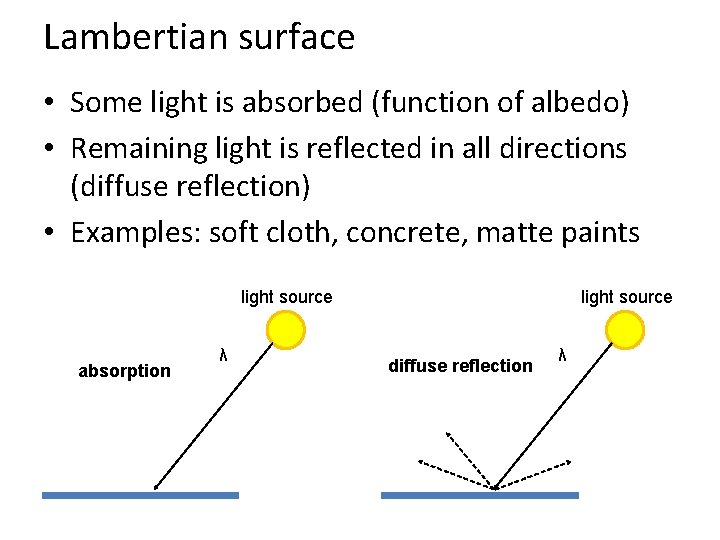
Lambertian surface • Some light is absorbed (function of albedo) • Remaining light is reflected in all directions (diffuse reflection) • Examples: soft cloth, concrete, matte paints light source absorption λ light source diffuse reflection λ
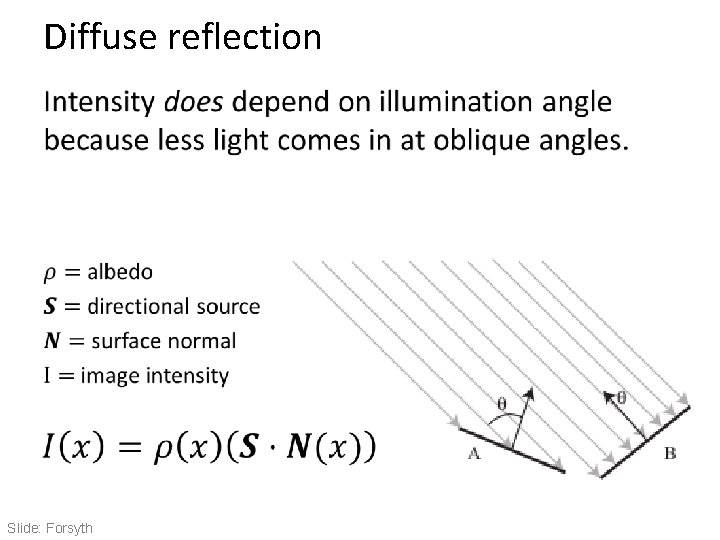
Diffuse reflection • Slide: Forsyth
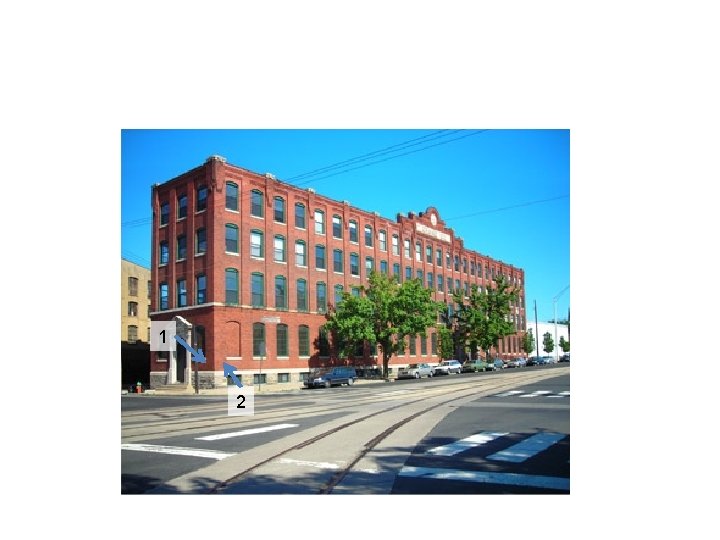
1 2
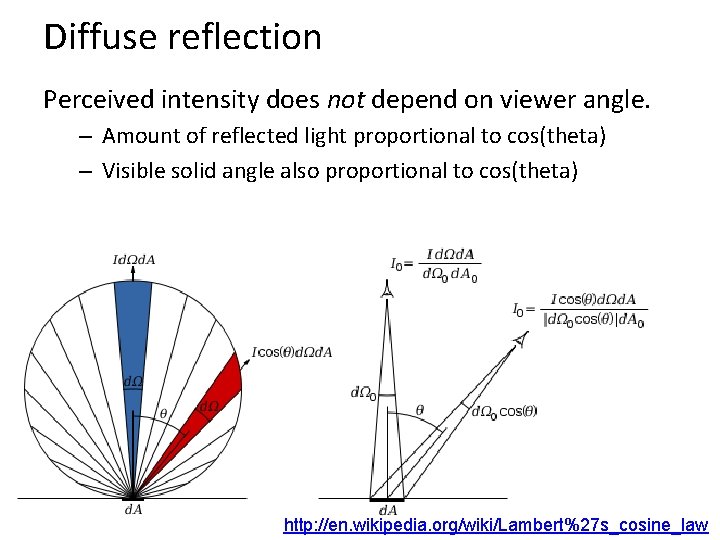
Diffuse reflection Perceived intensity does not depend on viewer angle. – Amount of reflected light proportional to cos(theta) – Visible solid angle also proportional to cos(theta) http: //en. wikipedia. org/wiki/Lambert%27 s_cosine_law
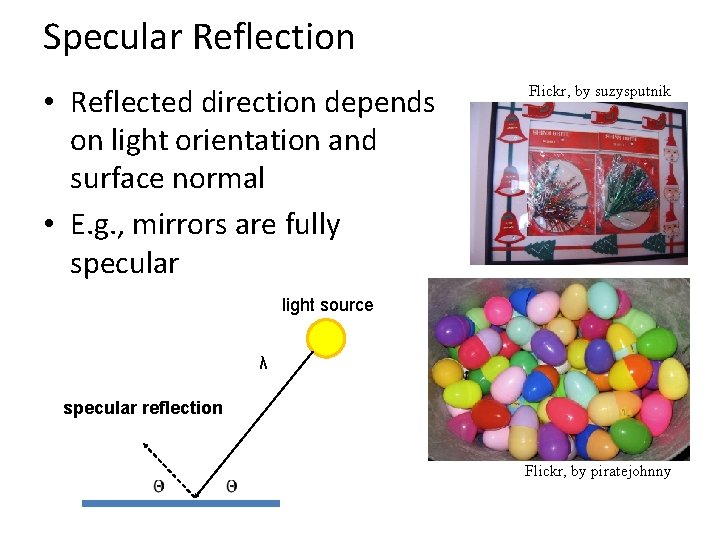
Specular Reflection • Reflected direction depends on light orientation and surface normal • E. g. , mirrors are fully specular Flickr, by suzysputnik light source λ specular reflection Flickr, by piratejohnny
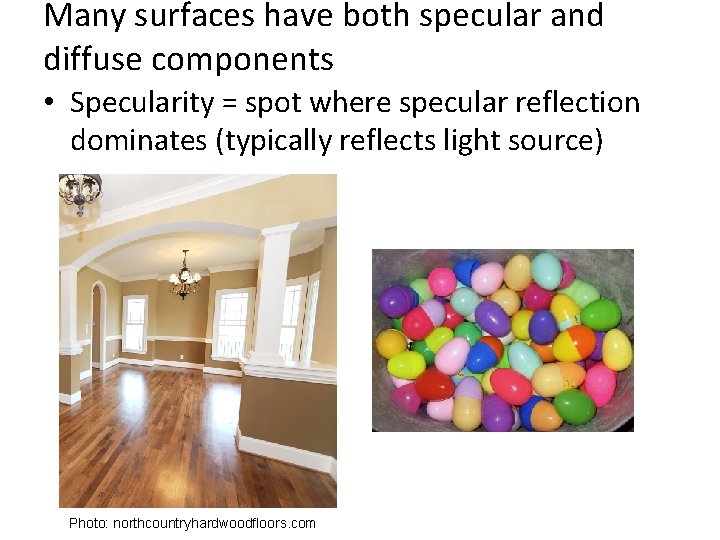
Many surfaces have both specular and diffuse components • Specularity = spot where specular reflection dominates (typically reflects light source) Photo: northcountryhardwoodfloors. com
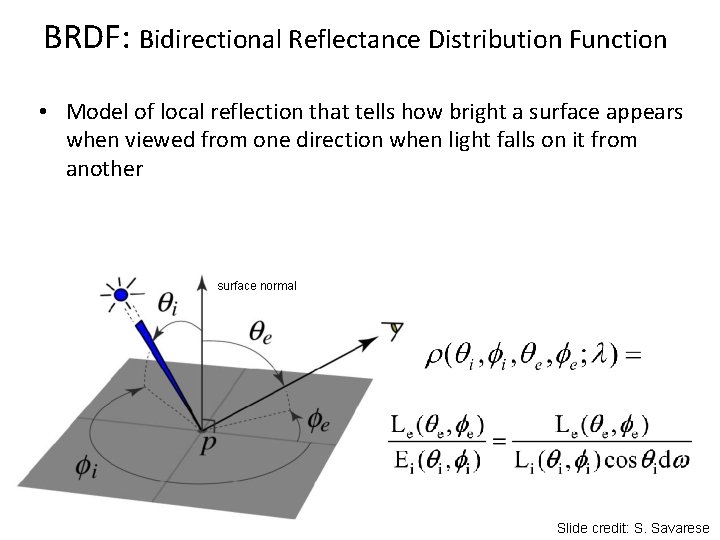
BRDF: Bidirectional Reflectance Distribution Function • Model of local reflection that tells how bright a surface appears when viewed from one direction when light falls on it from another surface normal Slide credit: S. Savarese
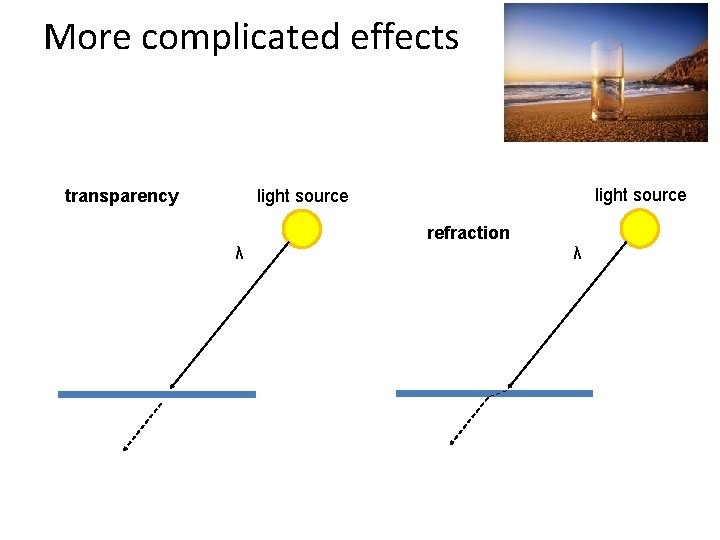
More complicated effects transparency light source refraction λ λ
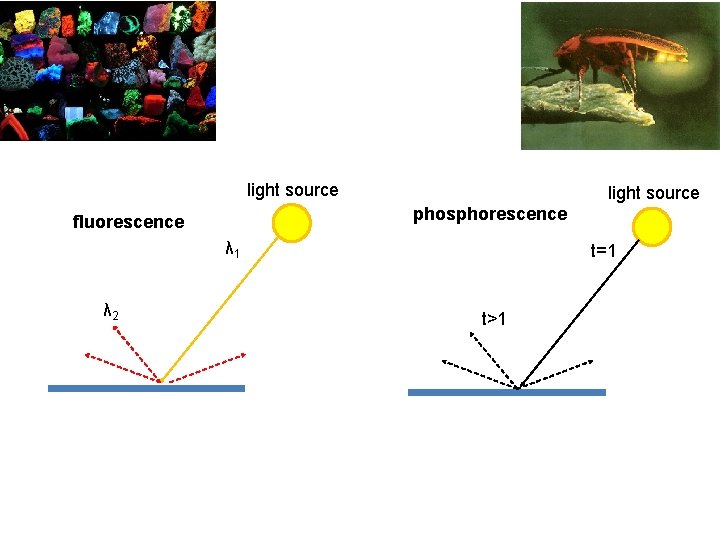
light source phosphorescence fluorescence λ 1 λ 2 t=1 t>1
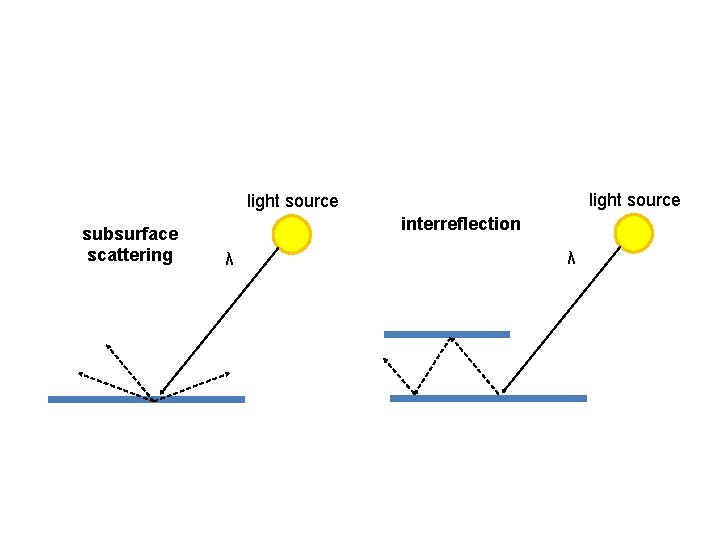
light source subsurface scattering interreflection λ λ
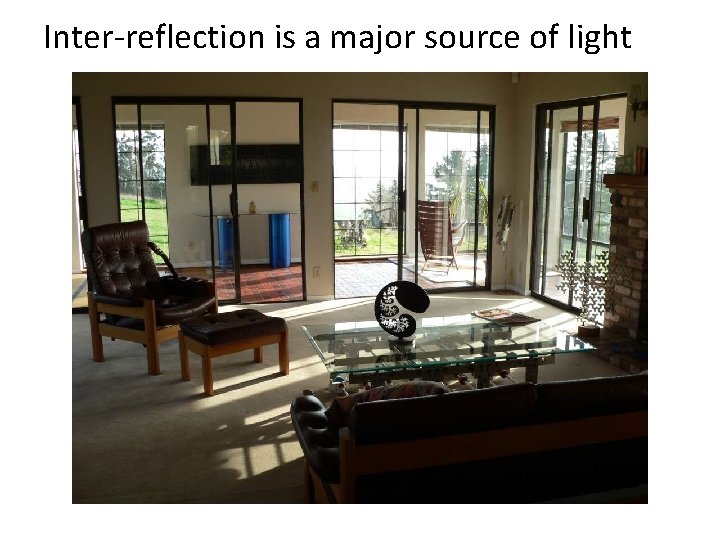
Inter-reflection is a major source of light
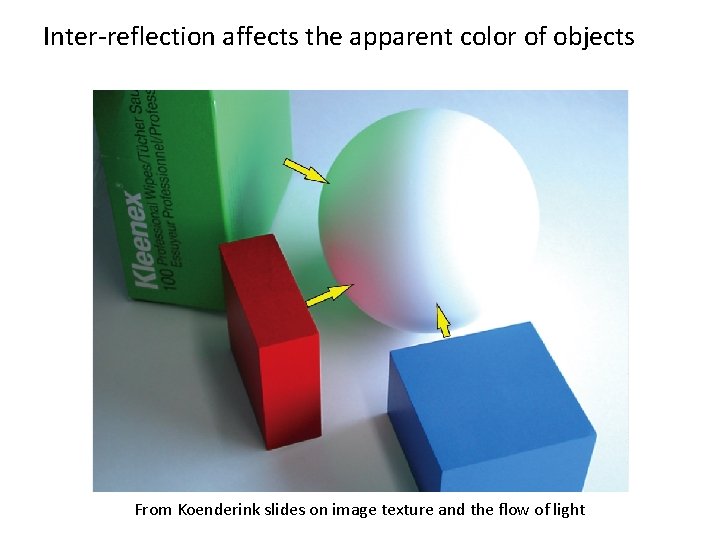
Inter-reflection affects the apparent color of objects From Koenderink slides on image texture and the flow of light
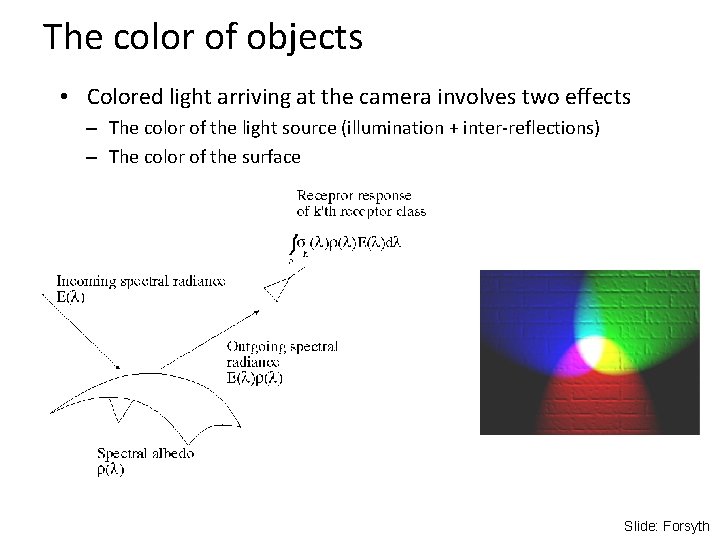
The color of objects • Colored light arriving at the camera involves two effects – The color of the light source (illumination + inter-reflections) – The color of the surface Slide: Forsyth
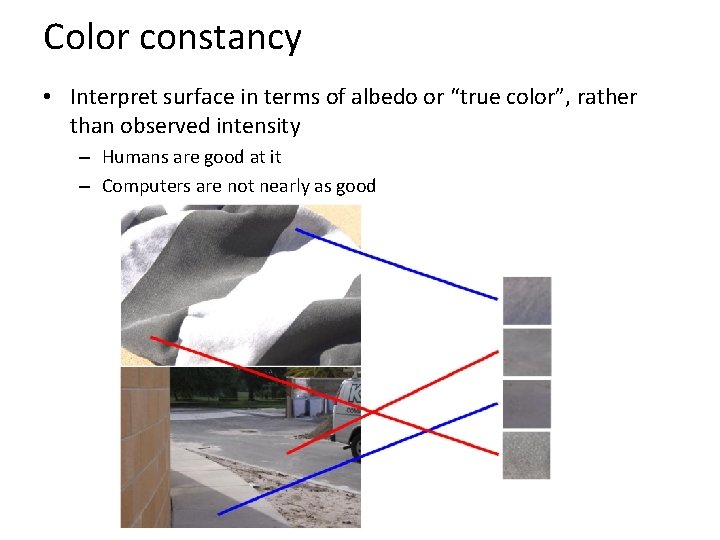
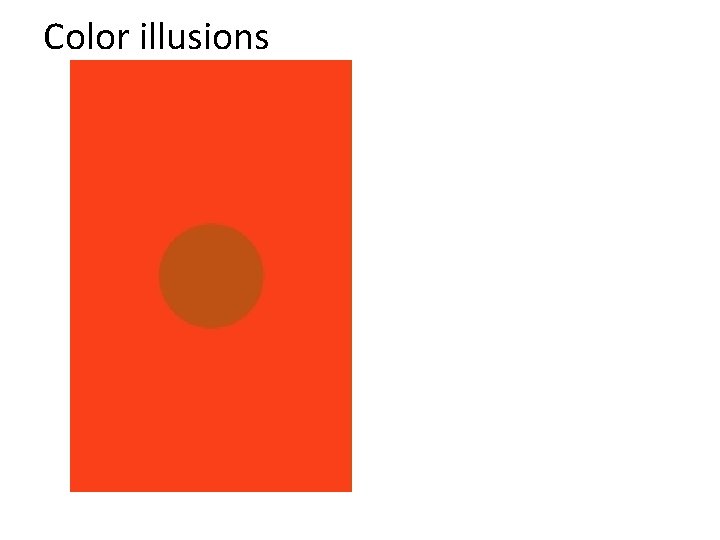
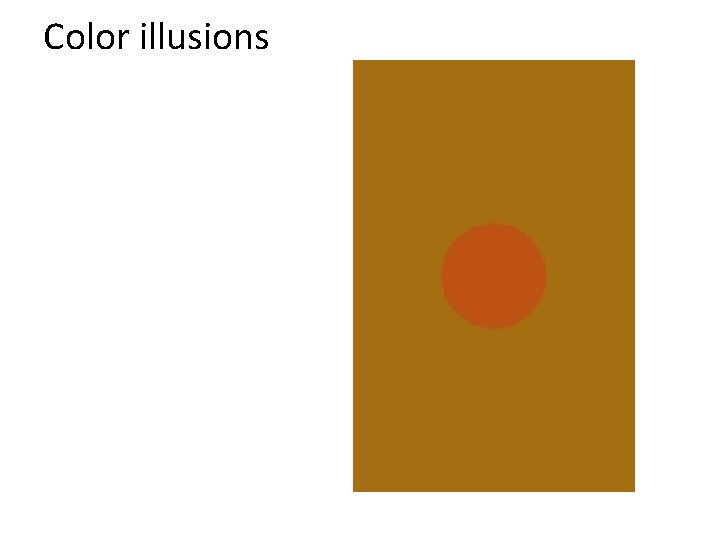
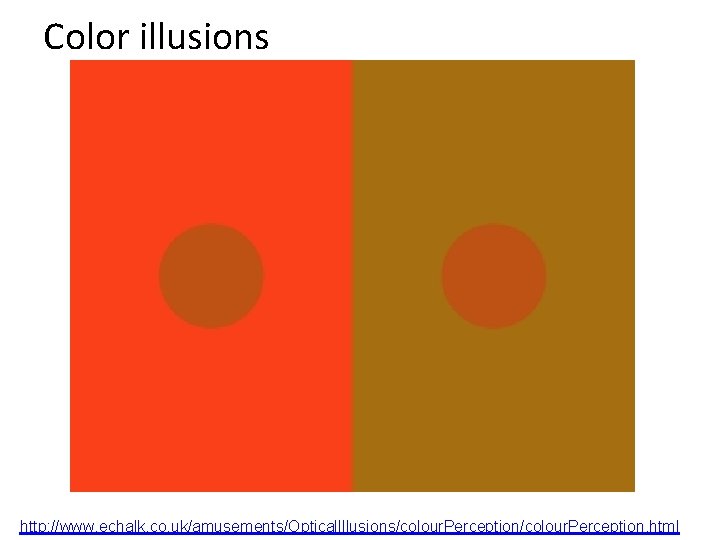
Color constancy • Interpret surface in terms of albedo or “true color”, rather than observed intensity – Humans are good at it – Computers are not nearly as good
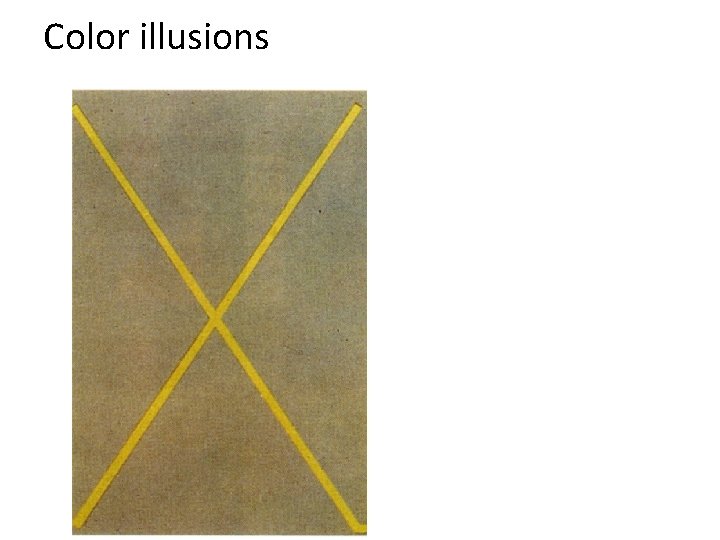
Color illusions
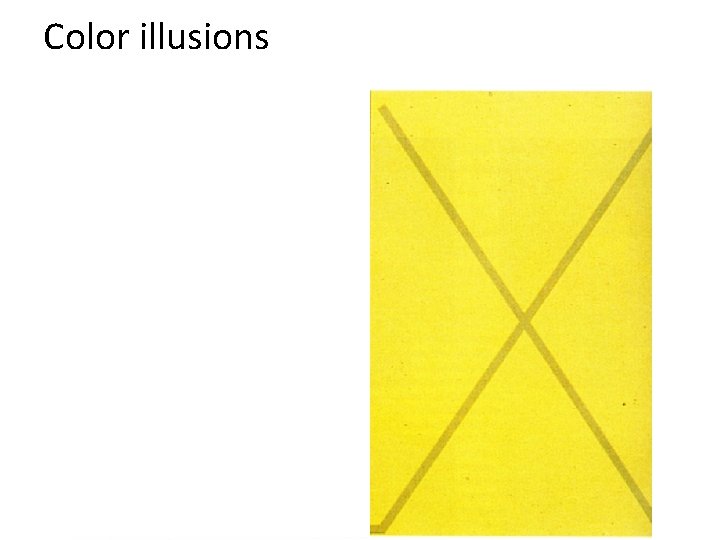
Color illusions
Color illusions
Color illusions
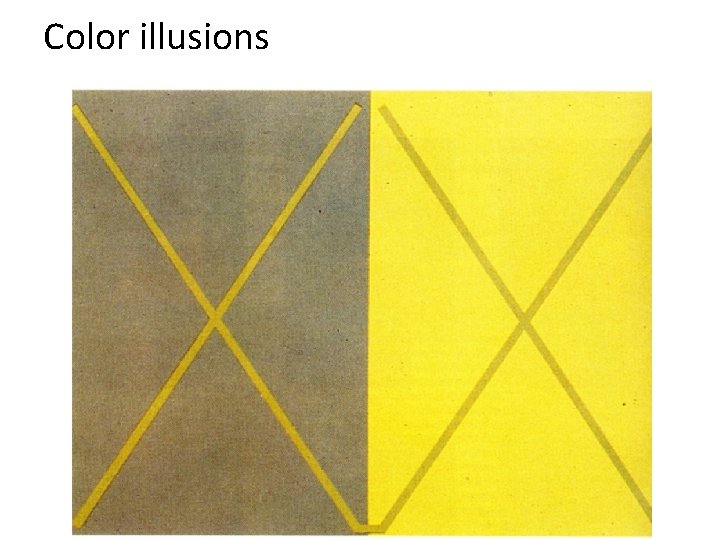
Color illusions
Color illusions http: //www. echalk. co. uk/amusements/Optical. Illusions/colour. Perception. html
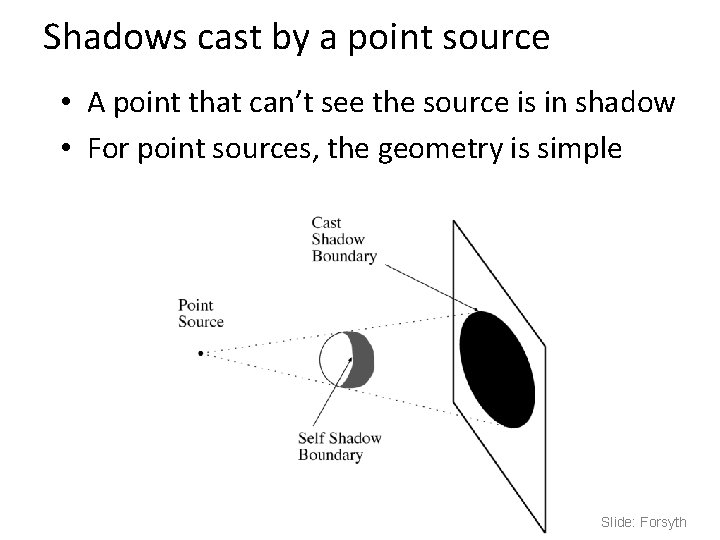
Shadows cast by a point source • A point that can’t see the source is in shadow • For point sources, the geometry is simple Slide: Forsyth
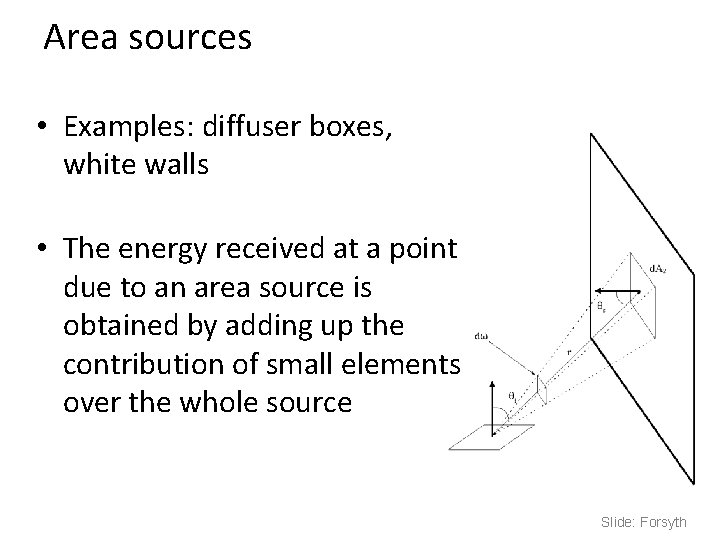
Area sources • Examples: diffuser boxes, white walls • The energy received at a point due to an area source is obtained by adding up the contribution of small elements over the whole source Slide: Forsyth
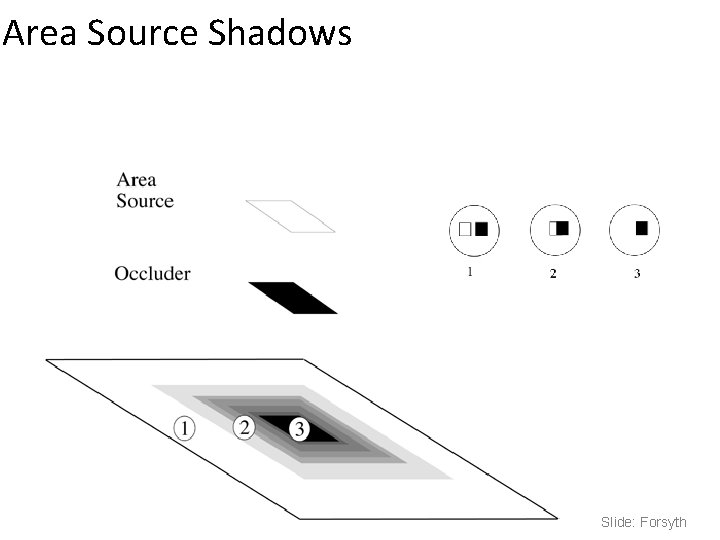
Area Source Shadows Slide: Forsyth
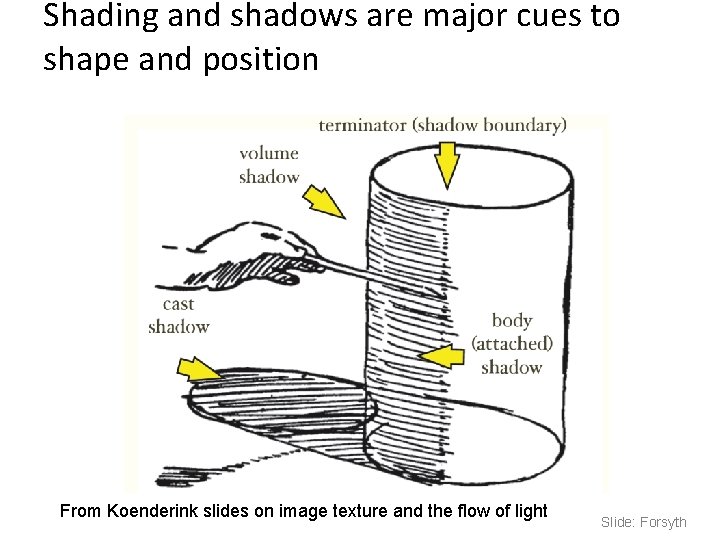
Shading and shadows are major cues to shape and position From Koenderink slides on image texture and the flow of light Slide: Forsyth
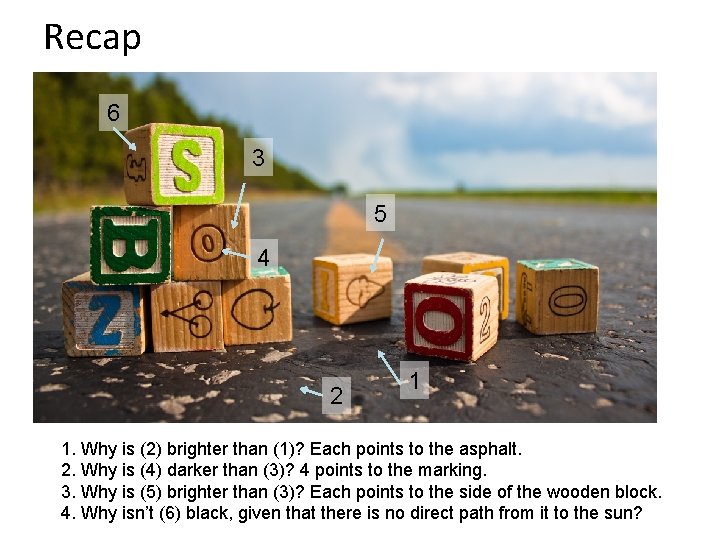
Recap 6 3 5 4 2 1 1. Why is (2) brighter than (1)? Each points to the asphalt. 2. Why is (4) darker than (3)? 4 points to the marking. 3. Why is (5) brighter than (3)? Each points to the side of the wooden block. 4. Why isn’t (6) black, given that there is no direct path from it to the sun?
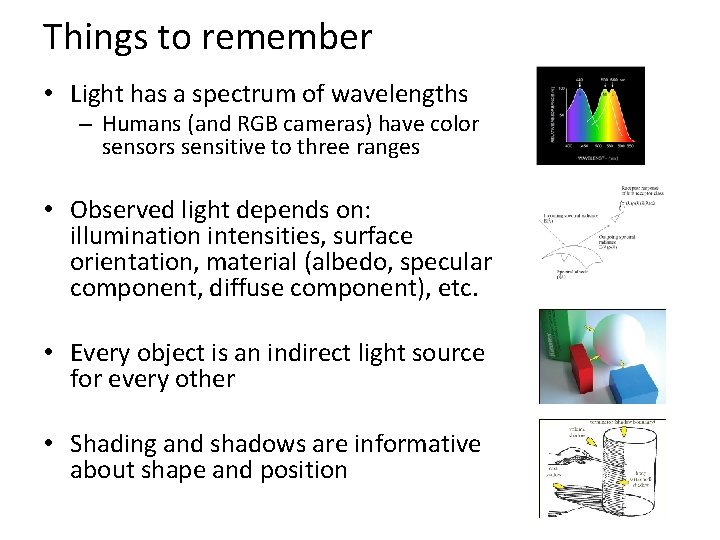
Things to remember • Light has a spectrum of wavelengths – Humans (and RGB cameras) have color sensors sensitive to three ranges • Observed light depends on: illumination intensities, surface orientation, material (albedo, specular component, diffuse component), etc. • Every object is an indirect light source for every other • Shading and shadows are informative about shape and position
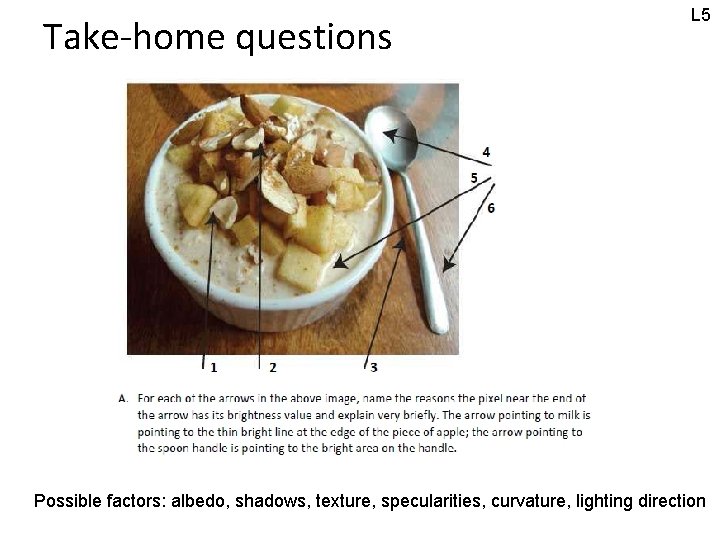
Take-home questions L 5 Possible factors: albedo, shadows, texture, specularities, curvature, lighting direction