
LiFraumeni Syndrome WENDY KOHLMANN MS CGC LICENSED GENETIC
- Slides: 17
Li-Fraumeni Syndrome WENDY KOHLMANN, MS, CGC LICENSED GENETIC COUNSELOR UNIVERSITY OF UTAH HUNTSMAN CANCER INSTITUTE
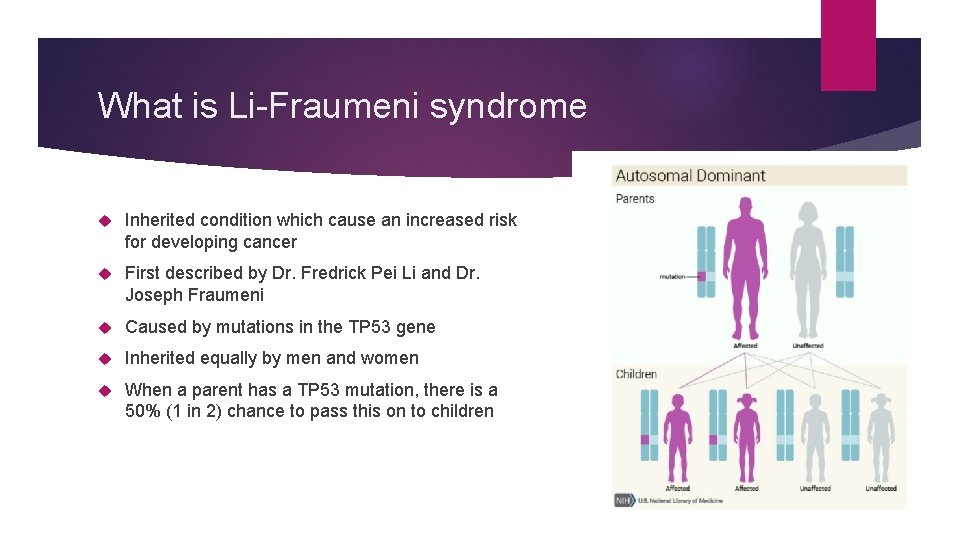
What is Li-Fraumeni syndrome Inherited condition which cause an increased risk for developing cancer First described by Dr. Fredrick Pei Li and Dr. Joseph Fraumeni Caused by mutations in the TP 53 gene Inherited equally by men and women When a parent has a TP 53 mutation, there is a 50% (1 in 2) chance to pass this on to children
Why would someone be offered genetic testing for Li-Fraumeni syndrome? Because a family member has been found to have a TP 53 mutation When a TP 53 mutation is identified in a person, it is generally recommended that relatives be tested to determine if anyone else has inherited this and is at risk Because your doctor suspects that you may have Li-Fraumeni syndrome Certain types of cancer or patterns of cancer can raise concerns about a TP 53 mutation. Genetic testing may be recommended to determine the cause of the cancer. Determining whether cancer is due to Li-Fraumeni syndrome may help with planning treatment and screening for future cancer
Genetic testing for Li-Fraumeni syndrome Genetic testing of the TP 53 gene is recommended for the following: Choroid plexus tumors Adrenocortical tumors Rhabdomyosarcoma-embryonal anaplastic subtype Individual with multiple Li-Fraumeni related cancers before age 46 An individual with a Li-Fraumeni related cancer before age 46 and a close relative (parent, sibling, children, aunt, uncle, grandparent) with a Li-Fraumeni related cancer before age 56 *Classic Li-Fraumeni cancers include adrenocortical tumors, breast cancer, osteosarcomas, soft tissue sarcomas, brain tumors
Sometimes TP 53 is included in other genetic tests Genetic testing technology allows for many genes to be tested at once TP 53 is now included in many genetic tests for various cancer risks When having genetic testing, it is important to ask why your doctor or genetic counselor: Why they think the testing would be helpful What genes are being tested What are the possible outcomes
What if I decide not to have genetic testing? Having genetic testing is a personal choice Without information from genetic testing, recommendations can be made on the basis of family history However, it can be difficult to identify those families who have Li-Fraumeni syndrome based on family history alone Invasive procedures (ex. risk reducing mastectomies) or specialty screening exams (ex. whole body MRI) it may be difficult to obtain without a confirmed diagnosis
What does it mean when a variant of uncertain significance is found in TP 53? All people have differences in our DNA Not all variations in the genetic code are bad! Some have no effect Some contribute to unique features Some cause a gene to not function and cause an increased risk for disease When a laboratory does not have enough information about a particular genetic variant to determine its effect, it will report the finding as uncertain When this finding occurs Discuss with a genetic counselor or genetic specialist Other laboratories may know more about variant Find out how you will be notified when more is learned about the variant Ask about research
What is mosacism? Detecting a TP 53 mutation on a genetic test does not always mean a person has Li-Fraumeni syndrome TP 53 Mutations can arise in the blood as we get older or as an effect of chemotherapy These mutations do not cause an increased risk for cancer in other parts of the body They cannot be passed on to children They may indicate some risk for developing hematologic malignancy In rare cases a person may be mosaic for a TP 53 mutation, meaning that the mutation arose some time after fertilization as the embryo developed. The mutation is only present in some cells in the body. In this situation, there can be risks for other cancers and there is a possibility of passing on the mutation to children depending on which tissues are affected. When a TP 53 mutation is identified for the first time in a family, steps should be taken to determine if the mutation is truly present in all cells (causing Li-Fraumeni syndrome) or if it may have been detected for other reasons.
How does cancer treatment change for someone with Li-Fraumeni syndrome? Must do what is best to treat the current cancer! If there are equally good options for treating a cancer, then choosing treatments that are less likely to cause a risk for additional cancers can be chosen Example: treating breast cancer with a mastectomy rather than lumpectomy and radiation
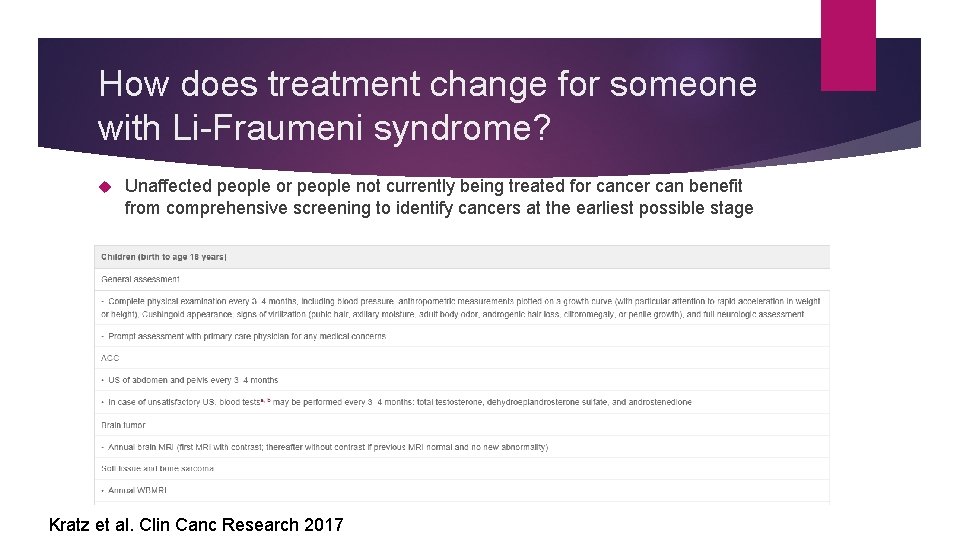
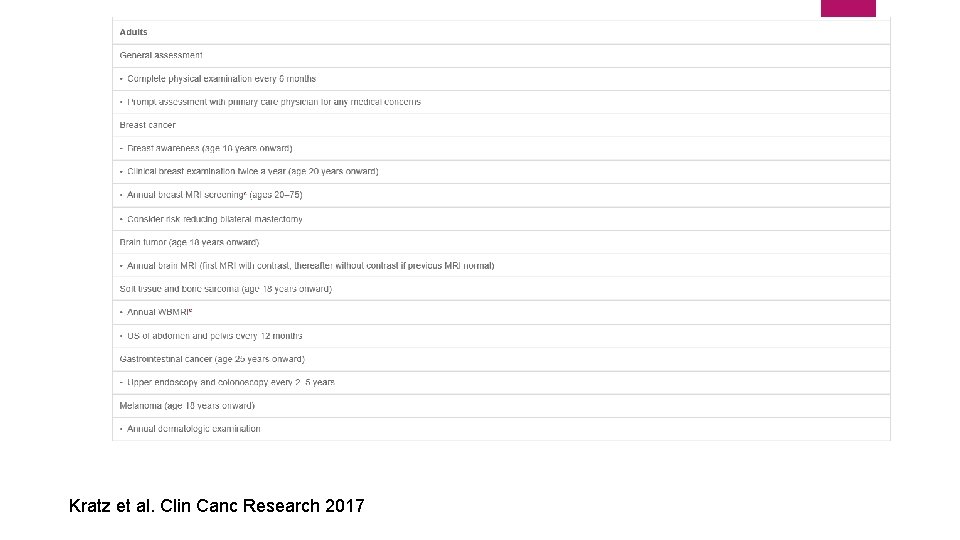
How does treatment change for someone with Li-Fraumeni syndrome? Unaffected people or people not currently being treated for cancer can benefit from comprehensive screening to identify cancers at the earliest possible stage Kratz et al. Clin Canc Research 2017
Kratz et al. Clin Canc Research 2017
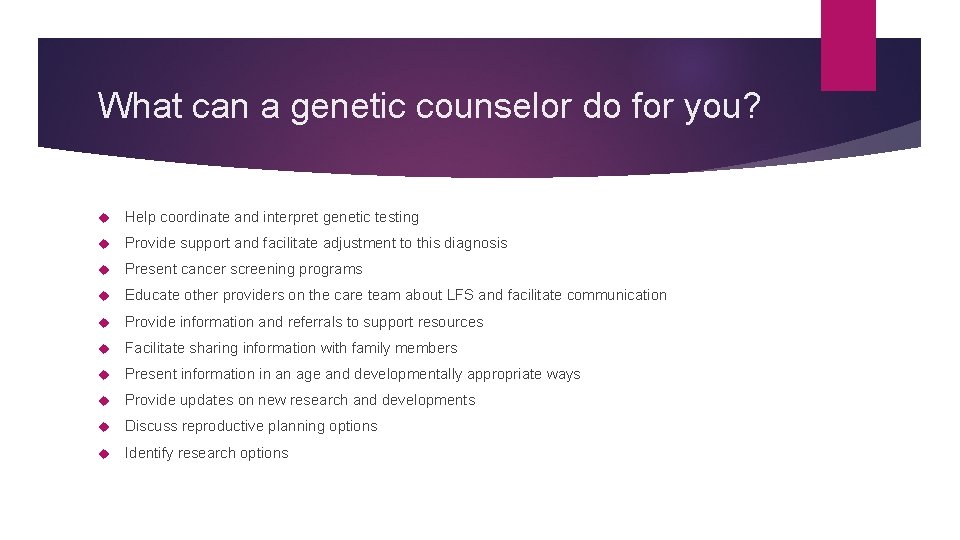
What can a genetic counselor do for you? Help coordinate and interpret genetic testing Provide support and facilitate adjustment to this diagnosis Present cancer screening programs Educate other providers on the care team about LFS and facilitate communication Provide information and referrals to support resources Facilitate sharing information with family members Present information in an age and developmentally appropriate ways Provide updates on new research and developments Discuss reproductive planning options Identify research options
How do I find a genetic counselor? National Society of Genetic Counselors Find a genetic counselor tool: https: //www. nsgc. org/
Huntsman Cancer Institute Cancer Genetics Study Registry of patients with hereditary cancers including Li-Fraumeni syndrome Participation involves: Allowing access to medical, family history and genetic testing data Providing blood samples Tracking outcomes of screening Contact information: Sara Johnson, at 801 -585 -7343 or at cgs@hci. utah. edu http: //healthcare. utah. edu/huntsmancancerinstitute/research-studies/cancergenetics-study/
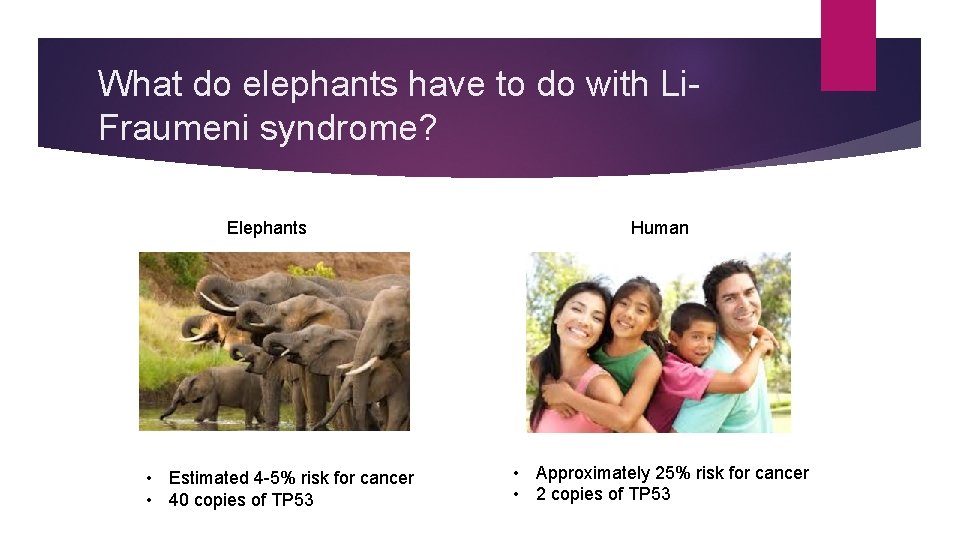
What do elephants have to do with Li. Fraumeni syndrome? Elephants • Estimated 4 -5% risk for cancer • 40 copies of TP 53 Human • Approximately 25% risk for cancer • 2 copies of TP 53
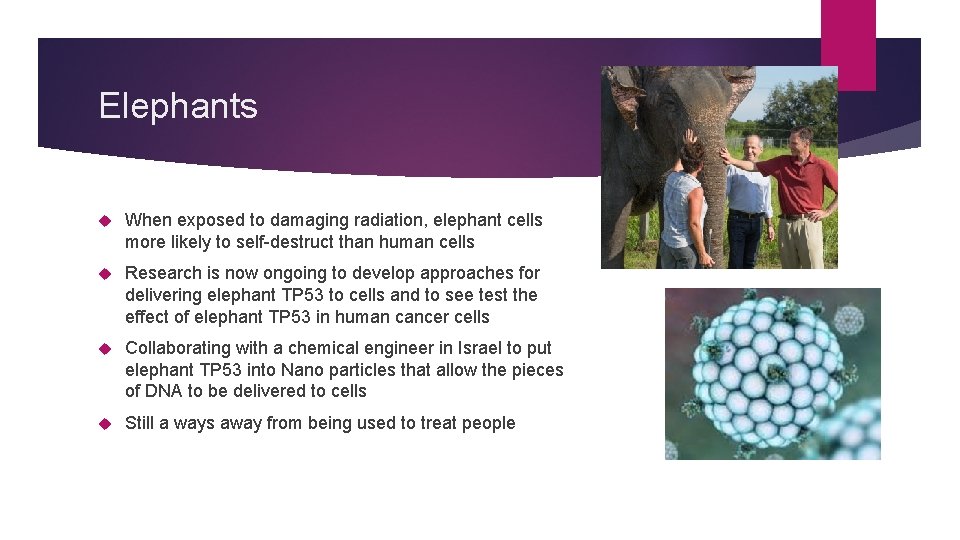
Elephants When exposed to damaging radiation, elephant cells more likely to self-destruct than human cells Research is now ongoing to develop approaches for delivering elephant TP 53 to cells and to see test the effect of elephant TP 53 in human cancer cells Collaborating with a chemical engineer in Israel to put elephant TP 53 into Nano particles that allow the pieces of DNA to be delivered to cells Still a ways away from being used to treat people
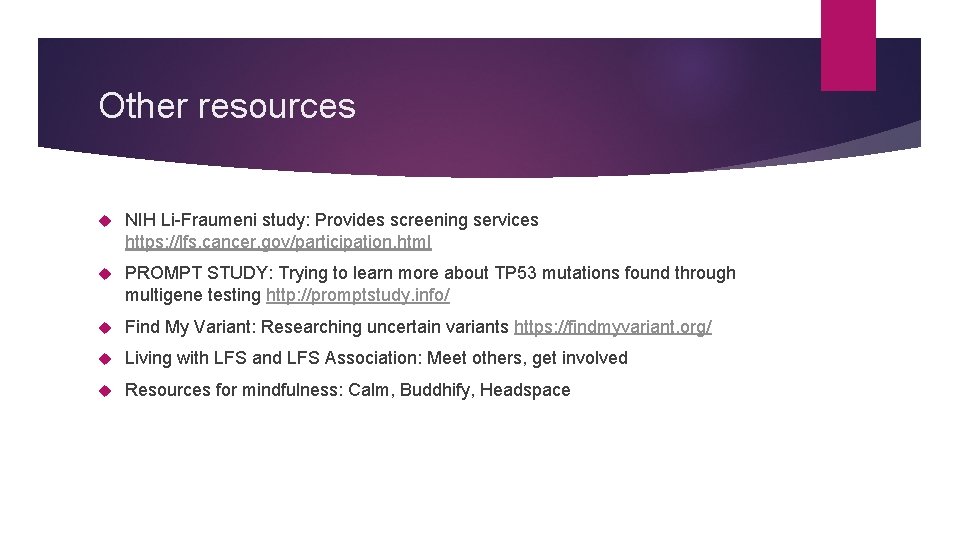
Other resources NIH Li-Fraumeni study: Provides screening services https: //lfs. cancer. gov/participation. html PROMPT STUDY: Trying to learn more about TP 53 mutations found through multigene testing http: //promptstudy. info/ Find My Variant: Researching uncertain variants https: //findmyvariant. org/ Living with LFS and LFS Association: Meet others, get involved Resources for mindfulness: Calm, Buddhify, Headspace