
Lifestyle and Parkinsons Gregory Pontone MD MHS Director


- Slides: 12
Lifestyle and Parkinson’s
Gregory Pontone, MD, MHS Director, Parkinson’s Neuropsychiatry Clinical Programs Johns Hopkins University School of Medicine Morris K. Udall Parkinson's Disease Research Center Associate Professor Departments of Psychiatry and Neurology
Disclosures • No relevant financial relationships with commercial interests • Dr. Pontone is a consultant for Acadia Pharmaceuticals • Dr. Pontone is a consultant for Concert Pharmaceuticals
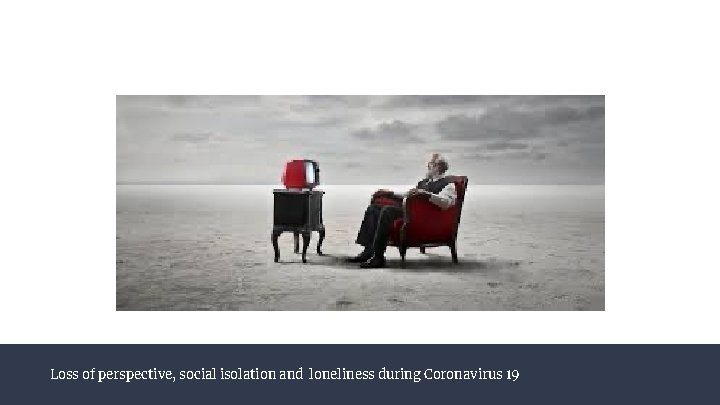
Loss of perspective, social isolation and loneliness during Coronavirus 19
Social isolation and loneliness Social isolation ● objective lack of contact or interaction with family, friends, and the wider community Loneliness ● subjective negative feeling associated with a perceived lack of wider social network or absence of a specific desired companion
Social isolation and loneliness • Social isolation significantly increased your risk of premature death, a risk that may rival those of smoking, obesity, and physical inactivity • Social isolation is associated with a 50% percent increased risk of dementia • Inadequate social relationships are associated with a 29% increased risk of heart disease and a 32% increased risk of stroke
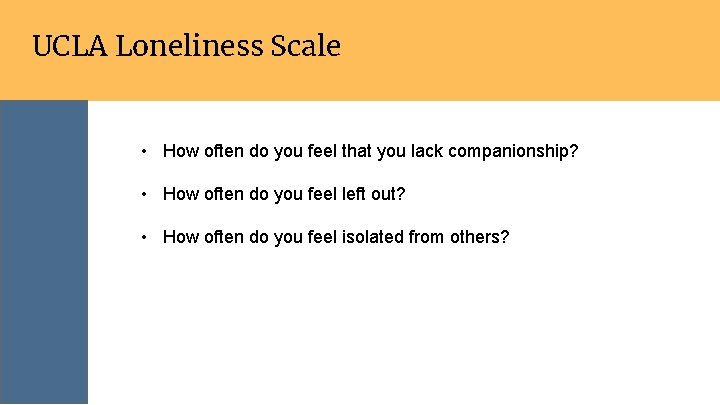
UCLA Loneliness Scale • How often do you feel that you lack companionship? • How often do you feel left out? • How often do you feel isolated from others?
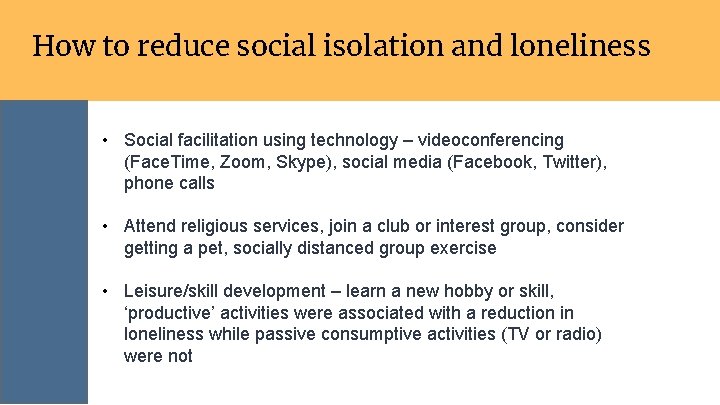
How to reduce social isolation and loneliness • Social facilitation using technology – videoconferencing (Face. Time, Zoom, Skype), social media (Facebook, Twitter), phone calls • Attend religious services, join a club or interest group, consider getting a pet, socially distanced group exercise • Leisure/skill development – learn a new hobby or skill, ‘productive’ activities were associated with a reduction in loneliness while passive consumptive activities (TV or radio) were not
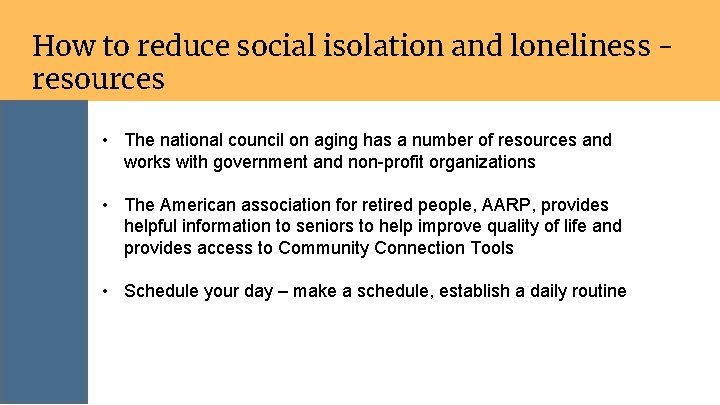
How to reduce social isolation and loneliness resources • The national council on aging has a number of resources and works with government and non-profit organizations • The American association for retired people, AARP, provides helpful information to seniors to help improve quality of life and provides access to Community Connection Tools • Schedule your day – make a schedule, establish a daily routine
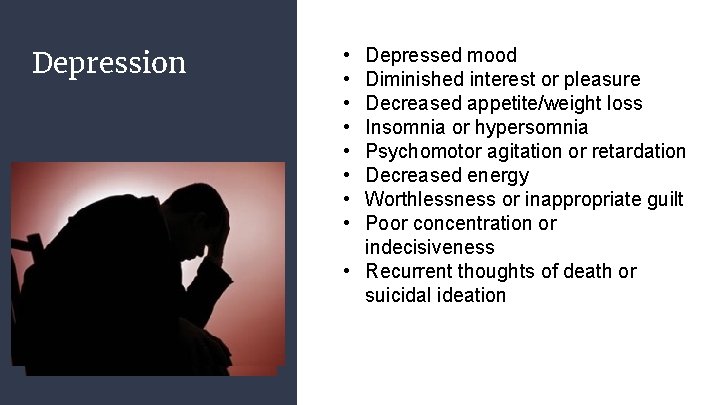
Depression • • Depressed mood Diminished interest or pleasure Decreased appetite/weight loss Insomnia or hypersomnia Psychomotor agitation or retardation Decreased energy Worthlessness or inappropriate guilt Poor concentration or indecisiveness • Recurrent thoughts of death or suicidal ideation
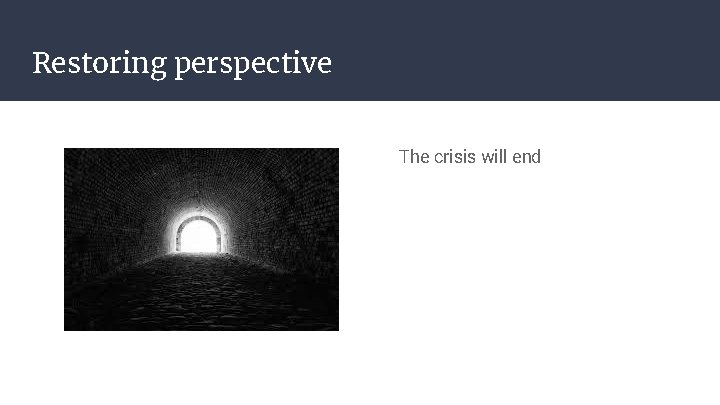
Restoring perspective The crisis will end
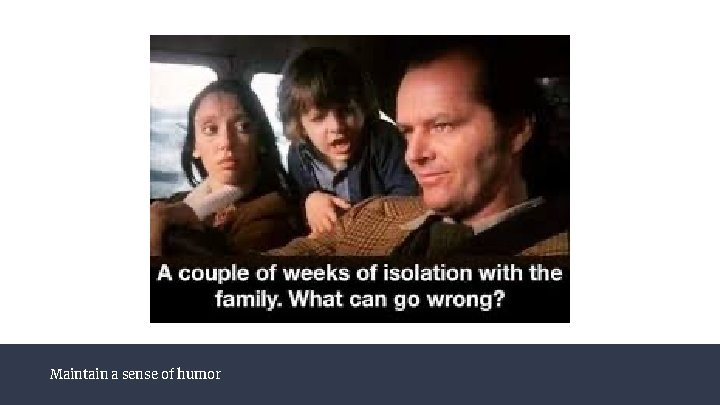
Maintain a sense of humor