
Lifelong Learning of the Elderly in Japan HORI
- Slides: 39
Lifelong Learning of the Elderly in Japan HORI, Shigeo (堀 薫夫) Professor, Dept. of Lifelong Education, Osaka University of Education (大阪教育大学)
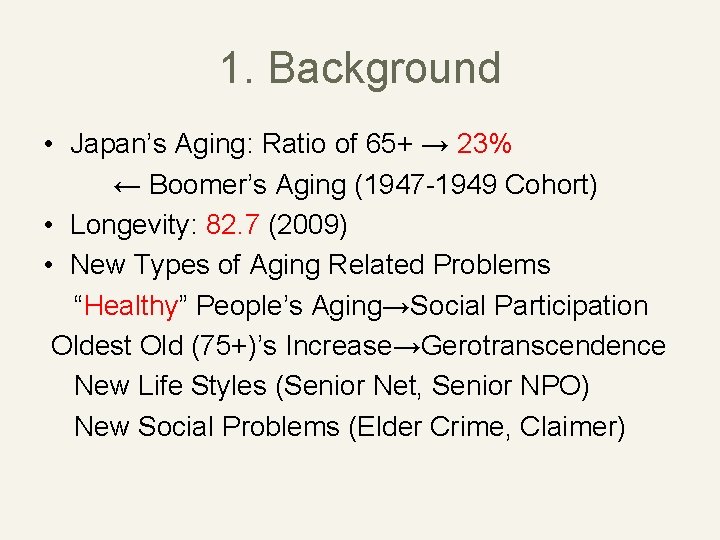
1. Background • Japan’s Aging: Ratio of 65+ → 23% ← Boomer’s Aging (1947 -1949 Cohort) • Longevity: 82. 7 (2009) • New Types of Aging Related Problems “Healthy” People’s Aging→Social Participation Oldest Old (75+)’s Increase→Gerotranscendence New Life Styles (Senior Net, Senior NPO) New Social Problems (Elder Crime, Claimer)
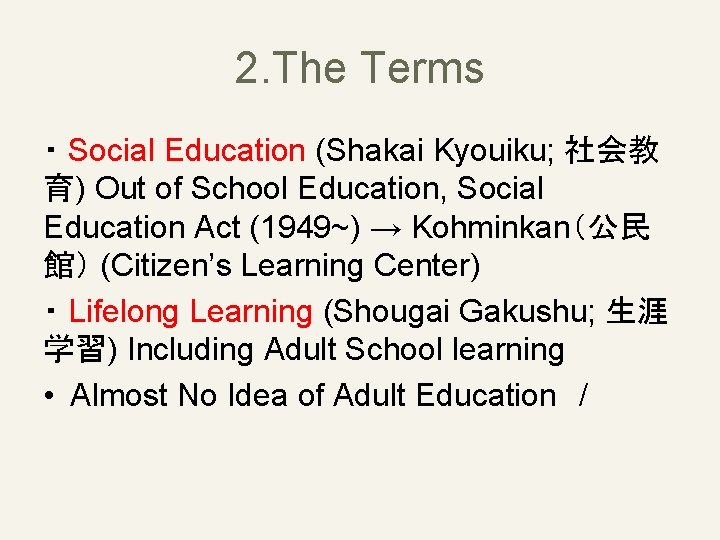
2. The Terms ・ Social Education (Shakai Kyouiku; 社会教 育) Out of School Education, Social Education Act (1949~) → Kohminkan(公民 館) (Citizen’s Learning Center) ・ Lifelong Learning (Shougai Gakushu; 生涯 学習) Including Adult School learning • Almost No Idea of Adult Education /
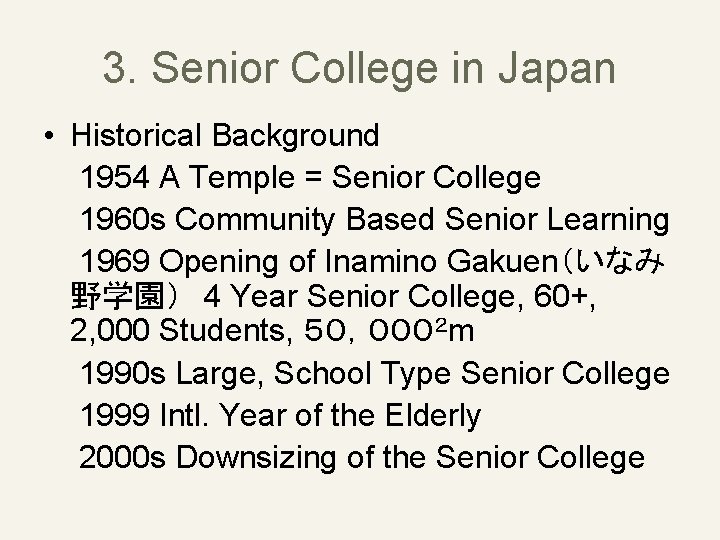
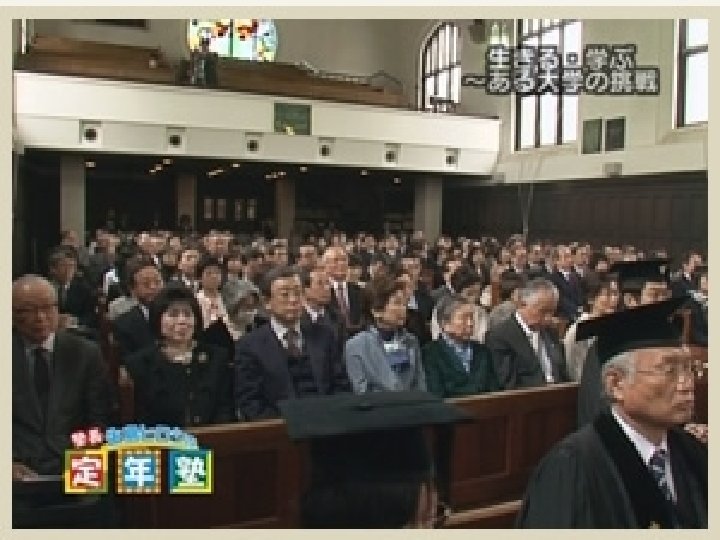
3. Senior College in Japan • Historical Background 1954 A Temple = Senior College 1960 s Community Based Senior Learning 1969 Opening of Inamino Gakuen(いなみ 野学園) 4 Year Senior College, 60+, 2, 000 Students, 50,0002 m 1990 s Large, School Type Senior College 1999 Intl. Year of the Elderly 2000 s Downsizing of the Senior College
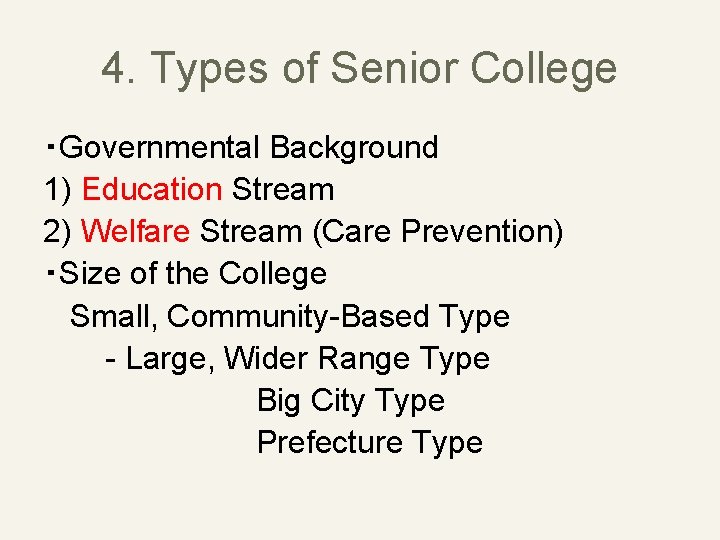
4. Types of Senior College ・Governmental Background 1) Education Stream 2) Welfare Stream (Care Prevention) ・Size of the College Small, Community-Based Type - Large, Wider Range Type Big City Type Prefecture Type
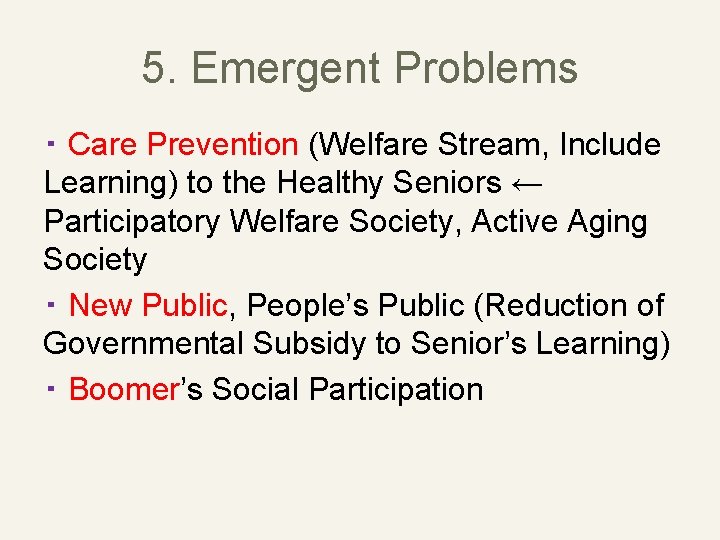
5. Emergent Problems ・ Care Prevention (Welfare Stream, Include Learning) to the Healthy Seniors ← Participatory Welfare Society, Active Aging Society ・ New Public, People’s Public (Reduction of Governmental Subsidy to Senior’s Learning) ・ Boomer’s Social Participation
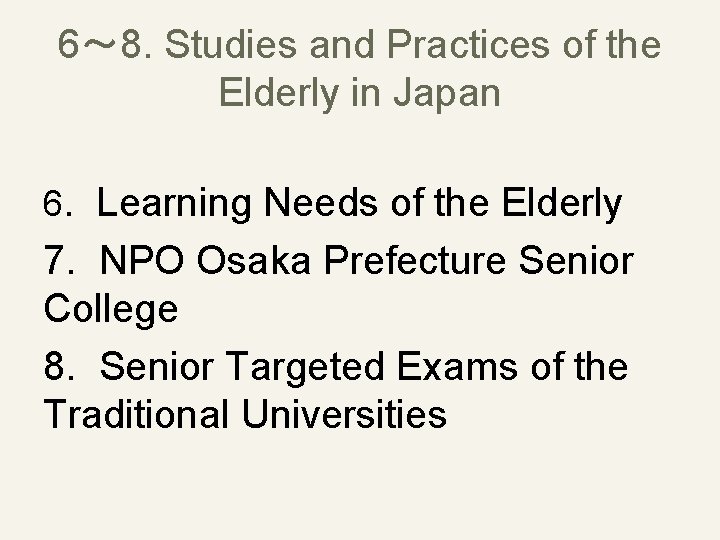
6~ 8. Studies and Practices of the Elderly in Japan 6. Learning Needs of the Elderly 7. NPO Osaka Prefecture Senior College 8. Senior Targeted Exams of the Traditional Universities
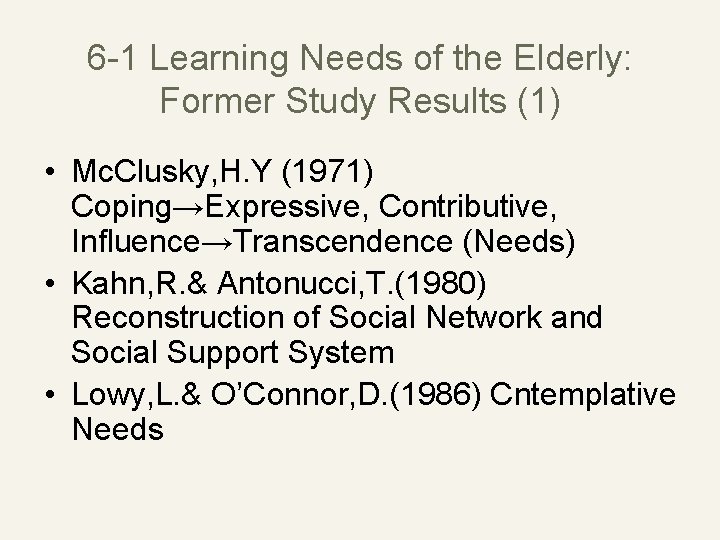
6 -1 Learning Needs of the Elderly: Former Study Results (1) • Mc. Clusky, H. Y (1971) Coping→Expressive, Contributive, Influence→Transcendence (Needs) • Kahn, R. & Antonucci, T. (1980) Reconstruction of Social Network and Social Support System • Lowy, L. & O’Connor, D. (1986) Cntemplative Needs
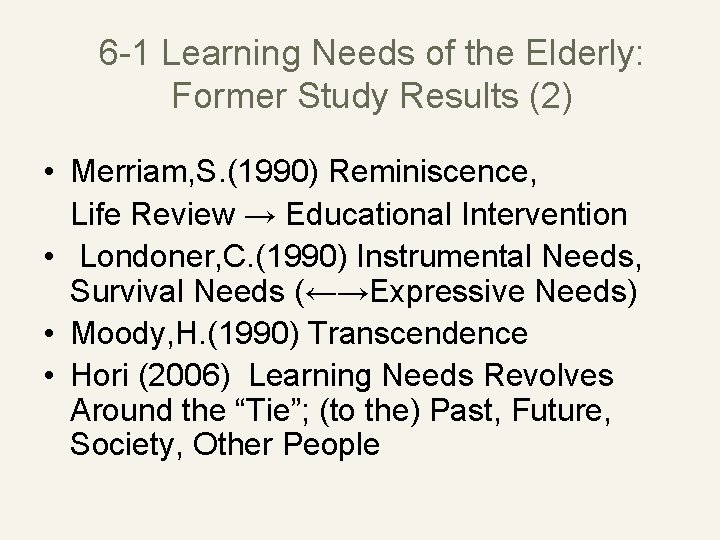
6 -1 Learning Needs of the Elderly: Former Study Results (2) • Merriam, S. (1990) Reminiscence, Life Review → Educational Intervention • Londoner, C. (1990) Instrumental Needs, Survival Needs (←→Expressive Needs) • Moody, H. (1990) Transcendence • Hori (2006) Learning Needs Revolves Around the “Tie”; (to the) Past, Future, Society, Other People
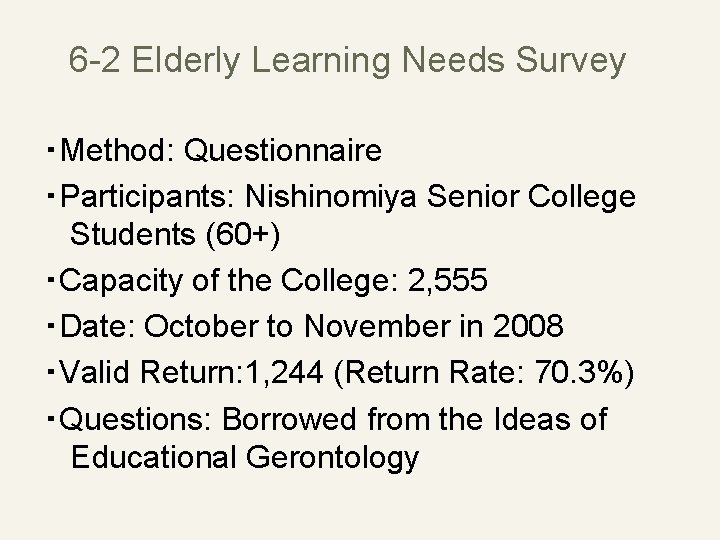
6 -2 Elderly Learning Needs Survey ・Method: Questionnaire ・Participants: Nishinomiya Senior College Students (60+) ・Capacity of the College: 2, 555 ・Date: October to November in 2008 ・Valid Return: 1, 244 (Return Rate: 70. 3%) ・Questions: Borrowed from the Ideas of Educational Gerontology
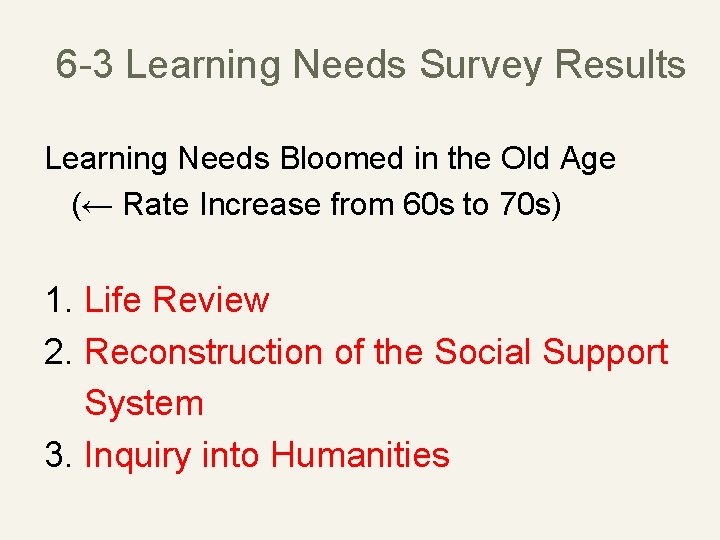
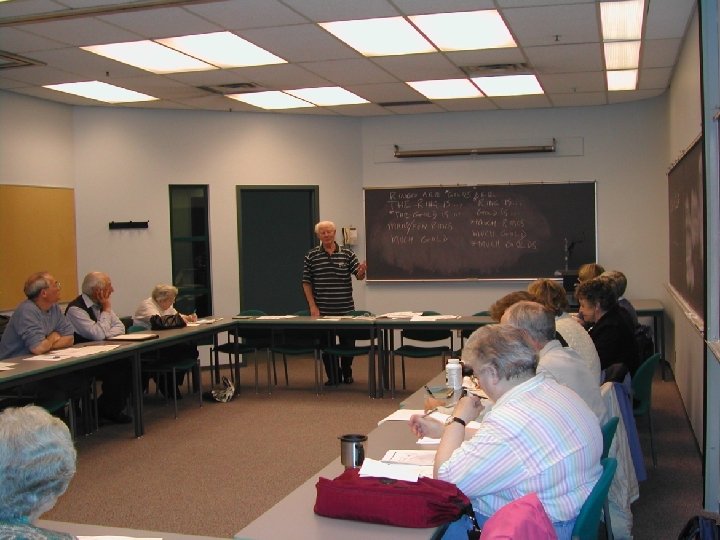
6 -3 Learning Needs Survey Results Learning Needs Bloomed in the Old Age (← Rate Increase from 60 s to 70 s) 1. Life Review 2. Reconstruction of the Social Support System 3. Inquiry into Humanities
6 -3 -1 Implications (1) Life Review • Therapeutic Effects: Alleviation of the Degree of Dementia, Increase of Life Satisfaction • Educational Effects: e. g. Library Practices, Discussion Group with Old Days Films, Photos, Tools
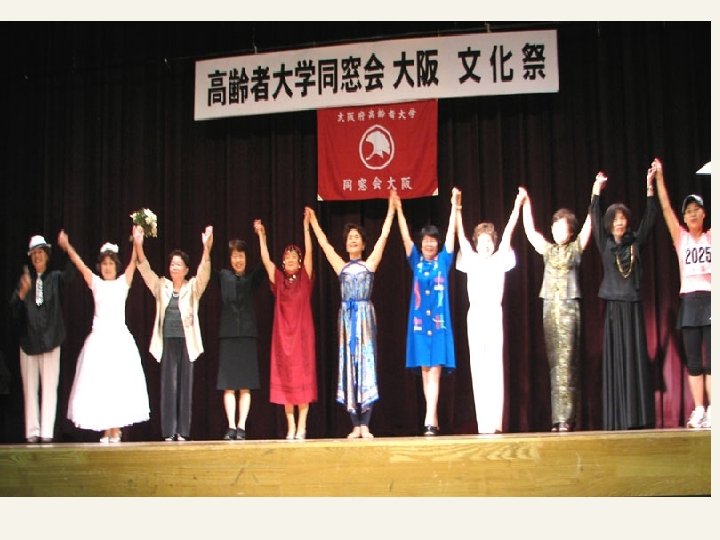
6 -3 -2 Implications (2) Reconstruction of the Social Support System ・ Achievement Needs → Affiliation Needs (← The Reality of Many Losses) ・ Osaka Prefecture Senior College: Tactics for Making New Friends System e. g. , Reunion, Class Manager, Circles
6 -3 -3 Implications (3) Inquiry into Humanities • Transcendence Needs (Mc. Clusky, 1971; Moody, 1990; Tornstam, 2005) The Realization of the Finitude of Life → Inquiry into Eternity and Humanities e. g. , History, Classics, Art, Religion, Spirituality, Nature Cf. Young People’s Needs: Vocational, Psychology, Computers …
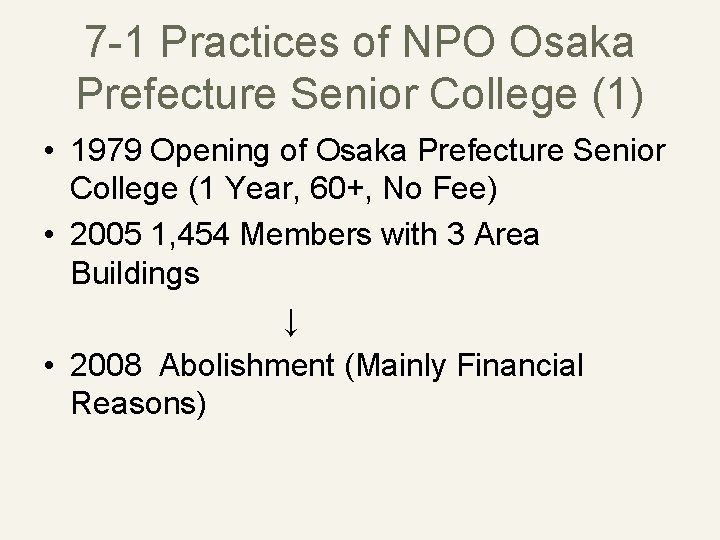
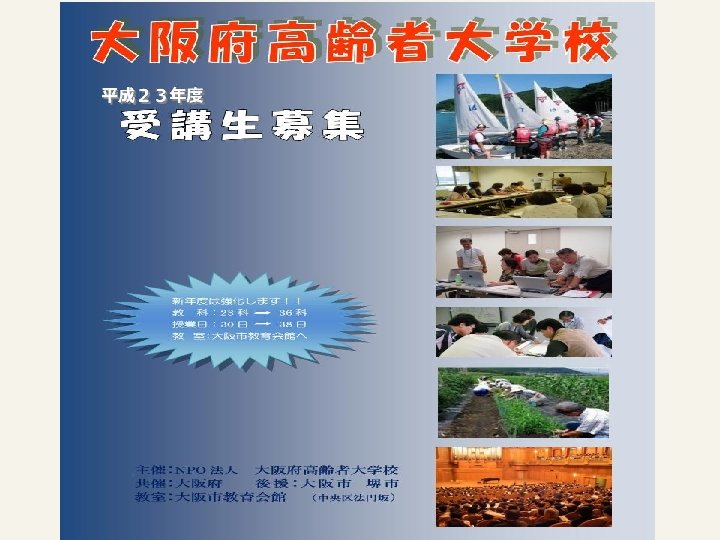
7 -1 Practices of NPO Osaka Prefecture Senior College (1) • 1979 Opening of Osaka Prefecture Senior College (1 Year, 60+, No Fee) • 2005 1, 454 Members with 3 Area Buildings ↓ • 2008 Abolishment (Mainly Financial Reasons)
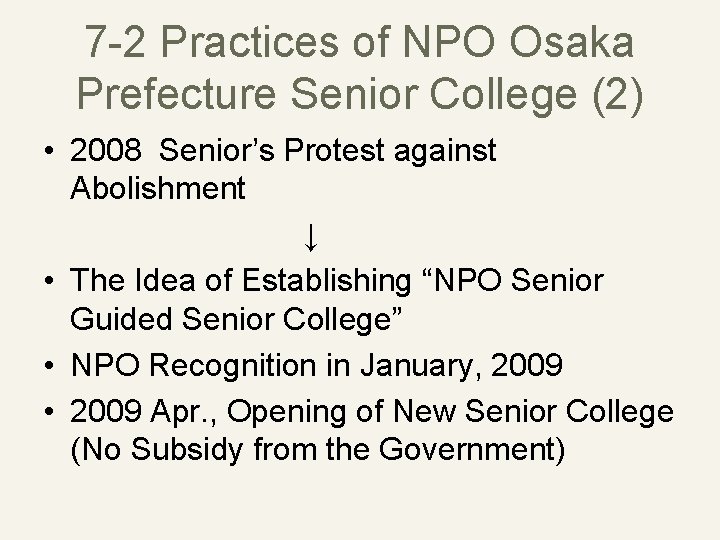
7 -2 Practices of NPO Osaka Prefecture Senior College (2) • 2008 Senior’s Protest against Abolishment ↓ • The Idea of Establishing “NPO Senior Guided Senior College” • NPO Recognition in January, 2009 • 2009 Apr. , Opening of New Senior College (No Subsidy from the Government)
7 -3 Practices of NPO Osaka Prefecture Senior College (3) Features of Senior Guided College (1) No Age Boundaries (2) No Geographical Boundaries (3) New Curriculum and Abolishment of Little Needed Programs
8 -1 Senior Targeted Exams of the Traditional Universities (1) Two Streams of the University of the Third Age ・ French Type: Seniors→Universities British Type: Seniors’ Self Help Group = the University ・ No Equivalents in Japan
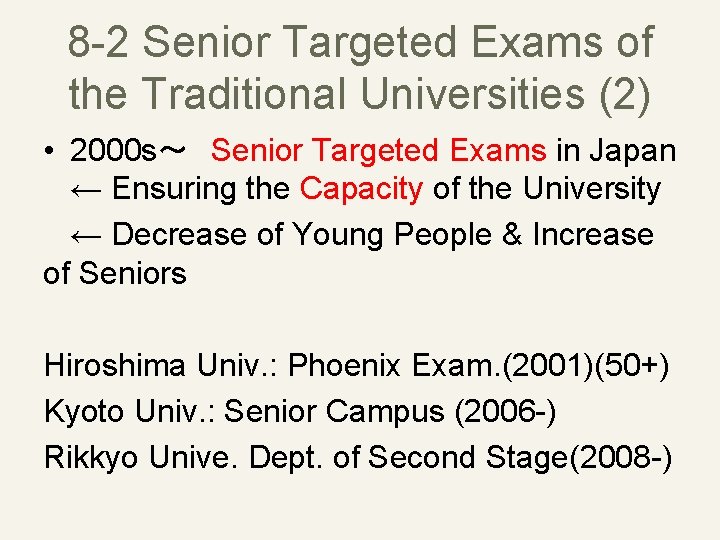
8 -2 Senior Targeted Exams of the Traditional Universities (2) • 2000 s~ Senior Targeted Exams in Japan ← Ensuring the Capacity of the University ← Decrease of Young People & Increase of Seniors Hiroshima Univ. : Phoenix Exam. (2001)(50+) Kyoto Univ. : Senior Campus (2006 -) Rikkyo Unive. Dept. of Second Stage(2008 -)
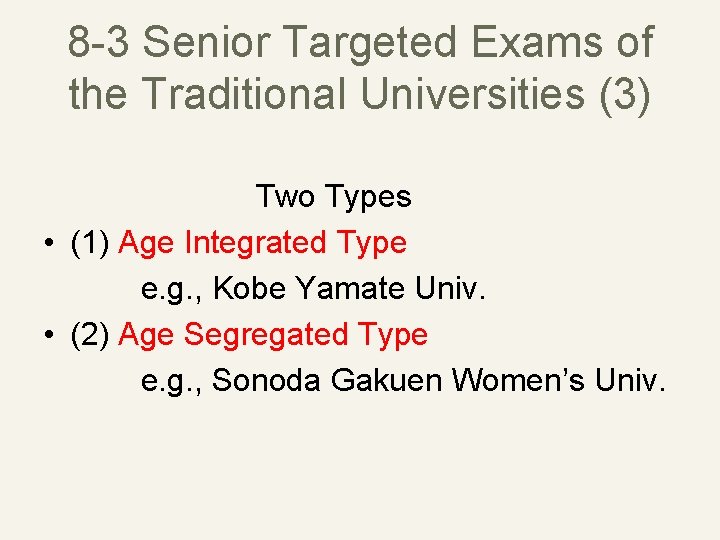
8 -3 Senior Targeted Exams of the Traditional Universities (3) Two Types • (1) Age Integrated Type e. g. , Kobe Yamate Univ. • (2) Age Segregated Type e. g. , Sonoda Gakuen Women’s Univ.
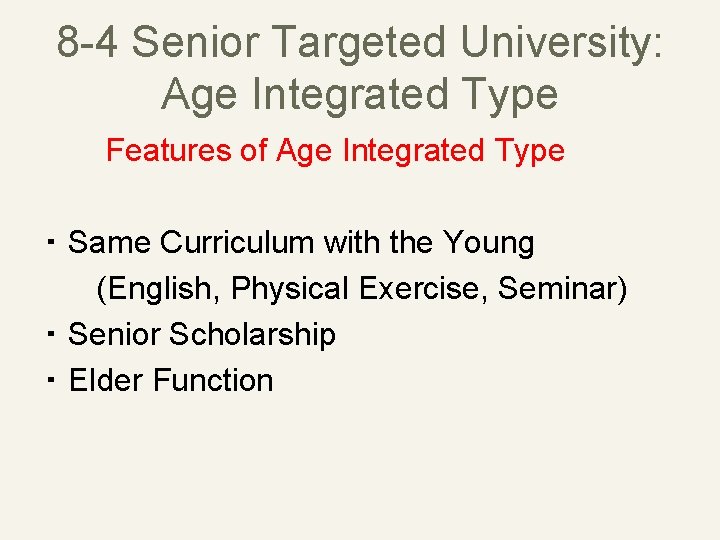
8 -4 Senior Targeted University: Age Integrated Type Features of Age Integrated Type ・ Same Curriculum with the Young (English, Physical Exercise, Seminar) ・ Senior Scholarship ・ Elder Function
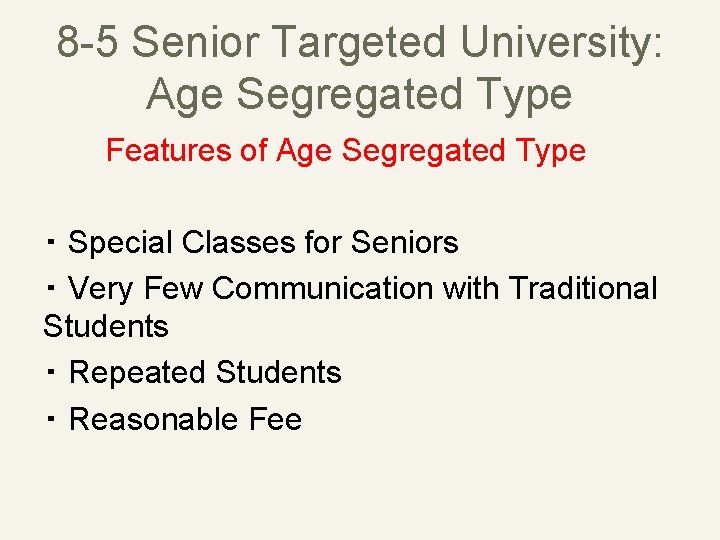
8 -5 Senior Targeted University: Age Segregated Type Features of Age Segregated Type ・ Special Classes for Seniors ・ Very Few Communication with Traditional Students ・ Repeated Students ・ Reasonable Fee
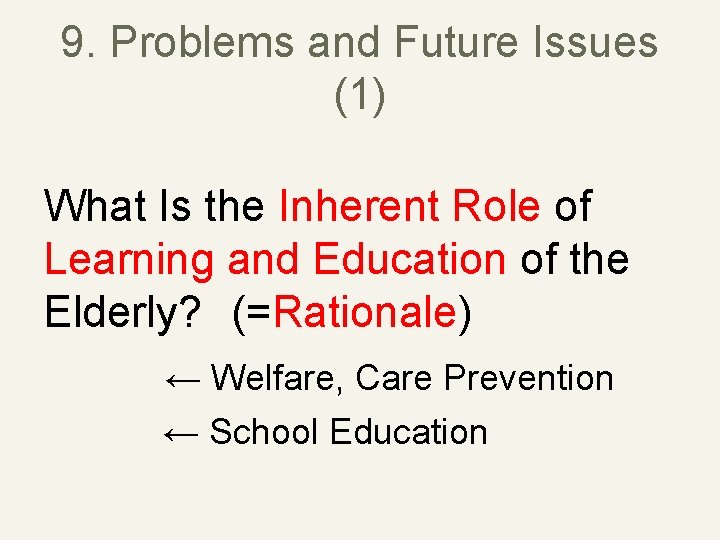
9. Problems and Future Issues (1) What Is the Inherent Role of Learning and Education of the Elderly? (=Rationale) ← Welfare, Care Prevention ← School Education
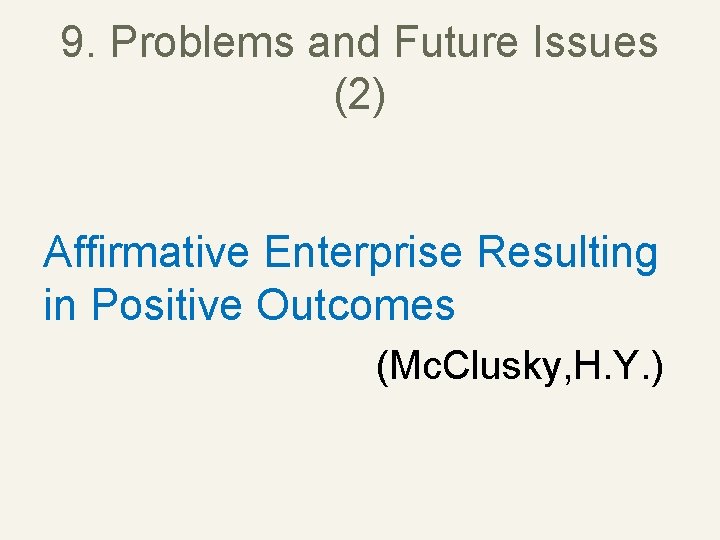
9. Problems and Future Issues (2) Affirmative Enterprise Resulting in Positive Outcomes (Mc. Clusky, H. Y. )
9. Problems and Future Issues (3) Positive Changes Occur BECAUSE OF Aging, Not IN SPITE OF Aging (US National Conference on Positive Aging, 2007)
THANK YOU To Add Life to Years, Not Just Years to Life Journal of Gerontology, 1 st Issue