
Lifelong Learning for All UNESCO Global Learning City
Lifelong Learning for All & UNESCO Global Learning City Network Jin Yang UNESCO Institute for Lifelong learning 27 March 2013 9/11/2021
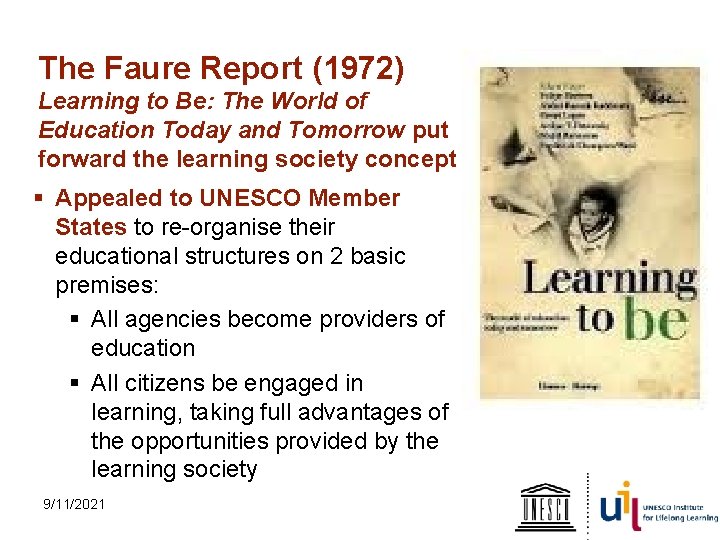
The Faure Report (1972) Learning to Be: The World of Education Today and Tomorrow put forward the learning society concept § Appealed to UNESCO Member States to re-organise their educational structures on 2 basic premises: § All agencies become providers of education § All citizens be engaged in learning, taking full advantages of the opportunities provided by the learning society 9/11/2021

Delors Report: Learning: The Treasure Within (1996) • The concept of learning throughout life leads straight on to that of a learning society which offers many and varied opportunities of learning, both at school and in economic, social and cultural life • More collaboration and partnerships with families, industry and business, voluntary associations, people active in cultural life, etc 9/11/2021
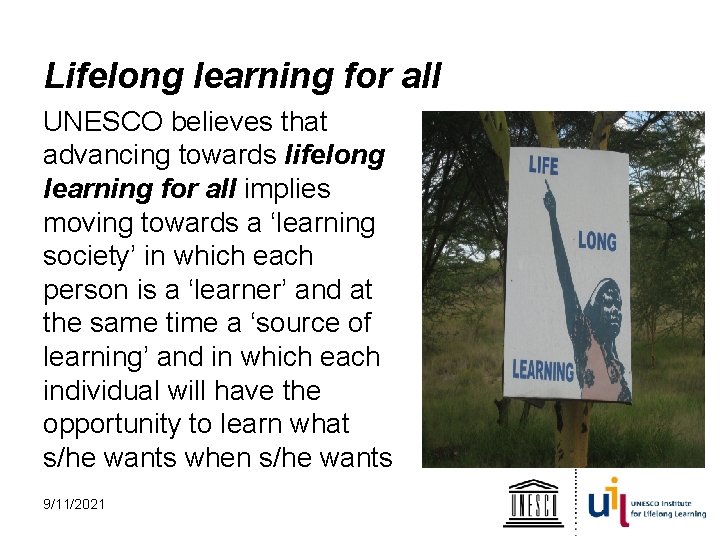
Lifelong learning for all UNESCO believes that advancing towards lifelong learning for all implies moving towards a ‘learning society’ in which each person is a ‘learner’ and at the same time a ‘source of learning’ and in which each individual will have the opportunity to learn what s/he wants when s/he wants 9/11/2021
Some basic conclusions drawn from previous research Ø The discourse of ‘lifelong learning’ as a ‘master concept for educational policies’ has been widely accepted; Ø Some pragmatic approaches have been adopted to make the visionary discourse of lifelong learning ‘handle-able’; Ø A learning society in a country can only be built province by province, city by city, community by community. 9/11/2021
Ø The building of a learning region/area is one of the practical or operational approaches; Ø The concept of a learning region/area can apply at all levels of local government, the main focus tends to be on cities 9/11/2021
Why cities? Ø Cities offer a more favourable setting to solve social and environmental problems Ø Cities generate jobs and income Ø Cities could deliver education, health care and other services more efficiently Ø Cities present opportunities for social mobilisation and women’s empowerment 9/11/2021
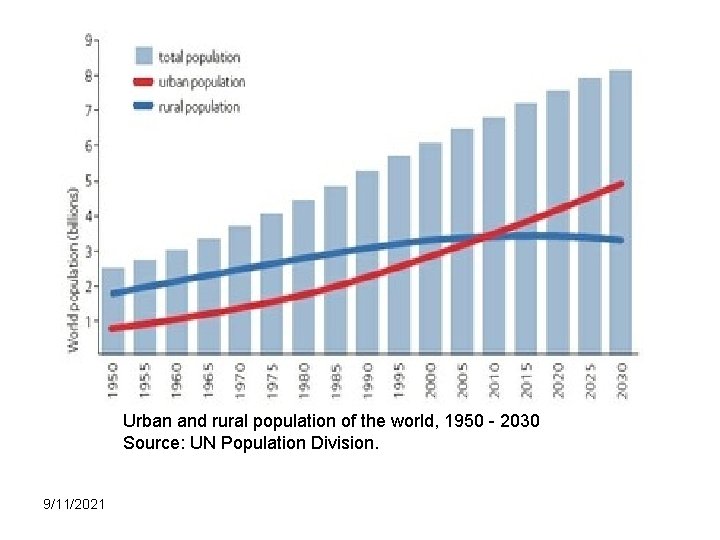
Urban and rural population of the world, 1950 - 2030 Source: UN Population Division. 9/11/2021
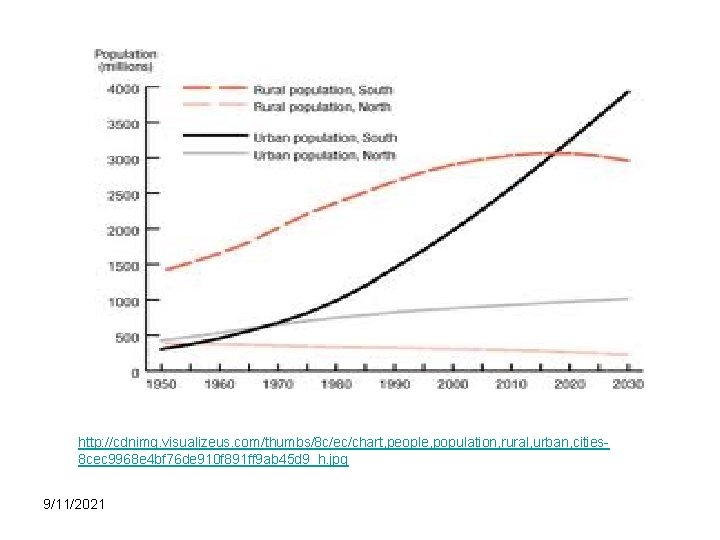
http: //cdnimg. visualizeus. com/thumbs/8 c/ec/chart, people, population, rural, urban, cities 8 cec 9968 e 4 bf 76 de 910 f 891 ff 9 ab 45 d 9_h. jpg 9/11/2021
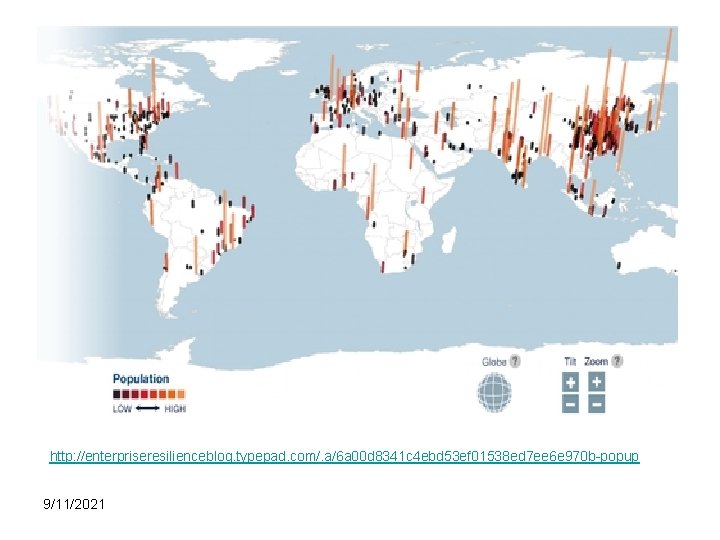
http: //enterpriseresilienceblog. typepad. com/. a/6 a 00 d 8341 c 4 ebd 53 ef 01538 ed 7 ee 6 e 970 b-popup 9/11/2021
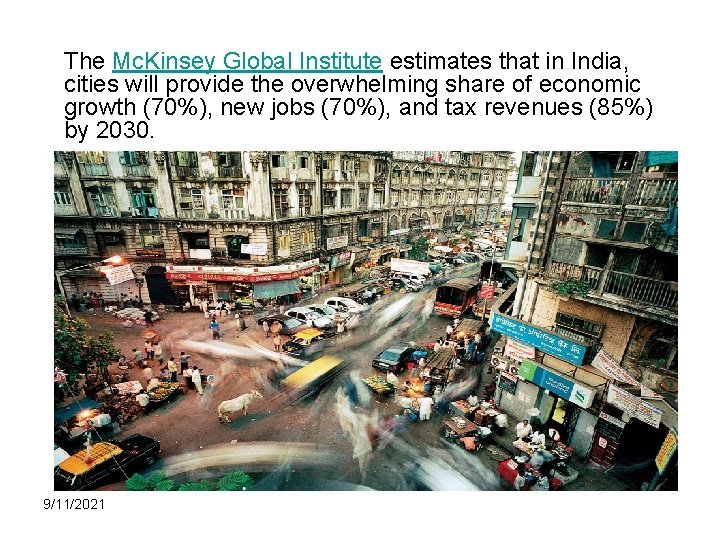
The Mc. Kinsey Global Institute estimates that in India, cities will provide the overwhelming share of economic growth (70%), new jobs (70%), and tax revenues (85%) by 2030. 9/11/2021
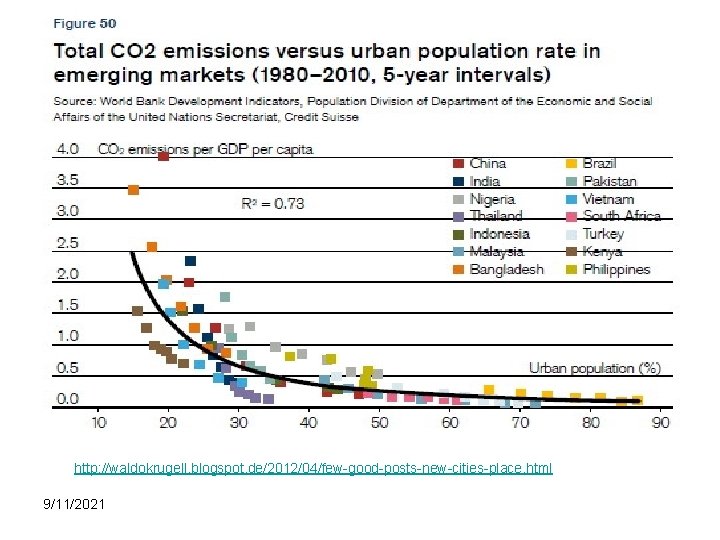
http: //waldokrugell. blogspot. de/2012/04/few-good-posts-new-cities-place. html 9/11/2021
Why learning? Ø Cities with better-educated individuals have stronger economies; Ø In term of social inclusion or exclusion and learning, lower educational levels are associated, with unemployment; Ø Learning is critically important in a city’s efforts to attract and retain skilled and diverse workers; Ø Learning is crucial to improve the quality of life; Ø Cities in a globalised world cannot afford not to become learning cities (Longworth, 2010) 9/11/2021
Examples of learning cities around the world More than 1000 cities in the world have already become or are building Learning/Educating cities. The building of Learning/Educating Cities has become a considerable world-wide phenomenon. 9/11/2021
Ø In 1990 s, implement the European Lifelong Learning Initiative (ELLI) Ø In 1998,started to promote Towards a European Learning Society (TELS)
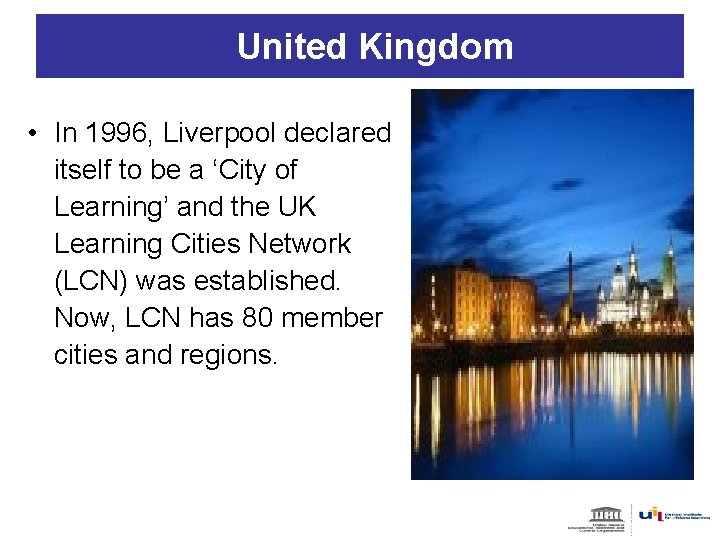
United Kingdom • In 1996, Liverpool declared itself to be a ‘City of Learning’ and the UK Learning Cities Network (LCN) was established. Now, LCN has 80 member cities and regions.
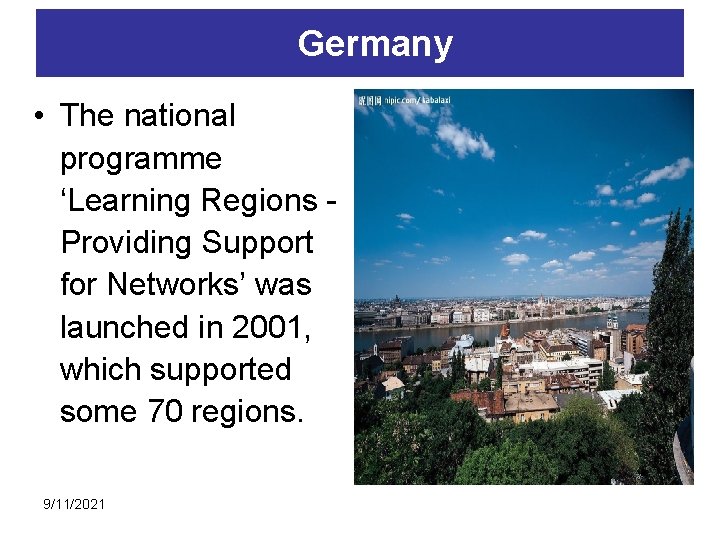
Germany • The national programme ‘Learning Regions Providing Support for Networks’ was launched in 2001, which supported some 70 regions. 9/11/2021
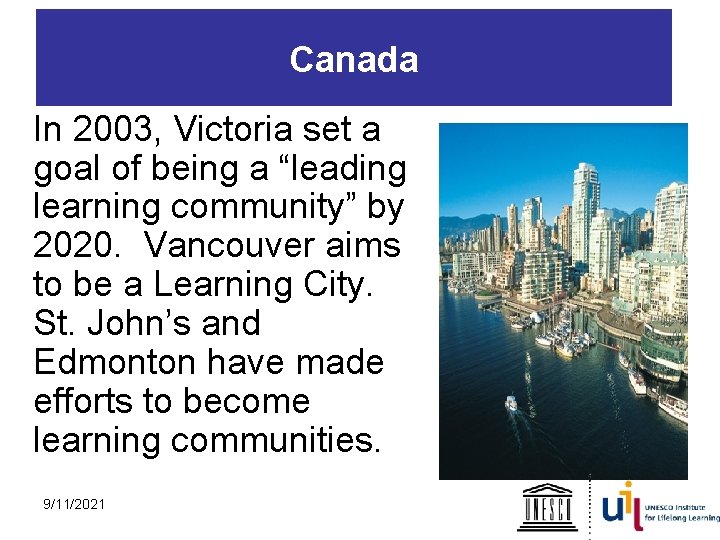
Canada In 2003, Victoria set a goal of being a “leading learning community” by 2020. Vancouver aims to be a Learning City. St. John’s and Edmonton have made efforts to become learning communities. 9/11/2021
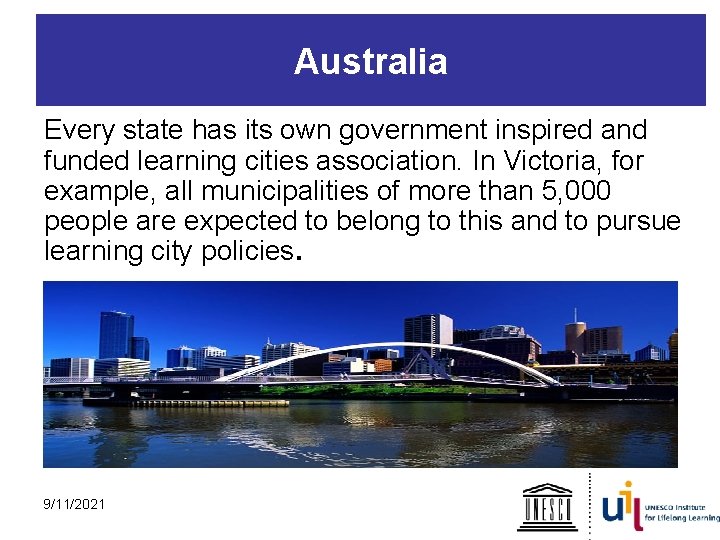
Australia Every state has its own government inspired and funded learning cities association. In Victoria, for example, all municipalities of more than 5, 000 people are expected to belong to this and to pursue learning city policies. 9/11/2021
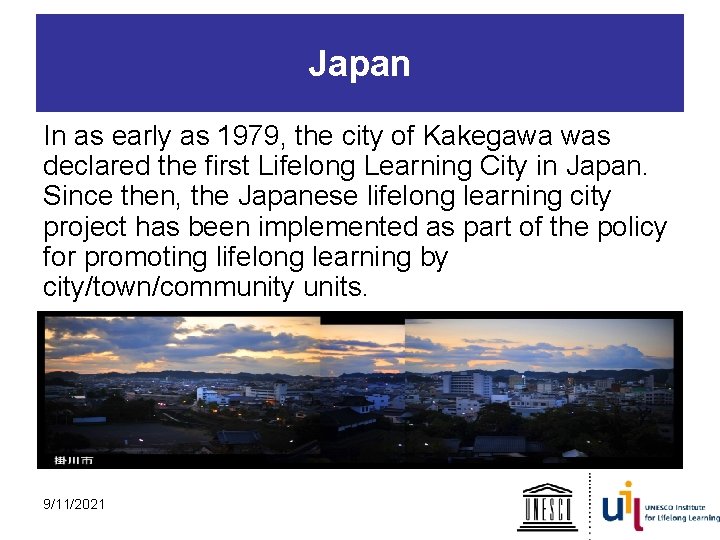
Japan In as early as 1979, the city of Kakegawa was declared the first Lifelong Learning City in Japan. Since then, the Japanese lifelong learning city project has been implemented as part of the policy for promoting lifelong learning by city/town/community units. 9/11/2021
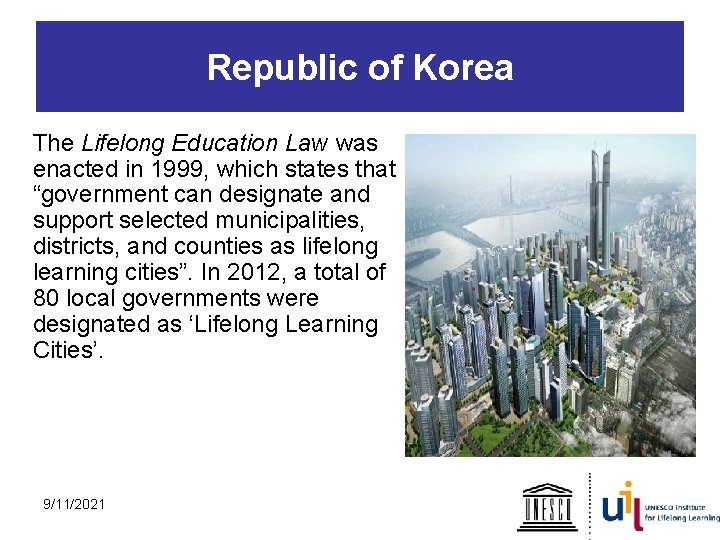
Republic of Korea The Lifelong Education Law was enacted in 1999, which states that “government can designate and support selected municipalities, districts, and counties as lifelong learning cities”. In 2012, a total of 80 local governments were designated as ‘Lifelong Learning Cities’. 9/11/2021
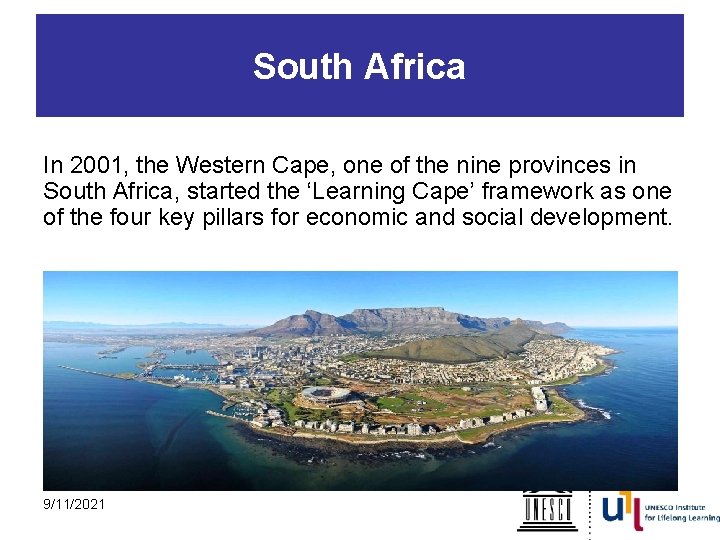
South Africa In 2001, the Western Cape, one of the nine provinces in South Africa, started the ‘Learning Cape’ framework as one of the four key pillars for economic and social development. 9/11/2021
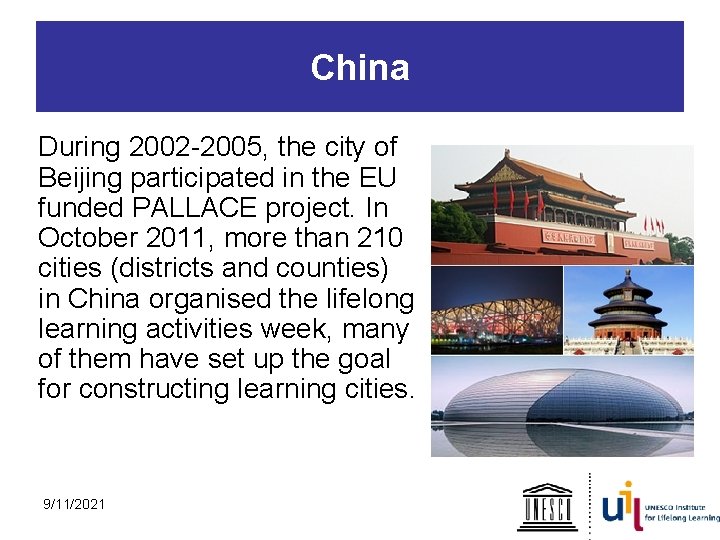
China During 2002 -2005, the city of Beijing participated in the EU funded PALLACE project. In October 2011, more than 210 cities (districts and counties) in China organised the lifelong learning activities week, many of them have set up the goal for constructing learning cities. 9/11/2021
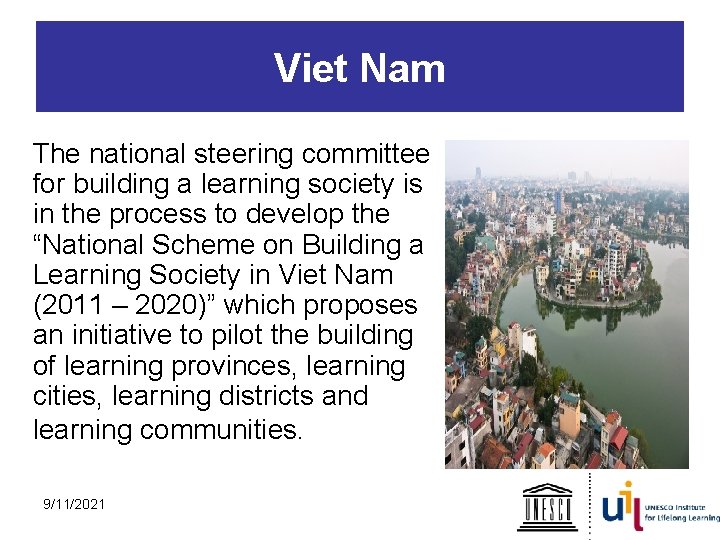
Viet Nam The national steering committee for building a learning society is in the process to develop the “National Scheme on Building a Learning Society in Viet Nam (2011 – 2020)” which proposes an initiative to pilot the building of learning provinces, learning cities, learning districts and learning communities. 9/11/2021
Definition of a learning city A Learning City is one which invests in quality lifelong learning for all in order to: – Promote inclusive learning from basic to higher education – Invest in the sustainable growth of its workplaces, – Re-vitalise the vibrant energy of its communities, – Nurture a culture of learning throughout life, – Exploit the value of local, regional and international partnerships, and – Guarantee the fulfillment of its environmental obligations. In so doing it will release the strength and capacity of all its resources for creating individual empowerment and cultural prosperity, social cohesion and economic prosperity, and sustainable development. 9/11/2021
UNESCO Initiative In response to Member States’ call to adopt a more pragmatic and instrumental approach to promoting lifelong learning, UNESCO/UIL plans to establish: UNESCO Global Learning Cities Network UNESCO GLCN With its Secretariat at the UNESCO Institute for Lifelong learning 9/11/2021
Overall aim UNESCO GLCN Ø To create a global platform to mobilise cities and demonstrate how to use effectively their resources in every sector to develop and enrich all their human potential to foster lifelong learning for all, to develop equality and social justice, to maintain harmonious social cohesion, and to create sustainable prosperity. 9/11/2021
Objectives of UNESCO GLCN • Advocate lifelong learning for all; • Facilitate research; • Promote policy dialogue and peer learning; • Serve as a clearing-house; • Provide capacity development; • Develop a Global Learning City Index; • Monitor the implementation of the Index. 9/11/2021
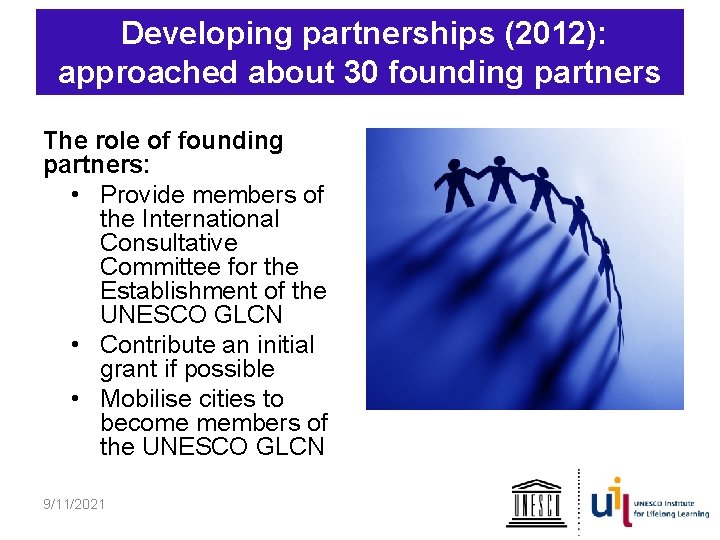
Developing partnerships (2012): approached about 30 founding partners The role of founding partners: • Provide members of the International Consultative Committee for the Establishment of the UNESCO GLCN • Contribute an initial grant if possible • Mobilise cities to become members of the UNESCO GLCN 9/11/2021
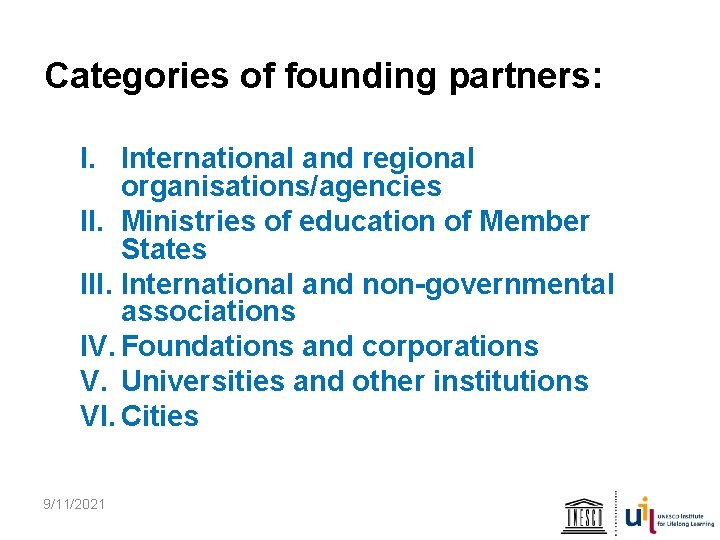
Categories of founding partners: I. International and regional organisations/agencies II. Ministries of education of Member States III. International and non-governmental associations IV. Foundations and corporations V. Universities and other institutions VI. Cities 9/11/2021
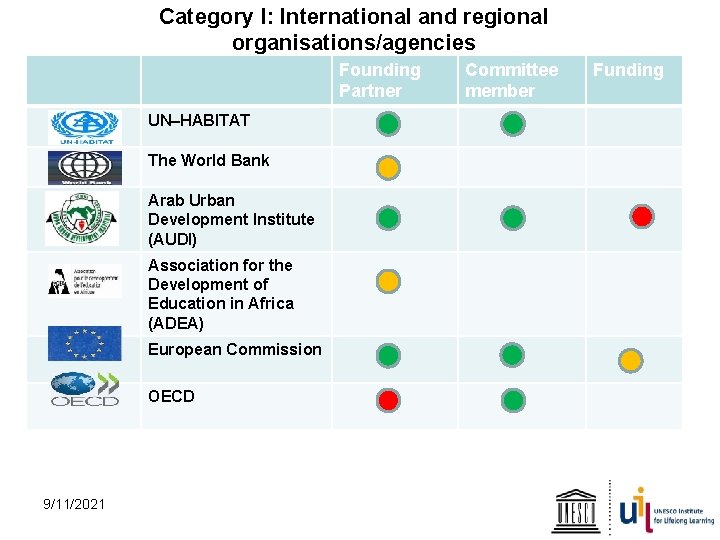
Category I: International and regional organisations/agencies Founding Partner UN–HABITAT The World Bank Arab Urban Development Institute (AUDI) Association for the Development of Education in Africa (ADEA) European Commission OECD 9/11/2021 Committee member Funding
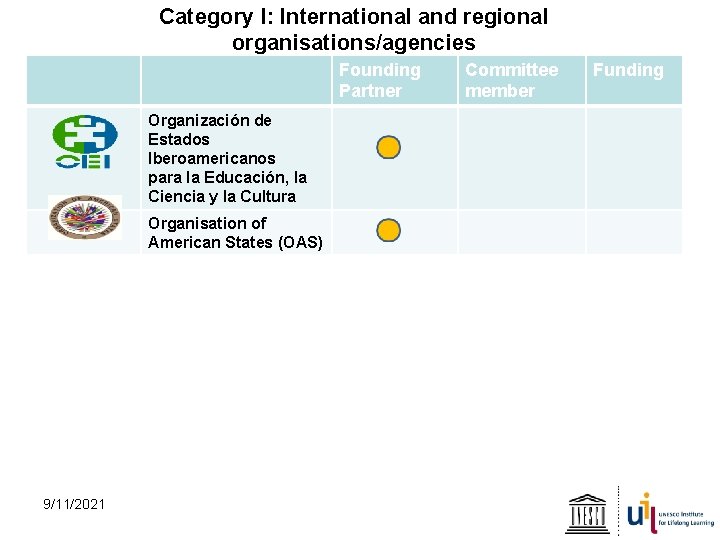
Category I: International and regional organisations/agencies Founding Partner Organización de Estados Iberoamericanos para la Educación, la Ciencia y la Cultura Organisation of American States (OAS) 9/11/2021 Committee member Funding
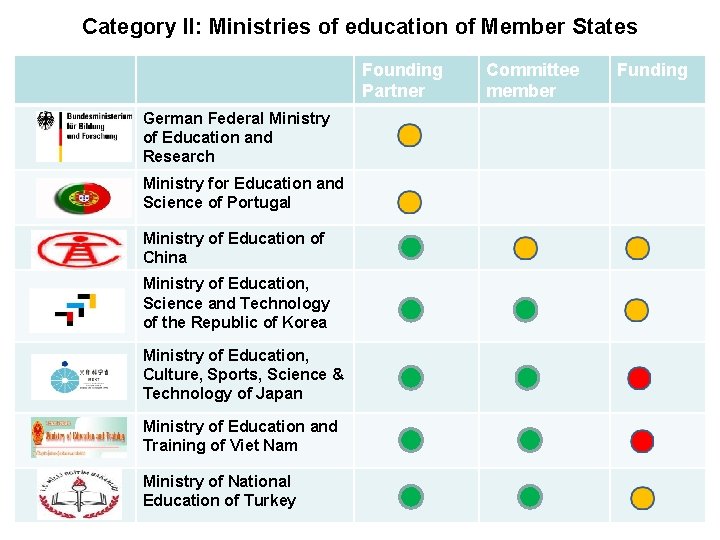
Category II: Ministries of education of Member States Founding Partner German Federal Ministry of Education and Research Ministry for Education and Science of Portugal Ministry of Education of China Ministry of Education, Science and Technology of the Republic of Korea Ministry of Education, Culture, Sports, Science & Technology of Japan Ministry of Education and Training of Viet Nam 9/11/2021 Ministry of National Education of Turkey Committee member Funding
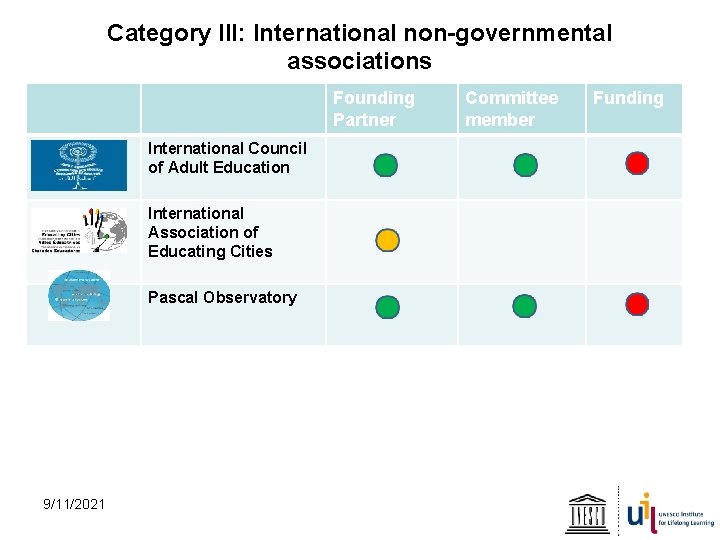
Category III: International non-governmental associations Founding Partner International Council of Adult Education International Association of Educating Cities Pascal Observatory 9/11/2021 Committee member Funding
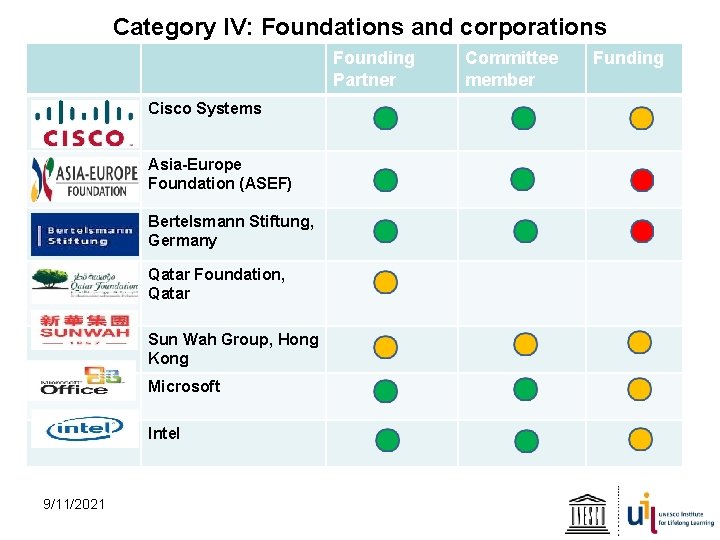
Category IV: Foundations and corporations Founding Partner Cisco Systems Asia-Europe Foundation (ASEF) Bertelsmann Stiftung, Germany Qatar Foundation, Qatar Sun Wah Group, Hong Kong Microsoft Intel 9/11/2021 Committee member Funding
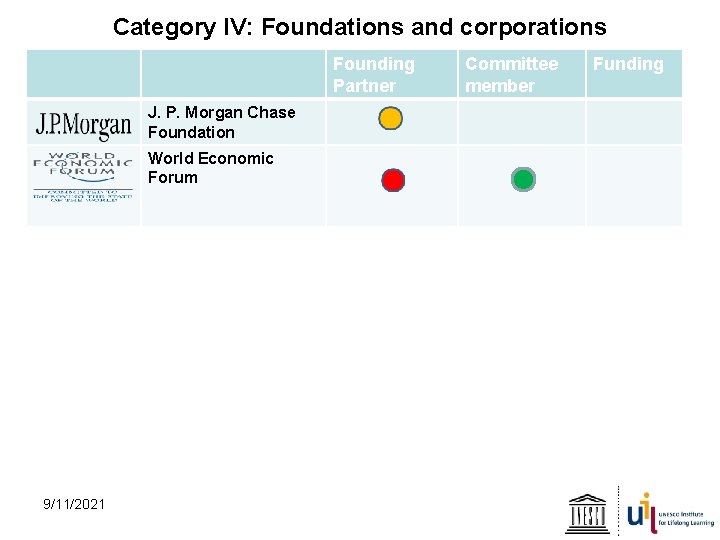
Category IV: Foundations and corporations Founding Partner J. P. Morgan Chase Foundation World Economic Forum 9/11/2021 Committee member Funding
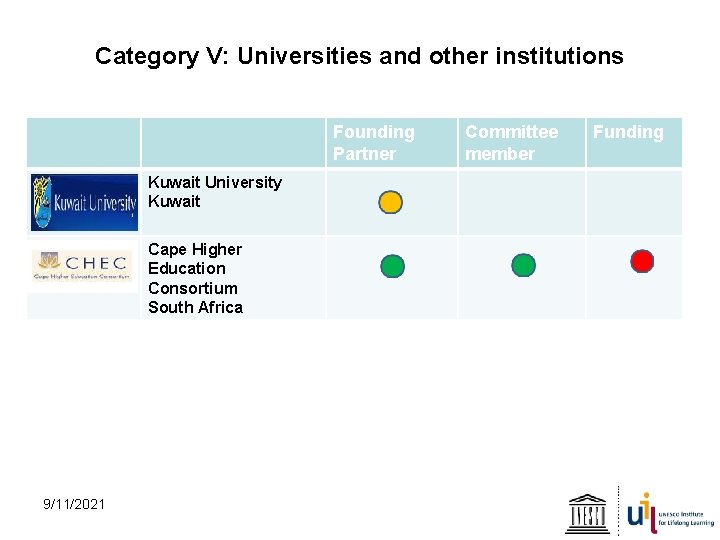
Category V: Universities and other institutions Founding Partner Kuwait University Kuwait Cape Higher Education Consortium South Africa 9/11/2021 Committee member Funding
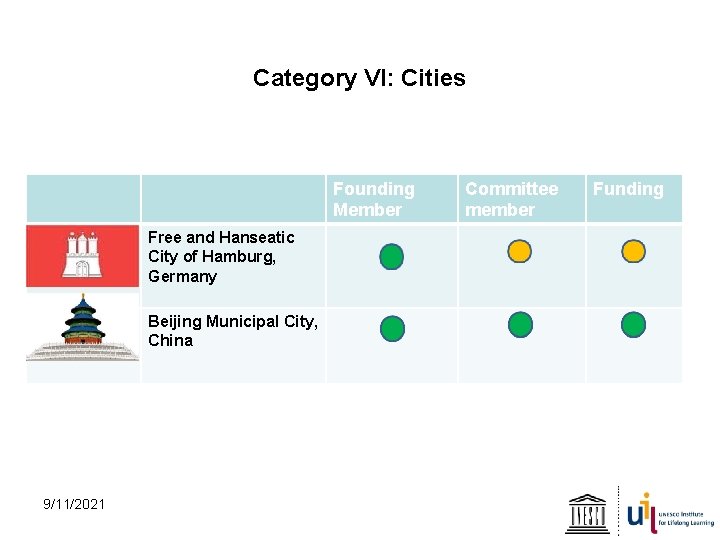
Category VI: Cities Founding Member Free and Hanseatic City of Hamburg, Germany Beijing Municipal City, China 9/11/2021 Committee member Funding
A framework for the Global Learning City Index
Features of good indicators • Ambitious but achievable: achieving the target should represent significant progress but should also be realistic • Crucial - Every indicator reflects a value, a priority or a critical issue. • Relevant – an indicator must fit the purpose we have it for; Achieving the target should contribute significantly to meeting a key objective. 9/11/2021 J. YANG 40
• Clear and understandable – an indicator must be simple and easy for all stakeholders to understand, and should make sense to the average person. • Easy to measure – an indicator should be measured by available data, or by data to be collected through a well-designed survey. • Valid and reliable – people must trust the information that an indicator provides.
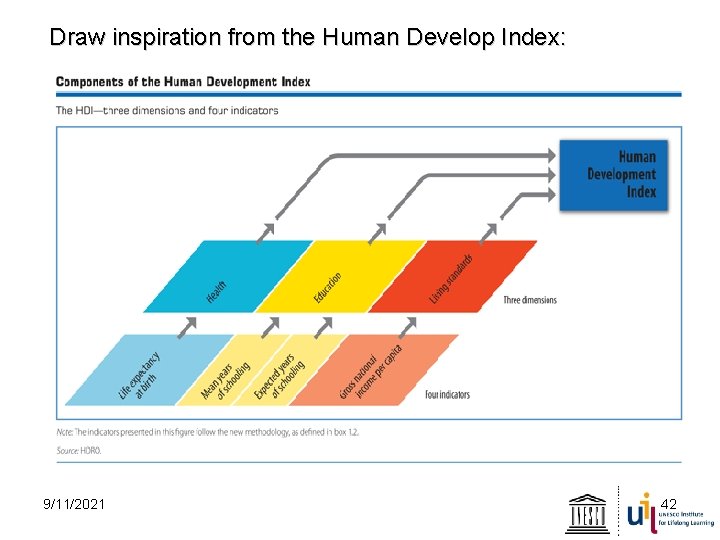
Draw inspiration from the Human Develop Index: 9/11/2021 42
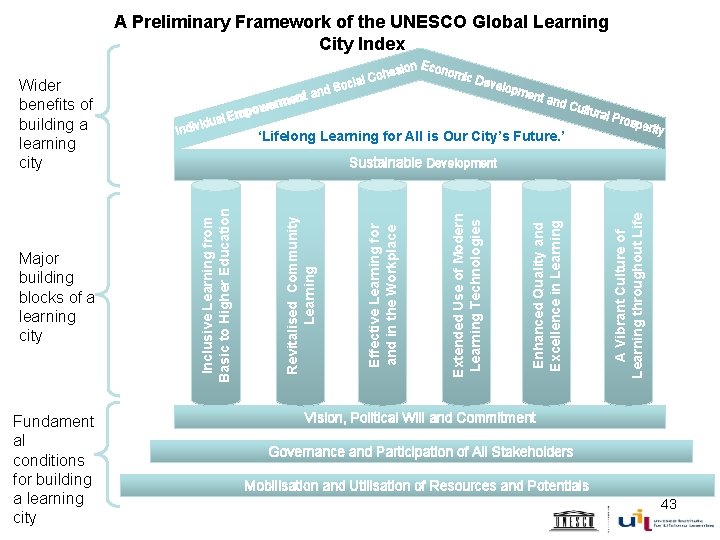
A Preliminary Framework of the UNESCO Global Learning City Index Fundament al conditions for building a learning city dual i Indiv en werm ion Econom ic De velop men t and o Emp Cultu r ‘Lifelong Learning for All is Our City’s Future. ’ al Pr ospe rity A Vibrant Culture of Learning throughout Life Enhanced Quality and Excellence in Learning Extended Use of Modern Learning Technologies Effective Learning for and in the Workplace Sustainable Development Revitalised Community Learning Major building blocks of a learning city t and Inclusive Learning from Basic to Higher Education Wider benefits of building a learning city ohes C l a i Soc Vision, Political Will and Commitment Governance and Participation of All Stakeholders Mobilisation and Utilisation of Resources and Potentials 43
The Pediment: 3 areas of focus reflect the wider benefits or purposefulness of building a modern learning City: (1) Individual Empowerment and Social Cohesion; (2) Economic Development and Cultural Prosperity; (3) Sustainable Development.
The Columns – six areas of focus reflect the major building blocks of a learning city: (1) Inclusive learning from basic to higher education; (2) Revitalised community learning; (3) Effective learning for and in the workplace; (4) Extended use of modern learning technologies; (5) Enhanced quality and excellence in learning, and (6) A vibrant culture of learning throughout life.
The Foundational Steps - three areas of focus reflect the fundamental conditions for building a learning city (1) Vision, political will and commitment; (2) Governance and participation of all stakeholders; and (3) Mobilisation and utilisation of resources and potentials.
The 1 st Global Learning City Conference 21 -22 October 2013 · Beijing 9/11/2021
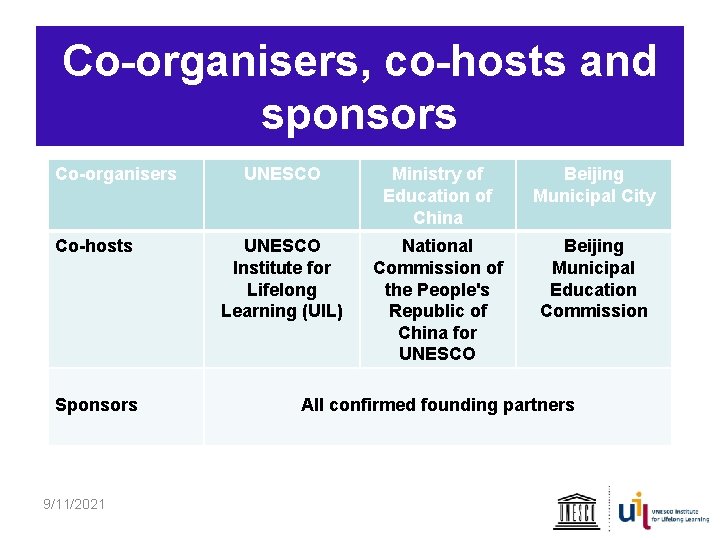
Co-organisers, co-hosts and sponsors Co-organisers Co-hosts Sponsors 9/11/2021 UNESCO Ministry of Education of China Beijing Municipal City UNESCO Institute for Lifelong Learning (UIL) National Commission of the People's Republic of China for UNESCO Beijing Municipal Education Commission All confirmed founding partners

Dates? November 2013 9/11/2021
Objectives The overall aim of the Conference: To create a platform to mobilise cities and demonstrate how to use their resources effectively in every sector to develop and enrich all their human potential for promoting lifelong learning for all, for developing equality and social justice, for maintaining harmonious social cohesion, and for creating sustainable prosperity. 9/11/2021
The objectives of the Conference: – To launch the establishment of the UNESCO GLCN; – To adopt the Beijing Declaration on Building Learning Cities; – To validate the UNESCO Global Learning Cities Index; and – To exchange best practices in building learning cities in the international community. 9/11/2021
Themes Lifelong learning for all: Inclusion, prosperity and sustainability in cities • Make a case for building a learning city • The building blocks of a learning city • The major strategies for building a learning city 9/11/2021
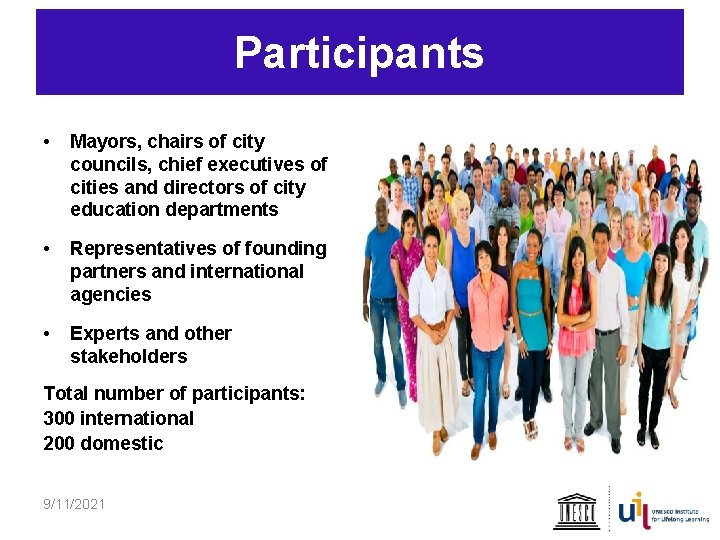
Participants Dp • Mayors, chairs of city councils, chief executives of cities and directors of city education departments • Representatives of founding partners and international agencies • Experts and other stakeholders Total number of participants: 300 international 200 domestic 9/11/2021
Road map November 2012: 2 nd International Consultative Meeting on Establishing the UNESCO GLCN organised in Hangzhou, China, co-hosted by the UNESCO Institute for Lifelong Learning and the Chinese National Commission for UNESCO December 2012: Preparatory meeting organized in Beijing, cohosted by UNESCO Institute for Lifelong Learning and the Chinese National Commission for UNESCO, and the Beijing Municipal Education Commission March 2013: Conference venue and hotel selected by the Chinese National Commission for UNESCO, and the Beijing Municipal Education Commission April 2014: Host Country Agreement signed by representatives of UNESCO and the Ministry of Education of China 9/11/2021
May 2013: • 2 nd International Consultative Meeting on Establishing the UNESCO GLCN organized in Seoul, the Republic of Korea, co-hosted by UNESCO Institute for Lifelong Learning and the National Institute for Lifelong Education (NILE) • The UNESCO GLCN Website established by UNESCO Institute for Lifelong Learning • The Conference Website established by Beijing Municipal Education Commission June 2013: Invitations to UNESCO Member States and international organisations/agencies dispatched by the Director-General of UNESCO 9/11/2021
September 2013: • Registration for participation completed • Conference agenda finalized October 2013: • The draft Beijing Declaration on Building Learning Cities finalized and translated by the UNESCO Institute for Lifelong Learning • The draft Global Learning City Index finalized and translated by the UNESCO Institute for Lifelong Learning November 2013: Conference organised 9/11/2021
Many thanks! Project Secretariat UNESCO Institute for Lifelong Learning Feldbrunnenstr. 58 20148 Hamburg Germany Tel. : 0049 40 80 41 12 Email: uil-projects@unesco. org 9/11/2021 57
- Slides: 57