
Lifelines 2 Hypothesis Generation in Multiple EHRs Taowei

- Slides: 33
Lifelines 2: Hypothesis Generation in Multiple EHRs Taowei David Wang Catherine Plaisant Ben Shneiderman Shawn Murphy Mark Smith Human-Computer Interaction Lab, University of Maryland
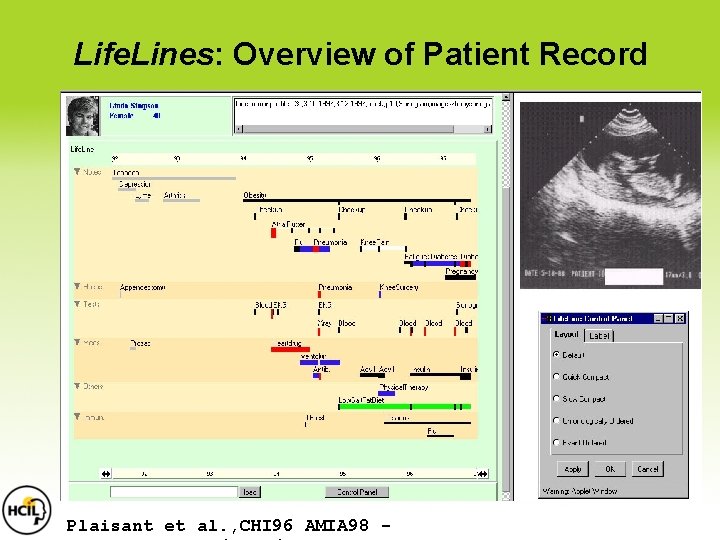
Life. Lines: Overview of Patient Record Plaisant et al. , CHI 96 AMIA 98 -
Single record Millions of records • Large databases of Electronic Health Records (EHRs): • • • Observational studies Recruitment for clinical trials Hospital metrics Alarm design and testing etc. Often involves temporal comparison relative to an important event (e. g. heart attack, start of a treatment, 1 st diagnosis of cancer)
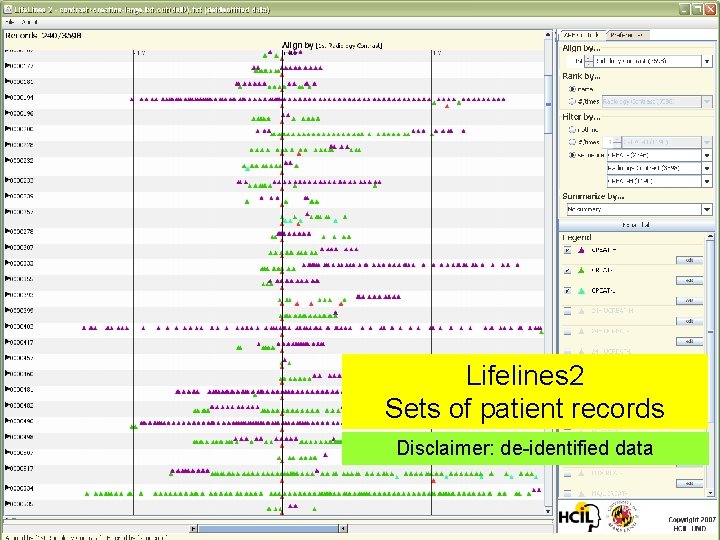
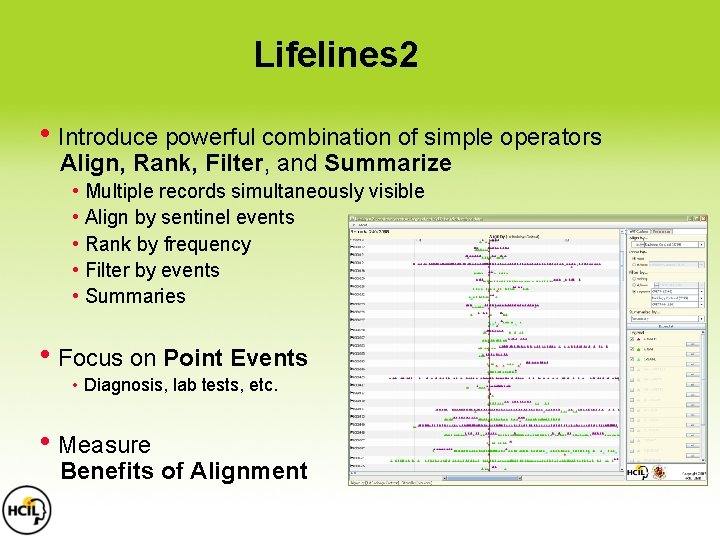
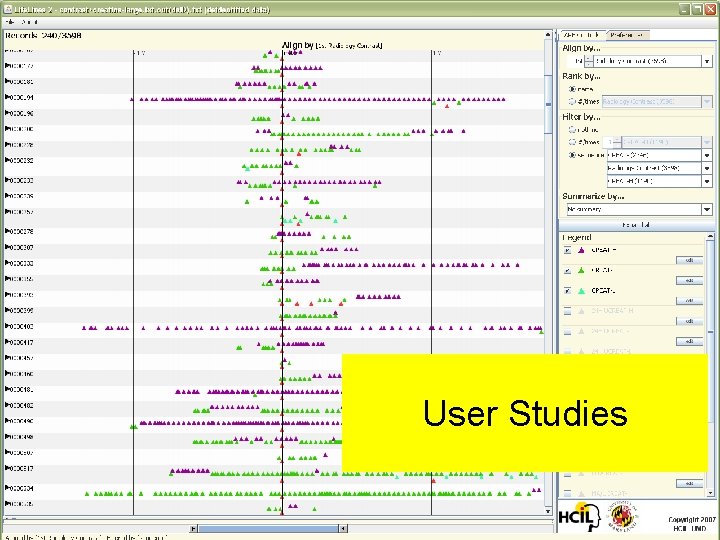
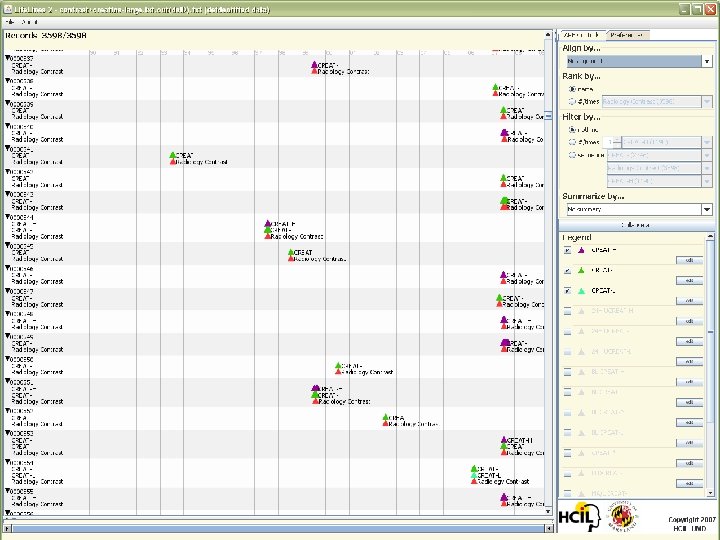
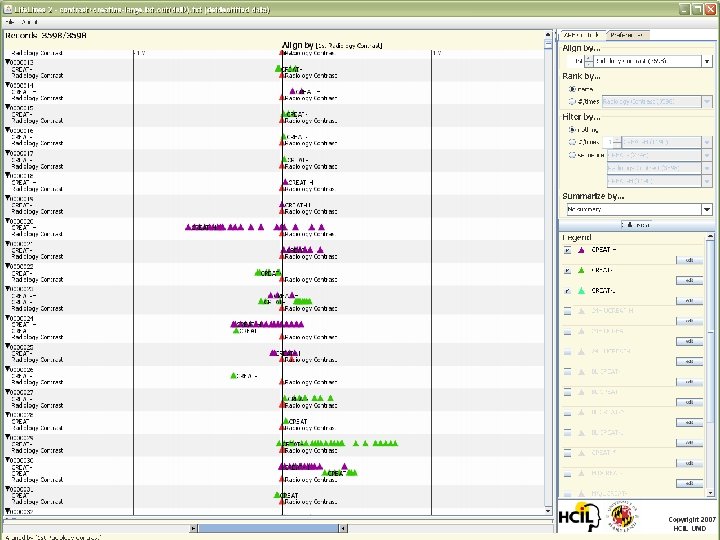
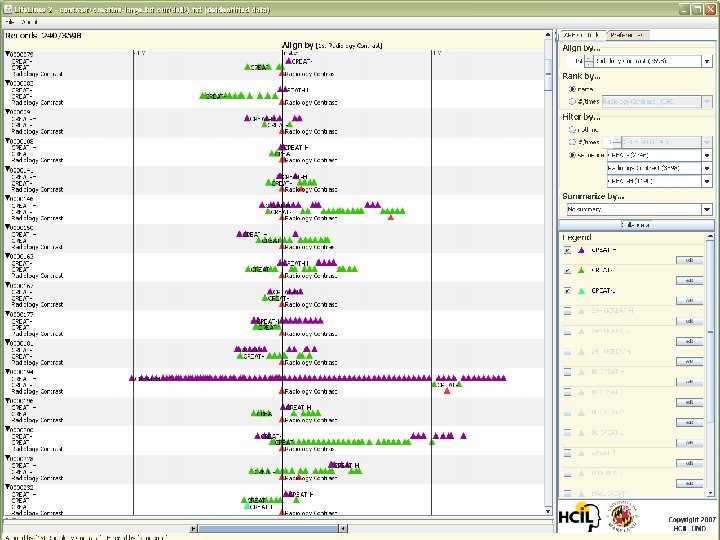
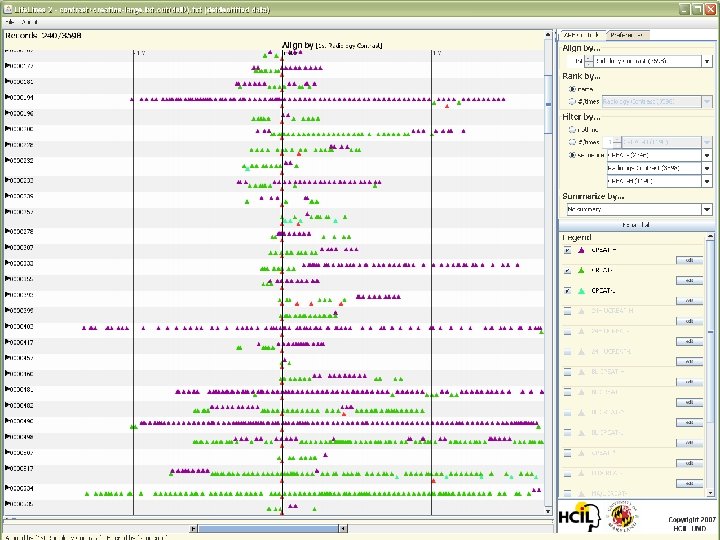
Lifelines 2 Sets of patient records multiple patients Disclaimer: de-identified data
Lifelines 2 • Introduce powerful combination of simple operators Align, Rank, Filter, and Summarize • Multiple records simultaneously visible • Align by sentinel events • Rank by frequency • Filter by events • Summaries • Focus on Point Events • Diagnosis, lab tests, etc. • Measure Benefits of Alignment
• Sample of Related Work • Demo • (Quick) Report on Studies • Ongoing & Future Work
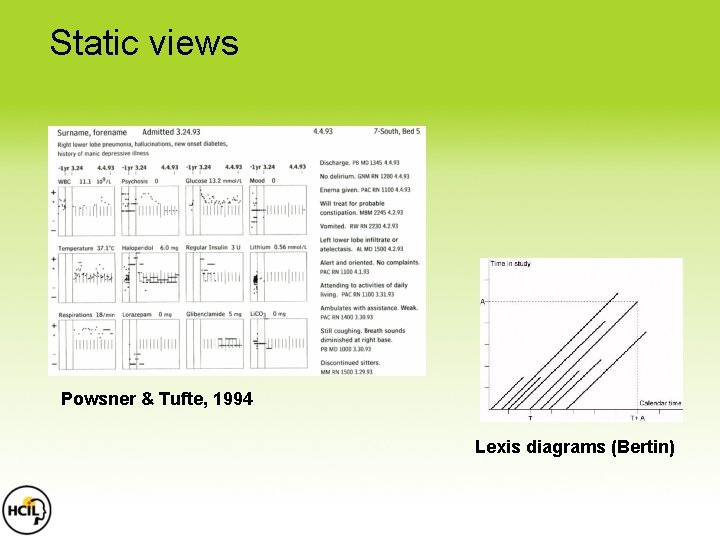
Static views Powsner & Tufte, 1994 Lexis diagrams (Bertin)
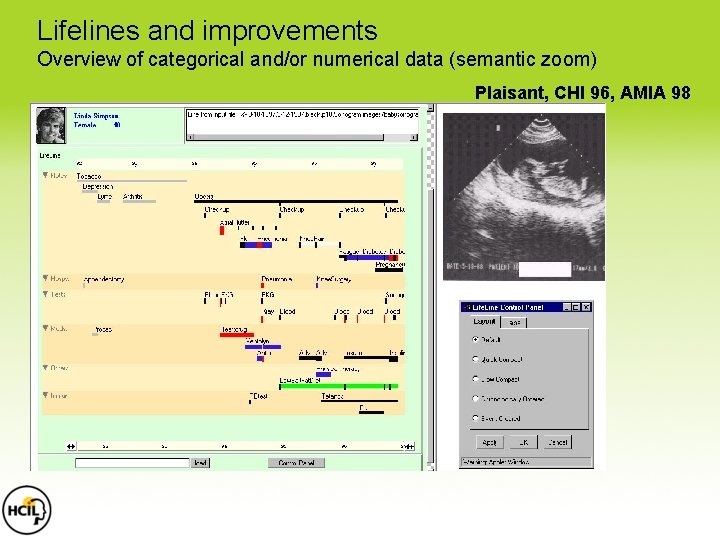
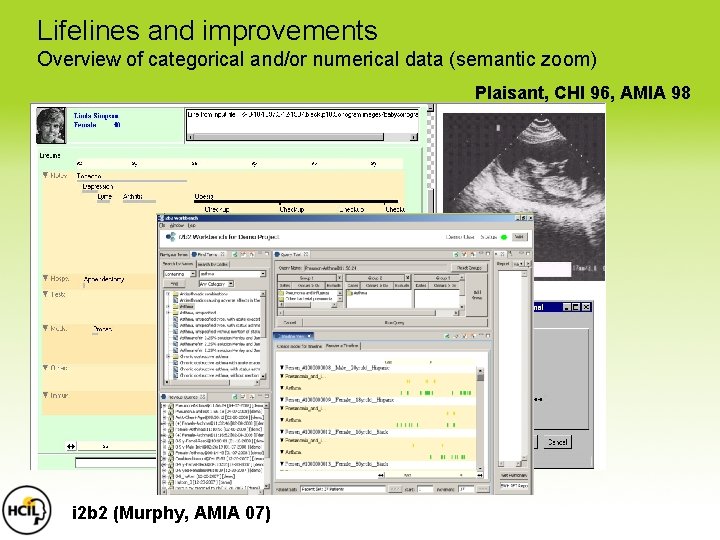
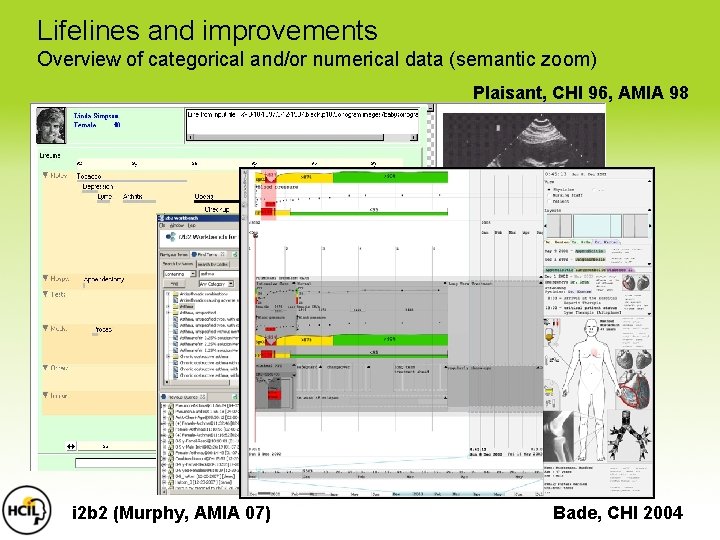
Lifelines and improvements Overview of categorical and/or numerical data (semantic zoom) Plaisant, CHI 96, AMIA 98
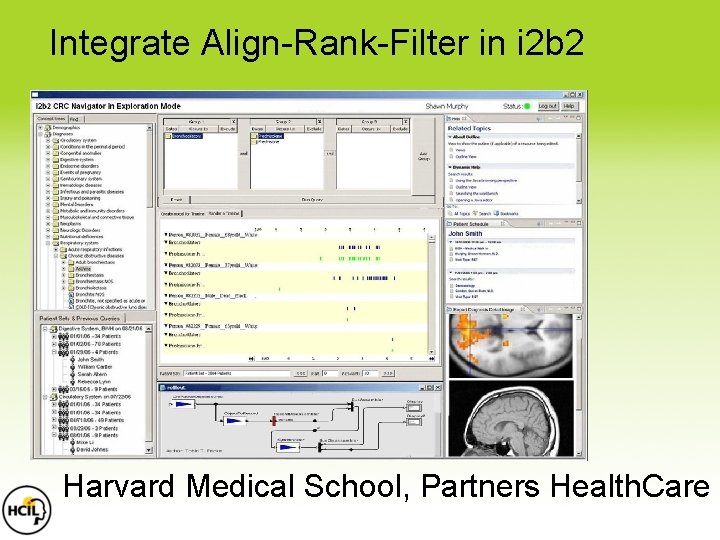
Lifelines and improvements Overview of categorical and/or numerical data (semantic zoom) Plaisant, CHI 96, AMIA 98 i 2 b 2 (Murphy, AMIA 07)
Lifelines and improvements Overview of categorical and/or numerical data (semantic zoom) Plaisant, CHI 96, AMIA 98 i 2 b 2 (Murphy, AMIA 07) Bade, CHI 2004
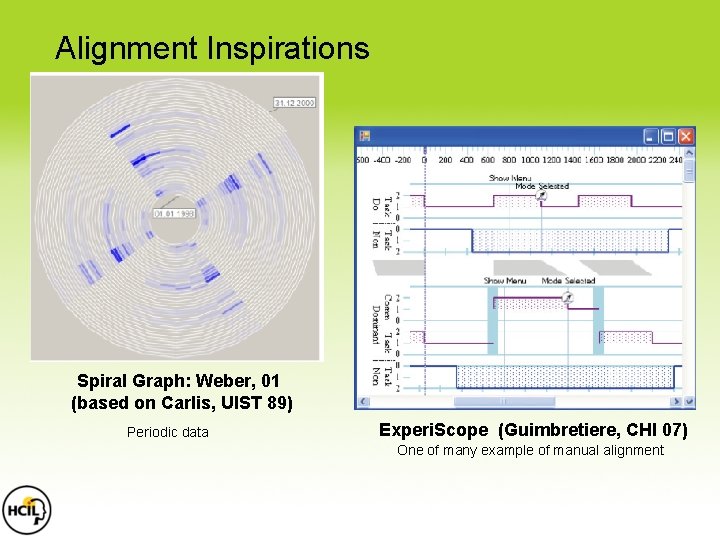
Alignment Inspirations Spiral Graph: Weber, 01 (based on Carlis, UIST 89) Periodic data Experi. Scope (Guimbretiere, CHI 07) One of many example of manual alignment
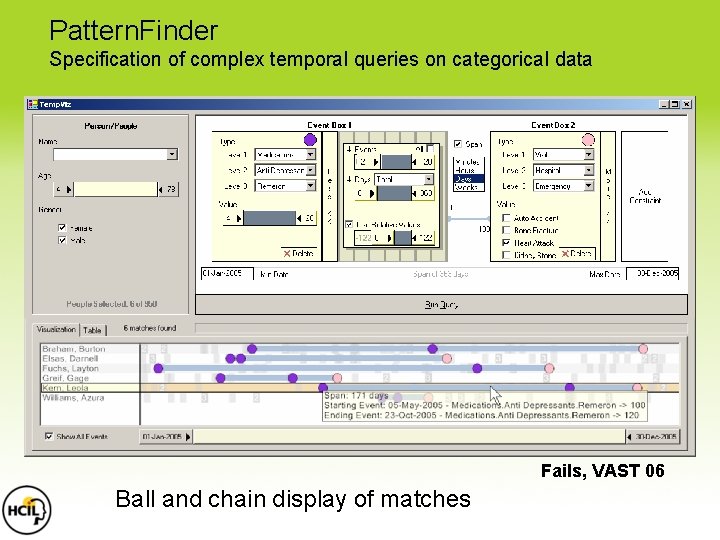
Pattern. Finder Specification of complex temporal queries on categorical data Patients with increasing dosages of Remeron followed by a heart attack within 180 days Fails, VAST 06 Ball and chain display of matches
• Sample of Related Work • Demo Life. Lines 2 • Report on Studies • Ongoing & Future Work
Demo
User multiple. Studies patients
Two user studies • Controlled experiment on Alignment (some training, measure speed and error) • Domain expert qualitative study (no training, think aloud, discussion)
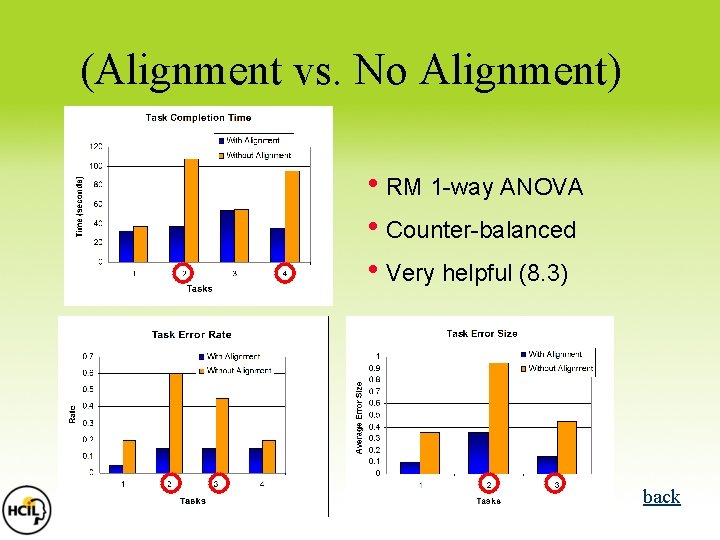
Two user studies • Controlled experiment (some training, measure speed and error) • Benefit of alignment: YES (Significant improvement on complex tasks) • 20 participants: grad students • Data: synthetic student record data Tasks checked as domain independent • Domain expert qualitative study (no training, think aloud, discussion) Details
Two user studies • Controlled experiment (some training, measure speed and error) • Benefit of alignment: YES (Significant improvement on complex tasks) • 20 participants: grad students Data: synthetic student record data Tasks checked as domain independent • Domain expert qualitative study (no training, think aloud, discussion) • Learnability: GOOD • General feedback and suggestions Suggestions • 4 participants: nurse, physician, 2 prof. of nursing • All experienced with EHR and medical research
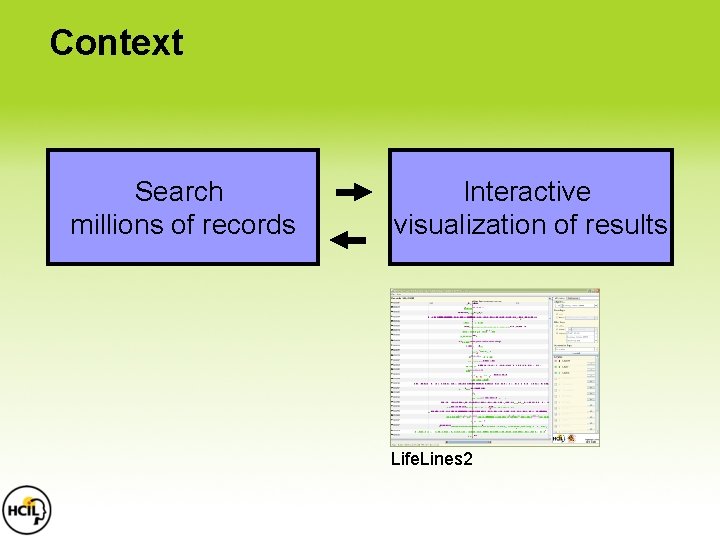
Context Search millions of records Interactive visualization of results Life. Lines 2
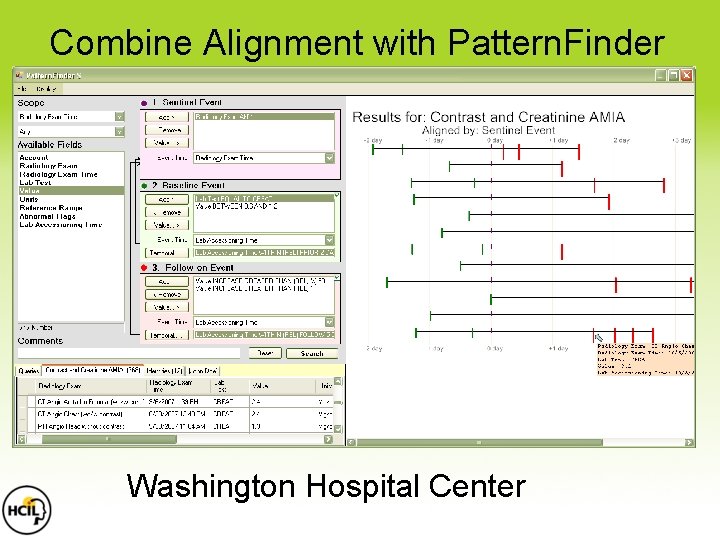
Combine Alignment with Pattern. Finder Washington Hospital Center
Integrate Align-Rank-Filter in i 2 b 2 Harvard Medical School, Partners Health. Care
In summary… • • Align Rank, Filter, and Summarize Powerful combination of simple operations to explore temporal categorical data (events) Performance benefit of alignment: significant • • Impact: Deployment in 2 large operational EHR systems Many applicable domains: • • Highway incident log Student records Web logs Vehicle fleet records
Thank you! www. cs. umd. edu/hcil/lifelines 2
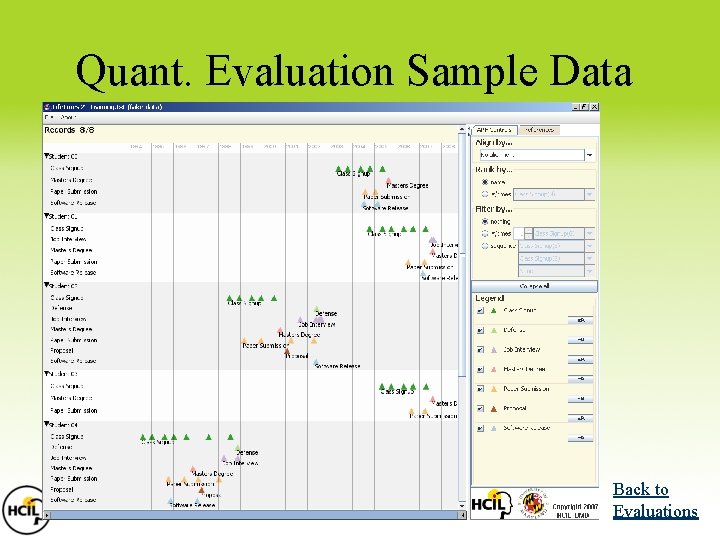
Quant. Evaluation Sample Data Back to Evaluations
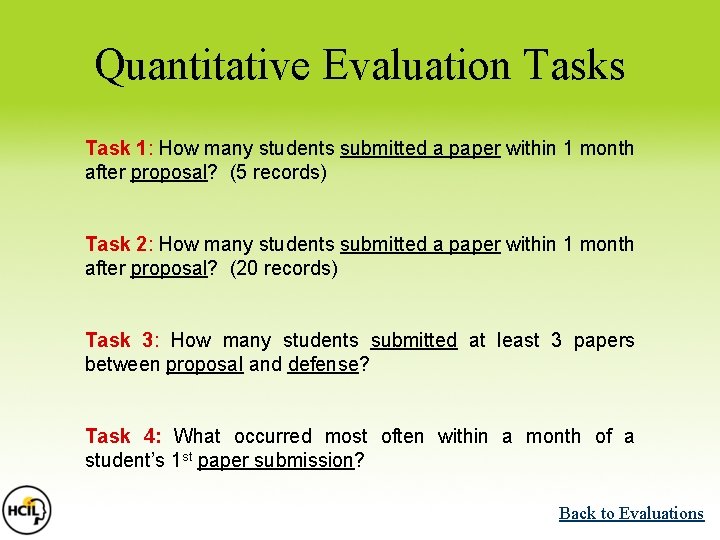
Quantitative Evaluation Tasks Task 1: How many students submitted a paper within 1 month after proposal? (5 records) Task 2: How many students submitted a paper within 1 month after proposal? (20 records) Task 3: How many students submitted at least 3 papers between proposal and defense? Task 4: What occurred most often within a month of a student’s 1 st paper submission? Back to Evaluations
(Alignment vs. No Alignment) • RM 1 -way ANOVA • Counter-balanced • Very helpful (8. 3) back
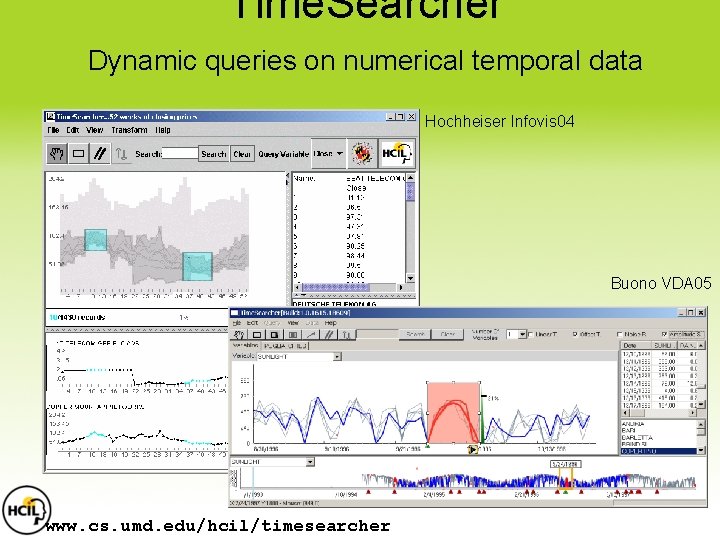
Time. Searcher Dynamic queries on numerical temporal data Hochheiser Infovis 04 Buono VDA 05 www. cs. umd. edu/hcil/timesearcher
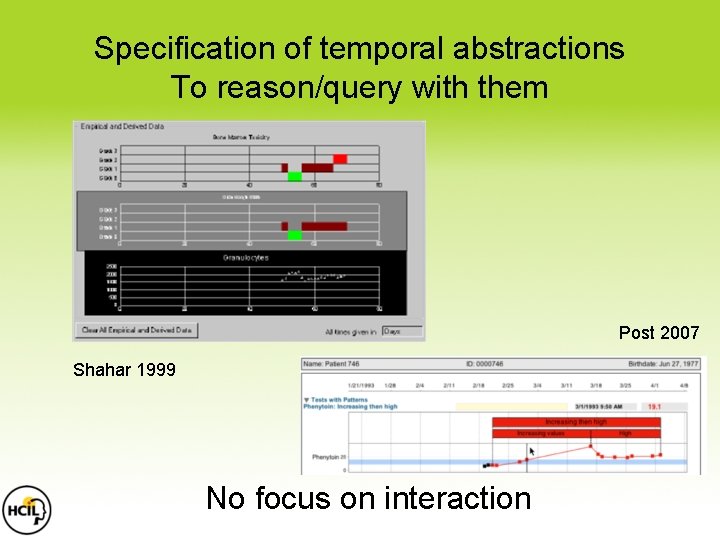
Specification of temporal abstractions To reason/query with them Post 2007 Shahar 1999 No focus on interaction