
Lifehistory Strategies of Fishes and their Relevance to
- Slides: 31
Life-history Strategies of Fishes and their Relevance to Ecosystem-Based Fisheries Management Rainer Froese If. M-GEOMAR rfroese@ifm-geomar. de
Content • What are life-history strategies? – Choice of key traits – Correlation of traits – Dealing with bias • Exploring life-history space • Ecosystems and life-history strategies • Implications for ecosystem-based fisheries management
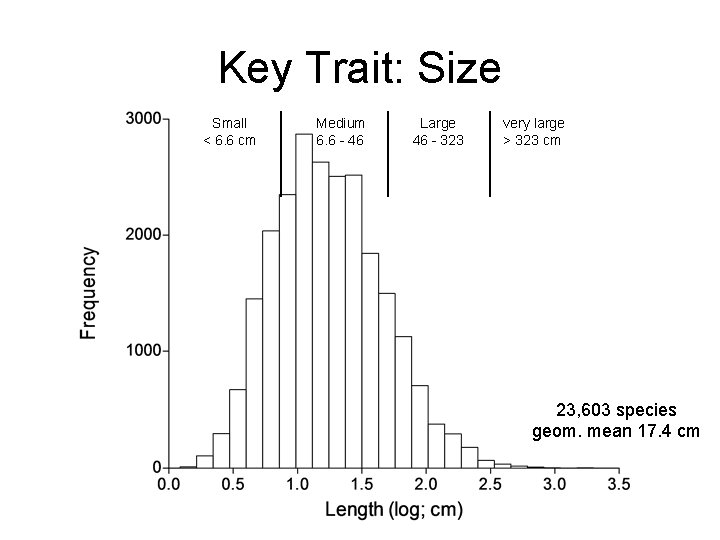
Key Trait: Size Small < 6. 6 cm Medium 6. 6 - 46 Large 46 - 323 very large > 323 cm 23, 603 species geom. mean 17. 4 cm
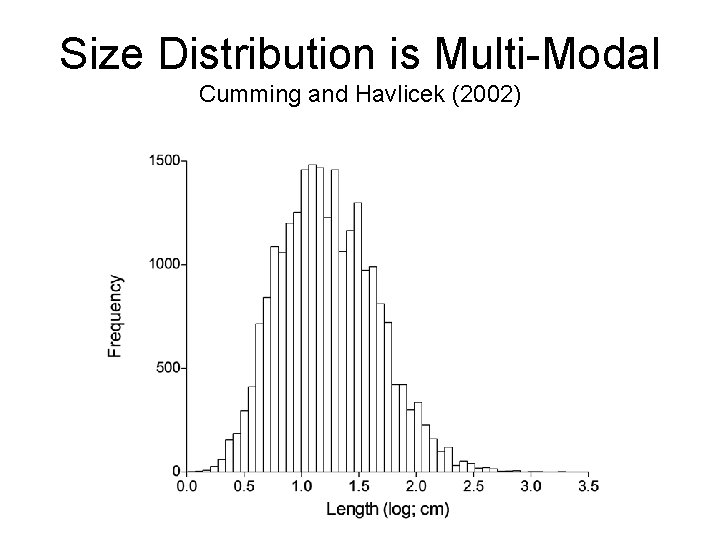
Size Distribution is Multi-Modal Cumming and Havlicek (2002)
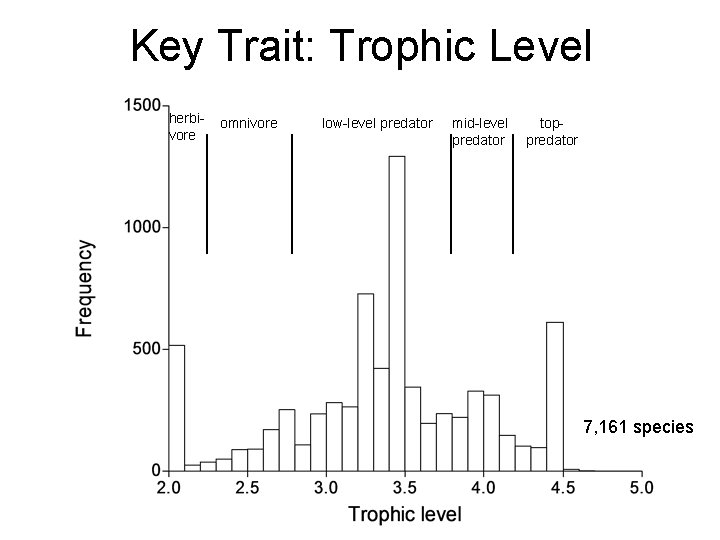
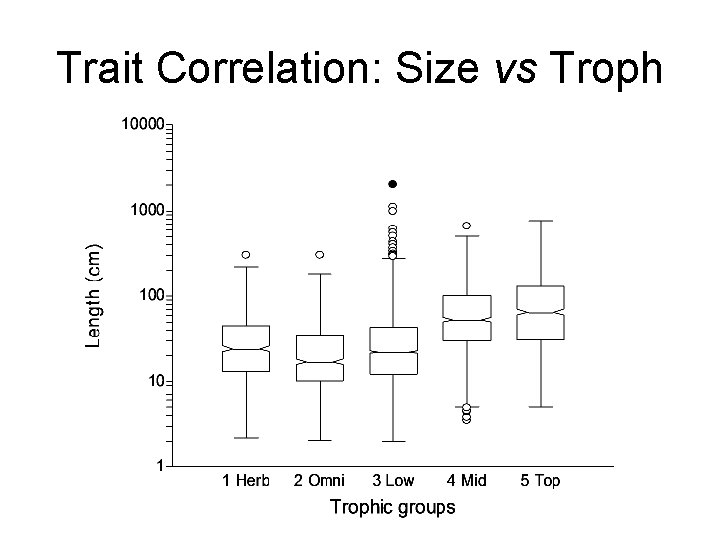
Key Trait: Trophic Level herbivore omnivore low-level predator mid-level predator toppredator 7, 161 species
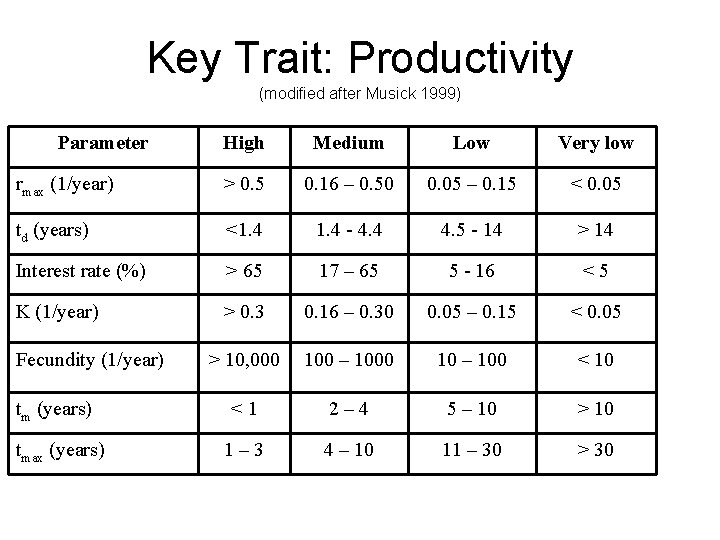
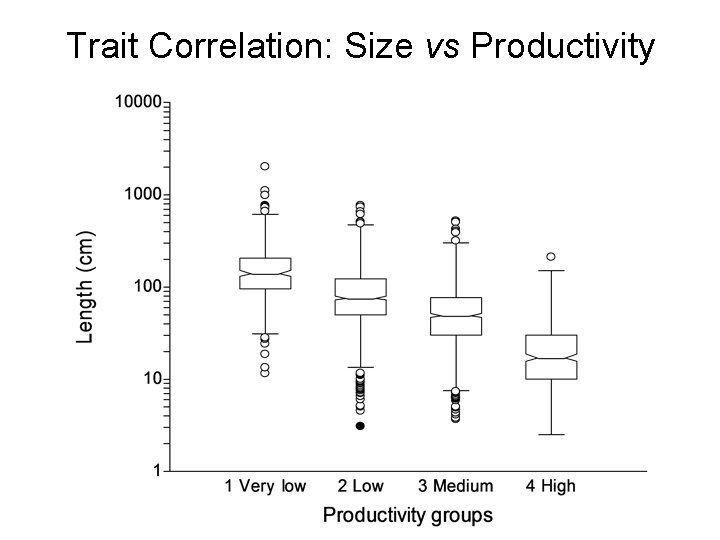
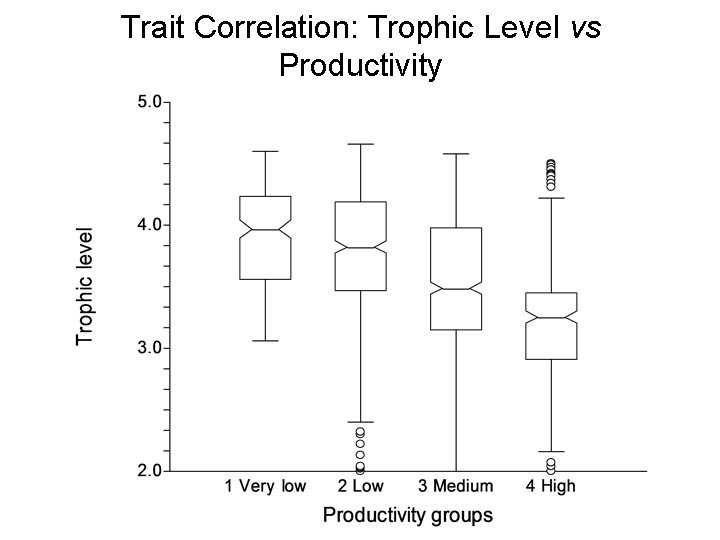
Key Trait: Productivity (modified after Musick 1999) Parameter High Medium Low Very low rmax (1/year) > 0. 5 0. 16 – 0. 50 0. 05 – 0. 15 < 0. 05 td (years) <1. 4 - 4. 4 4. 5 - 14 > 14 Interest rate (%) > 65 17 – 65 5 - 16 <5 K (1/year) > 0. 3 0. 16 – 0. 30 0. 05 – 0. 15 < 0. 05 > 10, 000 100 – 1000 10 – 100 < 10 <1 2– 4 5 – 10 > 10 1– 3 4 – 10 11 – 30 > 30 Fecundity (1/year) tm (years) tmax (years)
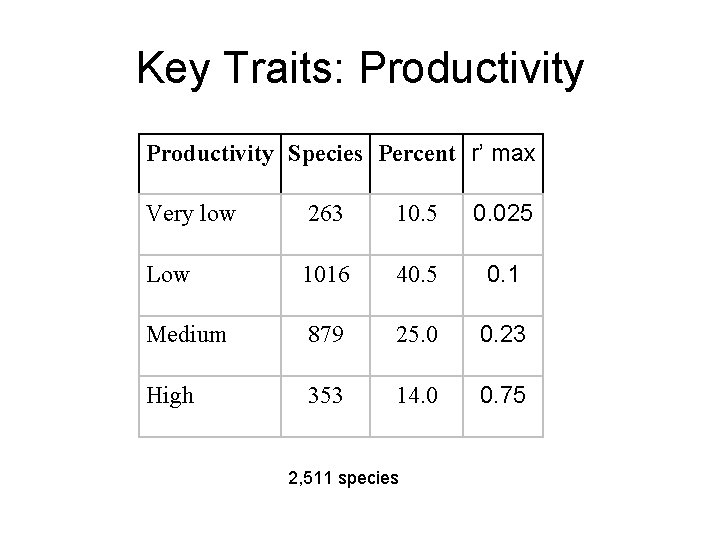
Key Traits: Productivity Species Percent r’ max Very low 263 10. 5 0. 025 Low 1016 40. 5 0. 1 Medium 879 25. 0 0. 23 High 353 14. 0 0. 75 2, 511 species
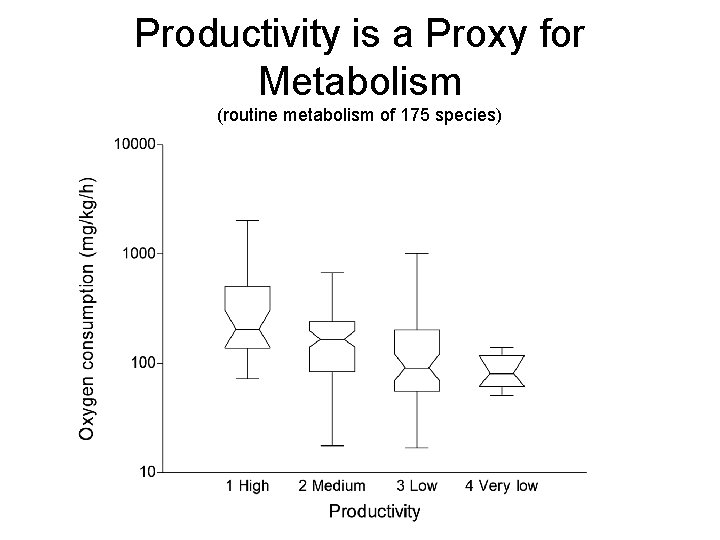
Productivity is a Proxy for Metabolism (routine metabolism of 175 species)
Trait Correlation: Size vs Troph
Trait Correlation: Size vs Productivity
Trait Correlation: Trophic Level vs Productivity
Available Data are Biased • Combined available data for 1, 880 species are biased towards large, commercial, northern-hemisphere, temperate species • Solution: Use modelling approach to expand data base
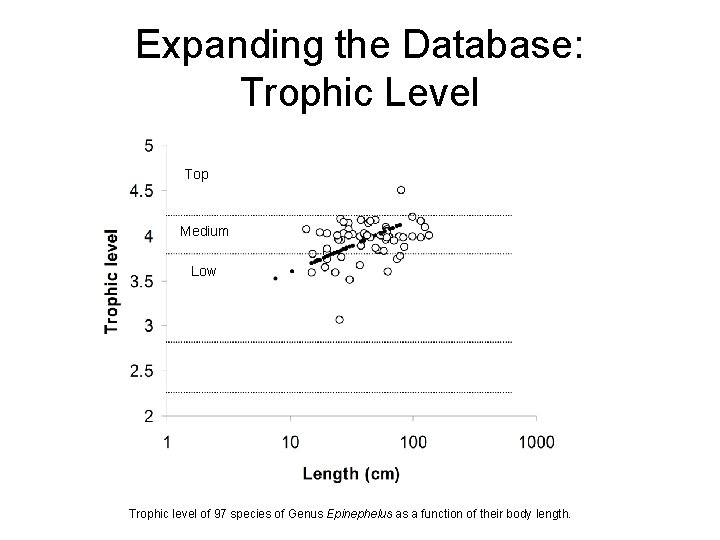
Expanding the Database: Trophic Level Top Medium Low Trophic level of 97 species of Genus Epinephelus as a function of their body length.
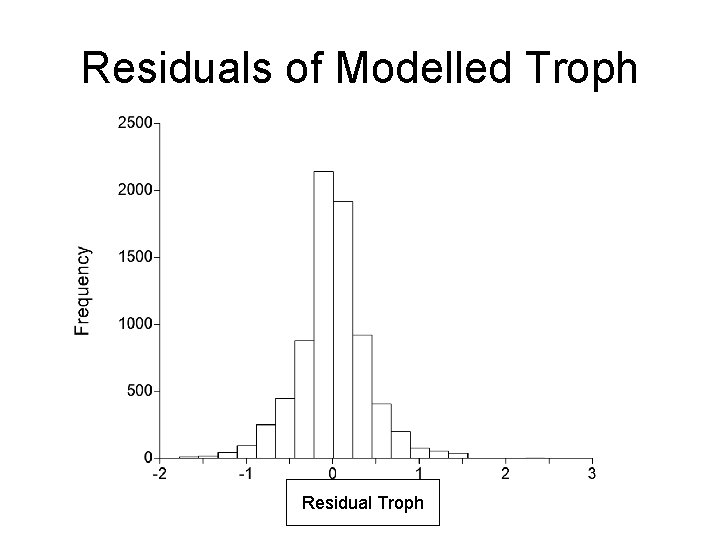
Residuals of Modelled Troph Residual Troph
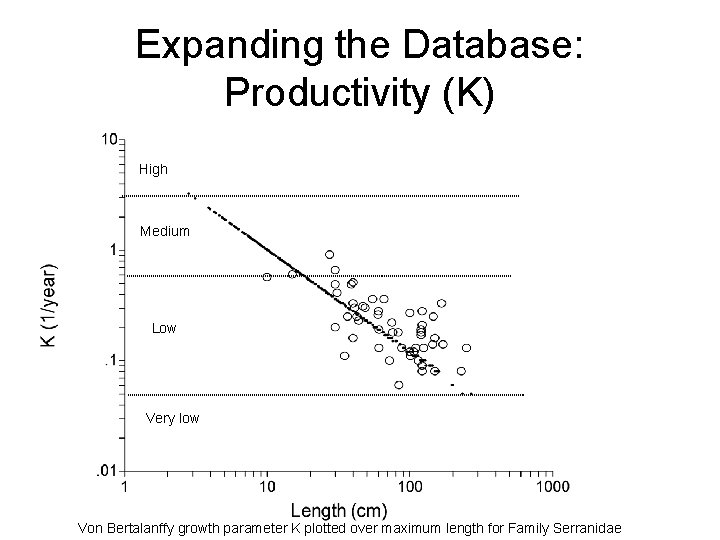
Expanding the Database: Productivity (K) High Medium Low Very low Von Bertalanffy growth parameter K plotted over maximum length for Family Serranidae
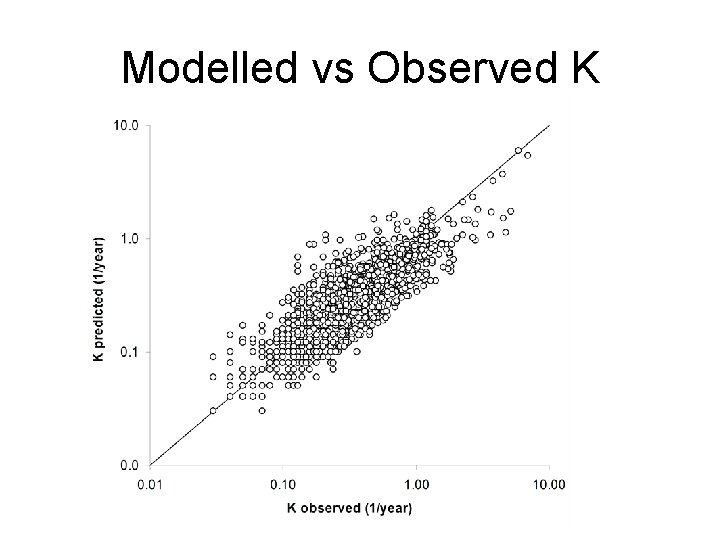
Modelled vs Observed K
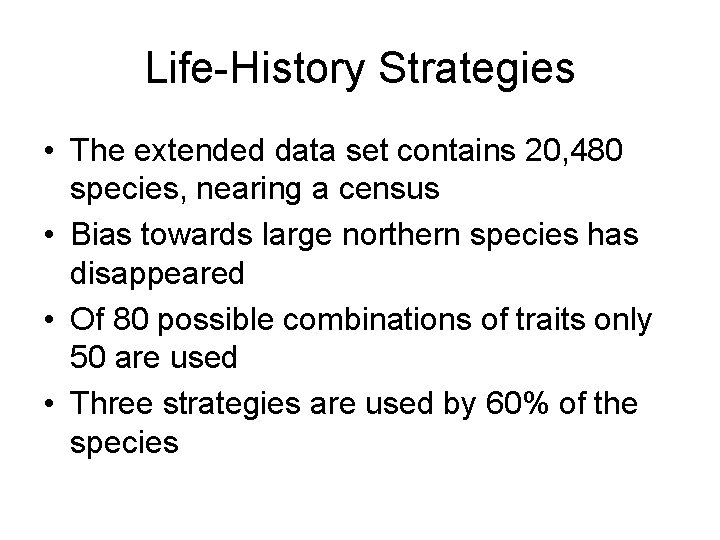
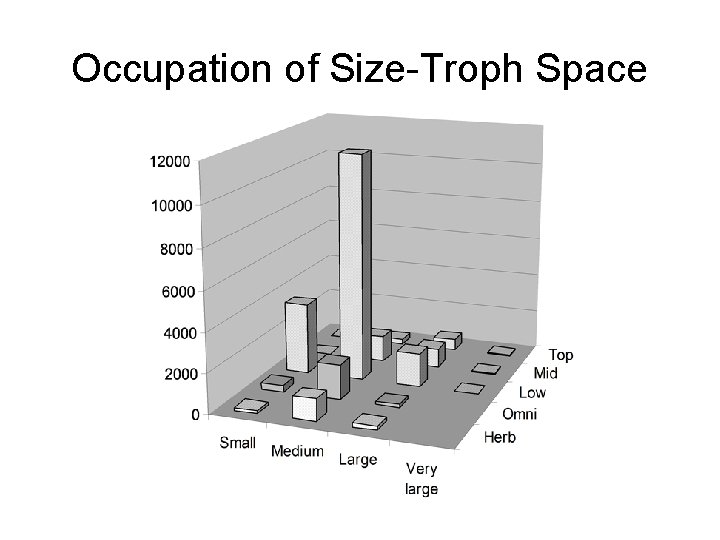
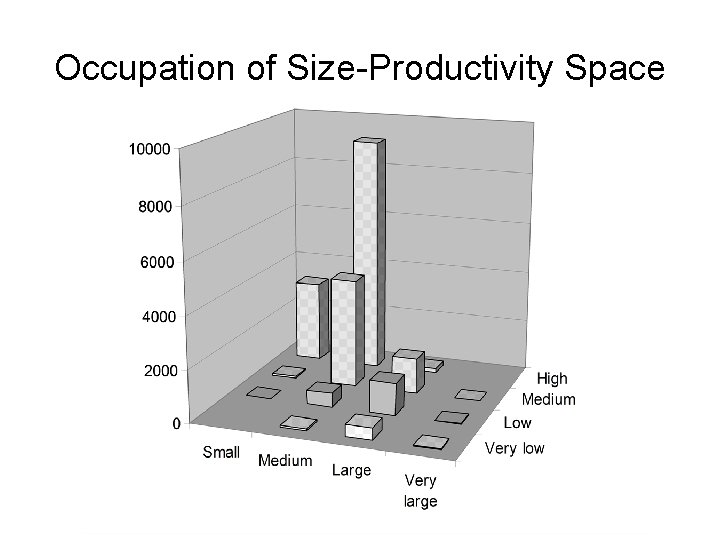
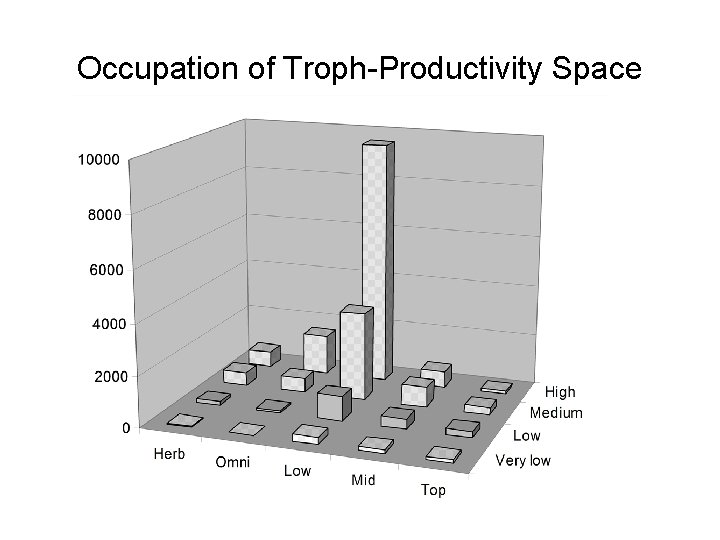
Life-History Strategies • The extended data set contains 20, 480 species, nearing a census • Bias towards large northern species has disappeared • Of 80 possible combinations of traits only 50 are used • Three strategies are used by 60% of the species
Occupation of Size-Troph Space
Occupation of Size-Productivity Space
Occupation of Troph-Productivity Space
Goals of Ecosystem-based Fisheries Management • Sustainable and productive fisheries • Minimum impact on the ecosystem • Ecosystem as close to unfished state as possible
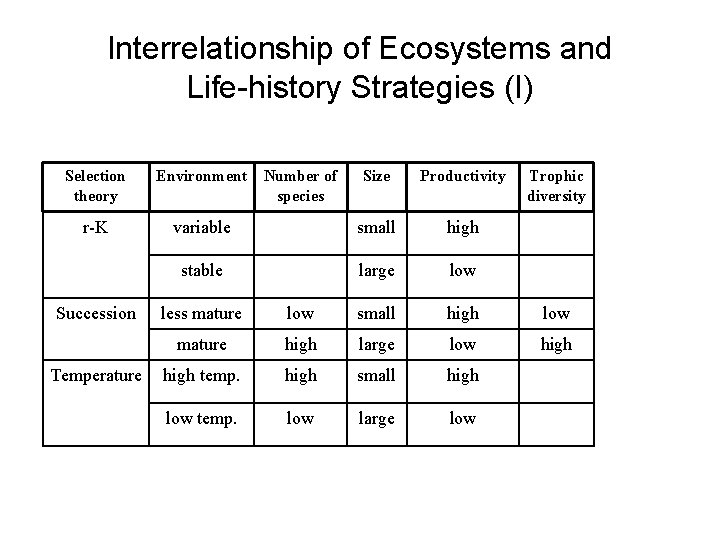
Interrelationship of Ecosystems and Life-history Strategies (I) Selection theory Environment r-K Succession Temperature Number of species Size Productivity variable small high stable large low Trophic diversity less mature low small high low mature high large low high temp. high small high low temp. low large low
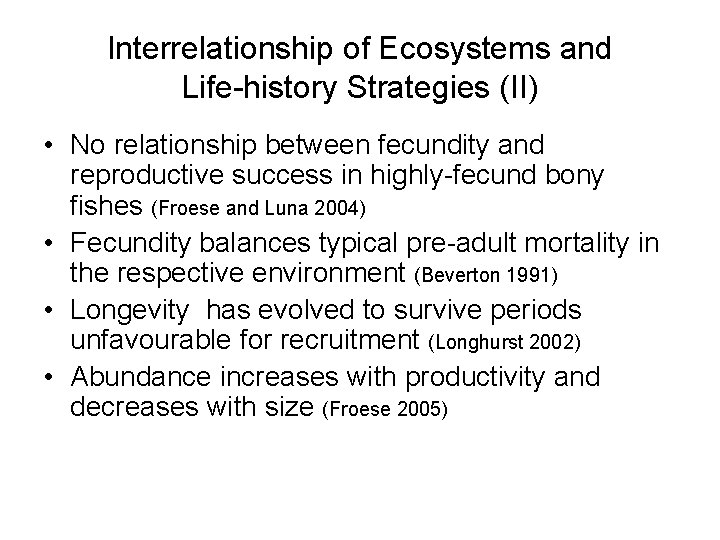
Interrelationship of Ecosystems and Life-history Strategies (II) • No relationship between fecundity and reproductive success in highly-fecund bony fishes (Froese and Luna 2004) • Fecundity balances typical pre-adult mortality in the respective environment (Beverton 1991) • Longevity has evolved to survive periods unfavourable for recruitment (Longhurst 2002) • Abundance increases with productivity and decreases with size (Froese 2005)
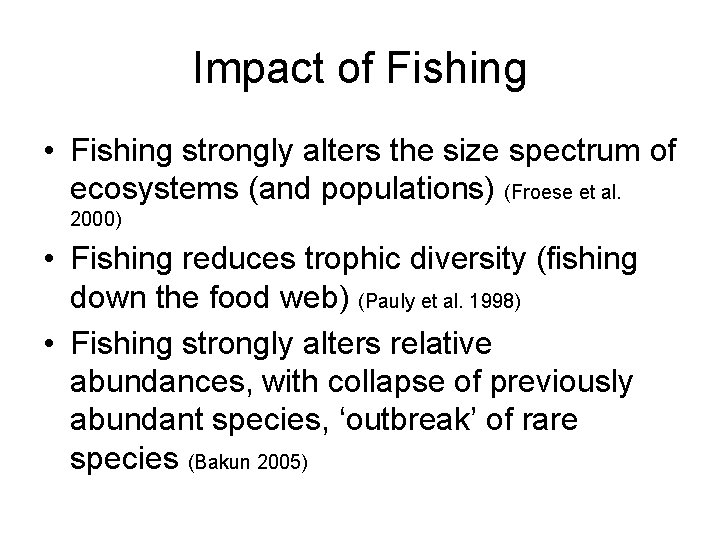
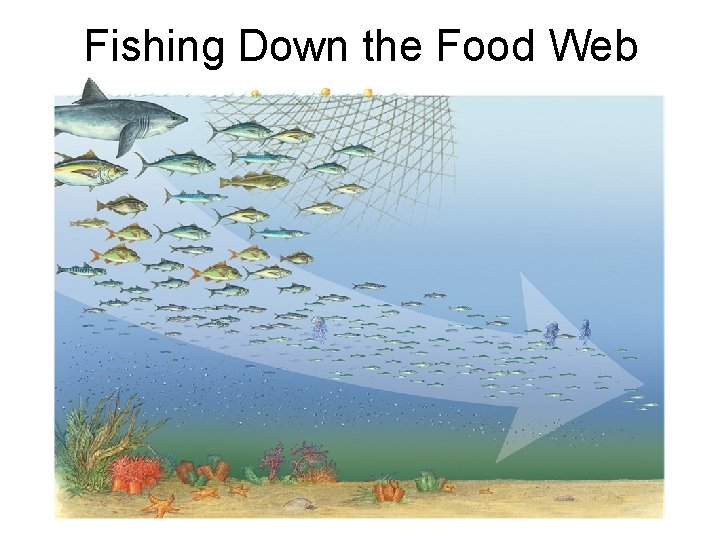
Impact of Fishing • Fishing strongly alters the size spectrum of ecosystems (and populations) (Froese et al. 2000) • Fishing reduces trophic diversity (fishing down the food web) (Pauly et al. 1998) • Fishing strongly alters relative abundances, with collapse of previously abundant species, ‘outbreak’ of rare species (Bakun 2005)
Fishing Down the Food Web
Goals of Ecosystem-based Fisheries • • Minimize direct impact on the environment Rebuild & preserve size spectrum Rebuild & preserve trophic diversity Rebuild & preserve productivity -- Don’t catch juveniles -- Protect Mega-spawners -- Only catch proportion of fish with optimum size, after first and before second spawning
How ? • • • Establish no-take zones Use non-destructive gears Use size-selective gears Use knowledge and technology Create incentives for ‘good’ fishing Involve stakeholders in monitoring and management
Thanks to the Fish. Base Team
Thanks to our Donors
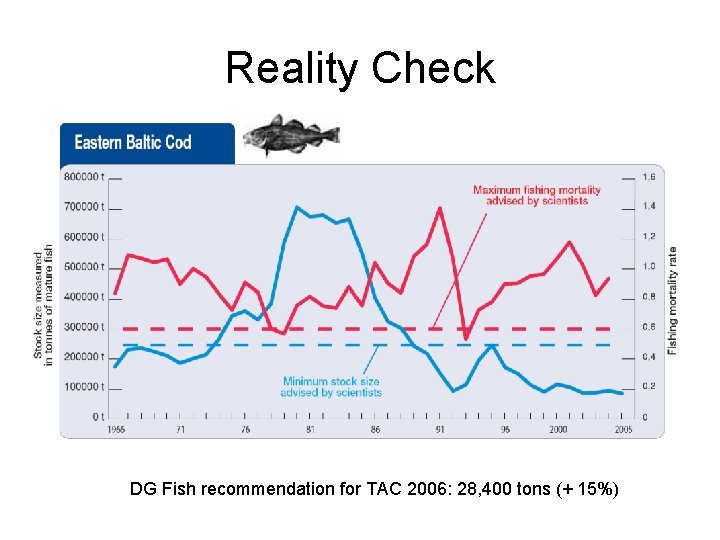
Reality Check DG Fish recommendation for TAC 2006: 28, 400 tons (+ 15%)
Thank You • Comments? • Questions?