
Life Threatening What is a Food Allergy The
- Slides: 14
Life Threatening
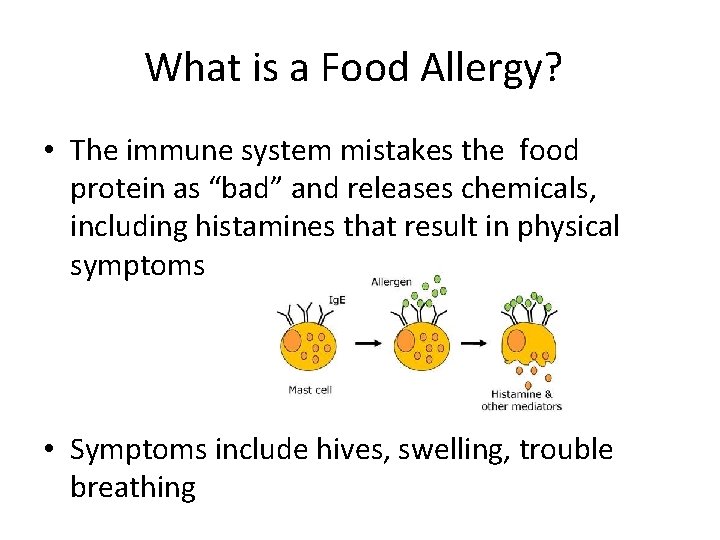
What is a Food Allergy? • The immune system mistakes the food protein as “bad” and releases chemicals, including histamines that result in physical symptoms • Symptoms include hives, swelling, trouble breathing
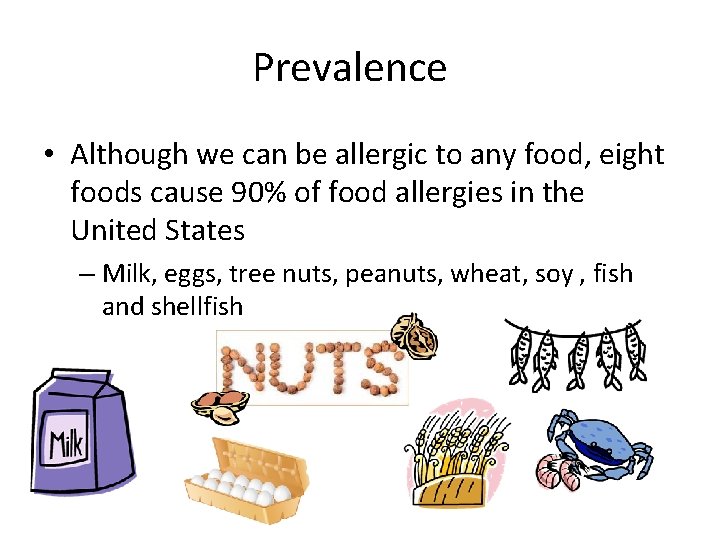
Prevalence • The CDC currently estimates that four out of every 100 kids have a food allergy with prevalence increasing. • Although we can be allergic to any food, eight foods cause 90% of food allergies in the United States – Milk, eggs, tree nuts, peanuts, wheat, soy , fish and shellfish
Prevalence • Although we can be allergic to any food, eight foods cause 90% of food allergies in the United States – Milk, eggs, tree nuts, peanuts, wheat, soy , fish and shellfish
Food Intolerance • Unlike a food allergy, a food intolerance does NOT involve the immune system and is not life threatening. • An example of a food intolerance is lactose intolerance. Lactose, found in milk, may cause GI discomfort, but the immune system is not involved and it is not life-threatening.
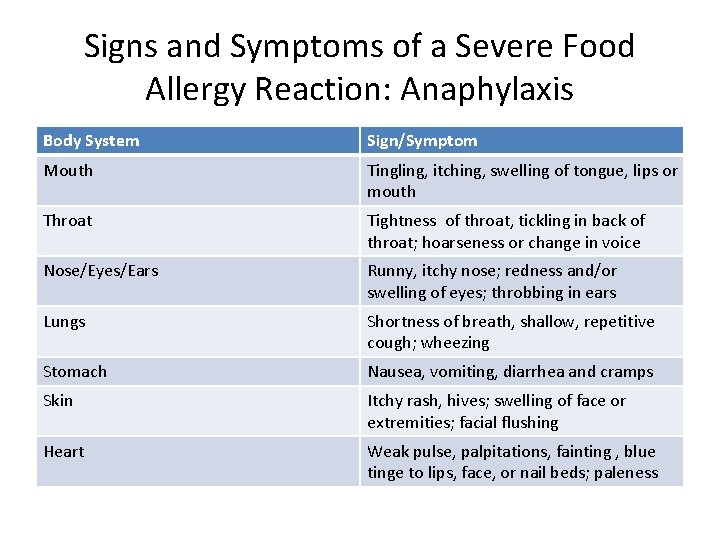
Signs and Symptoms of a Severe Food Allergy Reaction: Anaphylaxis Body System Sign/Symptom Mouth Tingling, itching, swelling of tongue, lips or mouth Throat Tightness of throat, tickling in back of throat; hoarseness or change in voice Nose/Eyes/Ears Runny, itchy nose; redness and/or swelling of eyes; throbbing in ears Lungs Shortness of breath, shallow, repetitive cough; wheezing Stomach Nausea, vomiting, diarrhea and cramps Skin Itchy rash, hives; swelling of face or extremities; facial flushing Heart Weak pulse, palpitations, fainting , blue tinge to lips, face, or nail beds; paleness
Anaphylaxis • Serious allergic reaction that is rapid in onset and may cause death. • More than one body system are involved – mouth, throat, nose, eyes, ears, lung, stomach, skin, heart, and brain. • The most dangerous symptoms include breathing difficulties and a drop in blood pressure or shock.
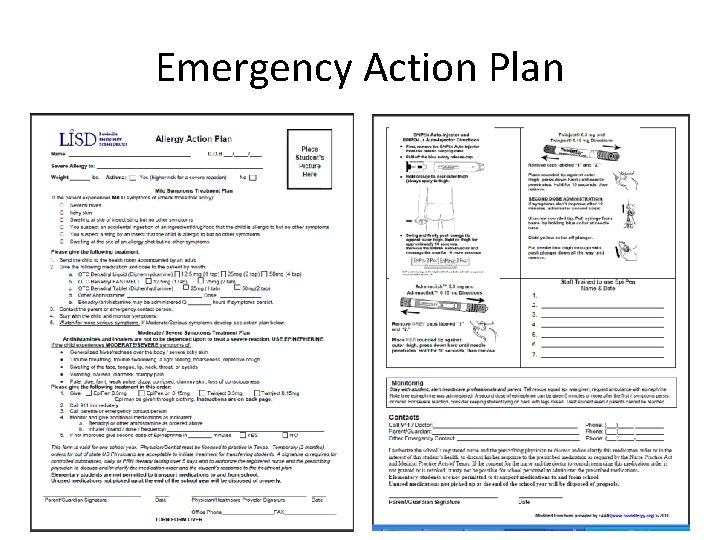
What Do We Do to Protect the Students With Life Threatening Food Allergies? • Identify students with life-threatening allergies; asked on enrollment and every year in health and emergency card • Confirm the allergy, including the severity, with documentation from a physician • Develop a plan which includes: – Emergency Action Plan – 504 Plan • Food Allergy Action Plan – Individualized Health Plan
What Do We Do to Protect the Students With Life Threatening Food Allergies? • The goal for all of the plans is to: – Reduce exposure to the allergen – Provide emergency protocols in the event of exposure
Emergency Action Plan
What to do if a reaction occurs • Administer the epi-pen as quickly as possible. • If the only epi-pen is in the clinic, contact the RN immediately • Call 911. • Call the parents. • Those involved will complete the Report of Epinephrine Administration and submit to the building administrator and the Supervisor of Health Services. • Debrief and adjust the EAP as needed.
How to Use the Epi-pen • Please watch the video that follows for a demonstration on how to use the Epi-pen.
It is imperative that we avoid: • Endangering • Isolating • Stigmatizing • Or harassing the student with food allergies.
Thank You for helping to keep our students safe!