
Life Structure and Function 2 3 Virus Virus
- Slides: 14
Life Structure and Function 2. 3 Virus
Virus
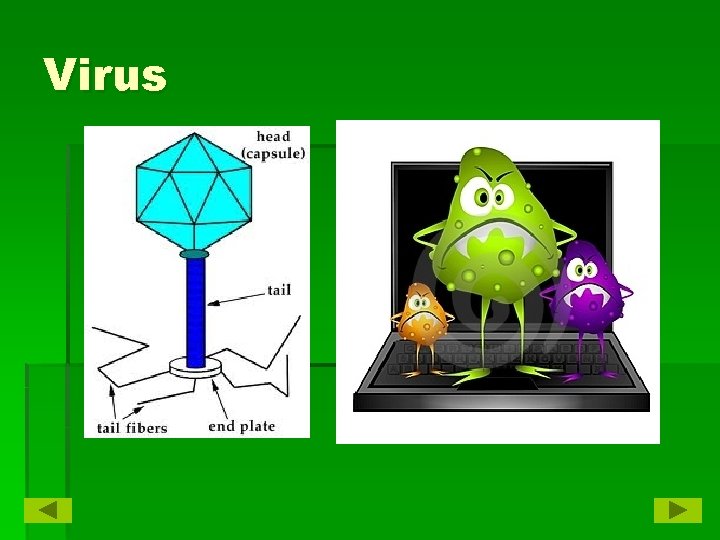
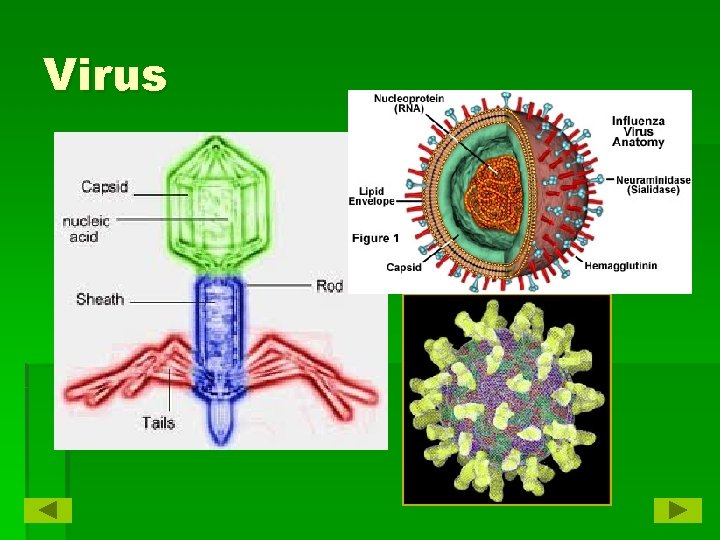
Virus § A virus is a strand of hereditary material surrounded by a protein coating. Viruses don’t have a nucleus, other organelles, or a cell membrane. § All viruses can do is make copies of themselves. § They can’t do that without the help of a living cell called a host cell.
Virus
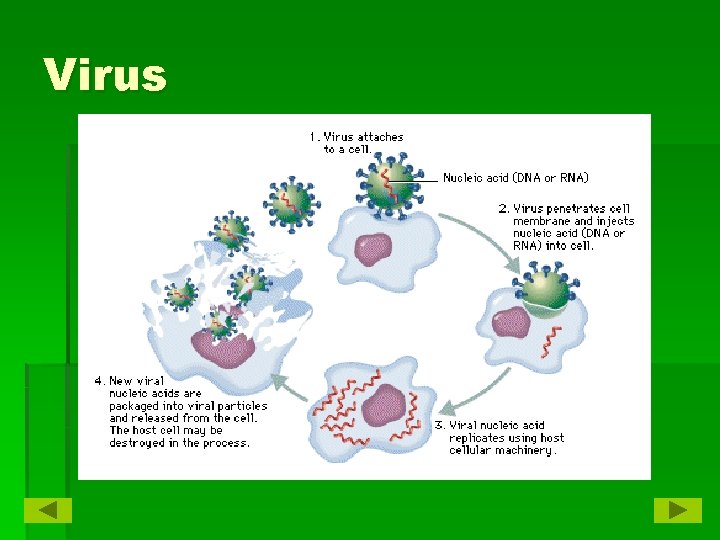
Virus § Then, if they enter an organism, they can multiply quickly. § It can either be active or it can become latent, which is an inactive stage § When a virus enters a cell and is active, it causes the host cell to make new viruses.
Virus
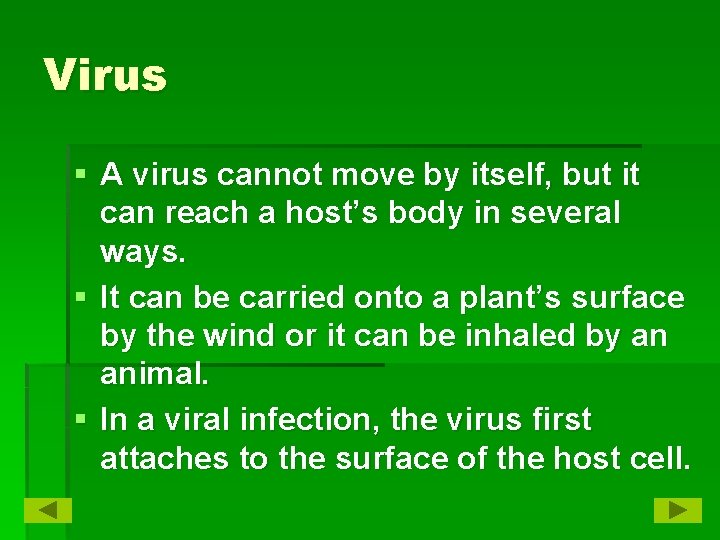
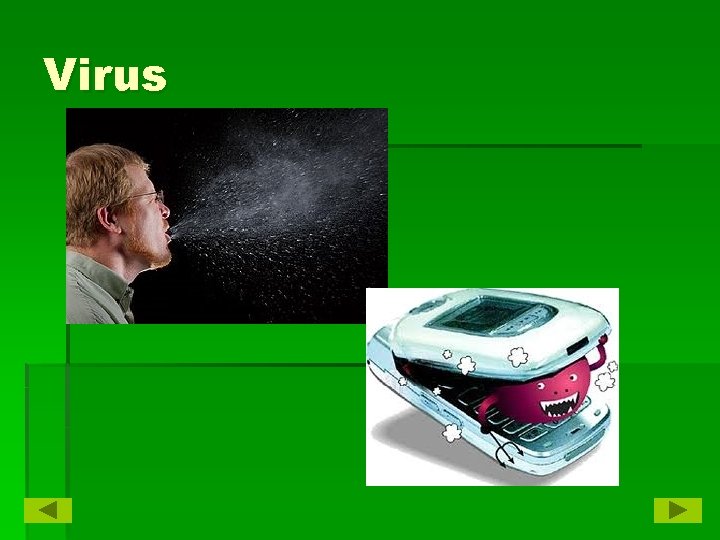
Virus § A virus cannot move by itself, but it can reach a host’s body in several ways. § It can be carried onto a plant’s surface by the wind or it can be inhaled by an animal. § In a viral infection, the virus first attaches to the surface of the host cell.
Virus
Virus § The virus and the place where it attaches must fit together exactly. § Because of this, most viruses attack only one kind of host cell. § A vaccine is made from weakened virus particles that can’t cause disease anymore.
Virus
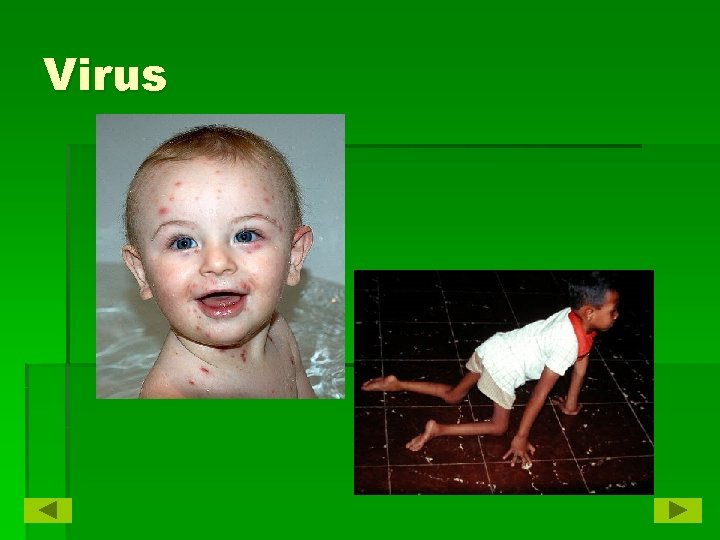
Virus § Vaccines have been made to prevent many diseases, including measles, mumps, smallpox, chicken pox, polio, and rabies. § Antibiotics treat bacterial infections but are not effective against viral diseases.
Virus
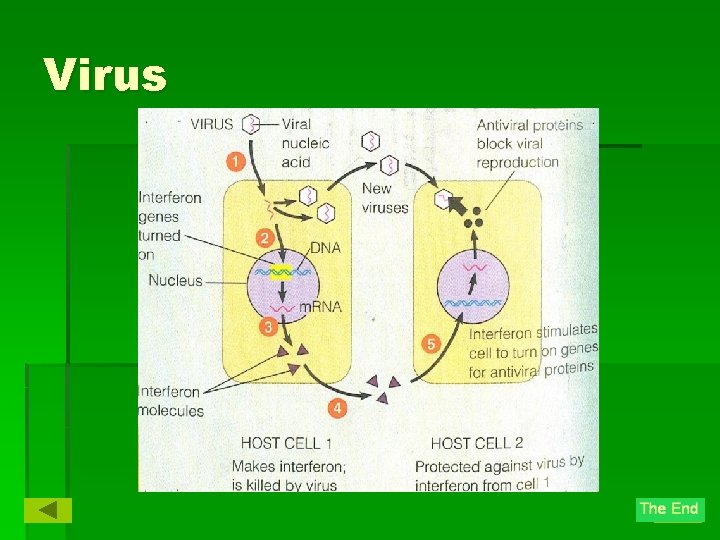
Virus § Antibiotics treat bacterial infections but are not effective against viral diseases. § Interferons are proteins that are produced rapidly by virus-infected cells and move to noninfected cells in the host. § Interferons cause the noninfected cells to produce protective substances.
Virus