
LIFE SIMPLE AND COMPLEX Produce by Mrs K
LIFE: SIMPLE AND COMPLEX Produce by Mrs. K. B. Satav
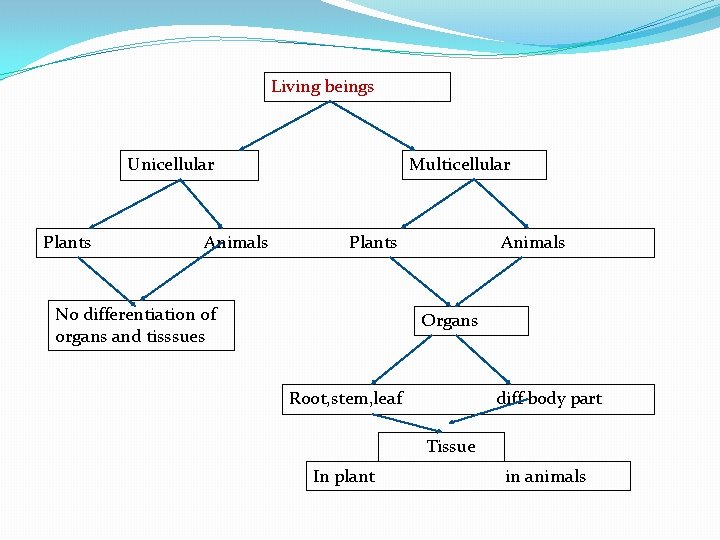
Living beings Unicellular Plants Animals Multicellular Plants No differentiation of organs and tisssues Animals Organs Root, stem, leaf diff body part Tissue In plant in animals
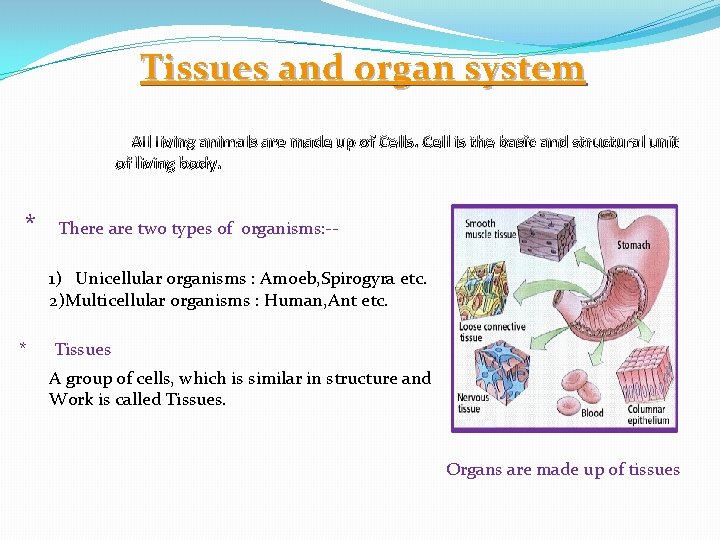
Tissues and organ system All living animals are made up of Cells. Cell is the basic and structural unit of living body. * There are two types of organisms: -1) Unicellular organisms : Amoeb, Spirogyra etc. 2)Multicellular organisms : Human, Ant etc. * Tissues A group of cells, which is similar in structure and Work is called Tissues. Organs are made up of tissues
Epithelial Tissue: Cells of the epithelial tissue are tightly packed and form a continuous sheet. They have no intercellular spaces. All epithelial is usually separated from the underlying tissue by an extra cellular fibrous basement membrane.

Different types of epithelial tissue squamous Cuboidal Ciliated columnar Stratified squamous.
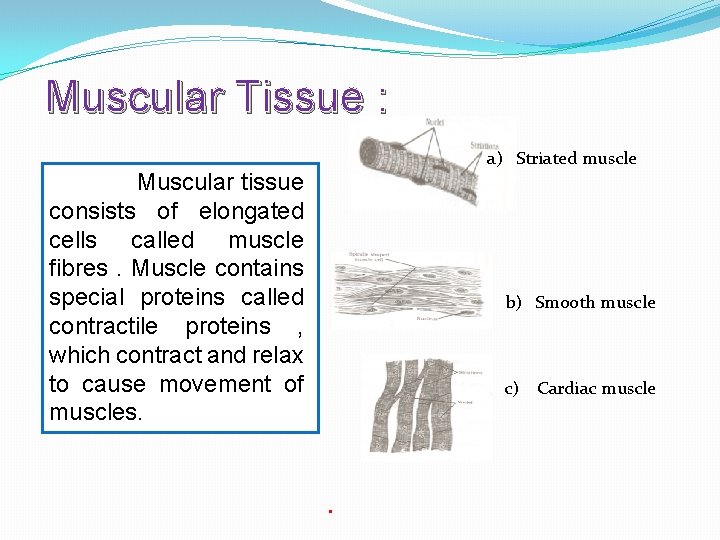
Muscular Tissue : a) Striated muscle Muscular tissue consists of elongated cells called muscle fibres. Muscle contains special proteins called contractile proteins , which contract and relax to cause movement of muscles. b) Smooth muscle c) . Cardiac muscle
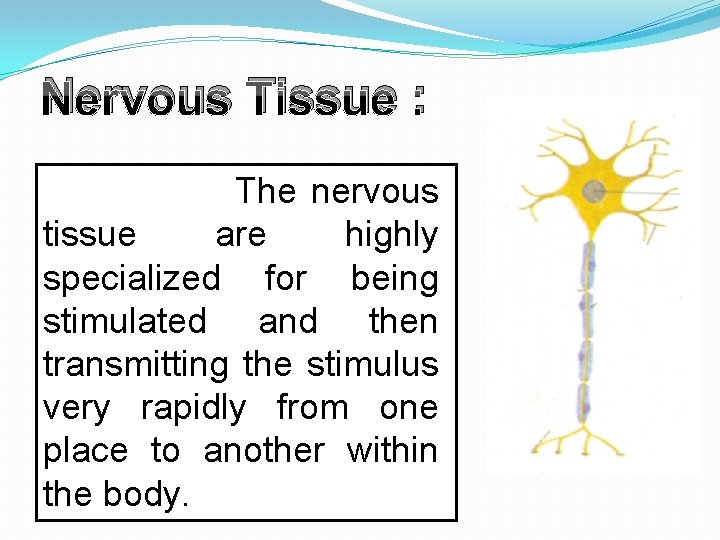
Nervous Tissue : The nervous tissue are highly specialized for being stimulated and then transmitting the stimulus very rapidly from one place to another within the body.
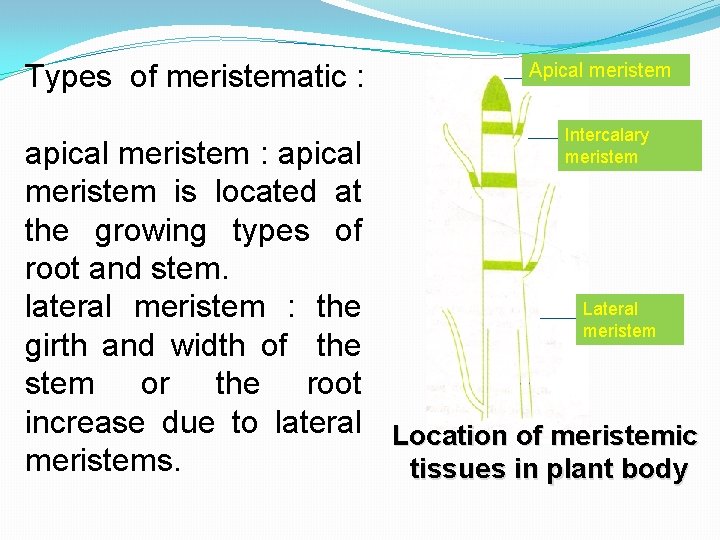
Types of meristematic : Apical meristem Intercalary meristem apical meristem : apical meristem is located at the growing types of root and stem. Lateral lateral meristem : the meristem girth and width of the stem or the root increase due to lateral Location of meristemic meristems. tissues in plant body
PLANT TISSUE : - Meristemic tissue : Meistemic tissue is the only plant tissue that produces new cells by cell division. Permanent tissue : The cells which are formed by the division of the meristemic tissue take up a specific role and lose the ability to divide. As a result they form a permanent tissue.
Complex permanent tissue : 1. Xylem : It's cells have thick walls and many of them are dead. a) Tracheids : They are long narrow cells with walls. b) Xylem vessels : They are tubular structures and are much wider then tracheids. c) Xylem parenchyma : Phloem fibres are elongated tapering cells. d) Xylem fibres : Phloem parenchyma cells are alive and filled with cytoplasm.
Complex permanent tissue : 2. Phloem : It is made up four types of cells. a) Sieve tubes : They are tubular cells with perforated walls and end to end. b) Companion cells : Companion cells are phloem cells that surround sieve tube elements. c) Phloem fibres : Phloem fibres are elongated tapering cells. d) Phloem parenchyma cells : Phloem parenchyma cells are alive and filled with cytoplasm.

CREATED BY: MRS. K. B. SATAV MRS. K VIDYALAY, INDAPUR
- Slides: 12