
Life Science Chapter 2 Plant Cell n n
- Slides: 12
Life Science Chapter 2
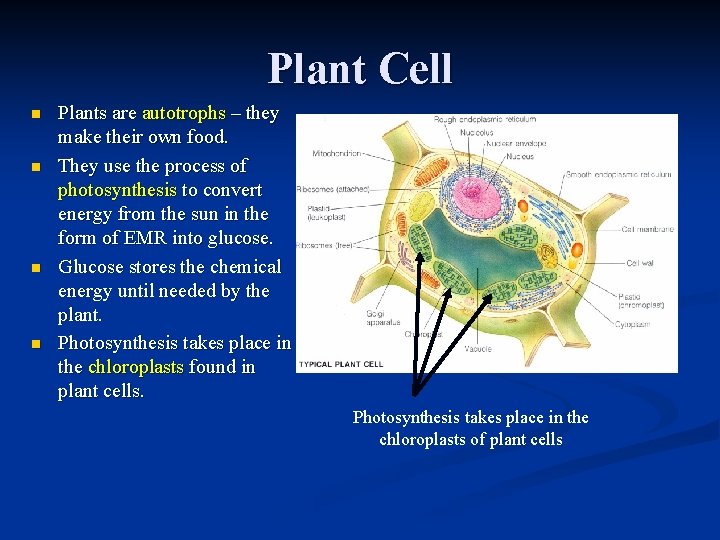
Plant Cell n n Plants are autotrophs – they make their own food. They use the process of photosynthesis to convert energy from the sun in the form of EMR into glucose. Glucose stores the chemical energy until needed by the plant. Photosynthesis takes place in the chloroplasts found in plant cells. Photosynthesis takes place in the chloroplasts of plant cells
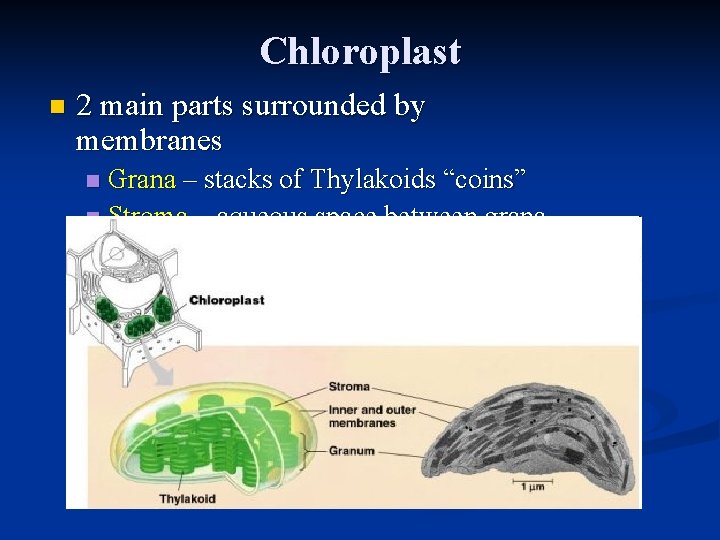
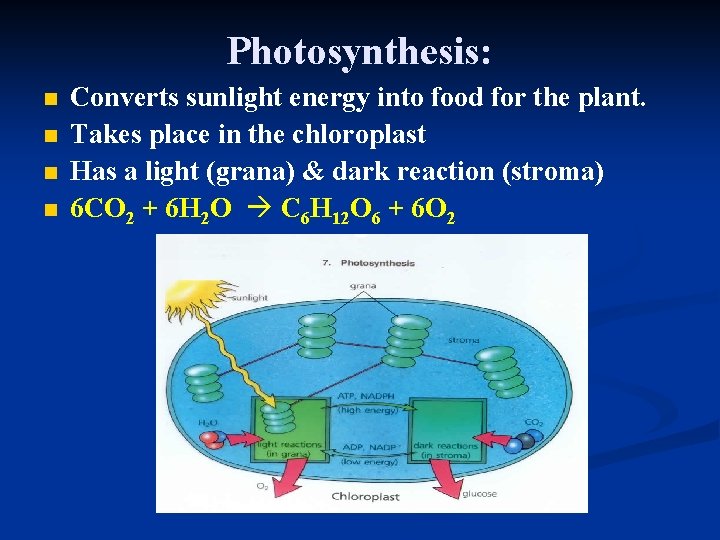
Chloroplast n 2 main parts surrounded by membranes Grana – stacks of Thylakoids “coins” n Stroma – aqueous space between grana n
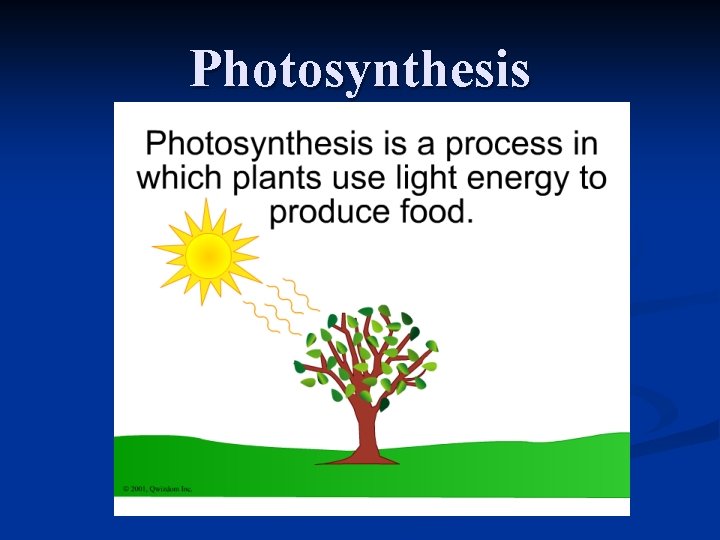
Photosynthesis
Photosynthesis: n n Converts sunlight energy into food for the plant. Takes place in the chloroplast Has a light (grana) & dark reaction (stroma) 6 CO 2 + 6 H 2 O C 6 H 12 O 6 + 6 O 2
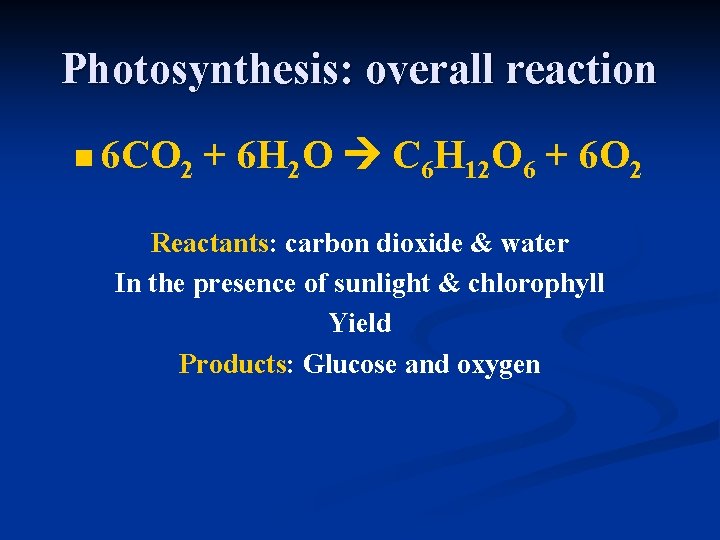
Photosynthesis: overall reaction n 6 CO 2 + 6 H 2 O C 6 H 12 O 6 + 6 O 2 Reactants: carbon dioxide & water In the presence of sunlight & chlorophyll Yield Products: Glucose and oxygen
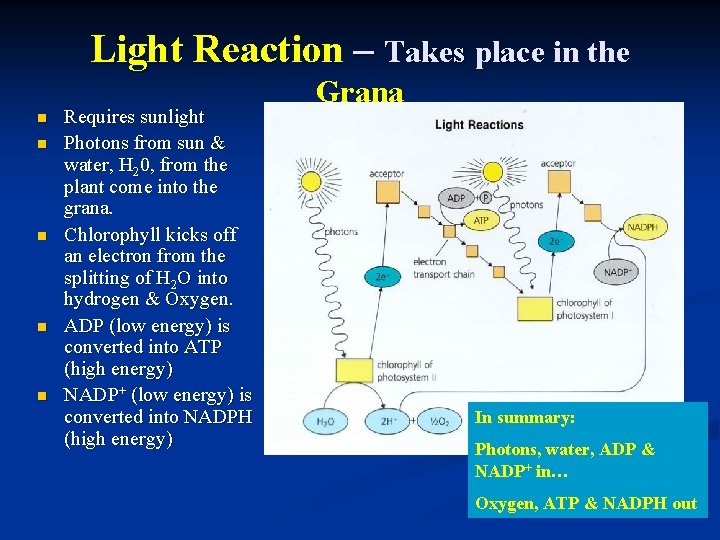
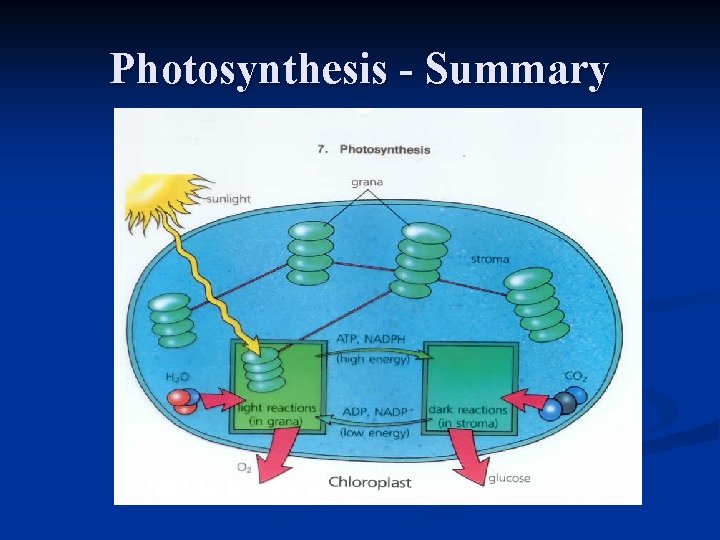
Light Reaction – Takes place in the n n n Requires sunlight Photons from sun & water, H 20, from the plant come into the grana. Chlorophyll kicks off an electron from the splitting of H 2 O into hydrogen & Oxygen. ADP (low energy) is converted into ATP (high energy) NADP+ (low energy) is converted into NADPH (high energy) Grana In summary: Photons, water, ADP & NADP+ in… Oxygen, ATP & NADPH out
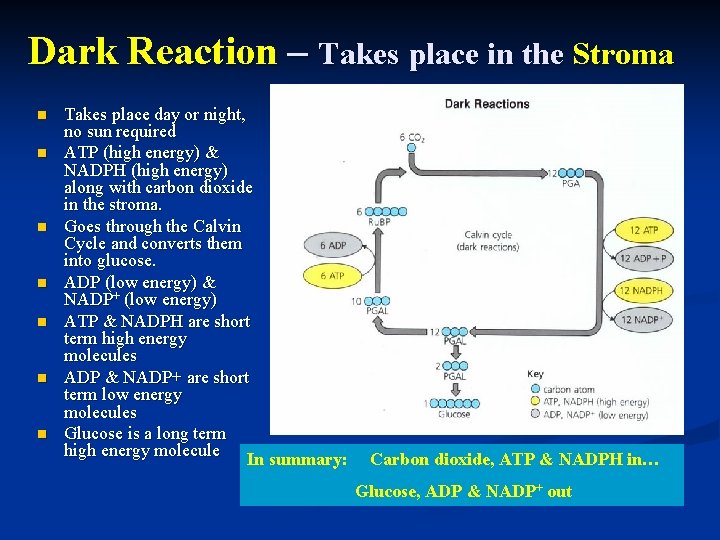
Dark Reaction – Takes place in the Stroma n n n n Takes place day or night, no sun required ATP (high energy) & NADPH (high energy) along with carbon dioxide in the stroma. Goes through the Calvin Cycle and converts them into glucose. ADP (low energy) & NADP+ (low energy) ATP & NADPH are short term high energy molecules ADP & NADP+ are short term low energy molecules Glucose is a long term high energy molecule In summary: Carbon dioxide, ATP & NADPH in… Glucose, ADP & NADP+ out
Photosynthesis - Summary
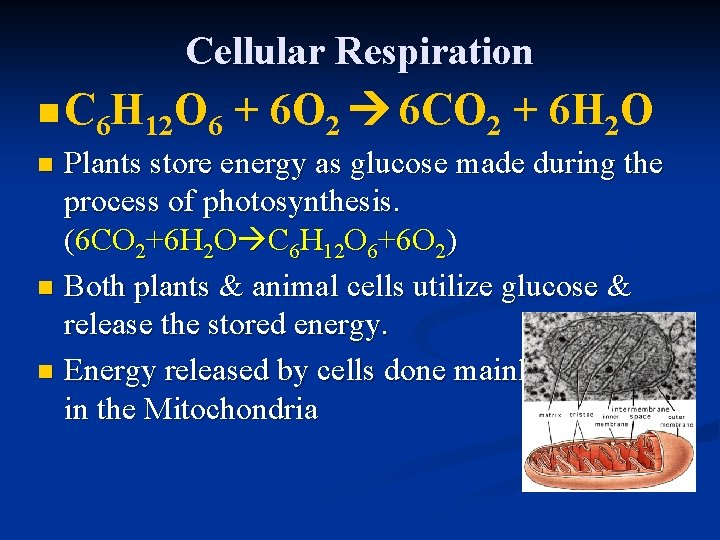
Cellular Respiration n C 6 H 12 O 6 + 6 O 2 6 CO 2 + 6 H 2 O Plants store energy as glucose made during the process of photosynthesis. (6 CO 2+6 H 2 O C 6 H 12 O 6+6 O 2) n Both plants & animal cells utilize glucose & release the stored energy. n Energy released by cells done mainly in the Mitochondria n
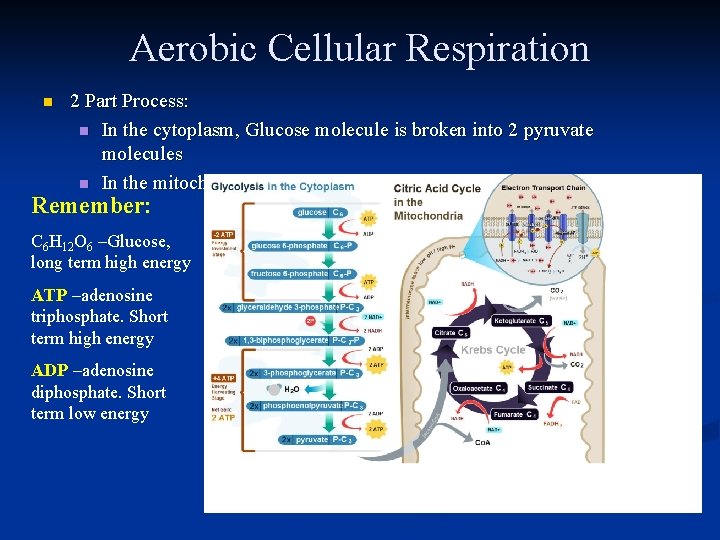
Aerobic Cellular Respiration n 2 Part Process: n In the cytoplasm, Glucose molecule is broken into 2 pyruvate molecules n In the mitochondria, Krebs Cycle converts them into 36 ATP molecules Remember: C 6 H 12 O 6 –Glucose, long term high energy ATP –adenosine triphosphate. Short term high energy ADP –adenosine diphosphate. Short term low energy
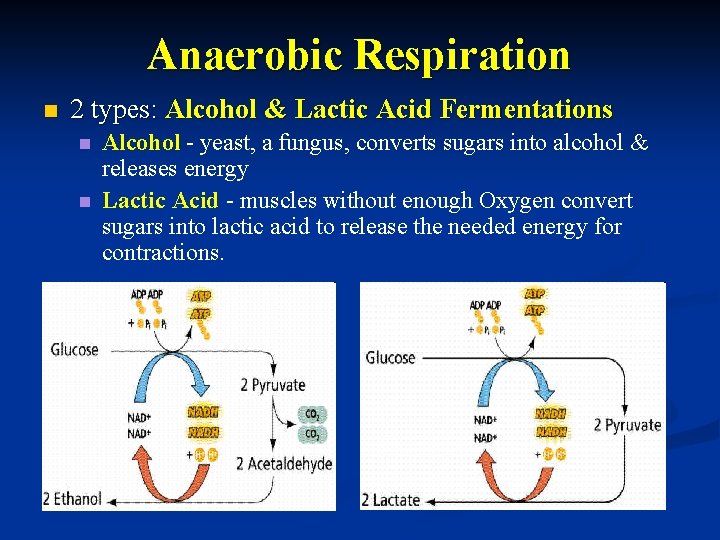
Anaerobic Respiration n 2 types: Alcohol & Lactic Acid Fermentations n n Alcohol - yeast, a fungus, converts sugars into alcohol & releases energy Lactic Acid - muscles without enough Oxygen convert sugars into lactic acid to release the needed energy for contractions.