
Life Science Animals Unit A Chapter 2 Lessons
- Slides: 20
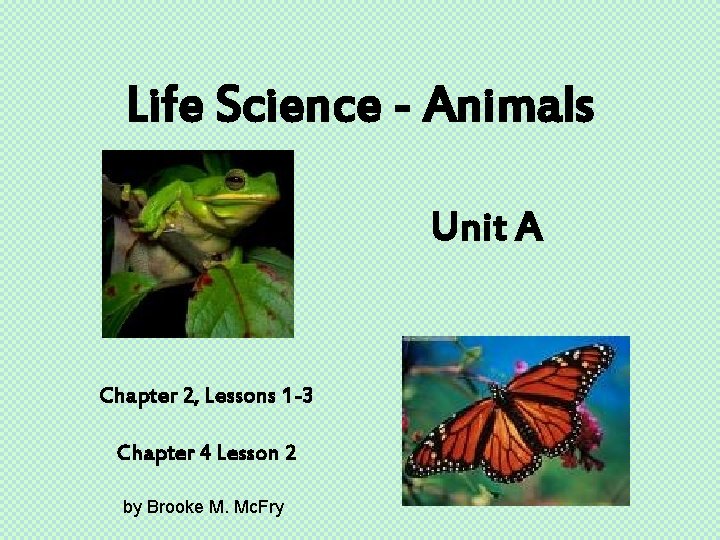
Life Science - Animals Unit A Chapter 2, Lessons 1 -3 Chapter 4 Lesson 2 by Brooke M. Mc. Fry
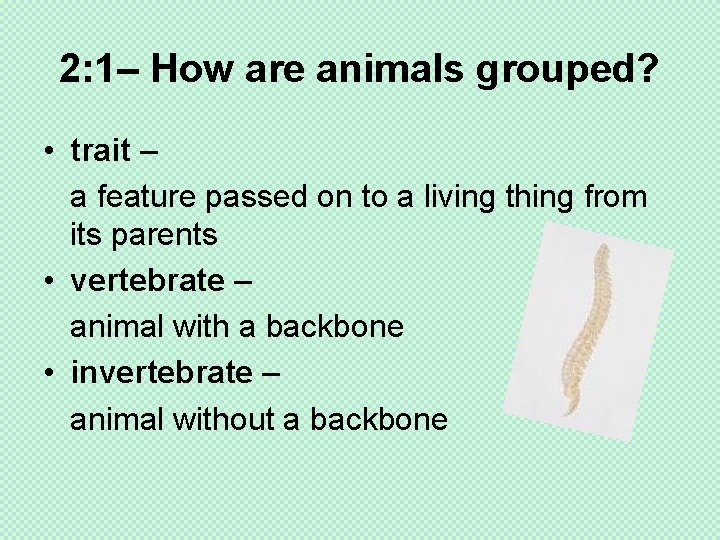
2: 1– How are animals grouped? • trait – a feature passed on to a living thing from its parents • vertebrate – animal with a backbone • invertebrate – animal without a backbone
Basic Needs of Animals • water • oxygen • food • shelter
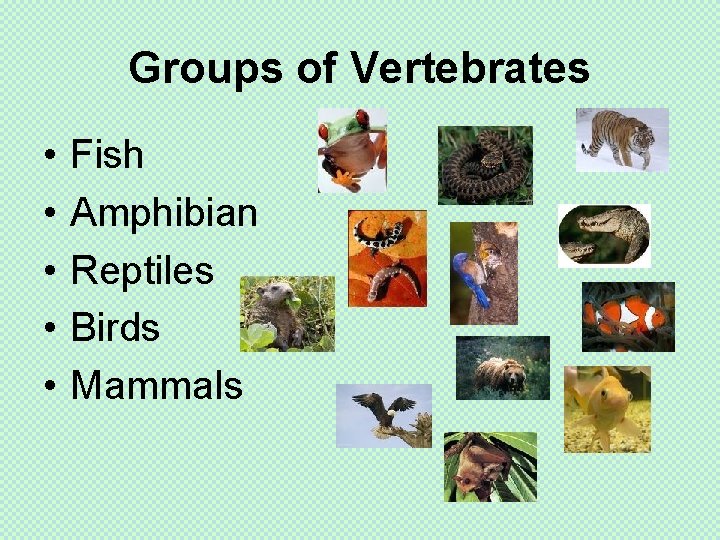
Groups of Vertebrates • • • Fish Amphibian Reptiles Birds Mammals
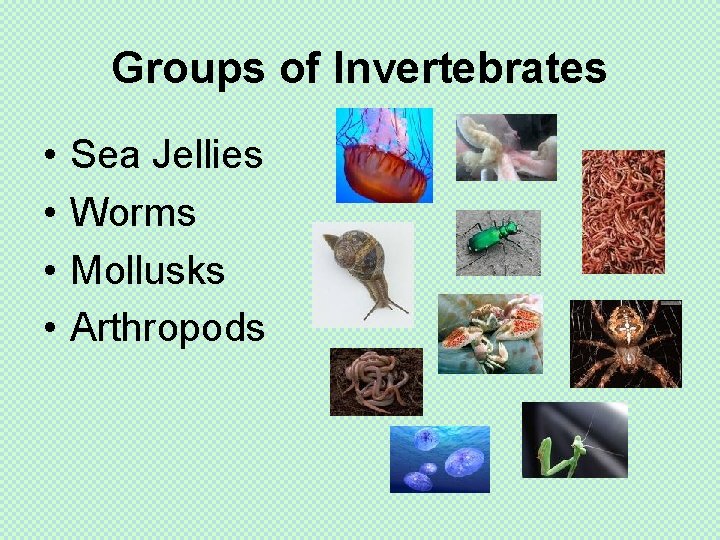
Groups of Invertebrates • • Sea Jellies Worms Mollusks Arthropods
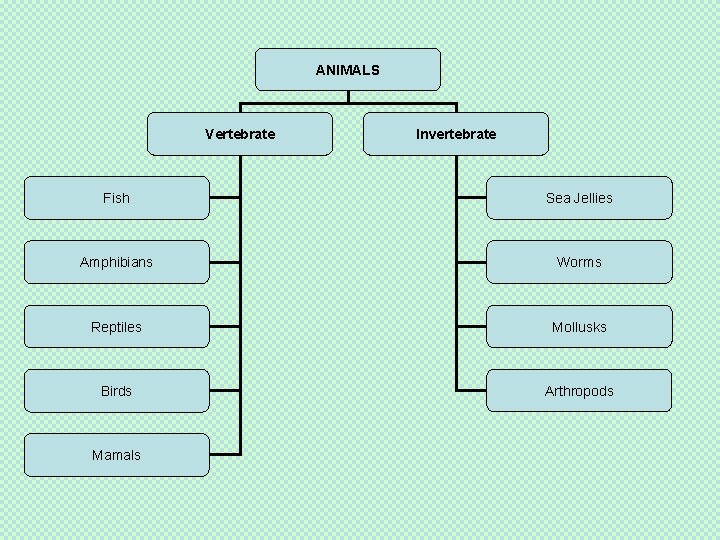
ANIMALS Vertebrate Invertebrate Fish Sea Jellies Amphibians Worms Reptiles Mollusks Birds Arthropods Mamals
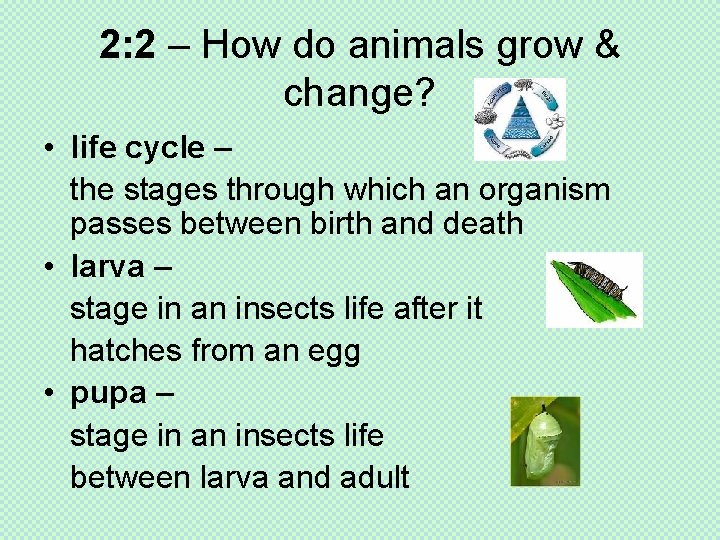
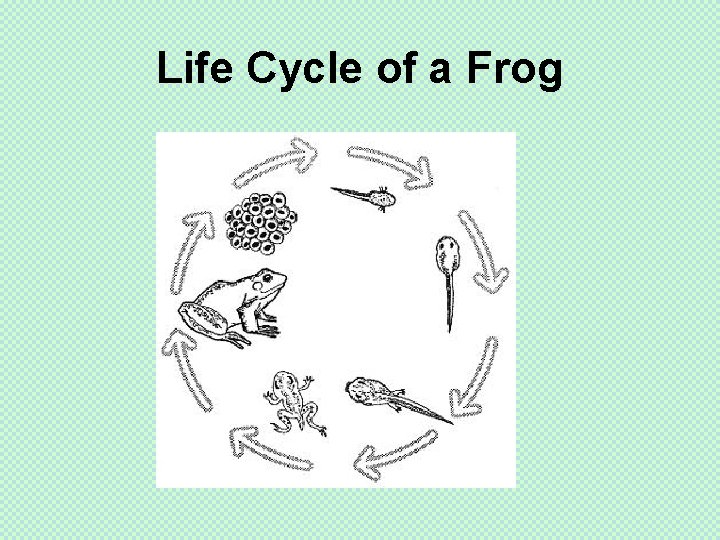
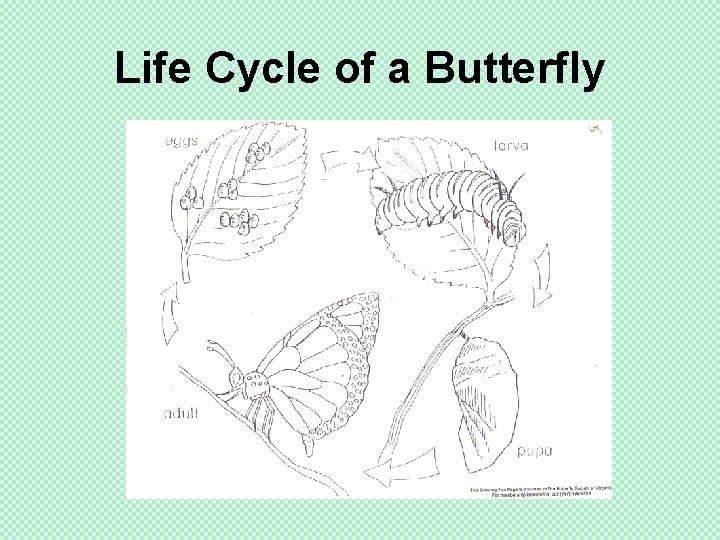
2: 2 – How do animals grow & change? • life cycle – the stages through which an organism passes between birth and death • larva – stage in an insects life after it hatches from an egg • pupa – stage in an insects life between larva and adult
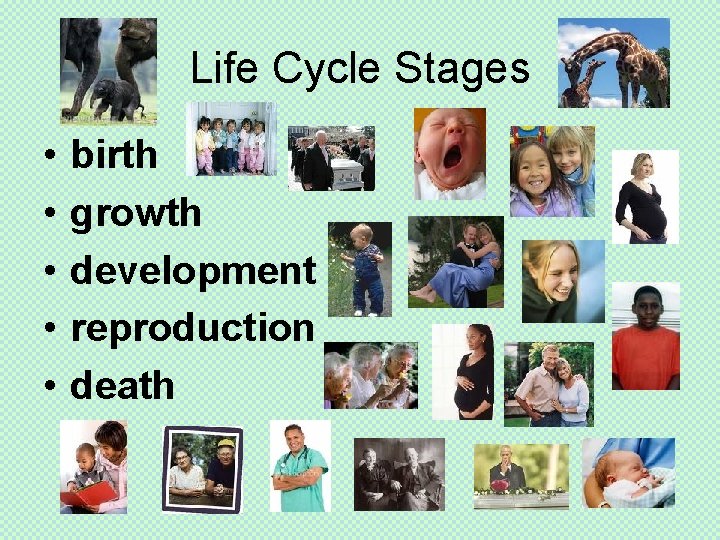
Life Cycle Stages • • • birth growth development reproduction death
Life Cycle of a Frog
Life Cycle of a Butterfly
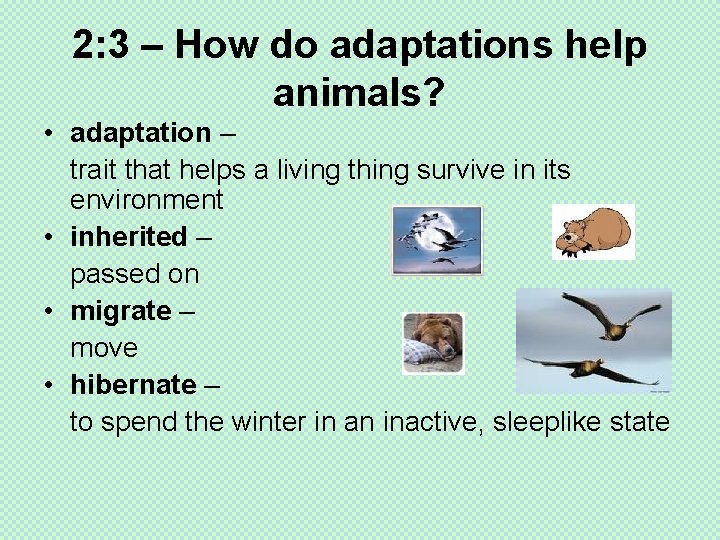
2: 3 – How do adaptations help animals? • adaptation – trait that helps a living thing survive in its environment • inherited – passed on • migrate – move • hibernate – to spend the winter in an inactive, sleeplike state
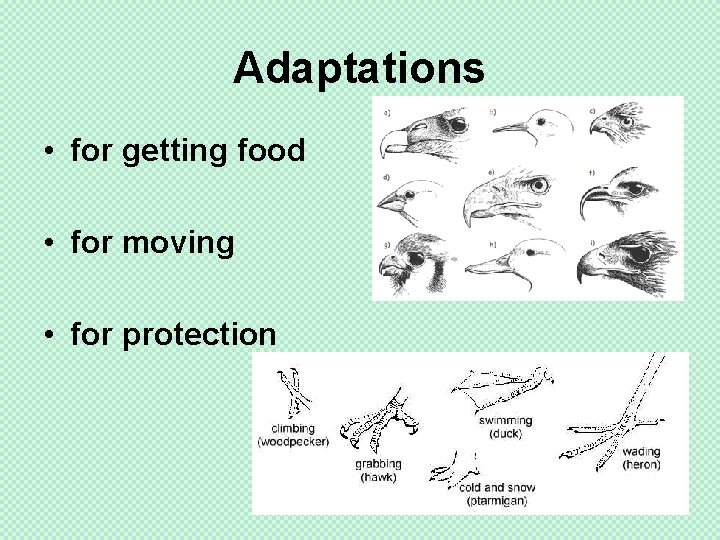
Adaptations • for getting food • for moving • for protection
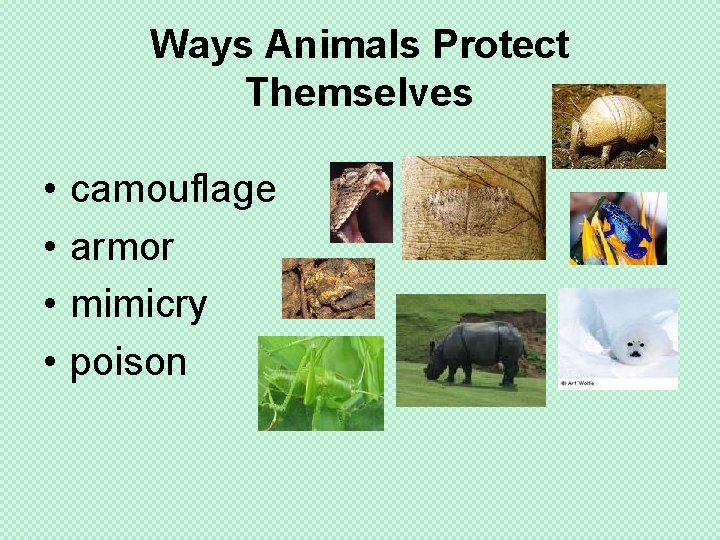
Ways Animals Protect Themselves • • camouflage armor mimicry poison
Animals Behaviors • Instincts behaviors an animal is born to do • Learning
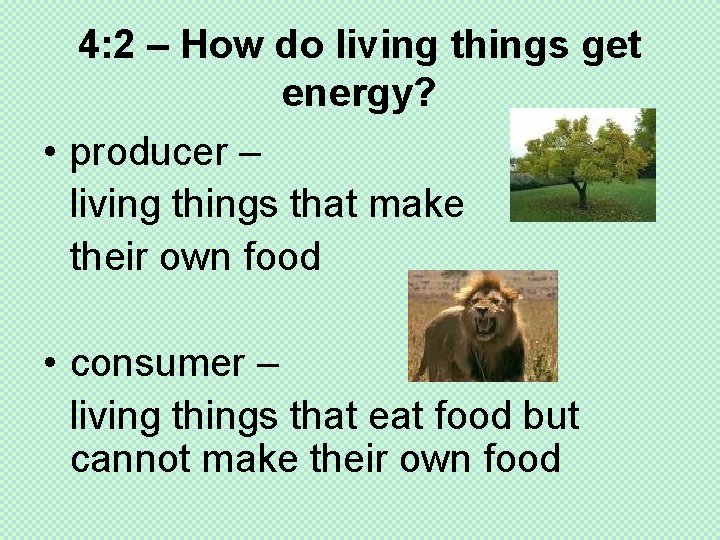
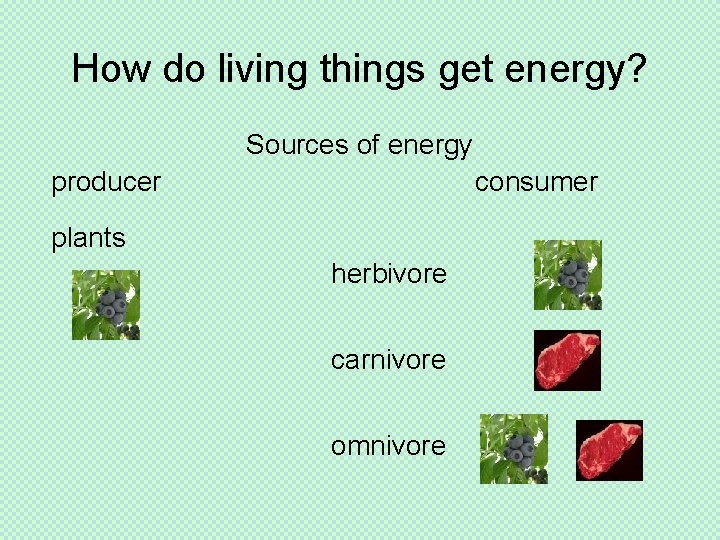
4: 2 – How do living things get energy? • producer – living things that make their own food • consumer – living things that eat food but cannot make their own food
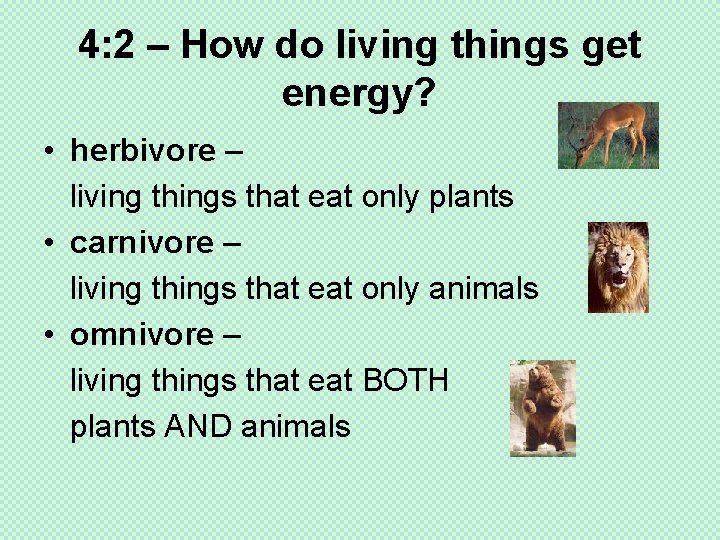
4: 2 – How do living things get energy? • herbivore – living things that eat only plants • carnivore – living things that eat only animals • omnivore – living things that eat BOTH plants AND animals
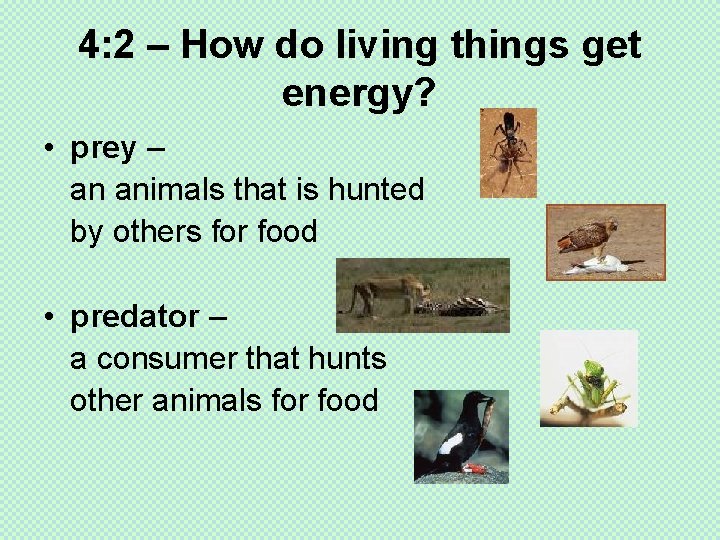
4: 2 – How do living things get energy? • prey – an animals that is hunted by others for food • predator – a consumer that hunts other animals for food
How do living things get energy? Sources of energy producer consumer plants herbivore carnivore omnivore
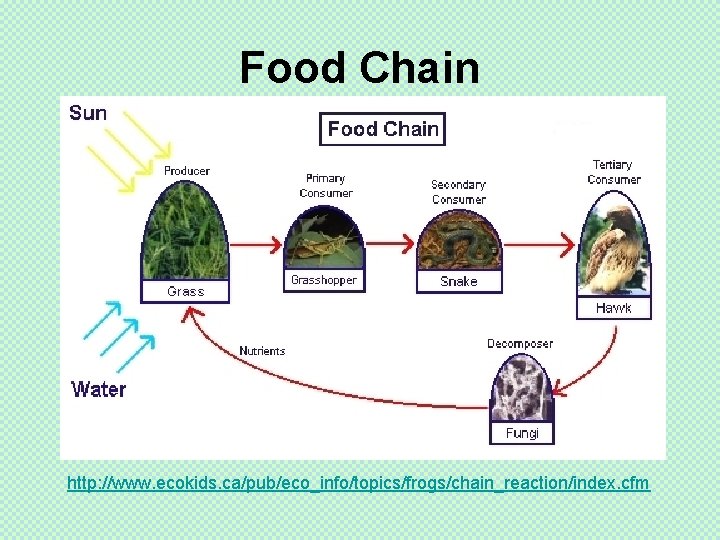
Food Chain http: //www. ecokids. ca/pub/eco_info/topics/frogs/chain_reaction/index. cfm
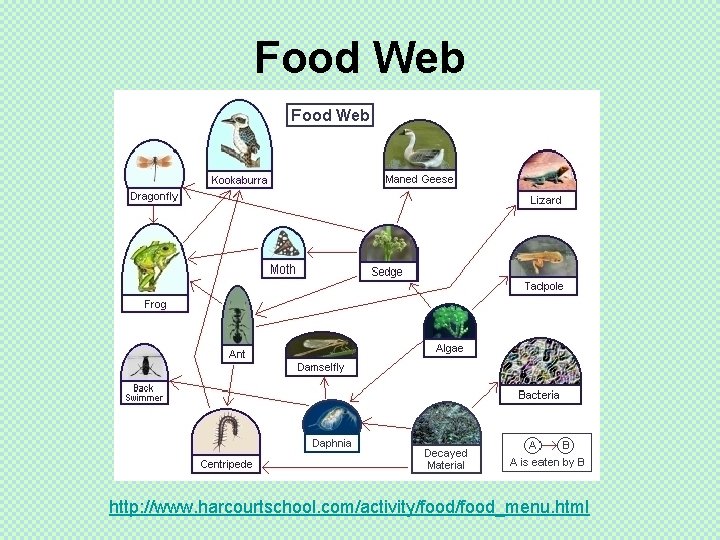
Food Web http: //www. harcourtschool. com/activity/food_menu. html