
Life Safety Annual Mandatory InService GENERAL SAFETY Know
- Slides: 22
Life Safety Annual Mandatory In-Service
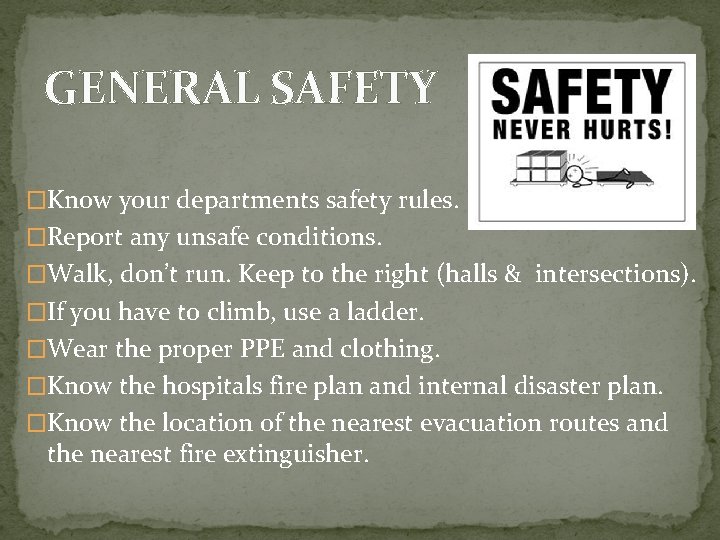
GENERAL SAFETY �Know your departments safety rules. �Report any unsafe conditions. �Walk, don’t run. Keep to the right (halls & intersections). �If you have to climb, use a ladder. �Wear the proper PPE and clothing. �Know the hospitals fire plan and internal disaster plan. �Know the location of the nearest evacuation routes and the nearest fire extinguisher.
SAFETY MANAGEMENT ü Hospital Safety Officer is Mark Arblaster ü Hospital Safety Committee Facilitator is Don Henley Everyone has a hand in safety!!
ELECTRICAL SAFETY
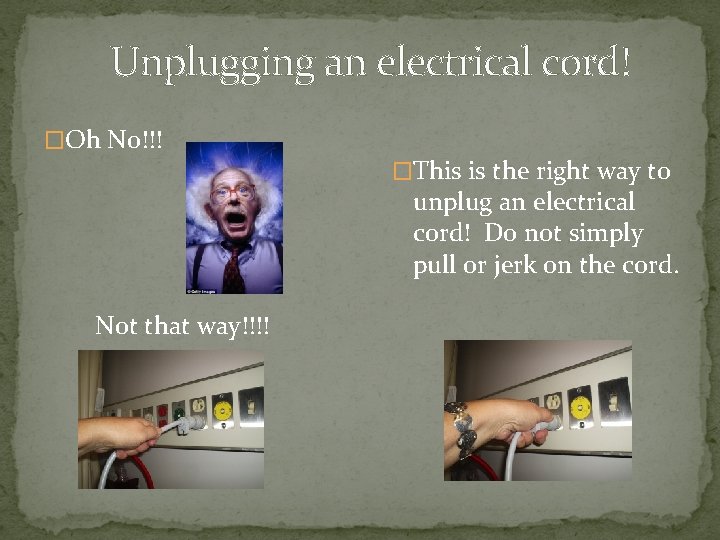
Unplugging an electrical cord! �Oh No!!! �This is the right way to unplug an electrical cord! Do not simply pull or jerk on the cord. Not that way!!!!
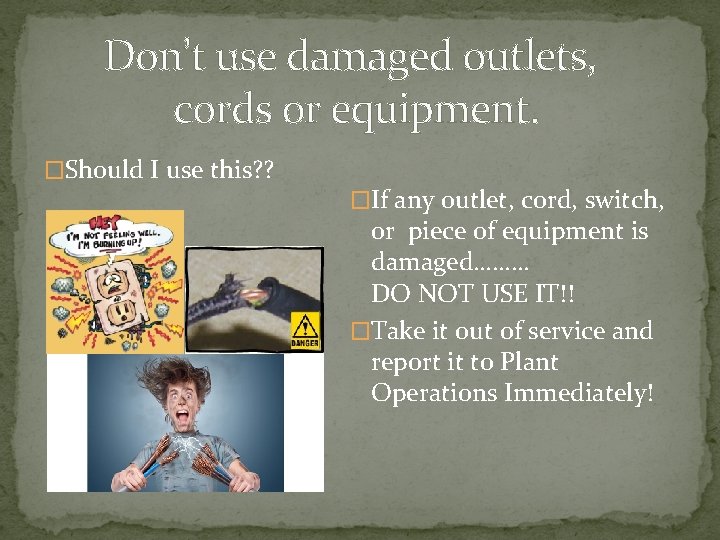
Don’t use damaged outlets, cords or equipment. �Should I use this? ? �If any outlet, cord, switch, or piece of equipment is damaged……… DO NOT USE IT!! �Take it out of service and report it to Plant Operations Immediately!
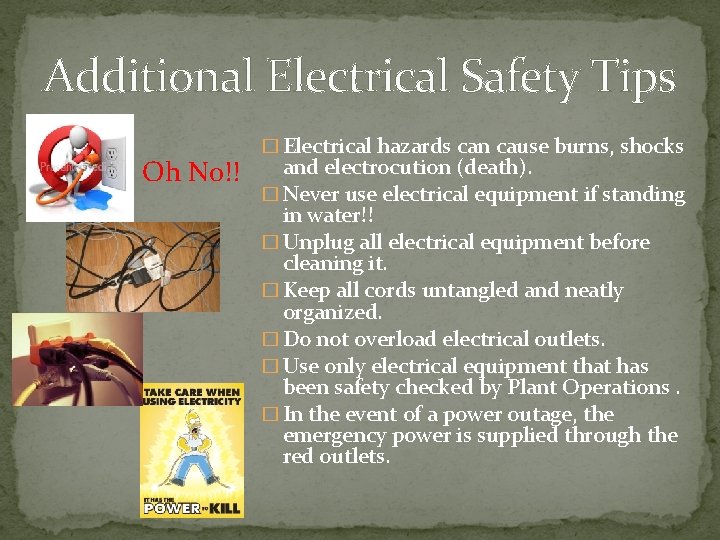
Additional Electrical Safety Tips � Oh No!! � Electrical hazards can cause burns, shocks and electrocution (death). � Never use electrical equipment if standing in water!! � Unplug all electrical equipment before cleaning it. � Keep all cords untangled and neatly organized. � Do not overload electrical outlets. � Use only electrical equipment that has been safety checked by Plant Operations. � In the event of a power outage, the emergency power is supplied through the red outlets.
Any Questions or Concerns? ? �Please feel free to contact …. Mark Arblaster in Plant Operations or any of the operations staff.
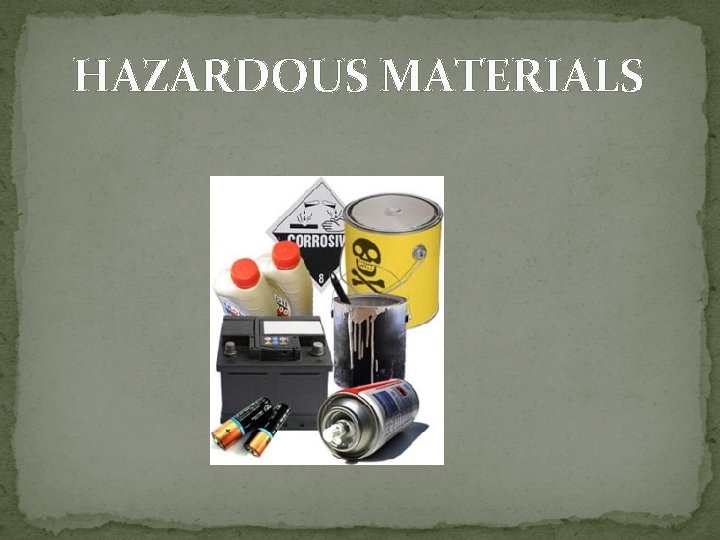
HAZARDOUS MATERIALS
What You Need To Know…. . �What significant hazards are located on your department �How to protect yourself from those hazards �To be able to recognize and interpret the different labels �Where to locate the Safety Data Sheets (SDS) �What information is on the SDS �What to do if there is an exposure
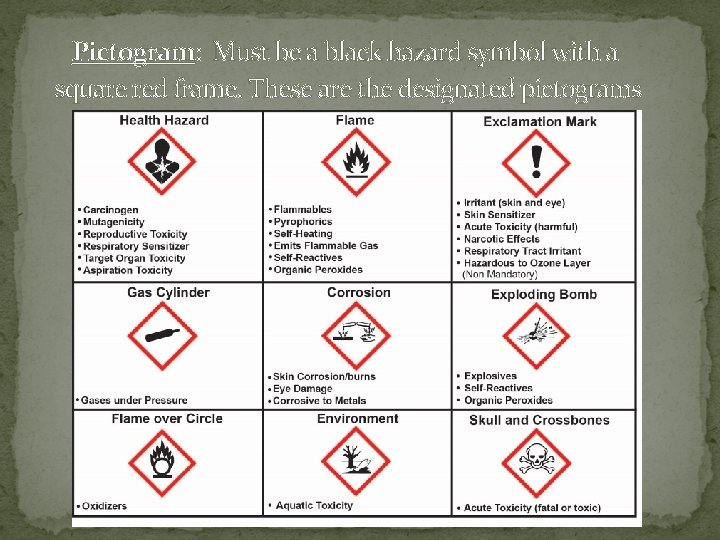
What is on a Safety Data Sheet? � Product Identifier: chemical name, code or batch number. � Signal Word: indicates the level of severity of hazard. a. “danger” – more severe b. “warning” – less severe � Hazard Statement: describes the nature of the hazard. � Precautionary Statements: describes measure to prevent or minimize adverse effects resulting from exposure. � Name, Address, Phone Number of the chemical manufacturer, distributor or importer. � Pictograms – red frame with black symbol – see next slide
Pictogram: Must be a black hazard symbol with a square red frame. These are the designated pictograms
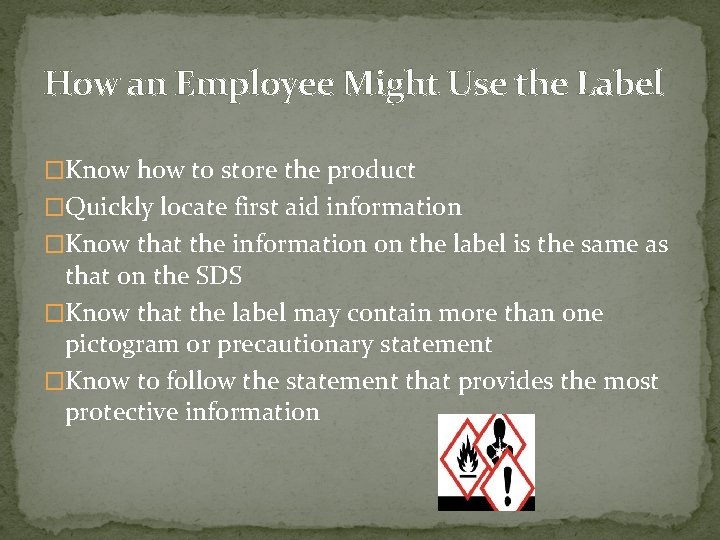
How an Employee Might Use the Label �Know how to store the product �Quickly locate first aid information �Know that the information on the label is the same as that on the SDS �Know that the label may contain more than one pictogram or precautionary statement �Know to follow the statement that provides the most protective information
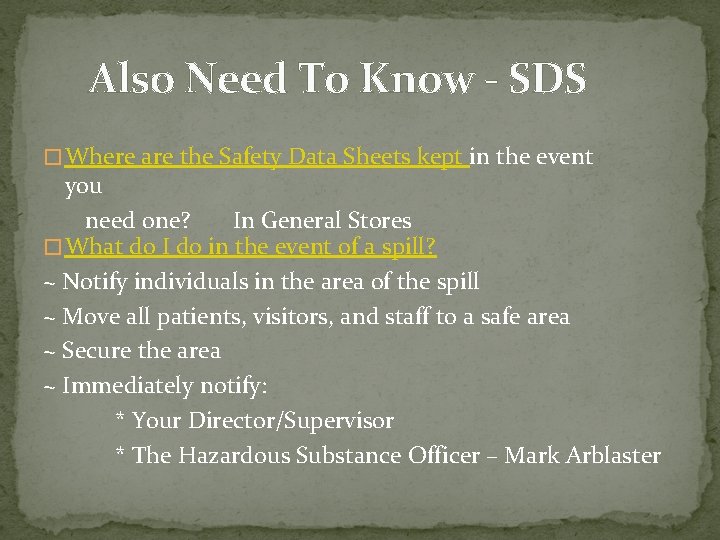
Also Need To Know - SDS � Where are the Safety Data Sheets kept in the event you need one? In General Stores � What do I do in the event of a spill? ~ Notify individuals in the area of the spill ~ Move all patients, visitors, and staff to a safe area ~ Secure the area ~ Immediately notify: * Your Director/Supervisor * The Hazardous Substance Officer – Mark Arblaster
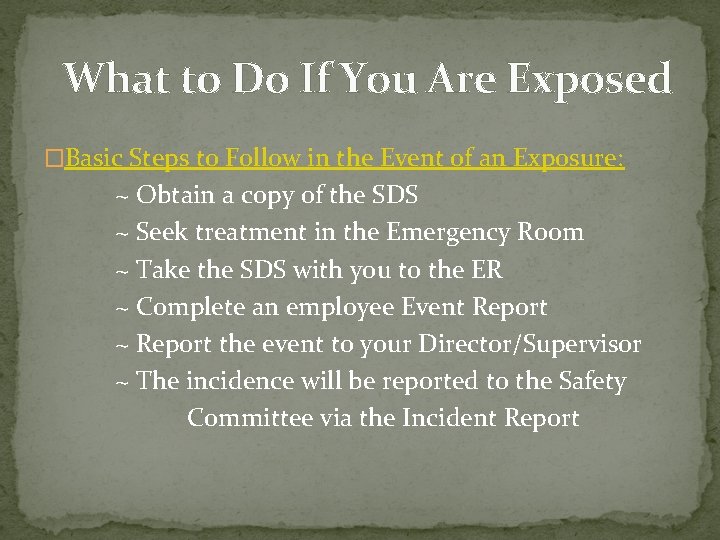
What to Do If You Are Exposed �Basic Steps to Follow in the Event of an Exposure: ~ Obtain a copy of the SDS ~ Seek treatment in the Emergency Room ~ Take the SDS with you to the ER ~ Complete an employee Event Report ~ Report the event to your Director/Supervisor ~ The incidence will be reported to the Safety Committee via the Incident Report
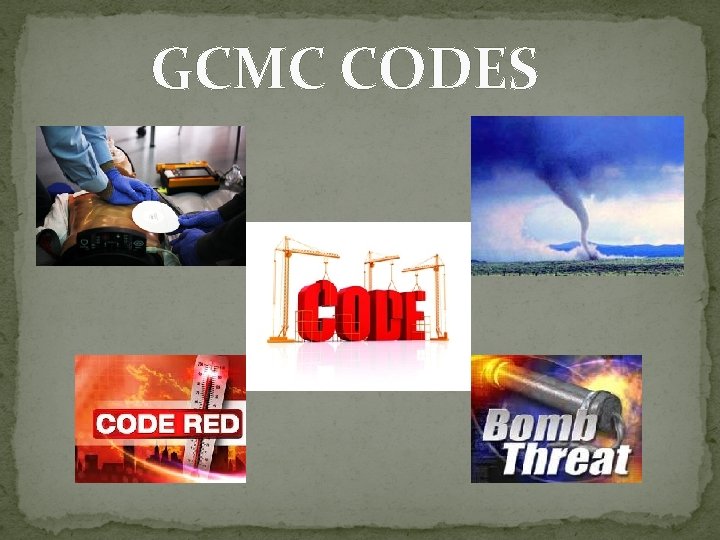
GCMC CODES
� Code Red – Fire response � Code Blue – Cardiac arrest GCM C CO DES � Code Blue Junior – Cardiac arrest < age 14 � Code Orange – Bomb threat � Code 10 – Security assistance needed � Code Lockdown – Facility doors locked � Code Adam - Suspected abduction of child of walking age � Code Dr. Cradle – Suspected abduction of infant or non-walking age child
� Code Gray – Severe weather condition � Level I – No immediate threat to hospital � Level II – Immediate threat to hospital � Code Yellow – External Disaster � Level I – 11 -20 victims � Level II – above 20 victims � Condition C – Medical crisis � Code Waldo – Missing person � Trauma Alert – Trauma patient coming in to the ER � See the Safety manual for department specific response
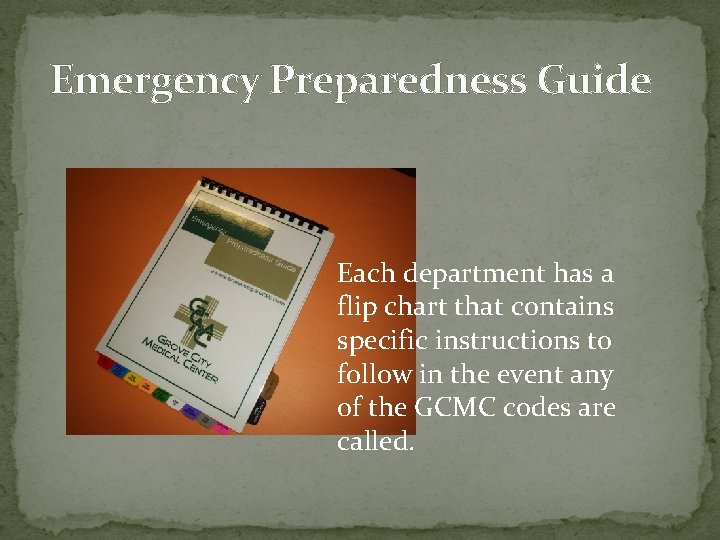
Emergency Preparedness Guide Each department has a flip chart that contains specific instructions to follow in the event any of the GCMC codes are called.
An emergency code can be called by dialing 1345
Please proceed to the test section to complete this mandatory.