
LIFE PROCESSES RAT KINGDOM Animalia PHYLUM Chordata CLASS
- Slides: 11
LIFE PROCESSES - RAT KINGDOM: Animalia PHYLUM: Chordata CLASS: Mammalia Rattus norvegicus
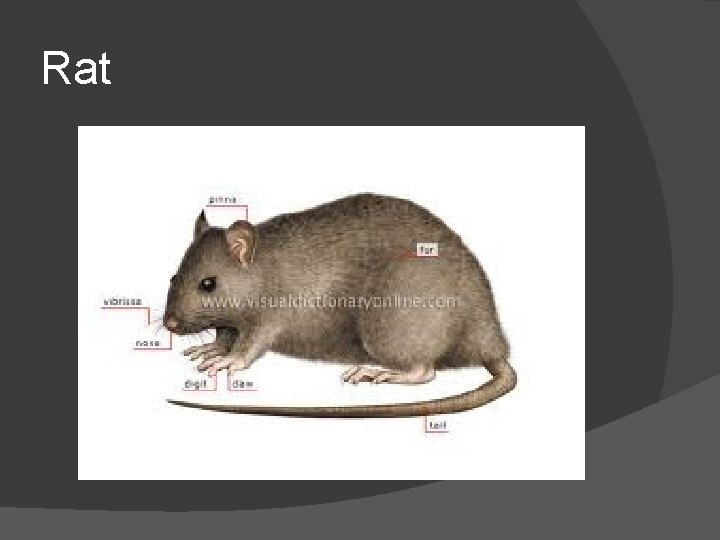
Rat
Movement � Four Legs – includes muscles, cartilage, ligaments and tendons for movement
Body Covering ○ Fur ○ Skin – protects deeper organs from injury due to bumps, chemicals, bacteria, and dehydration ○ Skin helps to regulate body temperature ○ Skin allows excretion of salts and urea
Support � Skeleton: full skeletal system with cartilages, tendons, ligaments, and joints � Supports and protects internal organs � Provides attachments points for muscles � Stores minerals � Has cavities for blood cell formation
Nutrition � Scavengers � Mouth, esophagus, stomach, small and large intestines, teeth, salivary glands, liver, gallbladder, and pancreas � Breaks down ingested goods to tiny particles, which can be absorbed into the blood for delivery to the body’s cells
Respiration � Nose, pharynx, larynx, trachea, bronchi, and lungs � Keeps the blood continuously supplied with oxygen while removing carbon dioxide � Contributes to the acid-base balance of the blood via its carbonic acid/carbonate buffer system
Circulation � Heart, blood vessels, and blood � Primarily a transport system that carries blood containing oxygen, carbon dioxide nutrients, wastes, ions, hormones, and other substances to and fro the cells where exchanges are made � Pumping action of the heart propels blood through the blood vessels � Protects body with blood clots, antibodies, and other protein molecules in the blood
Excretion � Kidneys, ureters, urinary bladder, and urethra � Allows the body to rid itself of nitrogencontaining wastes, which result from the breakdown of proteins and nucleic acids by the body’s cells � Maintains water, electrolyte, and acidbase balance of blood � Undigestible foods excreted as feces
Responses � Brain, spinal cord, nerves, and special sense organs � Allows body to detect changes in its internal and external environment and to respond to such information by activating appropriate muscle groups
Reproduction � Reproduction – sexual � Germ cells – male – sperm; female – egg � Male structures – testes, scrotum, penis and duct system � Female structures – ovaries, uterine tubes, uterus and vagina