
Life Processes and Adaptations in PLANTS A Booklet
Life Processes and Adaptations in PLANTS A Booklet Journey
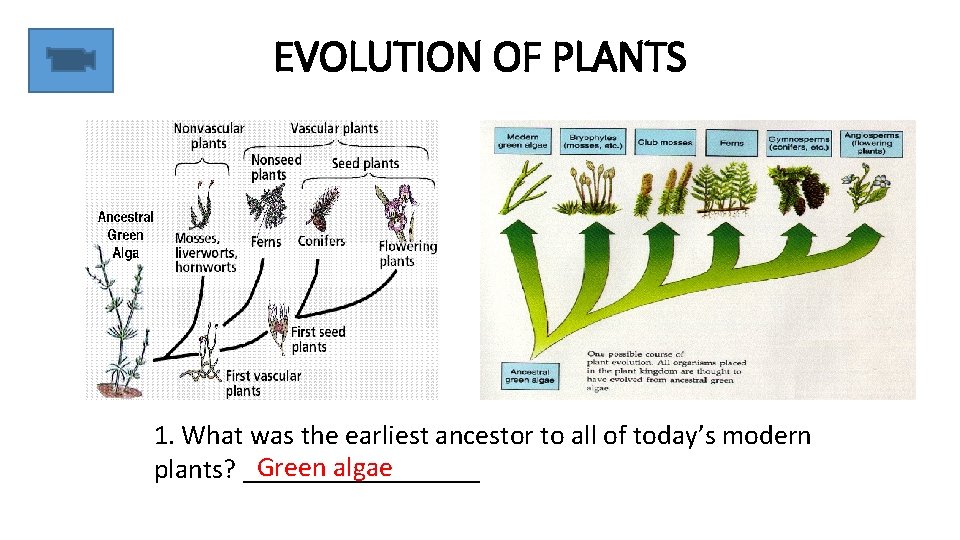
EVOLUTION OF PLANTS 1. What was the earliest ancestor to all of today’s modern Green algae plants? _________
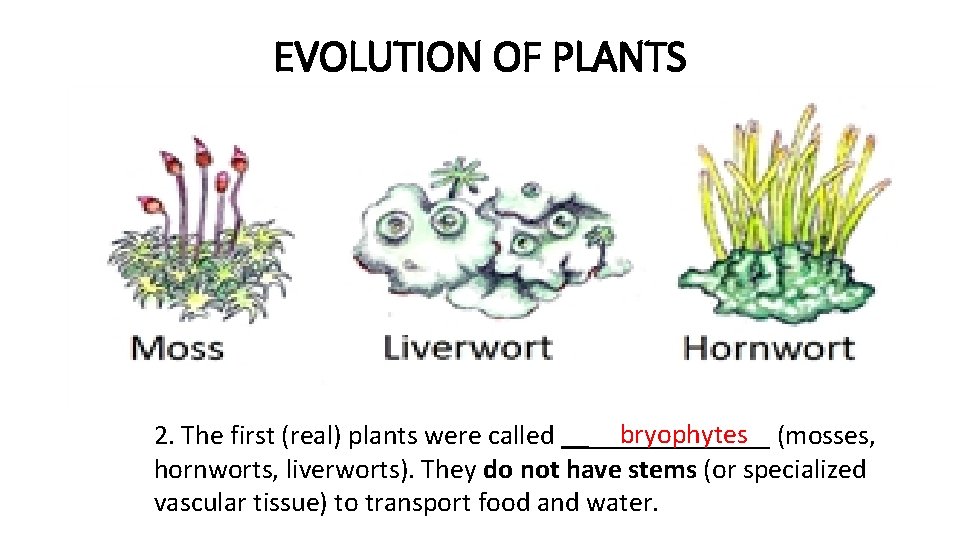
EVOLUTION OF PLANTS bryophytes (mosses, 2. The first (real) plants were called ________ hornworts, liverworts). They do not have stems (or specialized vascular tissue) to transport food and water.

EVOLUTION OF PLANTS 3. What part(s) of the plant have vascular tissue? Stems and Roots and Leaves
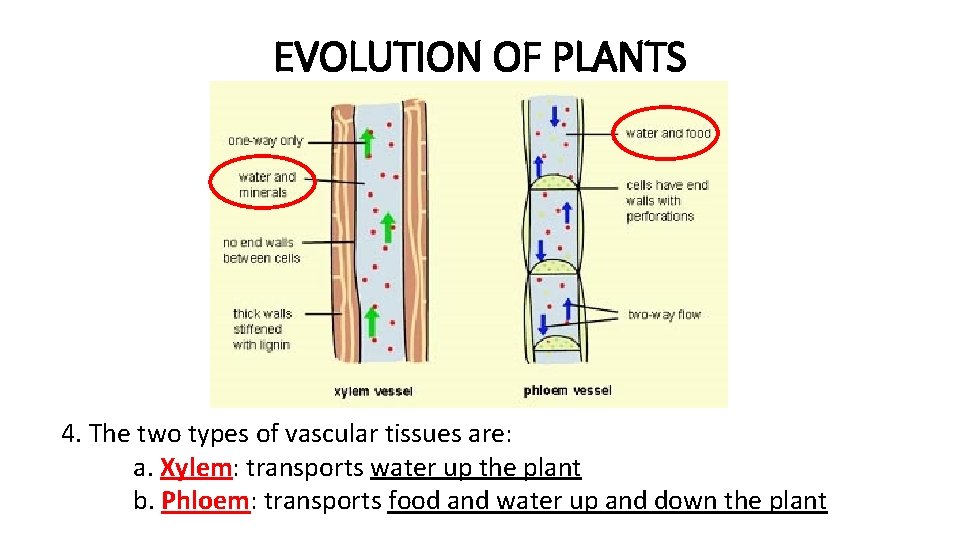
EVOLUTION OF PLANTS 4. The two types of vascular tissues are: a. Xylem: transports water up the plant b. Phloem: transports food and water up and down the plant
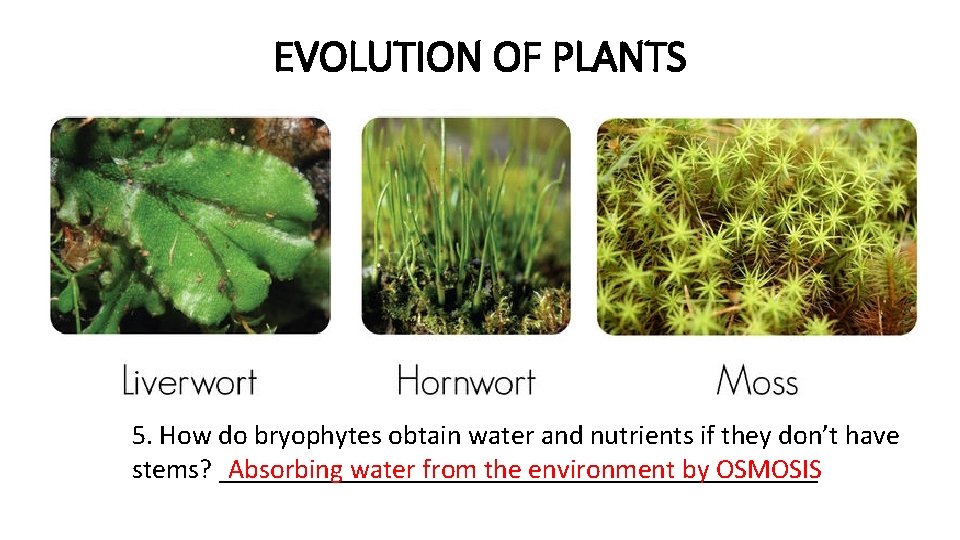
EVOLUTION OF PLANTS 5. How do bryophytes obtain water and nutrients if they don’t have stems? ______________________ Absorbing water from the environment by OSMOSIS
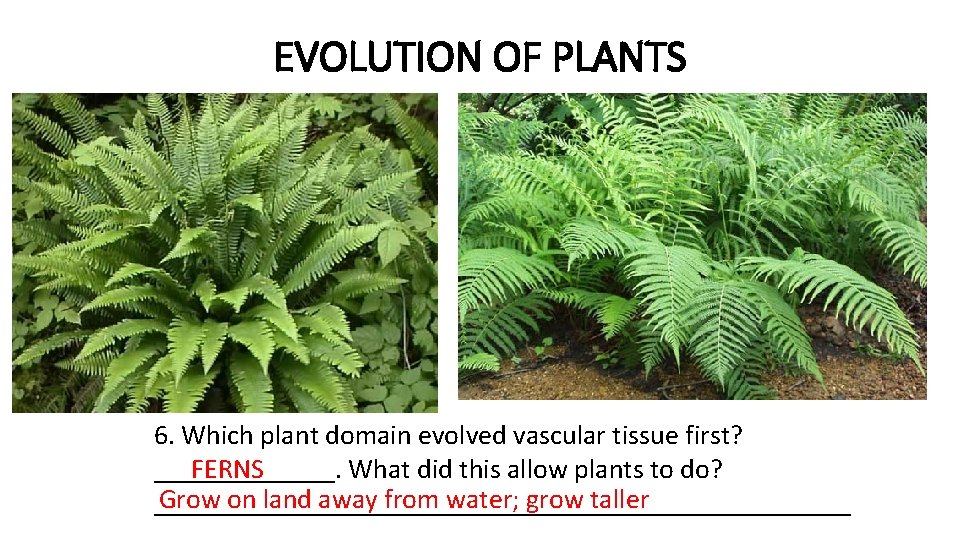
EVOLUTION OF PLANTS 6. Which plant domain evolved vascular tissue first? _______. What did this allow plants to do? FERNS Grow on land away from water; grow taller _________________________
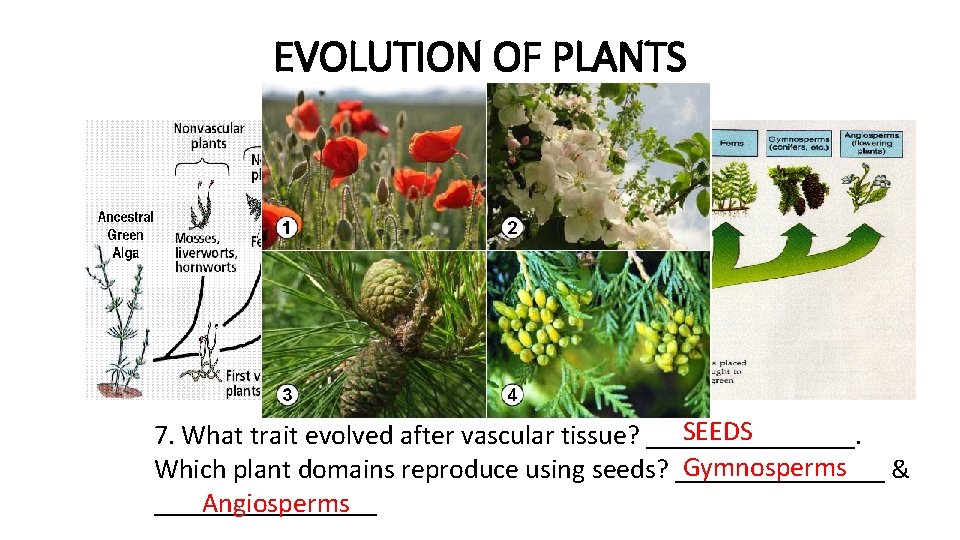
EVOLUTION OF PLANTS SEEDS 7. What trait evolved after vascular tissue? ________. Gymnosperms Which plant domains reproduce using seeds? ________ & ________ Angiosperms
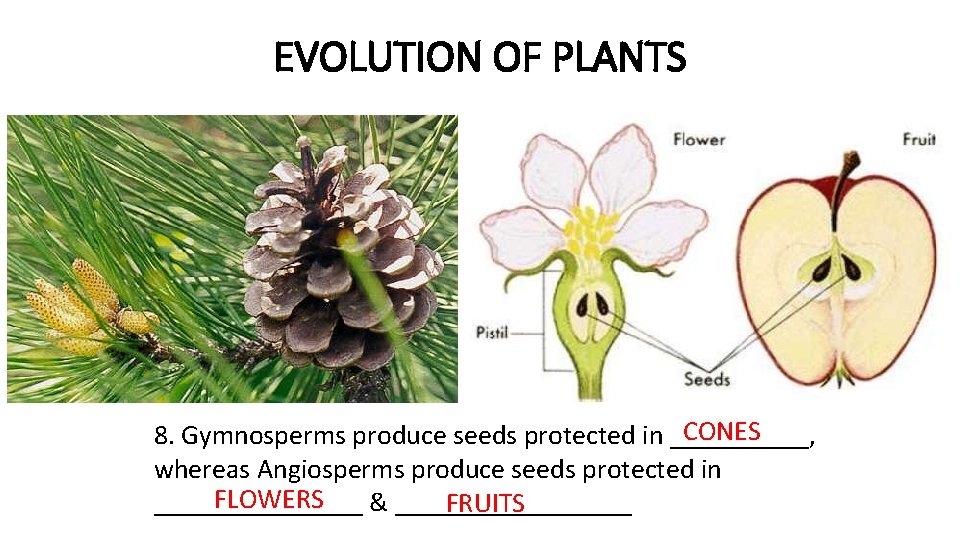
EVOLUTION OF PLANTS CONES 8. Gymnosperms produce seeds protected in _____, whereas Angiosperms produce seeds protected in FLOWERS ________ & _________ FRUITS
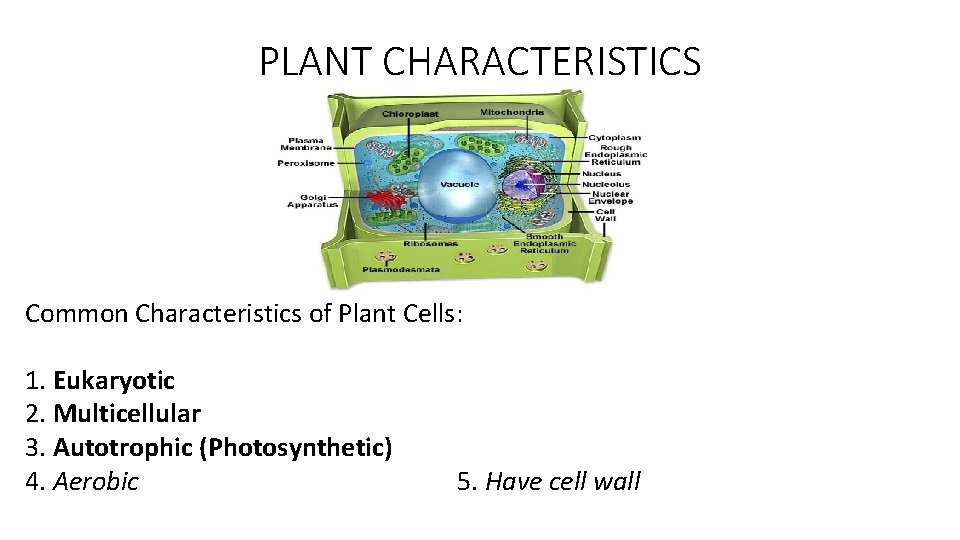
PLANT CHARACTERISTICS Common Characteristics of Plant Cells: 1. Eukaryotic 2. Multicellular 3. Autotrophic (Photosynthetic) 4. Aerobic 5. Have cell wall
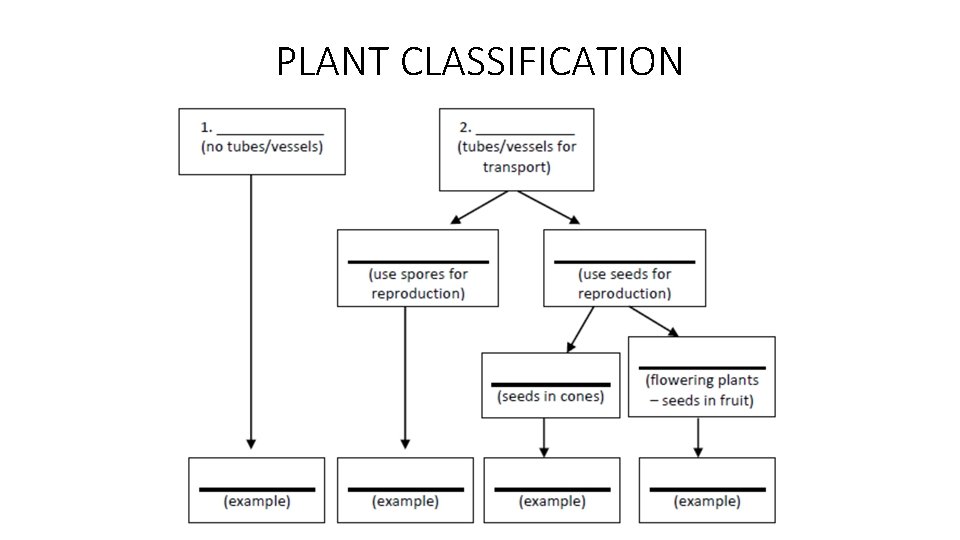
PLANT CLASSIFICATION
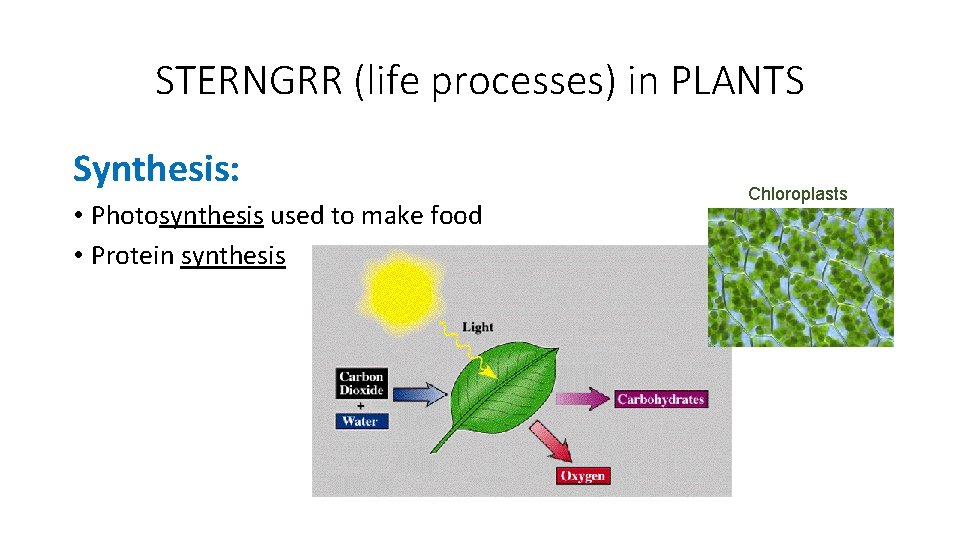
STERNGRR (life processes) in PLANTS Synthesis: • Photosynthesis used to make food • Protein synthesis Chloroplasts
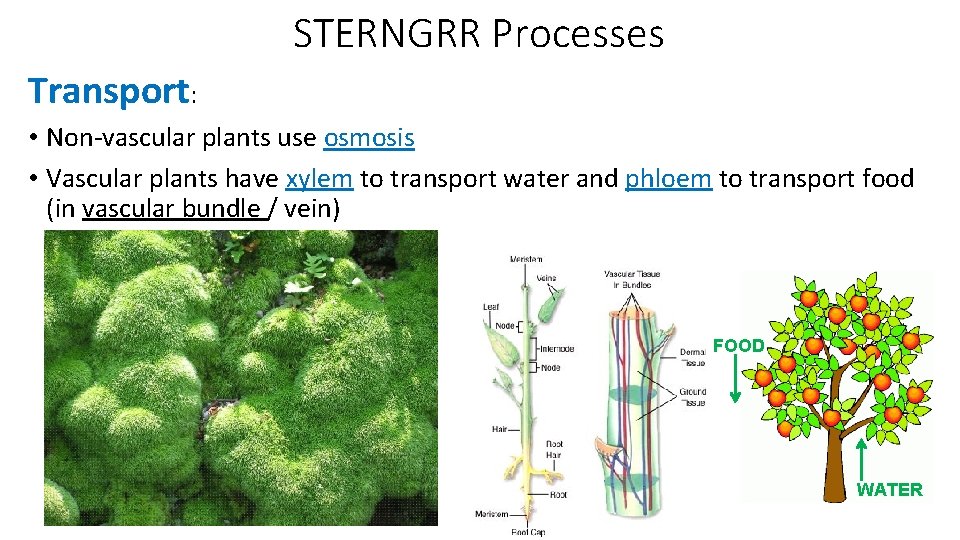
STERNGRR Processes Transport: • Non-vascular plants use osmosis • Vascular plants have xylem to transport water and phloem to transport food (in vascular bundle / vein) FOOD WATER
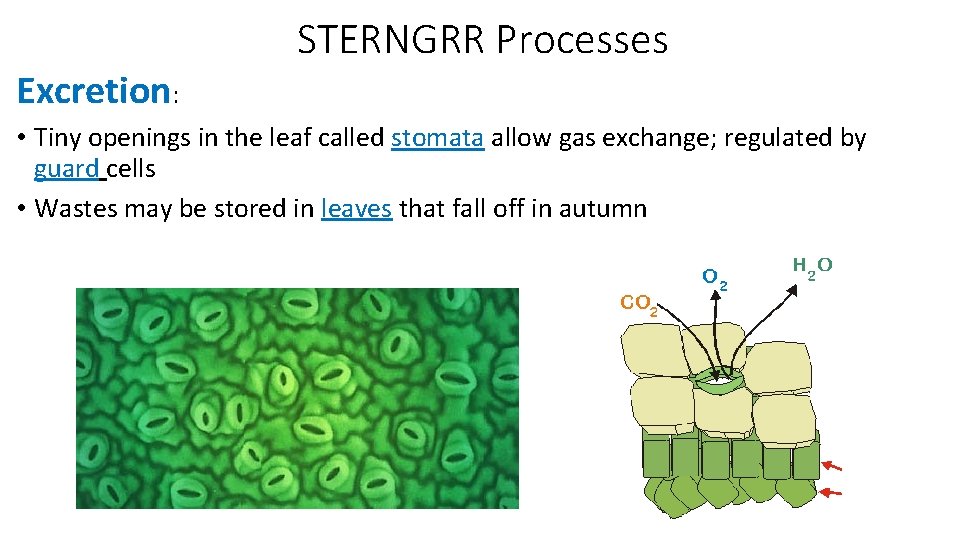
STERNGRR Processes Excretion: • Tiny openings in the leaf called stomata allow gas exchange; regulated by guard cells • Wastes may be stored in leaves that fall off in autumn
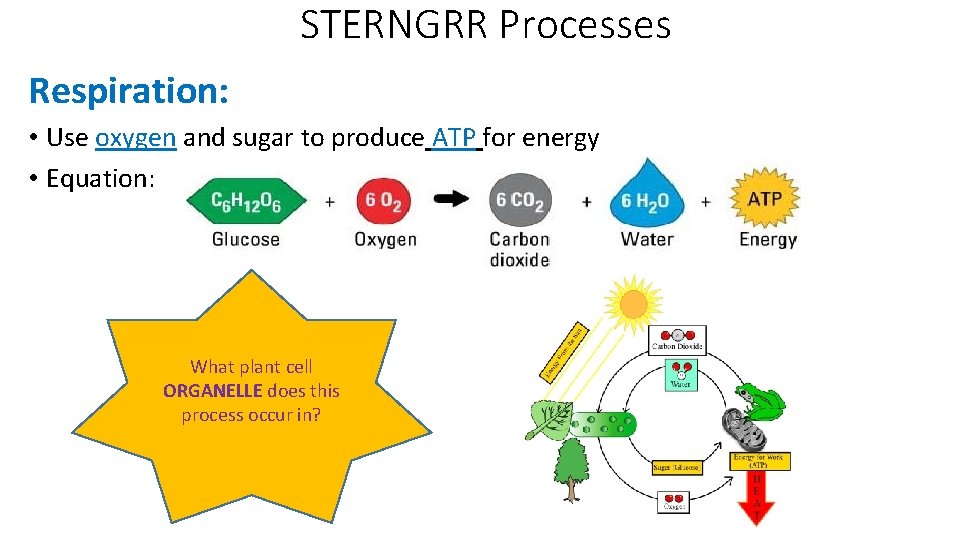
STERNGRR Processes Respiration: • Use oxygen and sugar to produce ATP for energy • Equation: What plant cell ORGANELLE does this process occur in?
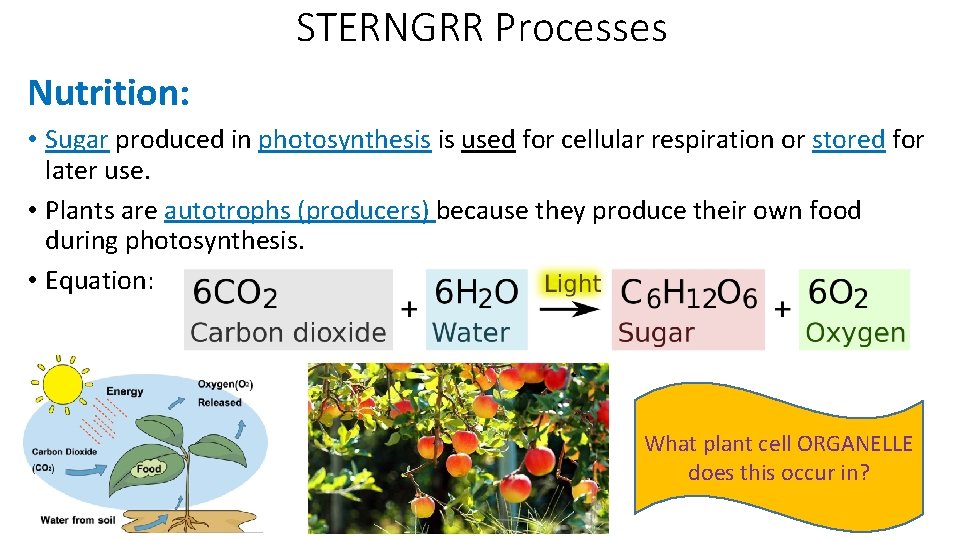
STERNGRR Processes Nutrition: • Sugar produced in photosynthesis is used for cellular respiration or stored for later use. • Plants are autotrophs (producers) because they produce their own food during photosynthesis. • Equation: What plant cell ORGANELLE does this occur in?
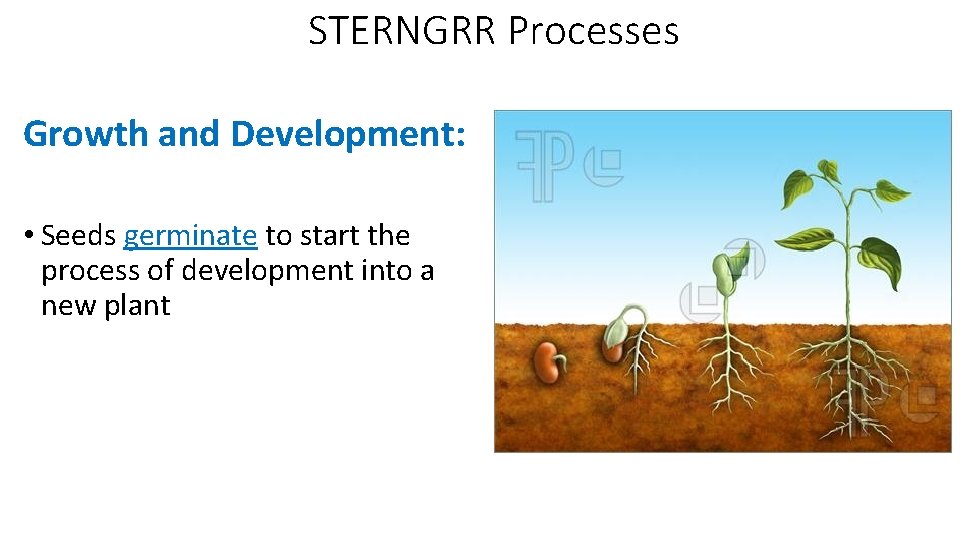
STERNGRR Processes Growth and Development: • Seeds germinate to start the process of development into a new plant
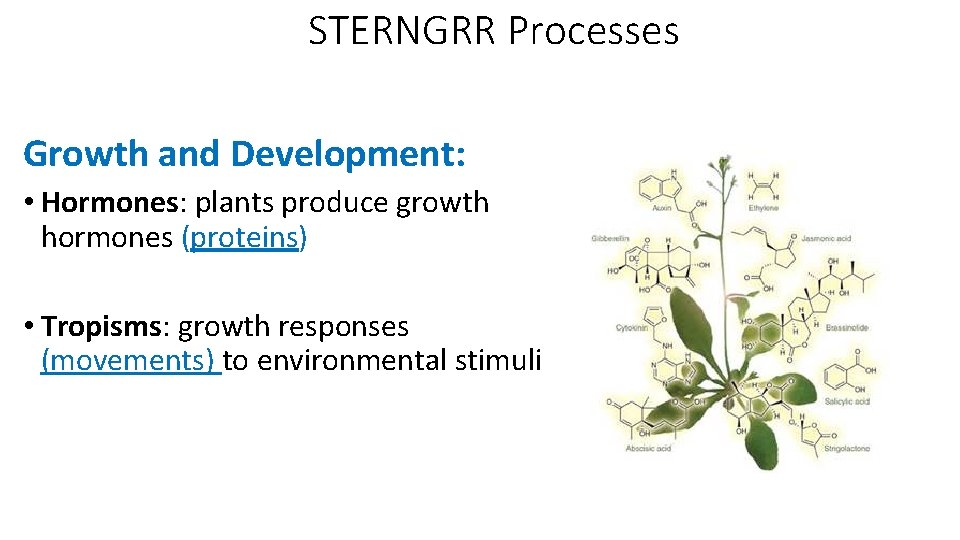
STERNGRR Processes Growth and Development: • Hormones: plants produce growth hormones (proteins) • Tropisms: growth responses (movements) to environmental stimuli
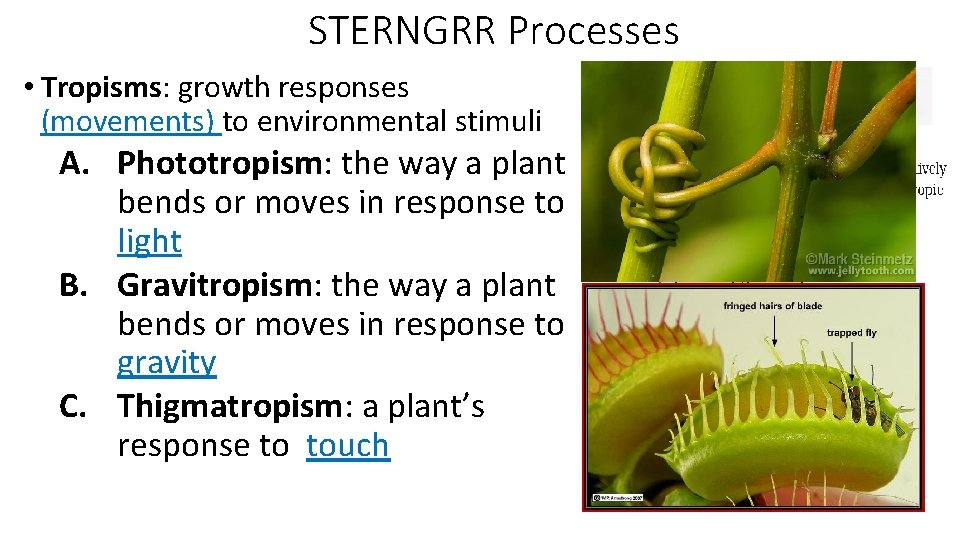
STERNGRR Processes • Tropisms: growth responses (movements) to environmental stimuli A. Phototropism: the way a plant bends or moves in response to light B. Gravitropism: the way a plant bends or moves in response to gravity C. Thigmatropism: a plant’s response to touch
Sex, Bugs, and Pollen’s Role • A CLOSE READ about Plant Reproduction! • Highlight important vocabulary terms • Make comments and connections in the margins • Ask questions in the margins.
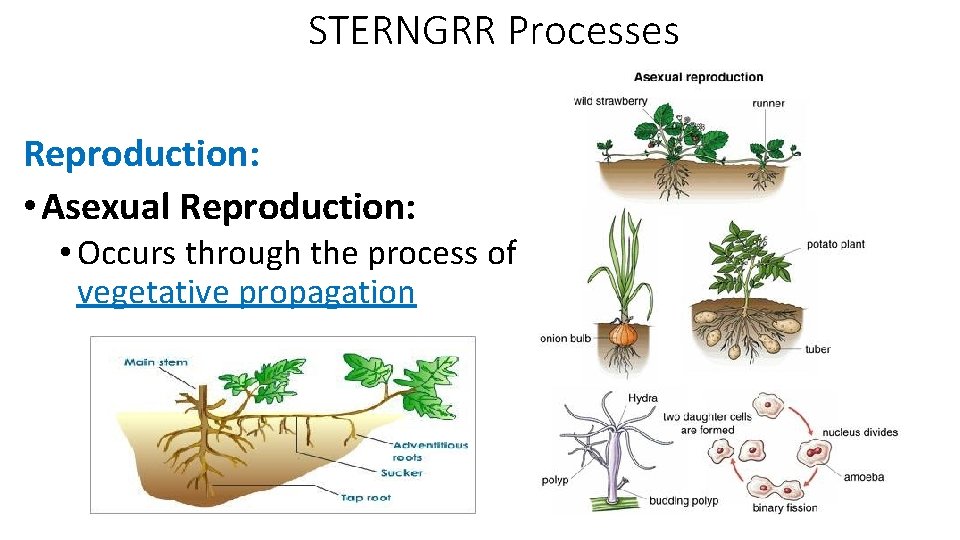
STERNGRR Processes Reproduction: • Asexual Reproduction: • Occurs through the process of vegetative propagation
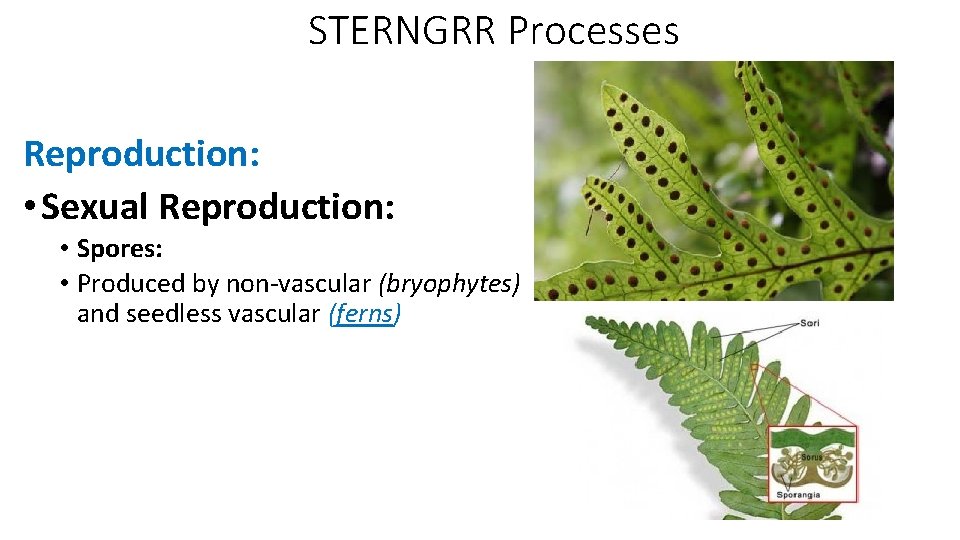
STERNGRR Processes Reproduction: • Sexual Reproduction: • Spores: • Produced by non-vascular (bryophytes) and seedless vascular (ferns)
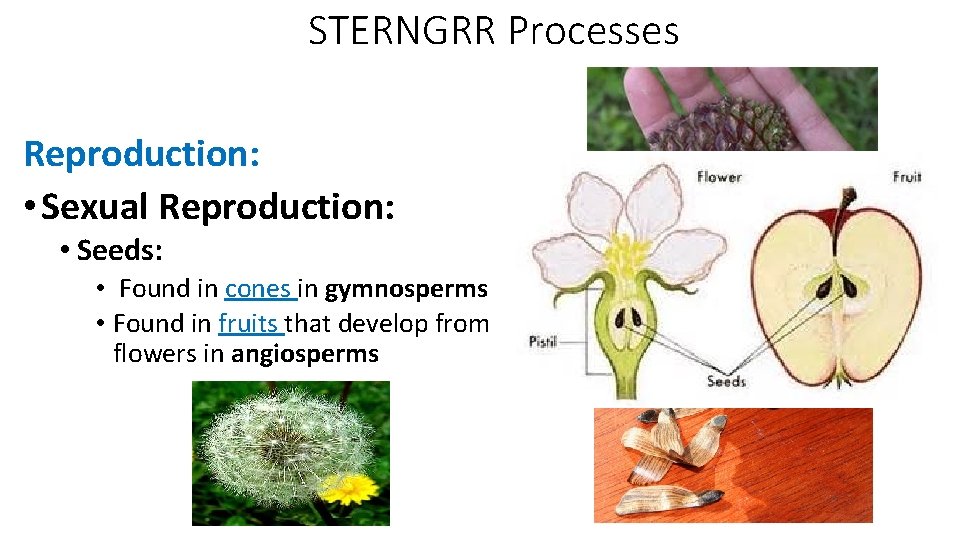
STERNGRR Processes Reproduction: • Sexual Reproduction: • Seeds: • Found in cones in gymnosperms • Found in fruits that develop from flowers in angiosperms
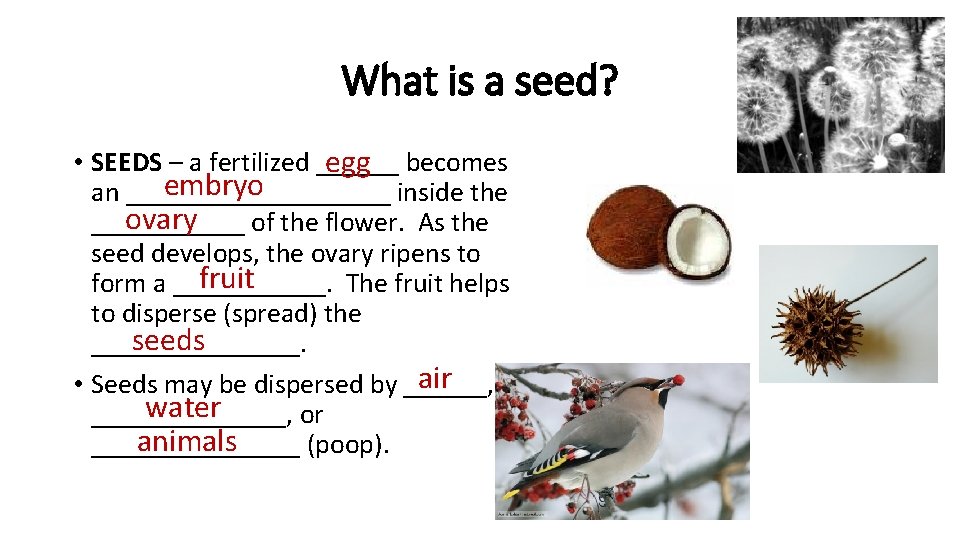
What is a seed? • SEEDS – a fertilized ______ egg becomes embryo an __________ inside the ovary ______ of the flower. As the seed develops, the ovary ripens to fruit form a ______. The fruit helps to disperse (spread) the seeds ________. air • Seeds may be dispersed by ______, water _______, or animals ________ (poop).
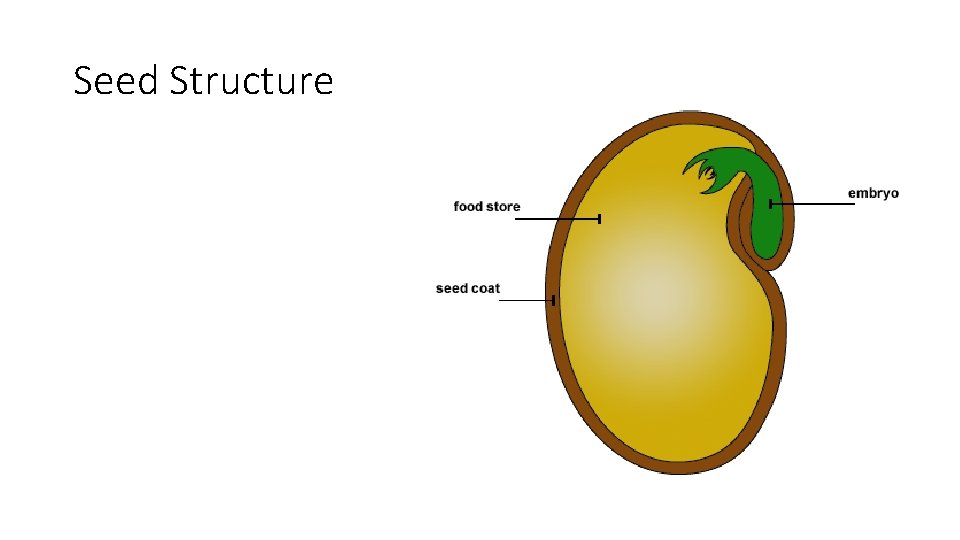
Seed Structure
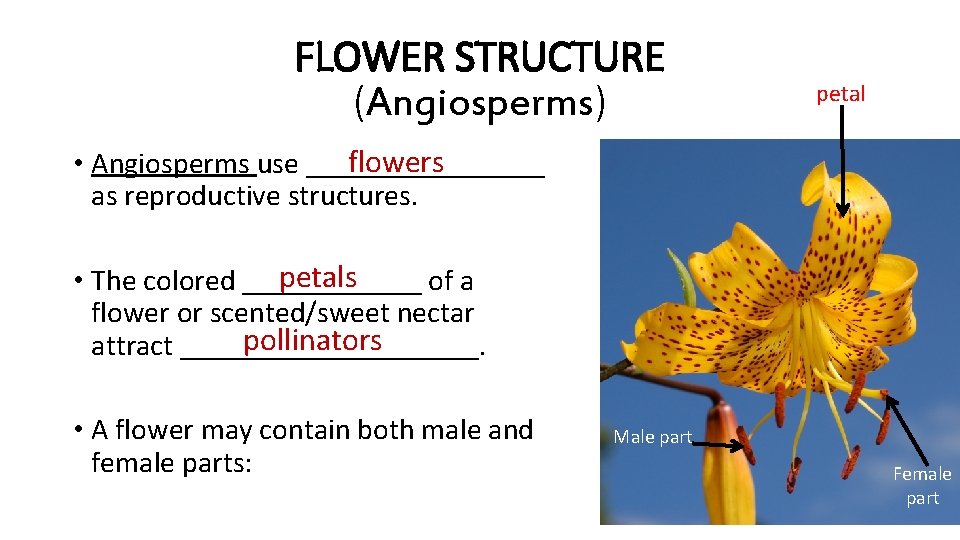
FLOWER STRUCTURE (Angiosperms) petal flowers • Angiosperms use ________ as reproductive structures. petals • The colored ______ of a flower or scented/sweet nectar pollinators attract __________. • A flower may contain both male and female parts: Male part Female part
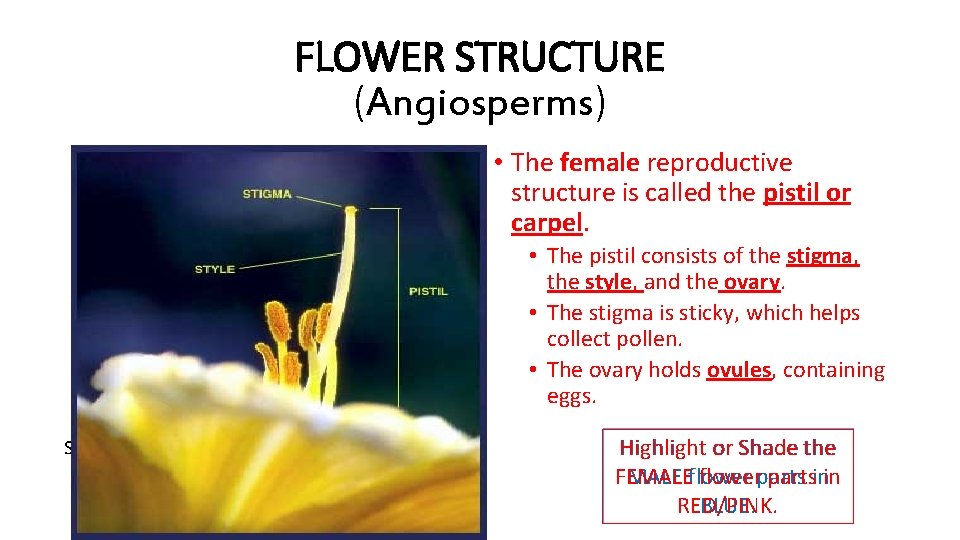
FLOWER STRUCTURE (Angiosperms) • The male reproductive structure is called the stamen. • The stamen consists of the anther and the filament. • The anther produces pollen, containing sperm. anther Stamen filament • The female reproductive structure is called the pistil or carpel. • The pistil consists of the stigma, the style, and the ovary. • The stigma is sticky, which helps collect pollen. • The ovary holds ovules, containing eggs. Highlight or Shade the MALE flower FEMALE flowerpartsinin BLUE. RED/PINK.
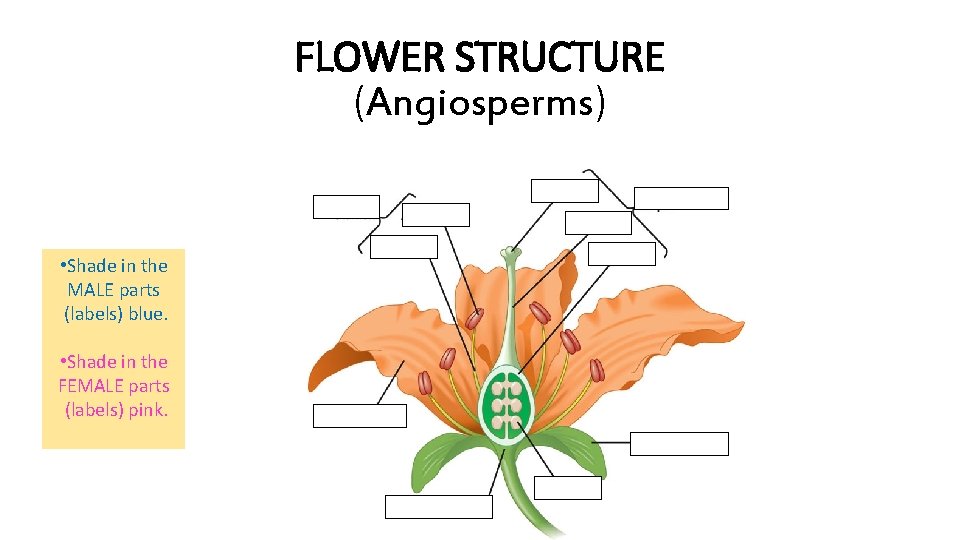
FLOWER STRUCTURE (Angiosperms) • Shade in the MALE parts (labels) blue. • Shade in the FEMALE parts (labels) pink.
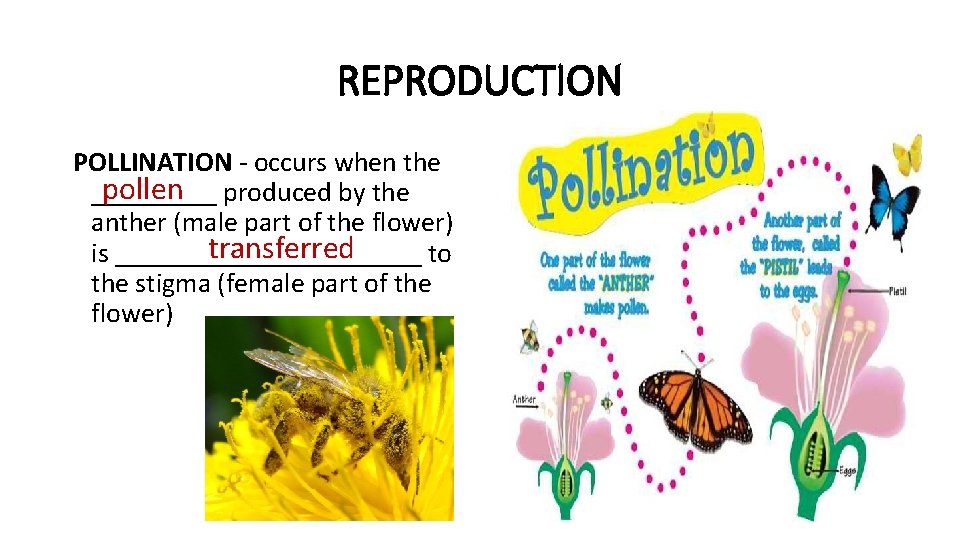
REPRODUCTION POLLINATION - occurs when the pollen produced by the _____ anther (male part of the flower) transferred is ___________ to the stigma (female part of the flower)
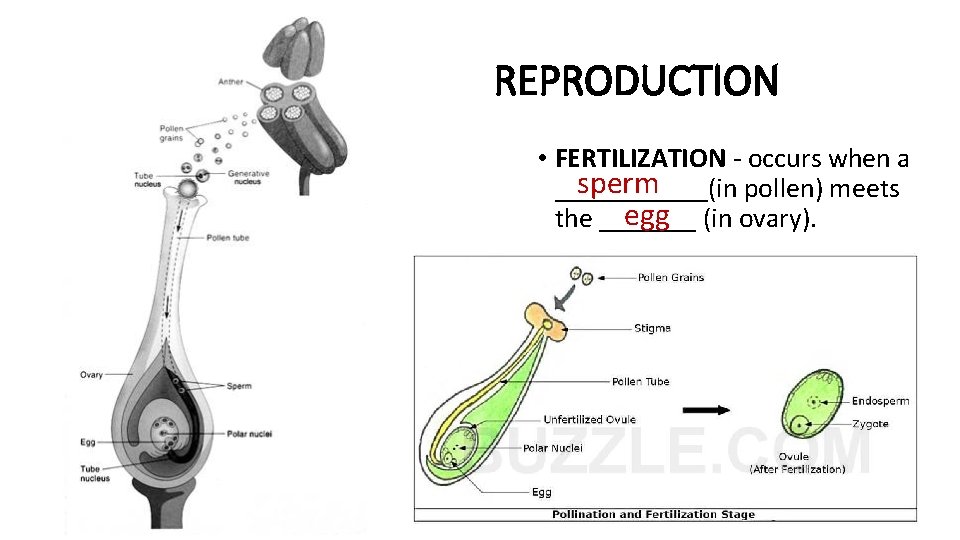
REPRODUCTION • FERTILIZATION - occurs when a sperm ______(in pollen) meets egg (in ovary). the _______
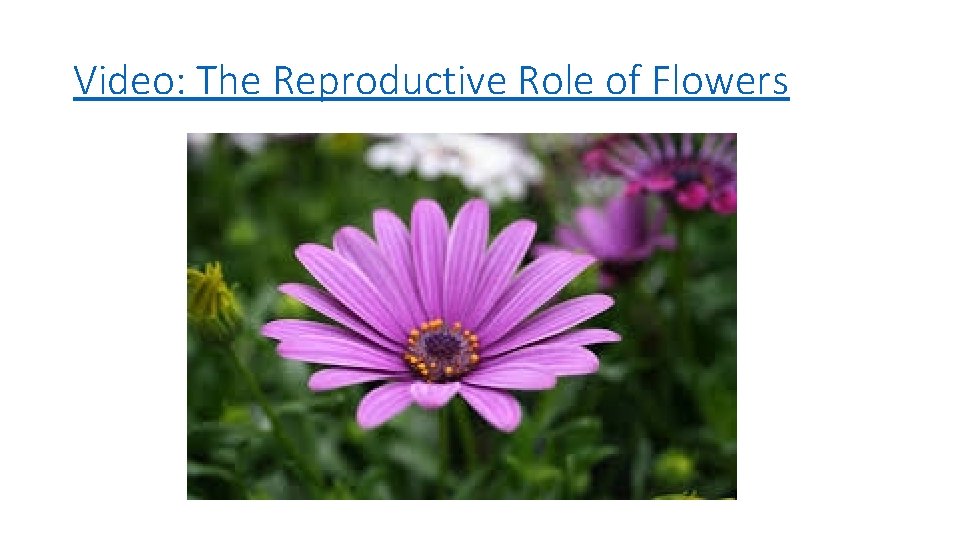
Video: The Reproductive Role of Flowers
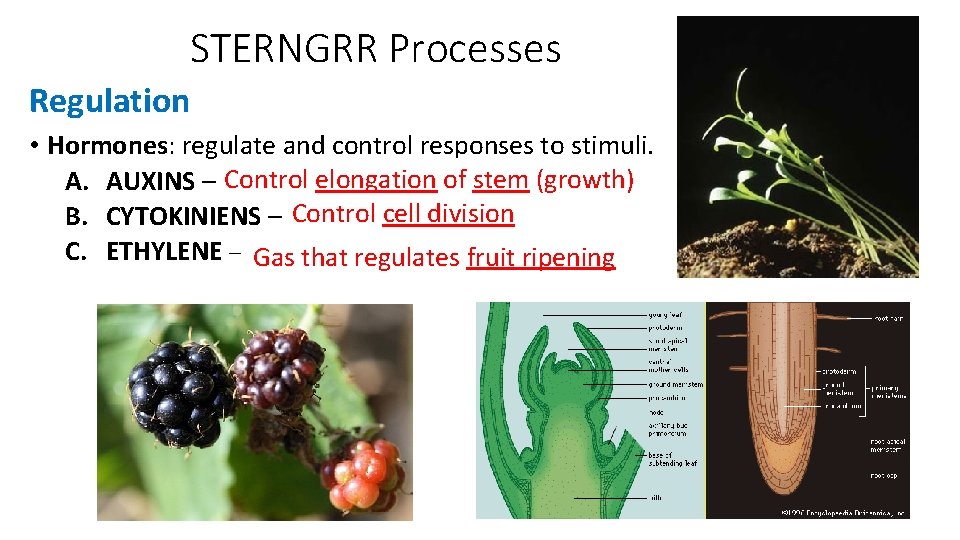
STERNGRR Processes Regulation • Hormones: regulate and control responses to stimuli. Control _________ elongation of stem (growth) A. AUXINS – control of ______ (growth) Control______ cell division B. CYTOKINIENS – control C. ETHYLENE – gas regulates ____________ Gasthat regulates fruit ripening
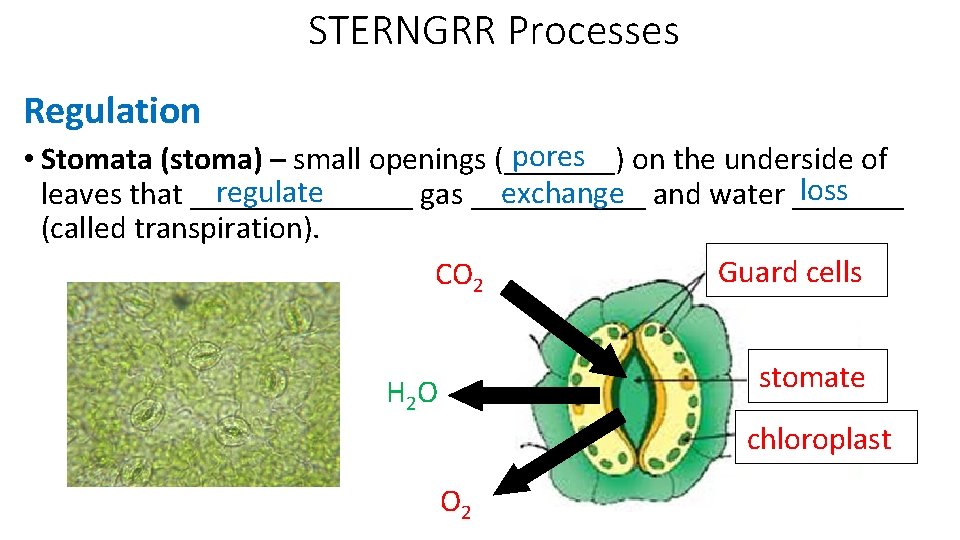
STERNGRR Processes Regulation pores on the underside of • Stomata (stoma) – small openings (_______) loss regulate exchange and water _______ leaves that _______ gas ______ (called transpiration). Guard cells CO 2 stomate H 2 O chloroplast O 2
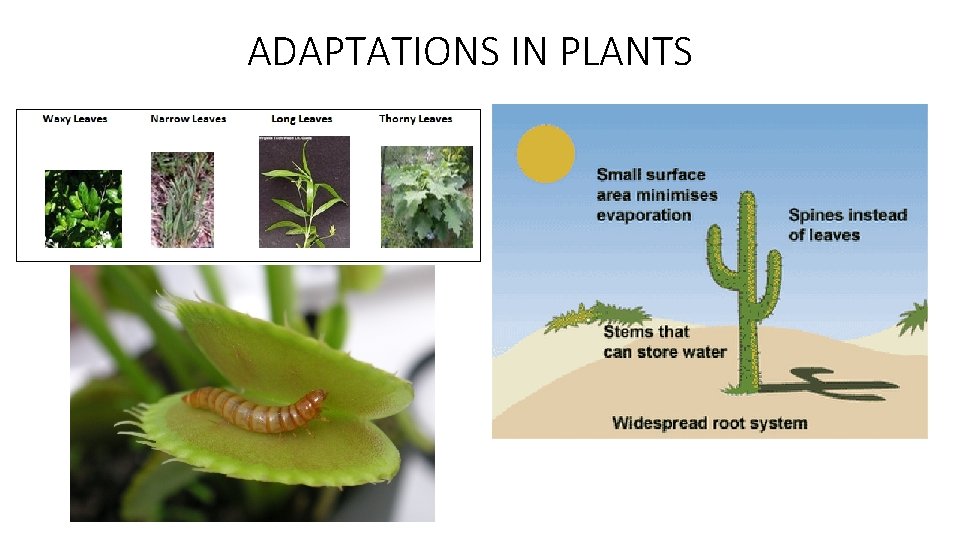
ADAPTATIONS IN PLANTS
Plant Adaptations • Plants have adaptations that help them survive in different areas • Adaptation: heritable trait that increases an organism’s ability to survive and reproduce (increases fitness)
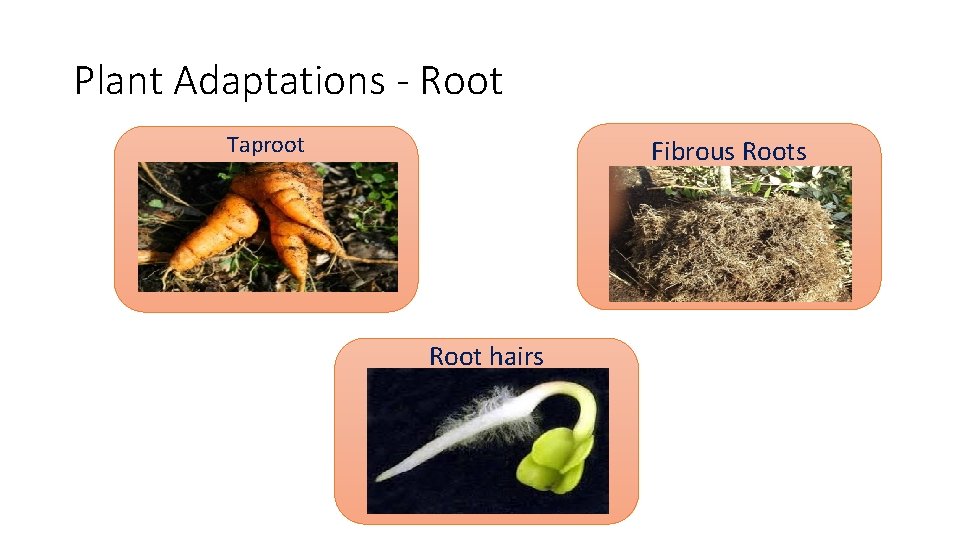
Plant Adaptations - Root Taproot Fibrous Root hairs
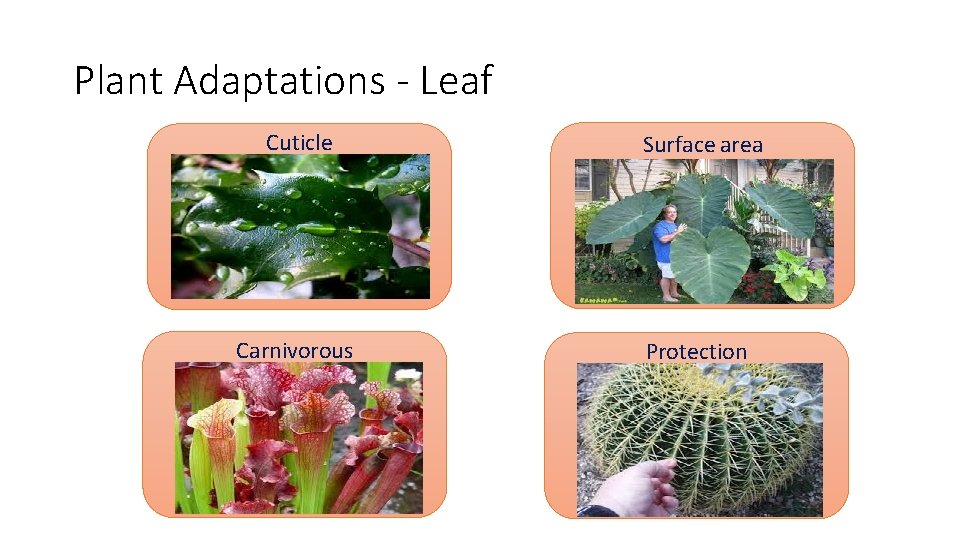
Plant Adaptations - Leaf Cuticle Surface area Carnivorous Protection
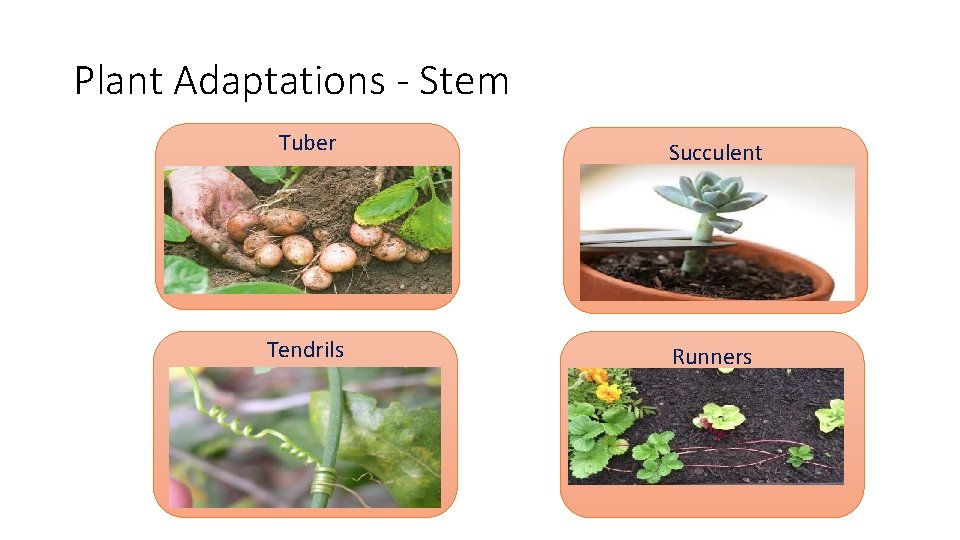
Plant Adaptations - Stem Tuber Succulent Tendrils Runners
- Slides: 41