
Life Orientation Life Skills NQF 2 Life Orientation

- Slides: 25
Life Orientation: Life Skills NQF 2 Life Orientation NQF Level 2
Explain human rights & responsibilities Module 11 *see terms and conditions
Think about it… • Can someone demand a right while ignoring its limitations & responsibilities? • What are the characteristics of a respectable role model? • Does a setup like that of a place of education have environmental concerns of its own?
Unit 11. 1 Human rights & responsibilities Life Orientation NQF Level 2
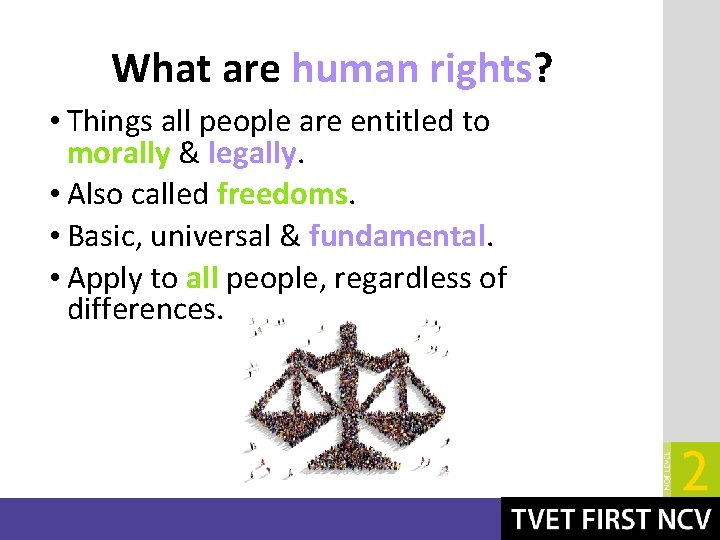
What are human rights? • Things all people are entitled to morally & legally. • Also called freedoms. • Basic, universal & fundamental. • Apply to all people, regardless of differences.
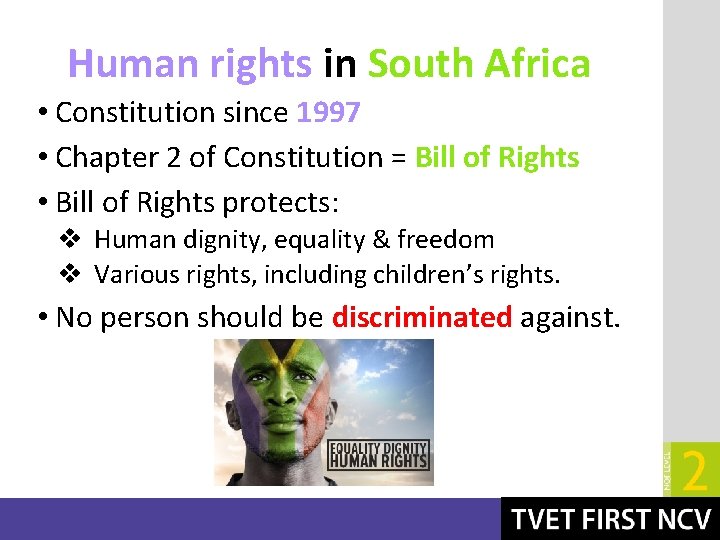
Human rights in South Africa • Constitution since 1997 • Chapter 2 of Constitution = Bill of Rights • Bill of Rights protects: v Human dignity, equality & freedom v Various rights, including children’s rights. • No person should be discriminated against.
Summary of human rights • Refer to Table 11. 1 in your Student’s Book to see a summary of human rights as specified in the South African Bill of Rights (with examples).
Rights have corresponding responsibilities • Refer to Example 11. 1 in your Student’s Book for more about enjoying rights with responsibilities.
Learning activity 11. 1 Module 11 Test your knowledge of this unit by completing Learning activity 11. 1 in your Student’s Book. Life Orientation NQF Level 2
Unit 11. 2 Good citizenship Life Orientation NQF Level 2
What is a citizen? • A person who is a subject of a state (also: a national). • South African citizens: v Born in SA to at least one parent with SA citizenship v Adopted by a SA citizen v Born elsewhere but lived in SA for many years. v Have successfully applied for citizenship.
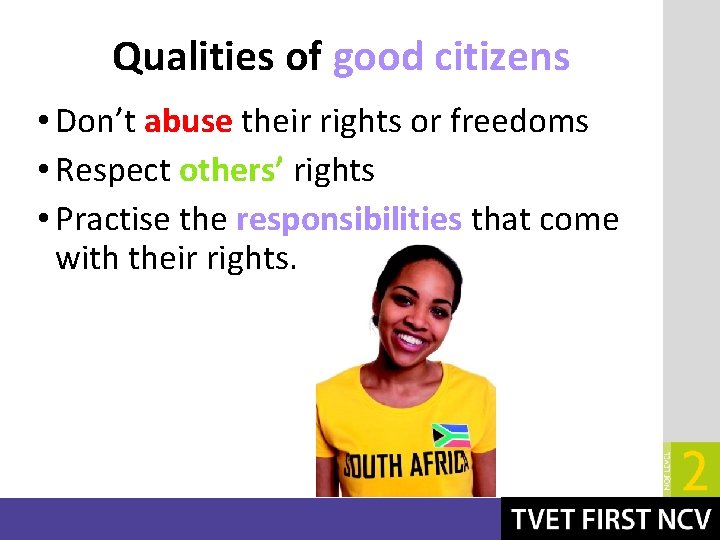
Qualities of good citizens • Don’t abuse their rights or freedoms • Respect others’ rights • Practise the responsibilities that come with their rights.
Examples of attributes of good citizens • Refer to Table 11. 2 in your Student’s Book to see examples of qualities of good South Africans, in the context of the South African Bill of Rights.
The previous video is courtesy of Civics Academy. ‘Civics Academy is an independent, not-for-profit online education initiative in South Africa. We offer free video and audio content aiming to inform and to strengthen democratic values and responsible citizenship. Civics Academy covers educational content related to democracy, governance, elections, political parties, the justice system, the Constitution, economics, civil society, human rights and the environment. All our content is purely educational, carefully peer reviewed by prominent experts and regularly updated. Please visit our website to view all of our educational content. ’ www. civicsacademy. co. za
Learning activity 11. 2 Module 11 Test your knowledge of this unit by completing Learning activity 11. 2 in your Student’s Book. Life Orientation NQF Level 2
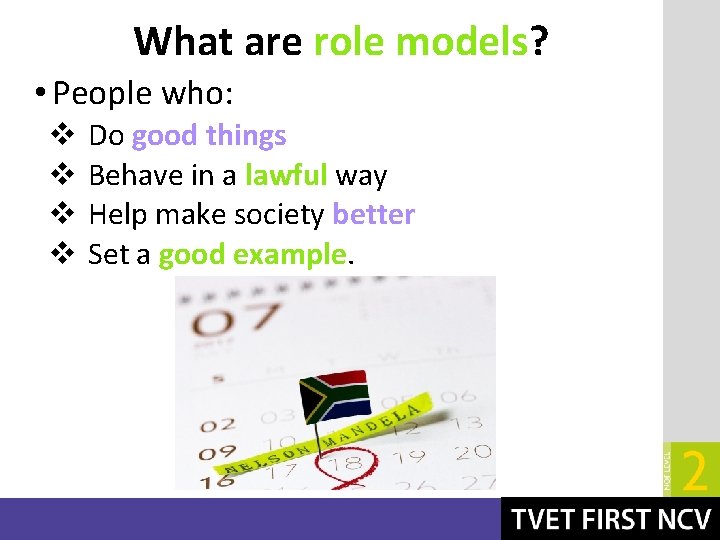
What are role models? • People who: v v Do good things Behave in a lawful way Help make society better Set a good example.
Role models of good SA citizens • May be awarded national orders (see Table 11. 3) • Inspiring public figures, e. g. involved in: v v v Child care/healthcare Business Politics Sport/entertainment Animal/environmental work Charity/social/emergency work. • Pillars in our homes & communities.
Learning activity 11. 3 Module 11 Test your knowledge of this unit by completing Learning activity 11. 3 in your Student’s Book. Life Orientation NQF Level 2
Unit 11. 3 Protecting the environment at college Life Orientation NQF Level 2
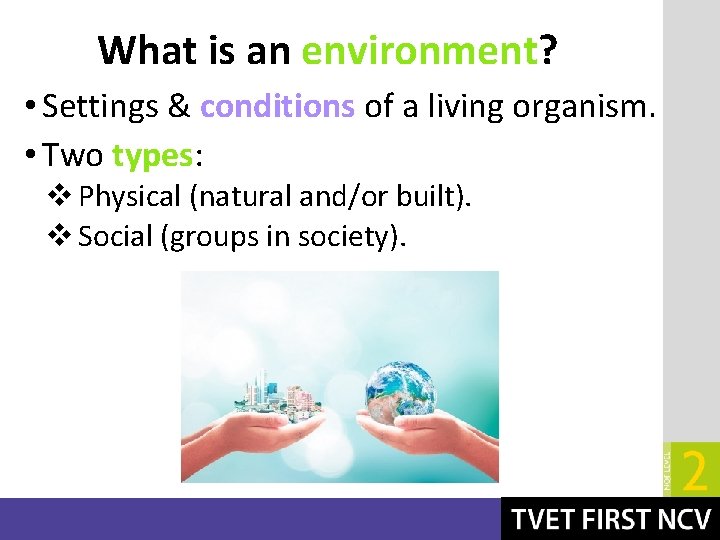
What is an environment? • Settings & conditions of a living organism. • Two types: v Physical (natural and/or built). v Social (groups in society).
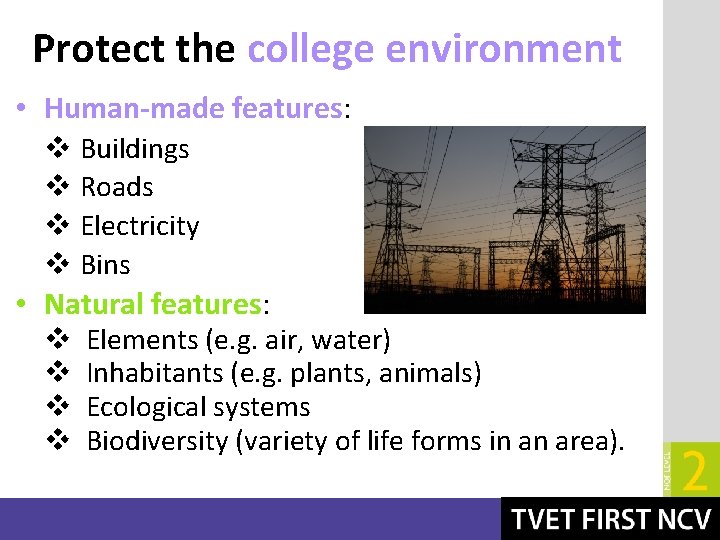
Protect the college environment • Human-made features: v Buildings v Roads v Electricity v Bins • Natural features: v Elements (e. g. air, water) v Inhabitants (e. g. plants, animals) v Ecological systems v Biodiversity (variety of life forms in an area).
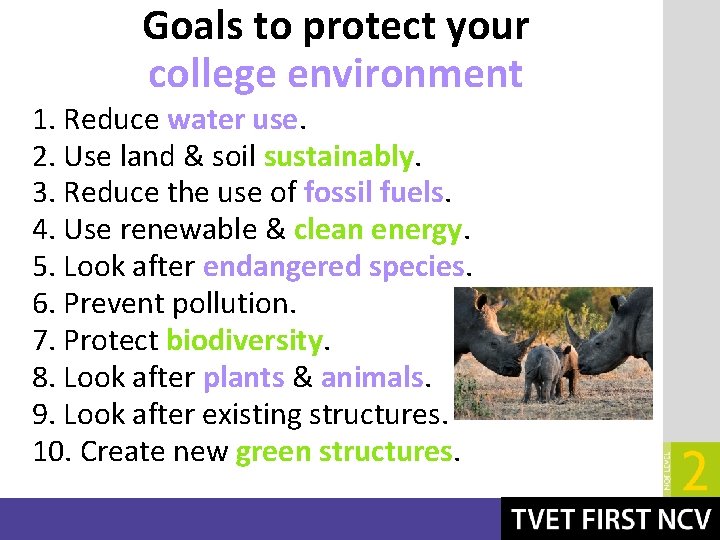
Goals to protect your college environment 1. Reduce water use. 2. Use land & soil sustainably. 3. Reduce the use of fossil fuels. 4. Use renewable & clean energy. 5. Look after endangered species. 6. Prevent pollution. 7. Protect biodiversity. 8. Look after plants & animals. 9. Look after existing structures. 10. Create new green structures.
Learning activity 11. 4 Module 11 Test your knowledge of this unit – and implement five actions to protect your environment – by completing Learning activity 11. 4 in your Student’s Book. Life Orientation NQF Level 2
Summative assessment Module 11 Test your knowledge of this module by completing the Summative assessment of Module 11 in your Student’s Book. Life Orientation NQF Level 2
Mathematics NQF Level 2 Life Orientation (Life Skills) NQF Level 2