
Life of a Mill Workers Family 1890 James









- Slides: 45
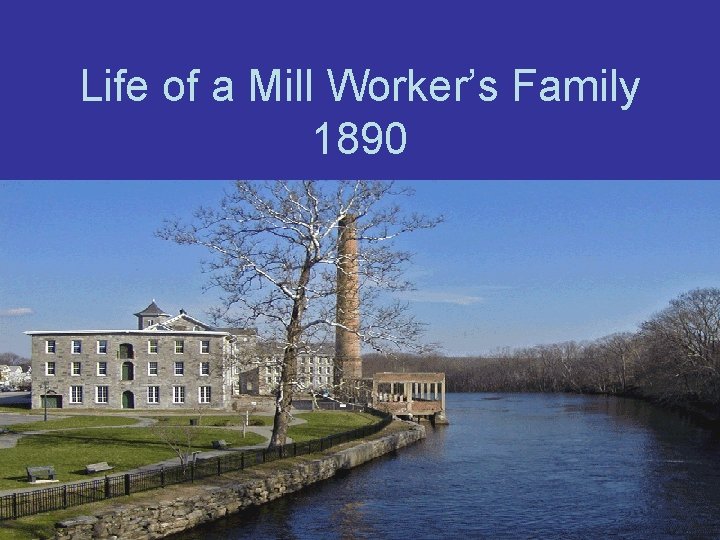
Life of a Mill Worker’s Family 1890
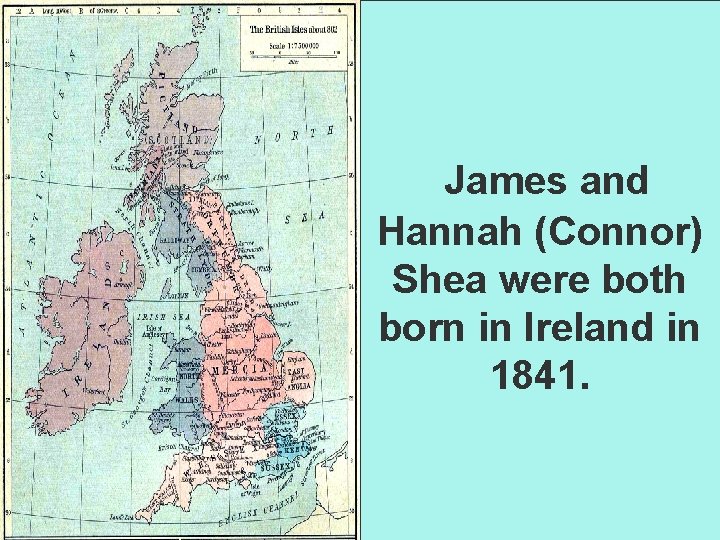
James and Hannah (Connor) Shea were both born in Ireland in 1841.
The poor people of Ireland were farmers who grew potatoes for their families to eat.
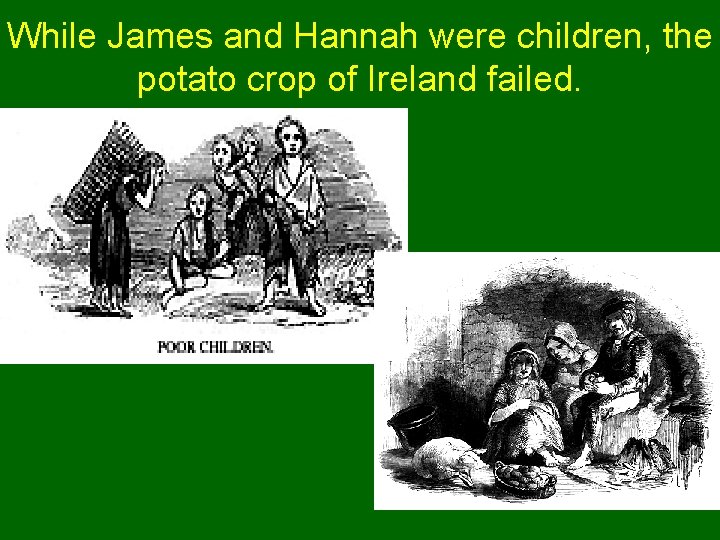
While James and Hannah were children, the potato crop of Ireland failed.
The poor people of Ireland had nothing to eat. They called this time “The Great Hunger” or “The Great Potato Famine”
The poor Irish people could not pay their bills. They were thrown off their farms.
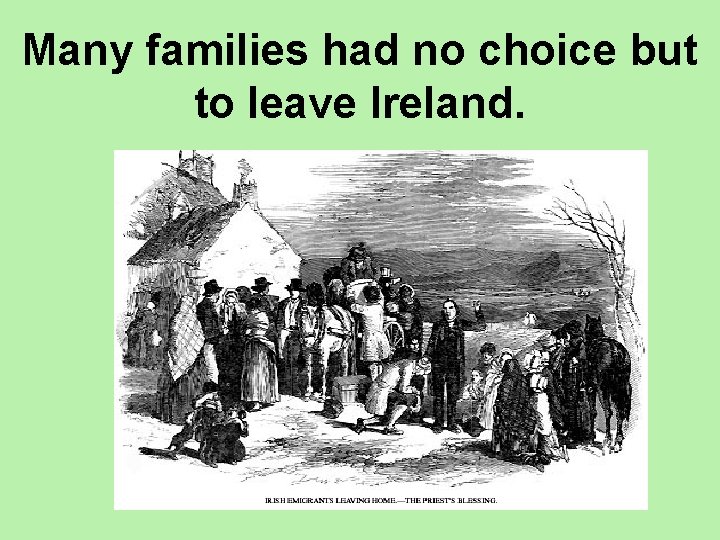
Many families had no choice but to leave Ireland.
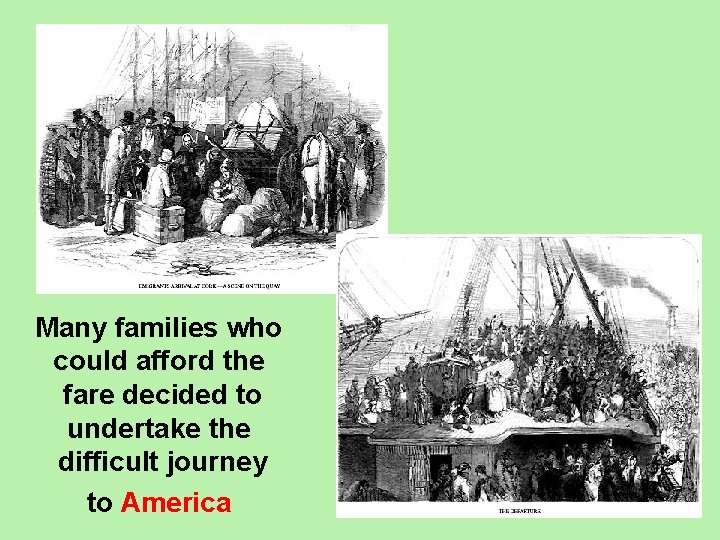
Many families who could afford the fare decided to undertake the difficult journey to America
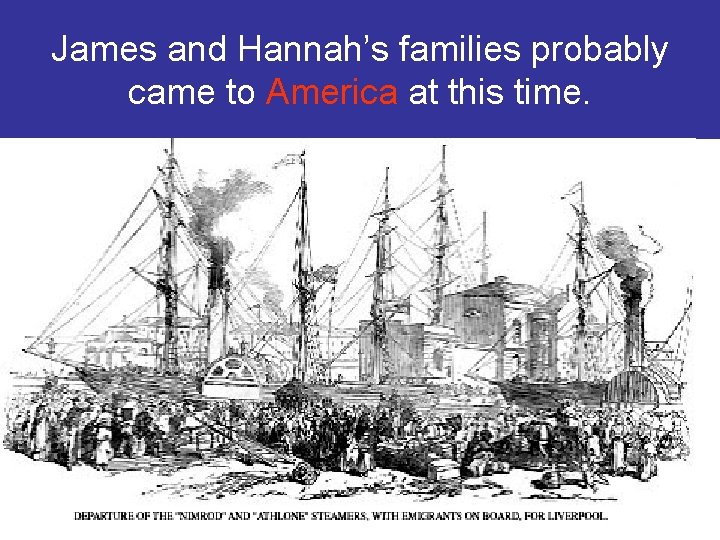
James and Hannah’s families probably came to America at this time.
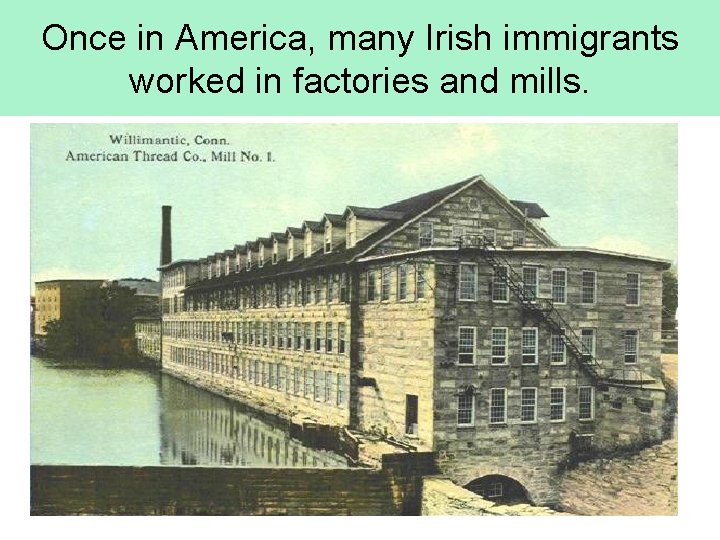
Once in America, many Irish immigrants worked in factories and mills.
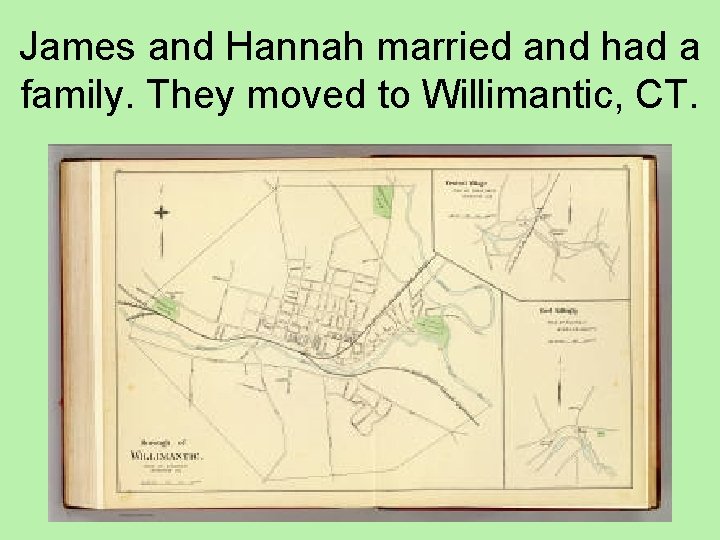
James and Hannah married and had a family. They moved to Willimantic, CT.
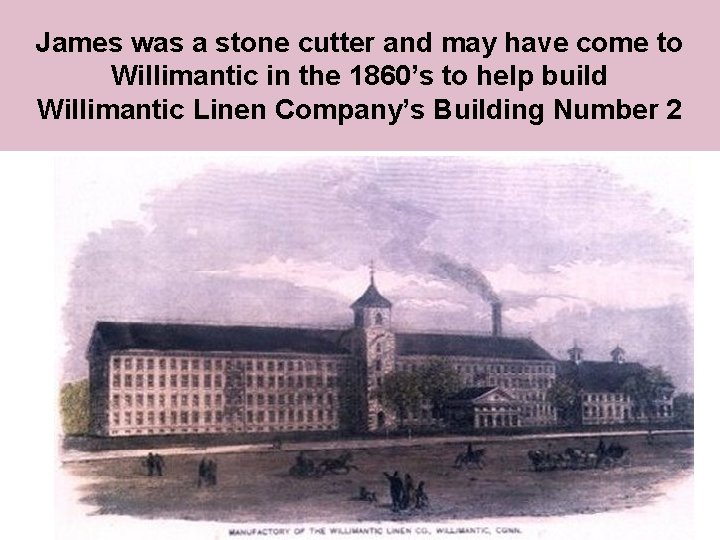
James was a stone cutter and may have come to Willimantic in the 1860’s to help build Willimantic Linen Company’s Building Number 2
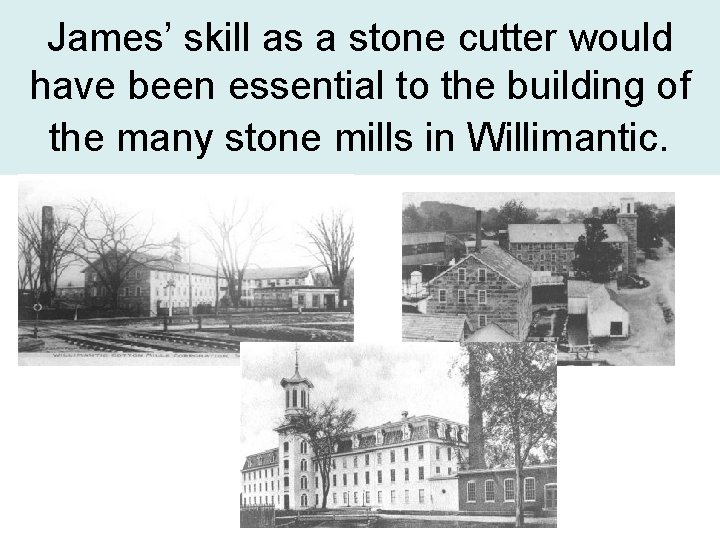
James’ skill as a stone cutter would have been essential to the building of the many stone mills in Willimantic.
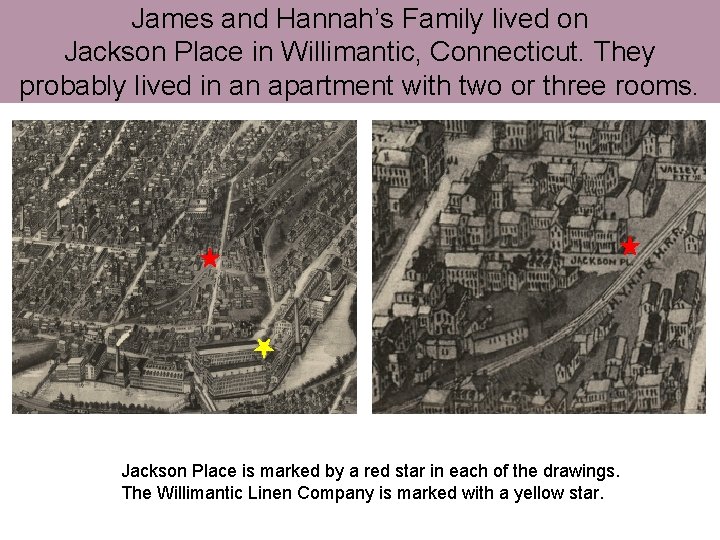
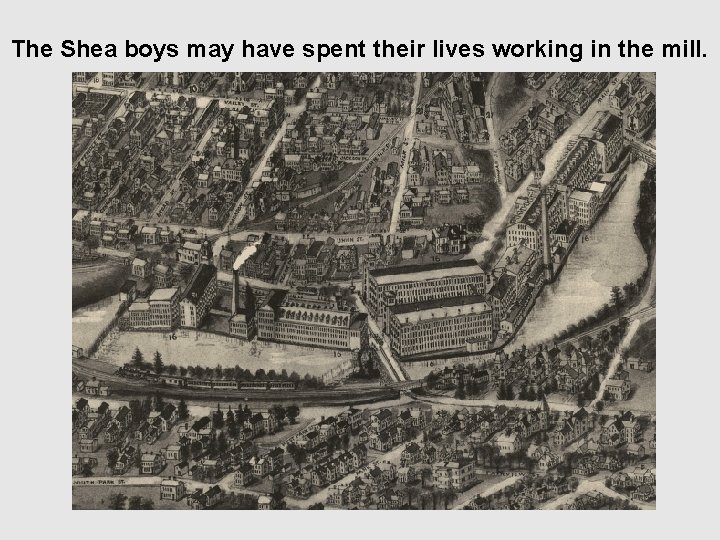
James and Hannah’s Family lived on Jackson Place in Willimantic, Connecticut. They probably lived in an apartment with two or three rooms. Jackson Place is marked by a red star in each of the drawings. The Willimantic Linen Company is marked with a yellow star.
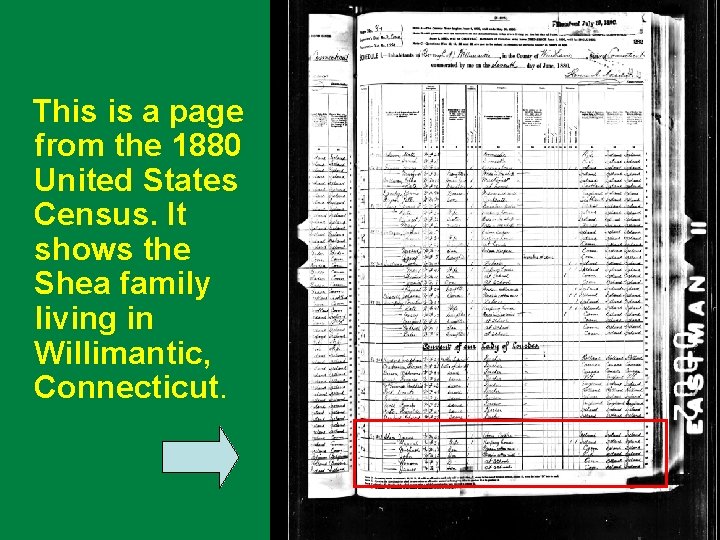
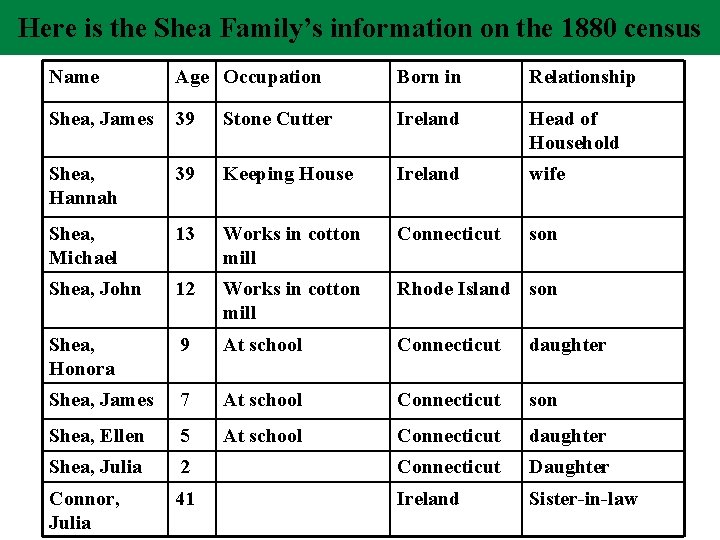
. This is a page from the 1880 United States Census. It shows the Shea family living in Willimantic, Connecticut.
Here is the Shea Family’s information on the 1880 census Name Age Occupation Born in Relationship Shea, James 39 Stone Cutter Ireland Head of Household Shea, Hannah 39 Keeping House Ireland wife Shea, Michael 13 Works in cotton mill Connecticut son Shea, John 12 Works in cotton mill Rhode Island son Shea, Honora 9 At school Connecticut daughter Shea, James 7 At school Connecticut son Shea, Ellen 5 At school Connecticut daughter Shea, Julia 2 Connecticut Daughter Connor, Julia 41 Ireland Sister-in-law
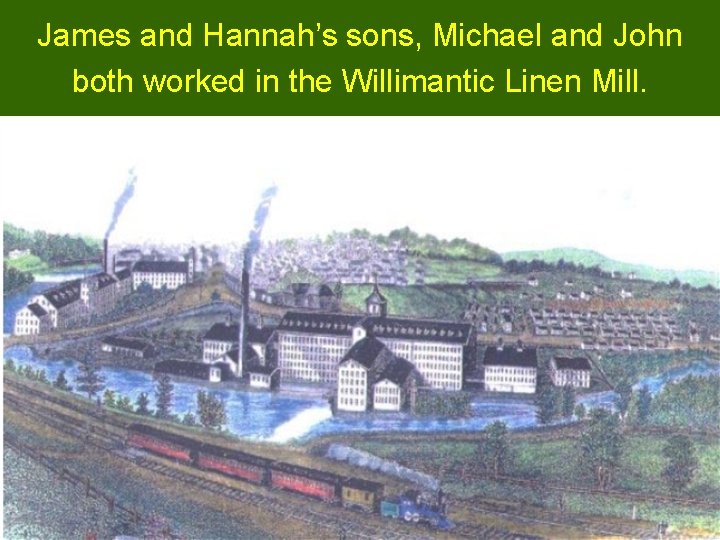
James and Hannah’s sons, Michael and John both worked in the Willimantic Linen Mill.
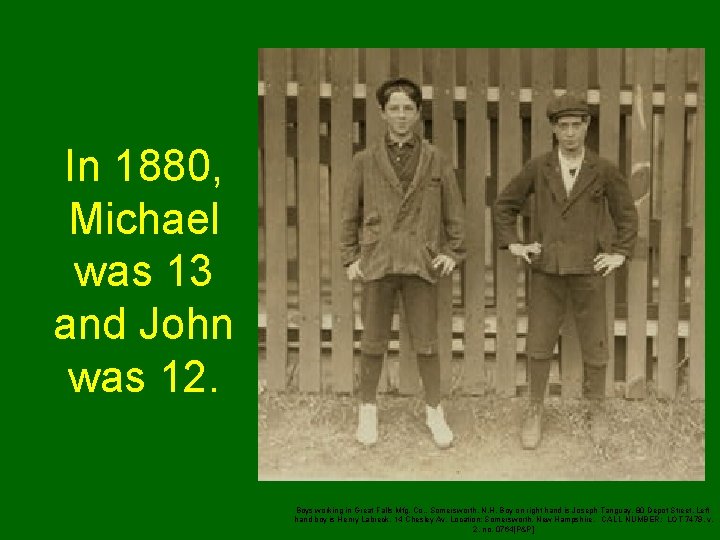
In 1880, Michael was 13 and John was 12. Boys working in Great Falls Mfg. Co. , Somersworth, N. H. Boy on right hand is Joseph Tanguay, 80 Depot Street. Left hand boy is Henry Labreck, 14 Chesley Av. Location: Somersworth, New Hampshire. CALL NUMBER: LOT 7479, v. 2, no. 0764[P&P]
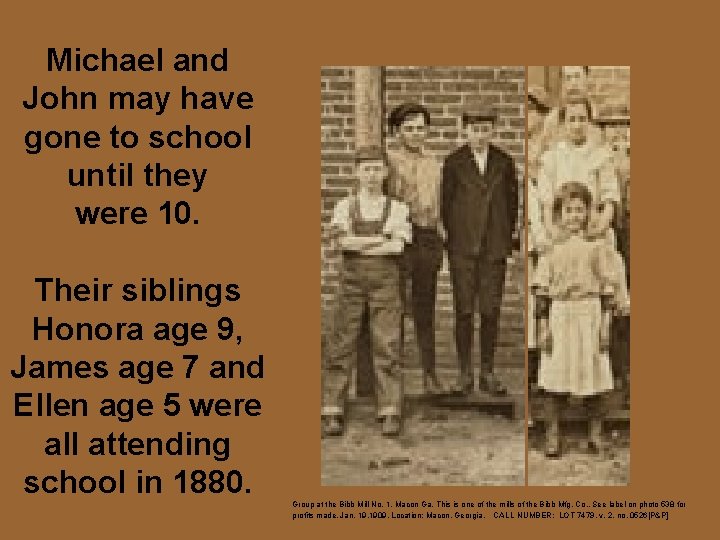
Michael and John may have gone to school until they were 10. Their siblings Honora age 9, James age 7 and Ellen age 5 were all attending school in 1880. Group at the Bibb Mill No. 1, Macon Ga. This is one of the mills of the Bibb Mfg. Co. , See label on photo 538 for profits made. Jan. 19, 1909. Location: Macon, Georgia. CALL NUMBER: LOT 7479, v. 2, no. 0526[P&P]
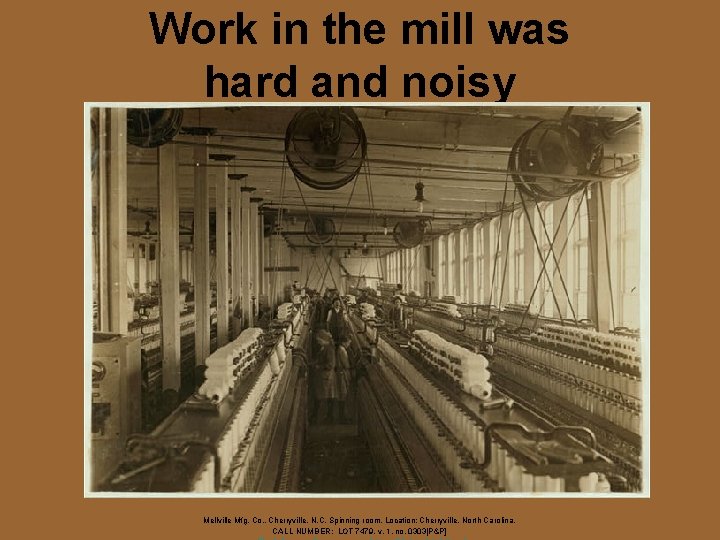
Work in the mill was hard and noisy Mellville Mfg. Co. , Cherryville, N. C. Spinning room. Location: Cherryville, North Carolina. CALL NUMBER: LOT 7479, v. 1, no. 0303[P&P]
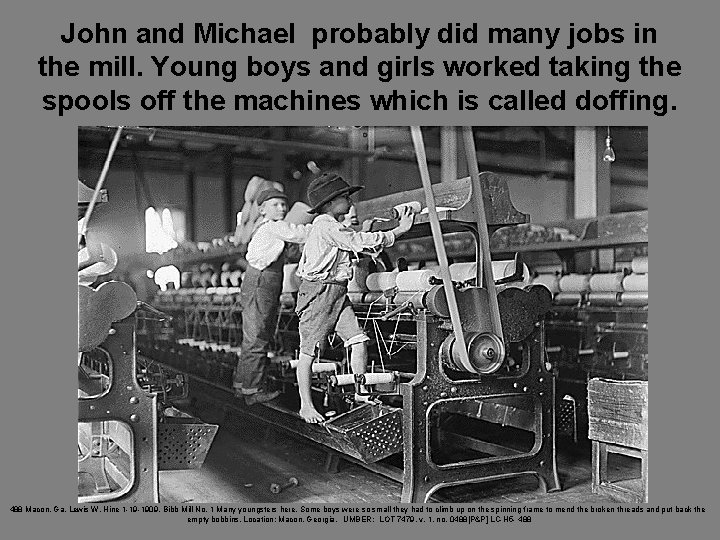
John and Michael probably did many jobs in the mill. Young boys and girls worked taking the spools off the machines which is called doffing. 488 Macon, Ga. Lewis W. Hine 1 -19 -1909. Bibb Mill No. 1 Many youngsters here. Some boys were so small they had to climb up on the spinning frame to mend the broken threads and put back the empty bobbins. Location: Macon, Georgia. UMBER: LOT 7479, v. 1, no. 0488[P&P] LC-H 5 - 488
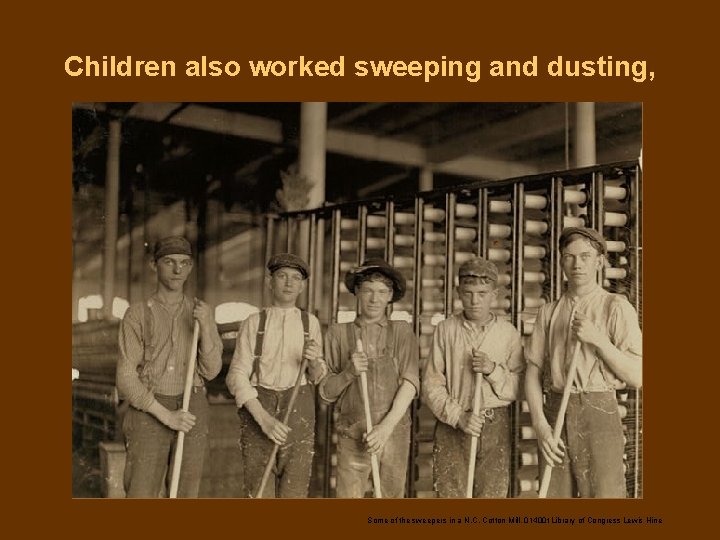
Children also worked sweeping and dusting, Some of the sweepers in a N. C. Cotton Mill. 01400 t Library of Congress Lewis Hine
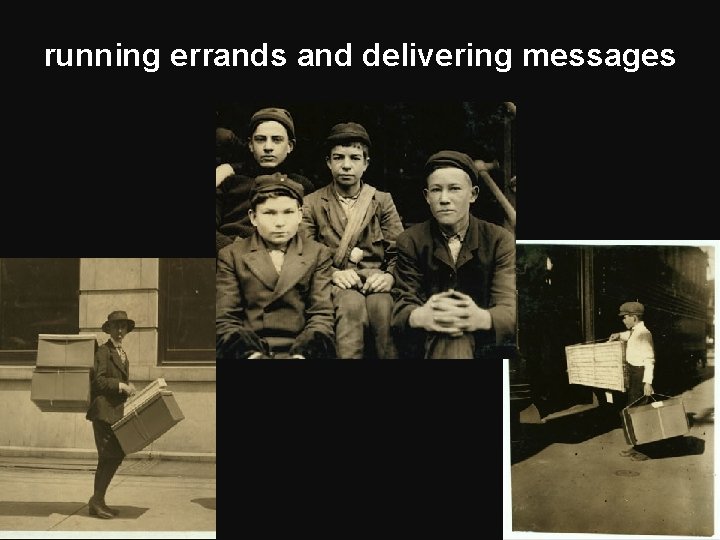
running errands and delivering messages
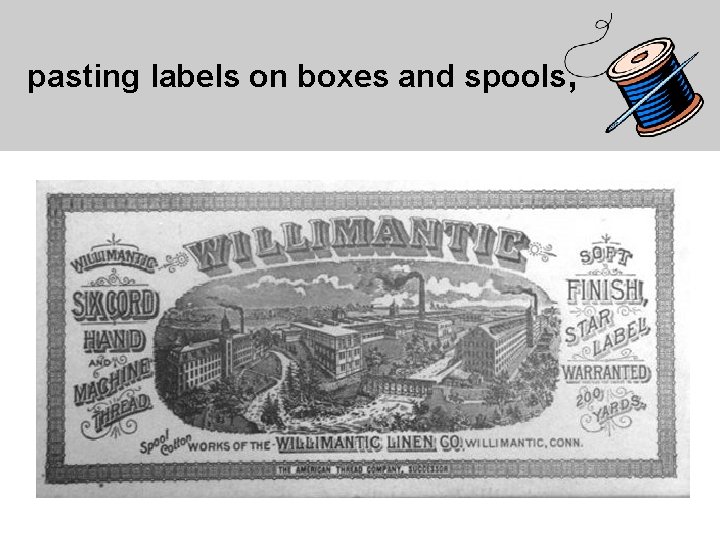
pasting labels on boxes and spools,
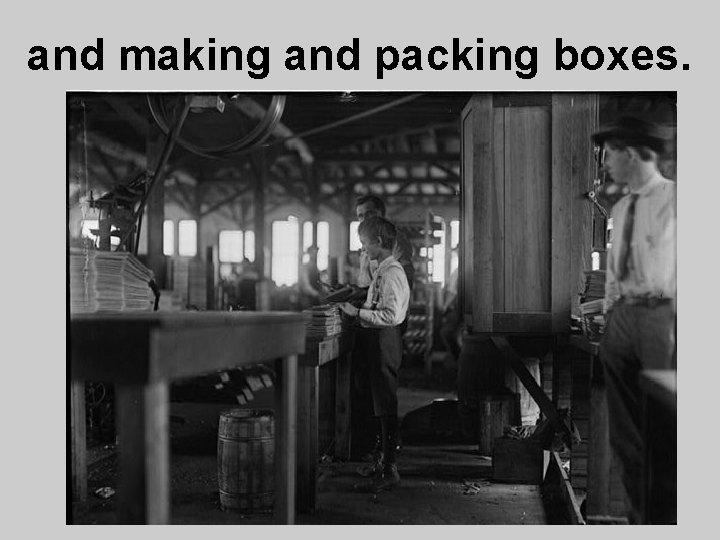
and making and packing boxes.
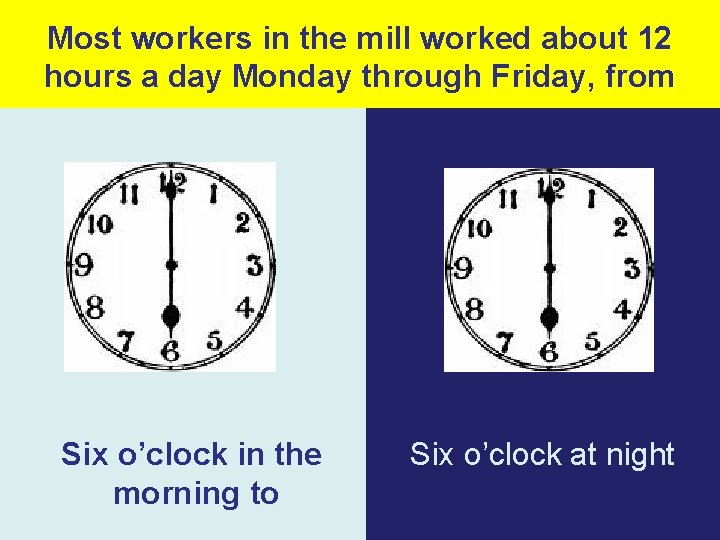
Most workers in the mill worked about 12 hours a day Monday through Friday, from Six o’clock in the morning to Six o’clock at night
They also worked half days on Saturdays
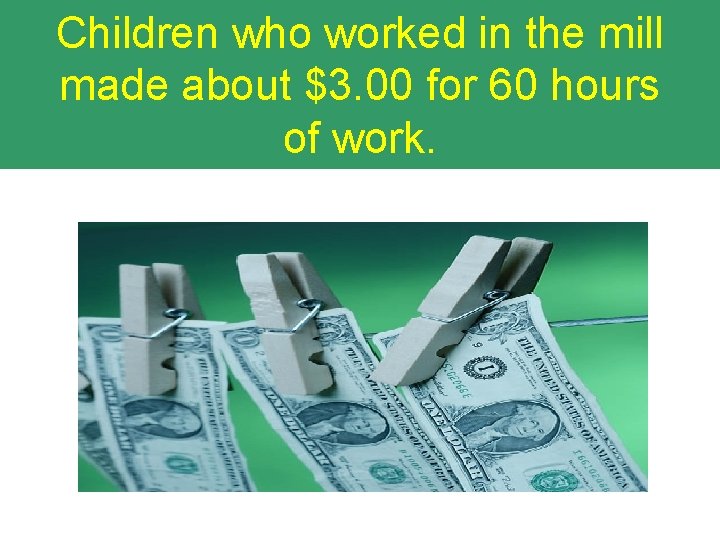
Children who worked in the mill made about $3. 00 for 60 hours of work.
That means that for every hour they worked, John and Michael were paid five cents each.
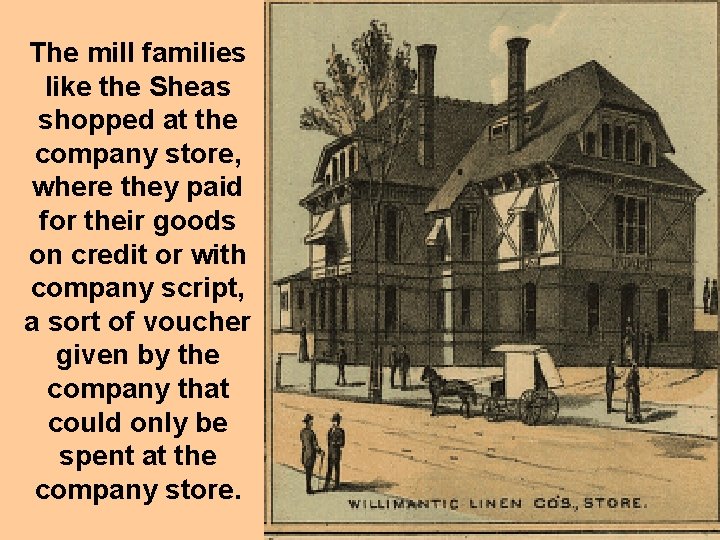
The mill families like the Sheas shopped at the company store, where they paid for their goods on credit or with company script, a sort of voucher given by the company that could only be spent at the company store.
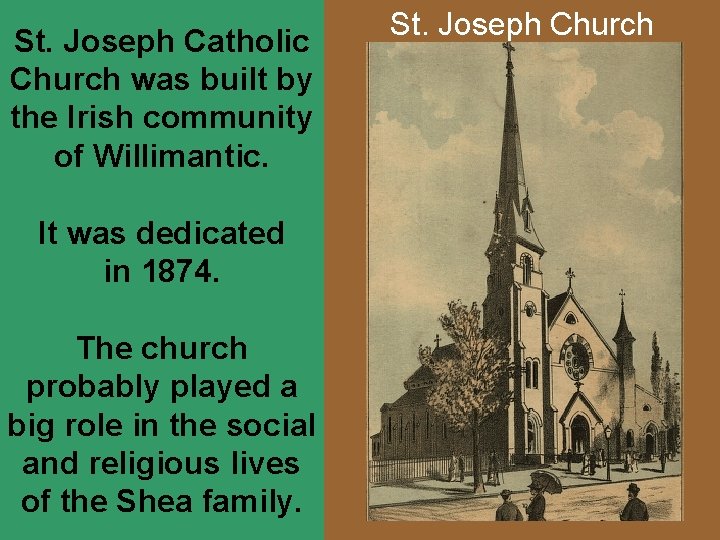
St. Joseph Catholic Church was built by the Irish community of Willimantic. It was dedicated in 1874. The church probably played a big role in the social and religious lives of the Shea family. St. Joseph Church
At the church the boys would have received religious education, and may have served as altar boys.
Boys who worked in the mills gave the money they made to their families to help the family survive.
They did not have money to buy games or sporting equipment or books.
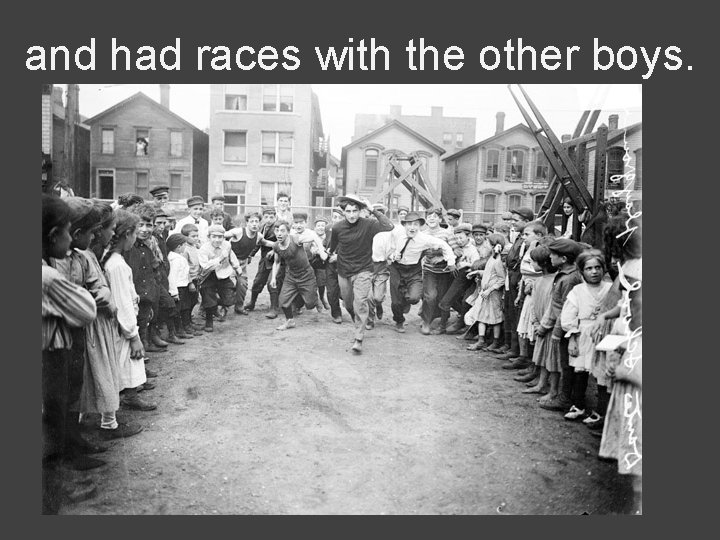
What did John and Michael do for fun? Mill boys had little free time, so they liked to enjoy what they had.
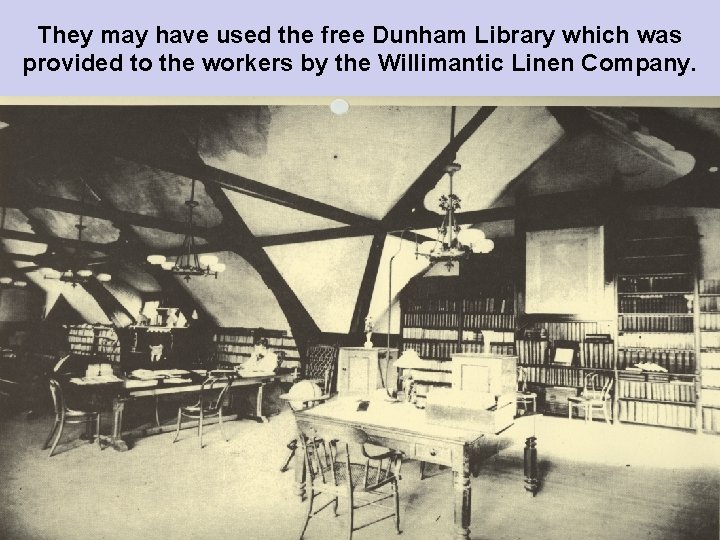
They may have used the free Dunham Library which was provided to the workers by the Willimantic Linen Company.
Michael and John may have fished in the rivers near Willimantic.
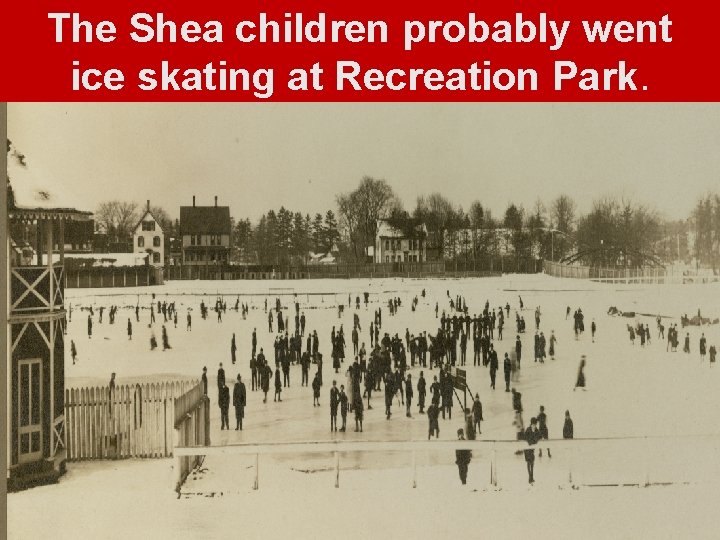
The Shea children probably went ice skating at Recreation Park.
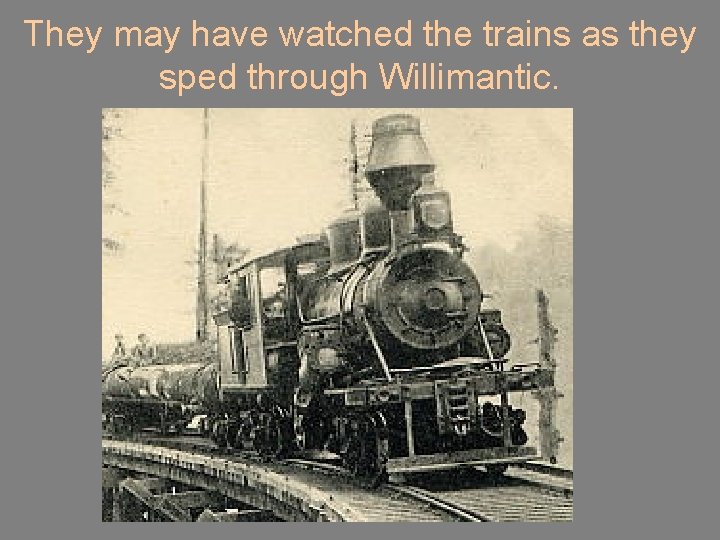
They may have watched the trains as they sped through Willimantic.
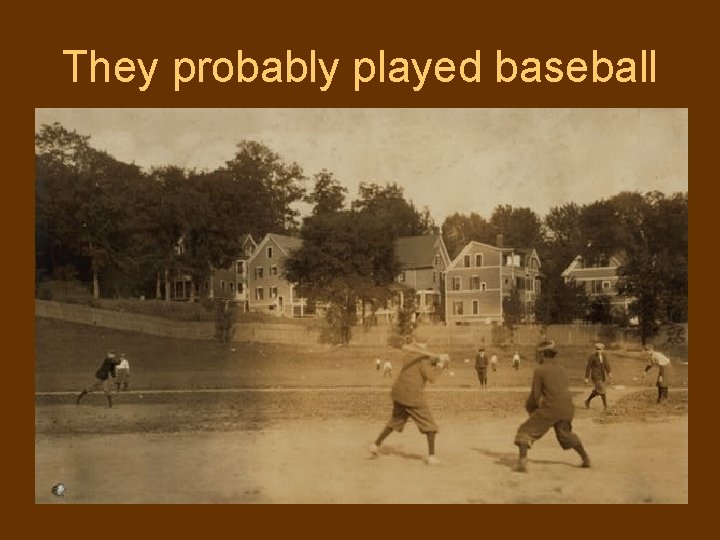
They probably played baseball
and had races with the other boys.
The Shea boys may have spent their lives working in the mill.
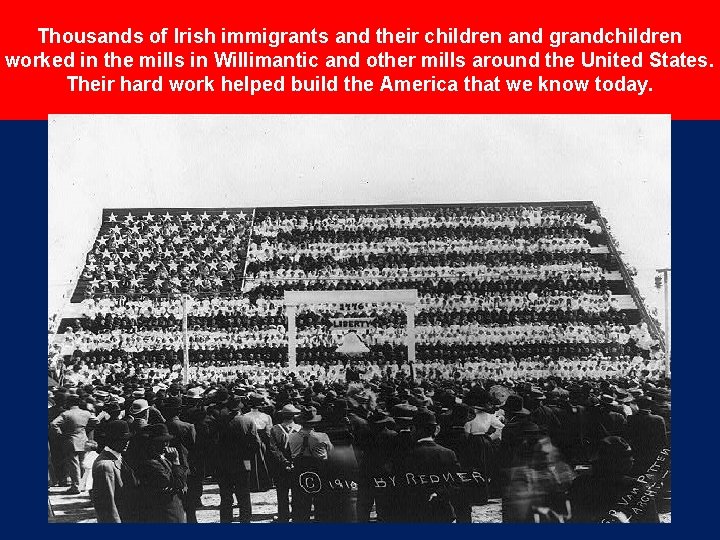
Thousands of Irish immigrants and their children and grandchildren worked in the mills in Willimantic and other mills around the United States. Their hard work helped build the America that we know today.
Bibliography of Images • Slides 3 – 9 The following slides contain illustrations from Views of the Famine, a website that features articles and illustrations of the Irish Potato Famine from period newspapers, magazines and articles. To read these articles and view many heart wrenching images of the Great Hunger, visit http: //adminstaff. vassar. edu/sttaylor/FAMINE/PT/PT. html • Slide 3 Pictorial Times Irish cabin (Aug 22 1846) • • Slide 4 Illustrated London News Ireland the Irish, August 12, 1843 The Pictorial Times. A potato dinner (Feb 28, 1846) • • Slide 5 Boy and Girl of Cahera, Village of Meinies, Sketches in the West of Ireland. -- By Mr. James Mahony, The Illustrated London News, Feb. 20, 1847. Bridget O’Donnel and her Children, The Illustrated London News, December 22, 1849 • Slide 6 Evictions of the Peasantry in Ireland, The Illustrated London News, Dec. 16, 1848. • Slide 7 The Depopulation of Ireland: Priests Blessing, The Illustrated London News, May 10, 1851 • Slide 8, Emigrants at Cork, Departure from Cork, The Illustrated London News, July 6, 1850. • Slide 9 The Depopulation of Ireland: Departure of the Nimrod and the Athlone Steamers, with Emigrants on Board, for Liverpool. - The Illustrated London News, May 10, 1851 • Slide 11 Willimantic, Connecticut from Town and city atlas of the state of Connecticut. Compiled from government surveys, county records and personal investigations. D. H. Hurd & Co. , Boston. 1893. Copyright 1893, by D. H. Hurd & Co. , Boston. • Slide 16 Willimantic Linen Mils http: //www. cs. arizona. edu/patterns/weaving/ephemera/000221 • Slides 18 – 23, 25, 37, 38 and 40 feature Lewis Hine photographs from the National Child Labor Committee Collection, one of the Prints and Photographs Division of the digital collections of the Library of Congress. The National Child Labor Committee Collection contains about 5, 100 photographs taken between 1908 and 1924. The photographs, taken primarily by Lewis Hine, focus on children, showing workers, working and living conditions, and educational settings. For more information about Arrangements and Access to the NCLCC, please visit http: //lcweb 2. loc. gov/pp/nclchtml/nclcarrange. html From the Library of Congress website http: //www. loc. gov/rr/print/res/097_hine. html • National Child Labor Committee (Lewis Hine Photographs) Rights and Restrictions Information Prints and Photographs Division, Library of Congress, Washington, D. C. , 20540 -4730 In 1954 the Library received the records of the National Child Labor Committee, including approximately 5, 000 photographs and 350 negatives by Lewis Hine. In giving the collection to the Library, the NCLC stipulated that "There will be no restrictions of any kind on your use of the Hine photographic material. “ Access: Permitted; subject to P&P policy on serving originals.
Reproduction (photocopying, hand-held camera copying, photo duplication and other forms of copying allowed by "fair use"): Permitted; subject to P&P policy on copying. This policy prohibits photocopying of the original photographs in this collection. Publication and other forms of distribution: In 1954 the Library received the records of the National Child Labor Committee, including approximately 5, 000 photographs and 350 negatives by Lewis Hine. In giving the collection to the Library, the NCLC stipulated that "There will be no restrictions of any kind on your use of the Hine photographic material. " Credit Line: Library of Congress, Prints & Photographs Division, National Child Labor Committee Collection, [reproduction number, e. g. , LC-USZ 62 -108765] Prepared by: Prints and Photographs Division staff. Last revised: January 7, 2004 Slide 18 - Library of Congress, Prints & Photographs Division, National Child Labor Committee Collection, Boys working in Great Falls Mfg. Co. , Somersworth, N. H. Boy on right hand is Joseph Tanguay, 80 Depot Street. Left hand boy is Henry Labreck, 14 Chesley Av. Location: Somersworth, New Hampshire. CALL NUMBER: LOT 7479, v. 2, no. 0764[P&P] Slide 19 - Library of Congress, Prints & Photographs Division, National Child Labor Committee Collection, Group at the Bibb Mill No. 1, Macon Ga. This is one of the mills of the Bibb Mfg. Co. , See label on photo 538 for profits made. Jan. 19, 1909. Location: Macon, Georgia. CALL NUMBER: LOT 7479, v. 2, no. 0526[P&P] Slide 20 - Library of Congress, Prints & Photographs Division, National Child Labor Committee Collection, Mellville Mfg. Co. , Cherryville, N. C. Spinning room. Location: Cherryville, North Carolina. CALL NUMBER: LOT 7479, v. 1, no. 0303[P&P] Slide 21 - Library of Congress, Prints & Photographs Division, National Child Labor Committee Collection, 488 Macon, Ga. Lewis W. Hine 1 -19 -1909. Bibb Mill No. 1 Many youngsters here. Some boys were so small they had to climb up on the spinning frame to mend the broken threads and put back the empty bobbins. Location: Macon, Georgia. CALL NUMBER: LOT 7479, v. 1, no. 0488[P&P]LC-H 5 - 488 Slide 22 - Library of Congress, Prints & Photographs Division, National Child Labor Committee Collection, Some Sweepers in a N. C. cotton mill. N. C. Location: North Carolina. CALL NUMBER: LOT 7479, v. 1, no. 0307[P&P] LC-DIG-nclc-01400 Slide 23 - Library of Congress, Prints & Photographs Division, National Child Labor Committee Collection, Left to right: Bundle carrier. Location: St. Louis, Missouri. CALL NUMBER: LOT 7480, v. 22 no. 1456[P&P], LC-DIG-nclc-03540. , Several of the boys working in Benn's Messenger Service. Boy in middle is Thomas Knox (described in Brown's report on Messenger Service. ) Location: Chattanooga, Tennessee. CALL NUMBER: LOT 7480, v. 2, no. 1852[P&P], LC-DIG-nclc-03716. , Young delivery boy with heavy bundles. Location: Mobile, Alabama. CALL NUMBER: LOT 7480, v. 3, no. 3839 -A[P&P]. LC-DIG-nclc-03953. Slide 25 - Library of Congress, Prints & Photographs Division, National Child Labor Committee Collection, One of several youngsters I found in Tampa Fla. Cigar Box Factory. They are reported to have many children when work is rushing. Found about 10 young boys and girls, 300 employees. Location: Tampa, Florida. CALL NUMBER: LOT 7483, v. 1, no. 0585[P&P] LC-H 5 - 585, LC-DIG-nclc-04524 Slides 28 and 29 - The estimated weekly pay is extrapolated from the calculations based on the pay scales in the one existing Willimantic Linen payroll book (from 1886 - 1887) Payroll book, 18571887, Willimantic Linen Company. Account Books Collection. Series III: Businesses (1857 -1892). Archives & Special Collections at the Thomas J. Dodd Research Center. University of Connecticut. Slide 37 - Library of Congress, Prints & Photographs Division, National Child Labor Committee Collection, [Emerson Wight Playground - 4: 40 P. M. ] Location: [Springfield, Massachusetts] / Lewis W. Hine. CALL NUMBER: LOT 7483, v. 2, no. 4348[P&P], LC-DIG-nclc-05095 Slide 38 - Library of Congress, Prints & Photographs Division, National Child Labor Committee Collection, Boys racing between two groups of children at the Dante School playground in the Near West Side community area of Chicago, Illinois. Chicago Daily News, Inc. , photographer. , 1910. DN-0008532, Chicago Daily News negatives collection, Chicago Historical Society. Slide 40 - Library of Congress, Prints & Photographs Division, National Child Labor Committee Collection, Flag formed by children, CALL NUMBER: SSF - Formations [item] [P&P], LC-USZ 62 -69835