
Life Is Cellular Learning Objectives State the cell
Life Is Cellular
Learning Objectives § § State the cell theory. Describe how the different types of microscopes work. Distinguish between prokaryotes and eukaryotes. Discuss the endosymbiotic theory
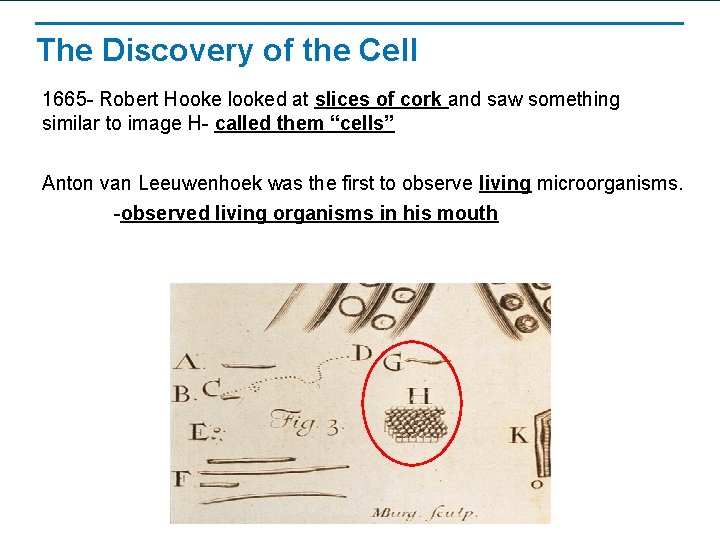
The Discovery of the Cell 1665 - Robert Hooke looked at slices of cork and saw something similar to image H- called them “cells” Anton van Leeuwenhoek was the first to observe living microorganisms. -observed living organisms in his mouth
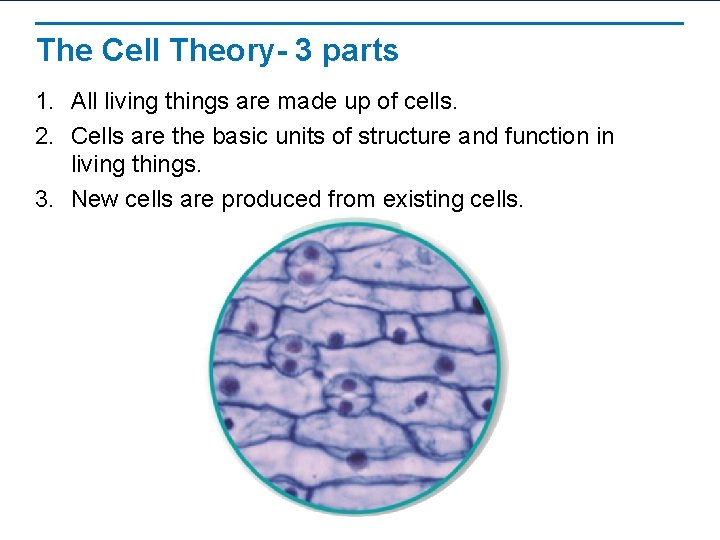
The Cell Theory- 3 parts 1. All living things are made up of cells. 2. Cells are the basic units of structure and function in living things. 3. New cells are produced from existing cells.
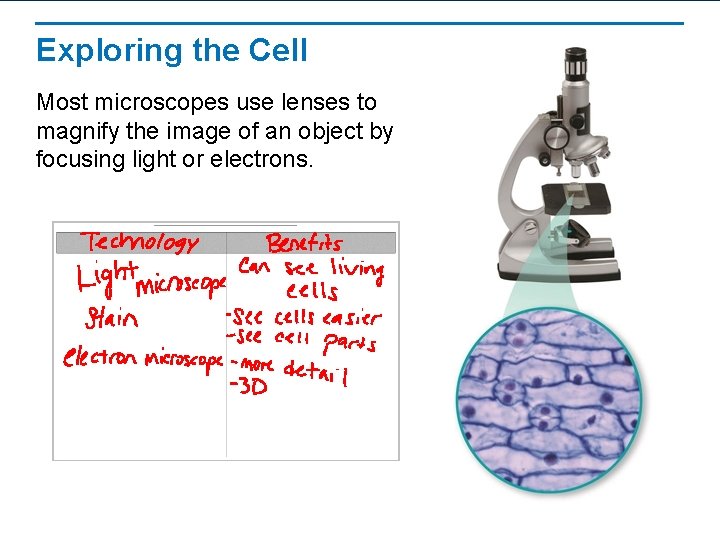
Exploring the Cell Most microscopes use lenses to magnify the image of an object by focusing light or electrons.
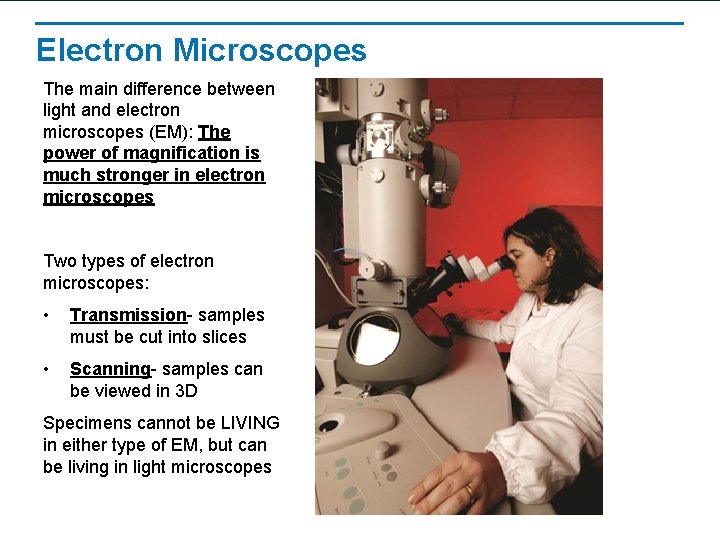
Electron Microscopes The main difference between light and electron microscopes (EM): The power of magnification is much stronger in electron microscopes Two types of electron microscopes: • Transmission- samples must be cut into slices • Scanning- samples can be viewed in 3 D Specimens cannot be LIVING in either type of EM, but can be living in light microscopes
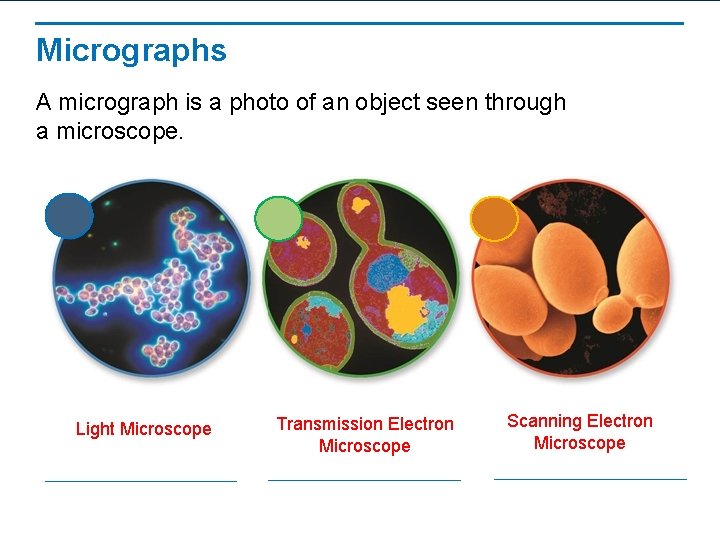
Micrographs A micrograph is a photo of an object seen through a microscope. Light Microscope Transmission Electron Microscope Scanning Electron Microscope
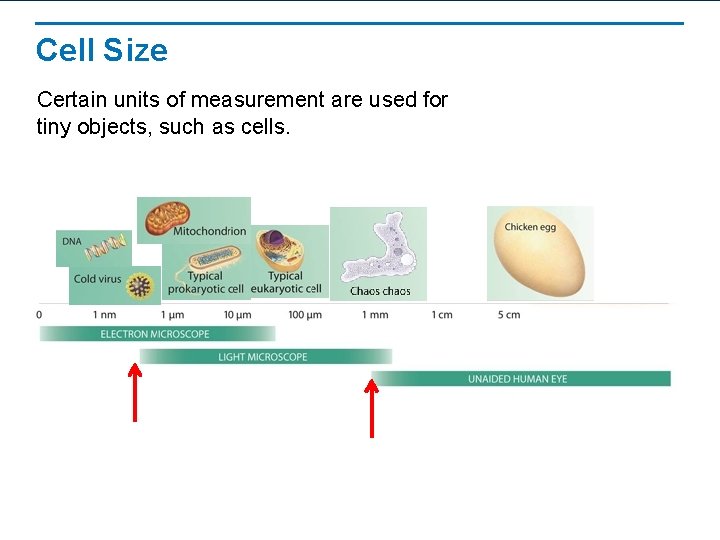
Cell Size Certain units of measurement are used for tiny objects, such as cells.
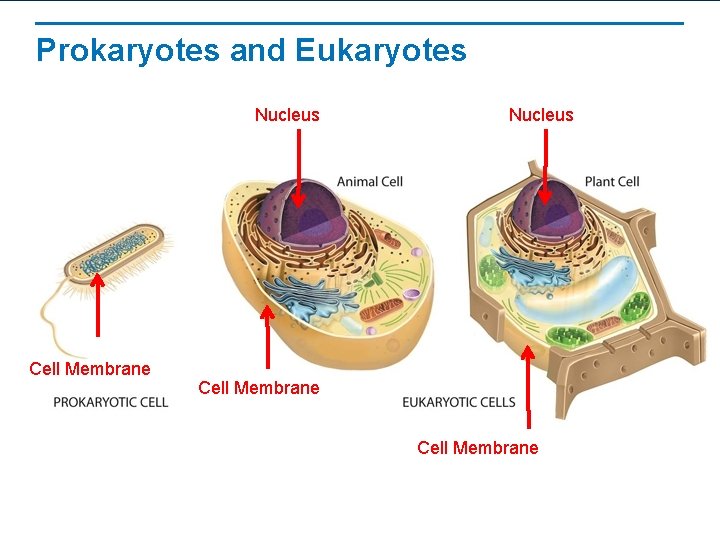
Prokaryotes and Eukaryotes Nucleus Cell Membrane
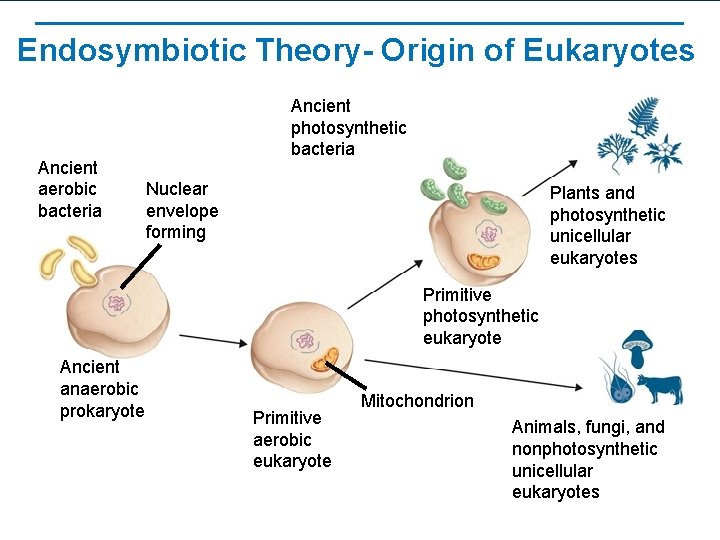
Endosymbiotic Theory- Origin of Eukaryotes Ancient aerobic bacteria Ancient photosynthetic bacteria Nuclear envelope forming Plants and photosynthetic unicellular eukaryotes Primitive photosynthetic eukaryote Ancient anaerobic prokaryote Primitive aerobic eukaryote Mitochondrion Animals, fungi, and nonphotosynthetic unicellular eukaryotes
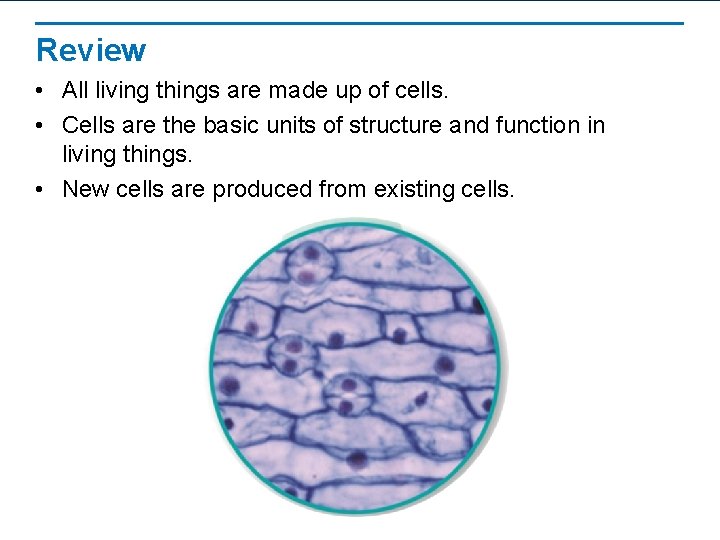
Review • All living things are made up of cells. • Cells are the basic units of structure and function in living things. • New cells are produced from existing cells.
- Slides: 11