
Life in the Oceans The Diversity of Ocean
- Slides: 11
Life in the Oceans
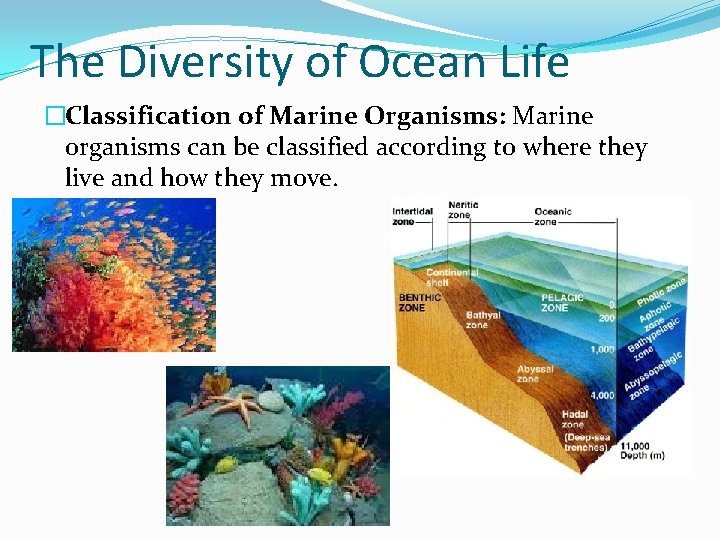
The Diversity of Ocean Life �Classification of Marine Organisms: Marine organisms can be classified according to where they live and how they move.
Marine Ecosystems �Some of the most diverse marine ecosystems are: �Estuaries - body of water formed where freshwater from rivers and streams flows into the ocean, mixing with the seawater �Coral reefs – underwater community found near the surface of tropical waters formed by skeletal deposits of corals
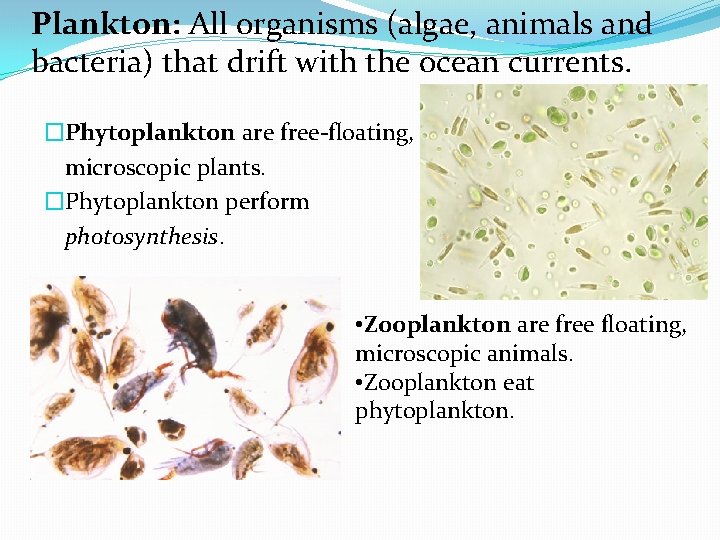
Plankton: All organisms (algae, animals and bacteria) that drift with the ocean currents. �Phytoplankton are free-floating, microscopic plants. �Phytoplankton perform photosynthesis. • Zooplankton are free floating, microscopic animals. • Zooplankton eat phytoplankton.
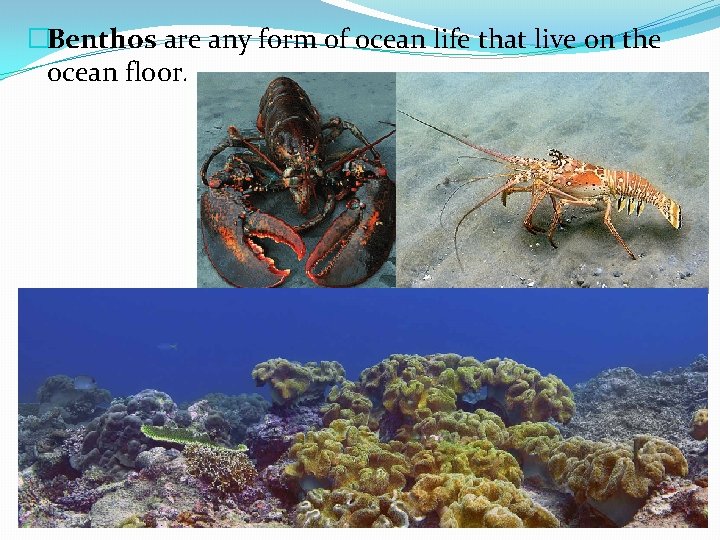
�Benthos are any form of ocean life that live on the ocean floor.
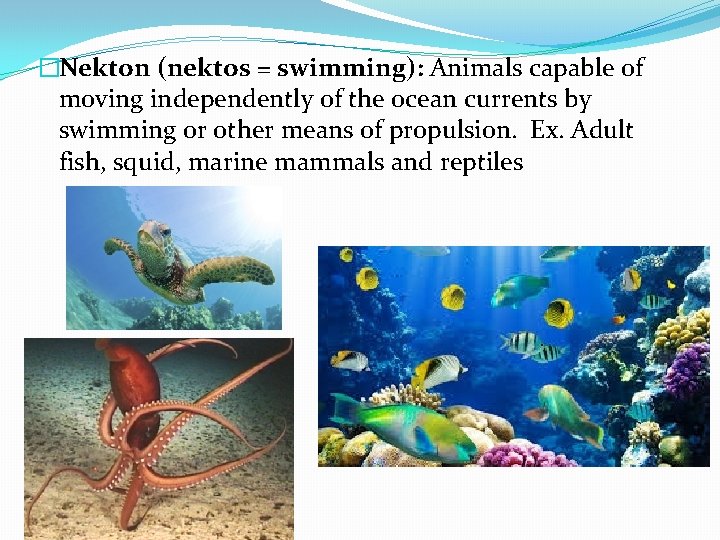
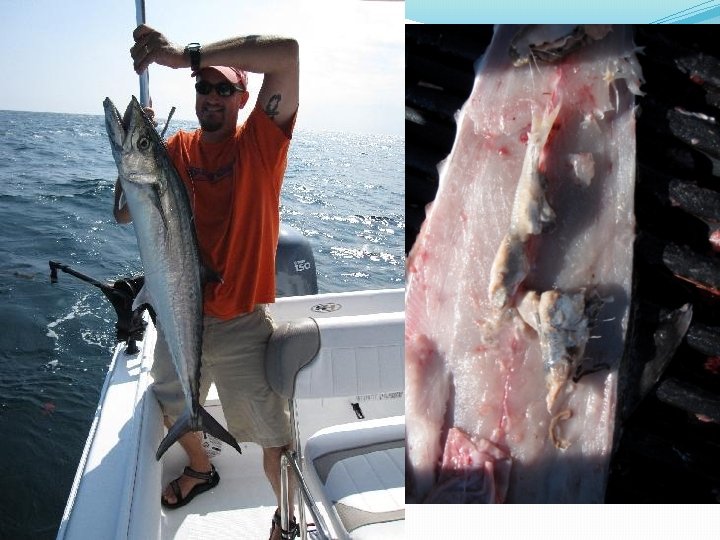
�Nekton (nektos = swimming): Animals capable of moving independently of the ocean currents by swimming or other means of propulsion. Ex. Adult fish, squid, marine mammals and reptiles
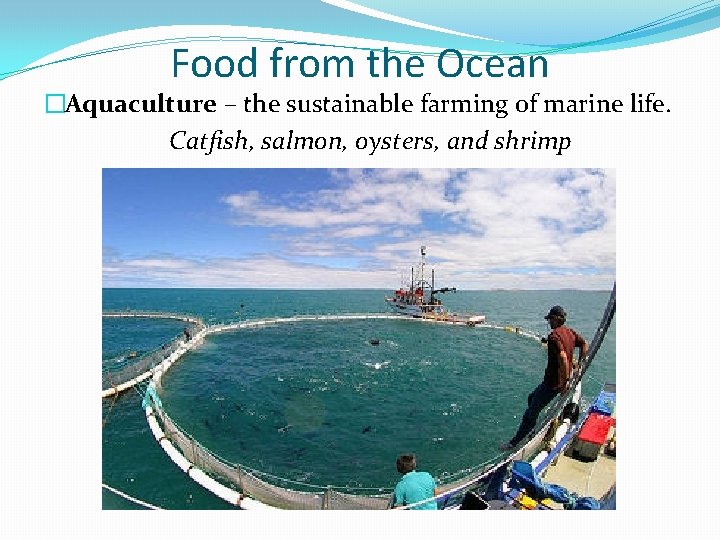
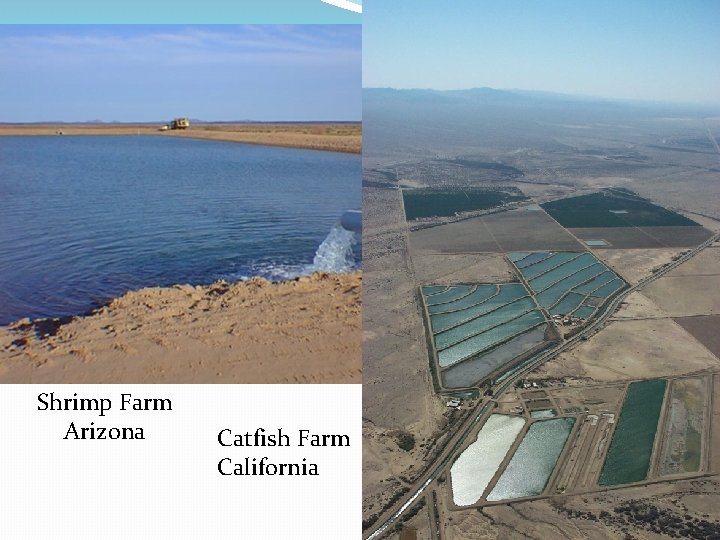
Food from the Ocean �Aquaculture – the sustainable farming of marine life. Catfish, salmon, oysters, and shrimp
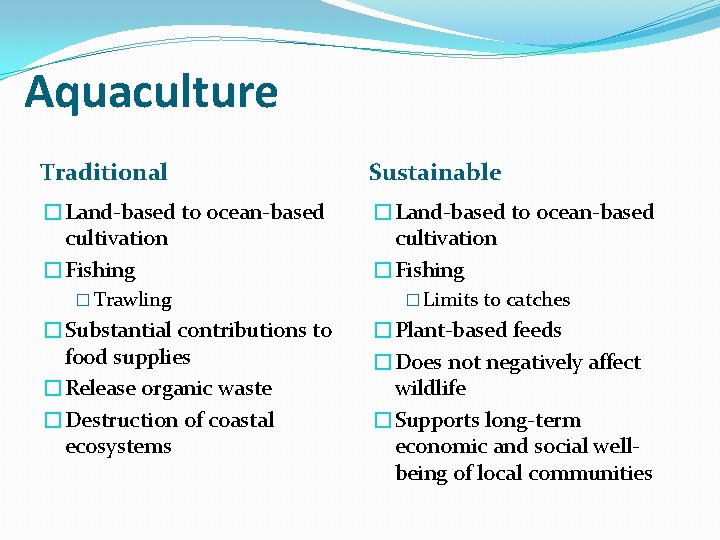
Aquaculture Traditional Sustainable �Land-based to ocean-based cultivation �Fishing � Trawling �Substantial contributions to food supplies �Release organic waste �Destruction of coastal ecosystems � Limits to catches �Plant-based feeds �Does not negatively affect wildlife �Supports long-term economic and social wellbeing of local communities
Shrimp Farm Arizona Catfish Farm California