
Life in the Desert Kendra Webb EQ What
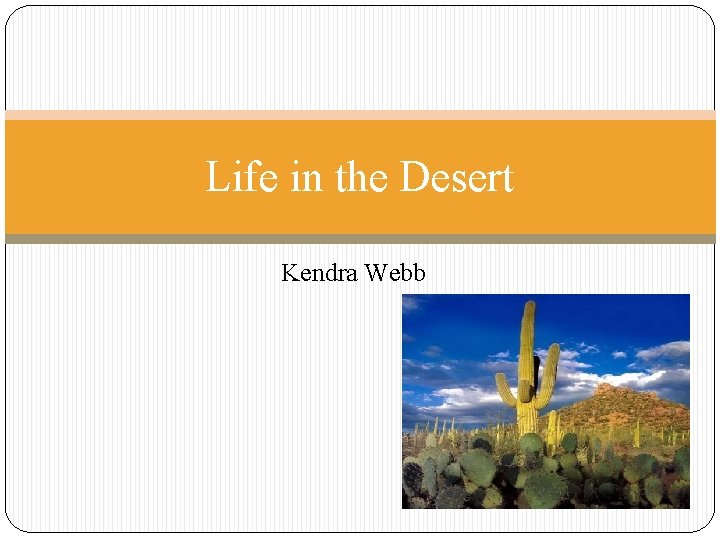
Life in the Desert Kendra Webb
EQ: What are structures, characteristics, and adaptations of organisms that allow them to function and survive within their habitats?
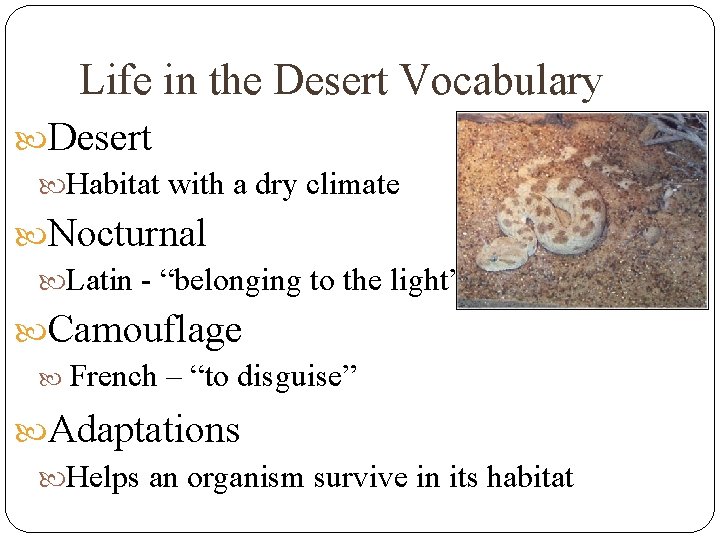
Life in the Desert Vocabulary Desert Habitat with a dry climate Nocturnal Latin - “belonging to the light” Camouflage French – “to disguise” Adaptations Helps an organism survive in its habitat
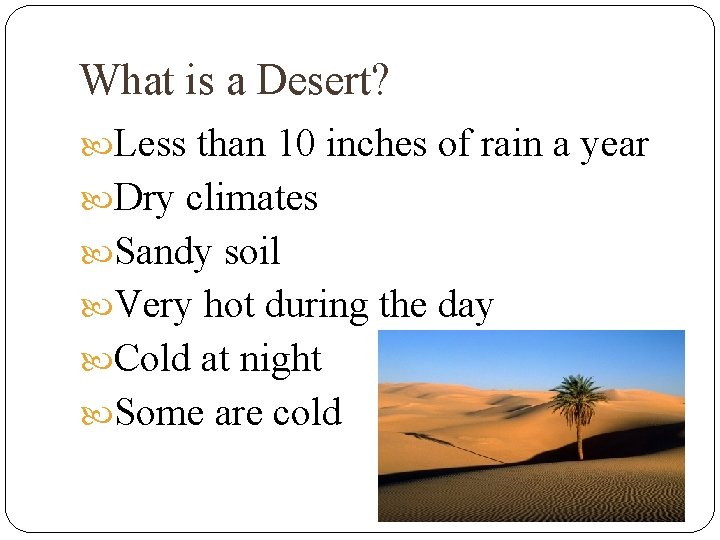
What is a Desert? Less than 10 inches of rain a year Dry climates Sandy soil Very hot during the day Cold at night Some are cold

Desert Plant Adaptations Some plants are not able to grow in the desert Plants must be able to survive with little water
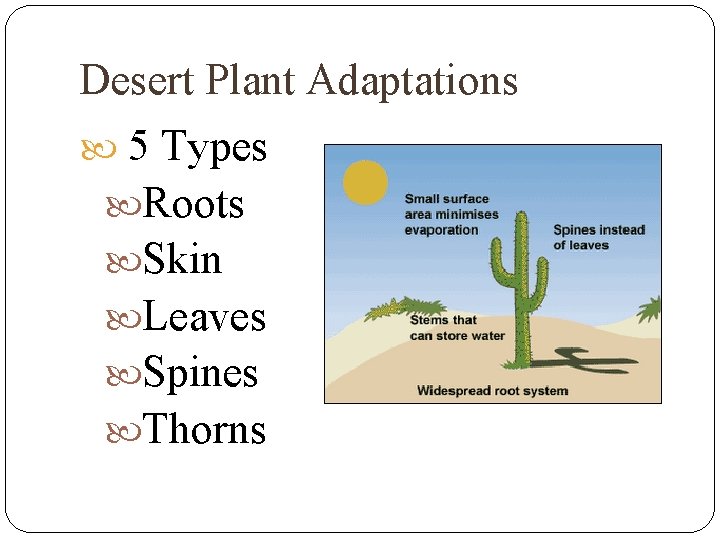
Desert Plant Adaptations 5 Types Roots Skin Leaves Spines Thorns
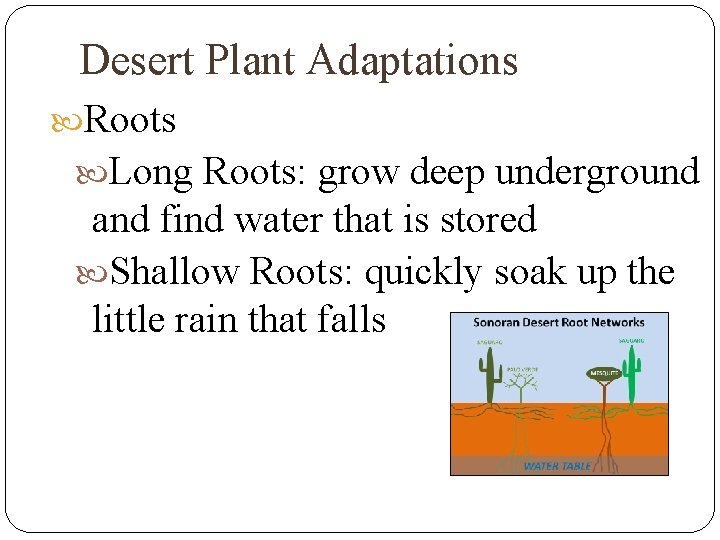
Desert Plant Adaptations Roots Long Roots: grow deep underground and find water that is stored Shallow Roots: quickly soak up the little rain that falls

Desert Plant Adaptations Waxy Skin reduces evaporation Small Leaves less surface area for water to evaporate from

Desert Plant Adaptations Spines and Thorns Help protect plants from thirsty animals
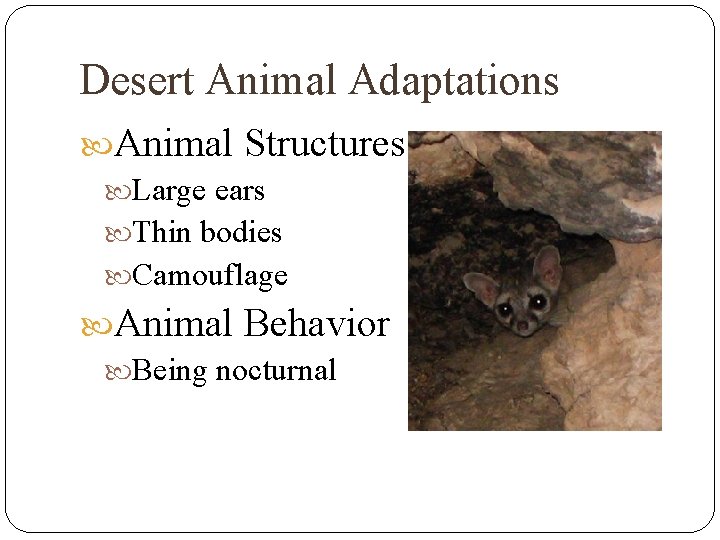
Desert Animal Adaptations Animal Structures Large ears Thin bodies Camouflage Animal Behavior Being nocturnal
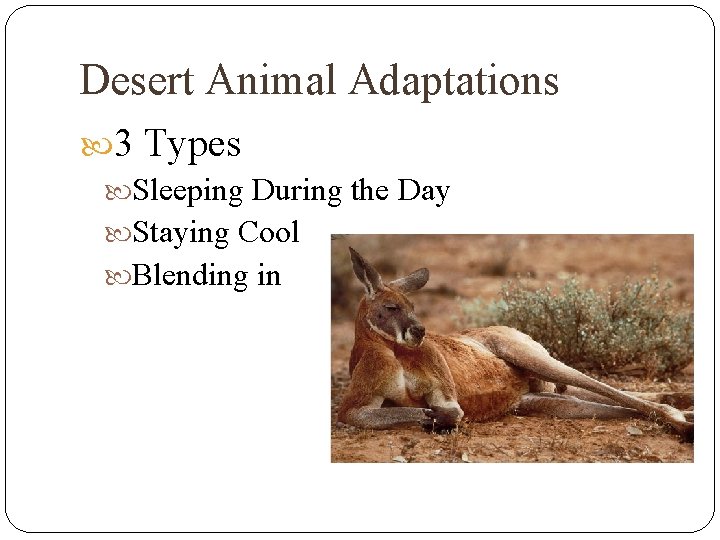
Desert Animal Adaptations 3 Types Sleeping During the Day Staying Cool Blending in

Desert Animal Adaptations Most desert animals are nocturnal They sleep during the day They come out when it is cooler at night
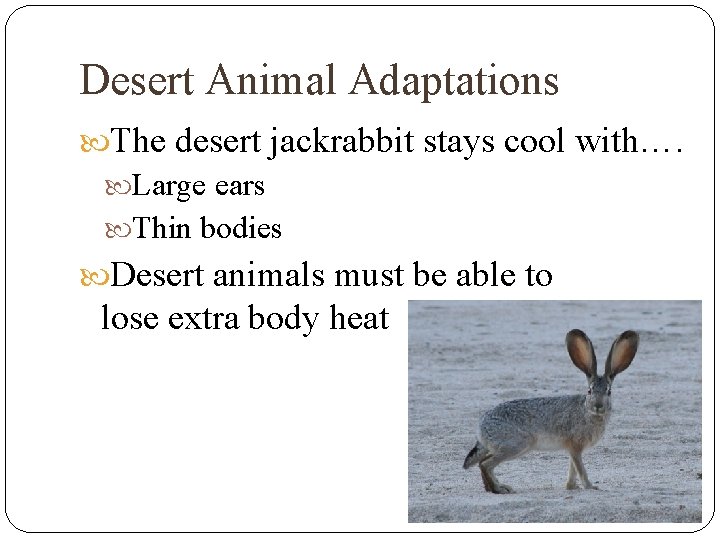
Desert Animal Adaptations The desert jackrabbit stays cool with…. Large ears Thin bodies Desert animals must be able to lose extra body heat
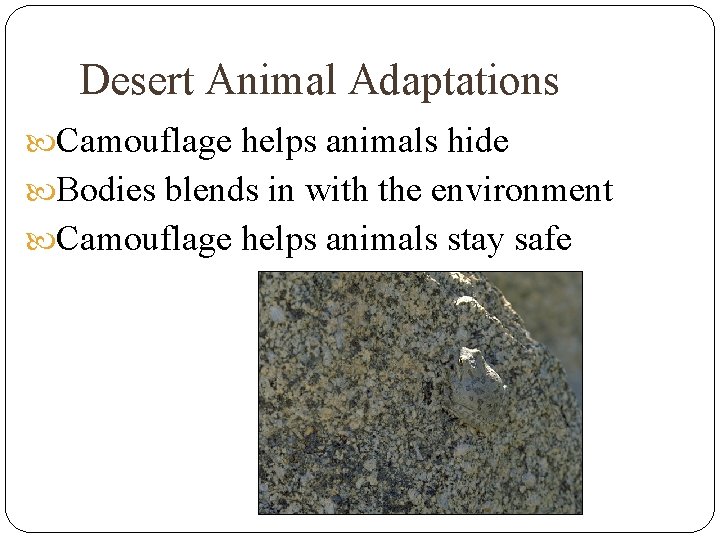
Desert Animal Adaptations Camouflage helps animals hide Bodies blends in with the environment Camouflage helps animals stay safe
Video Clip on Desert Animals https: //www. youtube. com/watch? v=7 Ifk 9 IJl 0 A 0#t=5 2
Standards 3 -2 The student will demonstrate an understanding of the structures, characteristics, and adaptations of organisms that allow them to function and survive within their habitats. (Life Science) 3 -2. 2 Explain how physical and behavioral adaptations allow organisms to survive (including hibernation, defense, locomotion, movement, food obtainment, and camouflage for animals and seed dispersal, color, and response to light for plants). 3 -2. 3 Recall the characteristics of an organism’s habitat that allow the organism to survive there.
Resources � � � � Cactus: http: //www. picturesdepot. com/images/10367/desert+cactus. html Snake: http: //whozoo. org/Intro 2000/sabrinor/Desert. Horned. Viper_Fwz 20201 c 27. jpg Desert: http: //www. desertroseracing. com/wp-content/themes/desertrose/images/bg-dunes 2. jpg Dead Plant: http: //webecoist. momtastic. com/wp-content/uploads/2009/12/welwitschia. jpg Adaptations: http: //water. me. vccs. edu/courses/SCT 112/desert 2. gif Roots: http: //watchingtheworldwakeup. blogspot. com/2010_01_01_archive. html Cactus: http: //bloomiq. com/succulents-0 Thorns: http: //commons. wikimedia. org/wiki/File: Cactus_spines_thorns_cacti. jpg Nocturnal: http: //www. nps. gov/moca/naturescience/images/Ringtail_03_2. jpg Kangaroo: http: //www. nwf. org/Kids/Ranger-Rick/Animals/Mammals/Red-Kangaroos. aspx Desert Fox: http: //www. kidstimes. org/wp-content/uploads/2011/07/shutterstock_36438316. jpg Jackrabbit: http: //upload. wikimedia. org/wikipedia/commons/6/6 d/Jackrabbit 2_crop. JPG Frog: http: //www. pbase. com/alxnavarro/image/102777938 Video Clip: http: //www. neok 12. com/video/Deserts/z. X 0571505 e 0 e 7 b 725 a 057602. htm
- Slides: 17