
Life in the Community Like Everyone Else Fundamentals


- Slides: 57
Life in the Community Like Everyone Else: Fundamentals of Community Inclusion and Participation for Individuals With Serious Mental Illnesses Mark S. Salzer, Ph. D. Professor of Rehabilitation Sciences, Temple University Director, Temple University Collaborative on Community Inclusion For more information about these issues please go to www. tucollaborative. org or send an email to msalzer@temple. edu
Disclosure and Acknowledgments • I have no financial conflicts of interest to disclose associated with this presentation. • Salary support over the past year includes: • NIH; NIDILRR; Mental Health Partnerships (SAMHSA); PA BAS/Drexel University (ASERT); MS Foundation; DSAMH; Project Home (SAMHSA) • Royalties • Temple University (Elsevier/Direct. Course) • Speaking Honoraria/Consulting over the past year includes • NASMHPD; JBS; National Council; Yellowbrick; County of San Diego; Health & Human Resources Education Center (Alameda County, CA); NC Practice Improvement Collaborative • Acknowledgments for this presentation • Travel support and honorarium were accepted for this presentation from OCEACT. The contents of this presentation are supported by a grant from the National Institute on Disability, Independent Living, and Rehabilitation Research (90 RT 5021 -02 -00) within the Administration for Community Living (ACL), Department of Health and Human Services (HHS). The contents of this document do not necessarily represent the policy of NIDILRR/ACL/HHS, and you should not assume endorsement by the U. S. Federal Government.
“People don’t need more referrals to mental health services, they need referrals to life and community” (Rapp, 1996) 5/30/2018 4
Community Integration as a Right • Definition: “The opportunity to live in the community, and be valued for one’s uniqueness and ability, like everyone else. ” (Salzer, 2006) • Legal and Policy Grounding • Americans with Disabilities Act (1990) • Supreme Court Olmstead decision (1999): unnecessary institutionalization is a form of discrimination prohibited by the ADA • President’s New freedom Initiative (2001) • President’s New Freedom Commission Report (2003) Salzer, M. S. (2006). Introduction. In M. S. Salzer (ed. ), Psychiatric Rehabilitation Skills in Practice: A CPRP Preparation and Skills Workbook. Columbia, MD. : United States Psychiatric Rehabilitation Association.
Community Participation as a Medical Necessity 5/30/2018 6
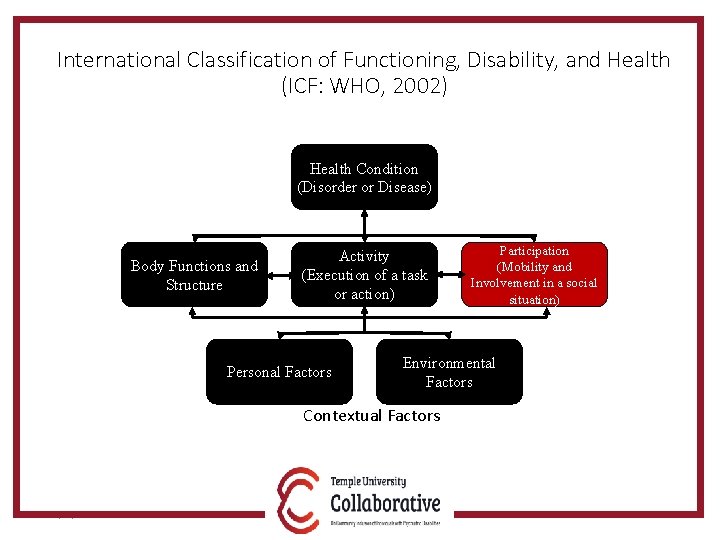
International Classification of Functioning, Disability, and Health (ICF: WHO, 2002) Health Condition (Disorder or Disease) Body Functions and Structure Activity (Execution of a task or action) Personal Factors Participation (Mobility and Involvement in a social situation) Environmental Factors Contextual Factors 5/30/2018 7
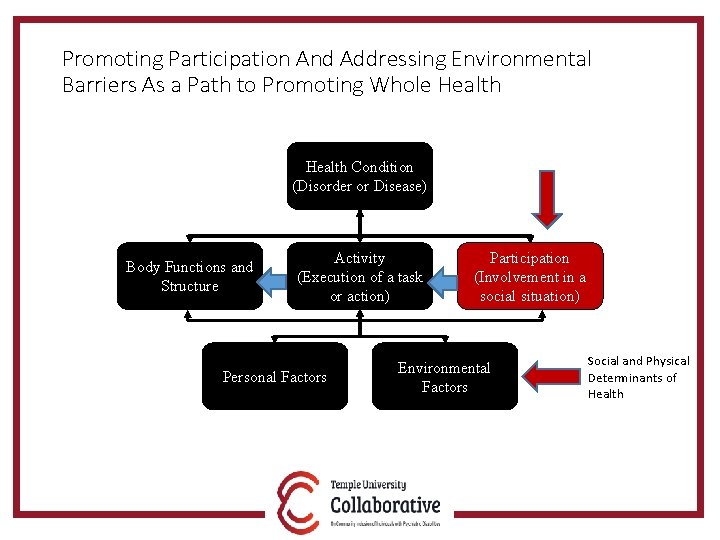
Promoting Participation And Addressing Environmental Barriers As a Path to Promoting Whole Health Condition (Disorder or Disease) Body Functions and Structure Activity (Execution of a task or action) Personal Factors Participation (Involvement in a social situation) Environmental Factors Social and Physical Determinants of Health
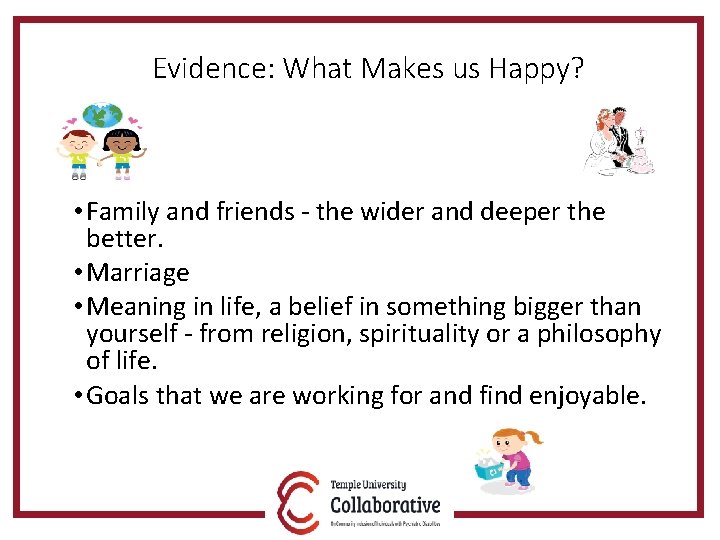
Evidence: What Makes us Happy? • Family and friends - the wider and deeper the better. • Marriage • Meaning in life, a belief in something bigger than yourself - from religion, spirituality or a philosophy of life. • Goals that we are working for and find enjoyable.
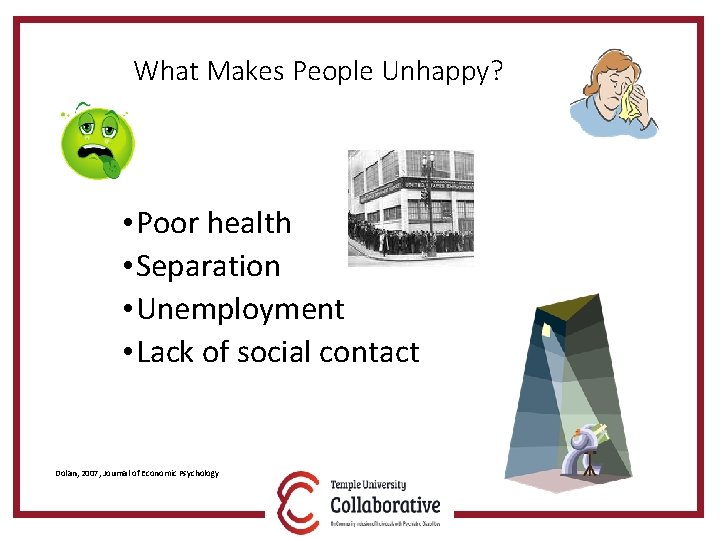
What Makes People Unhappy? • Poor health • Separation • Unemployment • Lack of social contact Dolan, 2007, Journal of Economic Psychology
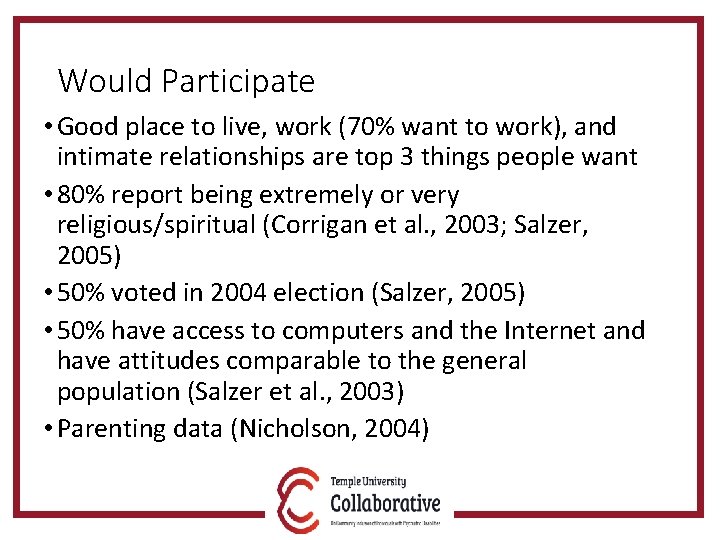
Would Participate • Good place to live, work (70% want to work), and intimate relationships are top 3 things people want • 80% report being extremely or very religious/spiritual (Corrigan et al. , 2003; Salzer, 2005) • 50% voted in 2004 election (Salzer, 2005) • 50% have access to computers and the Internet and have attitudes comparable to the general population (Salzer et al. , 2003) • Parenting data (Nicholson, 2004)
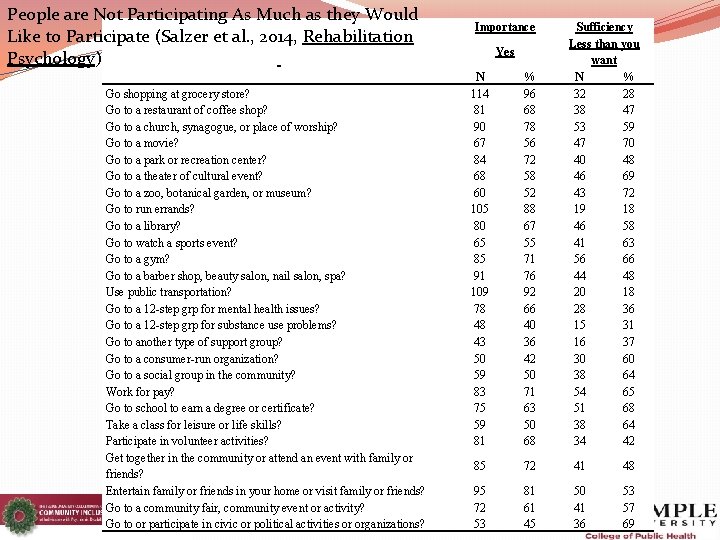
People are Not Participating As Much as they Would Like to Participate (Salzer et al. , 2014, Rehabilitation Psychology) Go shopping at grocery store? Go to a restaurant of coffee shop? Go to a church, synagogue, or place of worship? Go to a movie? Go to a park or recreation center? Go to a theater of cultural event? Go to a zoo, botanical garden, or museum? Go to run errands? Go to a library? Go to watch a sports event? Go to a gym? Go to a barber shop, beauty salon, nail salon, spa? Use public transportation? Go to a 12 -step grp for mental health issues? Go to a 12 -step grp for substance use problems? Go to another type of support group? Go to a consumer-run organization? Go to a social group in the community? Work for pay? Go to school to earn a degree or certificate? Take a class for leisure or life skills? Participate in volunteer activities? Get together in the community or attend an event with family or friends? Entertain family or friends in your home or visit family or friends? Go to a community fair, community event or activity? Go to or participate in civic or political activities or organizations? Importance Yes Sufficiency Less than you want N % 32 28 38 47 53 59 47 70 40 48 46 69 43 72 19 18 46 58 41 63 56 66 44 48 20 18 28 36 15 31 16 37 30 60 38 64 54 65 51 68 38 64 34 42 N 114 81 90 67 84 68 60 105 80 65 85 91 109 78 48 43 50 59 83 75 59 81 % 96 68 78 56 72 58 52 88 67 55 71 76 92 66 40 36 42 50 71 63 50 68 85 72 41 48 95 72 53 81 61 45 50 41 36 53 57 69
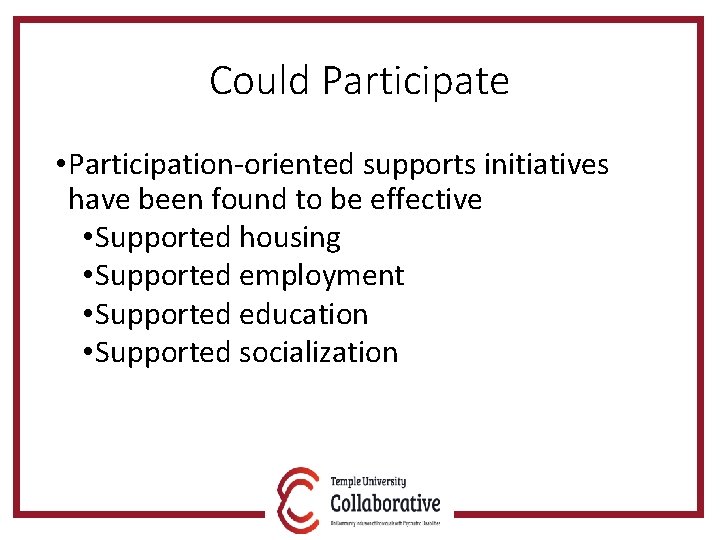
Could Participate • Participation-oriented supports initiatives have been found to be effective • Supported housing • Supported employment • Supported education • Supported socialization
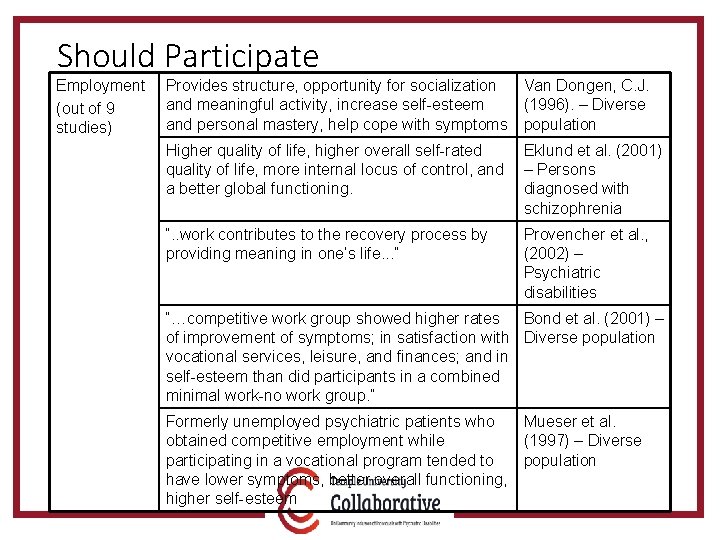
Should Participate Employment (out of 9 studies) Provides structure, opportunity for socialization Van Dongen, C. J. and meaningful activity, increase self-esteem (1996). – Diverse and personal mastery, help cope with symptoms population Higher quality of life, higher overall self-rated quality of life, more internal locus of control, and a better global functioning. Eklund et al. (2001) – Persons diagnosed with schizophrenia “. . work contributes to the recovery process by providing meaning in one’s life. . . ” Provencher et al. , (2002) – Psychiatric disabilities “…competitive work group showed higher rates Bond et al. (2001) – of improvement of symptoms; in satisfaction with Diverse population vocational services, leisure, and finances; and in self-esteem than did participants in a combined minimal work-no work group. ” Formerly unemployed psychiatric patients who Mueser et al. obtained competitive employment while (1997) – Diverse participating in a vocational program tended to population have lower symptoms, better overall functioning, higher self-esteem
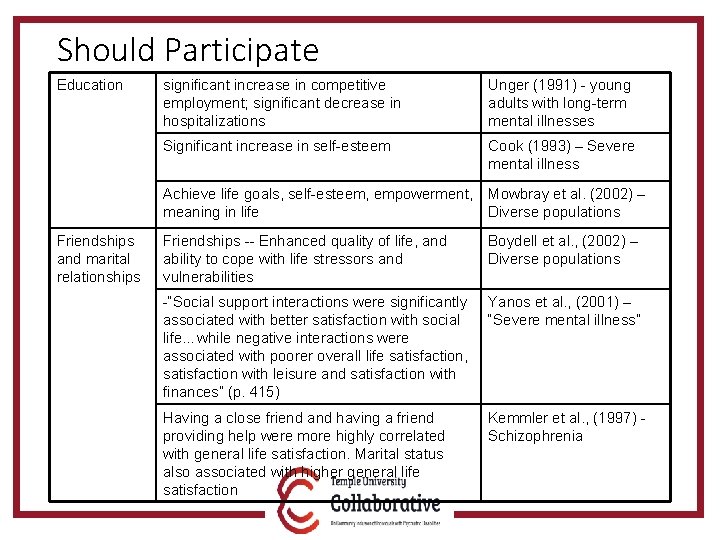
Should Participate Education Friendships and marital relationships significant increase in competitive employment; significant decrease in hospitalizations Unger (1991) - young adults with long-term mental illnesses Significant increase in self-esteem Cook (1993) – Severe mental illness Achieve life goals, self-esteem, empowerment, meaning in life Mowbray et al. (2002) – Diverse populations Friendships -- Enhanced quality of life, and ability to cope with life stressors and vulnerabilities Boydell et al. , (2002) – Diverse populations -“Social support interactions were significantly associated with better satisfaction with social life…while negative interactions were associated with poorer overall life satisfaction, satisfaction with leisure and satisfaction with finances” (p. 415) Yanos et al. , (2001) – “Severe mental illness” Having a close friend and having a friend providing help were more highly correlated with general life satisfaction. Marital status also associated with higher general life satisfaction Kemmler et al. , (1997) Schizophrenia
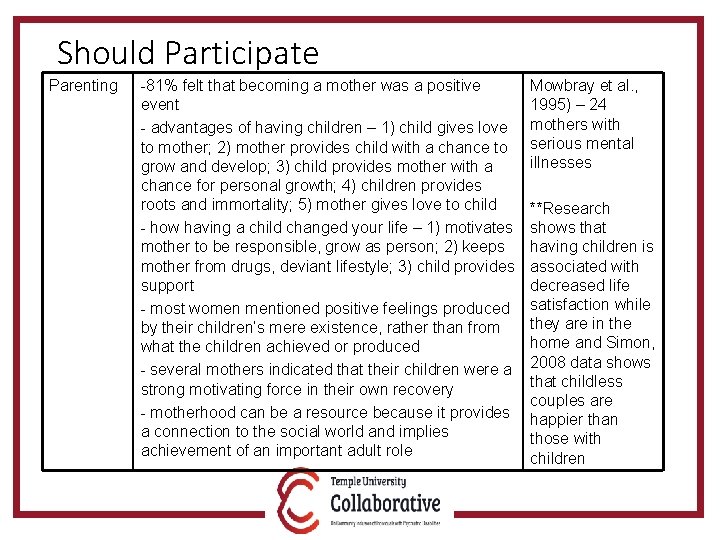
Should Participate Parenting -81% felt that becoming a mother was a positive event - advantages of having children – 1) child gives love to mother; 2) mother provides child with a chance to grow and develop; 3) child provides mother with a chance for personal growth; 4) children provides roots and immortality; 5) mother gives love to child - how having a child changed your life – 1) motivates mother to be responsible, grow as person; 2) keeps mother from drugs, deviant lifestyle; 3) child provides support - most women mentioned positive feelings produced by their children’s mere existence, rather than from what the children achieved or produced - several mothers indicated that their children were a strong motivating force in their own recovery - motherhood can be a resource because it provides a connection to the social world and implies achievement of an important adult role Mowbray et al. , 1995) – 24 mothers with serious mental illnesses **Research shows that having children is associated with decreased life satisfaction while they are in the home and Simon, 2008 data shows that childless couples are happier than those with children
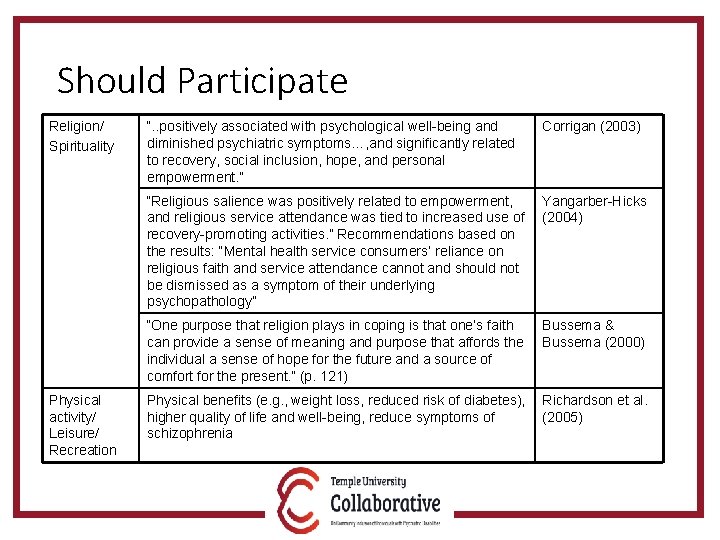
Should Participate Religion/ Spirituality Physical activity/ Leisure/ Recreation “. . positively associated with psychological well-being and diminished psychiatric symptoms…, and significantly related to recovery, social inclusion, hope, and personal empowerment. ” Corrigan (2003) “Religious salience was positively related to empowerment, and religious service attendance was tied to increased use of recovery-promoting activities. ” Recommendations based on the results: “Mental health service consumers’ reliance on religious faith and service attendance cannot and should not be dismissed as a symptom of their underlying psychopathology” Yangarber-Hicks (2004) “One purpose that religion plays in coping is that one’s faith can provide a sense of meaning and purpose that affords the individual a sense of hope for the future and a source of comfort for the present. ” (p. 121) Bussema & Bussema (2000) Physical benefits (e. g. , weight loss, reduced risk of diabetes), higher quality of life and well-being, reduce symptoms of schizophrenia Richardson et al. (2005)
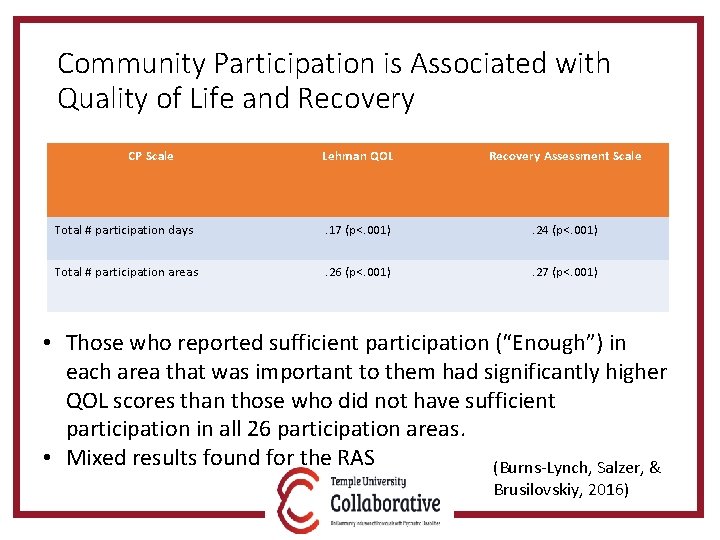
Community Participation is Associated with Quality of Life and Recovery CP Scale Lehman QOL Recovery Assessment Scale Total # participation days . 17 (p<. 001) . 24 (p<. 001) Total # participation areas . 26 (p<. 001) . 27 (p<. 001) • Those who reported sufficient participation (“Enough”) in each area that was important to them had significantly higher QOL scores than those who did not have sufficient participation in all 26 participation areas. • Mixed results found for the RAS (Burns-Lynch, Salzer, & Brusilovskiy, 2016)
Physical Activity Associated with Cognitive Functioning • Physical activity and brain plasticity (greater hippocampal, basal ganglia, and prefrontal cortex volume, greater white matter integrity, elevated and more efficient patterns of brain activity, greater functional brain connectivity) • Kirk I Erickson, Charles H Hillman, Arthur F Kramer, Physical activity, brain, and cognition, Current Opinion in Behavioral Sciences, Volume 4, August 2015, Pages 2732, http: //dx. doi. org/10. 1016/j. cobeha. 2015. 01. 005. • Neurotrophic factor signaling and physical activity • Phillips, C. , Baktir, M. A. , Srivatsan, M. , & Salehi, A. (2014). Neuroprotective effects of physical activity on the brain: a closer look at trophic factor signaling. Frontiers in Cellular Neuroscience, 8, 170. http: //doi. org/10. 3389/fncel. 2014. 00170 • “A growing body of literature suggests that physical activity beneficially influences brain function during adulthood, particularly frontal lobe-mediated cognitive processes, such as planning, scheduling, inhibition, and working memory. ” • Ratey, J. J. , & Loehr, J. E. (2011). The positive impact of physical activity on cognition during adulthood: a review of underlying mechanisms, evidence and recommendations. Rev Neurosci, 22(2), 171 -185. doi: 10. 1515/rns. 2011. 017
Loneliness Identified as a Major Public Health Issue and Associated with Cognitive Decline • Loneliness associated with greater healthcare utilization among older adults (Gerst. Emerson & Jayawardhana, 2015) • Social isolation associated with cognitive decline (Cacioppo & Hawkley, 2009). Gerst-Emerson, K. , & Jayawardhana, J. (2015). Loneliness as a Public Health Issue: The Impact of Loneliness on Health Care Utilization Among Older Adults. American journal of public health, 105(5), 1013 -1019. Cacioppo, J. T. , & Hawkley, L. C. (2009). Perceived Social Isolation and Cognition. Trends in Cognitive Sciences, 13(10), 447– 454. http: //doi. org/10. 1016/j. tics. 2009. 06. 005
Poverty (Resulting from Minimal Participation in the Economy) and Cognitive Functioning • Schizophrenia and deficits in cognitive functioning: Does poverty play a role? • Eldar Shafir – Research on the science of not having enough • “Poverty impedes cognitive function” (Science, Aug 2013) • The strain of poverty drains cognitive resources, especially as tasks become more challenging and complex
Current State of Community Participation 5/30/2018 22
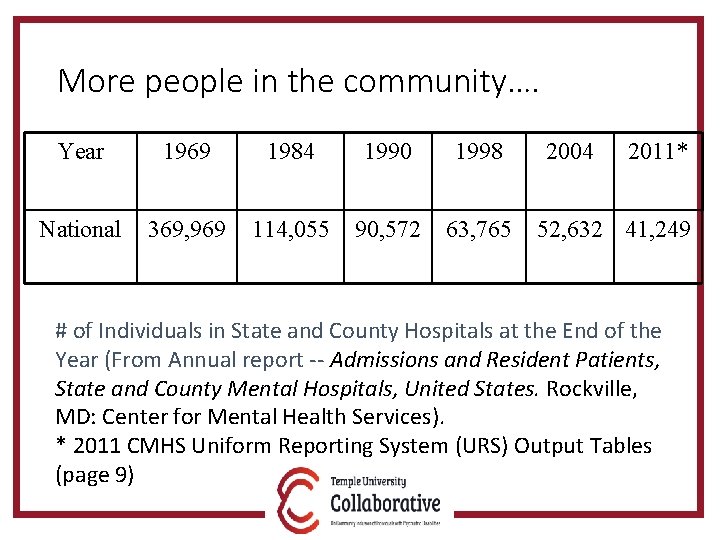
More people in the community…. Year 1969 1984 1990 1998 National 369, 969 114, 055 90, 572 63, 765 2004 2011* 52, 632 41, 249 # of Individuals in State and County Hospitals at the End of the Year (From Annual report -- Admissions and Resident Patients, State and County Mental Hospitals, United States. Rockville, MD: Center for Mental Health Services). * 2011 CMHS Uniform Reporting System (URS) Output Tables (page 9)
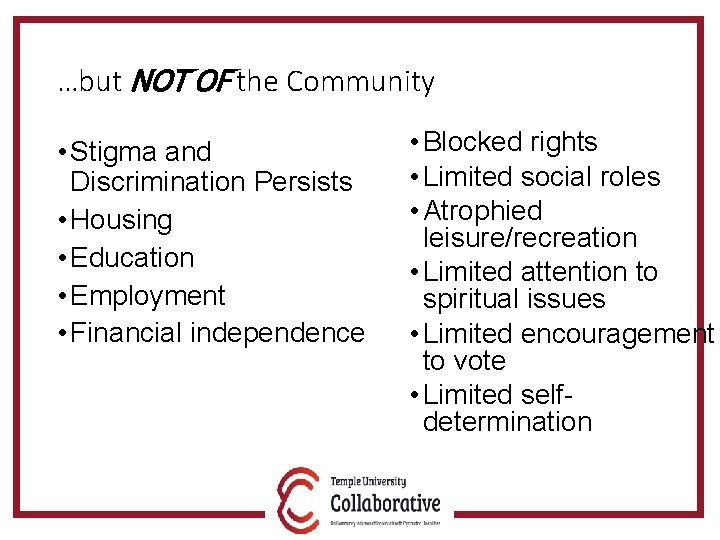
…but NOT OF the Community • Stigma and Discrimination Persists • Housing • Education • Employment • Financial independence • Blocked rights • Limited social roles • Atrophied leisure/recreation • Limited attention to spiritual issues • Limited encouragement to vote • Limited selfdetermination
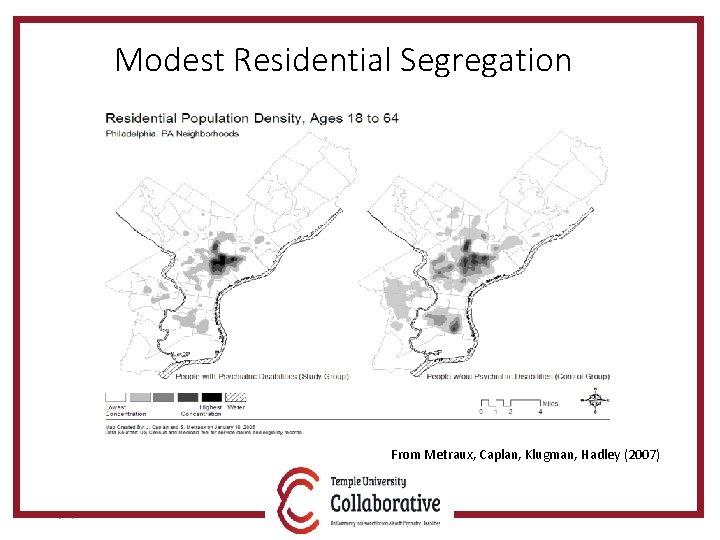
Modest Residential Segregation From Metraux, Caplan, Klugman, Hadley (2007) 5/30/2018 25
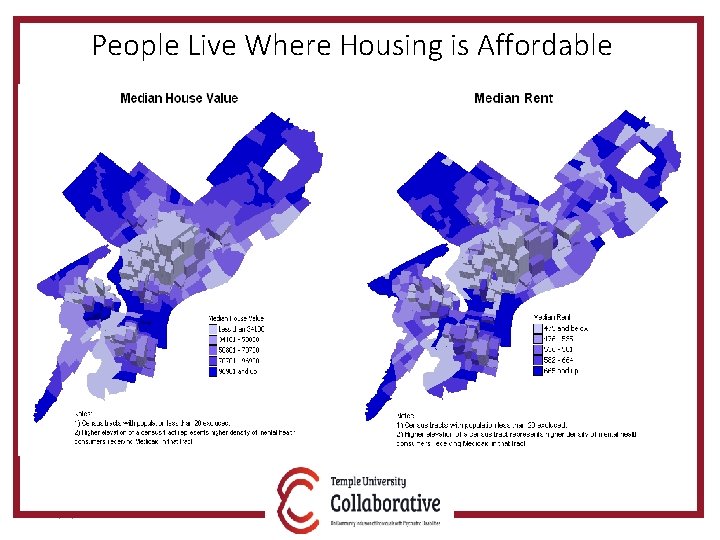
People Live Where Housing is Affordable 5/30/2018 26
Fundamentals of Community Inclusion and Participation 5/30/2018 27
New Understanding of Disability • Paradigm shift in views about causes of community participation/”disability” • Individual Model of Disability: “Disability” is something inherent within an individual • Social Model of Disability: “Disability” results from a person-environment interaction that reduces opportunities for people to live like everyone else • Reduce “disability” and increase opportunity by • Interventions to increase participation should • Reducing and eliminating environmental barriers • Making a broad-spectrum of individualized supports readily available
Fundamental #1: Community Inclusion is important 5/30/2018 29
Fundamental #2: Community Inclusion applies to everyone who experiences a disability 5/30/2018 30
Evidence • Individuals who were believed to be incapable of living in the community consistently have been found to be able to live successfully in the community (Deinstitutionalization data and long-term recovery data) • Practitioners have not been shown to be able to predict whether or not a specific individual will be able to participate in the community, or how much or when, an individual can participate.
Fundamental #2: Practice Implications • Use motivation/interest in participation as your criterion for providing supports rather than an assessment of “readiness”
Fundamental #3: Community inclusion requires seeing ‘the person, ’ not ‘the patient. ’ 5/30/2018 33
Evidence • “Patient” and “person” schemas • Mental health professionals often have negative beliefs and attitudes toward people with mental health issues that are similar to the general population • Pygmalion Effect -- The expectations of professionals about individuals with mental health conditions may contribute to negative outcomes
What Can We Do? • Need to change our schemas about people with mental illnesses • Stop the negative labels (Joyce Bell Labeling exercise) • Develop our own recovery stories about people we support
Fundamental #4: Selfdetermination and dignity of risk are critical 5/30/2018 36
Self-Determination and Dignity of Risk • Self-determination refers to “acting as the primary causal agent in one’s life and making choices and decisions regarding one’s quality of life free from undue external influence or interference” (Wehmeyer, 1996, p. 24). • Dignity of risk (Perske, 1981) refers to the right to make choices that affect one’s own life even when these choices could, or do, turn out to be mistakes, allowing individuals to learn from their mistakes, along the way, like everyone else.
Evidence • People with psychiatric disabilities desire more participation and indicate not engaging in many areas enough • Participation is beneficial even if it might lead to stress • Marrone and Golowka (1999): Work might be stressful, but poverty is much worse • Self-determination interventions show positive benefits (e. g. , WRAP; SDC; Psychiatric Advanced Directives; Shared Decision-Making)
Fundamental #4: Self-Determination and Dignity of Risk Should Be Protected • Use approaches that facilitate selfdetermination and address risk head-on rather than opposing risk outright • WRAP; Develop “personal medicines”; SDC; Psychiatric Advanced Directives; Shared Decision-Making • Doing “with” rather than “for” • Managing risk http: //tucollaborative. org/pdfs/Toolkits_Mon ographs_Guidebooks/community_inclusion/ Managing_Risk_in_CI. pdf
Fundamental #5: Multiple domains of mainstream life should be sought 5/30/2018 40
Fundamental #6: Seek participation that is more like everyone else
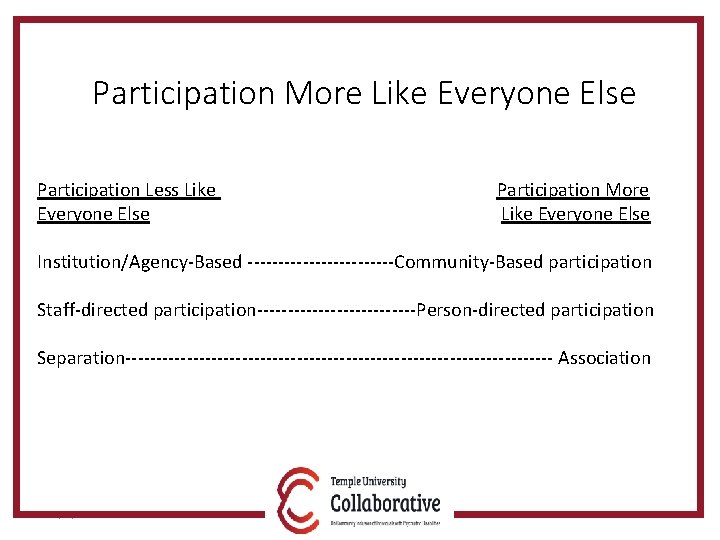
Participation More Like Everyone Else Participation Less Like Everyone Else Participation More Like Everyone Else Institution/Agency-Based ------------Community-Based participation Staff-directed participation-------------Person-directed participation Separation----------------------------------- Association 5/30/2018 42
Fundamental #7: Use emerging support technologies, the natural supports of families and friends, and the engagement of peer supports 5/30/2018 43
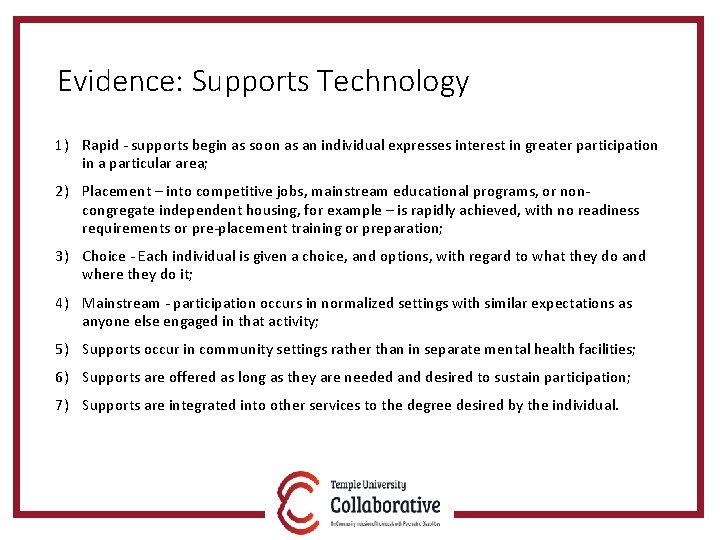
Evidence: Supports Technology 1) Rapid - supports begin as soon as an individual expresses interest in greater participation in a particular area; 2) Placement – into competitive jobs, mainstream educational programs, or noncongregate independent housing, for example – is rapidly achieved, with no readiness requirements or pre-placement training or preparation; 3) Choice - Each individual is given a choice, and options, with regard to what they do and where they do it; 4) Mainstream - participation occurs in normalized settings with similar expectations as anyone else engaged in that activity; 5) Supports occur in community settings rather than in separate mental health facilities; 6) Supports are offered as long as they are needed and desired to sustain participation; 7) Supports are integrated into other services to the degree desired by the individual.
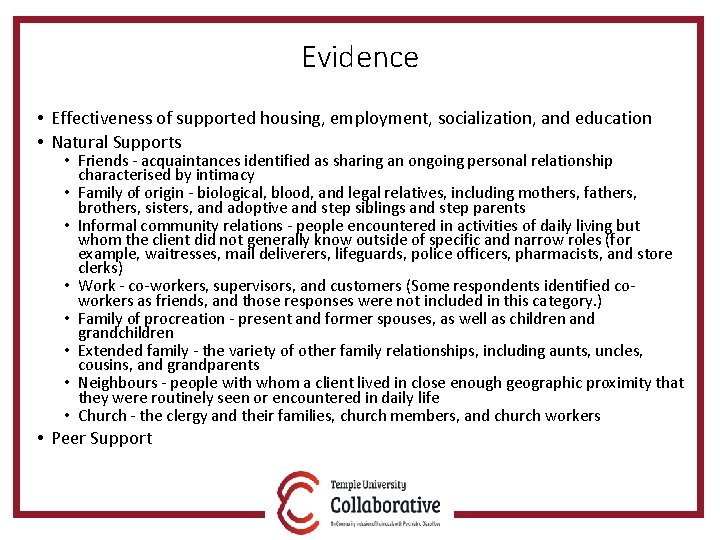
Evidence • Effectiveness of supported housing, employment, socialization, and education • Natural Supports • Friends - acquaintances identified as sharing an ongoing personal relationship characterised by intimacy • Family of origin - biological, blood, and legal relatives, including mothers, fathers, brothers, sisters, and adoptive and step siblings and step parents • Informal community relations - people encountered in activities of daily living but whom the client did not generally know outside of specific and narrow roles (for example, waitresses, mail deliverers, lifeguards, police officers, pharmacists, and store clerks) • Work - co-workers, supervisors, and customers (Some respondents identified coworkers as friends, and those responses were not included in this category. ) • Family of procreation - present and former spouses, as well as children and grandchildren • Extended family - the variety of other family relationships, including aunts, uncles, cousins, and grandparents • Neighbours - people with whom a client lived in close enough geographic proximity that they were routinely seen or encountered in daily life • Church - the clergy and their families, church members, and church workers • Peer Support
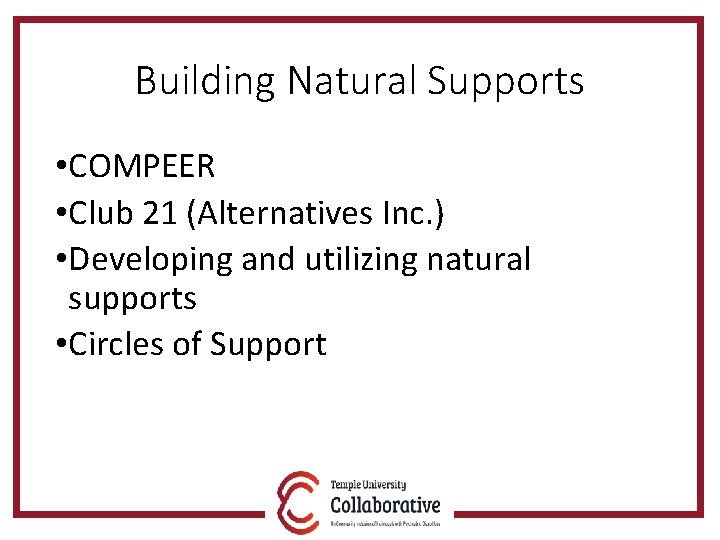
Building Natural Supports • COMPEER • Club 21 (Alternatives Inc. ) • Developing and utilizing natural supports • Circles of Support
Fundamental #8: Providing support to family and other natural supports promotes community integration 5/30/2018 47
Evidence • Community integration of families of persons with psychiatric disabilities is affected • Ability to effectively support loved ones of families is also affected • Effective interventions exist to support carers
Fundamental #9: Environmental barriers must be identified and addressed 5/30/2018 49
Evidence 1) Individual disempowerment 2) Sustained poverty A. Local environment and access to resources 3) Inadequate transportation 4) Public prejudice and discrimination
Fundamental #10: Maximize the use of mainstream community resources 5/30/2018 51
Evidence • There are many more, accessible resources in all participation domains available to all citizens than there ever will be for people with disabilities • Use of mainstream resources will enhance ability to use such resources in the future rather than specialized services offered in the mental health system
Fundamental #10: Maximize the use of mainstream community resources • Know what is available to people in the community • Recovery Connections Program (Bedford VA) • Develop partnerships and reciprocal relationships to access these resources (Access Services asking for help to make connections) • Vocational Services • Educational institutions • Gyms, community centers, and other leisure/recreation settings and organizations • Religious and spiritual organizations • Parks • Community groups
Fundamental #11: Need to establish welcoming communities 5/30/2018 54
The Role of Communities in Community Inclusion v Community can ignore, isolate, or actively reject = exclusion and v Community can seek out and embrace people = inclusion 5/30/2018 55
Evidence • Individuals who feel ‘connected’ to a community of others – families and friends, co-workers and neighbours, etc. – are better able to avoid both physical illness and emotional stress • Welcoming communities are stronger communities • E. g. , employment: Diversity of workforce, productivity, and job tenure
Fundamental #11: Need to establish welcoming communities • Eliminate prejudice and discrimination • Contact hypothesis (Allport, 1954) • Speakers bureaus and reach out to atypical places for presentations (health clubs, churches, etc. ) • Develop partnerships • Contact decreases stereotypes, prejudice, and discrimination (Alternatives, Inc. ) • Create awareness of the strengths of individuals who have been seen only as having deficits • Create respect for the uniqueness of all individuals…even those aspects that are viewed as “different” or deficits • Create demand in the community for increased presence and participation • Inclusion not just accommodation