
Life in Heian Court Heian Period peace Aristocrats





- Slides: 21
Life in Heian Court
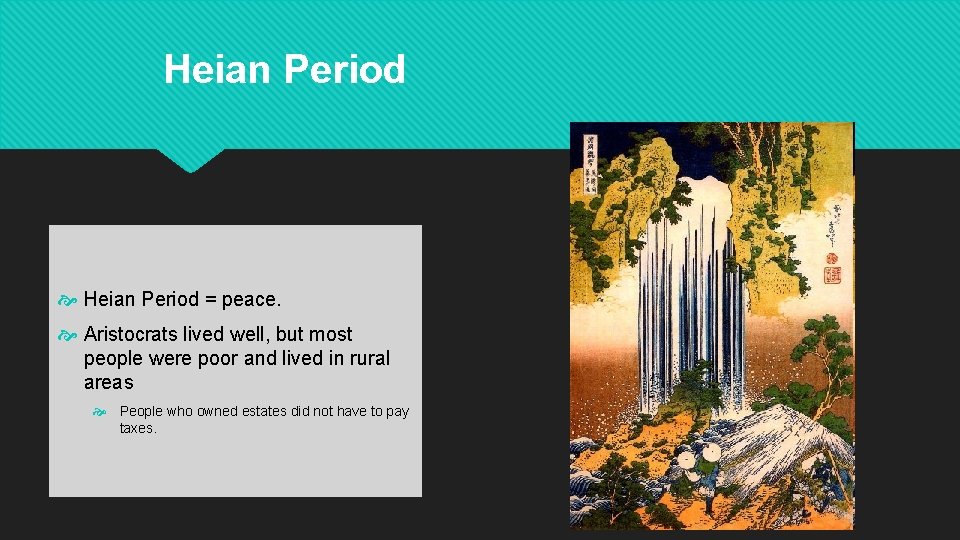
Heian Period = peace. Aristocrats lived well, but most people were poor and lived in rural areas People who owned estates did not have to pay taxes.
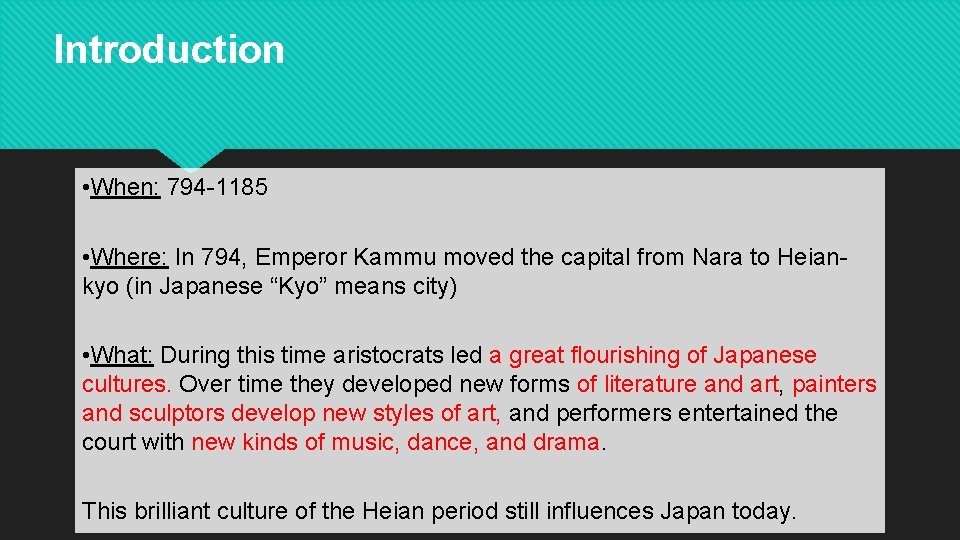
Introduction • When: 794 -1185 • Where: In 794, Emperor Kammu moved the capital from Nara to Heiankyo (in Japanese “Kyo” means city) • What: During this time aristocrats led a great flourishing of Japanese cultures. Over time they developed new forms of literature and art, painters and sculptors develop new styles of art, and performers entertained the court with new kinds of music, dance, and drama. This brilliant culture of the Heian period still influences Japan today.
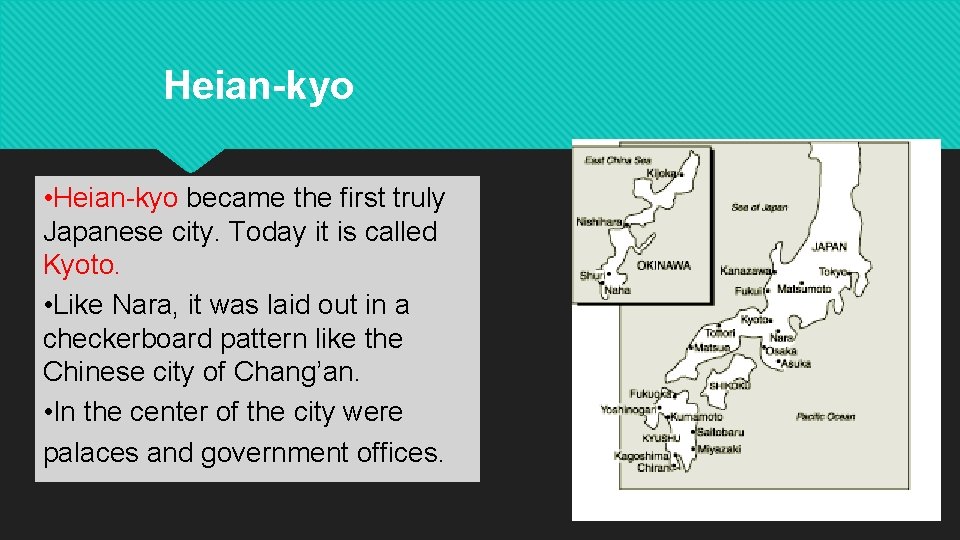
Heian-kyo • Heian-kyo became the first truly Japanese city. Today it is called Kyoto. • Like Nara, it was laid out in a checkerboard pattern like the Chinese city of Chang’an. • In the center of the city were palaces and government offices.
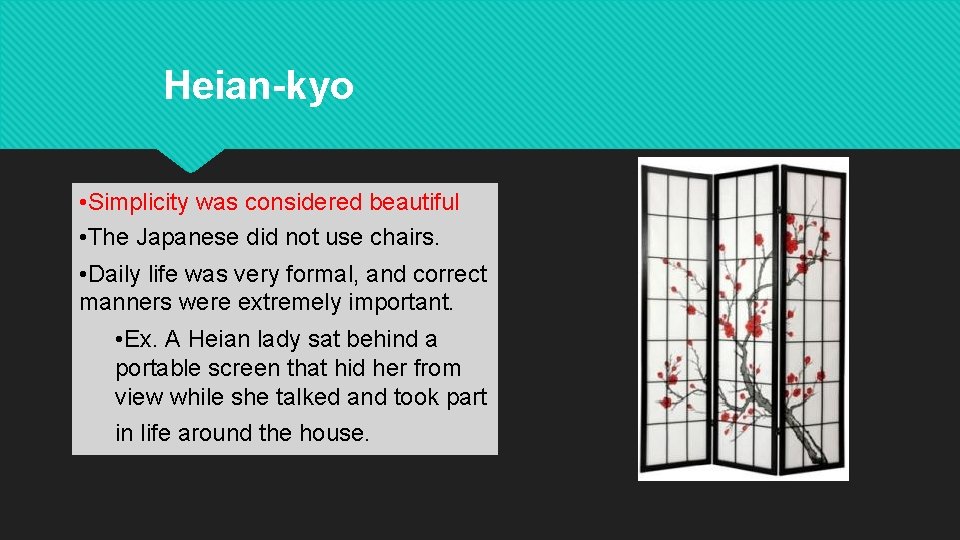
Heian-kyo • Simplicity was considered beautiful • The Japanese did not use chairs. • Daily life was very formal, and correct manners were extremely important. • Ex. A Heian lady sat behind a portable screen that hid her from view while she talked and took part in life around the house.
Social Position of the Heian Court A person’s rank was determined almost completely by what family he or she came from. Being born into a high-ranking family mattered more than personal qualities or skills. Each rank brought with it specific privileges and detailed rules about conduct.
Ranking System This precise ranking system also determined such matters as what color clothing a noble could wear, and the height of the gatepost in front of the family’s home. In addition, if a person was found guilty of a crime, rank determined how harsh the sentence would be.
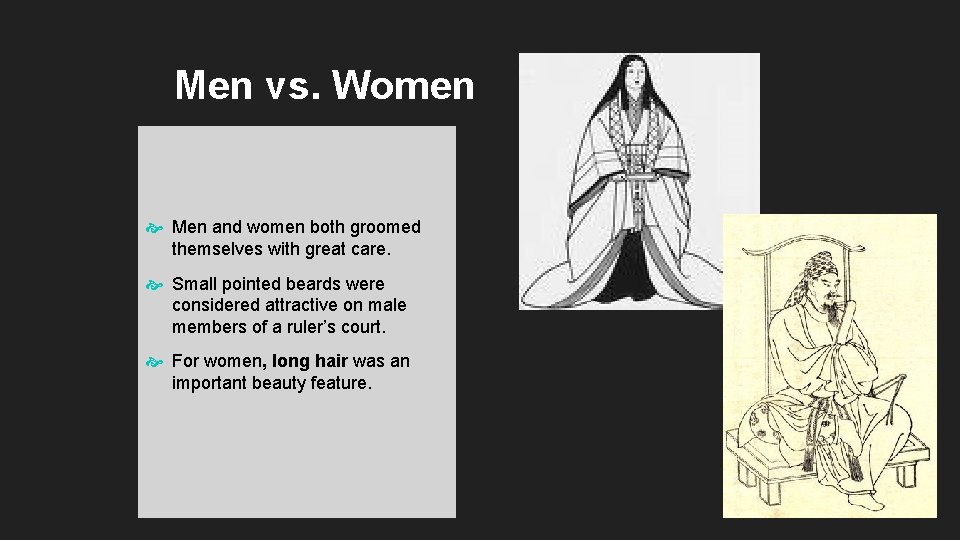
Men vs. Women Men and women both groomed themselves with great care. Small pointed beards were considered attractive on male members of a ruler’s court. For women, long hair was an important beauty feature.
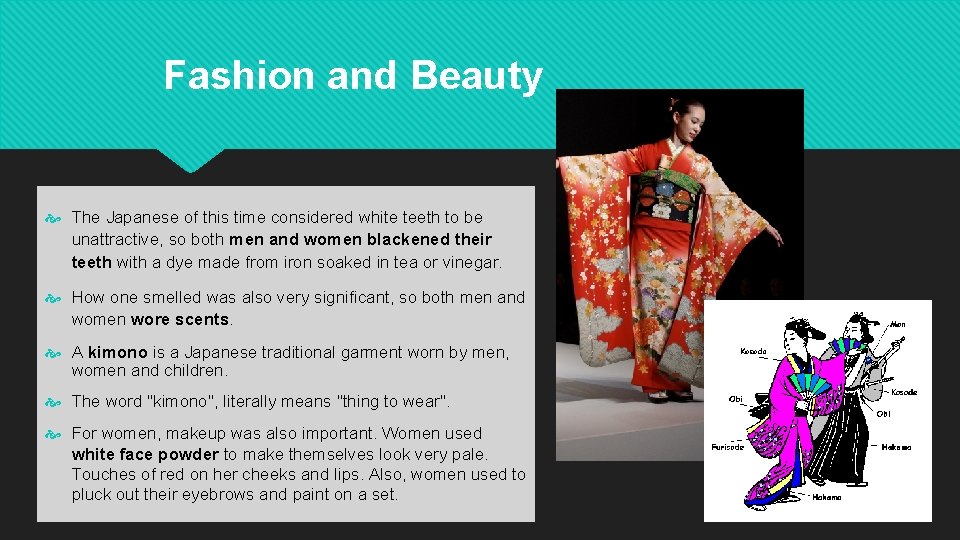
Fashion and Beauty The Japanese of this time considered white teeth to be unattractive, so both men and women blackened their teeth with a dye made from iron soaked in tea or vinegar. How one smelled was also very significant, so both men and women wore scents. A kimono is a Japanese traditional garment worn by men, women and children. The word "kimono", literally means "thing to wear". For women, makeup was also important. Women used white face powder to make themselves look very pale. Touches of red on her cheeks and lips. Also, women used to pluck out their eyebrows and paint on a set.
Literature Women in the Heian Court played an important role- they documented daily life in the court.
History of the Haiku Originated around the 16 th Century in Japan Most popular form of Japanese poetry Made popular by poets such as Matsu Basho Kobayashi Issa Masaoka Shiki
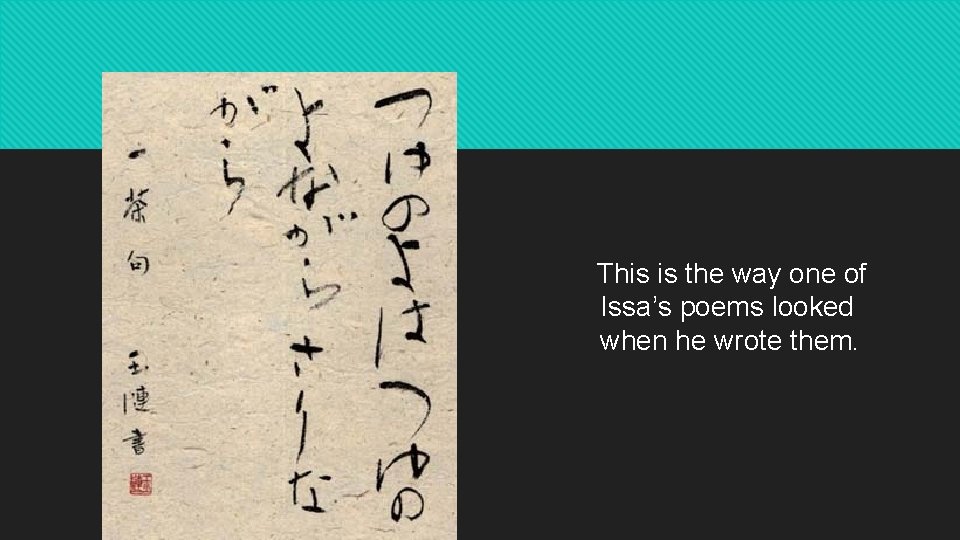
This is the way one of Issa’s poems looked when he wrote them.
Haiku Content Traditionally about nature and the seasons (season key word) Should be simple but deep Should be like a photo of nature that moves the author and reveals some insight Written in the present tense
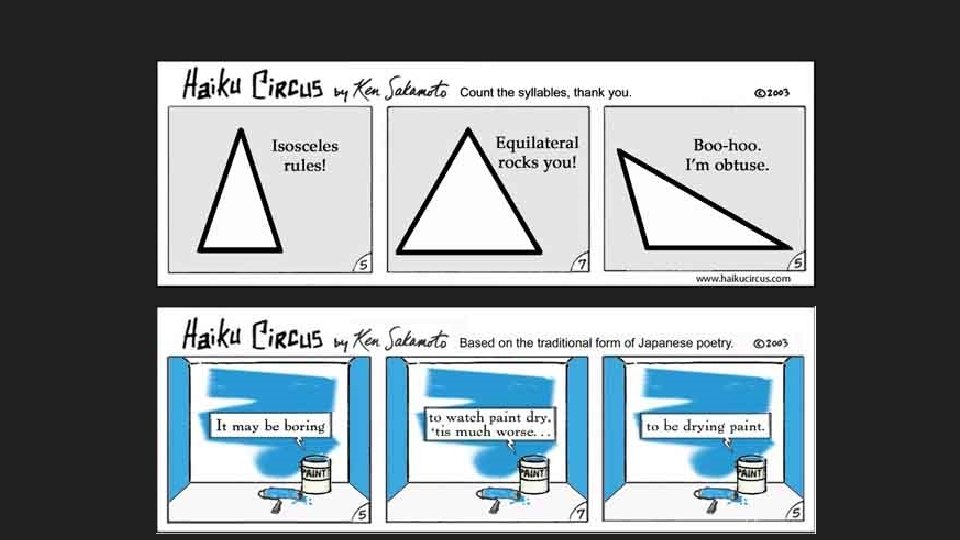
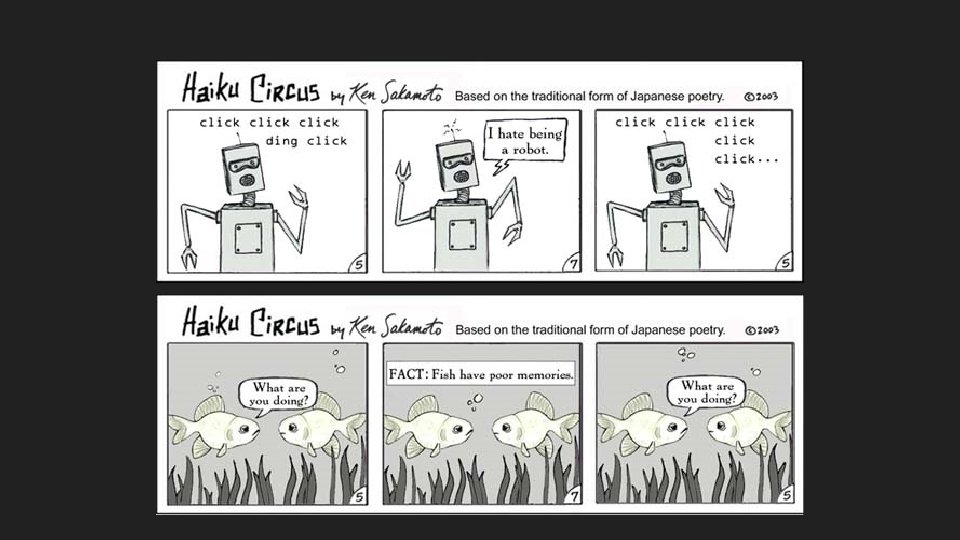
Haiku Form Three lines Syllable pattern of 5, 7, 5 First line: 5 syllables Second line: 7 syllables Third line: 5 syllables Usually doesn’t rhyme Usually about nature Often includes a reference to a season Often a single sentence, but may be sentence fragments Every single star Is quivering now with light… Oh, how bitter cold. ~Taigi
Examples After the shower… Spring-enchanted sparrow-folk Chatter in the leaves. ~Uko
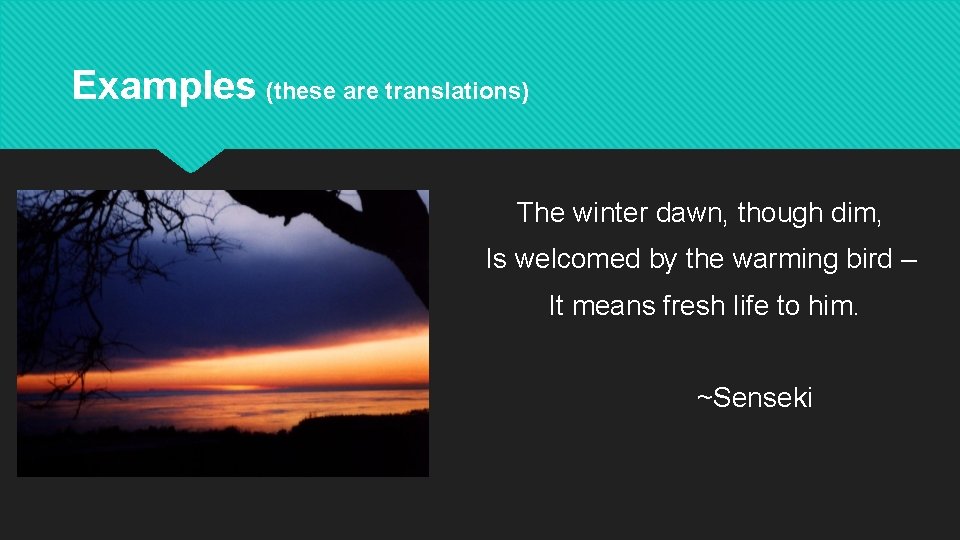
Examples (these are translations) The winter dawn, though dim, Is welcomed by the warming bird – It means fresh life to him. ~Senseki
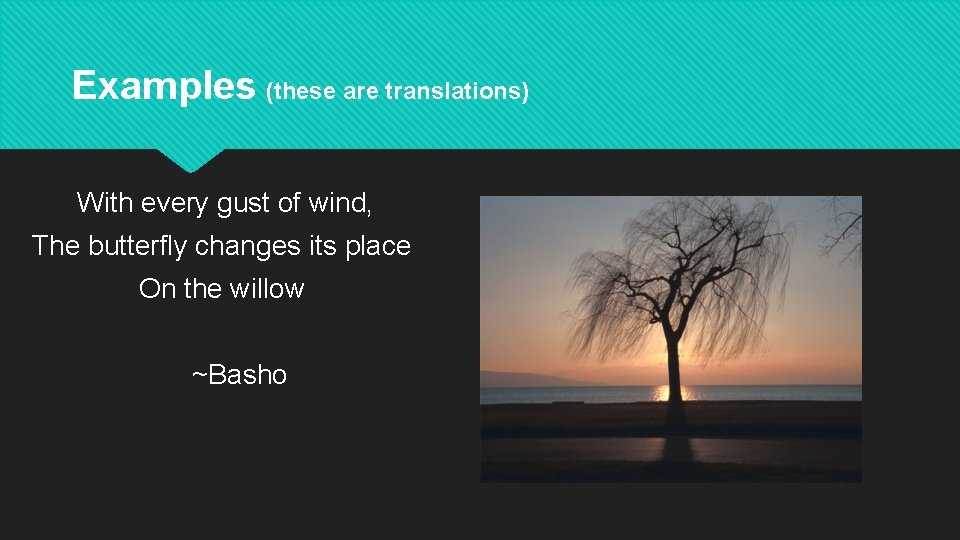
Examples (these are translations) With every gust of wind, The butterfly changes its place On the willow ~Basho
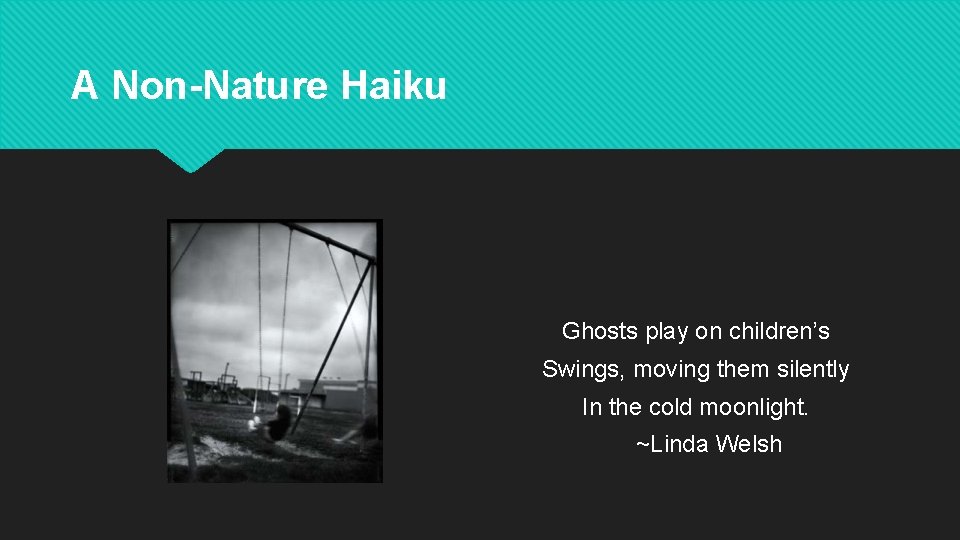
A Non-Nature Haiku Ghosts play on children’s Swings, moving them silently In the cold moonlight. ~Linda Welsh