
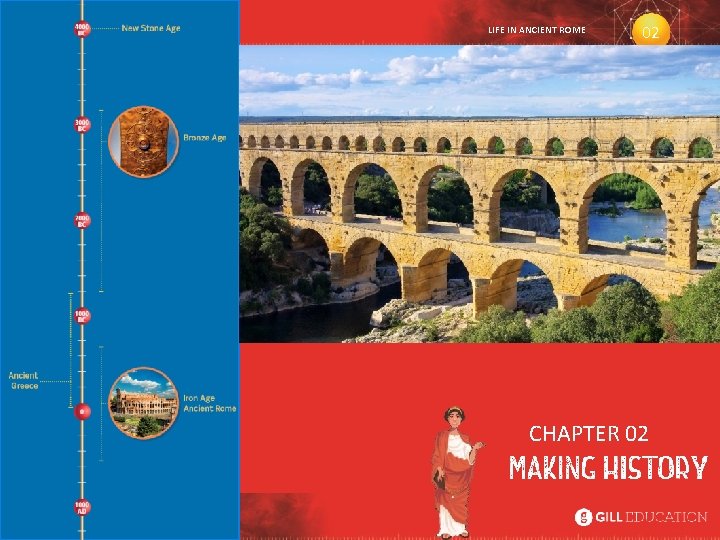
LIFE IN ANCIENT ROME 02 CHAPTER 02 LIFE
- Slides: 36
LIFE IN ANCIENT ROME 02 CHAPTER 02
LIFE IN ANCIENT ROME What Will I Learn? • Investigate the lives of people in Ancient Rome • Explain how their actions contributed to the history of Europe and/or the wider world • Explain how their achievements contributed to the history of Europe and/or the wider world • Illustrate patterns of change in Crime and Punishment or Health and Medicine • Explore the Nature of History 02
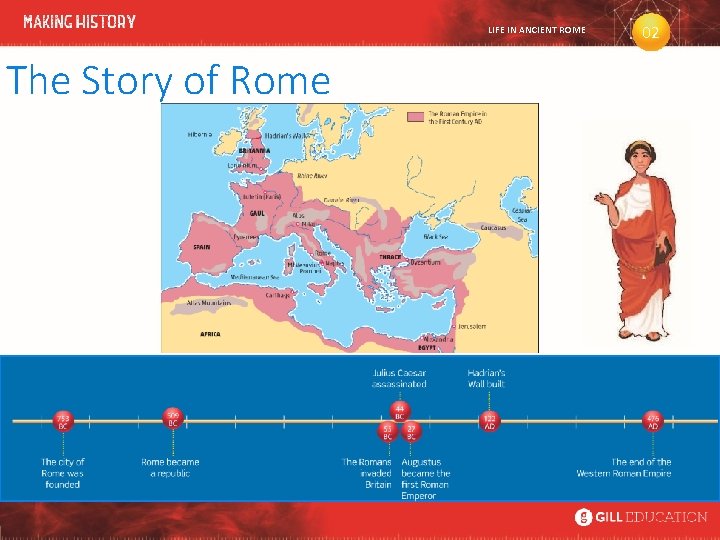
LIFE IN ANCIENT ROME The Story of Rome 02
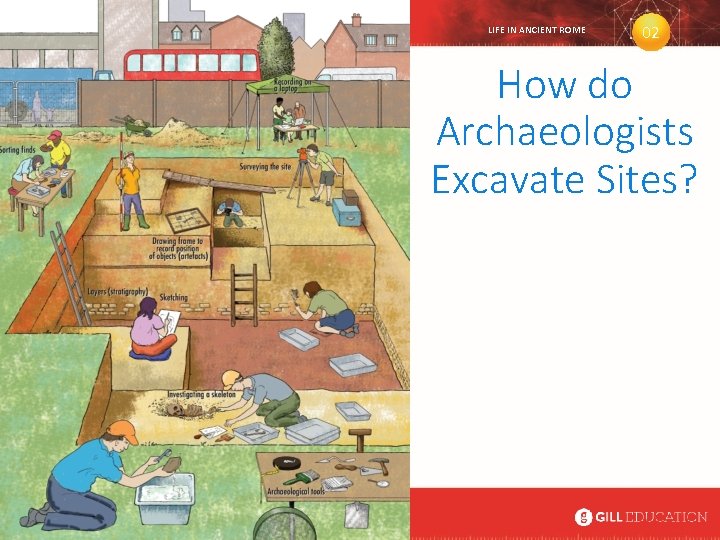
LIFE IN ANCIENT ROME 02 How do Archaeologists Excavate Sites?
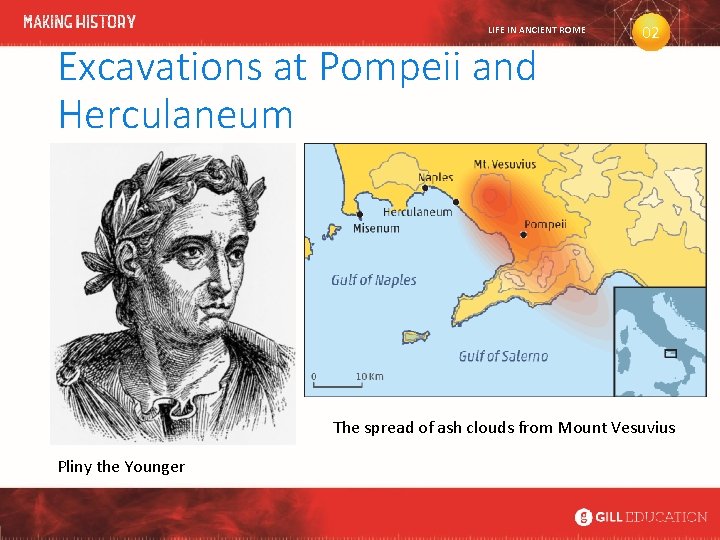
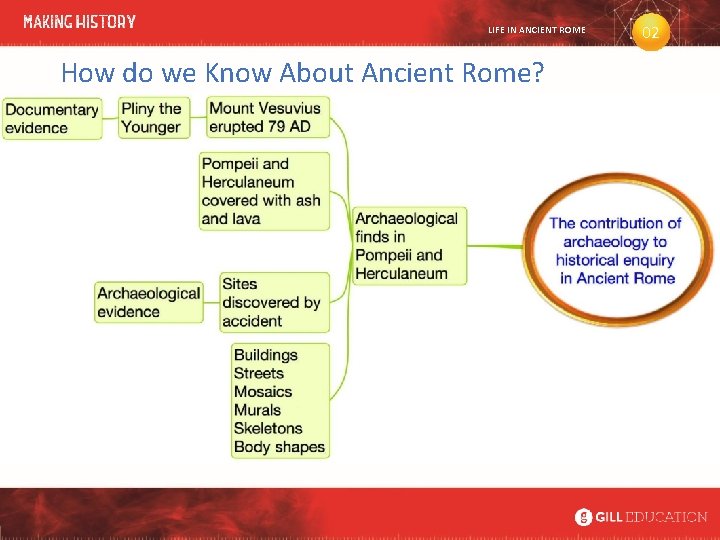
LIFE IN ANCIENT ROME Excavations at Pompeii and Herculaneum 02 The spread of ash clouds from Mount Vesuvius Pliny the Younger
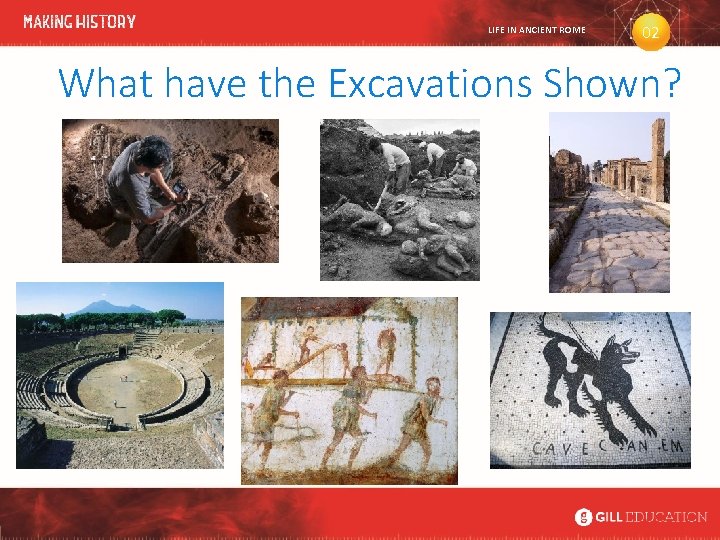
LIFE IN ANCIENT ROME 02 What have the Excavations Shown?
LIFE IN ANCIENT ROME 02 What have the Excavations Shown? Source 1 There is an old archaeological joke that Pompeii has died twice: first, the sudden death caused by the [volcanic] eruption; second, the slow death that the city has suffered since it began to be uncovered in the mid-eighteenth century. Despite the heroic efforts of the Pompeiian archaeological service, the city is disintegrating (decaying). It is a gradual process of dilapidation (ruin), aggravated (worsened) by earthquakes and mass tourism, and given an extra helping hand by the rough methods of the early excavators; by allied bombing campaigns in 1943; and by thieves and vandals for whom the archaeological site, large and hard to police, is an enticing target. (from Mary Beard, Pompeii: The Life of a Roman Town [2008]) Source 2 Though our tools today – the trowels, shovels, buckets and brushes – are nearly identical to [those used in past excavations], many advances have been made in archaeological method and methodology over the course of the past 70+ years. We are now able to re-examine [the work done by archaeologists]. (‘What Happened in Pompeii’, www. interactive. archaeology. org/Pompeii/histor y. html)
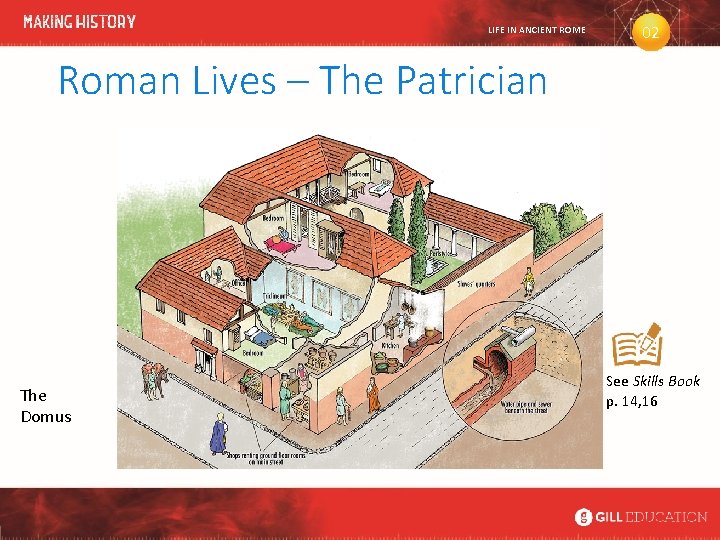
LIFE IN ANCIENT ROME 02 Roman Lives – The Patrician The Domus See Skills Book p. 14, 16
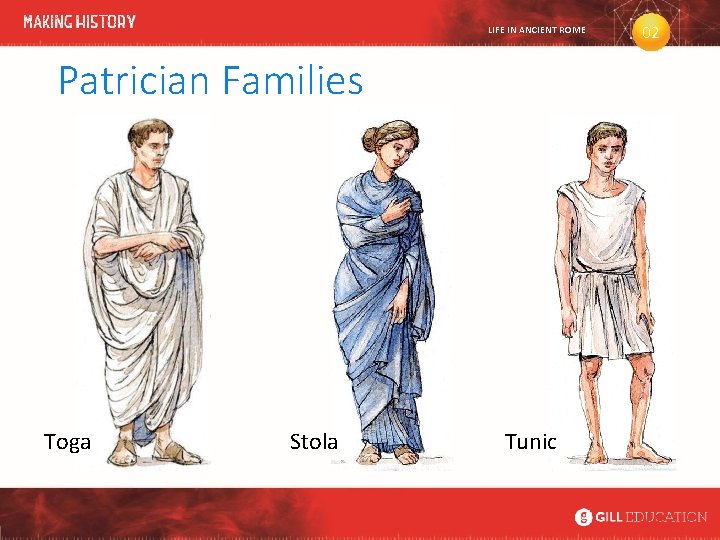
LIFE IN ANCIENT ROME Patrician Families Toga Stola Tunic 02
LIFE IN ANCIENT ROME 02 Patrician Families Source 2 Richer families had two simple meals for breakfast and lunch, and waited until the evening for the main meal of the day. This was after a visit to the baths. The main meal, called the cena, had three courses. The men and women lay on couches around a central table. Slaves served the food and musicians entertained during the meal. Sometimes people ate so much that they deliberately got sick so that they could begin again. Source 3 About the privileged – the haves – of the Roman world we know a great deal. All over the empire the rich paraded their wealth in large and expensive accommodations, measured not by floor area but by the number of tiles on the roof. And they indulged in the many pleasures that money could buy, from silks to oriental spices, skilled slaves to pricey antiques. Source 4 For the most part ancient cities were not zoned as modern cities are. Rich and poor lived side by side, large houses with many tiles sharing the same streets and districts as tiny hovels. The same diseases, and much the same dirt, killed the children of rich and poor alike. Questions: 1. How did the patricians show off their wealth? 2. How did the patricians organise their families? 3. What common experiences did rich and poor have? 4. Why, do you think, ‘we know a great deal’ about the haves? Explain your answers.
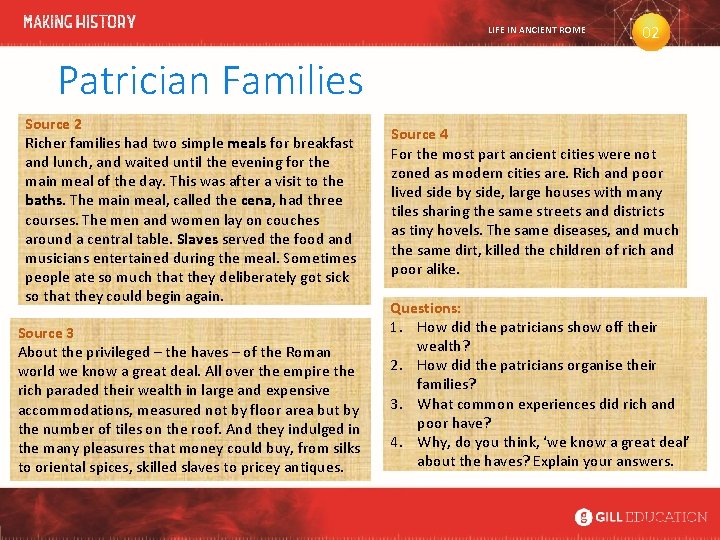
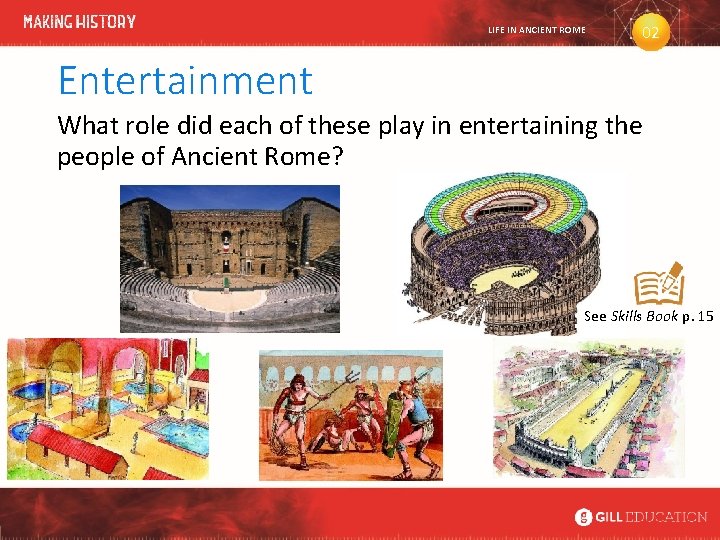
LIFE IN ANCIENT ROME 02 Entertainment What role did each of these play in entertaining the people of Ancient Rome? See Skills Book p. 15
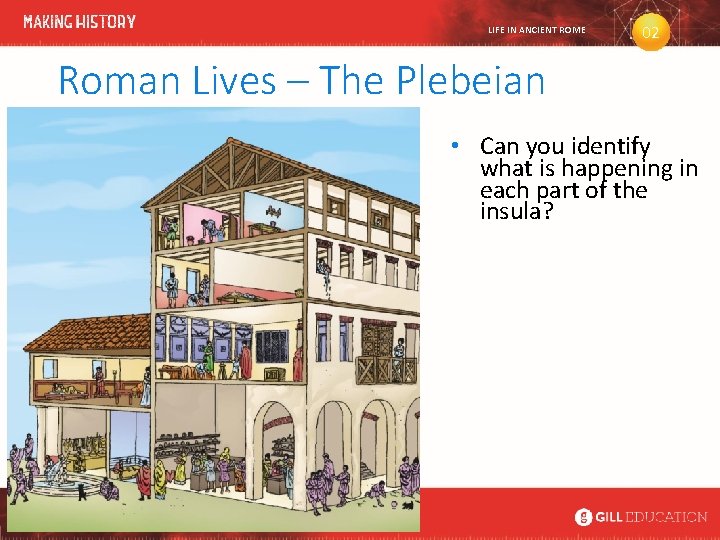
LIFE IN ANCIENT ROME 02 Roman Lives – The Plebeian • Can you identify what is happening in each part of the insula?
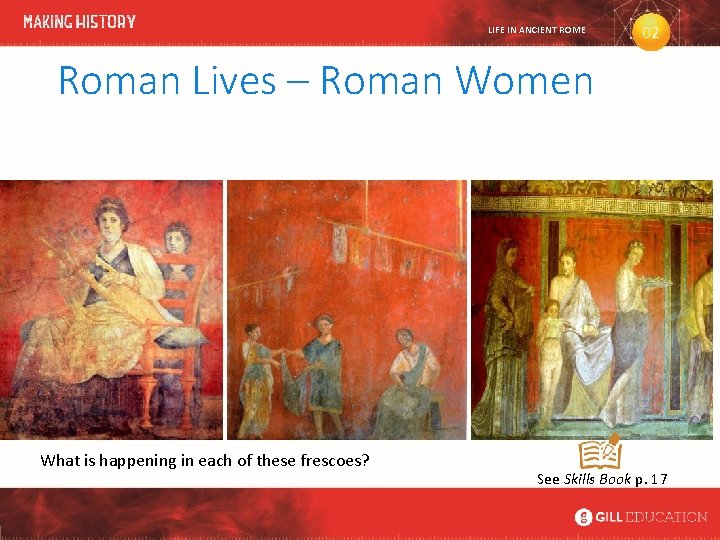
LIFE IN ANCIENT ROME 02 Roman Lives – Roman Women What is happening in each of these frescoes? See Skills Book p. 17
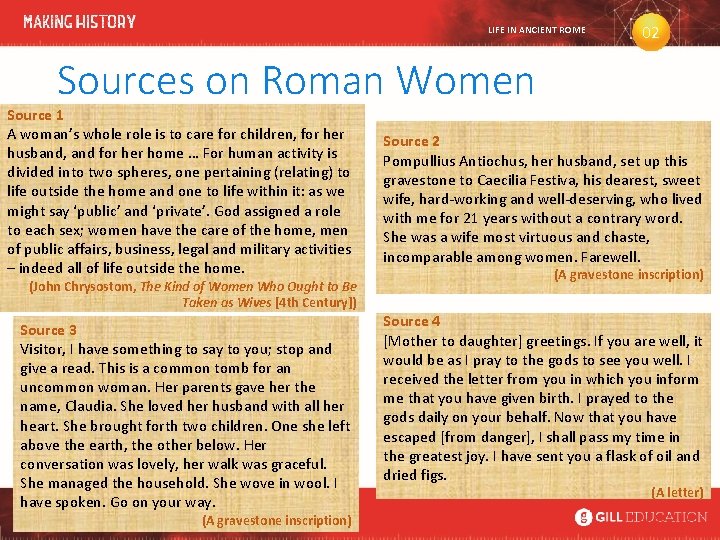
LIFE IN ANCIENT ROME 02 Sources on Roman Women Source 1 A woman’s whole role is to care for children, for her husband, and for her home … For human activity is divided into two spheres, one pertaining (relating) to life outside the home and one to life within it: as we might say ‘public’ and ‘private’. God assigned a role to each sex; women have the care of the home, men of public affairs, business, legal and military activities – indeed all of life outside the home. (John Chrysostom, The Kind of Women Who Ought to Be Taken as Wives [4 th Century]) Source 3 Visitor, I have something to say to you; stop and give a read. This is a common tomb for an uncommon woman. Her parents gave her the name, Claudia. She loved her husband with all her heart. She brought forth two children. One she left above the earth, the other below. Her conversation was lovely, her walk was graceful. She managed the household. She wove in wool. I have spoken. Go on your way. (A gravestone inscription) Source 2 Pompullius Antiochus, her husband, set up this gravestone to Caecilia Festiva, his dearest, sweet wife, hard-working and well-deserving, who lived with me for 21 years without a contrary word. She was a wife most virtuous and chaste, incomparable among women. Farewell. (A gravestone inscription) Source 4 [Mother to daughter] greetings. If you are well, it would be as I pray to the gods to see you well. I received the letter from you in which you inform me that you have given birth. I prayed to the gods daily on your behalf. Now that you have escaped [from danger], I shall pass my time in the greatest joy. I have sent you a flask of oil and dried figs. (A letter)
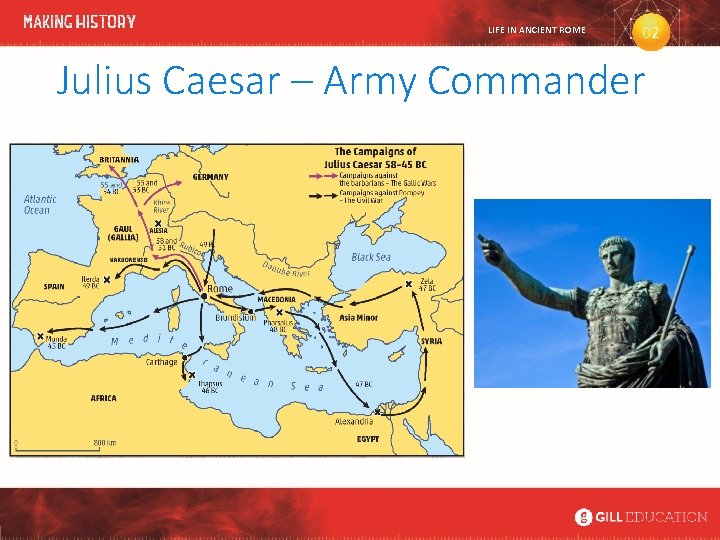
LIFE IN ANCIENT ROME 02 Julius Caesar – Army Commander
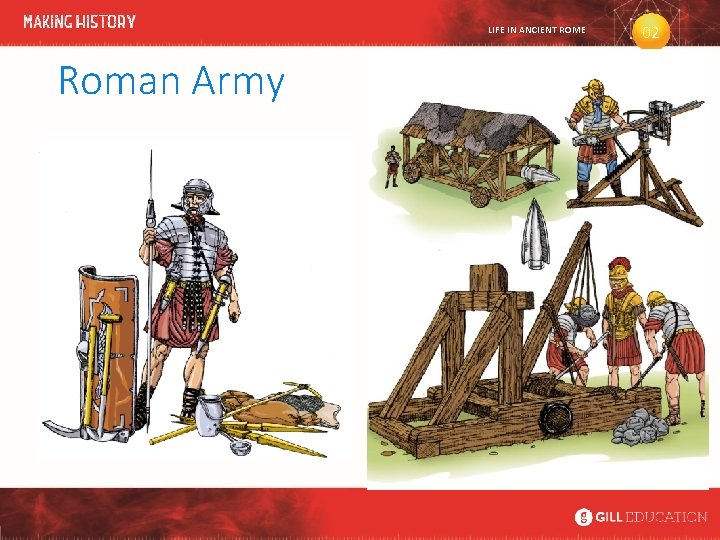
LIFE IN ANCIENT ROME Roman Army 02
LIFE IN ANCIENT ROME 02 Roman Army – Julius Caesar Source 2 Caesar was a most skilful swordsman and horseman, and showed surprising powers of endurance. He always led his army, more often on foot than in the saddle, went bareheaded in sun and rain alike and could travel for long distances at incredible speed … If Caesar’s troops gave ground he would often rally them in person, catching individual fugitives (deserters) by the throat and forcing them round to face the enemy again … He always addressed his soldiers not with ‘My men’; but with ‘Comrades’ … which put them into a better humour. He fixed the daily pay of the regular soldiers at double what it had been and occasionally gave each man a slave. (Suetonius, Life of Julius Caesar [c. 110 AD]) Source 4 What made Caesar hated was his passion to be king. (Plutarch Julius Caesar [c. 110 AD]) Source 5 When his friends advised him to have a guard, and several offered their services, he would not hear of it; but said it was better to death once than always live in fear of it. (Plutarch Julius Caesar [c. 110 AD])
LIFE IN ANCIENT ROME 02 Roman Lives – Slaves Their skins were seamed all over with marks of old floggings, as you could easily see through the holes in their ragged shirts that shaded rather than covered their scarred backs; but some wore only loin-cloths. They had letters branded on their foreheads, and half-shaved heads and irons on their legs. Their complexions were frightfully yellow, their eyelids caked with the smoke of the baking ovens, their eyes so bleary and inflamed that they could hardly see out of them and they were powdered like athletes in an arena, but with dirty flour, not dust. (Apuleius The Golden Ass [165 AD]) See Skills Book p. 18
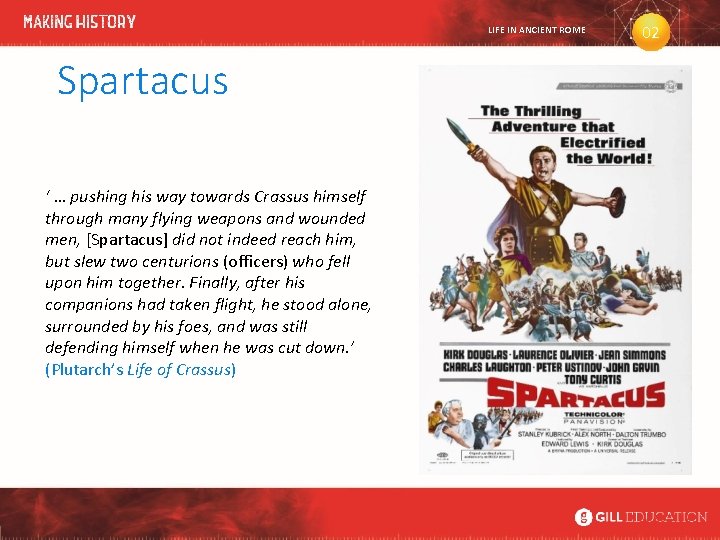
LIFE IN ANCIENT ROME Spartacus ‘ … pushing his way towards Crassus himself through many flying weapons and wounded men, [Spartacus] did not indeed reach him, but slew two centurions (officers) who fell upon him together. Finally, after his companions had taken flight, he stood alone, surrounded by his foes, and was still defending himself when he was cut down. ’ (Plutarch’s Life of Crassus) 02
LIFE IN ANCIENT ROME Crime and Punishment in Ancient Rome • • Who made the law? Who enforced the law? What were the crimes? What were the punishments? 02
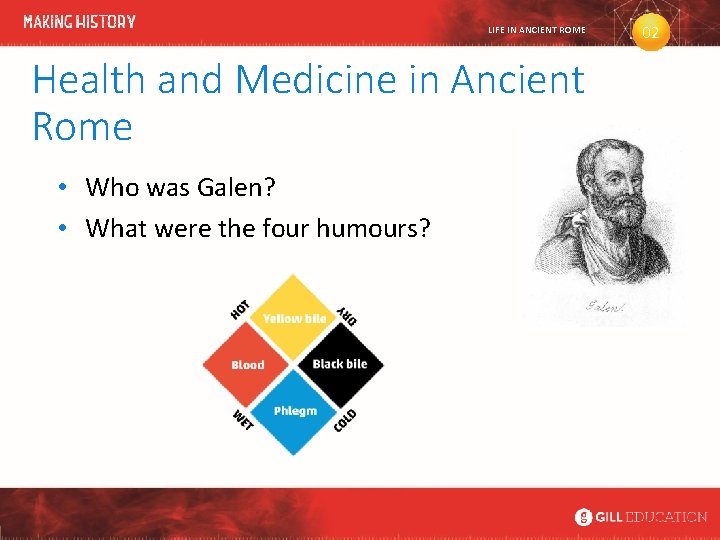
LIFE IN ANCIENT ROME Health and Medicine in Ancient Rome • Who was Galen? • What were the four humours? 02
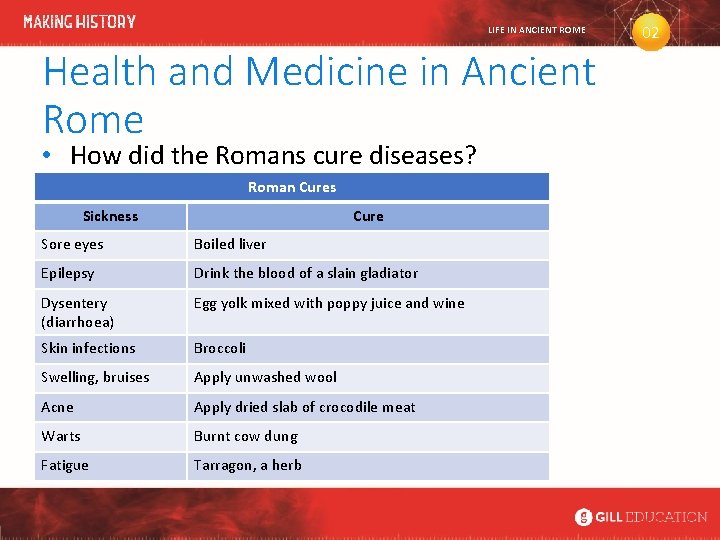
LIFE IN ANCIENT ROME Health and Medicine in Ancient Rome • How did the Romans cure diseases? Roman Cures Sickness Cure Sore eyes Boiled liver Epilepsy Drink the blood of a slain gladiator Dysentery (diarrhoea) Egg yolk mixed with poppy juice and wine Skin infections Broccoli Swelling, bruises Apply unwashed wool Acne Apply dried slab of crocodile meat Warts Burnt cow dung Fatigue Tarragon, a herb 02
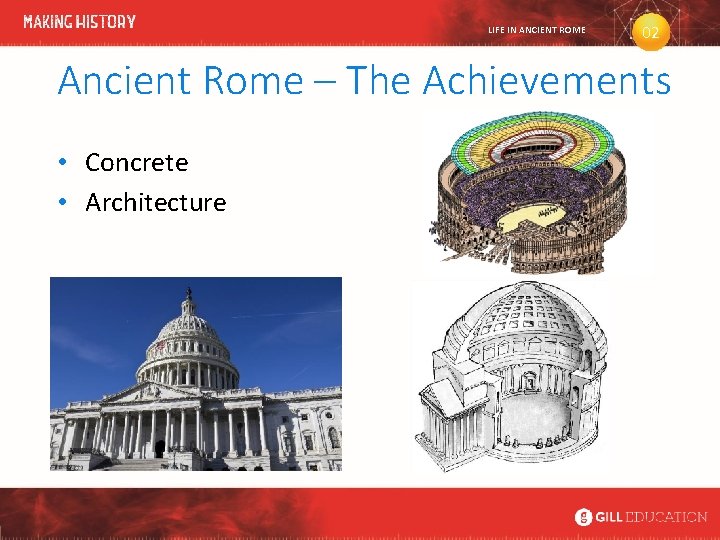
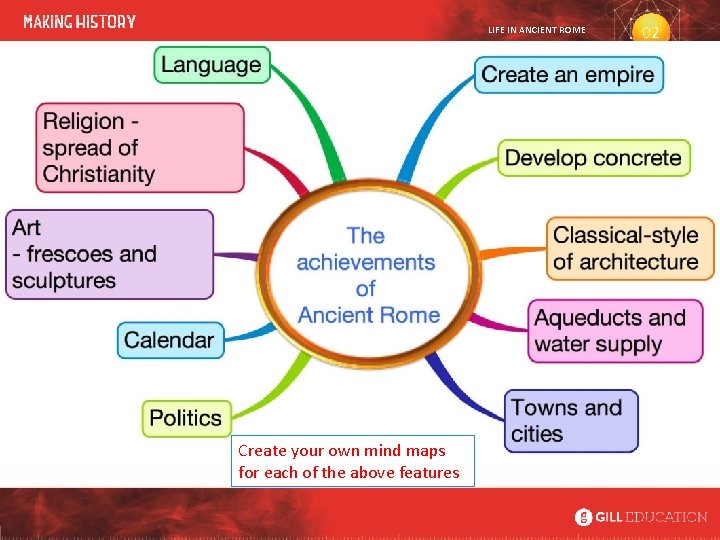
LIFE IN ANCIENT ROME 02 Ancient Rome – The Achievements • Concrete • Architecture
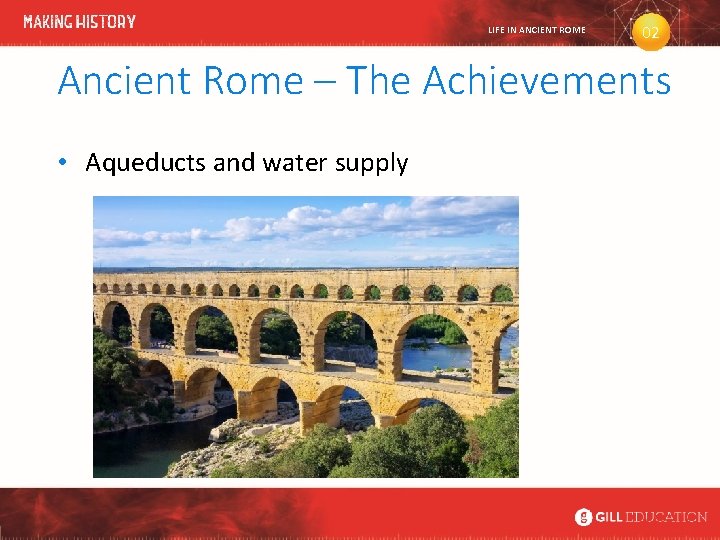
LIFE IN ANCIENT ROME 02 Ancient Rome – The Achievements • Aqueducts and water supply
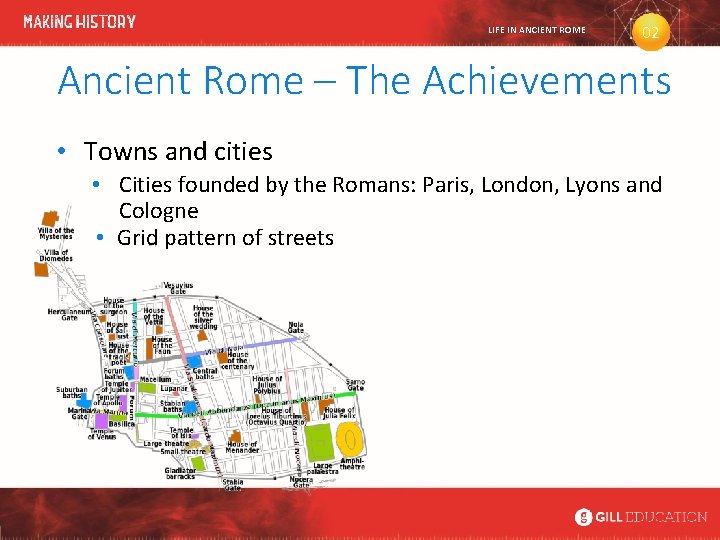
LIFE IN ANCIENT ROME 02 Ancient Rome – The Achievements • Towns and cities • Cities founded by the Romans: Paris, London, Lyons and Cologne • Grid pattern of streets
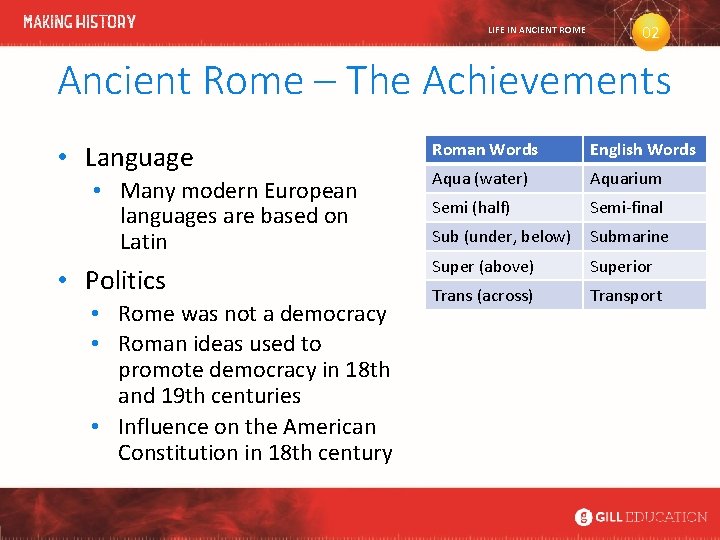
LIFE IN ANCIENT ROME 02 Ancient Rome – The Achievements • Language • Many modern European languages are based on Latin • Politics • Rome was not a democracy • Roman ideas used to promote democracy in 18 th and 19 th centuries • Influence on the American Constitution in 18 th century Roman Words English Words Aqua (water) Aquarium Semi (half) Semi-final Sub (under, below) Submarine Super (above) Superior Trans (across) Transport
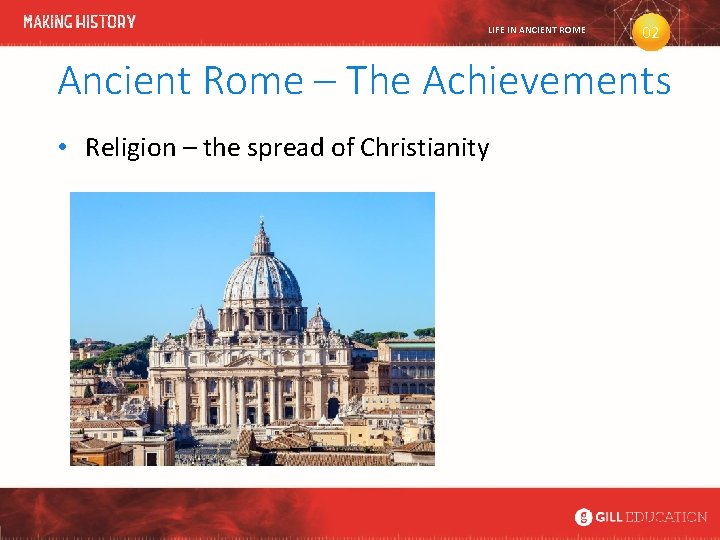
LIFE IN ANCIENT ROME 02 Ancient Rome – The Achievements • Religion – the spread of Christianity
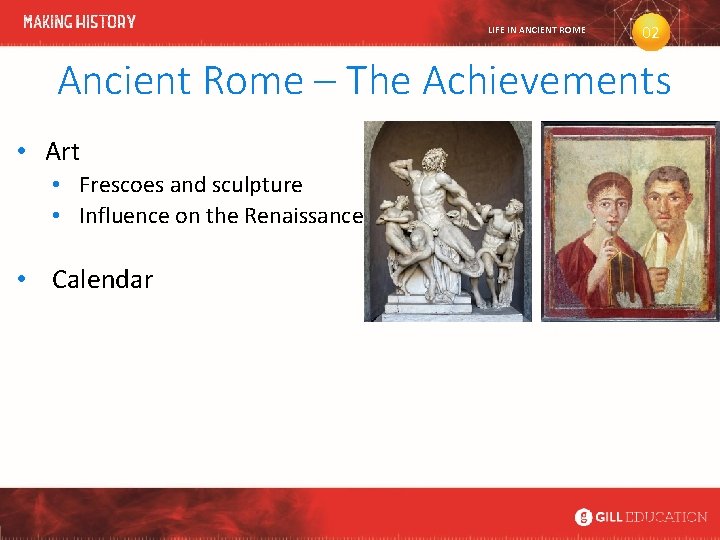
LIFE IN ANCIENT ROME 02 Ancient Rome – The Achievements • Art • Frescoes and sculpture • Influence on the Renaissance • Calendar
LIFE IN ANCIENT ROME 02 Ancient Rome – The Achievements • What did the Romans ever do for us? See Skills Book p. 19
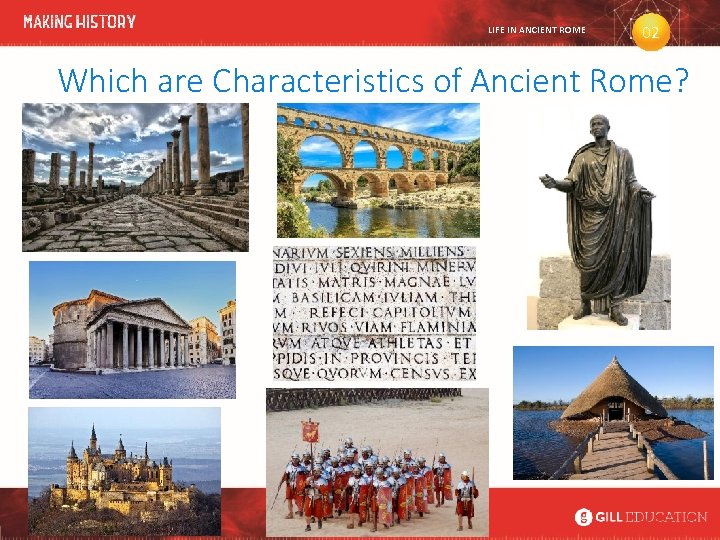
LIFE IN ANCIENT ROME 02 Which are Characteristics of Ancient Rome?
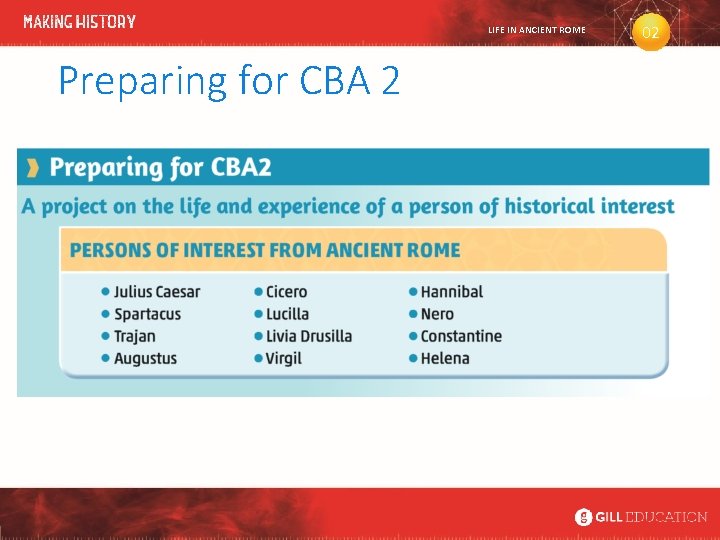
LIFE IN ANCIENT ROME Preparing for CBA 2 02
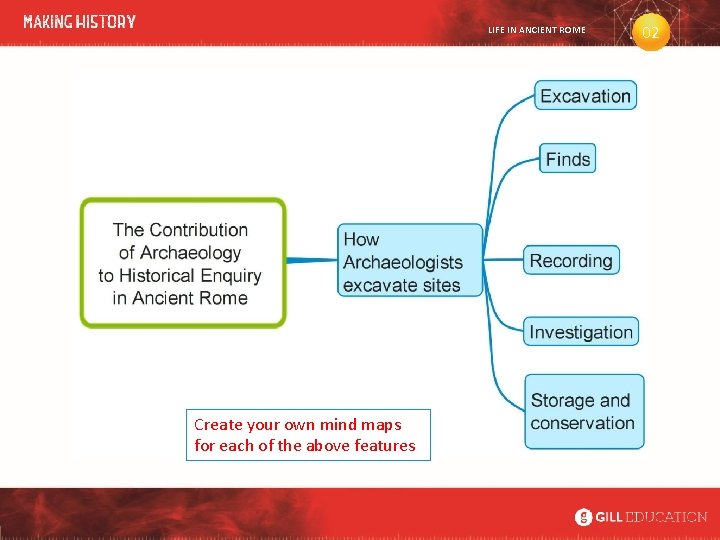
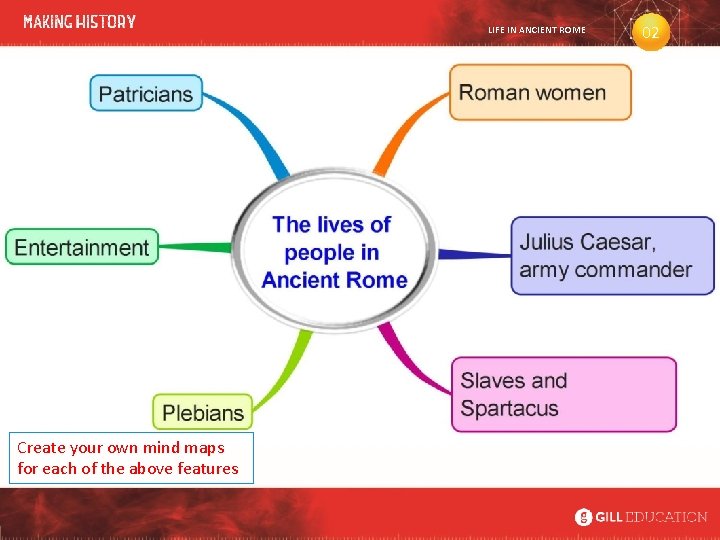
LIFE IN ANCIENT ROME Create your own mind maps for each of the above features 02
LIFE IN ANCIENT ROME How do we Know About Ancient Rome? 02
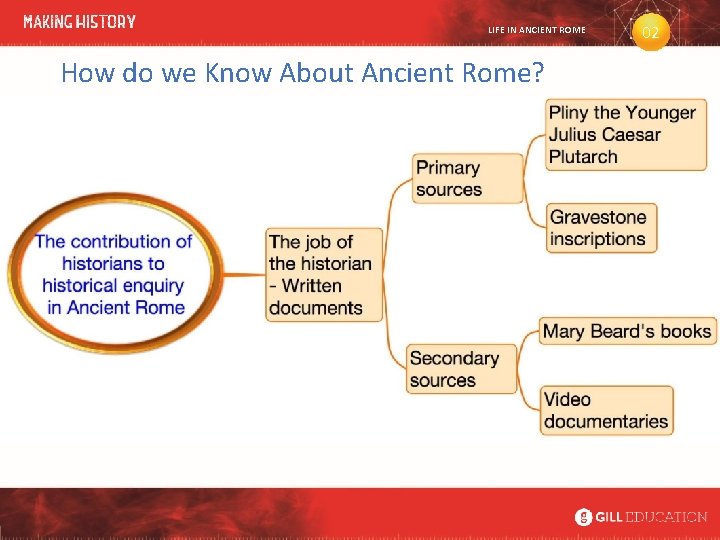
LIFE IN ANCIENT ROME How do we Know About Ancient Rome? 02
LIFE IN ANCIENT ROME Create your own mind maps for each of the above features 02
LIFE IN ANCIENT ROME Create your own mind maps for each of the above features 02