
Life History What is life history How does
- Slides: 40
Life History What is life history? How does energy allocation and trade-off? What is life history strategy? (Important and difficult parts) r-selection and K-selection C-strategy, S- strategy and R- strategy How does organism adapt to unfavorable conditions?
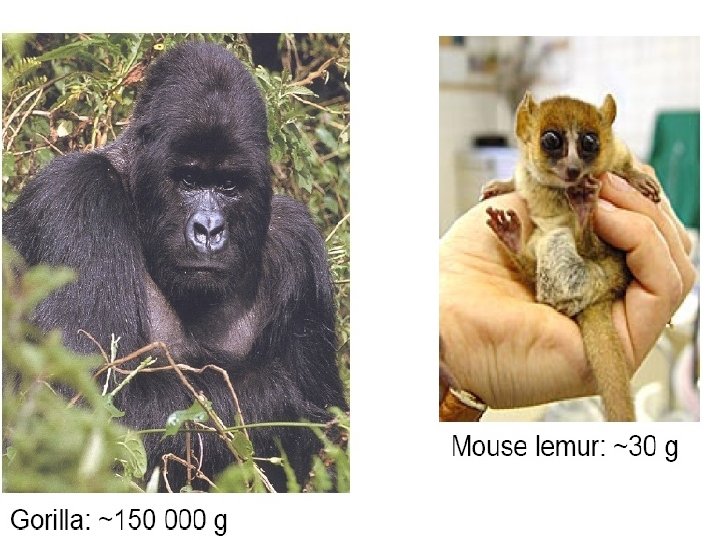
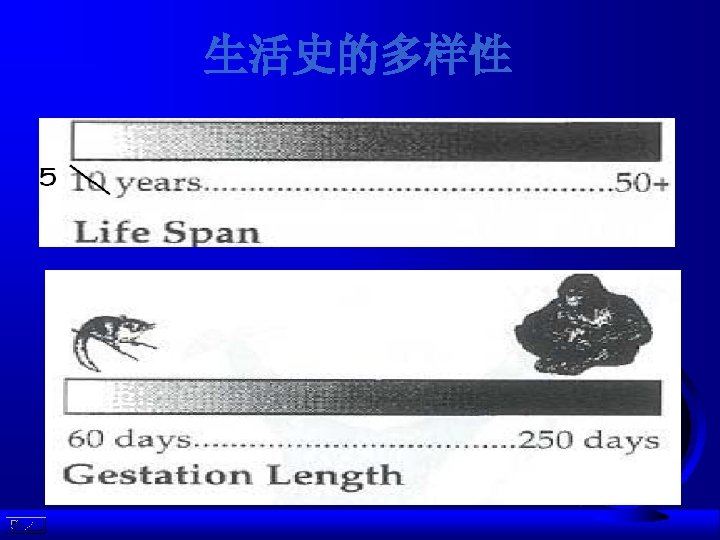
An organism’s life history is its lifetime pattern of Lire history growth and reproduction. Life history includes: body size, growth rate, reproduction and longevity. The observed in the life history patterns of different species is vast. 1、生物的生活史:一生中生长和繁殖的模式。 生活史 2、生活史的关键组分:个体大小、生长率、繁殖和寿命。 3、不同种类其生活史类型的变异是巨大的。
Darwinian demons:an organism to reach Energy allocation and trade-offs a large adult size shortly after birth, produce many large offspring and live to a great age. 达尔文魔鬼: 让某一生物在出生后短期 能量分配和 “权衡” 内达到大型的成体大小,生产许多大个 体后代并长寿。
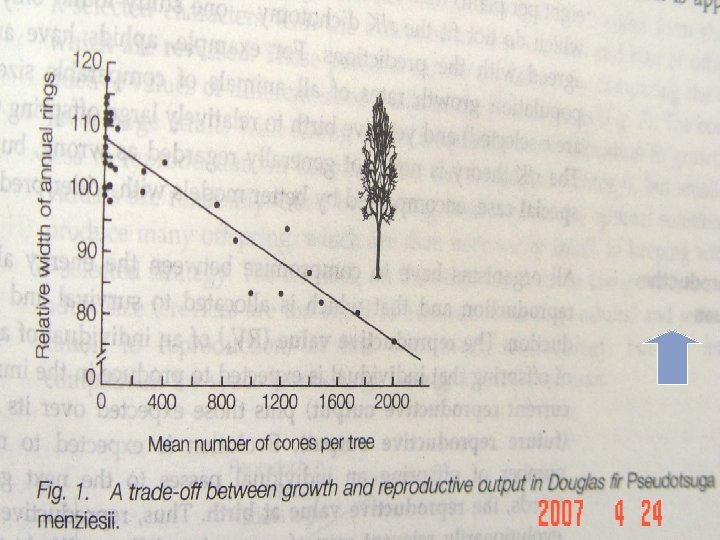
Energy allocated to one aspect of life history Energy allocation and trade-offs cannot be spent in another, so ‘trade-offs’ between different traits are inevitable. Energy allocation: semelparity or iteroparity many small offspring or less large offspring 分配给生活史一方面的能量不能再用在另一方面, 能量分配和 “权衡” 所以在不同生活史特性间进行“权衡”是不可避免的。 能量分配:单次生殖或多次生殖 许多小型后代或较少较大型后代
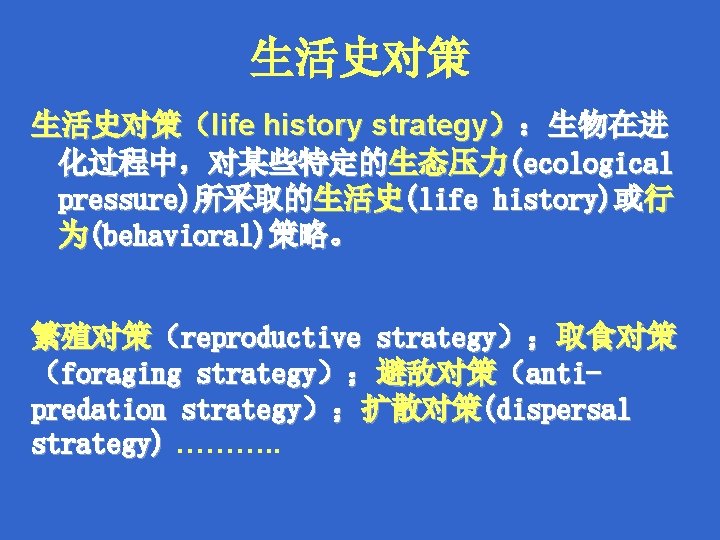
生活史对策(life history strategy):生物在进 化过程中,对某些特定的生态压力(ecological pressure)所采取的生活史(life history)或行 为(behavioral)策略。 繁殖对策(reproductive strategy);取食对策 (foraging strategy);避敌对策(antipredation strategy);扩散对策(dispersal strategy) ………. .
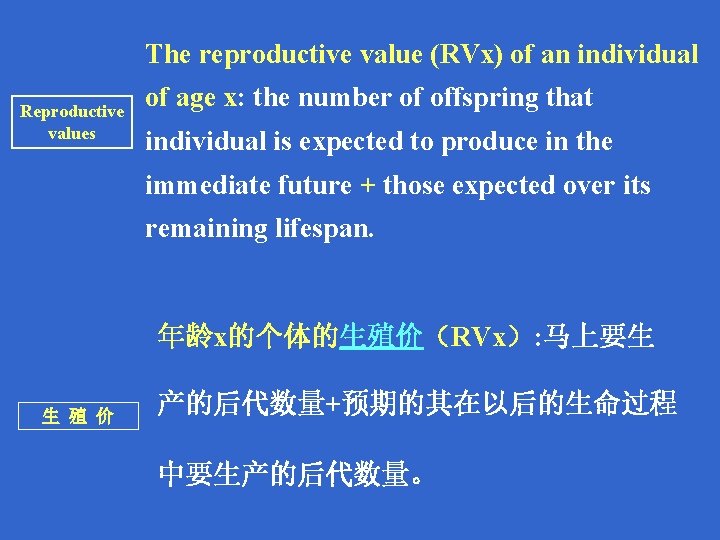
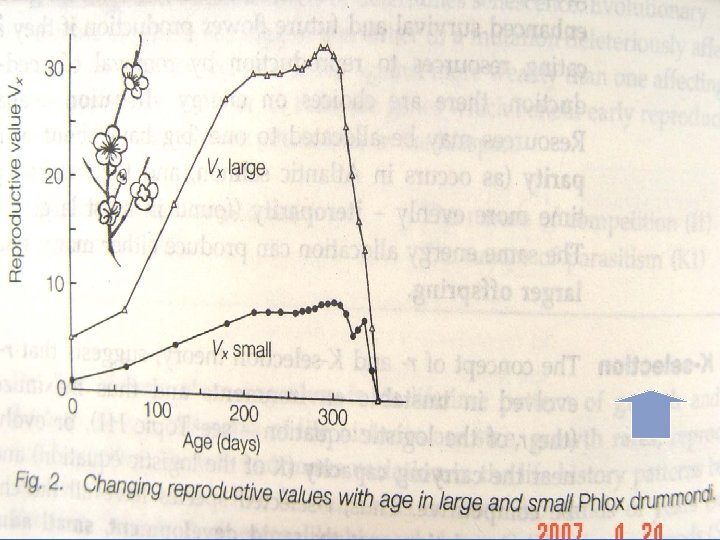
The reproductive value (RVx) of an individual Reproductive values of age x: the number of offspring that individual is expected to produce in the immediate future + those expected over its remaining lifespan. 年龄x的个体的生殖价(RVx): 马上要生 生 殖 价 产的后代数量+预期的其在以后的生命过程 中要生产的后代数量。
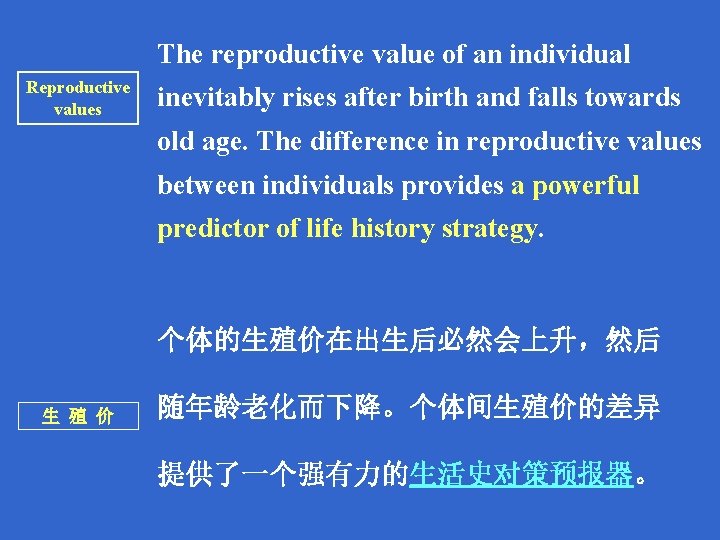
The reproductive value of an individual Reproductive values inevitably rises after birth and falls towards old age. The difference in reproductive values between individuals provides a powerful predictor of life history strategy. 个体的生殖价在出生后必然会上升,然后 生 殖 价 随年龄老化而下降。个体间生殖价的差异 提供了一个强有力的生活史对策预报器。
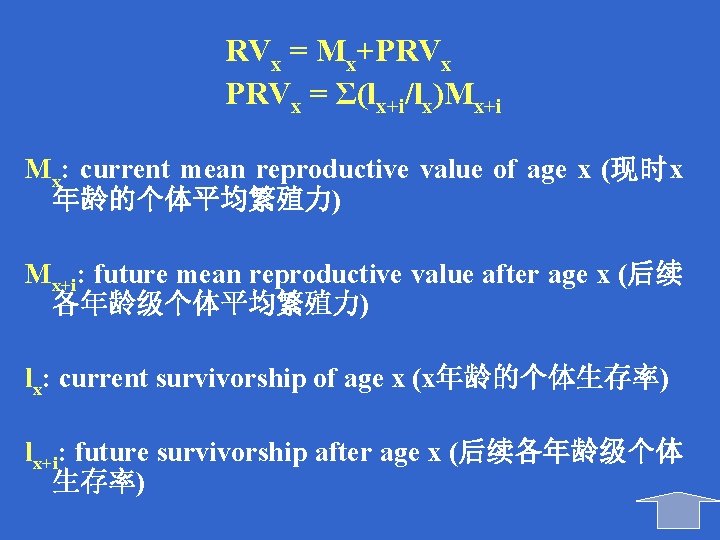
RVx = Mx+PRVx = Σ(lx+i/lx)Mx+i Mx: current mean reproductive value of age x (现时x 年龄的个体平均繁殖力) Mx+i: future mean reproductive value after age x (后续 各年龄级个体平均繁殖力) lx: current survivorship of age x (x年龄的个体生存率) lx+i: future survivorship after age x (后续各年龄级个体 生存率)
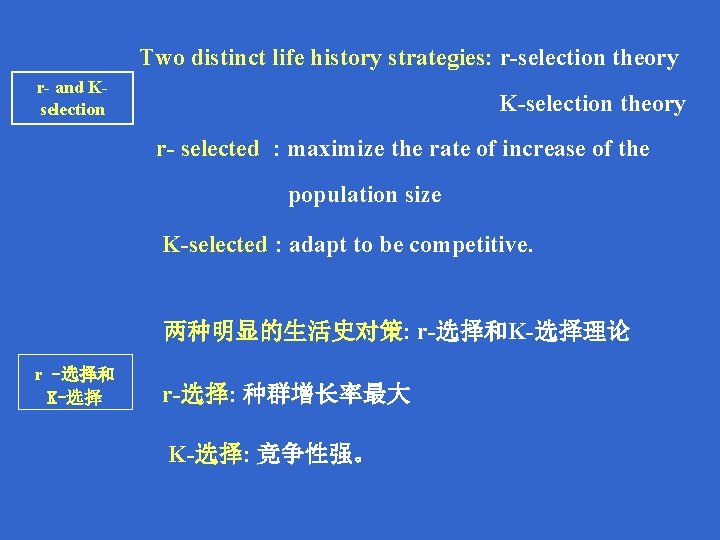
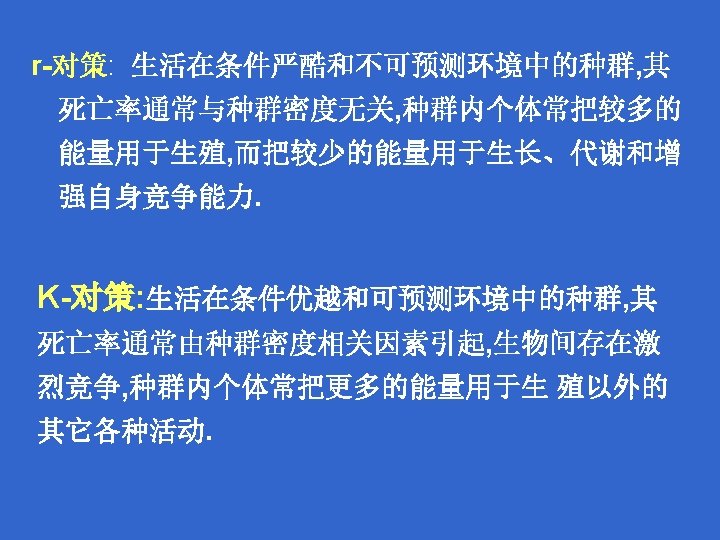
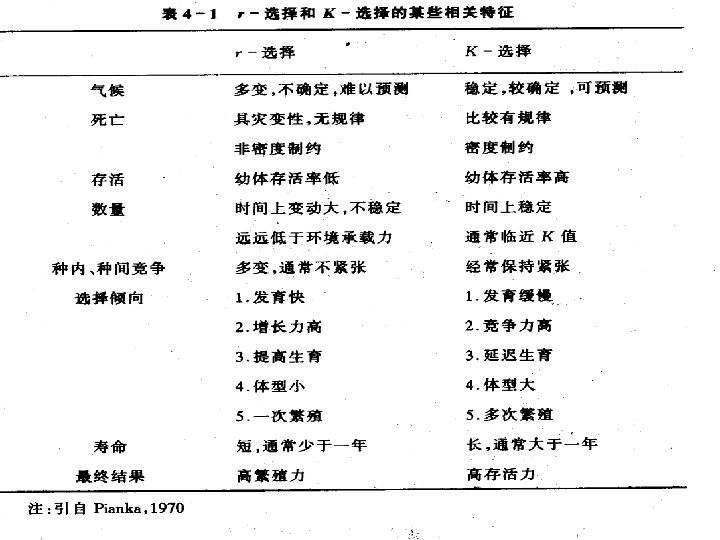
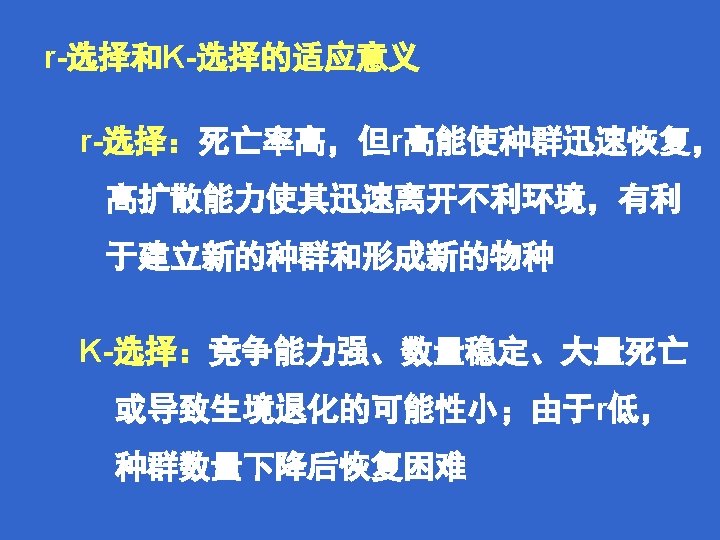
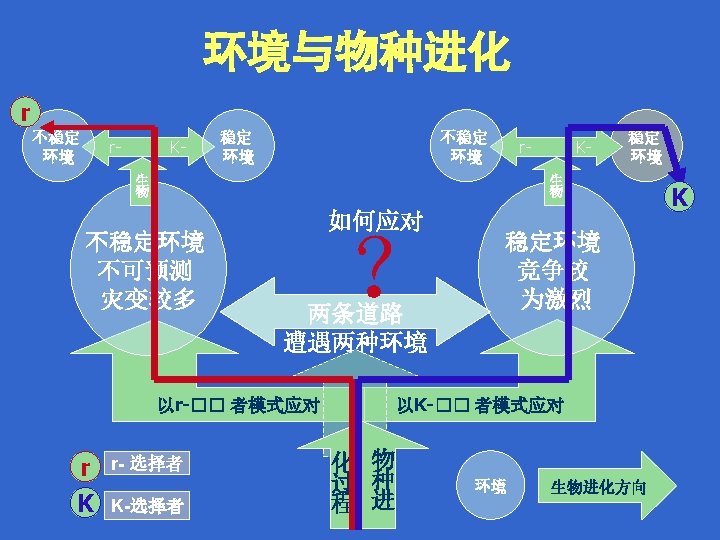
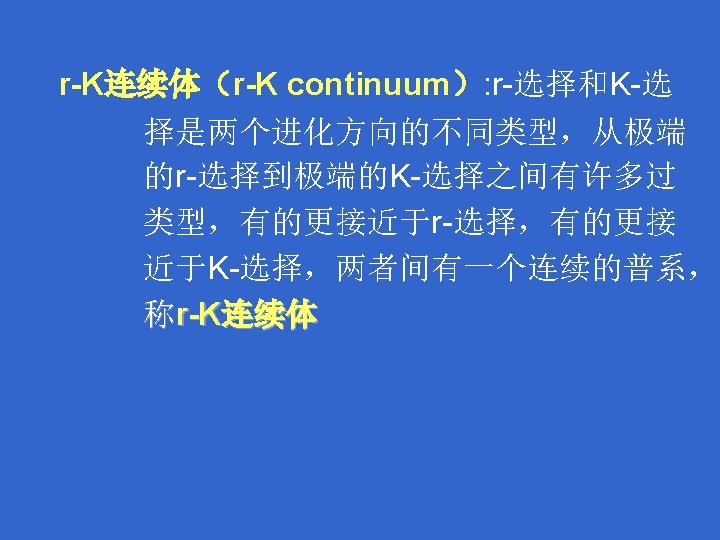
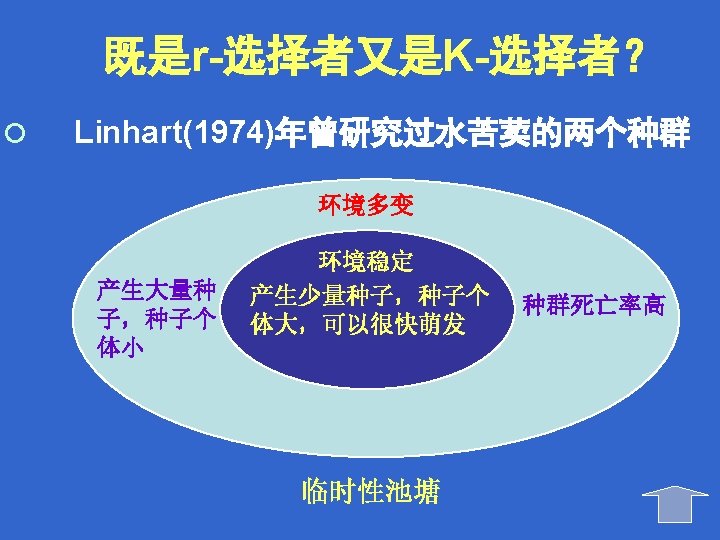
Two distinct life history strategies: r-selection theory r- and Kselection K-selection theory r- selected : maximize the rate of increase of the population size K-selected : adapt to be competitive. 两种明显的生活史对策: r-选择和K-选择理论 r -选择和 K-选择 r-选择: 种群增长率最大 K-选择: 竞争性强。
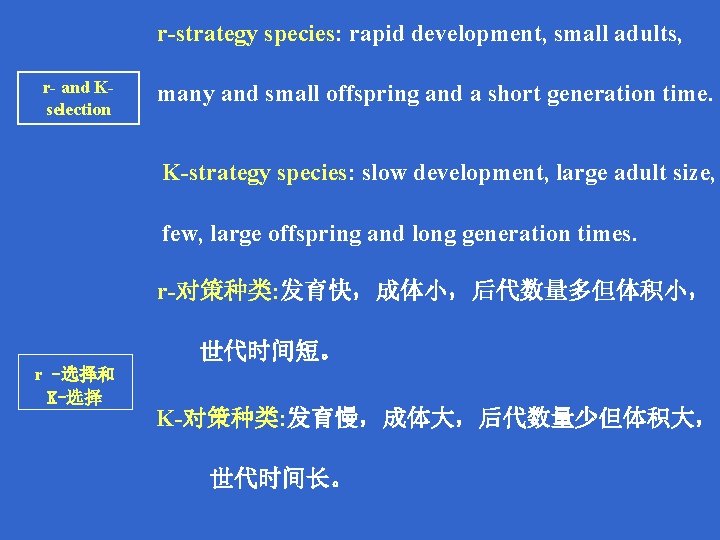
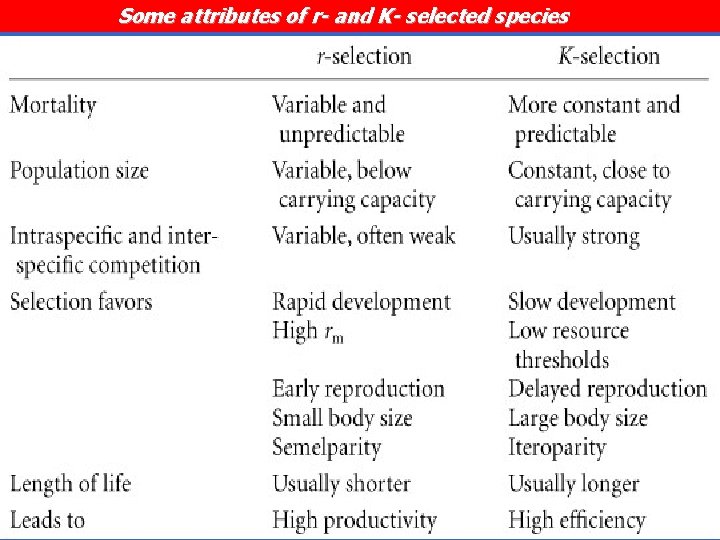
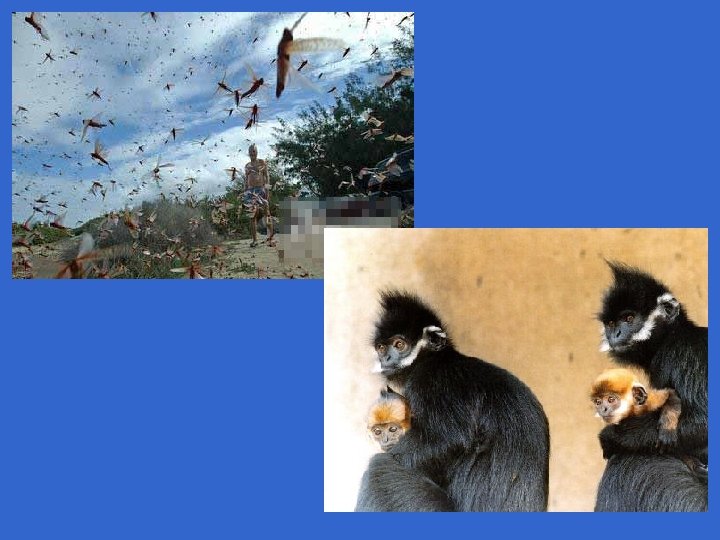
r-strategy species: rapid development, small adults, r- and Kselection many and small offspring and a short generation time. K-strategy species: slow development, large adult size, few, large offspring and long generation times. r-对策种类: 发育快,成体小,后代数量多但体积小, 世代时间短。 r -选择和 K-选择 K-对策种类: 发育慢,成体大,后代数量少但体积大, 世代时间长。
Some attributes of r- and K- selected species
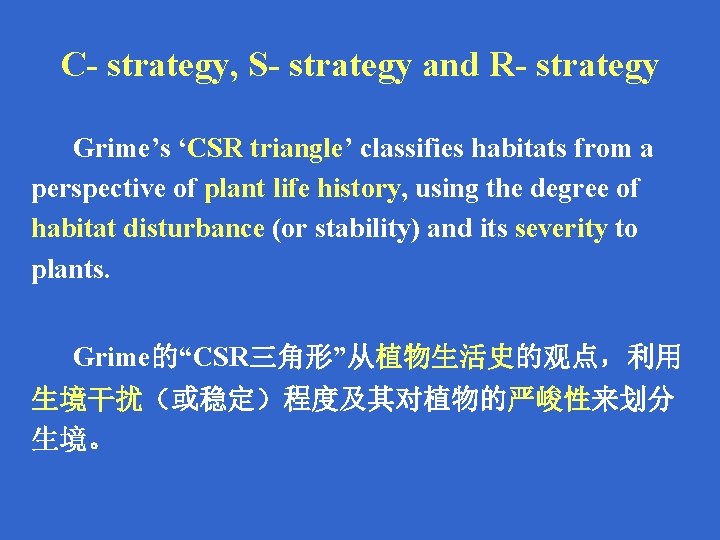
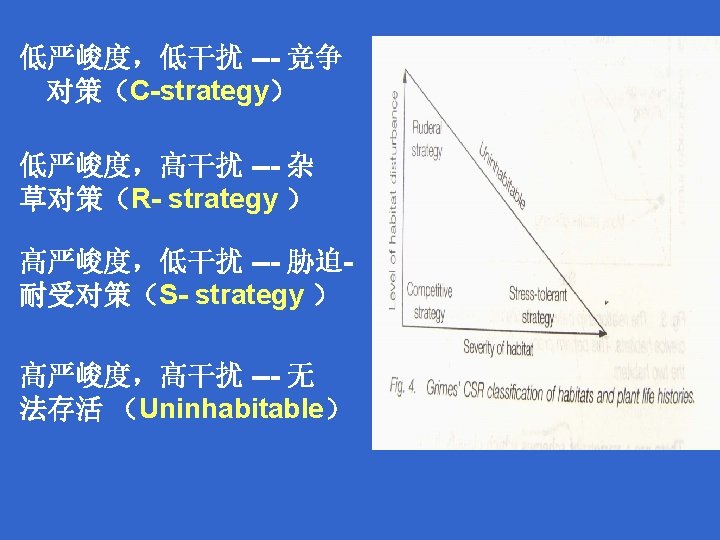
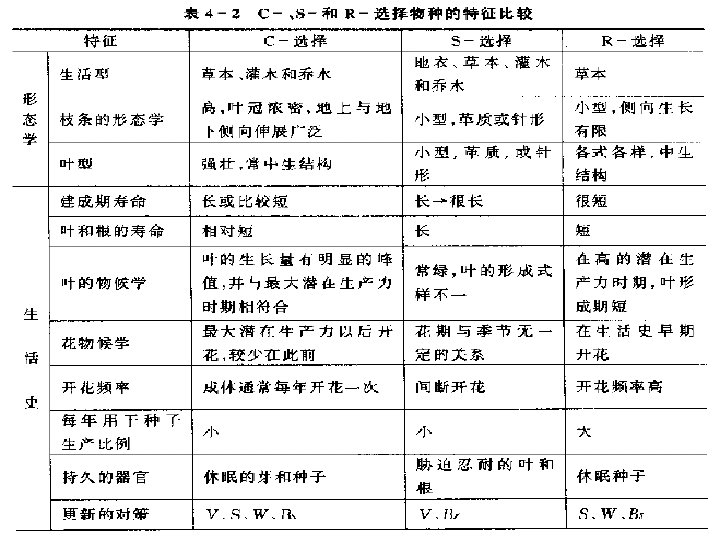
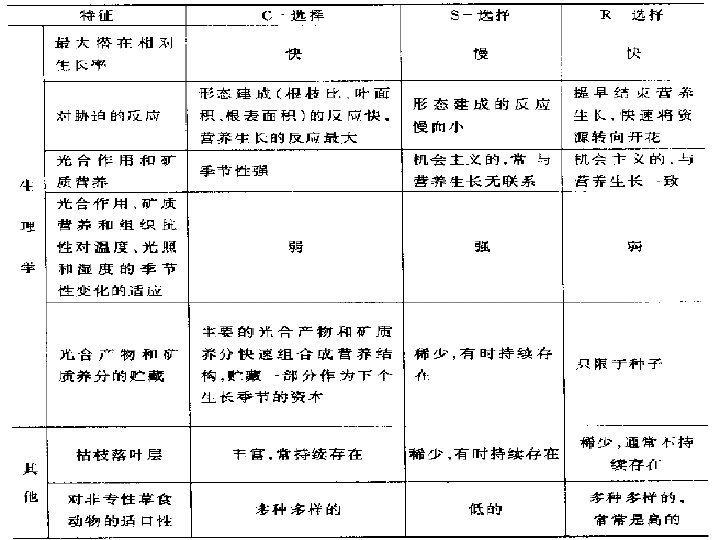
C- strategy, S- strategy and R- strategy Grime’s ‘CSR triangle’ classifies habitats from a perspective of plant life history, using the degree of habitat disturbance (or stability) and its severity to plants. Grime的“CSR三角形”从植物生活史的观点,利用 生境干扰(或稳定)程度及其对植物的严峻性来划分 生境。
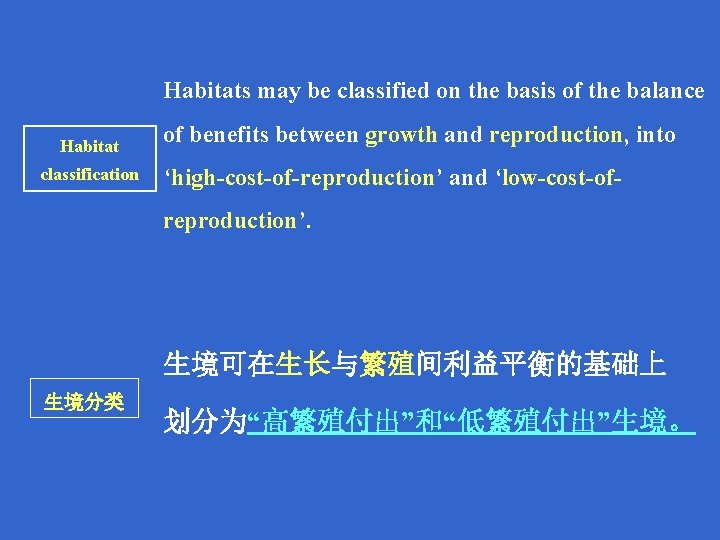
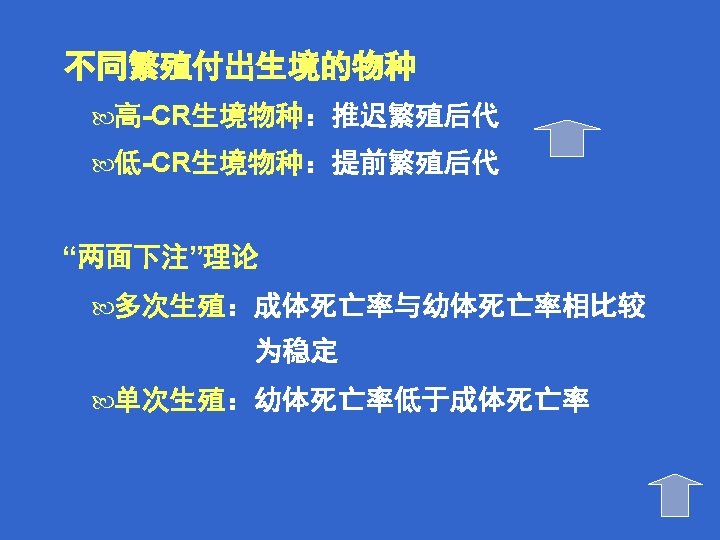
Habitats may be classified on the basis of the balance Habitat classification of benefits between growth and reproduction, into ‘high-cost-of-reproduction’ and ‘low-cost-ofreproduction’. 生境可在生长与繁殖间利益平衡的基础上 生境分类 划分为“高繁殖付出”和“低繁殖付出”生境。
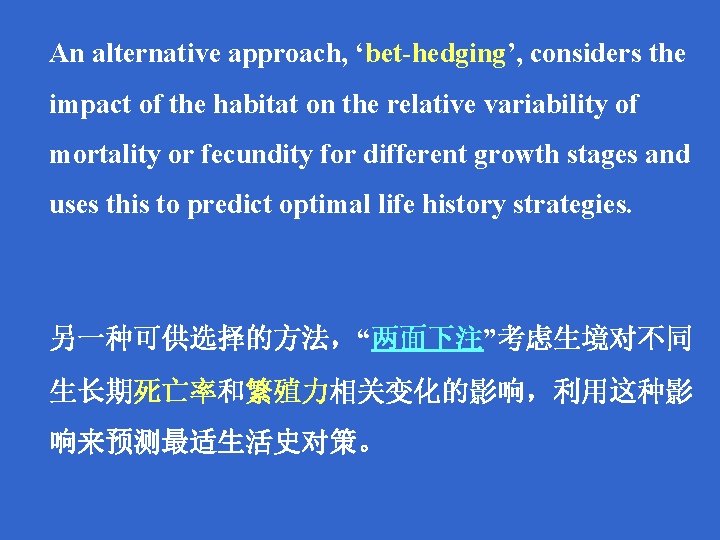
An alternative approach, ‘bet-hedging’, considers the impact of the habitat on the relative variability of mortality or fecundity for different growth stages and uses this to predict optimal life history strategies. 另一种可供选择的方法,“两面下注”考虑生境对不同 生长期死亡率和繁殖力相关变化的影响,利用这种影 响来预测最适生活史对策。
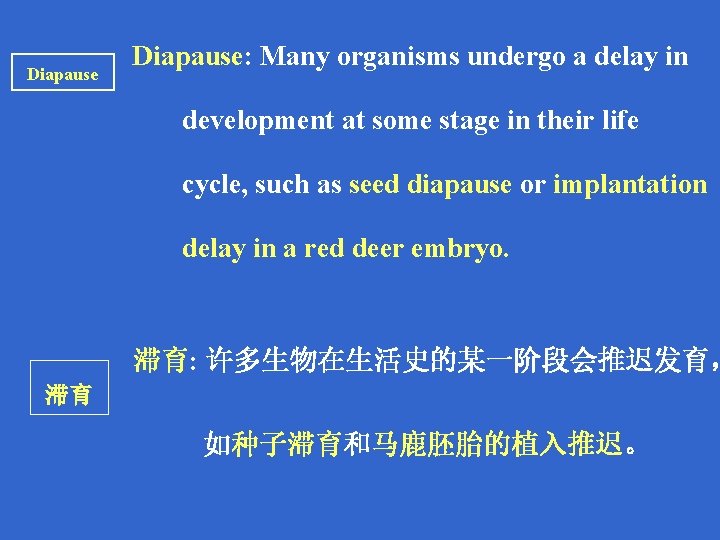
Diapause: Many organisms undergo a delay in development at some stage in their life cycle, such as seed diapause or implantation delay in a red deer embryo. 滞育: 许多生物在生活史的某一阶段会推迟发育, 滞育 如种子滞育和马鹿胚胎的植入推迟。
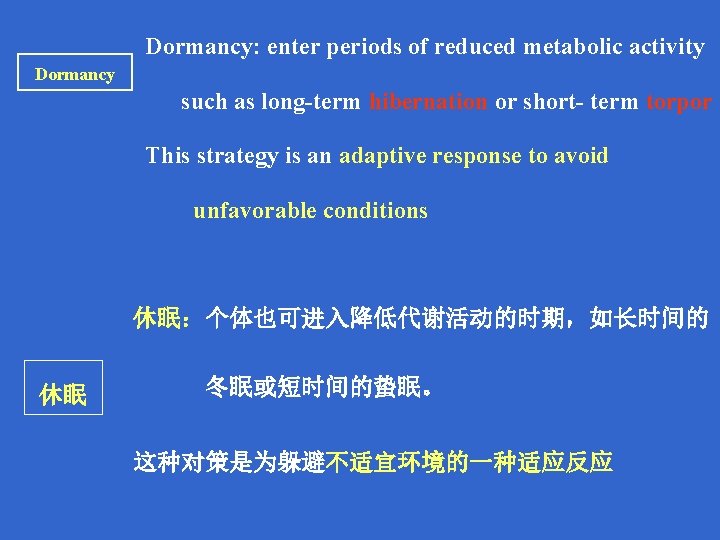
Dormancy: enter periods of reduced metabolic activity Dormancy such as long-term hibernation or short- term torpor This strategy is an adaptive response to avoid unfavorable conditions 休眠:个体也可进入降低代谢活动的时期,如长时间的 休眠 冬眠或短时间的蛰眠。 这种对策是为躲避不适宜环境的一种适应反应
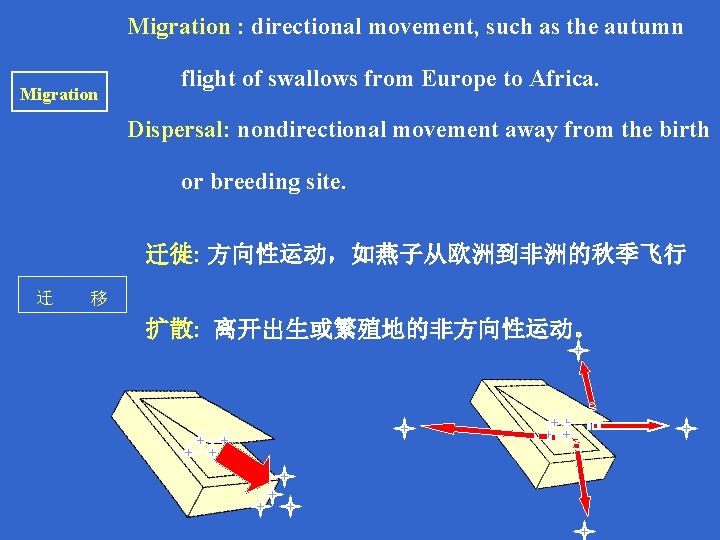
Migration : directional movement, such as the autumn Migration flight of swallows from Europe to Africa. Dispersal: nondirectional movement away from the birth or breeding site. 迁徙: 方向性运动,如燕子从欧洲到非洲的秋季飞行 迁 移 扩散: 离开出生或繁殖地的非方向性运动。
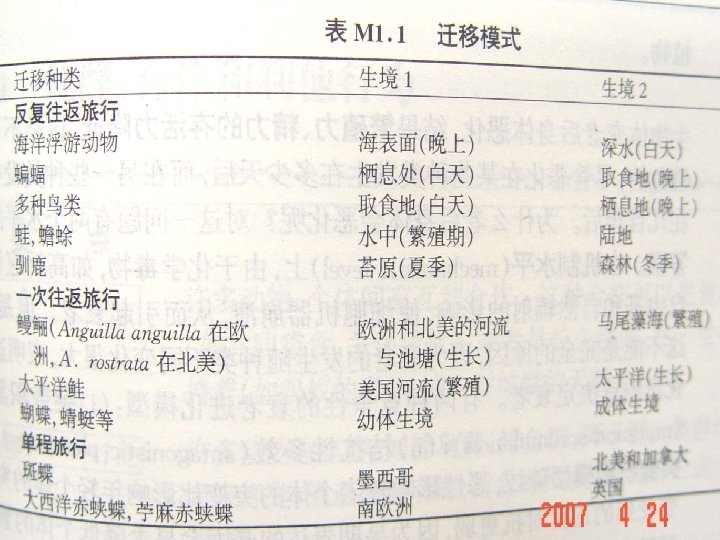
There are three categories of migration, depending on whether an individual makes (i) repeated return trips (ii) a single return trip, (iii) a one- way trip. 迁移有三种,依据生物个体做的是 (i)反复的往返旅行, (ii)单次往返旅行, (iii)单程旅行。
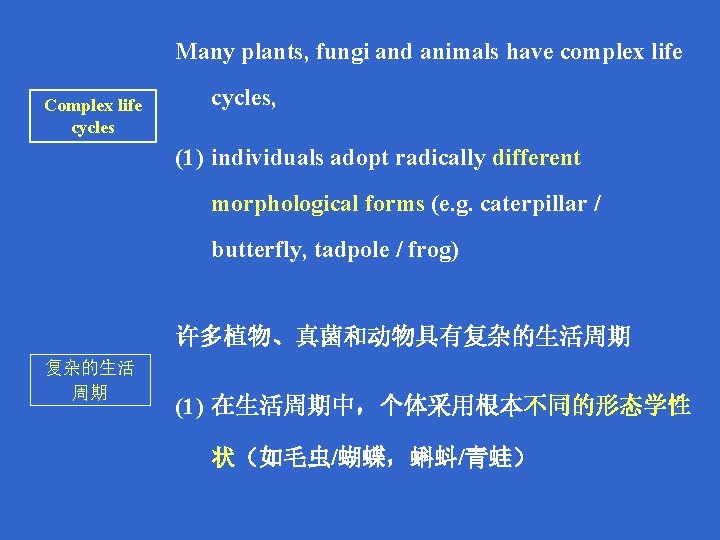
Many plants, fungi and animals have complex life Complex life cycles, (1) individuals adopt radically different morphological forms (e. g. caterpillar / butterfly, tadpole / frog) 许多植物、真菌和动物具有复杂的生活周期 复杂的生活 周期 (1) 在生活周期中,个体采用根本不同的形态学性 状(如毛虫/蝴蝶,蝌蚪/青蛙)
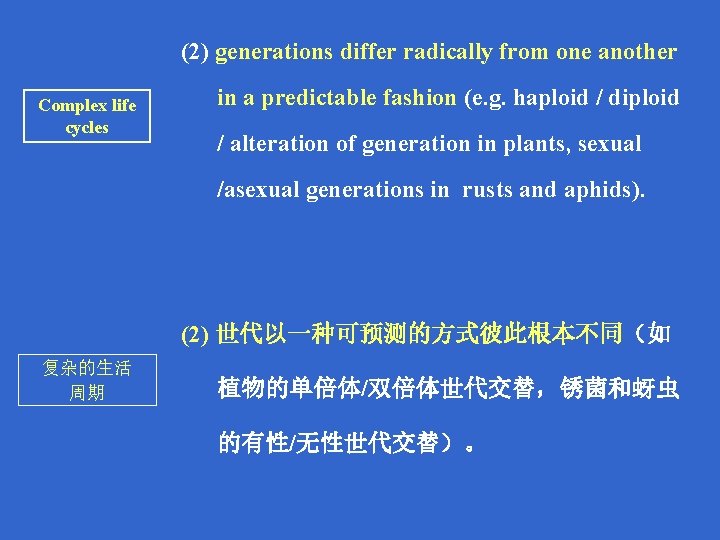
(2) generations differ radically from one another Complex life cycles in a predictable fashion (e. g. haploid / diploid / alteration of generation in plants, sexual /asexual generations in rusts and aphids). (2) 世代以一种可预测的方式彼此根本不同(如 复杂的生活 周期 植物的单倍体/双倍体世代交替,锈菌和蚜虫 的有性/无性世代交替)。
Why are these complex strategies adopted? trade-off between growth and dispersal ptimization in habitat utilization 为什么要采用这些复杂的生活史对策呢? 扩散与生长的权衡 生境利用的最优化