
Life Histories Ch 12 Life history tradeoffs Principle
- Slides: 33
Life Histories (Ch. 12)
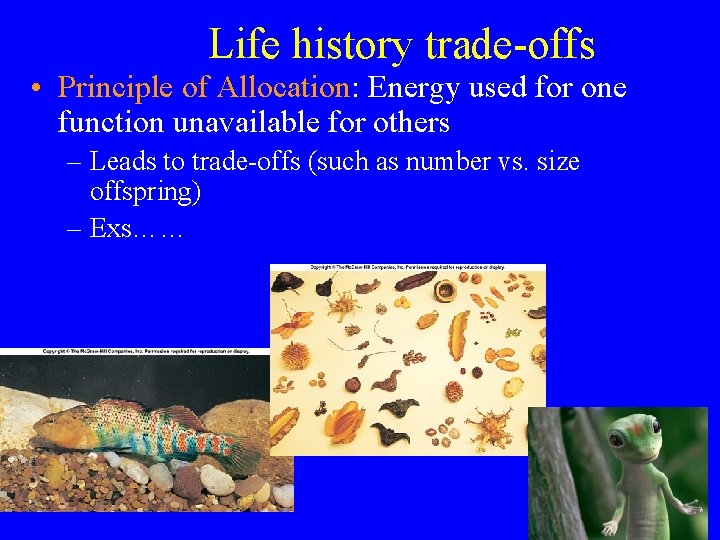
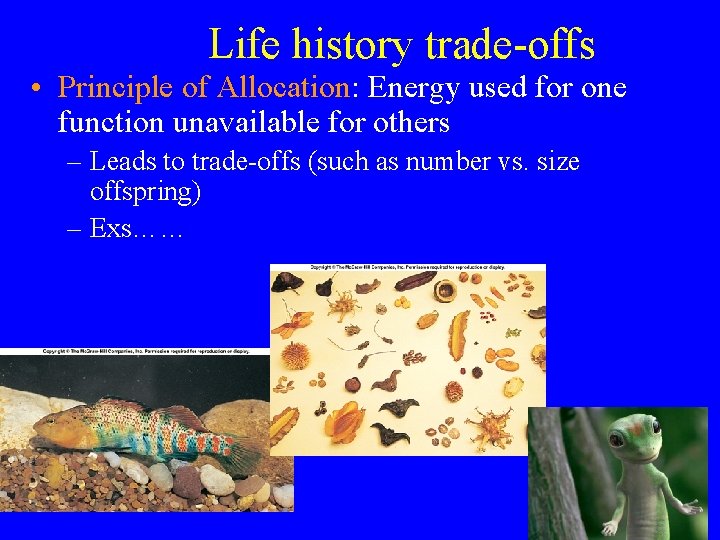
Life history trade-offs • Principle of Allocation: Energy used for one function unavailable for others – Leads to trade-offs (such as number vs. size offspring) – Exs……
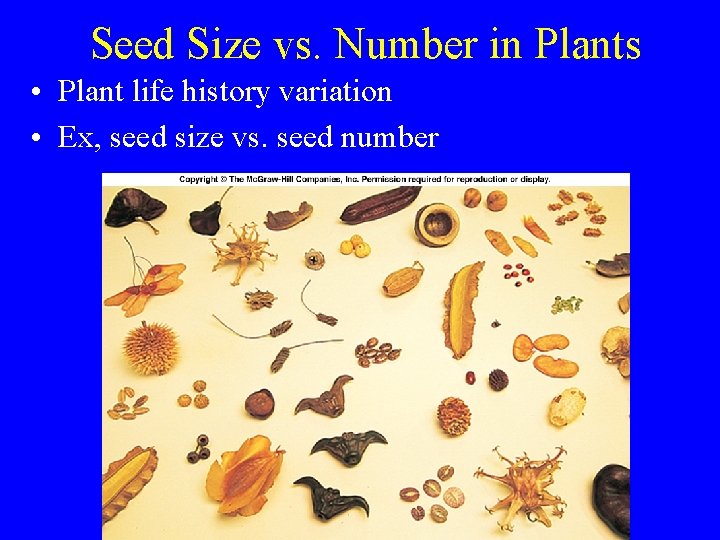
Seed Size vs. Number in Plants • Plant life history variation • Ex, seed size vs. seed number
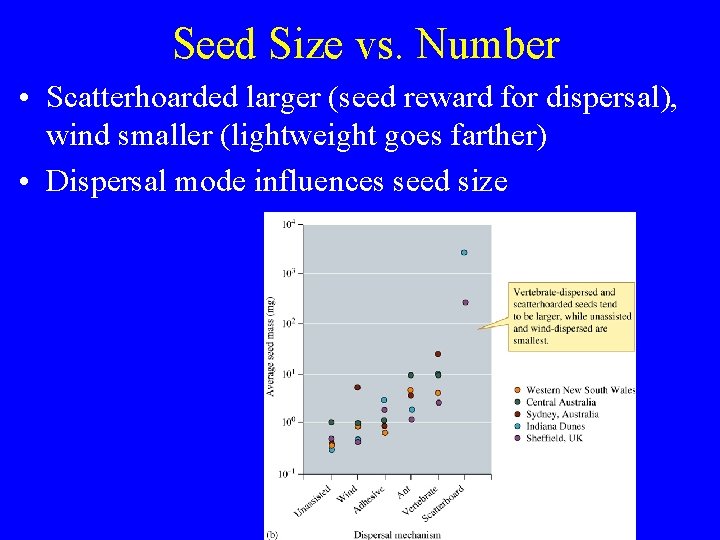
Seed Size vs. Number • Scatterhoarded larger (seed reward for dispersal), wind smaller (lightweight goes farther) • Dispersal mode influences seed size
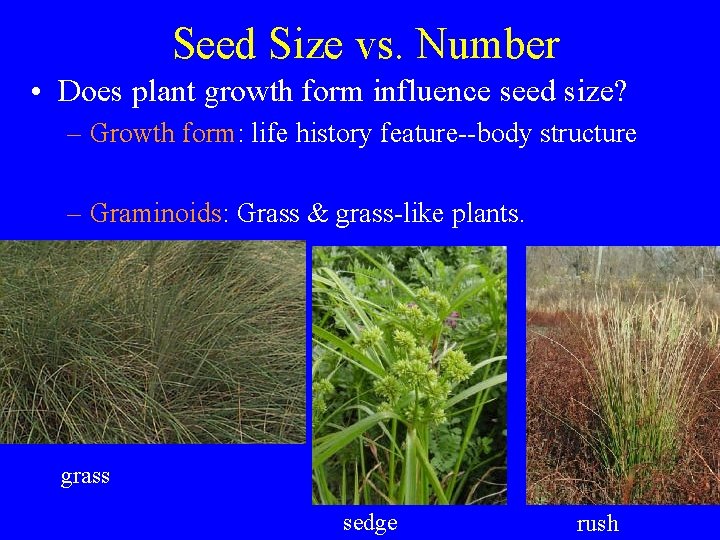
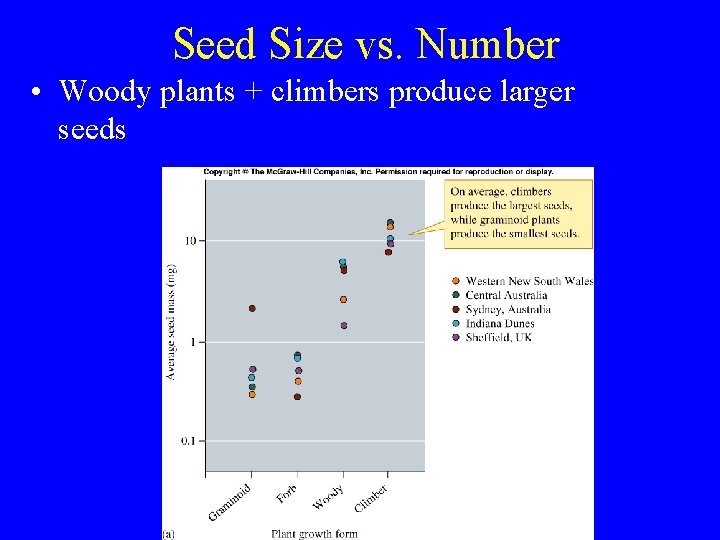
Seed Size vs. Number • Does plant growth form influence seed size? – Growth form: life history feature--body structure – Graminoids: Grass & grass-like plants. grass sedge rush
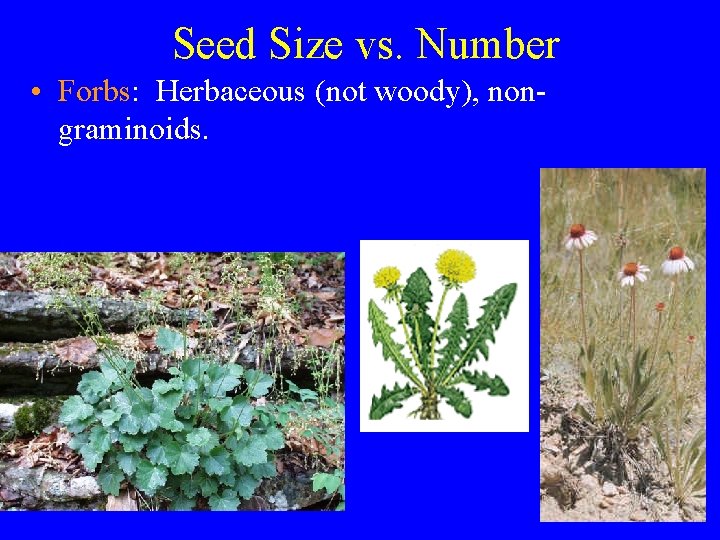
Seed Size vs. Number • Forbs: Herbaceous (not woody), nongraminoids.
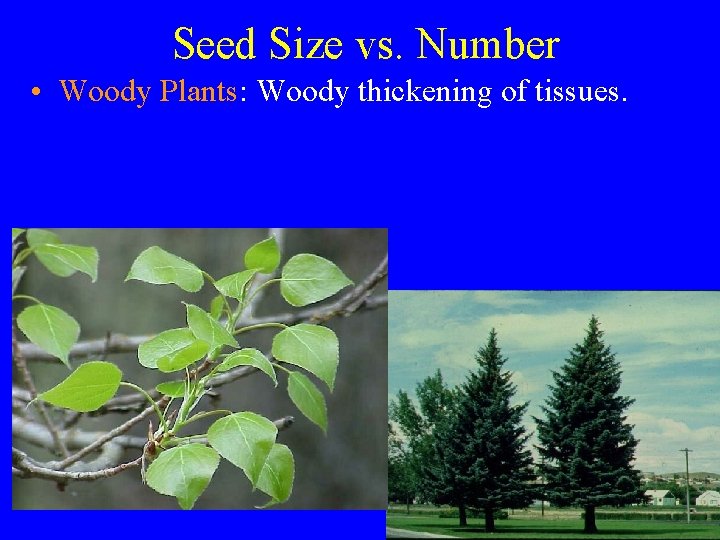
Seed Size vs. Number • Woody Plants: Woody thickening of tissues.
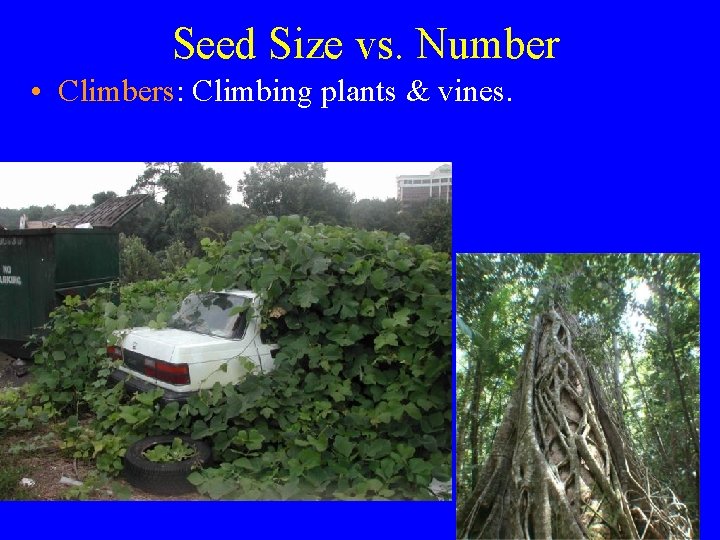
Seed Size vs. Number • Climbers: Climbing plants & vines.
Seed Size vs. Number • Woody plants + climbers produce larger seeds
Life history trade-offs • Principle of Allocation: Energy used for one function unavailable for others – Leads to trade-offs (such as number vs. size offspring) – Exs……
Life History Trade-offs • Vertebrates….
Life History Tradeoffs • Energy allocated to reproduction: reproductive effort • Energy budgets & sexual maturity. – Before maturity - maintenance or growth. – After maturity - maintenance, growth, or reproduction. • Trade-off: – Delay reproduction: grow faster & reach larger size – But reproducing early guarantees offspring…. .
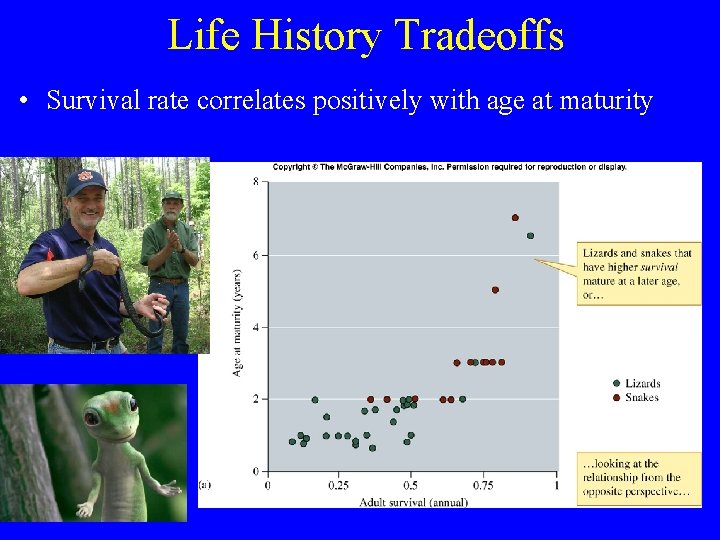
Life History Tradeoffs • Survival rate correlates positively with age at maturity
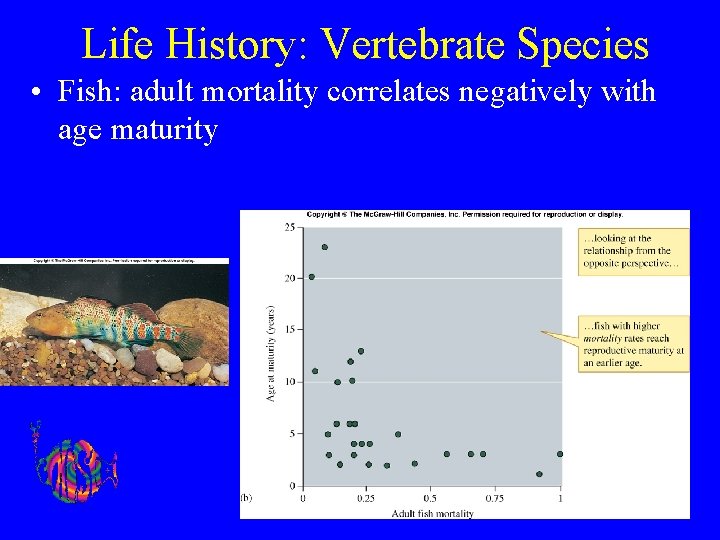
Life History: Vertebrate Species • Fish: adult mortality correlates negatively with age maturity
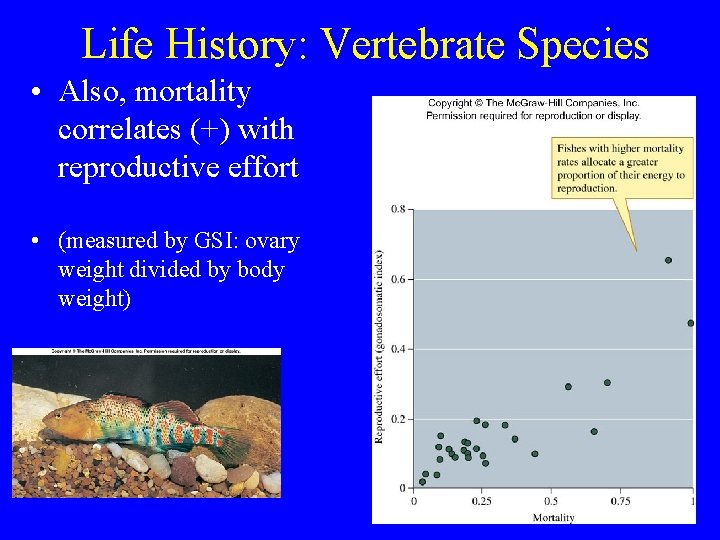
Life History: Vertebrate Species • Also, mortality correlates (+) with reproductive effort • (measured by GSI: ovary weight divided by body weight)
Life History Classification • Principle of Allocation: Energy used for one function unavailable for others – Leads to trade-offs (such as number vs. size offspring) • • Classification systems: 1) r and K 2) CSR (plants) 3) Opportunistic, equilibrium, periodic (animals) • 4) Life history cube (animals)
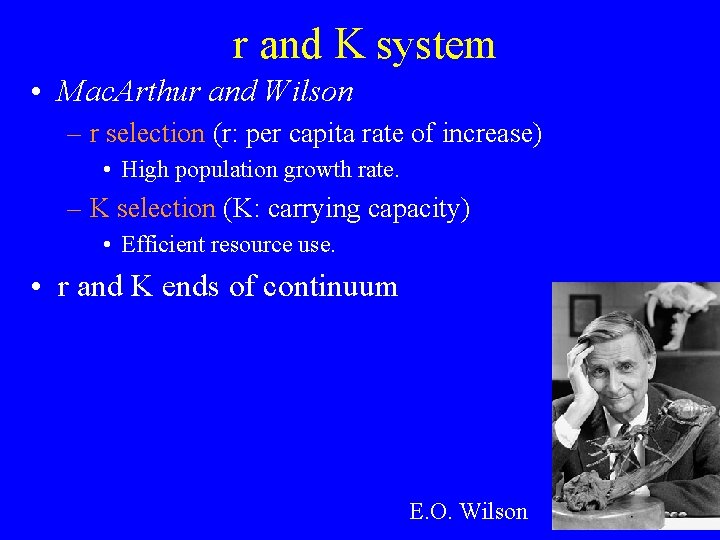
r and K system • Mac. Arthur and Wilson – r selection (r: per capita rate of increase) • High population growth rate. – K selection (K: carrying capacity) • Efficient resource use. • r and K ends of continuum E. O. Wilson
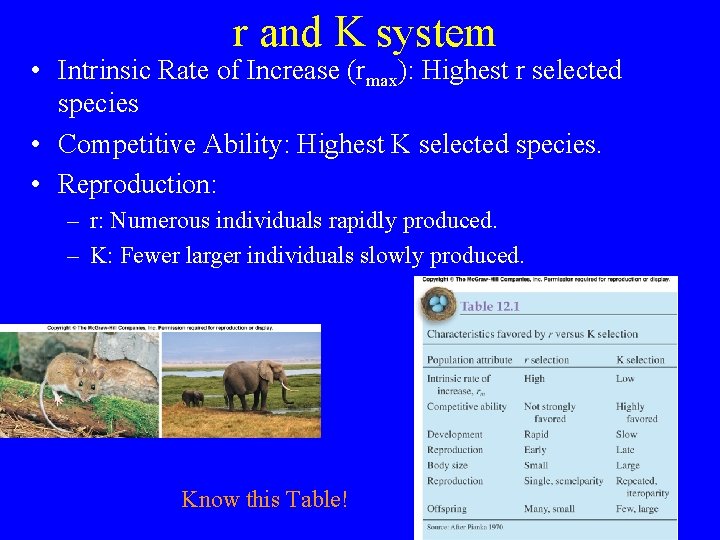
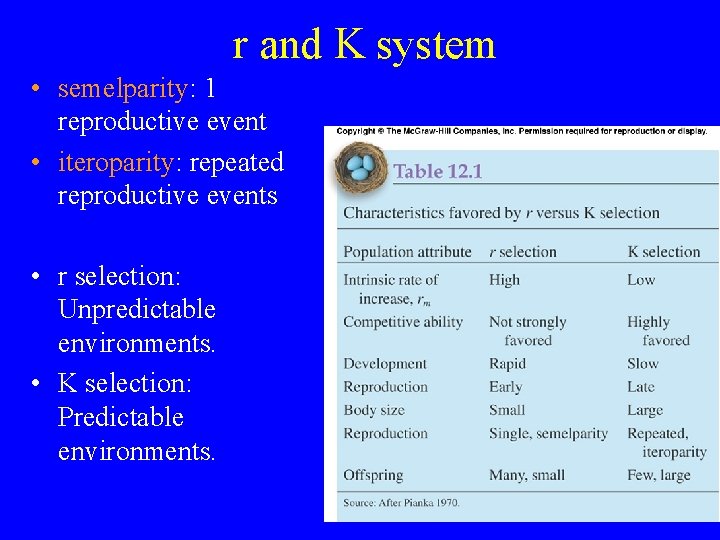
r and K system • Intrinsic Rate of Increase (rmax): Highest r selected species • Competitive Ability: Highest K selected species. • Reproduction: – r: Numerous individuals rapidly produced. – K: Fewer larger individuals slowly produced. Know this Table!
r and K system • semelparity: 1 reproductive event • iteroparity: repeated reproductive events • r selection: Unpredictable environments. • K selection: Predictable environments.
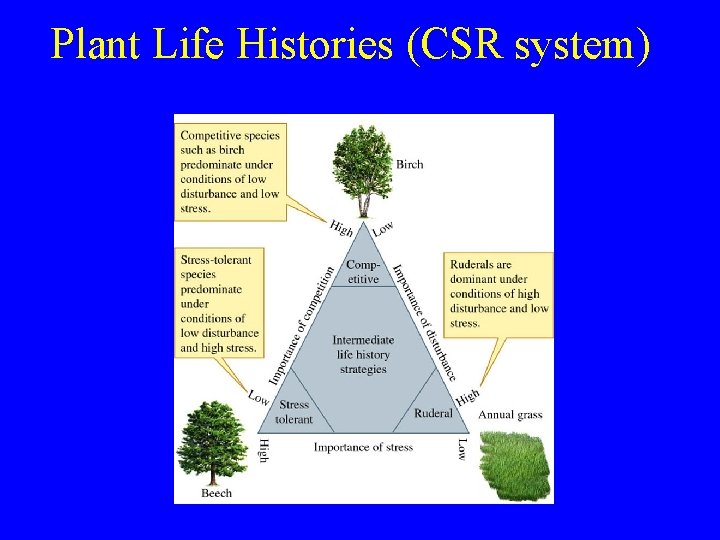
Plant Life Histories (CSR system)
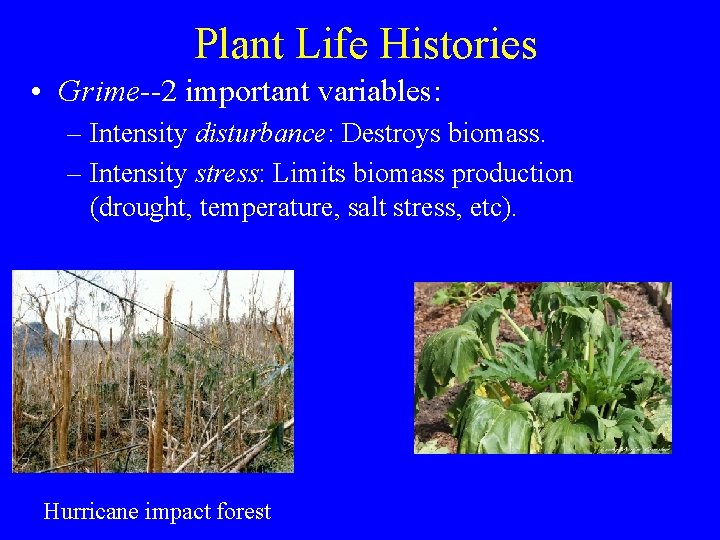
Plant Life Histories • Grime--2 important variables: – Intensity disturbance: Destroys biomass. – Intensity stress: Limits biomass production (drought, temperature, salt stress, etc). Hurricane impact forest
Plant Life Histories • 4 Environmental Extremes: – Low Disturb. : Low Stress – Low Disturb. : High Stress – High Disturb. : Low Stress – High Disturb. : High Stress 3 strategies
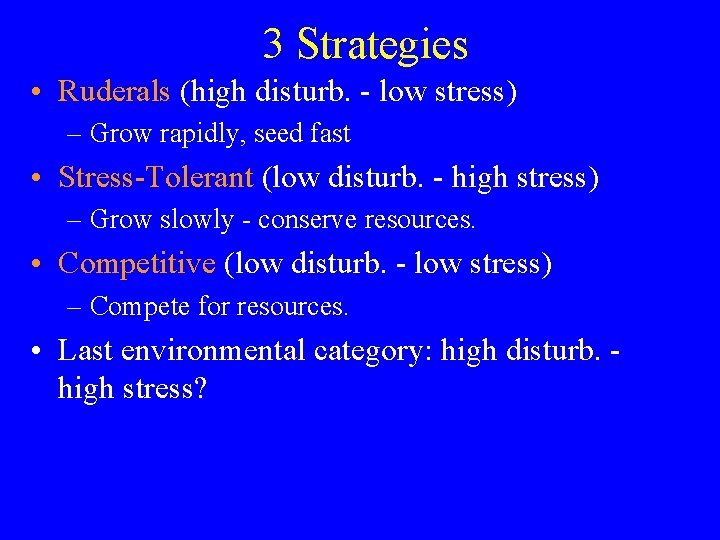
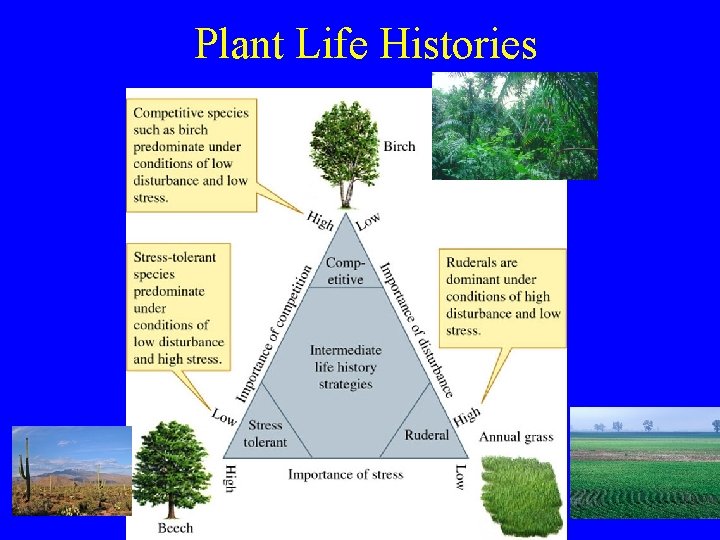
3 Strategies • Ruderals (high disturb. - low stress) – Grow rapidly, seed fast • Stress-Tolerant (low disturb. - high stress) – Grow slowly - conserve resources. • Competitive (low disturb. - low stress) – Compete for resources. • Last environmental category: high disturb. high stress?
Plant Life Histories
Life History Classification • Principle of Allocation: Energy used for one function unavailable for others – Leads to trade-offs (such as number vs. size offspring) • • Classification systems: 1) r and K 2) CSR (plants) 3) Opportunistic, equilibrium, periodic (animals) • 4) Life history cube (animals)
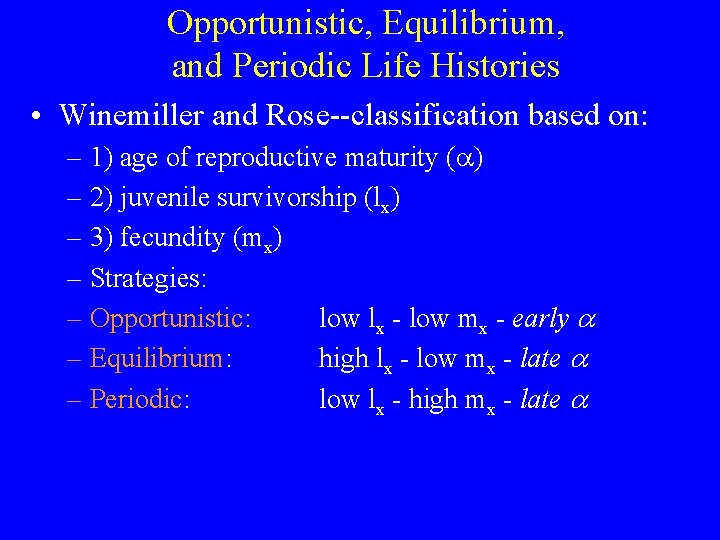
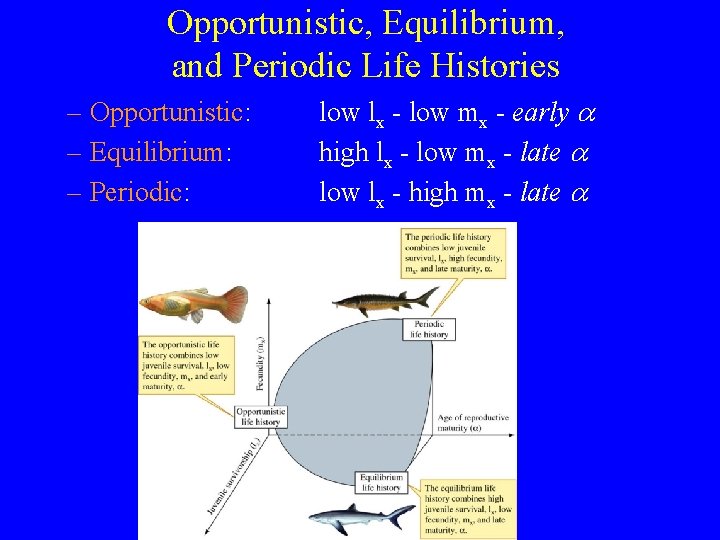
Opportunistic, Equilibrium, and Periodic Life Histories • Winemiller and Rose--classification based on: – 1) age of reproductive maturity ( ) – 2) juvenile survivorship (lx) – 3) fecundity (mx) – Strategies: – Opportunistic: low lx - low mx - early – Equilibrium: high lx - low mx - late – Periodic: low lx - high mx - late
Opportunistic, Equilibrium, and Periodic Life Histories – Opportunistic: – Equilibrium: – Periodic: low lx - low mx - early high lx - low mx - late low lx - high mx - late
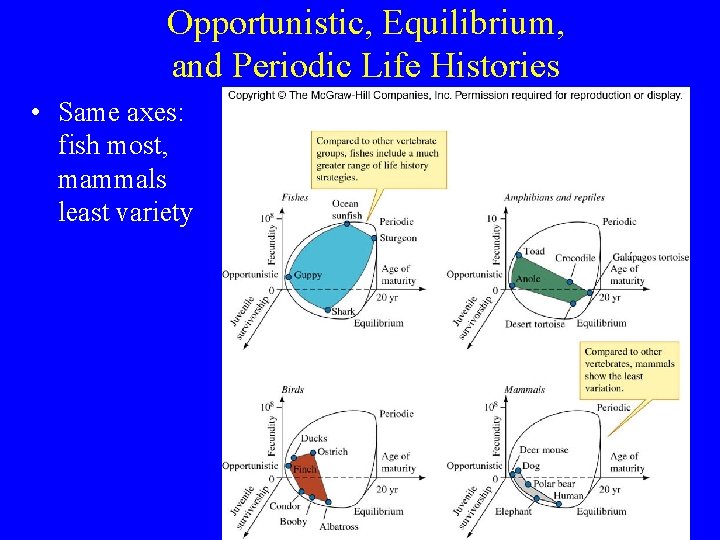
Opportunistic, Equilibrium, and Periodic Life Histories • Same axes: fish most, mammals least variety
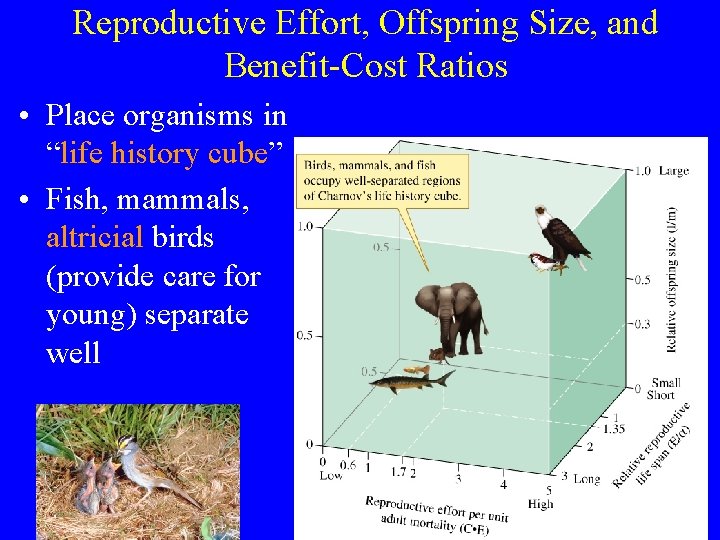
Reproductive Effort, Offspring Size, and Benefit-Cost Ratios • Charnov (life history cube) – Convert life history features to dimensionless numbers. – Remove influences time & size: reveals similarities/differences
Reproductive Effort, Offspring Size, and Benefit-Cost Ratios • 1) Reproductive effort per unit of adult mortality (proportion body mass allocated to reproduction per unit time, divided by adult mortality rate) – scales reproductive effort to mortality cost
Reproductive Effort, Offspring Size, and Benefit-Cost Ratios • 2) Relative reproductive lifespan (length reproductive life divided by time to maturity)
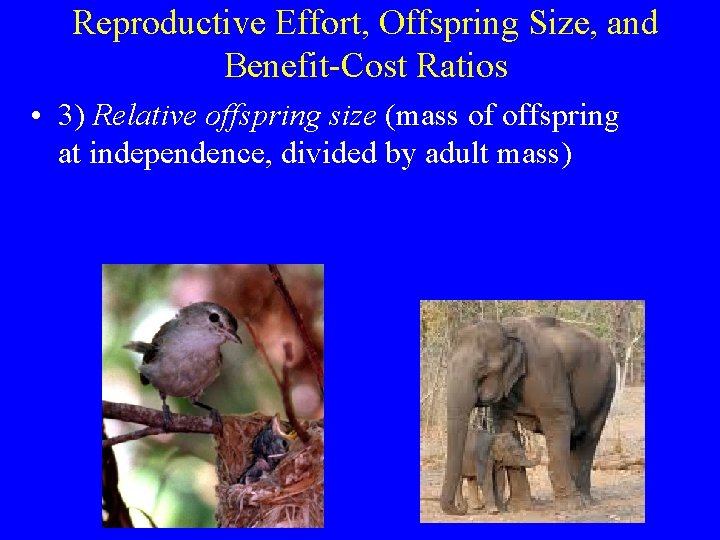
Reproductive Effort, Offspring Size, and Benefit-Cost Ratios • 3) Relative offspring size (mass of offspring at independence, divided by adult mass)
Reproductive Effort, Offspring Size, and Benefit-Cost Ratios • Place organisms in “life history cube” • Fish, mammals, altricial birds (provide care for young) separate well