
Life Cycle of Stars Main Sequence Stars Main
- Slides: 14
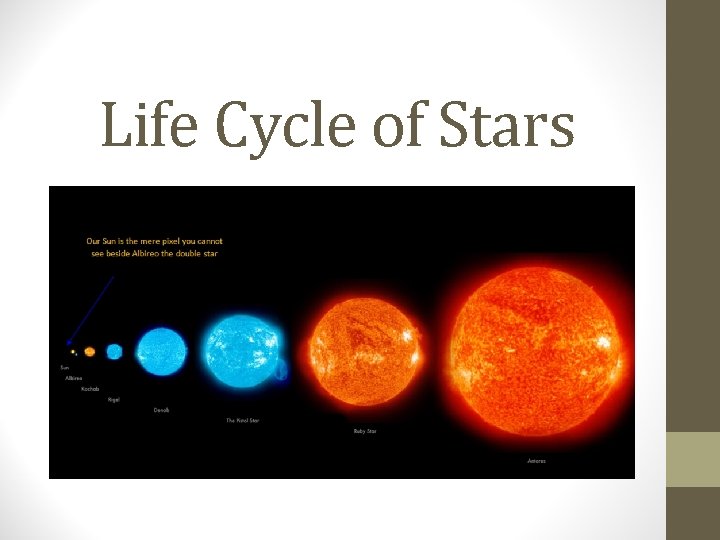
Life Cycle of Stars
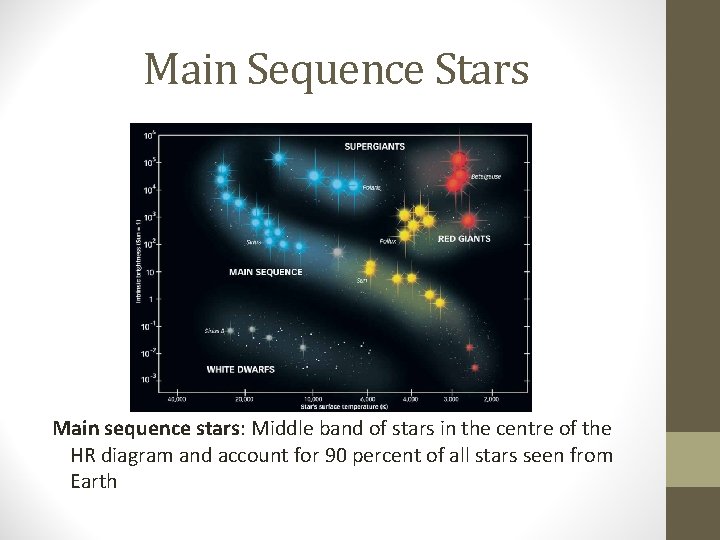
Main Sequence Stars Main sequence stars: Middle band of stars in the centre of the HR diagram and account for 90 percent of all stars seen from Earth
Low Mass Stars: Crash Course Astronomy #29 https: //www. youtube. com/watch? v=jfv. Mt. CHv 1 q 4
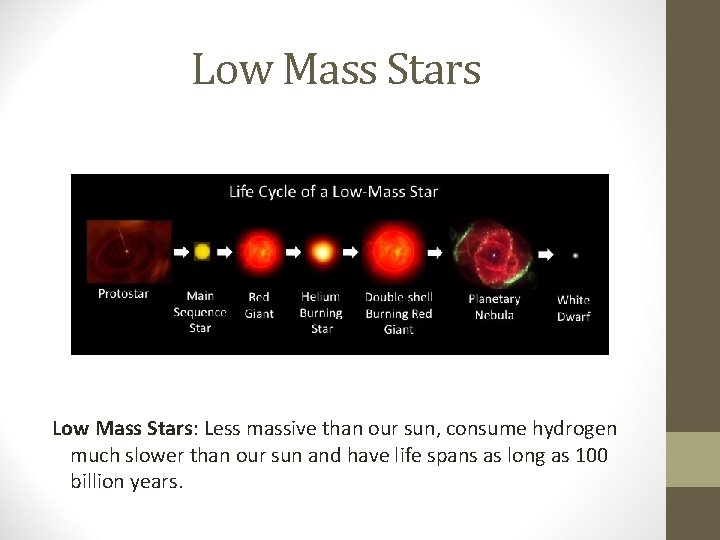
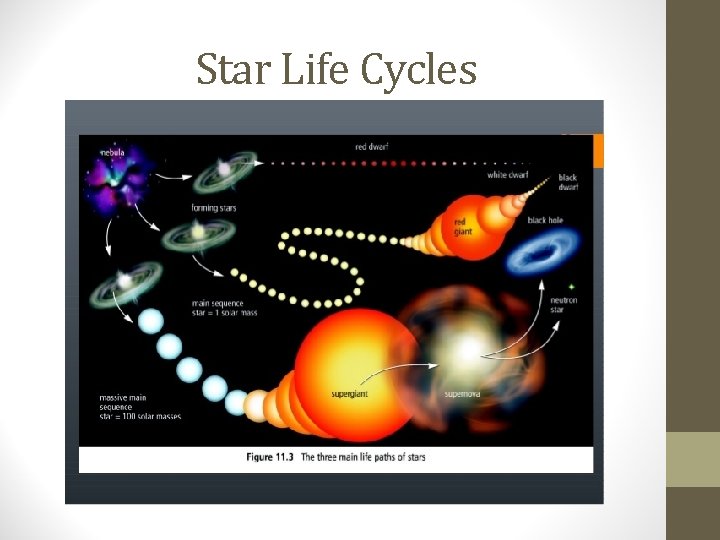
Low Mass Stars: Less massive than our sun, consume hydrogen much slower than our sun and have life spans as long as 100 billion years.
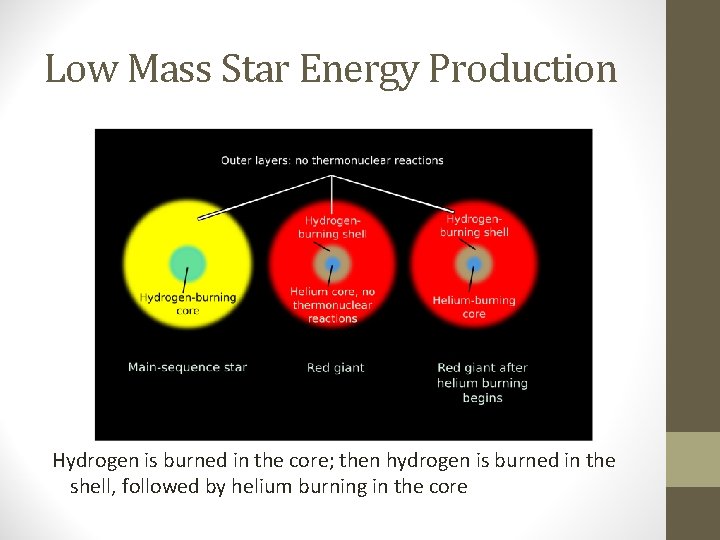
Low Mass Star Energy Production Hydrogen is burned in the core; then hydrogen is burned in the shell, followed by helium burning in the core
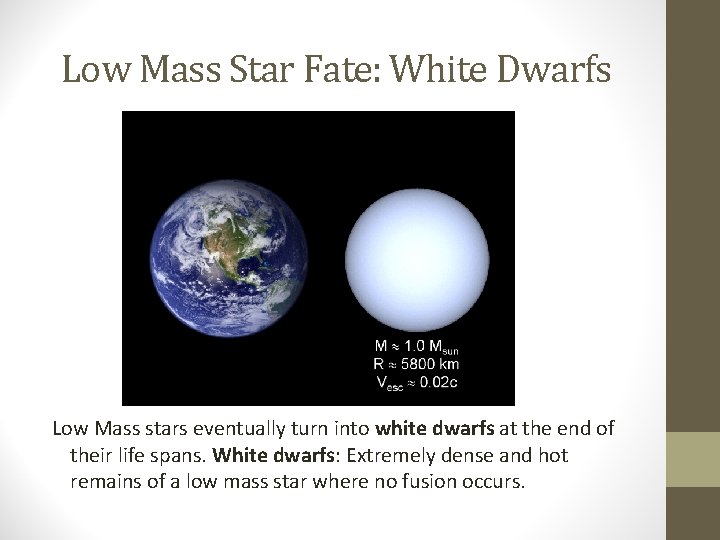
Low Mass Star Fate: White Dwarfs Low Mass stars eventually turn into white dwarfs at the end of their life spans. White dwarfs: Extremely dense and hot remains of a low mass star where no fusion occurs.
High Mass Stars: Crash Course Astronomy #31 https: //www. youtube. com/watch? v=PWx 9 Durg. Pn 8
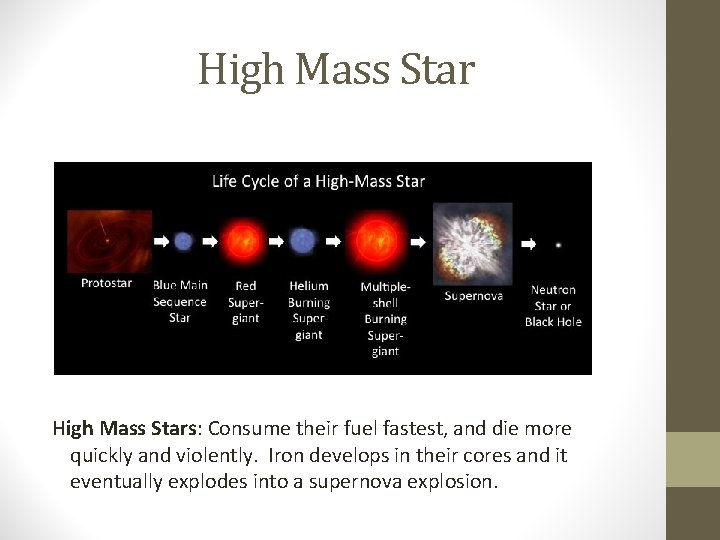
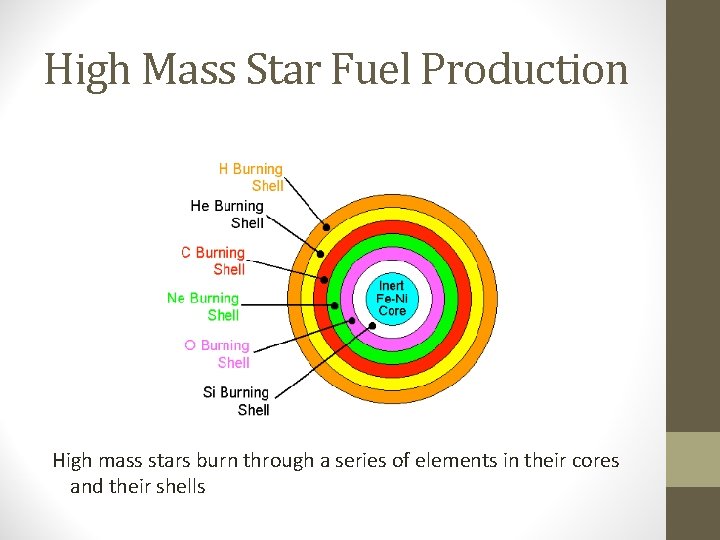
High Mass Stars: Consume their fuel fastest, and die more quickly and violently. Iron develops in their cores and it eventually explodes into a supernova explosion.
High Mass Star Fuel Production High mass stars burn through a series of elements in their cores and their shells
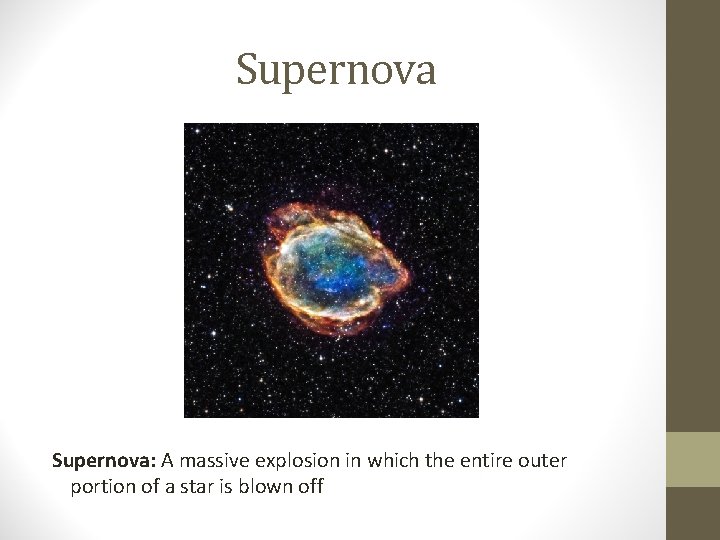
Supernova: A massive explosion in which the entire outer portion of a star is blown off
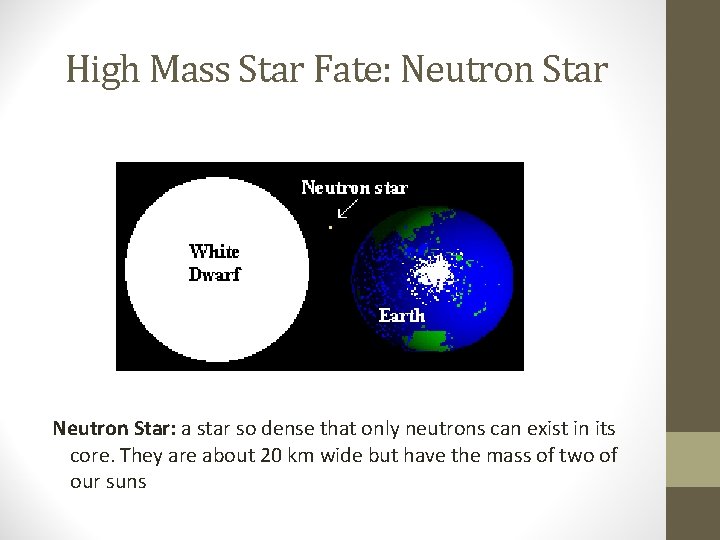
High Mass Star Fate: Neutron Star: a star so dense that only neutrons can exist in its core. They are about 20 km wide but have the mass of two of our suns
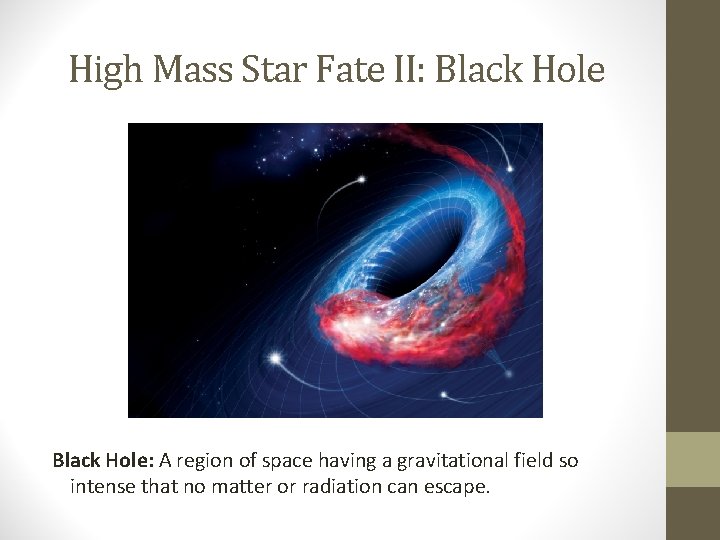
High Mass Star Fate II: Black Hole: A region of space having a gravitational field so intense that no matter or radiation can escape.
Star Life Cycles
Homework Describe the life cycle of a low mass star Describe the life cycle of a high mass star. What are the options for the end of a high mass star’s life? Where are most stars located on the HR diagram?