
Life Cycle Nutrition Pregnancy and Lactation Chapter 15
- Slides: 51
Life Cycle Nutrition: Pregnancy and Lactation Chapter 15 © 2016 Cengage Learning. All Rights Reserved.
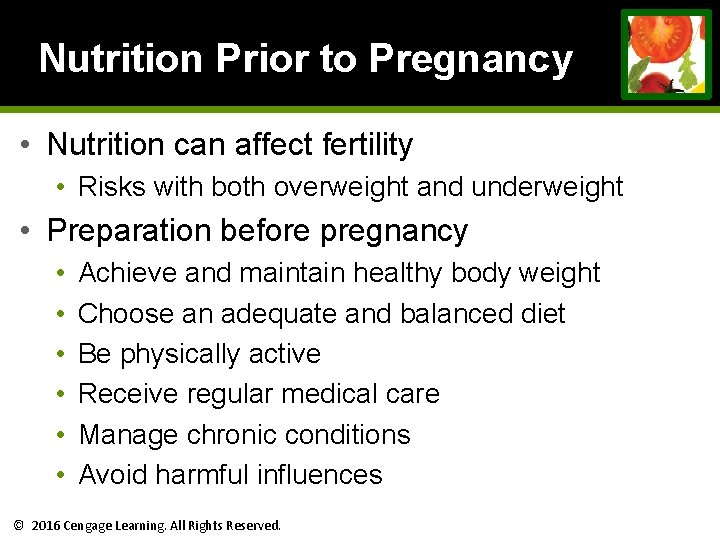
Nutrition Prior to Pregnancy • Nutrition can affect fertility • Risks with both overweight and underweight • Preparation before pregnancy • • • Achieve and maintain healthy body weight Choose an adequate and balanced diet Be physically active Receive regular medical care Manage chronic conditions Avoid harmful influences © 2016 Cengage Learning. All Rights Reserved.
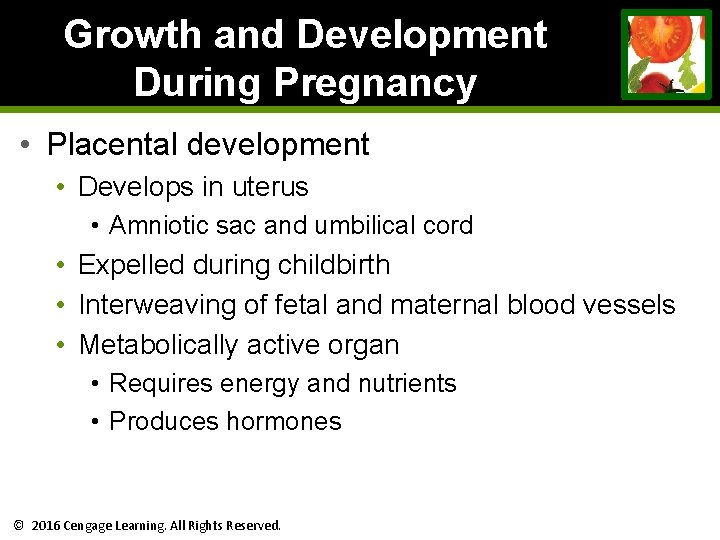
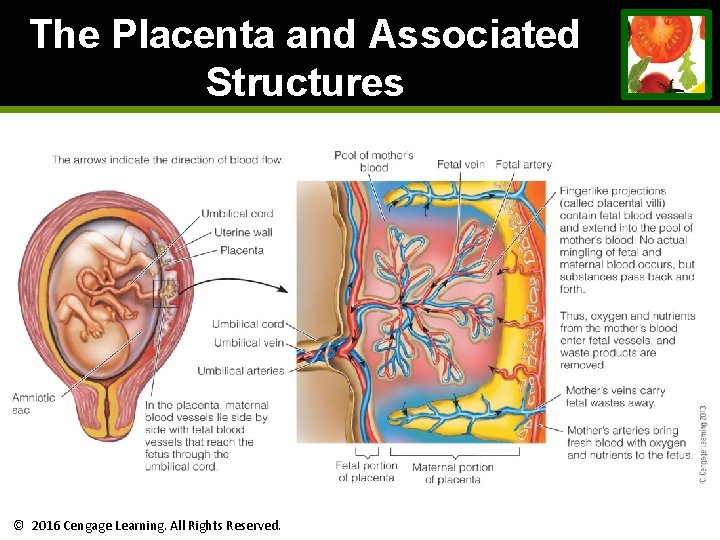
Growth and Development During Pregnancy • Placental development • Develops in uterus • Amniotic sac and umbilical cord • Expelled during childbirth • Interweaving of fetal and maternal blood vessels • Metabolically active organ • Requires energy and nutrients • Produces hormones © 2016 Cengage Learning. All Rights Reserved.
The Placenta and Associated Structures © 2016 Cengage Learning. All Rights Reserved.
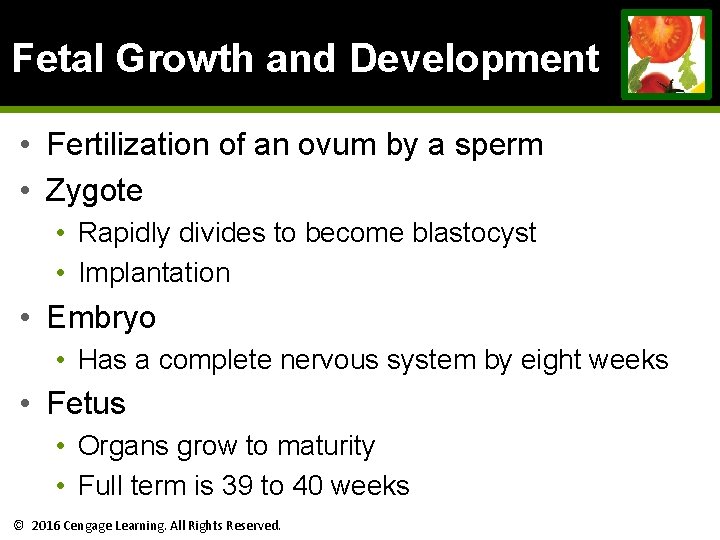
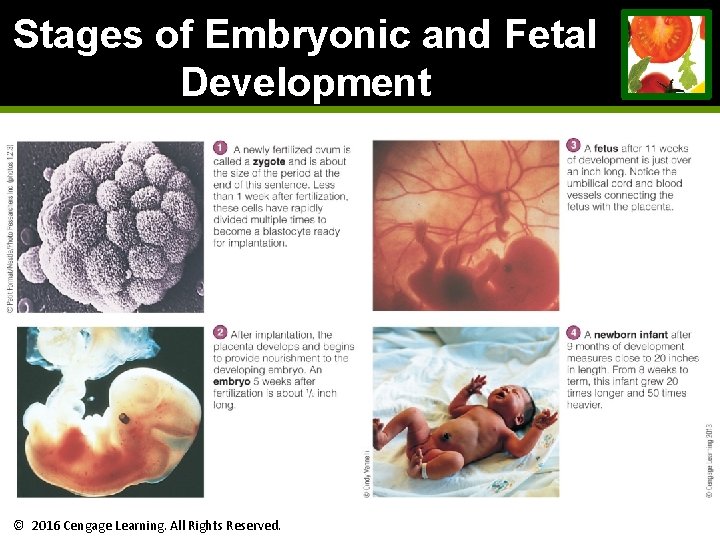
Fetal Growth and Development • Fertilization of an ovum by a sperm • Zygote • Rapidly divides to become blastocyst • Implantation • Embryo • Has a complete nervous system by eight weeks • Fetus • Organs grow to maturity • Full term is 39 to 40 weeks © 2016 Cengage Learning. All Rights Reserved.
Stages of Embryonic and Fetal Development © 2016 Cengage Learning. All Rights Reserved.
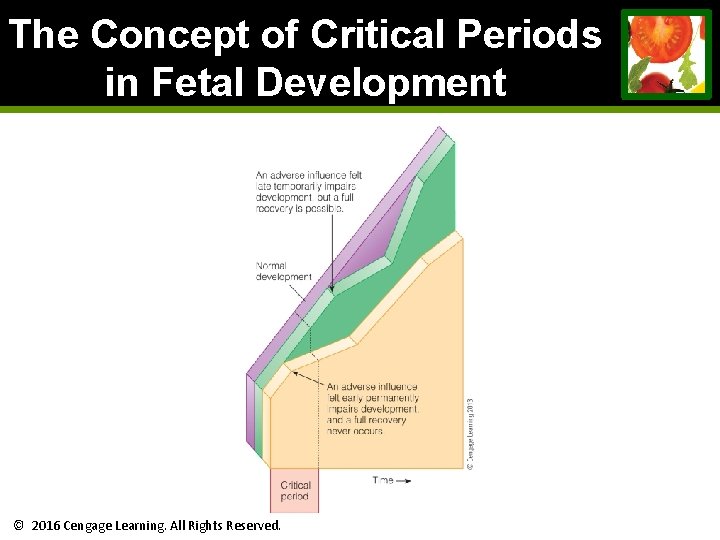
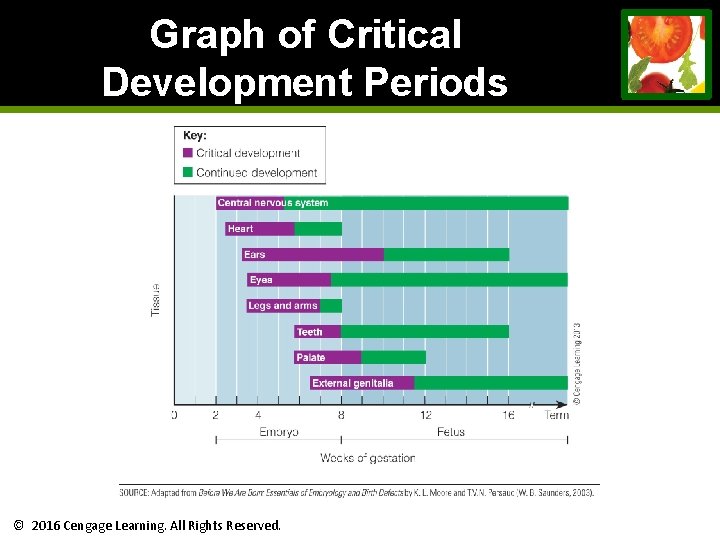
Critical Periods • Times of intense development and rapid cell division • Cellular activities can occur only during these times • Damage during these periods has permanent consequences for fetus’ life and health • Critical period for neural tube development • Between 17 -30 days of gestation © 2016 Cengage Learning. All Rights Reserved.
The Concept of Critical Periods in Fetal Development © 2016 Cengage Learning. All Rights Reserved.
Graph of Critical Development Periods © 2016 Cengage Learning. All Rights Reserved.
Growth and Development During Pregnancy, Part 2 • Neural tube defects • Anencephaly • Brain is either missing or fails to develop • Spina bifida • Incomplete closure of spinal cord and bony encasement • Cause is unknown • Risk factors • Folate supplementation © 2016 Cengage Learning. All Rights Reserved.
Developmental Origins of Disease • Mother’s nutrition may change gene expression in fetus • Influences diseases of adulthood • Chronic diseases • Adverse influences at critical times during fetal development • Malnutrition → type 2 diabetes • Inadequate growth during placental and gestational development → hypertension © 2016 Cengage Learning. All Rights Reserved.
Maternal Weight • Birth weight • Most reliable indicator of infant health • Weight prior to conception • Influences fetal growth • Underweight • Higher rates of preterm births and infant deaths • Overweight and obese • Medical complications • Risks for infant © 2016 Cengage Learning. All Rights Reserved.
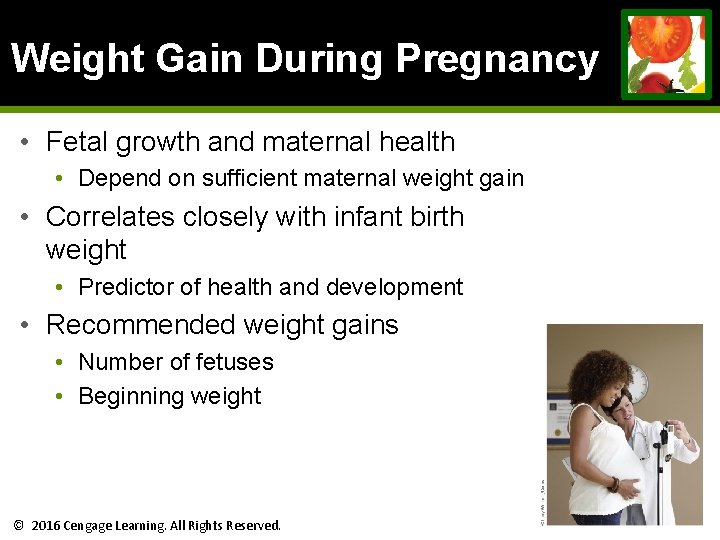
Weight Gain During Pregnancy • Fetal growth and maternal health • Depend on sufficient maternal weight gain • Correlates closely with infant birth weight • Predictor of health and development • Recommended weight gains • Number of fetuses • Beginning weight © 2016 Cengage Learning. All Rights Reserved.
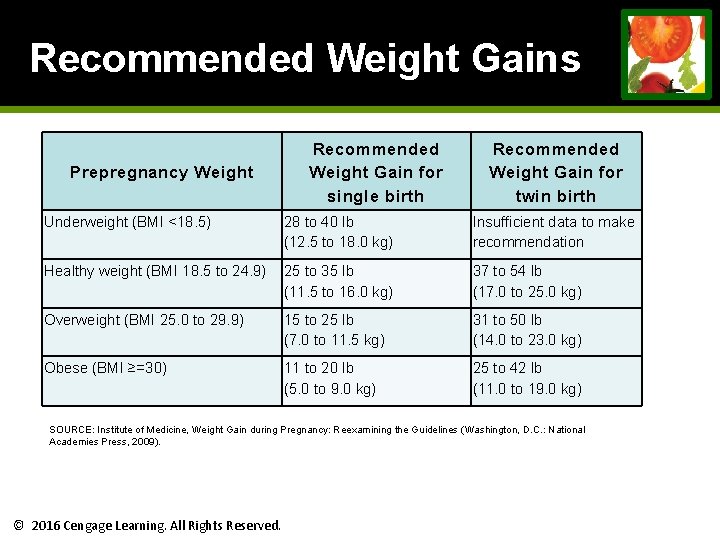
Recommended Weight Gains Prepregnancy Weight Recommended Weight Gain for single birth Recommended Weight Gain for twin birth Underweight (BMI <18. 5) 28 to 40 lb (12. 5 to 18. 0 kg) Insufficient data to make recommendation Healthy weight (BMI 18. 5 to 24. 9) 25 to 35 lb (11. 5 to 16. 0 kg) 37 to 54 lb (17. 0 to 25. 0 kg) Overweight (BMI 25. 0 to 29. 9) 15 to 25 lb (7. 0 to 11. 5 kg) 31 to 50 lb (14. 0 to 23. 0 kg) Obese (BMI ≥=30) 11 to 20 lb (5. 0 to 9. 0 kg) 25 to 42 lb (11. 0 to 19. 0 kg) SOURCE: Institute of Medicine, Weight Gain during Pregnancy: Reexamining the Guidelines (Washington, D. C. : National Academies Press, 2009). © 2016 Cengage Learning. All Rights Reserved.
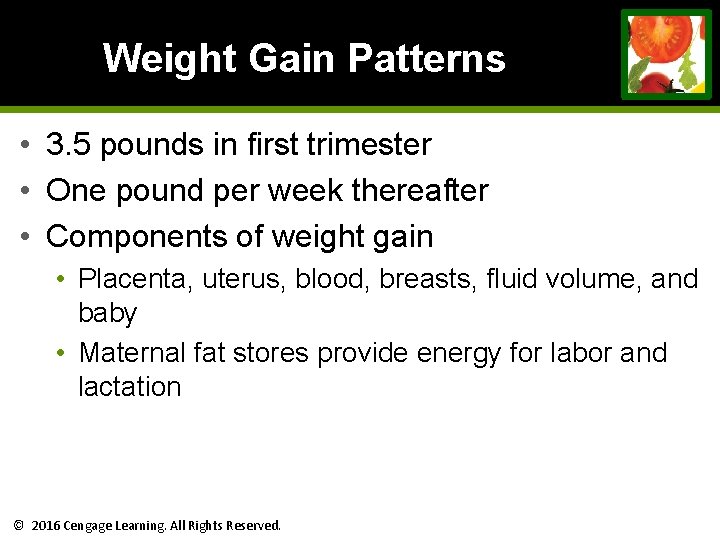
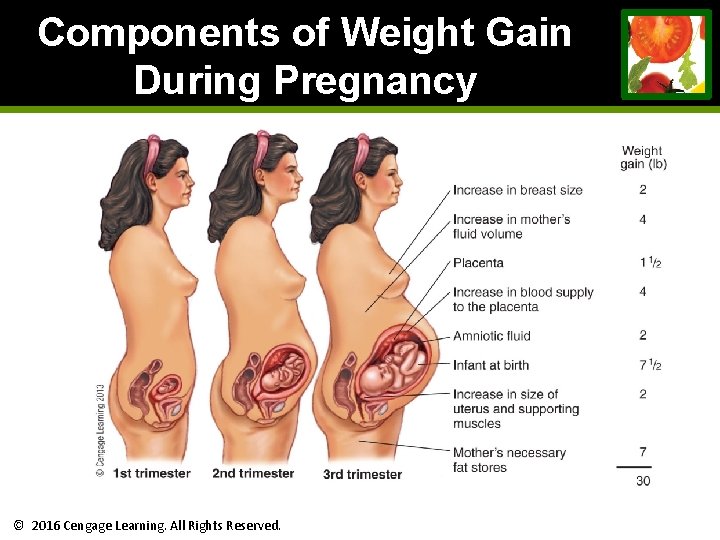
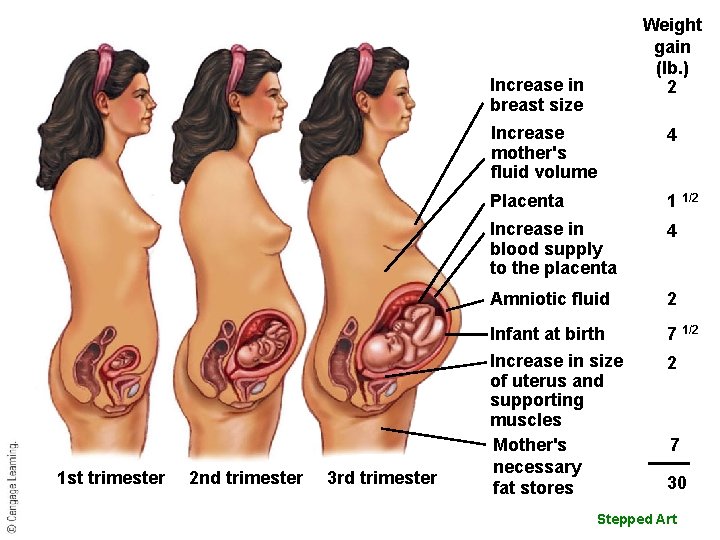
Weight Gain Patterns • 3. 5 pounds in first trimester • One pound per week thereafter • Components of weight gain • Placenta, uterus, blood, breasts, fluid volume, and baby • Maternal fat stores provide energy for labor and lactation © 2016 Cengage Learning. All Rights Reserved.
Components of Weight Gain During Pregnancy © 2016 Cengage Learning. All Rights Reserved.
Weight gain (lb. ) 2 Increase in breast size 1 st trimester 2 nd trimester 3 rd trimester Increase mother's fluid volume 4 Placenta 1 1/2 Increase in blood supply to the placenta 4 Amniotic fluid 2 Infant at birth 7 1/2 Increase in size of uterus and supporting muscles Mother's necessary fat stores 2 7 30 Stepped Art
Weight Loss after Pregnancy • Return to prepregnancy weight • Depends on whether mother stayed within gain recommendations • Most women tend to retain a couple of pounds with each pregnancy • Additional weight retention increases risk for: • Diabetes and hypertension • Chronic diseases later in life © 2016 Cengage Learning. All Rights Reserved.
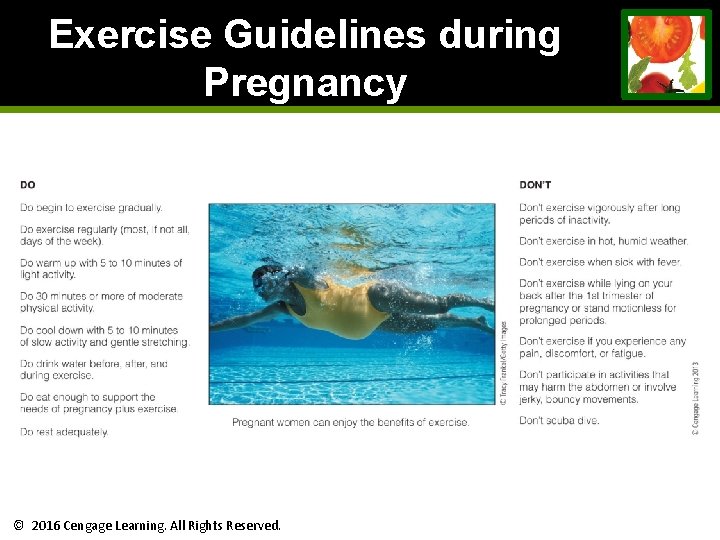
Exercise During Pregnancy • Can continue exercise throughout pregnancy • Adjust duration and intensity • Benefits • Low-impact activities recommended • Swimming and water aerobics allow body to remain cool • Excessively high internal body temperature or dehydration • Harmful to fetal development © 2016 Cengage Learning. All Rights Reserved.
Exercise Guidelines during Pregnancy © 2016 Cengage Learning. All Rights Reserved.
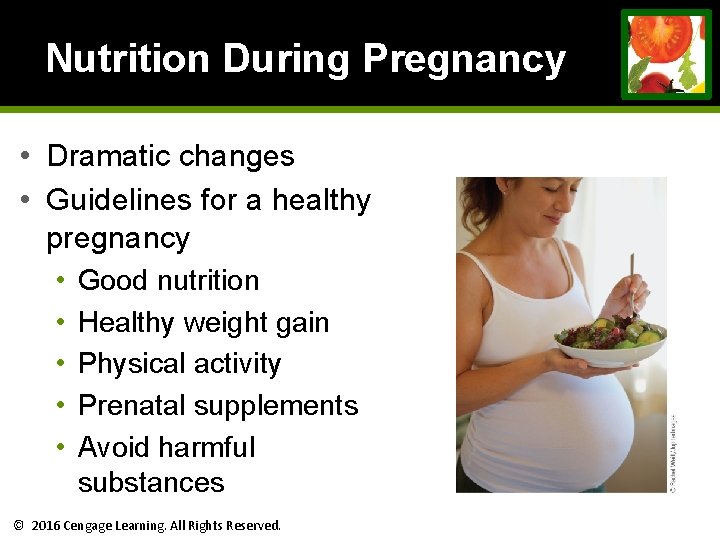
Nutrition During Pregnancy • Dramatic changes • Guidelines for a healthy pregnancy • • • Good nutrition Healthy weight gain Physical activity Prenatal supplements Avoid harmful substances © 2016 Cengage Learning. All Rights Reserved.
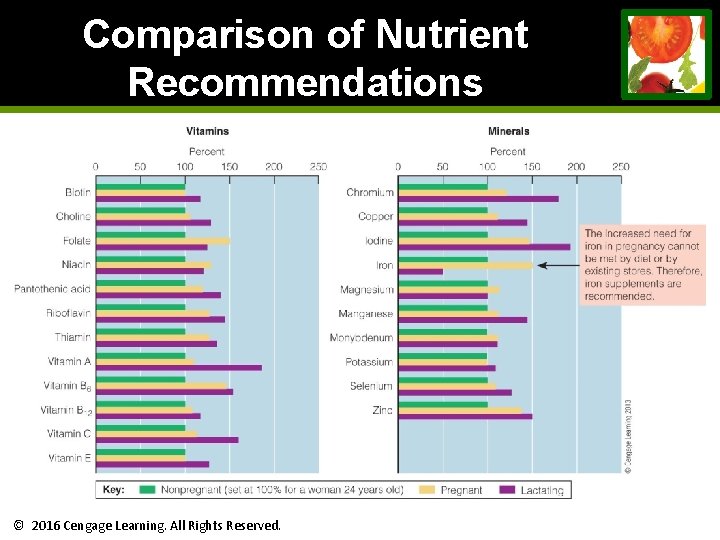
Nutrient Needs During Pregnancy • Highest during pregnancy and lactation • Than at other times in life • To meet needs: • Make careful selections • Body maximizes absorption • Body minimizes losses • Added energy • Basal metabolic rate increases • 15 to 20 percent more energy © 2016 Cengage Learning. All Rights Reserved.
Comparison of Nutrient Recommendations © 2016 Cengage Learning. All Rights Reserved.
Energy and Nutrient Needs During Pregnancy • Carbohydrate • Ample carbohydrate is necessary to fuel fetal brain • Protein • RDA: 25 grams per day higher • Supplements discouraged • Essential fatty acids • Omega-3 and omega-6 fatty acids for brain material © 2016 Cengage Learning. All Rights Reserved.
Blood Production and Cell Growth • Fetal cells laid down at a tremendous rate • Maternal red blood cell mass expands • Needs for synthesis of DNA and new cells • • Folate Vitamin B 12 Iron Zinc © 2016 Cengage Learning. All Rights Reserved.
Nutrients for Bone Development • Vitamin D • Deficiency interferes with calcium metabolism • Calcium • Absorption and retention increase • Intake usually falls below recommendations • Other nutrients • Short interval between pregnancies can deplete nutrient reserves • Optimal interval: 18 to 23 months © 2016 Cengage Learning. All Rights Reserved.
Vegetarian Diets During Pregnancy and Lactation • Can support healthy pregnancy and lactation • Well planned • Food sources • Vegan diets • Additional supplementation • Risks © 2016 Cengage Learning. All Rights Reserved.
Common Nutrition-Related Concerns of Pregnancy • Nausea • “Morning sickness” • Hormonal changes • Constipation and hemorrhoids • Heartburn • Food cravings and aversions • Hormone-induced changes • Nonfood cravings © 2016 Cengage Learning. All Rights Reserved.
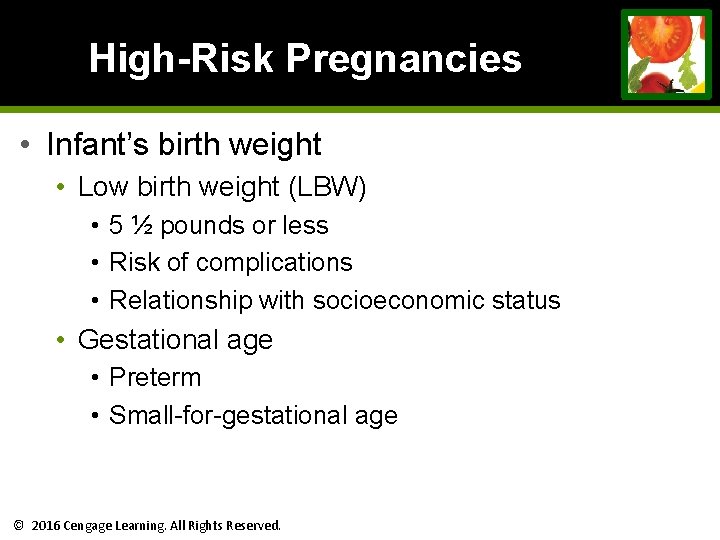
High-Risk Pregnancies • Infant’s birth weight • Low birth weight (LBW) • 5 ½ pounds or less • Risk of complications • Relationship with socioeconomic status • Gestational age • Preterm • Small-for-gestational age © 2016 Cengage Learning. All Rights Reserved.
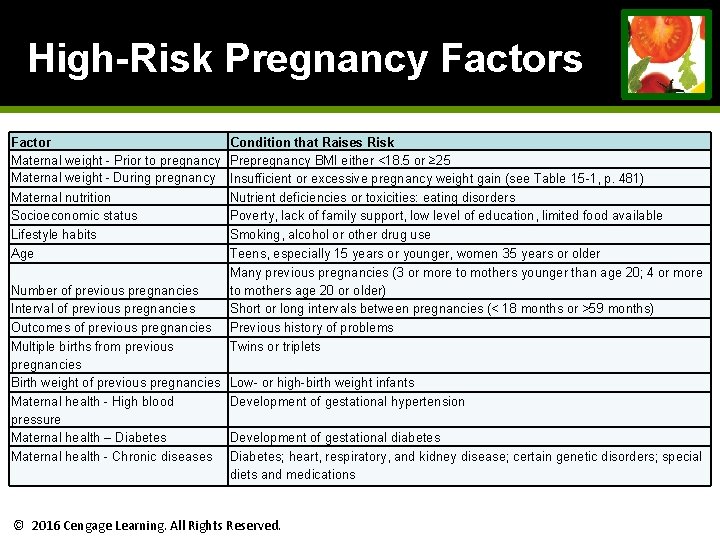
High-Risk Pregnancy Factors Factor Maternal weight - Prior to pregnancy Maternal weight - During pregnancy Maternal nutrition Socioeconomic status Lifestyle habits Age Number of previous pregnancies Interval of previous pregnancies Outcomes of previous pregnancies Multiple births from previous pregnancies Birth weight of previous pregnancies Maternal health - High blood pressure Maternal health – Diabetes Maternal health - Chronic diseases Condition that Raises Risk Prepregnancy BMI either <18. 5 or ≥ 25 Insufficient or excessive pregnancy weight gain (see Table 15 -1, p. 481) Nutrient deficiencies or toxicities: eating disorders Poverty, lack of family support, low level of education, limited food available Smoking, alcohol or other drug use Teens, especially 15 years or younger, women 35 years or older Many previous pregnancies (3 or more to mothers younger than age 20; 4 or more to mothers age 20 or older) Short or long intervals between pregnancies (< 18 months or >59 months) Previous history of problems Twins or triplets Low- or high-birth weight infants Development of gestational hypertension Development of gestational diabetes Diabetes; heart, respiratory, and kidney disease; certain genetic disorders; special diets and medications © 2016 Cengage Learning. All Rights Reserved.
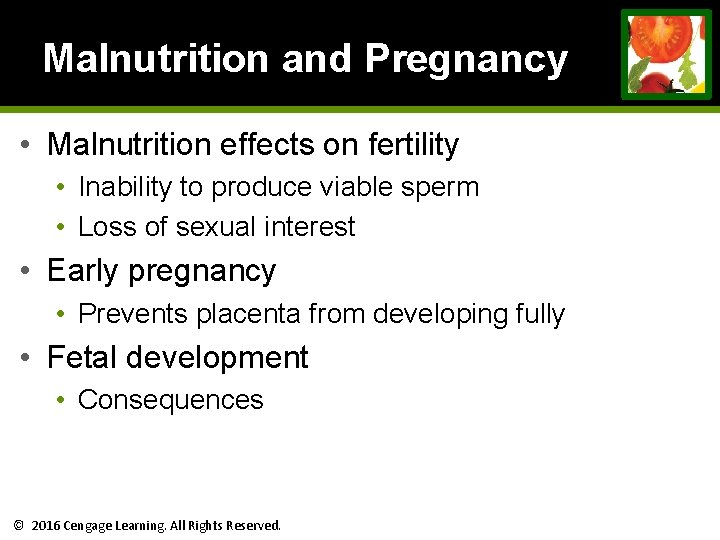
Malnutrition and Pregnancy • Malnutrition effects on fertility • Inability to produce viable sperm • Loss of sexual interest • Early pregnancy • Prevents placenta from developing fully • Fetal development • Consequences © 2016 Cengage Learning. All Rights Reserved.
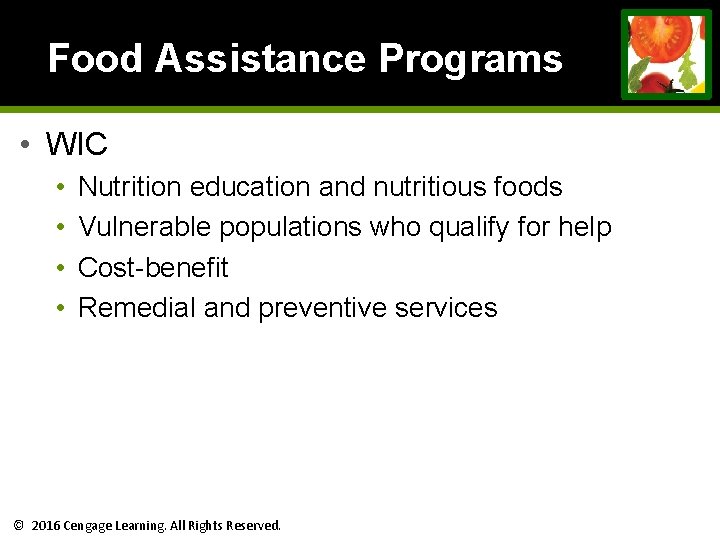
Food Assistance Programs • WIC • • Nutrition education and nutritious foods Vulnerable populations who qualify for help Cost-benefit Remedial and preventive services © 2016 Cengage Learning. All Rights Reserved.
Maternal Health • Preexisting diabetes • Risks associated with unmanaged diabetes • Gestational diabetes • Common consequences • Dietary recommendations • Chronic hypertension • Risks • Gestational hypertension • Preeclampsia © 2016 Cengage Learning. All Rights Reserved.
Age of the Mother • Physically ideal childbearing age • 20 to 25 • Adolescents • Risk of pregnancy complications • Higher rates of stillbirths, preterm births, and low birth weight infants • Weight gain recommendations • Need to seek prenatal care • Need for economic, social, and physical support © 2016 Cengage Learning. All Rights Reserved.
Pregnancies in Older Women • • Complications often reflect chronic conditions Cesarean section rates increase Maternal death rates are higher Higher rate of birth defects • One in 50 pregnancies results in genetic abnormalities • Risk of infant with Down syndrome • One in 100 for a 40 year old mother © 2016 Cengage Learning. All Rights Reserved.
Practices Incompatible with Pregnancy • Alcohol consumption • Irreversible mental and physical retardation • Fetal alcohol syndrome (FAS) • Medicinal drugs • Consult physician before using • Herbal supplements • Seek physician advice • Illicit drugs • Perinatal death © 2016 Cengage Learning. All Rights Reserved.
Other Dangerous Practices • Smoking and chewing tobacco • Harmful effects magnified during pregnancy • SIDS • Environmental contaminants • Lead • Mercury • Foodborne illness • Increased risk of listeriosis • Risks associated with illness © 2016 Cengage Learning. All Rights Reserved.
Risky Behaviors • Vitamin-mineral megadoses • Excessive vitamin A causes fetal malformations • Caffeine • High intakes: risk of miscarriage and fetal death • Low intakes appear safe • Restrictive dieting • Low carbohydrate diets can deprive fetal brain of needed glucose • Sugar-substitutes © 2016 Cengage Learning. All Rights Reserved.
Lactation • Health benefits of breastfeeding • Hormones promote growth and branching of duct system and milk-producing cells • Prolactin • Milk production • Oxytocin • Causes mammary glands to eject milk into ducts © 2016 Cengage Learning. All Rights Reserved.
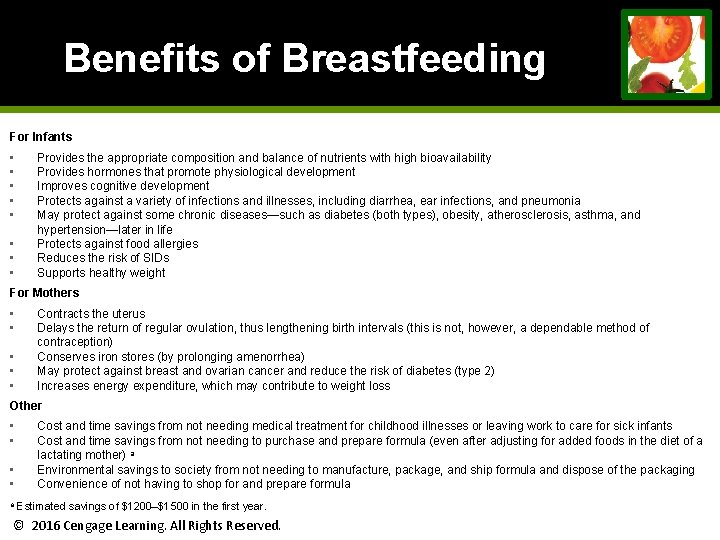
Benefits of Breastfeeding For Infants • • Provides the appropriate composition and balance of nutrients with high bioavailability Provides hormones that promote physiological development Improves cognitive development Protects against a variety of infections and illnesses, including diarrhea, ear infections, and pneumonia May protect against some chronic diseases—such as diabetes (both types), obesity, atherosclerosis, asthma, and hypertension—later in life Protects against food allergies Reduces the risk of SIDs Supports healthy weight For Mothers • • • Contracts the uterus Delays the return of regular ovulation, thus lengthening birth intervals (this is not, however, a dependable method of contraception) Conserves iron stores (by prolonging amenorrhea) May protect against breast and ovarian cancer and reduce the risk of diabetes (type 2) Increases energy expenditure, which may contribute to weight loss Other • • a Cost and time savings from not needing medical treatment for childhood illnesses or leaving work to care for sick infants Cost and time savings from not needing to purchase and prepare formula (even after adjusting for added foods in the diet of a lactating mother) a Environmental savings to society from not needing to manufacture, package, and ship formula and dispose of the packaging Convenience of not having to shop for and prepare formula Estimated savings of $1200–$1500 in the first year. © 2016 Cengage Learning. All Rights Reserved.
Breastfeeding: A Learned Behavior • Lactation is an automatic, physiological process • Breastfeeding is a learned behavior • Some decide not to breastfeed • Factors influencing breastfeeding success • Partner • Adequate nutrition and rest © 2016 Cengage Learning. All Rights Reserved.
Maternal Energy and Nutrient Needs During Lactation • Energy intake and exercise • Almost 500 extra kcalories per day • Exercise is compatible with breastfeeding • Energy nutrients • Recommendations increase for carbohydrates and fibers • Nutrient inadequacies reduce quantity, not quality of breast milk • Total water intake: 3. 8 liters per day © 2016 Cengage Learning. All Rights Reserved.
Food Assistance Programs, Part 2 • Participants less likely to breastfeed • WIC incentives to encourage breastfeeding • Effect of particular foods • May alter breast milk flavor • Allergies • Breast milk provides immunological protection • Women with HIV should not breastfeed • Where safe infant formula is available © 2016 Cengage Learning. All Rights Reserved.
Practices Incompatible With Lactation • Alcohol • Easily enters breast milk • Infants eat less when mother consumes alcohol • Medicinal drugs • Physician consultation • Illicit drugs • Risks • Smoking • Environmental contaminants © 2016 Cengage Learning. All Rights Reserved.
Fetal Alcohol Syndrome Highlight 15 © 2016 Cengage Learning. All Rights Reserved.
Introduction • Alcohol readily crosses the placenta • Deprives fetus of nutrients and oxygen • Fetal alcohol spectrum disorder • Fetal alcohol syndrome (FAS) • Cluster of physical, mental, and neurobehavioral symptoms • Alcohol-related neurodevelopmental disorder (ARND) • Alcohol-related birth defects (ARBD) © 2016 Cengage Learning. All Rights Reserved.
Recommendations • Abstinence from alcohol during pregnancy is recommended • Severe consequences • FAS can only be prevented • Not treated • Abstinence is recommended for those who may become pregnant © 2016 Cengage Learning. All Rights Reserved.
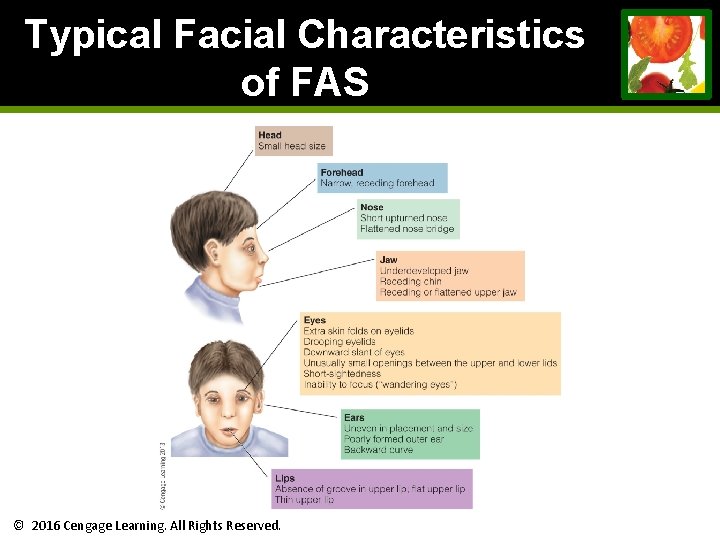
Typical Facial Characteristics of FAS © 2016 Cengage Learning. All Rights Reserved.
Drinking During Pregnancy • Direct damage • Intoxication • Indirect damage • Malnutrition • Alcohol interferes with tissue development during critical periods • Fetal blood alcohol concentration (BAC) increases until equal to maternal BAC levels © 2016 Cengage Learning. All Rights Reserved.
How Much Is Too Much? • Even one drink a day threatens neurological development and behaviors • Total alcohol intake • Average intakes • Drinking patterns • Frequency of consumption • Quantity consumed • Stage of fetal development © 2016 Cengage Learning. All Rights Reserved.
When Is the Damage Done? • First trimester • Developing organs may be malformed • Second trimester • Risk of spontaneous abortion increases • Third trimester • Body and brain growth may be retarded • Male alcohol ingestion • Studies show impacts on both fertility and fetal development © 2016 Cengage Learning. All Rights Reserved.