
Life Cycle Nutrition Adulthood and the Later Years
- Slides: 45
Life Cycle Nutrition: Adulthood and the Later Years Chapter 17 © 2016 Cengage Learning. All Rights Reserved.
Introduction • Two motivating goals • Promote health • Slow aging • The ratio of old people to young is increasing • Growing “old” happens day by day • Fastest-growing age group • Factors influencing life expectancy © 2016 Cengage Learning. All Rights Reserved.
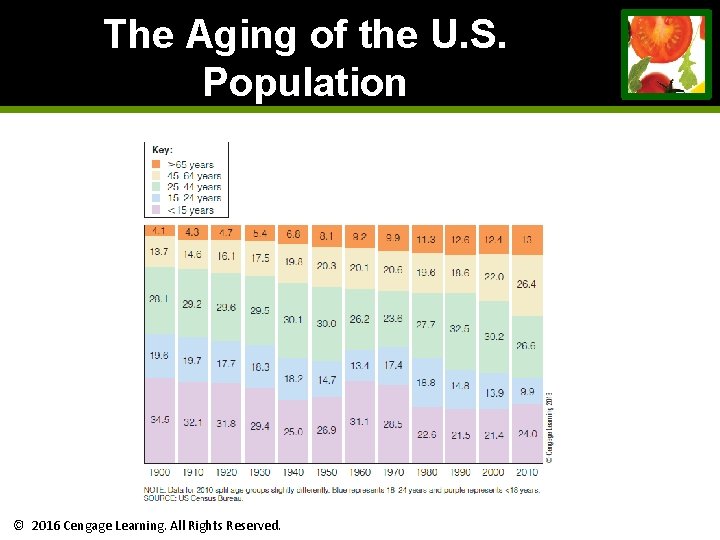
The Aging of the U. S. Population © 2016 Cengage Learning. All Rights Reserved.
Nutrition and Longevity • Diversity of older adults • Nutritional influence on aging process • Aging is inevitable • Process can be slowed by adopting a healthy lifestyle • Physiological age versus chronological age © 2016 Cengage Learning. All Rights Reserved.
Healthy Habits • • Eating well-balanced meals Engaging in physical activity daily Not smoking Not using alcohol, or using it in moderation Maintaining a healthy body weight Sleeping regularly and adequately Relieving stress; focus on a sense of purpose Having a community of family and friends © 2016 Cengage Learning. All Rights Reserved.
Physical Activity • Benefits of physical activity in older adults • Additional benefits from specific activity types • • Aerobic activities Moderate endurance activities Strength training Resistance training • Most powerful predictor of mobility in later years © 2016 Cengage Learning. All Rights Reserved.
Exercise Guidelines for Older Adults Aerobic Strength Balance Flexibility Be active 5 minutes on most or Using 0 - to 2 -pound weights, all days do 1 set of 8 -12 repetitions twice a week At least 5 days per week of At least 2 (nonconsecutive) moderate activity or at least 4 days per week of vigorous activity Moderate, vigorous, or Moderate to high; 10 to 15 combination repetitions per exercise; gradually increase weights At least 30 minutes of 8 to 10 exercises involving the moderate activity in bouts of at major muscle groups least 10 minutes each or at least 20 minutes of continuous vigorous activity Hold onto table or chair with one hand, then with one finger, 2 to 3 days each week Hold stretch for 10 seconds; do each stretch 3 times EMPTY CELL Moderate At least 20 to 30 minutes Stretch major muscle groups for 1030 seconds, repeating each stretch 3 to 4 times Stop if you are breathing so hard you can't talk or if you feel dizziness or chest pain Incorporate balance techniques with strength exercises as you progress Stretch after strength and endurance exercises for 20 minutes, 3 times a week; use slow, steady movements; bend joints slightly Examples Start easy and progress gradually Frequency Intensity a Duration Cautions and comments Breathe out as you contract and in as you relax (do not hold breath), use smooth, steady movements At least 2 days per week, preferably on all days that aerobic or strength activities are performed a On a 10 -point scale, where sitting =0 and maximum effort=10, moderate intensity =5 to 6 and vigorous intensity = 7 to 8 NOTE: Activity recommendations are in addition to routine activities of daily living(such as getting dressed, cooking, grocery shopping) and moderate activities lasting less than 10 minutes. SOURCE: Centers for Disease Control and Prevention. Division of Nutrition Physical Activity and Obesity, National Center for Chronic Disease prevention and Health Promotion. 2011. www. cdc. gov/physicalactivity/everyone/guidelines/olderadults. html; C. E. Garber and coauthors. Quantity and quality of exercise for developing and maintaining cardiorespiratory, musculoskeletal, and neuromotor fitness in apparently healthy adults: Guidance for prescribing exercise. Medicine & Science in Sports & Exercise 43 (2011): 1334 -1359. © 2016 Cengage Learning. All Rights Reserved.
Manipulation of Diet • Energy restriction in animals • Animals live longer and have fewer age-related diseases • Slows aging process • Food intake • Prevent malnutrition • 70 percent of normal energy intake • Increases antioxidant activity and DNA repair • Age of starting energy restriction © 2016 Cengage Learning. All Rights Reserved.
Energy Restriction in Human Beings • Difficulty defining energy restriction • Time of energy restriction needed to realize health benefit • Moderate restriction • 10 to 20 percent reduction in energy intake • Benefits • Nutritional adequacy essential to a long and healthy life © 2016 Cengage Learning. All Rights Reserved.
Stress • Psychological and physical stressors • Body’s stress response • Nervous and hormonal systems • Prolonged or severe stress effects • Difference between men and women • Fight-or-flight response • Tend-or-befriend response © 2016 Cengage Learning. All Rights Reserved.
Physiological Changes • Body weight • Being moderately overweight may not be harmful • Lowest mortality correlates with a BMI of 23. 5 to 27. 5 • Obesity complications • Risks associated with low body weight © 2016 Cengage Learning. All Rights Reserved.
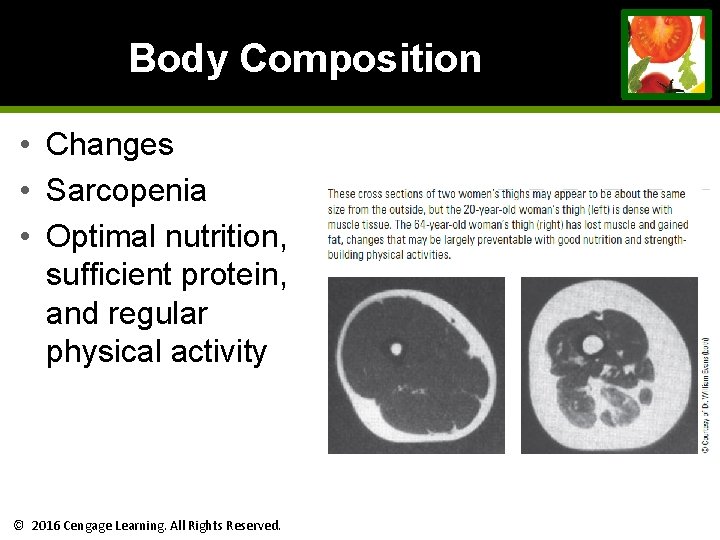
Body Composition • Changes • Sarcopenia • Optimal nutrition, sufficient protein, and regular physical activity © 2016 Cengage Learning. All Rights Reserved.
Immunity and Inflammation • • • Immune system loses function with age “Inflammaging” Inflammation – critical in supporting health Compromised by nutrient deficiencies Improving immune system response • Regular physical activity • Diet rich in fruits and vegetables © 2016 Cengage Learning. All Rights Reserved.
GI Tract • Intestinal walls lose strength and elasticity with age • GI hormone secretions change • Motility slows • • Diminished appetite Constipation Atrophic gastritis Dysphagia © 2016 Cengage Learning. All Rights Reserved.
Tooth Loss • Difficult and painful chewing • Limited food selections • Less dietary variety • Lower intakes of fiber and vitamins • Sensory losses and other physical problems • Vision, mobility, hearing, taste, and smell © 2016 Cengage Learning. All Rights Reserved.
Psychological Changes • Depression • Lose appetite and motivation to cook • Support and companionship of family and friends • Economic changes • Living arrangements and income • Social changes • Malnutrition most likely to affect those living alone • Especially men, those with low income and/or education © 2016 Cengage Learning. All Rights Reserved.
Energy and Nutrient Needs of Older Adults • Dietary Reference Intakes (DRI) • Two age categories • 51 to 70 years • 71 and older • Challenges with setting standards • Individual differences are more pronounced with age • Different chronic diseases • Different medications © 2016 Cengage Learning. All Rights Reserved.
Water • Thirst response and dry mouth • Dehydration • Total body water decreases with age • Risks associated with dehydration • Prevention • At least six glasses of water daily © 2016 Cengage Learning. All Rights Reserved.
Energy and Energy Nutrients • Energy needs decline estimated five percent per decade • Reasons • Nutrient needs remain high • USDA Food Patterns • Protein • Especially important • Low-calorie sources • Liquid nutritional formulas © 2016 Cengage Learning. All Rights Reserved.
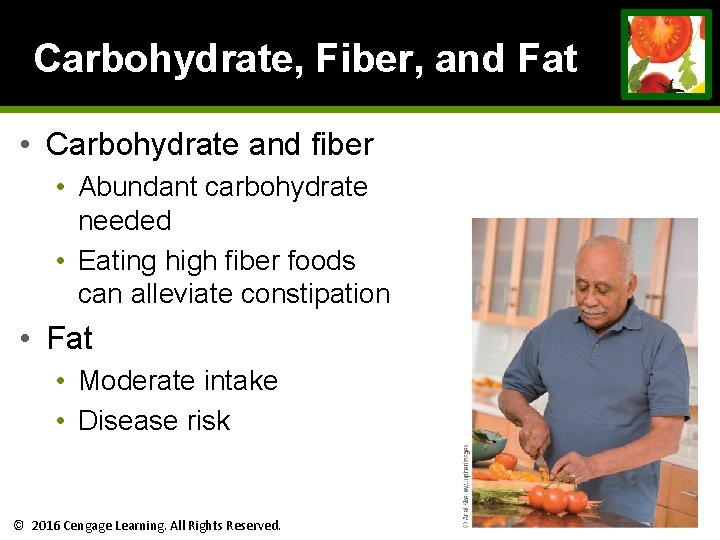
Carbohydrate, Fiber, and Fat • Carbohydrate and fiber • Abundant carbohydrate needed • Eating high fiber foods can alleviate constipation • Fat • Moderate intake • Disease risk © 2016 Cengage Learning. All Rights Reserved.
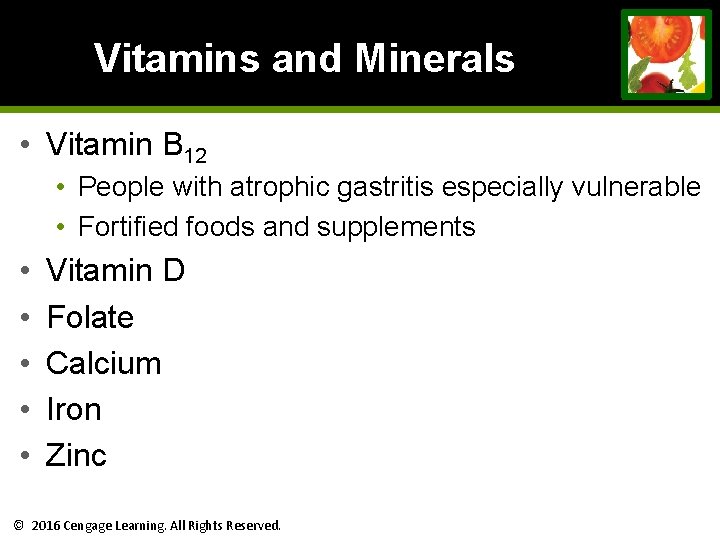
Vitamins and Minerals • Vitamin B 12 • People with atrophic gastritis especially vulnerable • Fortified foods and supplements • • • Vitamin D Folate Calcium Iron Zinc © 2016 Cengage Learning. All Rights Reserved.
Dietary Supplements • More than half of older adults use supplements • Vitamin D and calcium may be helpful • When recommended by a physician • Food is best source of nutrients © 2016 Cengage Learning. All Rights Reserved.
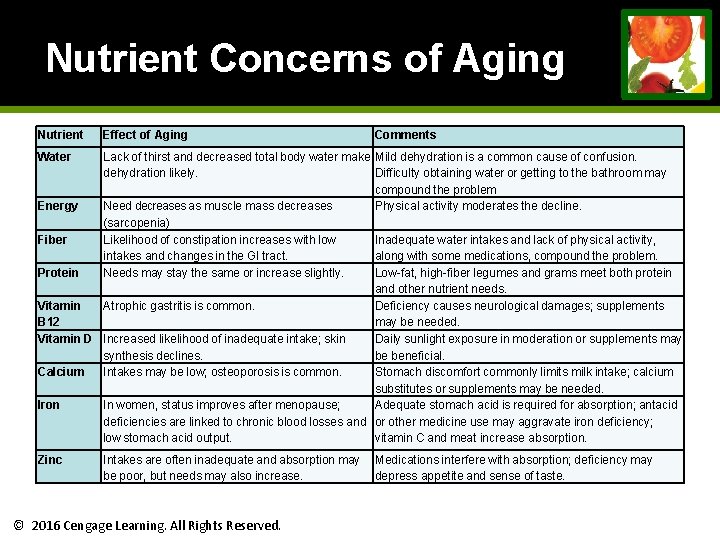
Nutrient Concerns of Aging Nutrient Effect of Aging Comments Water Lack of thirst and decreased total body water make Mild dehydration is a common cause of confusion. dehydration likely. Difficulty obtaining water or getting to the bathroom may compound the problem Energy Need decreases as muscle mass decreases Physical activity moderates the decline. (sarcopenia) Fiber Likelihood of constipation increases with low Inadequate water intakes and lack of physical activity, intakes and changes in the Gl tract. along with some medications, compound the problem. Protein Needs may stay the same or increase slightly. Low-fat, high-fiber legumes and grams meet both protein and other nutrient needs. Vitamin Atrophic gastritis is common. Deficiency causes neurological damages; supplements B 12 may be needed. Vitamin D Increased likelihood of inadequate intake; skin Daily sunlight exposure in moderation or supplements may synthesis declines. be beneficial. Calcium Intakes may be low; osteoporosis is common. Stomach discomfort commonly limits milk intake; calcium substitutes or supplements may be needed. Iron In women, status improves after menopause; Adequate stomach acid is required for absorption; antacid deficiencies are linked to chronic blood losses and or other medicine use may aggravate iron deficiency; low stomach acid output. vitamin C and meat increase absorption. Zinc Intakes are often inadequate and absorption may Medications interfere with absorption; deficiency may be poor, but needs may also increase. depress appetite and sense of taste. © 2016 Cengage Learning. All Rights Reserved.
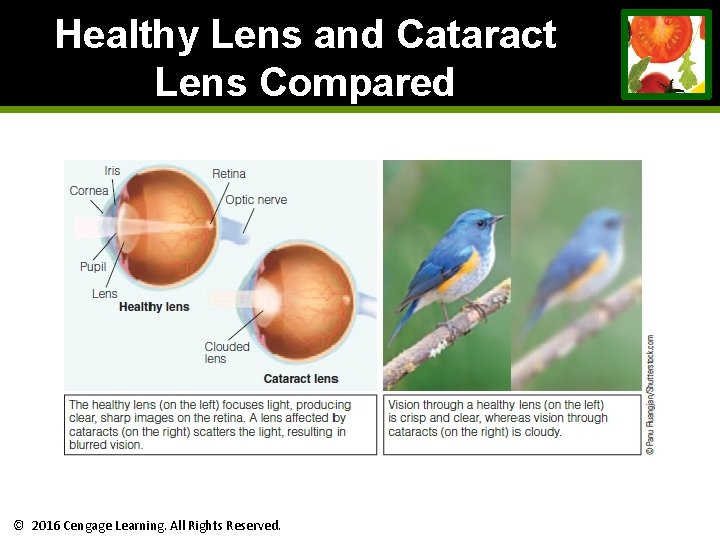
Vision • Cataracts • • Age-related clouding of the lenses of the eyes Lead to blindness if not surgically removed Risk factors Oxidative stress and antioxidants • Macular degeneration • Leading cause of vision loss © 2016 Cengage Learning. All Rights Reserved.
Healthy Lens and Cataract Lens Compared © 2016 Cengage Learning. All Rights Reserved.
Arthritis • Osteoarthritis • Deterioration of cartilage in the joints • Connection with being overweight • Benefits of aerobic activity and strength training • Rheumatoid arthritis • Immune system destroys bone and cartilage • Gout • Deposits of uric acid in joints • Purines in foods © 2016 Cengage Learning. All Rights Reserved.
The Aging Brain • Dementia • Affects 15 percent of adults over 70 • Brain changes due to genetic and environmental factors • Characteristic changes with age • Loss of neurons • Decreased blood supply • Nutrient deficiency • May be a factor in loss of memory and cognition © 2016 Cengage Learning. All Rights Reserved.
Alzheimer’s Disease • • Prevalence in U. S. Characteristic symptoms Possible causes Senile plaques and neurofibrillary tangles Cardiovascular disease risk factors Treatment Alcohol use and binge drinking • Affects older adults © 2016 Cengage Learning. All Rights Reserved.
Alzheimer’s and Healthy Brains Compared © 2016 Cengage Learning. All Rights Reserved.
Food Choices and Eating Habits of Older Adults • Older people an incredibly diverse group • Quality of life has improved • Chronic disabilities have declined • Strategies for growing old healthfully • Older adults spend more money on foods to eat at home • Less on foods eaten away from home • Influential factors in food choices © 2016 Cengage Learning. All Rights Reserved.
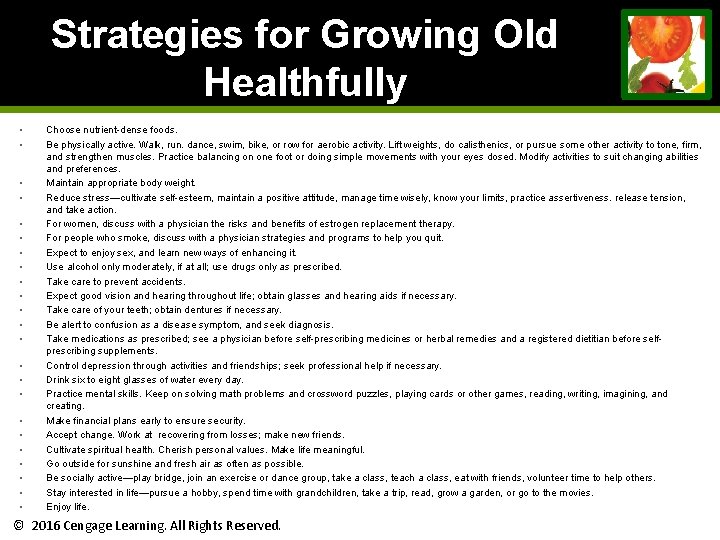
Strategies for Growing Old Healthfully • • • • • • Choose nutrient-dense foods. Be physically active. Walk, run. dance, swim, bike, or row for aerobic activity. Lift weights, do calisthenics, or pursue some other activity to tone, firm, and strengthen muscles. Practice balancing on one foot or doing simple movements with your eyes dosed. Modify activities to suit changing abilities and preferences. Maintain appropriate body weight. Reduce stress—cultivate self-esteem, maintain a positive attitude, manage time wisely, know your limits, practice assertiveness. release tension, and take action. For women, discuss with a physician the risks and benefits of estrogen replacement therapy. For people who smoke, discuss with a physician strategies and programs to help you quit. Expect to enjoy sex, and learn new ways of enhancing it. Use alcohol only moderately, if at all; use drugs only as prescribed. Take care to prevent accidents. Expect good vision and hearing throughout life; obtain glasses and hearing aids if necessary. Take care of your teeth; obtain dentures if necessary. Be alert to confusion as a disease symptom, and seek diagnosis. Take medications as prescribed; see a physician before self-prescribing medicines or herbal remedies and a registered dietitian before selfprescribing supplements. Control depression through activities and friendships; seek professional help if necessary. Drink six to eight glasses of water every day. Practice mental skills. Keep on solving math problems and crossword puzzles, playing cards or other games, reading, writing, imagining, and creating. Make financial plans early to ensure security. Accept change. Work at recovering from losses; make new friends. Cultivate spiritual health. Cherish personal values. Make life meaningful. Go outside for sunshine and fresh air as often as possible. Be socially active—play bridge, join an exercise or dance group, take a class, teach a class, eat with friends, volunteer time to help others. Stay interested in life—pursue a hobby, spend time with grandchildren, take a trip, read, grow a garden, or go to the movies. Enjoy life. © 2016 Cengage Learning. All Rights Reserved.
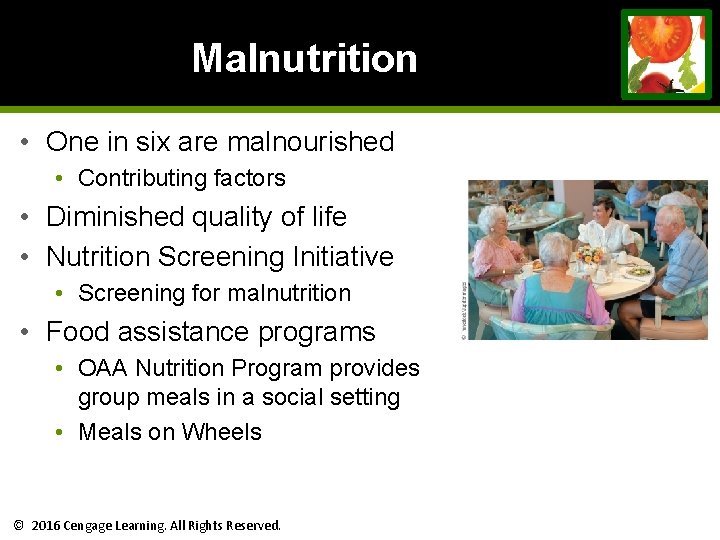
Malnutrition • One in six are malnourished • Contributing factors • Diminished quality of life • Nutrition Screening Initiative • Screening for malnutrition • Food assistance programs • OAA Nutrition Program provides group meals in a social setting • Meals on Wheels © 2016 Cengage Learning. All Rights Reserved.
Meals for Singles • Challenges for older adults living alone • Purchasing, storing, and preparing food • Foodborne illness • Risk is greater for older adults • Spend wisely • Wise shoppers • Be creative • Invite others to share a meal © 2016 Cengage Learning. All Rights Reserved.
Nutrient-Drug Interactions Highlight 17 © 2016 Cengage Learning. All Rights Reserved.
Introduction • Use of over-the-counter and prescription drugs by people over 65 • Average 14 -18 prescriptions per year • Vitamin and mineral supplements • Numerous doctors • Physiological changes occur that may impact drug metabolism and excretion © 2016 Cengage Learning. All Rights Reserved.
The Actions of Drugs • Drug • Any substance that modifies one or more of the body’s functions • Consequences • Desirable • Undesirable • Example of aspirin © 2016 Cengage Learning. All Rights Reserved.
The Interactions between Drugs and Nutrients • Interactions can: • Lead to nutrient imbalances • Interfere with drug effectiveness • Factors that increase risk for adverse nutrientdrug interactions • Methods of nutrient and medication interactions © 2016 Cengage Learning. All Rights Reserved.
The Effect of Drugs on Food Intake • Eating may be difficult or unpleasant • May stimulate appetite and cause weight gain • May suppress appetite and promote weight loss © 2016 Cengage Learning. All Rights Reserved.
The Effect of Drugs on Nutrient Absorption • Most likely occurs with medications that damage the intestinal mucosa • May bind with nutrients in GI tract, preventing nutrient absorption • May reduce stomach acidity • May interfere with intestinal metabolism or transport of nutrients into mucosal cells © 2016 Cengage Learning. All Rights Reserved.
The Effect of Diet on Drug Absorption • Most drugs are absorbed in upper small intestine • Influences on drug absorption • • • Stomach acidity and emptying rate Direct interactions with dietary components Drug formulation Whether drug is taken on empty or full stomach Binding with nutrients and nonnutrients © 2016 Cengage Learning. All Rights Reserved.
The Effect of Drugs on Nutrient Metabolism • Some drugs enhance or inhibit enzyme activity needed for nutrient metabolism • Diet alters drug metabolism • Some foods affect the activities of enzymes that metabolize drugs • May counteract the drugs’ effects • Some food and drug interactions can cause toxicity and exacerbate side effects © 2016 Cengage Learning. All Rights Reserved.
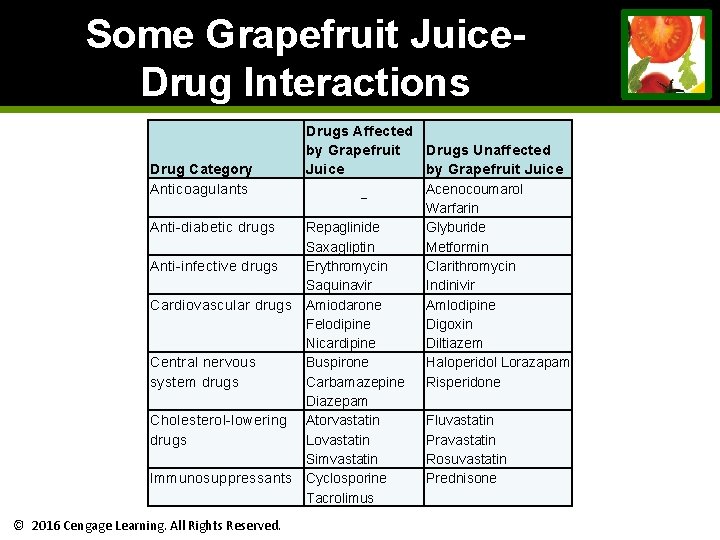
Some Grapefruit Juice. Drug Interactions Drugs Affected by Grapefruit Drugs Unaffected Drug Category Juice by Grapefruit Juice Anticoagulants Acenocoumarol — Warfarin Anti-diabetic drugs Repaglinide Glyburide Saxagliptin Metformin Anti-infective drugs Erythromycin Clarithromycin Saquinavir Indinivir Cardiovascular drugs Amiodarone Amlodipine Felodipine Digoxin Nicardipine Diltiazem Central nervous Buspirone Haloperidol Lorazapam system drugs Carbamazepine Risperidone Diazepam Cholesterol-lowering Atorvastatin Fluvastatin drugs Lovastatin Pravastatin Simvastatin Rosuvastatin Immunosuppressants Cyclosporine Prednisone Tacrolimus © 2016 Cengage Learning. All Rights Reserved.
The Effect of Drugs on Nutrient and Drug Excretion • Interfere with nutrient reabsorption • Greater urinary losses of nutrients • Mineral depletion • Diets alter drug excretion • May lead to toxicity • Urine acidity • Example: lithium • Diet-drug toxicities • Example: tyramine © 2016 Cengage Learning. All Rights Reserved.
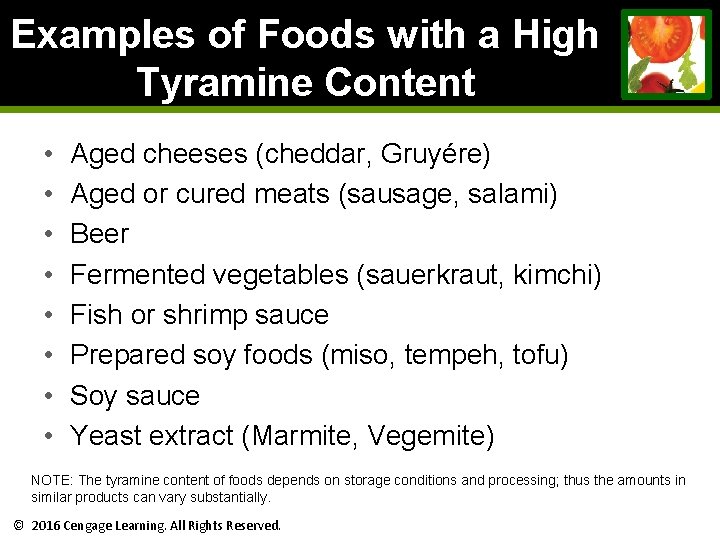
Examples of Foods with a High Tyramine Content • • Aged cheeses (cheddar, Gruyére) Aged or cured meats (sausage, salami) Beer Fermented vegetables (sauerkraut, kimchi) Fish or shrimp sauce Prepared soy foods (miso, tempeh, tofu) Soy sauce Yeast extract (Marmite, Vegemite) NOTE: The tyramine content of foods depends on storage conditions and processing; thus the amounts in similar products can vary substantially. © 2016 Cengage Learning. All Rights Reserved.
The Inactive Ingredients in Drugs • Sugar, sorbitol, and lactose • Diabetics • Lactose intolerance • Sodium • Hypertension • Antacids • Nutrient-drug interactions also happen with over-the-counter drugs • Consult a physician © 2016 Cengage Learning. All Rights Reserved.