
Life Cycle Costing Principles theories 1 Session Aims

- Slides: 31
Life Cycle Costing (Principles & theories) 1
Session Aims – To understand the purpose, principles and theories of Life cycle costing – To identify the benefits and limitations of LCC
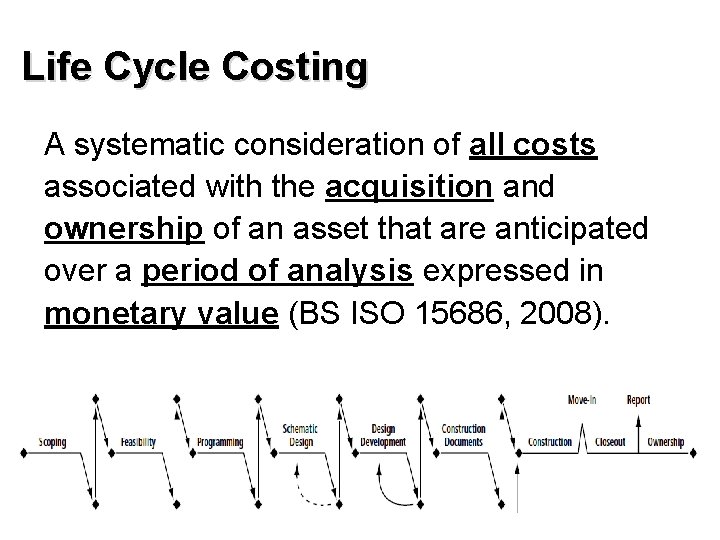
Life Cycle Costing A systematic consideration of all costs associated with the acquisition and ownership of an asset that are anticipated over a period of analysis expressed in monetary value (BS ISO 15686, 2008).
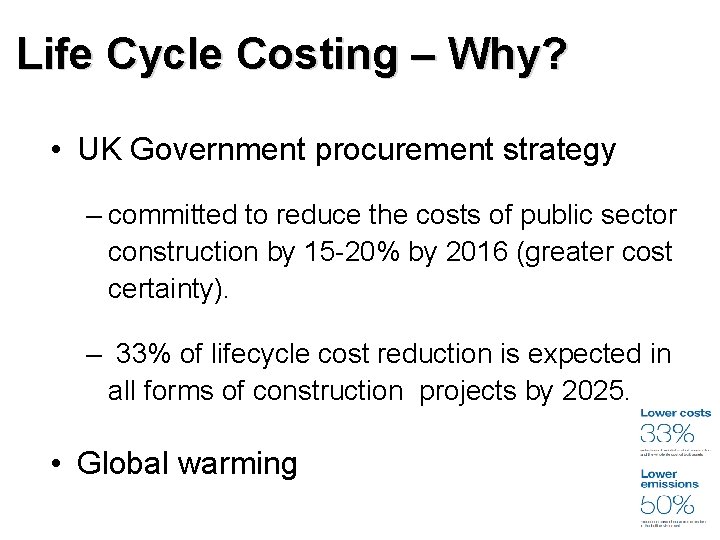
Life Cycle Costing – Why? • UK Government procurement strategy – committed to reduce the costs of public sector construction by 15 -20% by 2016 (greater cost certainty). – 33% of lifecycle cost reduction is expected in all forms of construction projects by 2025. • Global warming
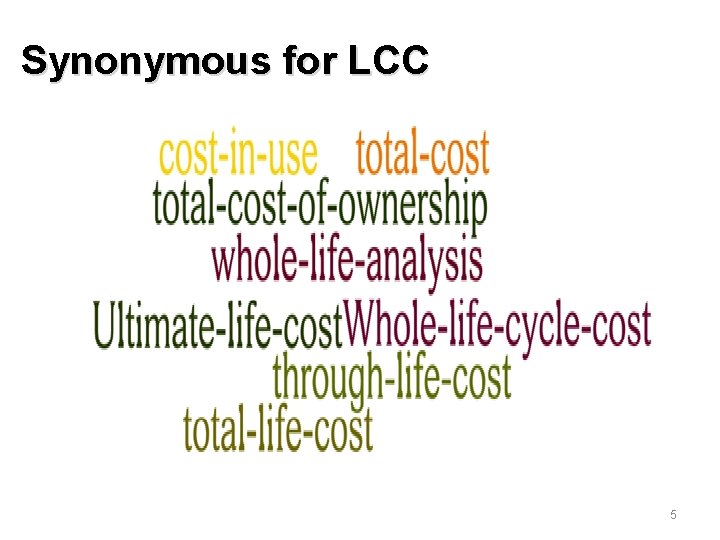
Synonymous for LCC 5
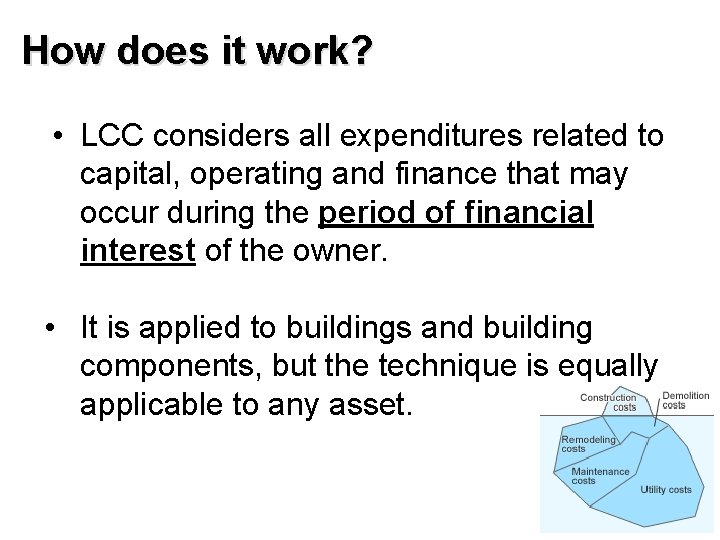
How does it work? • LCC considers all expenditures related to capital, operating and finance that may occur during the period of financial interest of the owner. • It is applied to buildings and building components, but the technique is equally applicable to any asset.
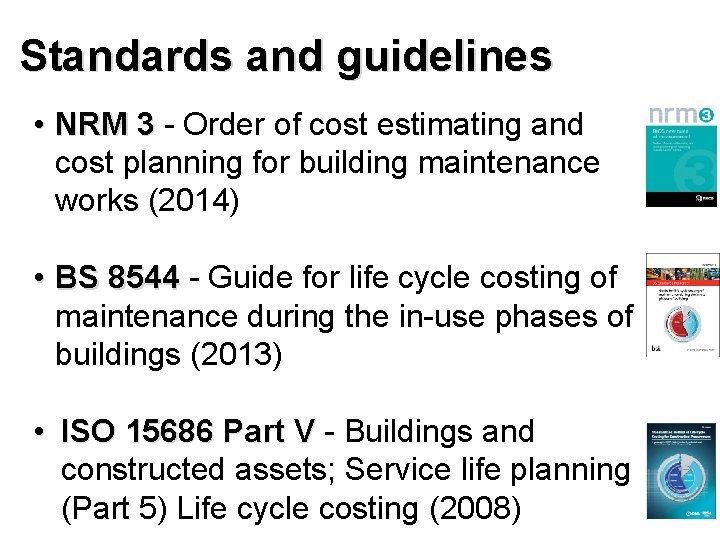
Standards and guidelines • NRM 3 - Order of cost estimating and cost planning for building maintenance works (2014) • BS 8544 - Guide for life cycle costing of maintenance during the in-use phases of buildings (2013) • ISO 15686 Part V - Buildings and constructed assets; Service life planning (Part 5) Life cycle costing (2008)
Purposes of LCC • LCC identifies the total cost commitment for the acquisition of any asset (cash flow prediction) • Evaluates the better solution among alternative choices of achieving the stated objective (Option appraisal)
Purposes of LCC cont. . • It’s a management or planning tool that details current operating commitments • It identifies the areas in which operating costs may be reduced, either by usage or system design
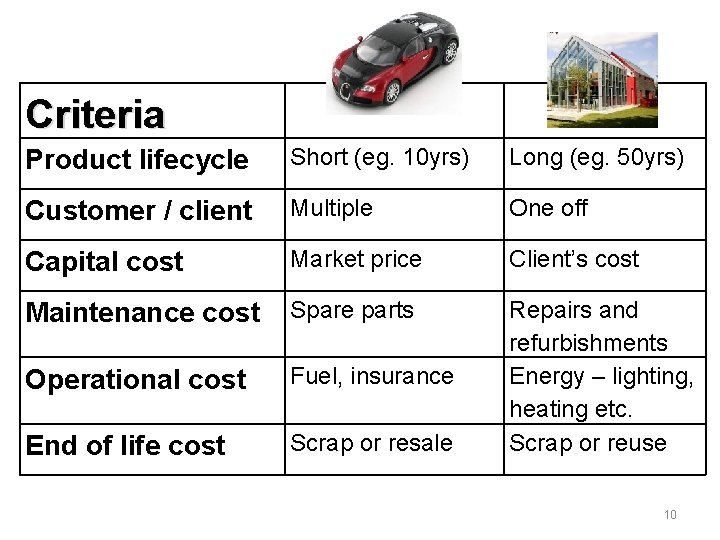
Product lifecycle Short (eg. 10 yrs) Long (eg. 50 yrs) Customer / client Multiple One off Capital cost Market price Client’s cost Maintenance cost Spare parts Operational cost Fuel, insurance End of life cost Scrap or resale Repairs and refurbishments Energy – lighting, heating etc. Scrap or reuse Criteria 10
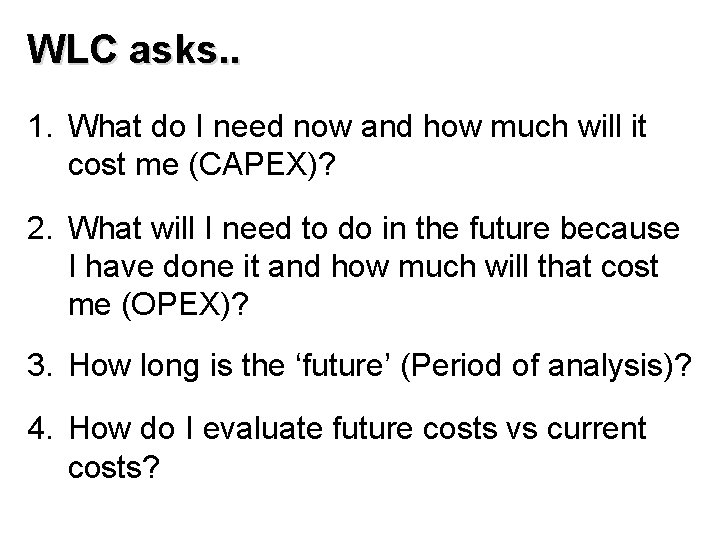
WLC asks. . 1. What do I need now and how much will it cost me (CAPEX)? 2. What will I need to do in the future because I have done it and how much will that cost me (OPEX)? 3. How long is the ‘future’ (Period of analysis)? 4. How do I evaluate future costs vs current costs?
Important facts • 80% of the future cost is fixed in the first 20% of the design process. • It is worth undertaking Value Management studies in order to remove all unnecessary costs from functional specifications.
Why LCC is important? • • Government procurement strategy Optimises the total cost of ownership Enables early assessment of risk Promote realistic budgeting Decision support tool / design alternatives Enables best value to be attained Provide actual figures for future benchmarking
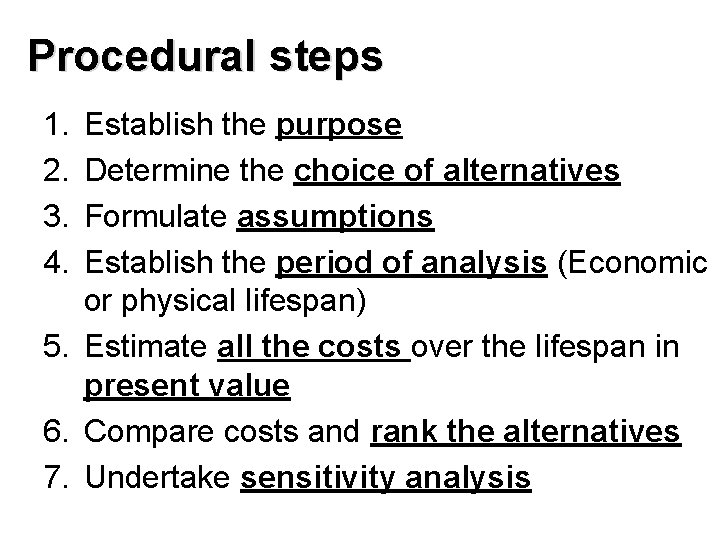
Procedural steps 1. 2. 3. 4. Establish the purpose Determine the choice of alternatives Formulate assumptions Establish the period of analysis (Economic or physical lifespan) 5. Estimate all the costs over the lifespan in present value 6. Compare costs and rank the alternatives 7. Undertake sensitivity analysis
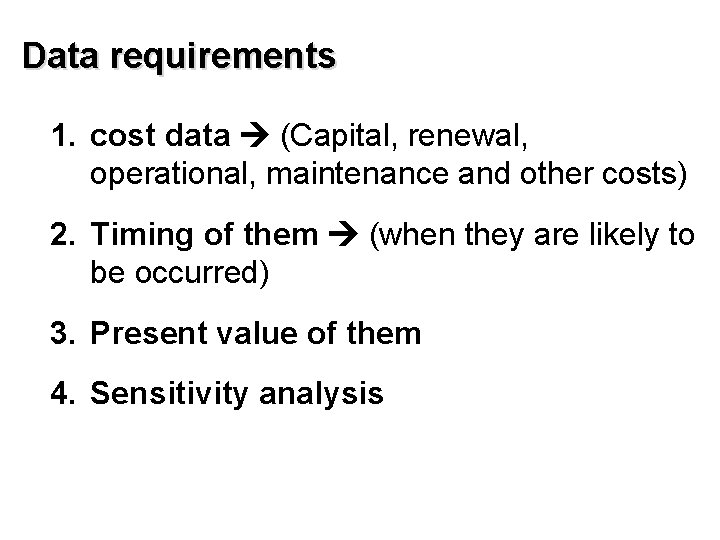
Data requirements 1. cost data (Capital, renewal, operational, maintenance and other costs) 2. Timing of them (when they are likely to be occurred) 3. Present value of them 4. Sensitivity analysis
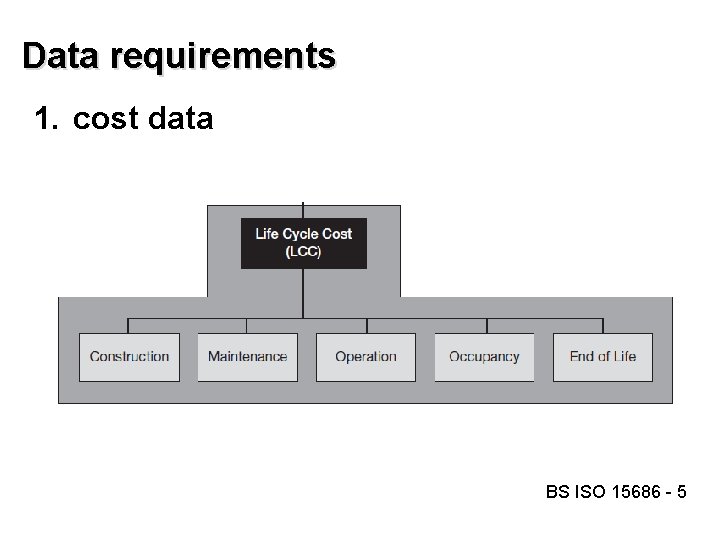
Data requirements 1. cost data BS ISO 15686 - 5
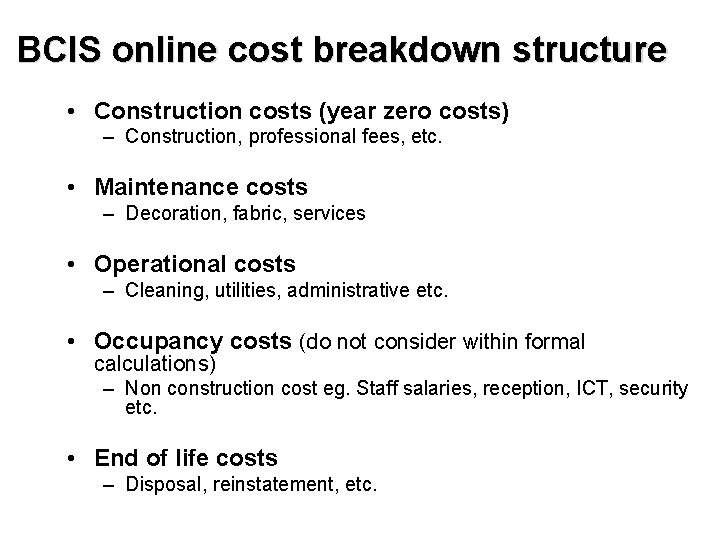
BCIS online cost breakdown structure • Construction costs (year zero costs) – Construction, professional fees, etc. • Maintenance costs – Decoration, fabric, services • Operational costs – Cleaning, utilities, administrative etc. • Occupancy costs (do not consider within formal calculations) – Non construction cost eg. Staff salaries, reception, ICT, security etc. • End of life costs – Disposal, reinstatement, etc.
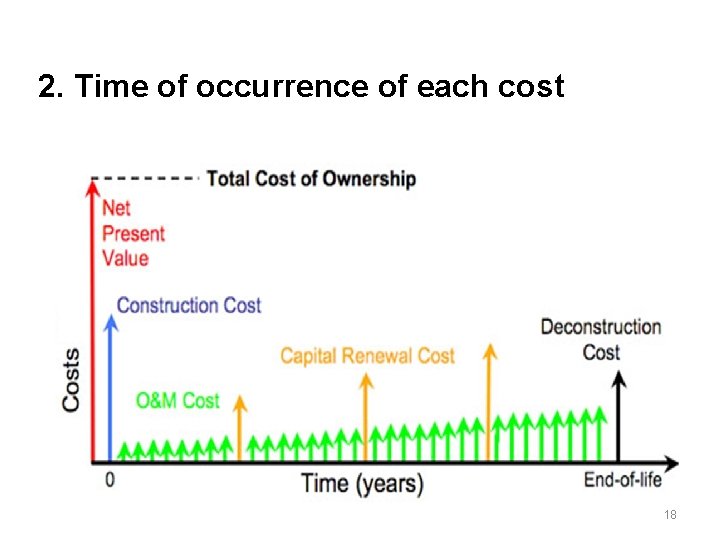
2. Time of occurrence of each cost 18
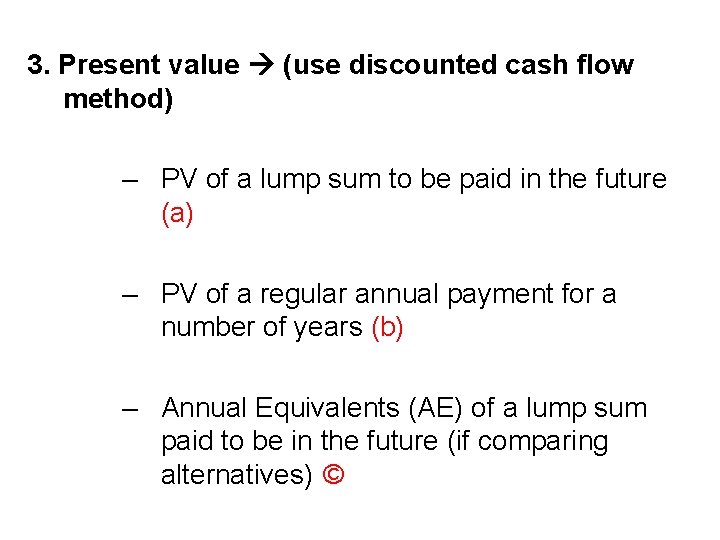
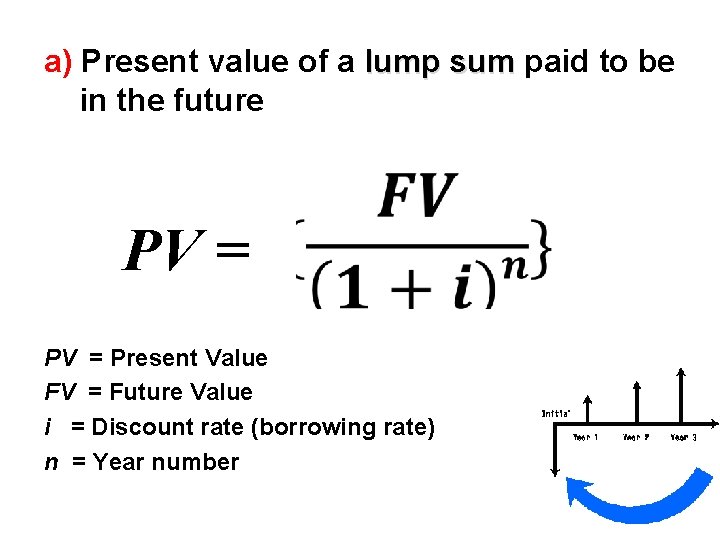
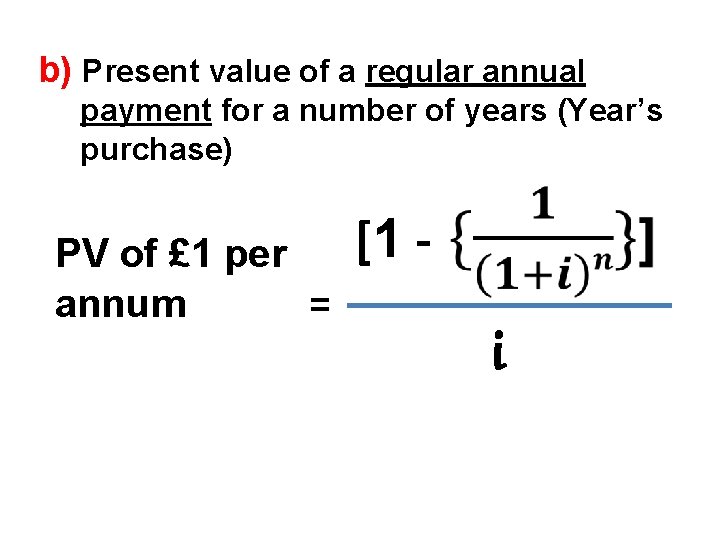
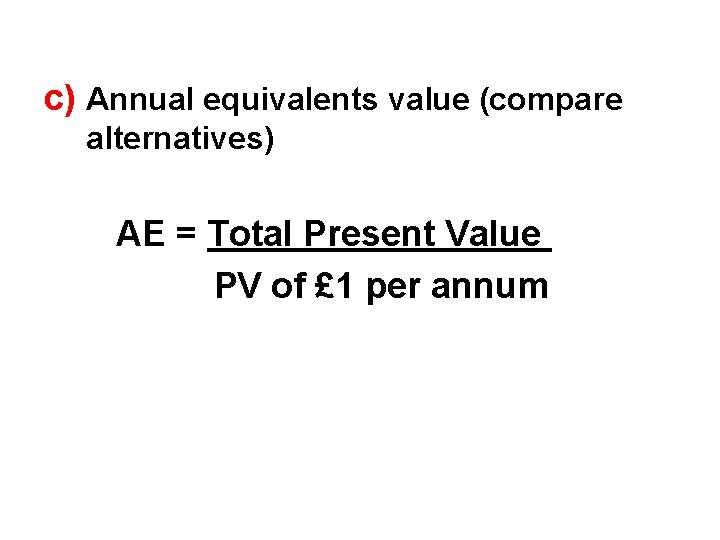
3. Present value (use discounted cash flow method) – PV of a lump sum to be paid in the future (a) – PV of a regular annual payment for a number of years (b) – Annual Equivalents (AE) of a lump sum paid to be in the future (if comparing alternatives) ©
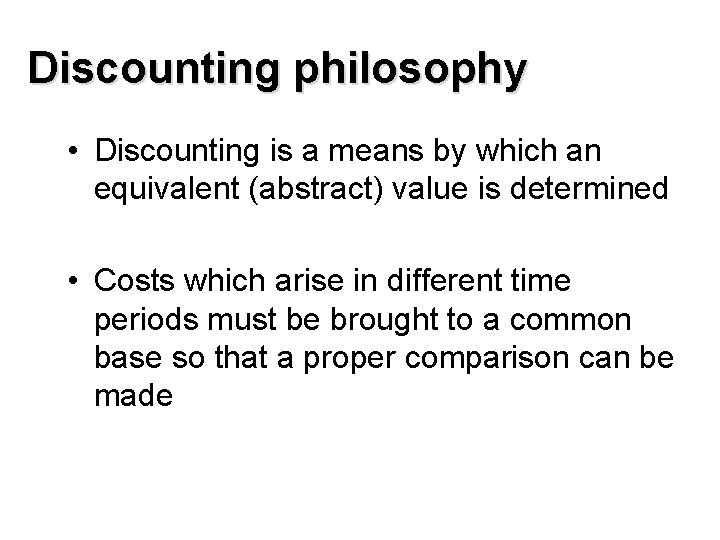
Discounting philosophy • Discounting is a means by which an equivalent (abstract) value is determined • Costs which arise in different time periods must be brought to a common base so that a proper comparison can be made
a) Present value of a lump sum paid to be in the future PV = Present Value FV = Future Value i = Discount rate (borrowing rate) n = Year number
b) Present value of a regular annual payment for a number of years (Year’s purchase) PV of £ 1 per annum = [1 - i
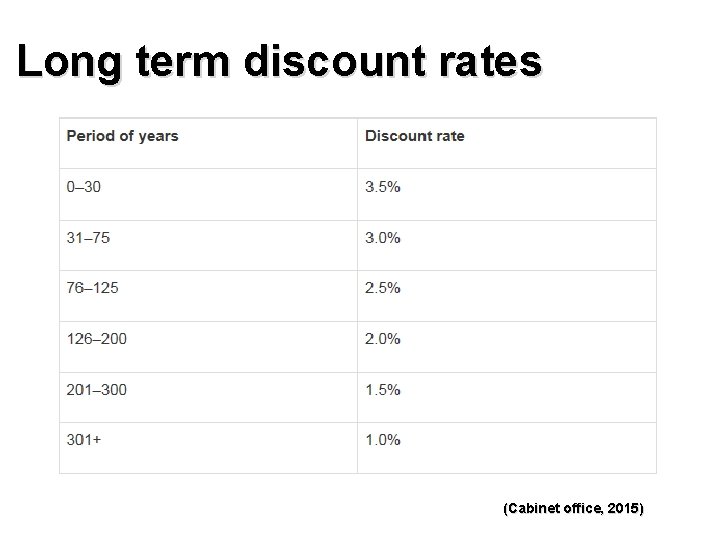
Long term discount rates (Cabinet office, 2015)
c) Annual equivalents value (compare alternatives) AE = Total Present Value PV of £ 1 per annum
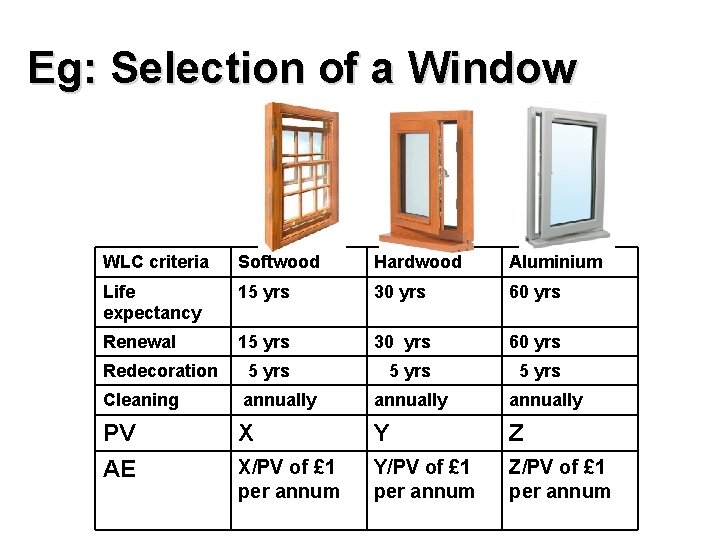
Eg: Selection of a Window WLC criteria Softwood Hardwood Aluminium Life expectancy 15 yrs 30 yrs 60 yrs Renewal 15 yrs 30 yrs 60 yrs Redecoration 5 yrs Cleaning annually PV AE X Y Z X/PV of £ 1 per annum Y/PV of £ 1 per annum Z/PV of £ 1 per annum
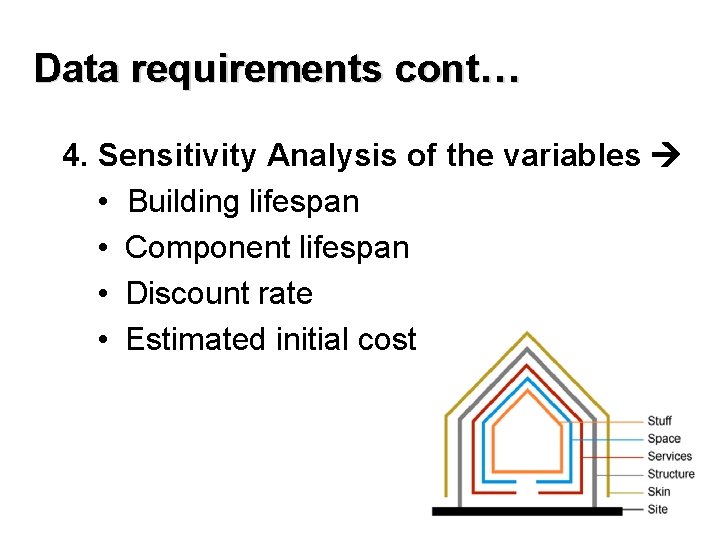
Data requirements cont… 4. Sensitivity Analysis of the variables • Building lifespan • Component lifespan • Discount rate • Estimated initial cost
Benefits of LCC • The final decision derived from LCC represents the total cost commitment of a facility • Identifies alternative ways to reduce unnecessary costs • The provision of a framework within which to compare options at all stages of development.
Limitations • Ignorance by the client • lack of awareness of the importance of future costs • Confusion over scoping and terminology (WLC, LCC, WLA…) • Lack of tangible evidences and know-how (skills) to make it happen
Limitations cont. . • Lack of framework for collecting relevant data • Low reliability of available data • Complex calculations • Number of unpredictable variables • Taxation changes and implications
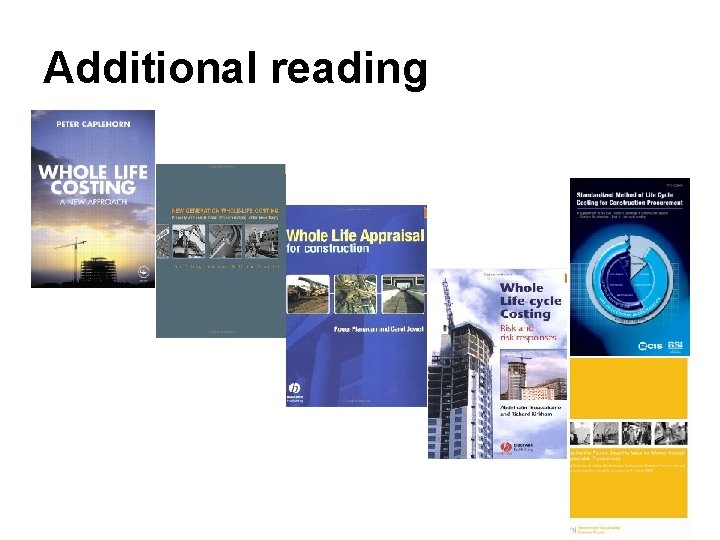
Additional reading 30
Questions? Questions