
LIFE CHANGES OVER TIME STUDY GUIDE 1 A
- Slides: 13
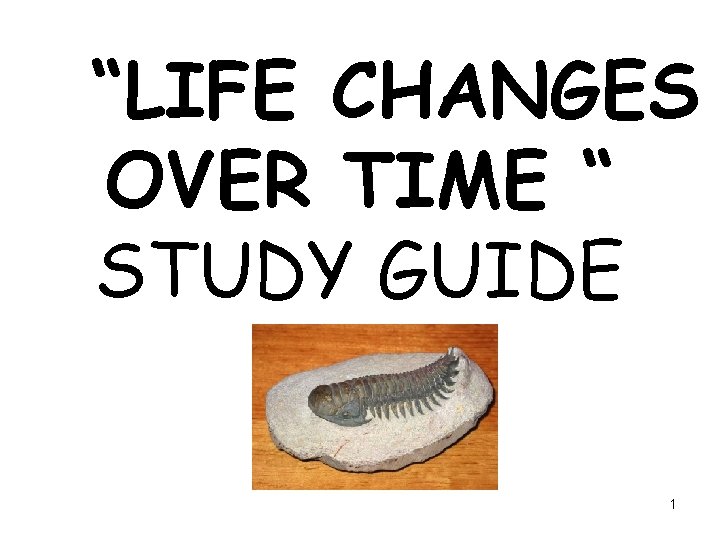
“LIFE CHANGES OVER TIME “ STUDY GUIDE 1
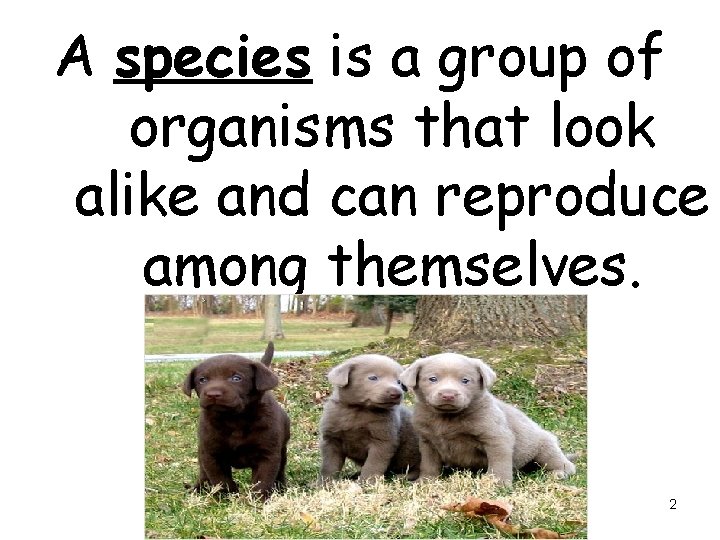
A species is a group of organisms that look alike and can reproduce among themselves. 2
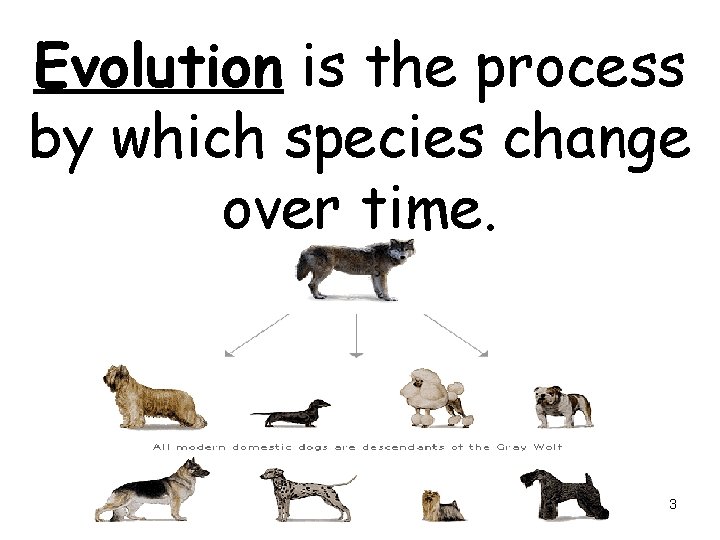
Evolution is the process by which species change over time. 3
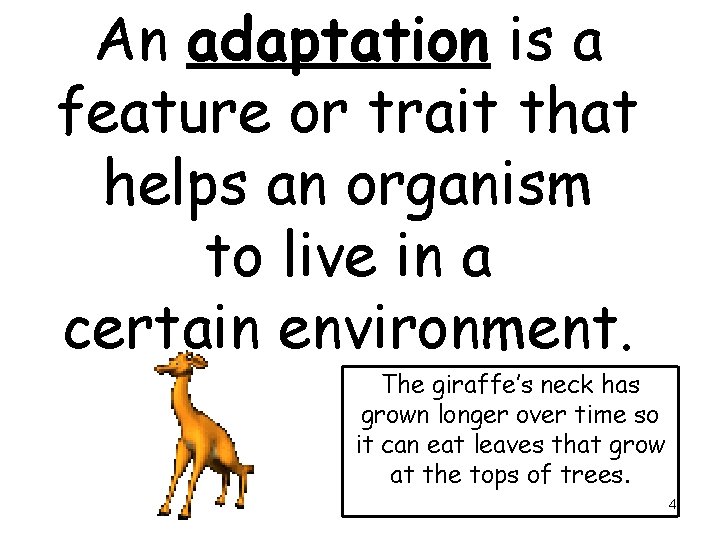
An adaptation is a feature or trait that helps an organism to live in a certain environment. The giraffe’s neck has grown longer over time so it can eat leaves that grow at the tops of trees. 4
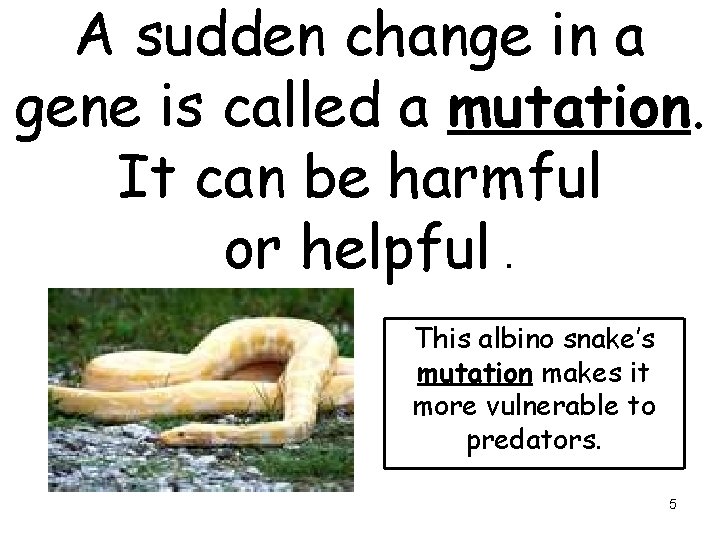
A sudden change in a gene is called a mutation. It can be harmful or helpful. This albino snake’s mutation makes it more vulnerable to predators. 5
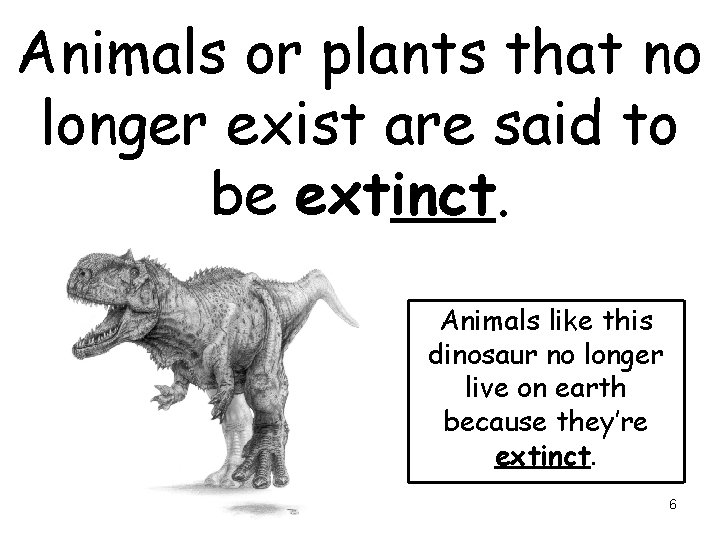
Animals or plants that no longer exist are said to be extinct. Animals like this dinosaur no longer live on earth because they’re extinct. 6
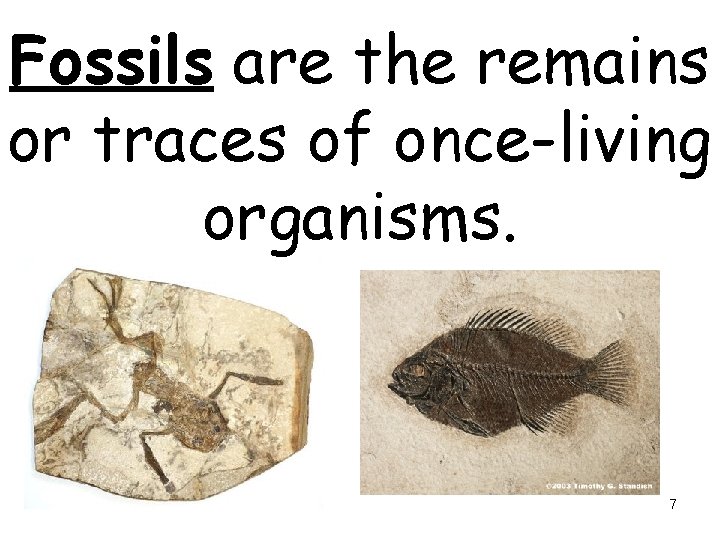
Fossils are the remains or traces of once-living organisms. 7
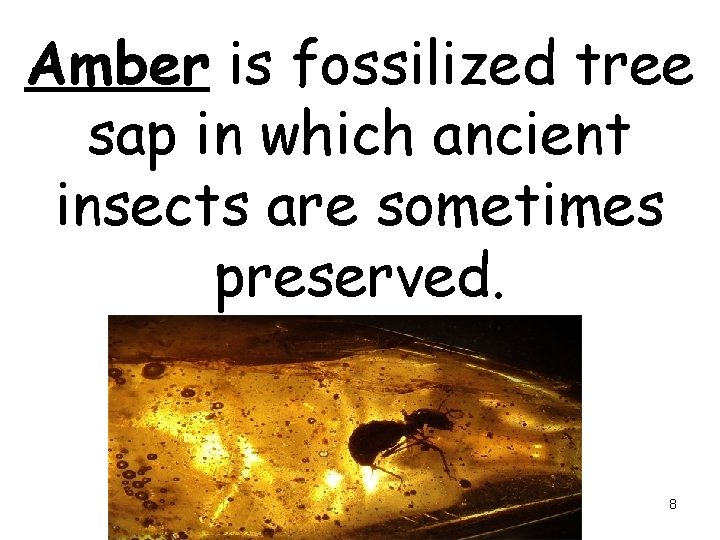
Amber is fossilized tree sap in which ancient insects are sometimes preserved. 8
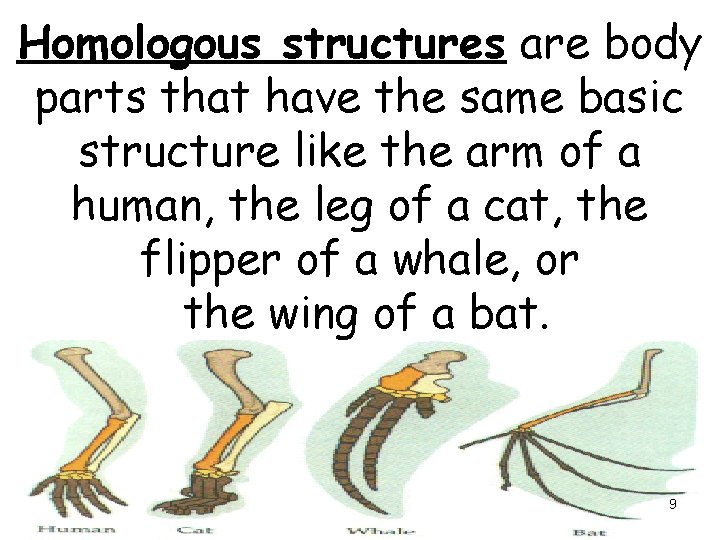
Homologous structures are body parts that have the same basic structure like the arm of a human, the leg of a cat, the flipper of a whale, or the wing of a bat. 9
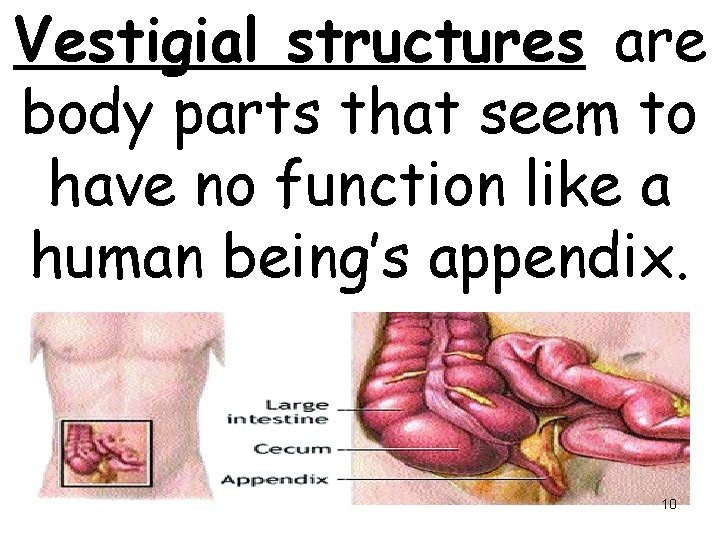
Vestigial structures are body parts that seem to have no function like a human being’s appendix. 10
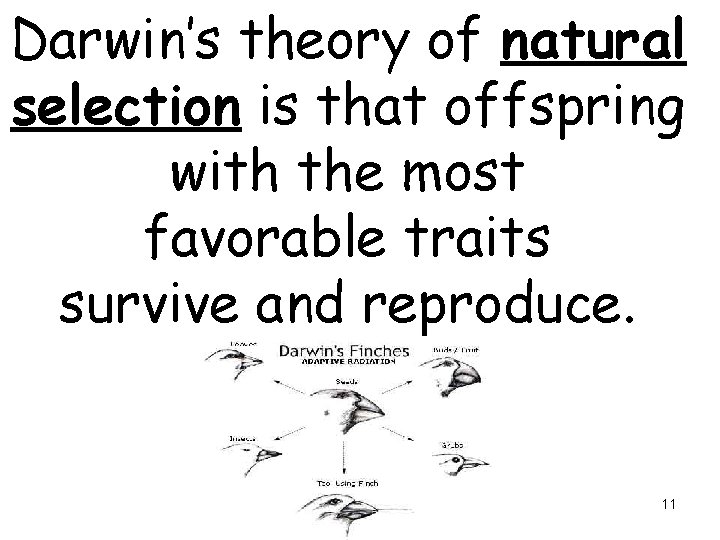
Darwin’s theory of natural selection is that offspring with the most favorable traits survive and reproduce. 11
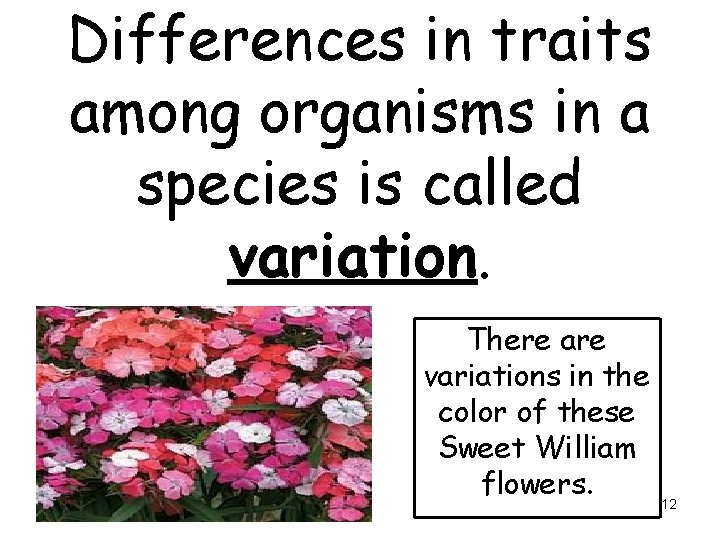
Differences in traits among organisms in a species is called variation. There are variations in the color of these Sweet William flowers. 12
Anthropology is the study of human beings. 13