
Library and Information Studies Education in the United
Library and Information Studies Education in the United States Diane L. Barlow College of Information Studies University of Maryland February 2010
Topics for Today �Introduction to library and information studies (LIS) education in the US �Growth in LIS education �Changes in instruction and curricula �i. School movement �ALA competencies
Library and Information Education in the US Basics
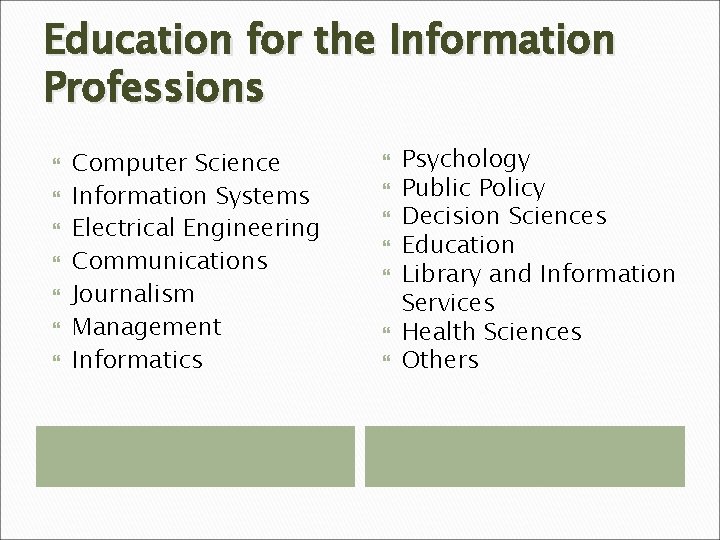
Education for the Information Professions Computer Science Information Systems Electrical Engineering Communications Journalism Management Informatics Psychology Public Policy Decision Sciences Education Library and Information Services Health Sciences Others
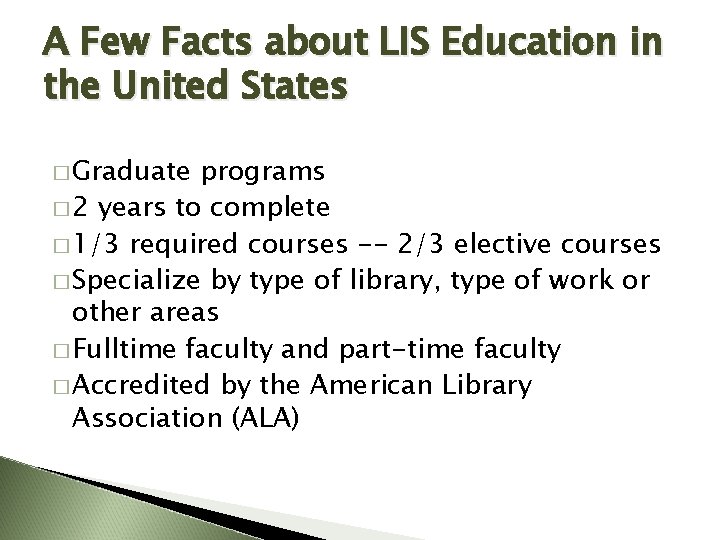
A Few Facts about LIS Education in the United States � Graduate programs � 2 years to complete � 1/3 required courses -- 2/3 elective courses � Specialize by type of library, type of work or other areas � Fulltime faculty and part-time faculty � Accredited by the American Library Association (ALA)
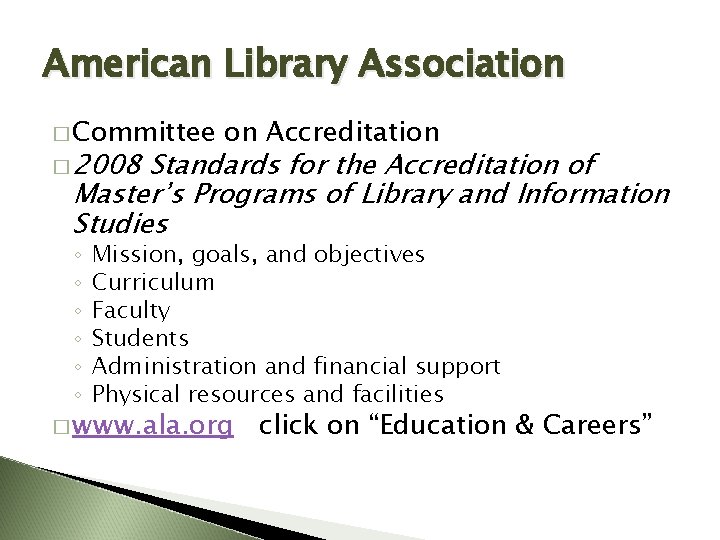
American Library Association � Committee � 2008 on Accreditation Standards for the Accreditation of Master’s Programs of Library and Information Studies ◦ ◦ ◦ Mission, goals, and objectives Curriculum Faculty Students Administration and financial support Physical resources and facilities � www. ala. org click on “Education & Careers”
Growth in LIS Education Increased participation Increased access
More Programs, More Students � Growth in the number of educational programs ◦ 1980 – 1995 � 18 programs closed ◦ 1995 – 2010 � 1 program closed � 5 programs opened ◦ 2010: 62 programs accredited by ALA and 4 programs progressing toward accreditation � Growth in the number of students ◦ 1992: 5, 122 students in LIS programs ◦ 2008: 19, 340 students in LIS programs Source: ALA Office on Accreditation

Factors Leading to Growth � Increase in distance education � Good job outlook
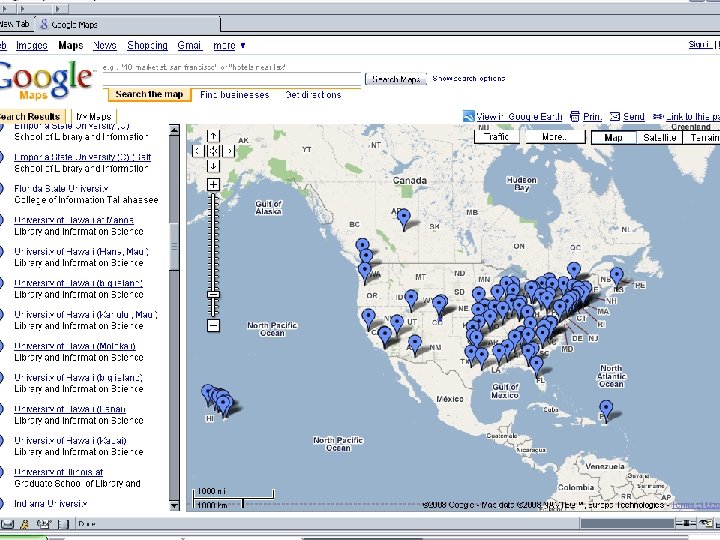
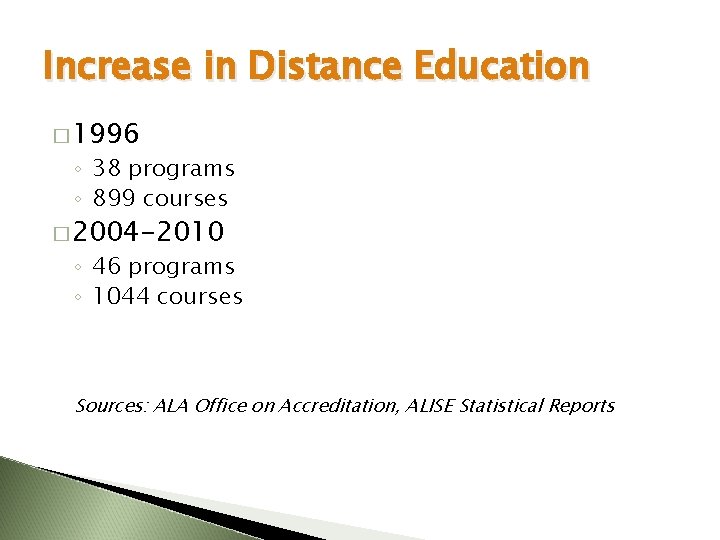
Increase in Distance Education � 1996 ◦ 38 programs ◦ 899 courses � 2004 -2010 ◦ 46 programs ◦ 1044 courses Sources: ALA Office on Accreditation, ALISE Statistical Reports

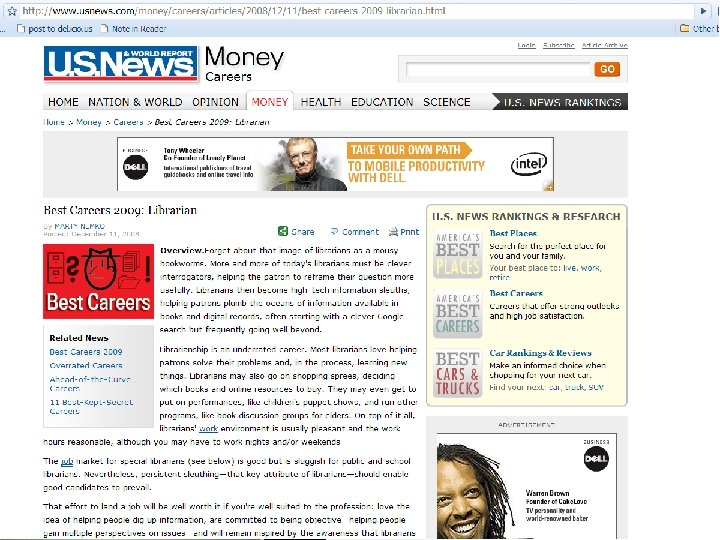
Good Job Outlook � “… job opportunities are expected to be favorable, as a large number of librarians are likely to retire in the coming decade. ” Source: Occupational Outlook Handbook, U. S. Department of Labor
Changes in Instruction and Curriculum New perspectives New audiences New opportunities
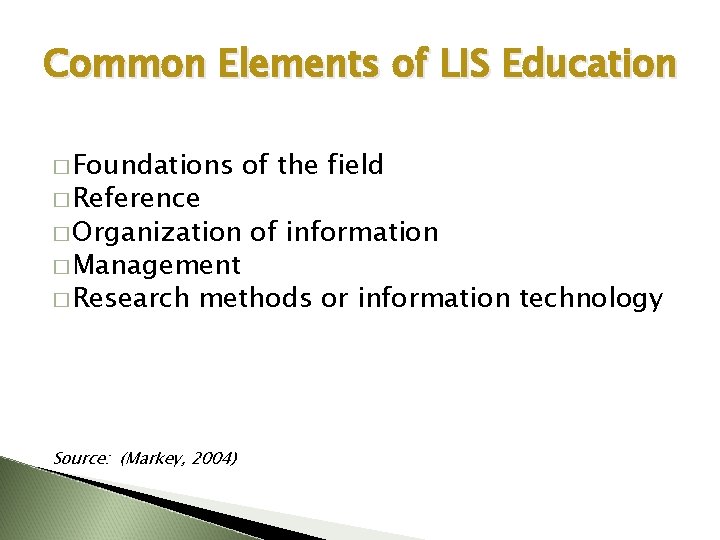
Common Elements of LIS Education � Foundations � Reference � Organization � Management � Research of the field of information methods or information technology Source: (Markey, 2004)
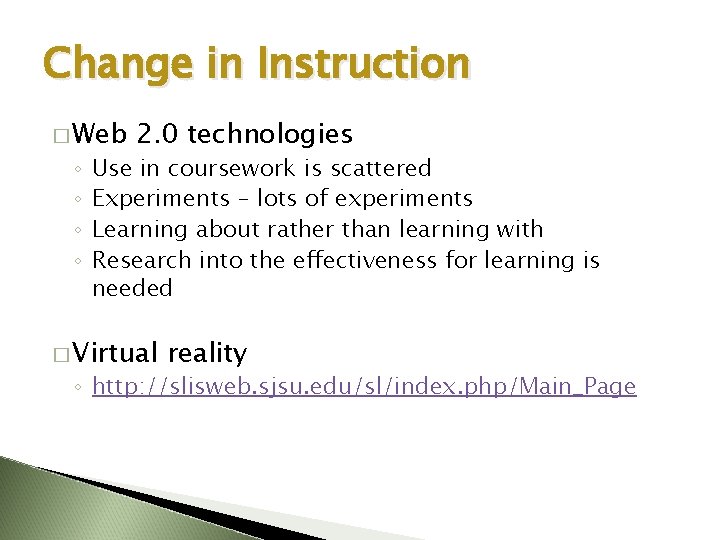
Change in Instruction � Web ◦ ◦ 2. 0 technologies Use in coursework is scattered Experiments – lots of experiments Learning about rather than learning with Research into the effectiveness for learning is needed � Virtual reality ◦ http: //slisweb. sjsu. edu/sl/index. php/Main_Page
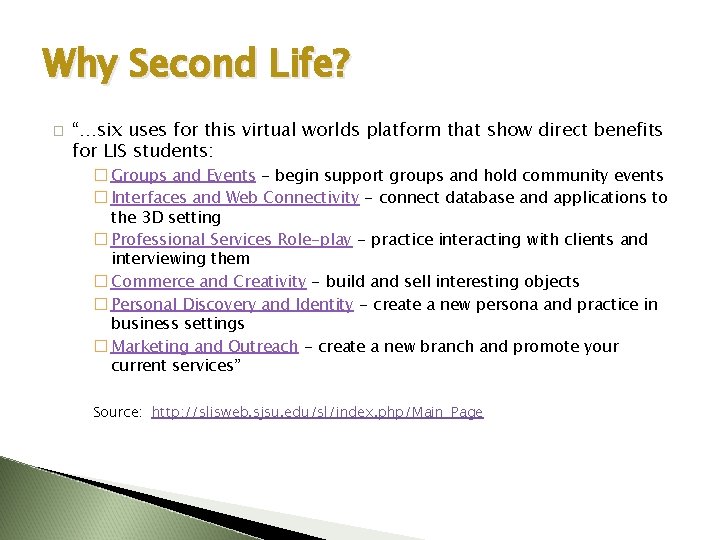
Why Second Life? � “…six uses for this virtual worlds platform that show direct benefits for LIS students: � Groups and Events - begin support groups and hold community events � Interfaces and Web Connectivity - connect database and applications to the 3 D setting � Professional Services Role-play - practice interacting with clients and interviewing them � Commerce and Creativity - build and sell interesting objects � Personal Discovery and Identity - create a new persona and practice in business settings � Marketing and Outreach - create a new branch and promote your current services” Source: http: //slisweb. sjsu. edu/sl/index. php/Main_Page
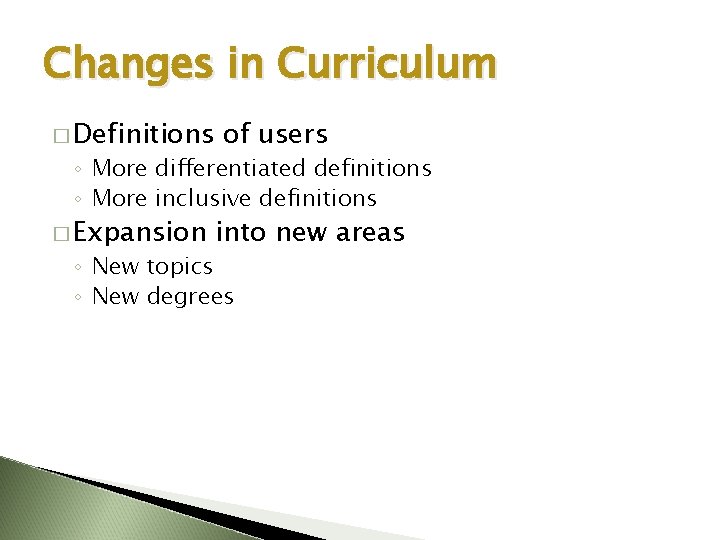
Changes in Curriculum � Definitions of users ◦ More differentiated definitions ◦ More inclusive definitions � Expansion into new areas ◦ New topics ◦ New degrees
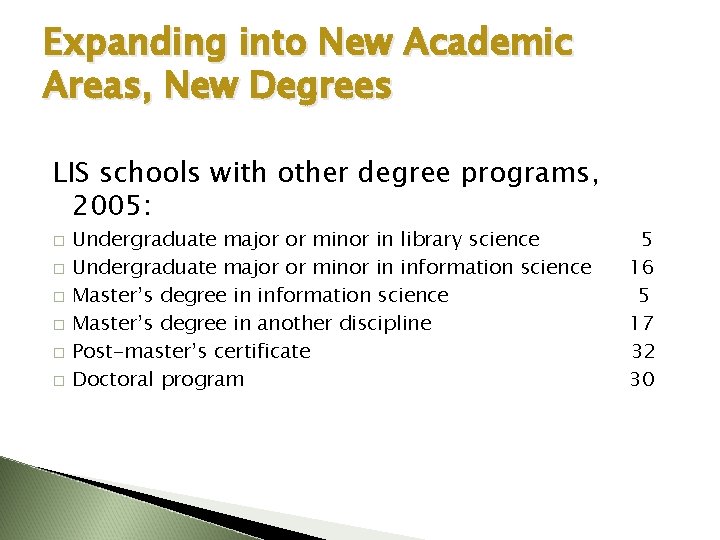
Expanding into New Academic Areas, New Degrees LIS schools with other degree programs, 2005: � � � Undergraduate major or minor in library science Undergraduate major or minor in information science Master’s degree in another discipline Post-master’s certificate Doctoral program 5 16 5 17 32 30
i-Schools More than a change of name
i. Schools � LIS programs that have expanded into other information domains � Computer science programs � Information systems programs

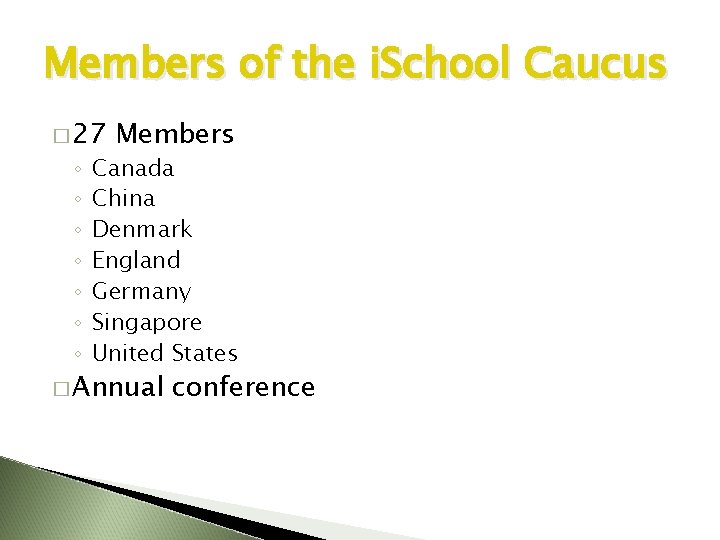
Members of the i. School Caucus � 27 ◦ ◦ ◦ ◦ Members Canada China Denmark England Germany Singapore United States � Annual conference
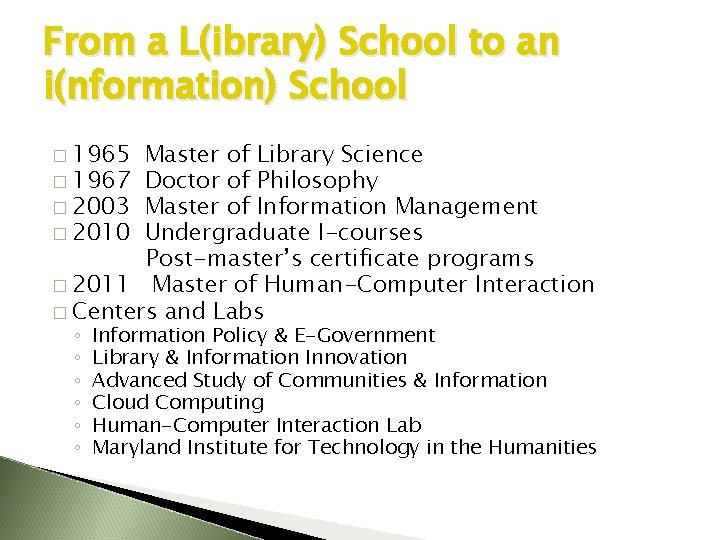
From a L(ibrary) School to an i(nformation) School � 1965 Master of Library Science � 1967 Doctor of Philosophy � 2003 Master of Information Management � 2010 Undergraduate I-courses Post-master’s certificate programs � 2011 Master of Human-Computer Interaction � Centers and Labs ◦ ◦ ◦ Information Policy & E-Government Library & Information Innovation Advanced Study of Communities & Information Cloud Computing Human-Computer Interaction Lab Maryland Institute for Technology in the Humanities
ALA Competencies Hot topic
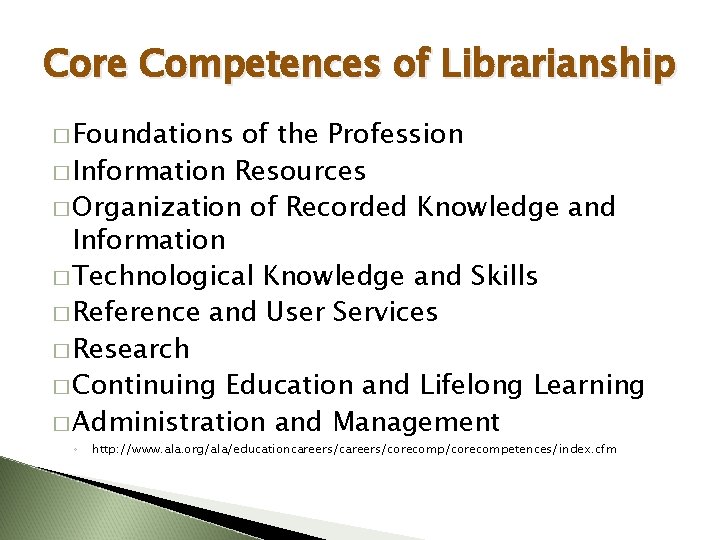
Core Competences of Librarianship � Foundations of the Profession � Information Resources � Organization of Recorded Knowledge and Information � Technological Knowledge and Skills � Reference and User Services � Research � Continuing Education and Lifelong Learning � Administration and Management ◦ http: //www. ala. org/ala/educationcareers/corecomp/corecompetences/index. cfm
A Few Final Observations � Younger students are entering programs � Diversity is not increasing � Federal and foundation funding is available for research and program development � Interest in international learning opportunities is growing
LIS Education in the US: A Final Word Good health ◦ ◦ Growing Experimenting Changing Expanding Stresses ◦ Competition ◦ Scarce resources ◦ Internal tensions
Thank you for your kind attention! dbarlow@umd. edu
- Slides: 33