
Lib QUALTM An Innovative Technology Based Assessment Tool
Lib. QUAL+TM: An Innovative, Technology- Based Assessment Tool for Libraries Online Northwest Twentieth Annual Conference Corvallis, Oregon • February 28, 2003 Julia Blixrud, ARL Director of Information Services
Why New Measures u u u Increased customer and stakeholder expectations Greater demands for accountability Exploding growth in use and applications of technology Increasing competition for resources Need for reliable and valid data – Benchmarking and best practice – Trends over time
ARL New Measures Initiative u u u Collaboration among member leaders with strong interest in this area Specific projects developed with different models for exploration Projects self-funded by interested members Intent to make resulting tools and methodologies available to full membership and wider community Freeze modifications to existing descriptive measures
Antecedents u Effective service delivery – “every unit … is valued in proportion to its contribution to the quality success of the campus” Danuta Nitecki
Lib. QUAL+™ Description Lib. QUAL+TM is a research and development project undertaken to define and measure library service quality across institutions and to create useful quality-assessment tools for local planning.
Project Resources Lib. QUAL+TM is an ARL/Texas A&M University joint effort. The project is supported in part by a 3 -year grant from the U. S. Department of Education’s Fund for the Improvement of Post-Secondary Education (FIPSE).
The Purpose of the Research u u u To fill a knowledge void in modeling the dimensions of library service quality from a user perspective Based upon the model, to develop a webdelivered, effective total market survey instrument equivalent for service quality assessment in academic libraries Using the derived instrument to recommend a process for an ongoing program of comparative outcome measurement for academic libraries
Lib. QUAL+™ Project Goals u u Establishment of a library service quality assessment program at ARL Development of web-based tools for assessing library service quality Development of mechanisms and protocols for evaluating libraries Identification of best practices in providing library service

Relationships: Perceptions, Service Quality and Satisfaction …. only customers judge quality; all other judgments are essentially irrelevant” Zeithaml, Parasuraman, Berry. (1999). Delivering quality service. NY: The Free Press.
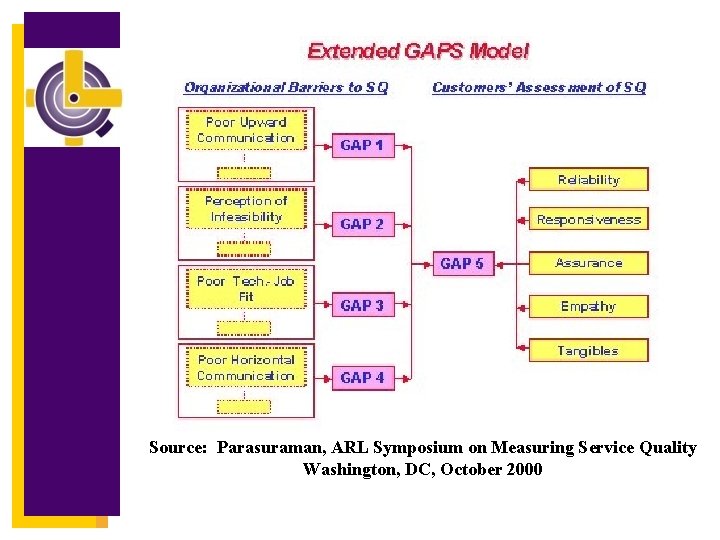
Source: Parasuraman, ARL Symposium on Measuring Service Quality Washington, DC, October 2000
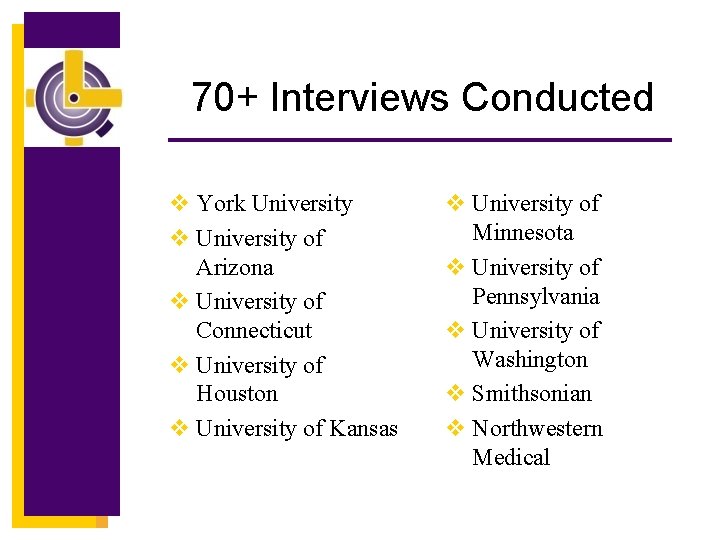
70+ Interviews Conducted v York University v University of Arizona v University of Connecticut v University of Houston v University of Kansas v University of Minnesota v University of Pennsylvania v University of Washington v Smithsonian v Northwestern Medical
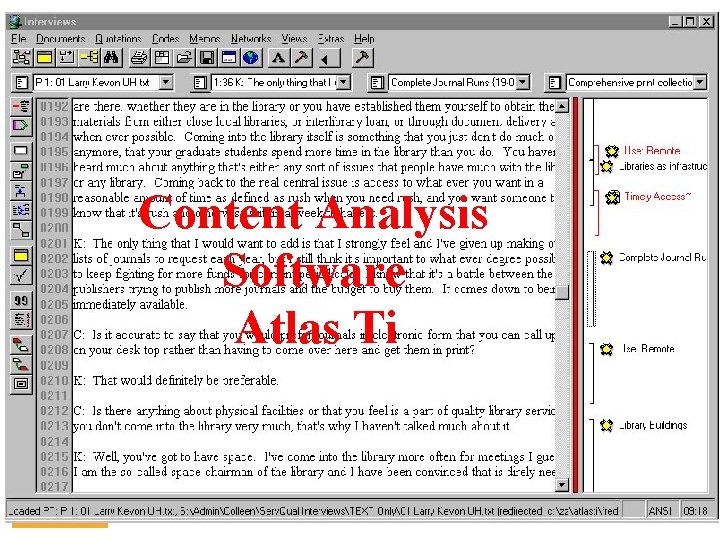
Content Analysis Software Atlas Ti
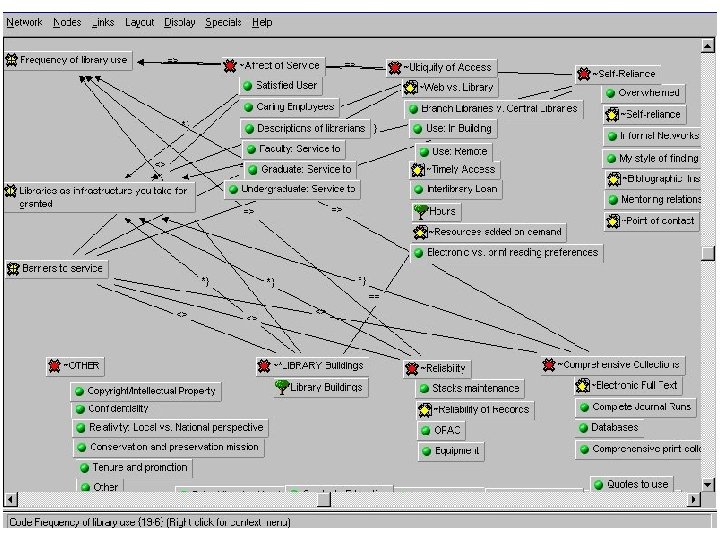

Dimensions of Library Service Quality
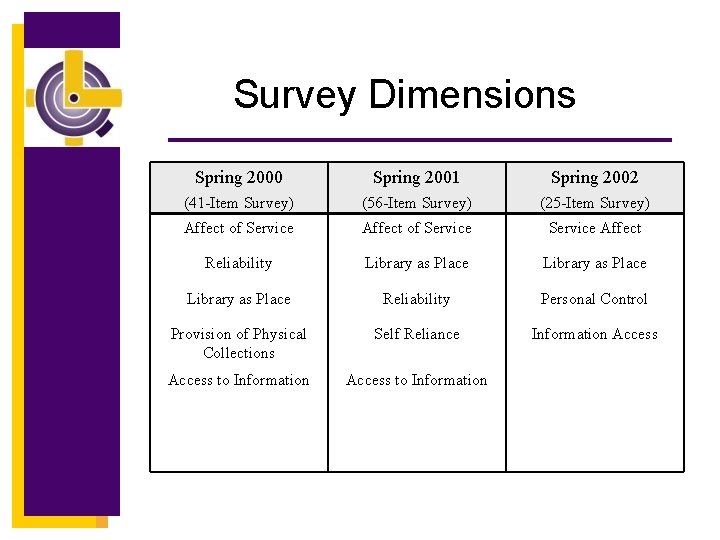
Survey Dimensions Spring 2000 Spring 2001 Spring 2002 (41 -Item Survey) (56 -Item Survey) (25 -Item Survey) Affect of Service Affect Reliability Library as Place Reliability Personal Control Provision of Physical Collections Self Reliance Information Access to Information
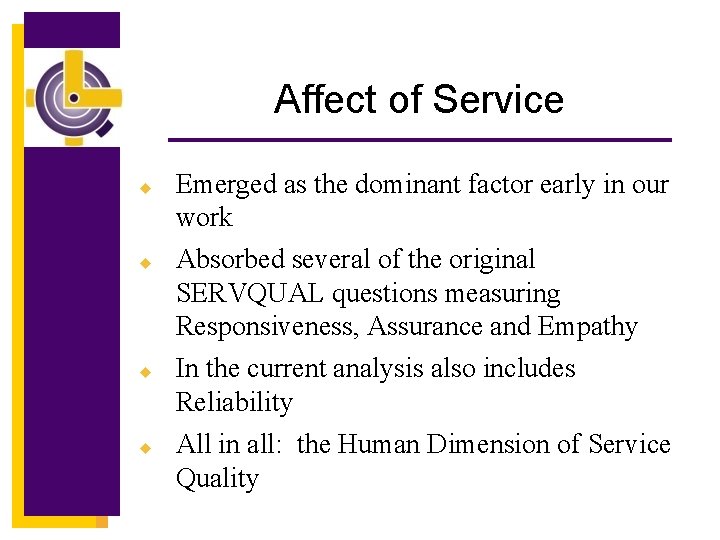
Affect of Service u u Emerged as the dominant factor early in our work Absorbed several of the original SERVQUAL questions measuring Responsiveness, Assurance and Empathy In the current analysis also includes Reliability All in all: the Human Dimension of Service Quality
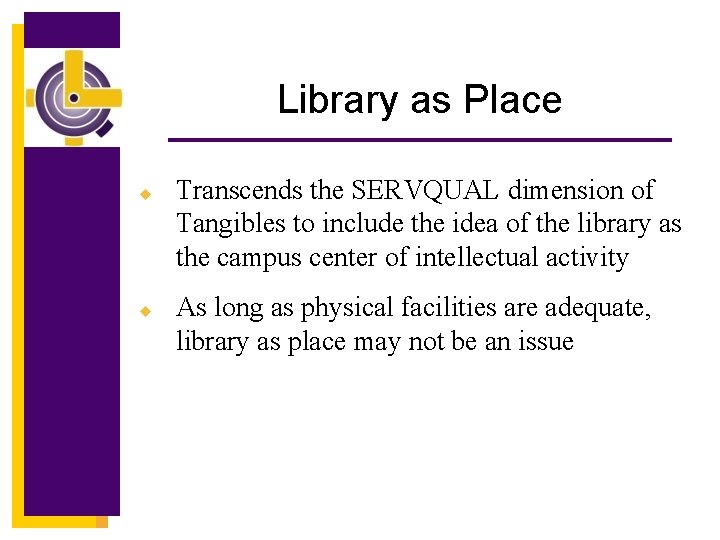
Library as Place u u Transcends the SERVQUAL dimension of Tangibles to include the idea of the library as the campus center of intellectual activity As long as physical facilities are adequate, library as place may not be an issue
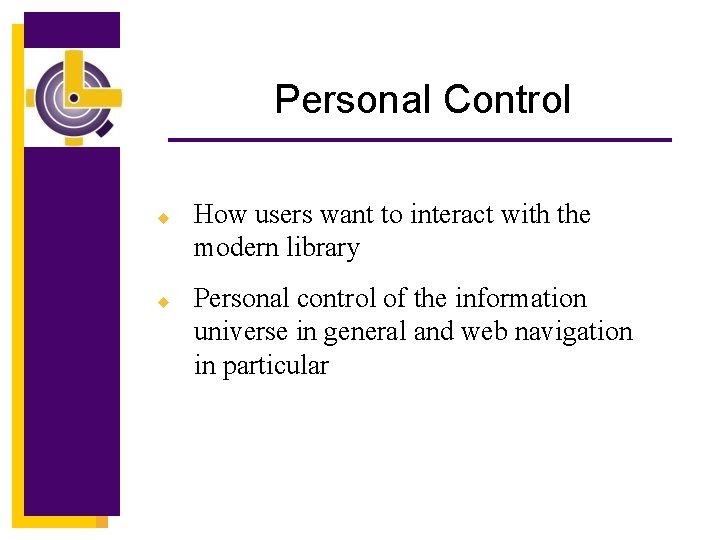
Personal Control u u How users want to interact with the modern library Personal control of the information universe in general and web navigation in particular
Access to Information u u Ubiquity of access: information delivered in the format, location and time of choice Comprehensive collections—either print or electronic
The Challenge of Analysis u u u There are few useful conclusions to be drawn from aggregate data of all institutions, because their missions and subsequent user expectations for service are too diverse There are commonalities in service delivery profiles that merit further investigation In the long run, information that may be derived from demographic responses of individuals may yield the richest data
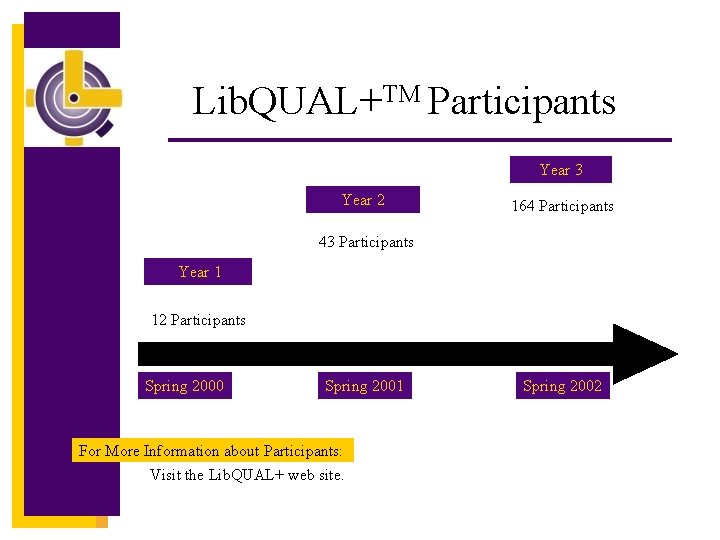
Lib. QUAL+TM Participants Year 3 Year 2 164 Participants 43 Participants Year 1 12 Participants Spring 2000 Spring 2001 For More Information about Participants: Visit the Lib. QUAL+ web site. Spring 2002
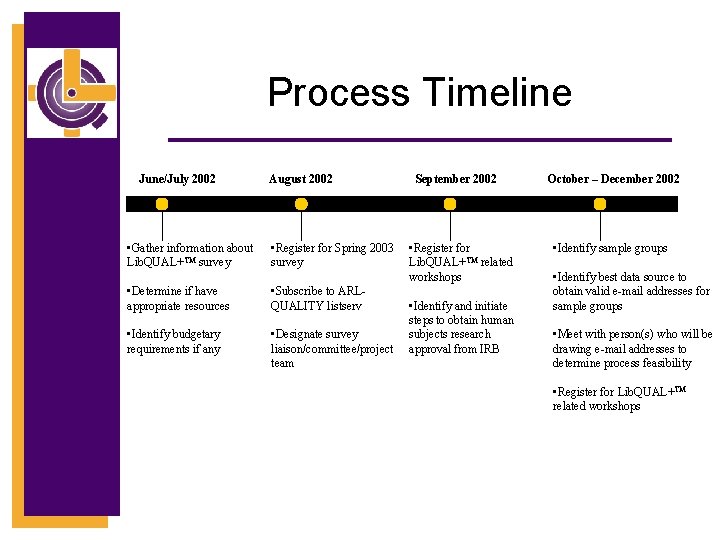
Process Timeline June/July 2002 August 2002 • Gather information about Lib. QUAL+TM survey • Register for Spring 2003 survey • Determine if have appropriate resources • Subscribe to ARLQUALITY listserv • Identify budgetary requirements if any • Designate survey liaison/committee/project team September 2002 • Register for Lib. QUAL+TM related workshops • Identify and initiate steps to obtain human subjects research approval from IRB October – December 2002 • Identify sample groups • Identify best data source to obtain valid e-mail addresses for sample groups • Meet with person(s) who will be drawing e-mail addresses to determine process feasibility • Register for Lib. QUAL+TM related workshops
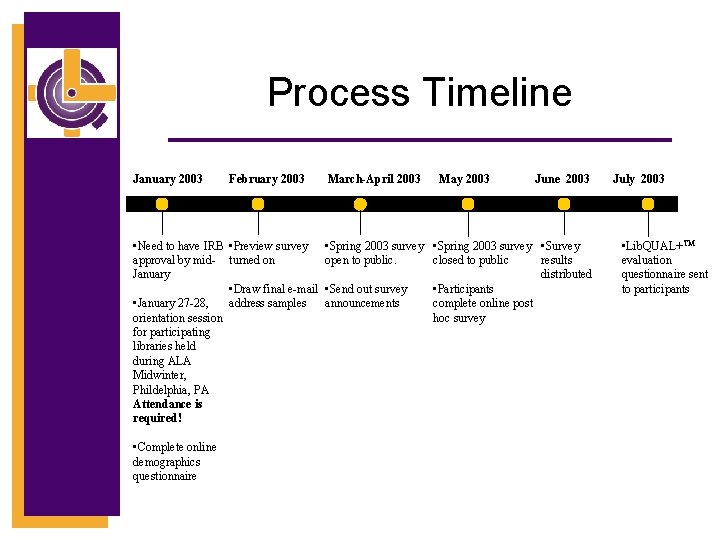
Process Timeline January 2003 February 2003 • Need to have IRB • Preview survey approval by mid- turned on January • Draw final e-mail • January 27 -28, address samples orientation session for participating libraries held during ALA Midwinter, Phildelphia, PA Attendance is required! • Complete online demographics questionnaire March-April 2003 May 2003 June 2003 • Spring 2003 survey • Survey open to public. closed to public results distributed • Send out survey • Participants announcements complete online post hoc survey July 2003 • Lib. QUAL+TM evaluation questionnaire sent to participants
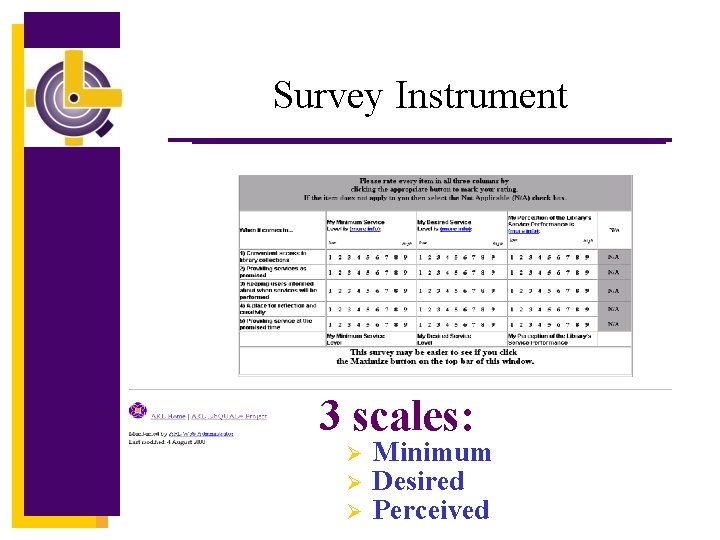
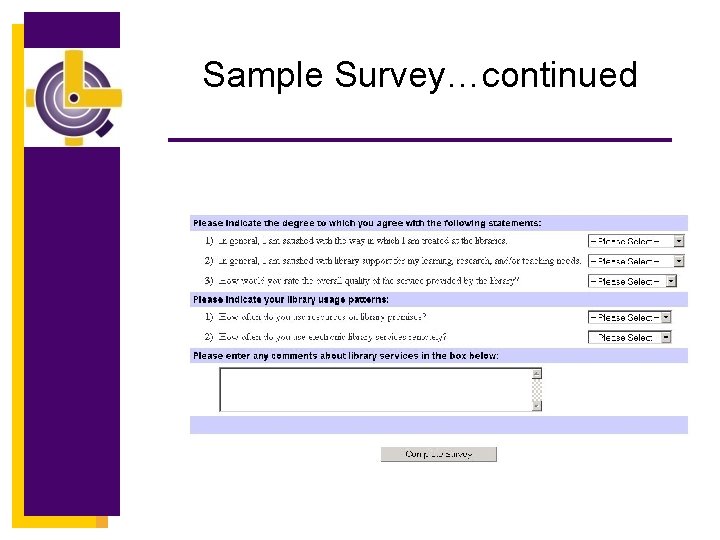
Survey Instrument 3 scales: Ø Ø Ø Minimum Desired Perceived
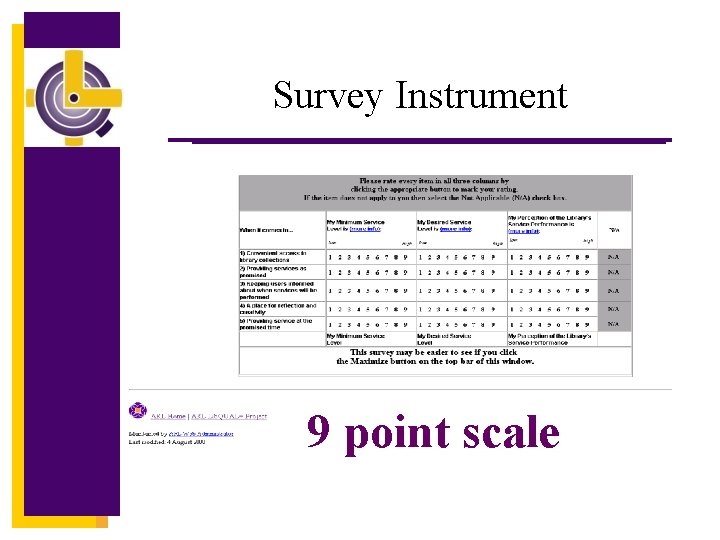
Survey Instrument 9 point scale
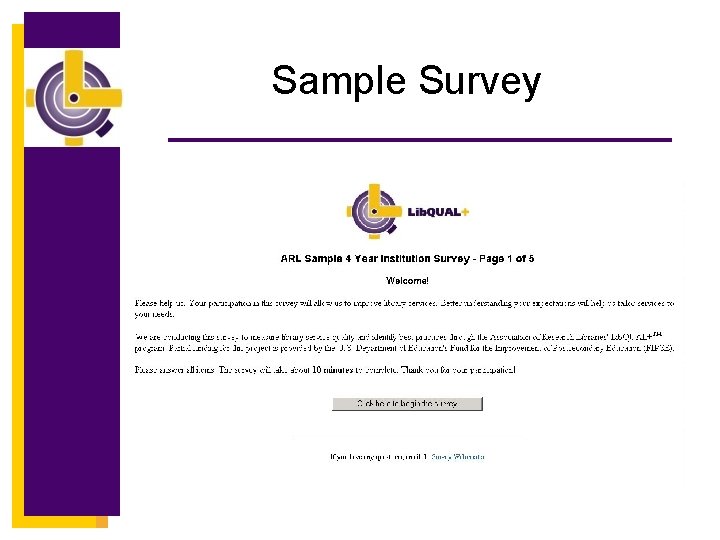
Sample Survey
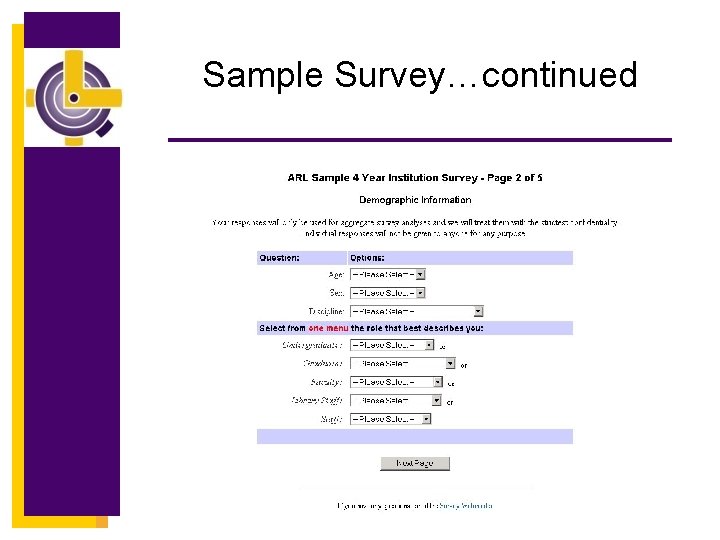
Sample Survey…continued
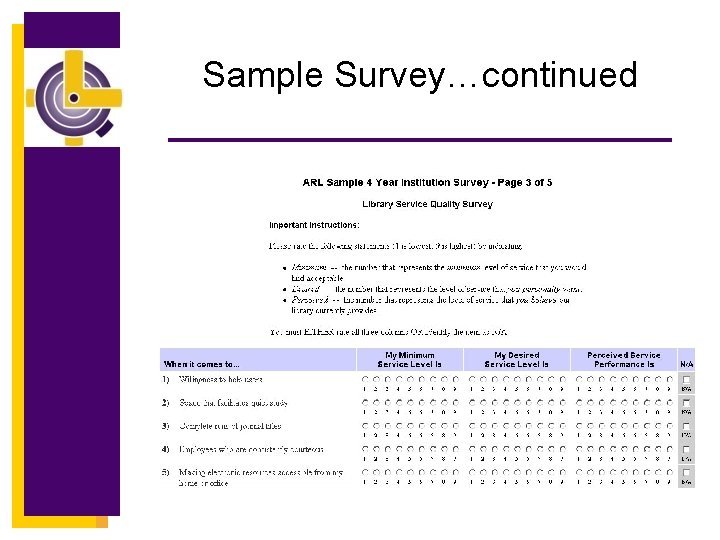
Sample Survey…continued
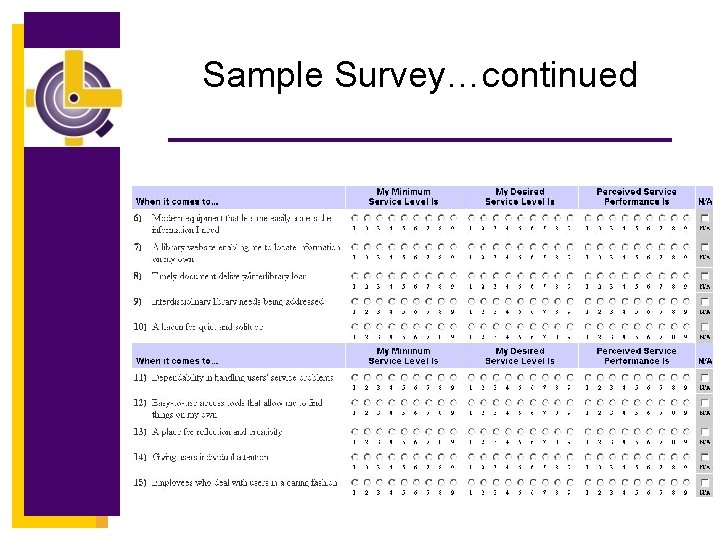
Sample Survey…continued
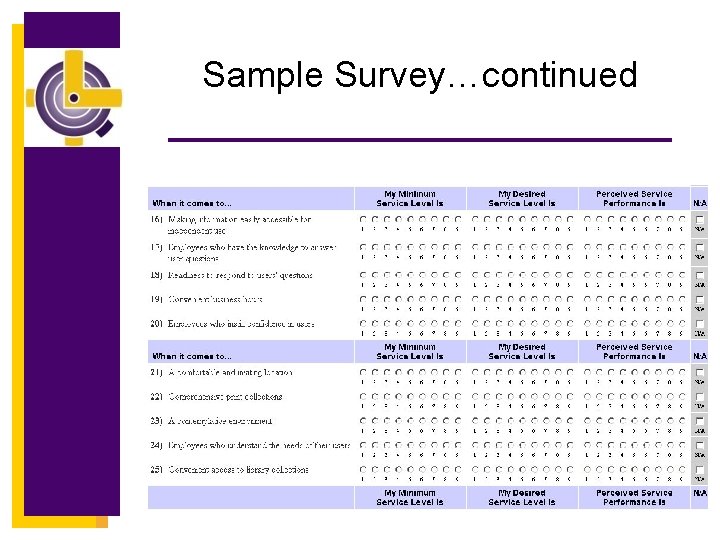
Sample Survey…continued
Sample Survey…continued
Sample Survey…continued

Technology Approach Software • Reduced HTML requirements • No client-side actions (no javascript, Java, Active-X, cookies) • Cold. Fusion (for website and loadbalanced servers) • SQL Server 2000 (for database server)
Technology Approach Hardware • 4 servers at TAMU – 1 reserved for old. libqual. org site – 2 load-balanced web/application Cold. Fusion-only servers that serve up the web pages of the survey – Database server that collects all data • 1 development server at ARL
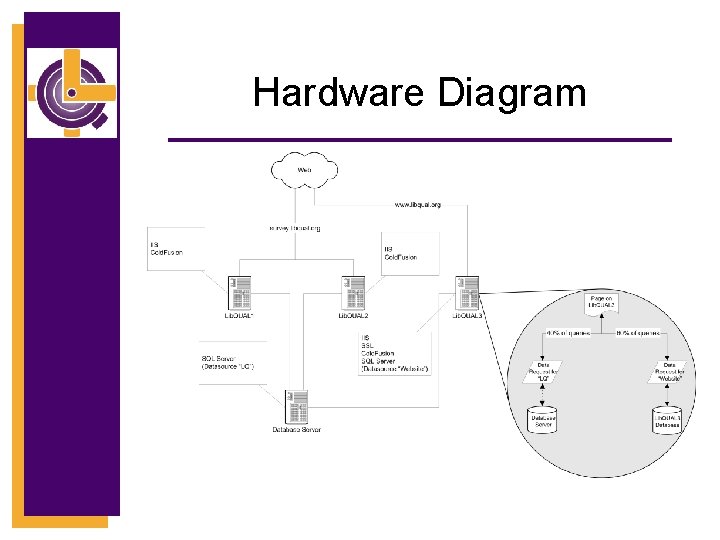
Hardware Diagram
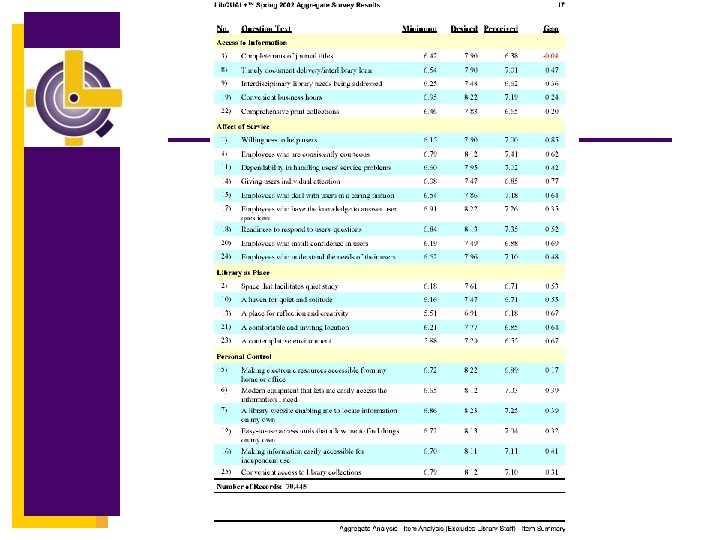
Project Deliverables Print and web-based results include: – Aggregate Summaries – Demographics by Library – Item Summaries – Dimension Summaries – A copy of the survey instrument – Dimensions measured for survey implementation
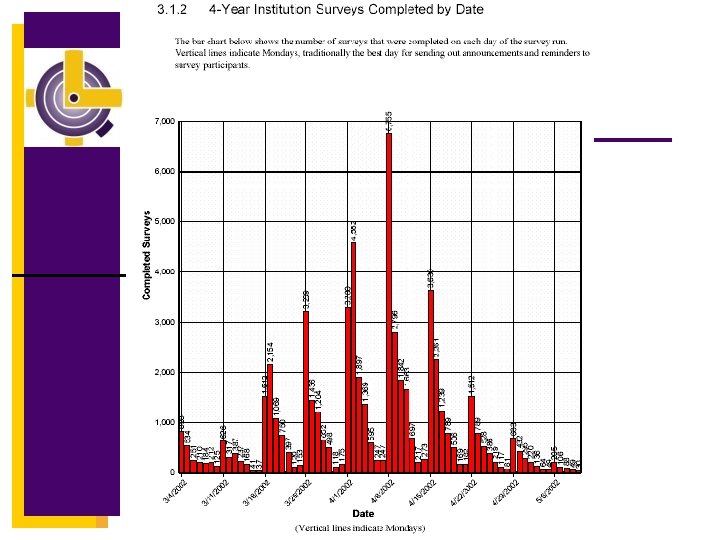
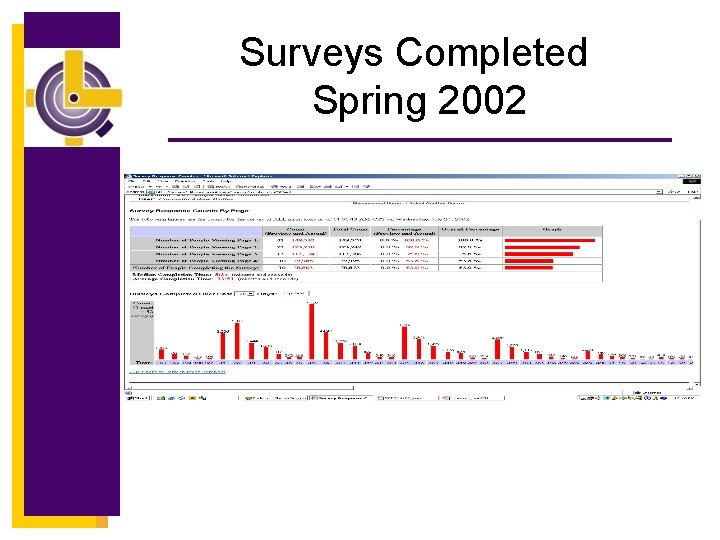
Surveys Completed Spring 2002
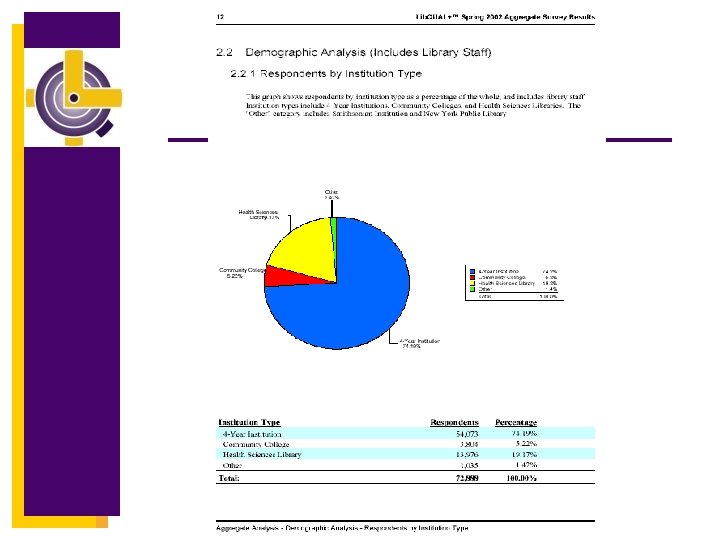
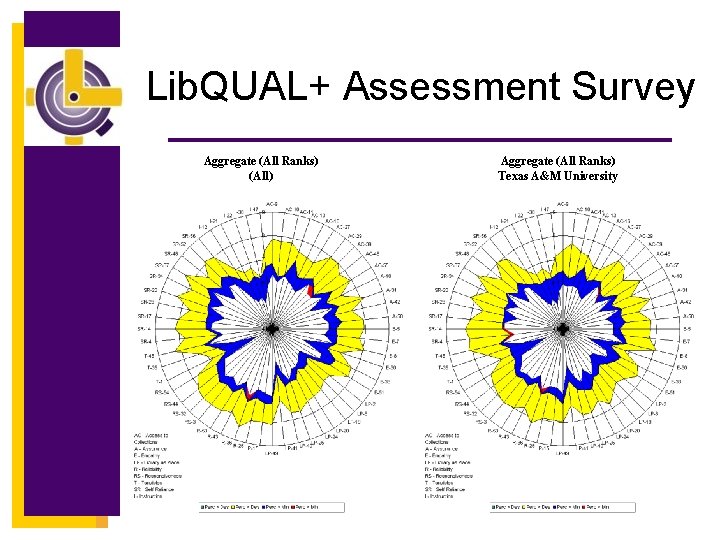
Lib. QUAL+ Assessment Survey Aggregate (All Ranks) (All) Aggregate (All Ranks) Texas A&M University
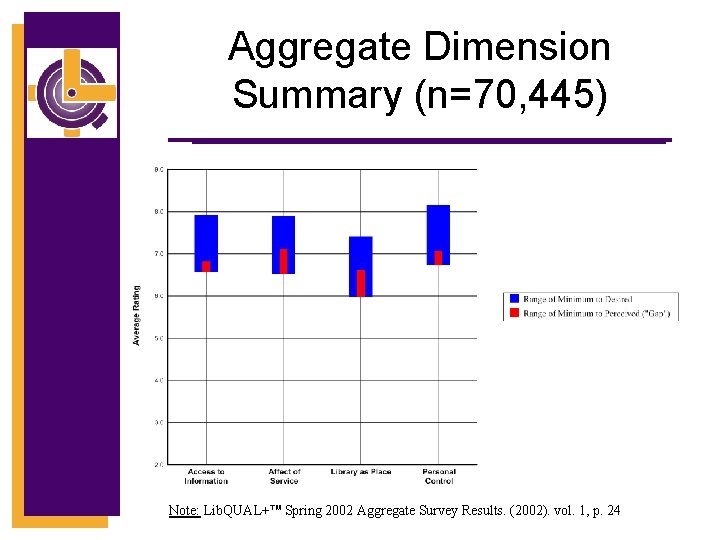
Aggregate Dimension Summary (n=70, 445) Note: Lib. QUAL+ Spring 2002 Aggregate Survey Results. (2002). vol. 1, p. 24
Interpretation Framework Zone of Tolerance u u The area between minimally acceptable and desired service quality ratings Perception ratings ideally fall within the Zone of Tolerance
Interpretation Framework Score Norms u u Norm Conversion Tables facilitate the interpretation of observed scores using norms created for a large and representative sample Lib. QUAL+TM norms have been created at both the individual and institutional level
Lib. QUAL+™ Fundamental Contributions to the Measurement of Effective Delivery of Library Services u Shift the focus of assessment u Determine the degree to which from mechanical expenditure-driven metrics to user-centered measures of quality information derived from local data can be generalized, providing much needed “best practices” information u Re-ground gap theory for the library sector, especially academic libraries u Demonstrate the efficacy of large -scale administration of usercentered assessment transparently across the web u Grounded questions yield data of sufficient granularity to be of value at the local level u Makes little demand of local resources and expertise
Lib. QUAL+™ Resources Lib. QUAL+ Web Site http: //www. libqual. org Lib. QUAL+ Bibliography http: //www. coe. tamu. edu/~bthompson/servqbib Survey Participants Policies and Procedures Manual http: //www. libqual. org/documents/admin/procedures 3. 8. pdf
Julia C. Blixrud Director of Information Services Association of Research Libraries 21 Dupont Circle, Ste 800 Washington, DC 20036 jblix@arl. org 202 -296 -2296 ext. 133 202 -872 -0884 (fax) 202 -251 -4678 (mobile)
- Slides: 48