
LGBT Topics in the Adult ESL Classroom Patrick
LGBT Topics in the Adult ESL Classroom Patrick Huang LSC International College / EC Toronto TESL Nova Scotia, 2016 Halifax, NS
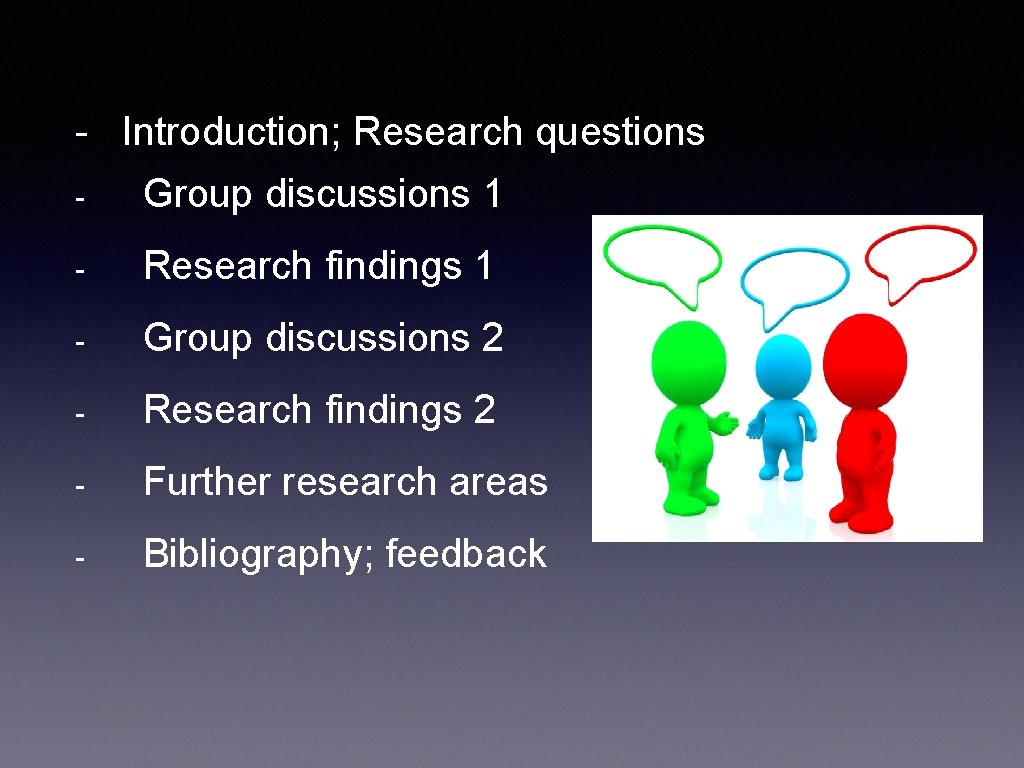
- Introduction; Research questions - Group discussions 1 - Research findings 1 - Group discussions 2 - Research findings 2 - Further research areas - Bibliography; feedback
Three Research Questions 1. LGBT-related issues in the literature 2. A gay-identified teacher’s strategies 3. How can teachers be supported
Group Discussion 1 What LGBT-related issues have you experienced in your practice? (Most prevalent / similar / unusual? )

Research Question 1: What LGBT-related issues? A. Sexual identities and same-sex relationships B. Violent, homophobic language C. Coming out for the teacher D. Coming out for learners
Group Discussion 2 [What LGBT-related issues have you experienced in your practice? (Most prevalent / similar / unusual? )] What measures or strategies are helpful in your experience?
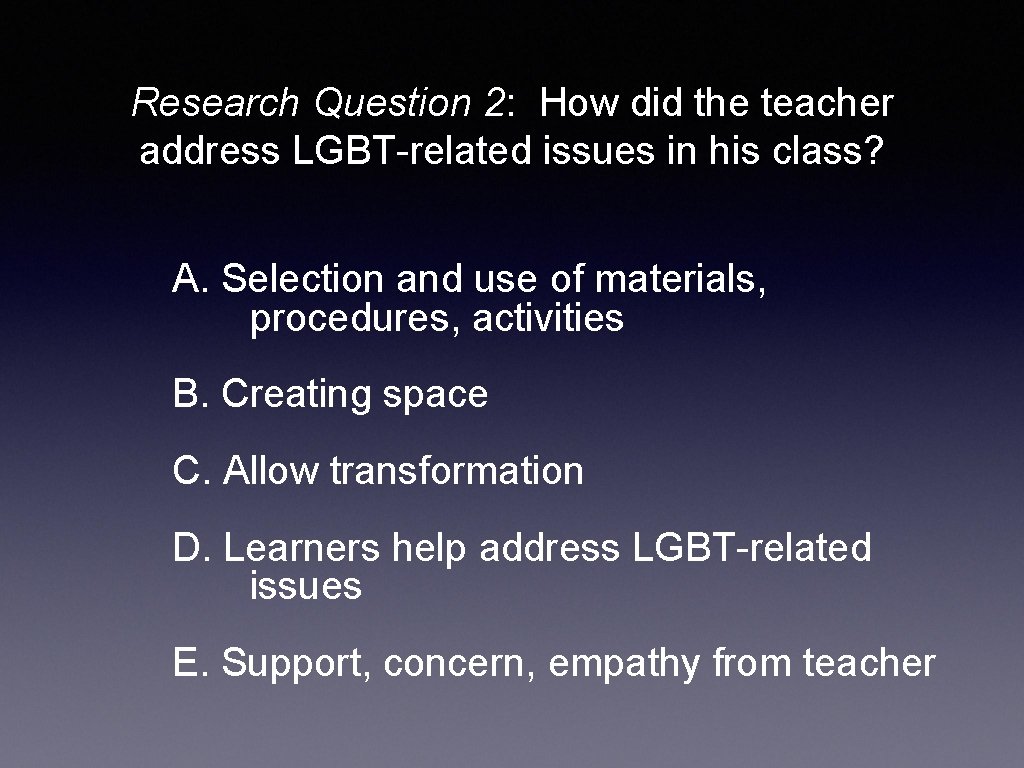
Research Question 2: How did the teacher address LGBT-related issues in his class? A. Selection and use of materials, procedures, activities B. Creating space C. Allow transformation D. Learners help address LGBT-related issues E. Support, concern, empathy from teacher
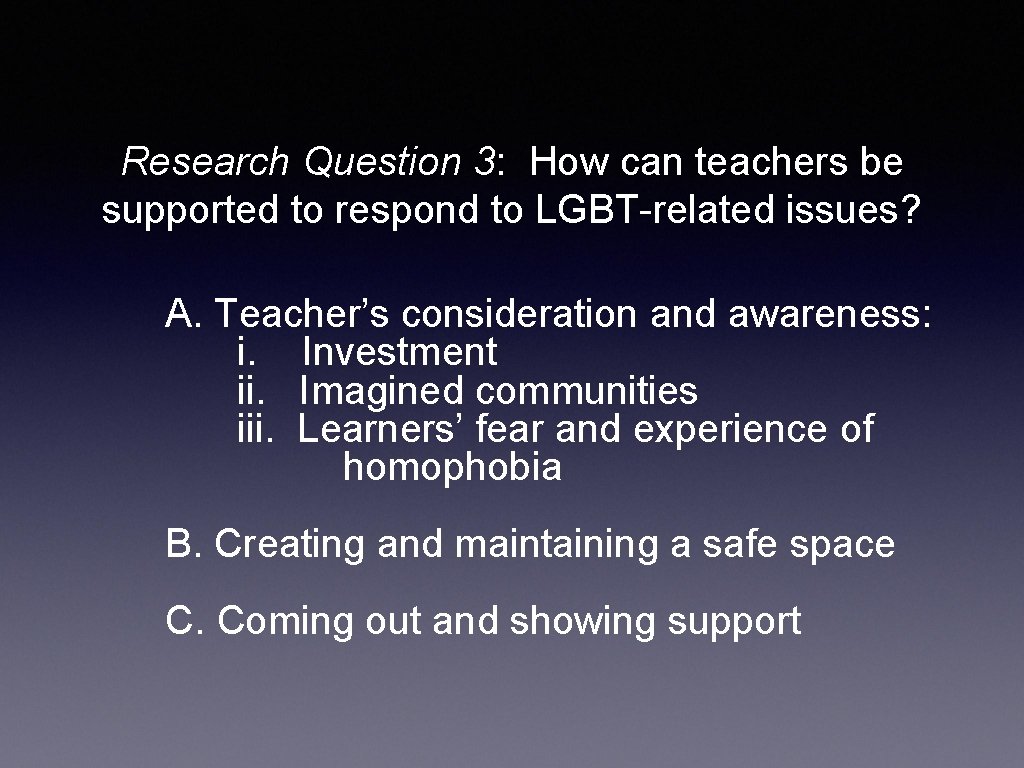
Research Question 3: How can teachers be supported to respond to LGBT-related issues? A. Teacher’s consideration and awareness: i. Investment ii. Imagined communities iii. Learners’ fear and experience of homophobia B. Creating and maintaining a safe space C. Coming out and showing support
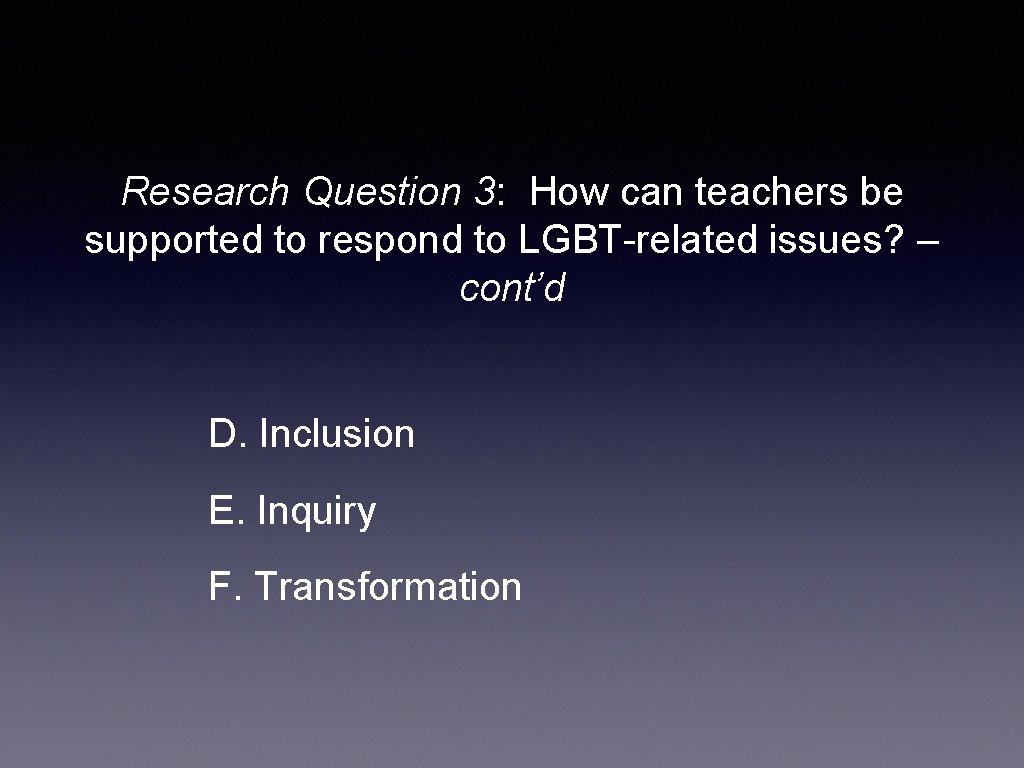
Research Question 3: How can teachers be supported to respond to LGBT-related issues? – cont’d D. Inclusion E. Inquiry F. Transformation
Possible areas for further investigation A. Female perspective B. Mono- lingual / cultural setting (e. g. Taiwan; Mexico) C. New immigrant context
References Johnson, K. E. , & Golombek, P. R. (2011). The transformative power of narrative in second language teacher education. TESOL Quarterly, 45(3), 486 -509. Nelson, C. D. (2002). Why queer theory is useful in teaching. Journal of Gay and Lesbian Social Services, 14(2), 43 -53.
References – cont’d Nelson, C. D. (2009). Sexual identities in English language education: Classroom conversations. New York: Routledge. Peirce, B. N. (1995). Social identity, investment, and language learning. TESOL Quarterly, 29(1), 9 -31. Ravitch, L. M. (2016). Integrating LGBTQ Topics within the ESL Classroom. TESOL Conference 2016, Baltimore, Maryland.
- Slides: 12