
Lexis Nexis Academic Lexis Nexis Lexis Nexis Academic
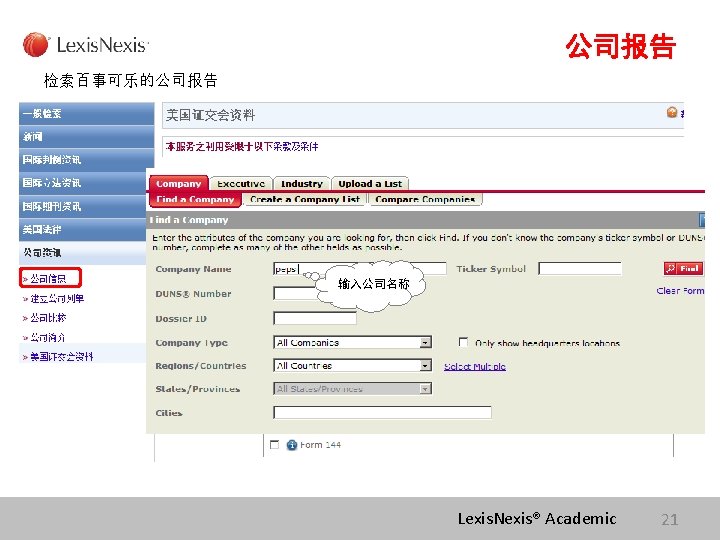
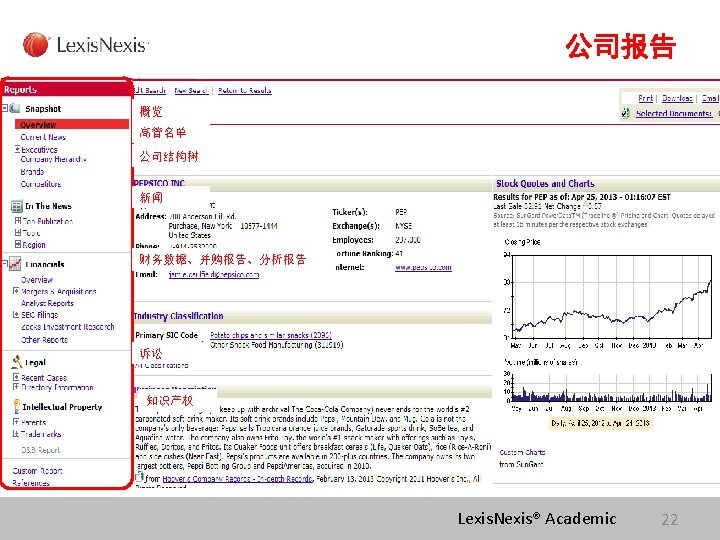
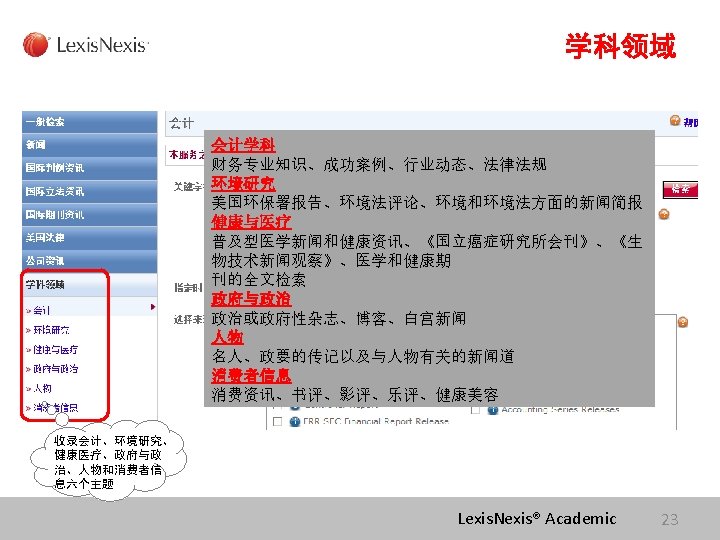
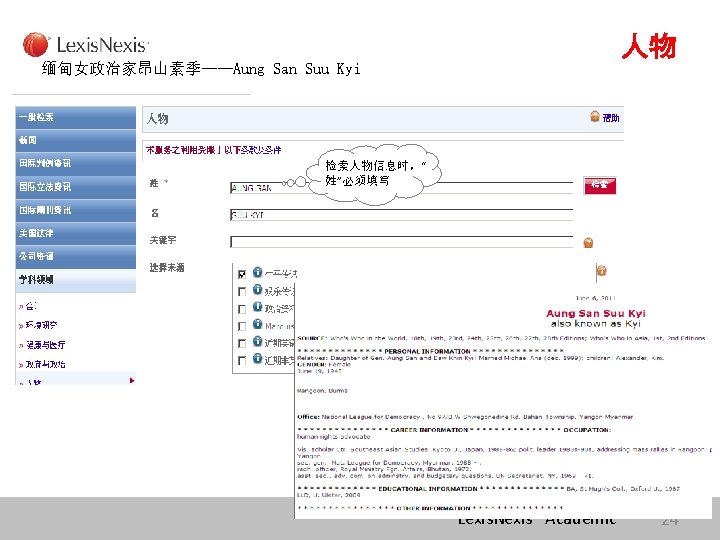
- Slides: 35
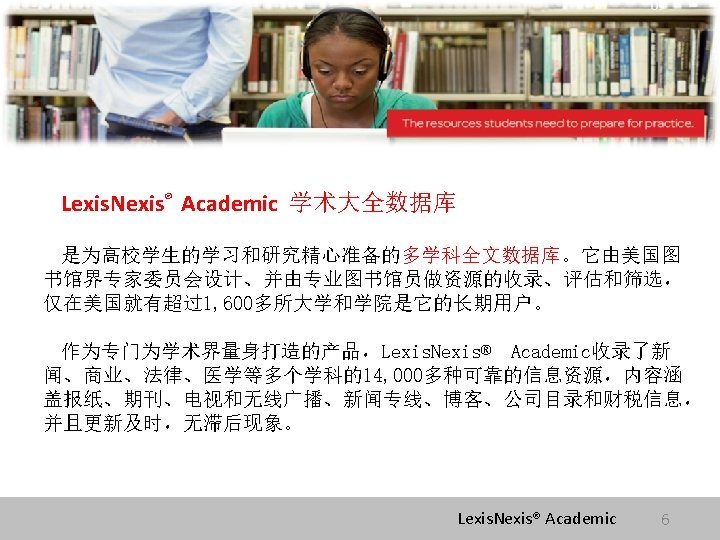
Lexis. Nexis ® Academic 学术大全数据库 Lexis. Nexis® 律商联讯
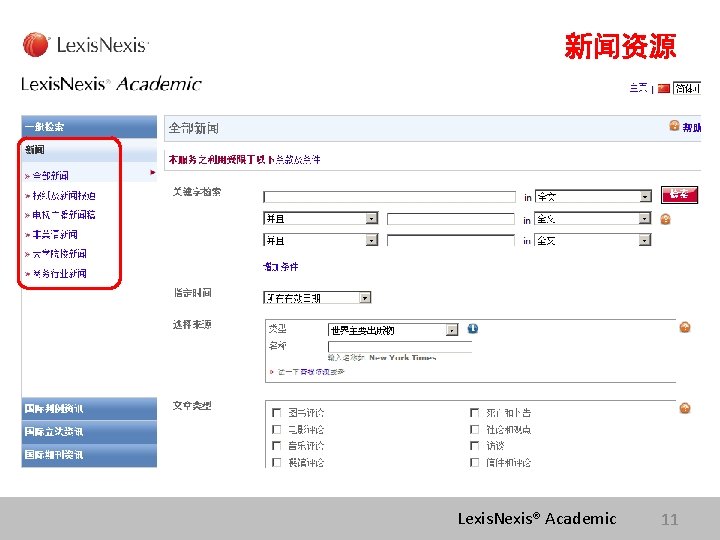
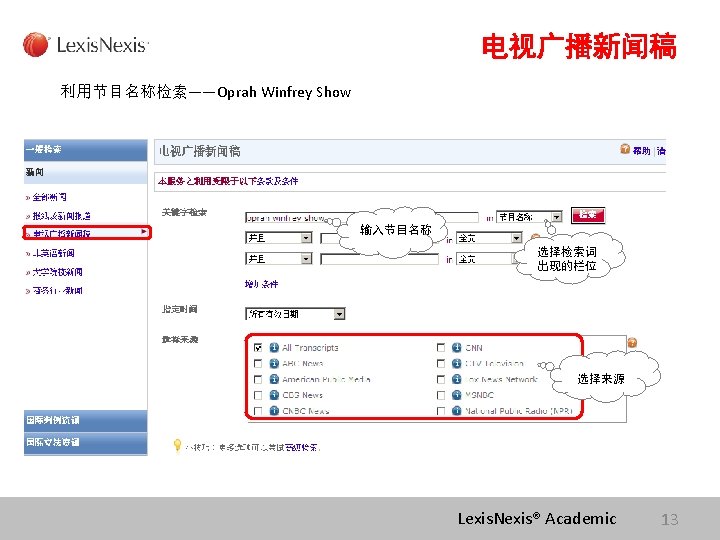
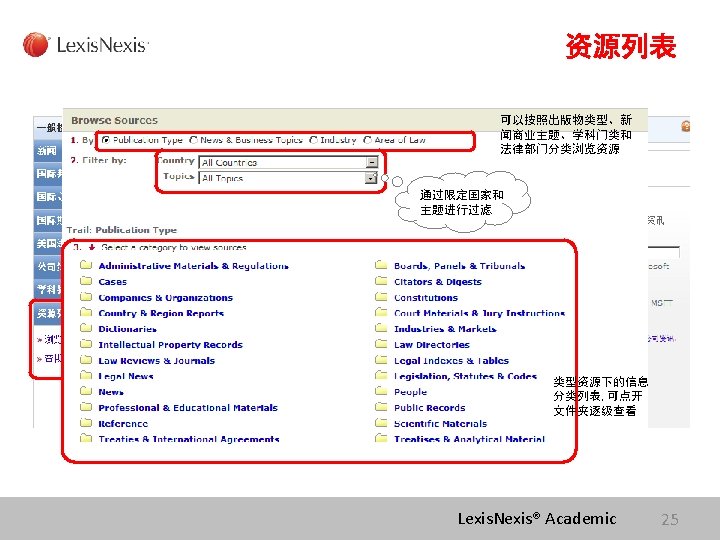
新闻资源 Lexis. Nexis® Academic 11
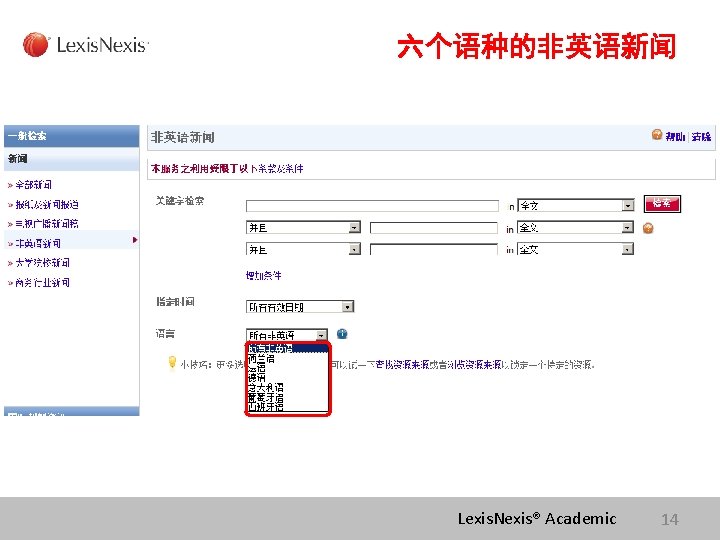
六个语种的非英语新闻 Lexis. Nexis® Academic 14
Using Lexis. com in Critical Thinking and essay topic analysis Lexis. Nexis® Lexis. com 27
Critical Thinking • What does this term mean? Is it relevant to all types of study? There are two strands to this term: q the idea of thinking analytically. q the use of the work of critics or theorists to back up an argument you make in an assignment or exam or essay q Critical works are secondary material. (secondary sources可以成为参考) • Critical thinking的中文流行翻译是“批判性思维”,但我觉得并不很 贴切。Critical一词的希腊词源是动词krinō,意思是“挑选、决定和判 断”,krites 是观察家、法官、仲裁人之意,kritikos 是指有观察、思 考和决定能力的人。所以,英文中critical也有几个意思,评论、批判、 挑剔、选择标准苛刻、审慎的、严谨的、经得住校勘的、重要的、不 可缺少等等意思。所以我认为可以把Critical Thinking暂时称为“评判性 思维方式”。 28
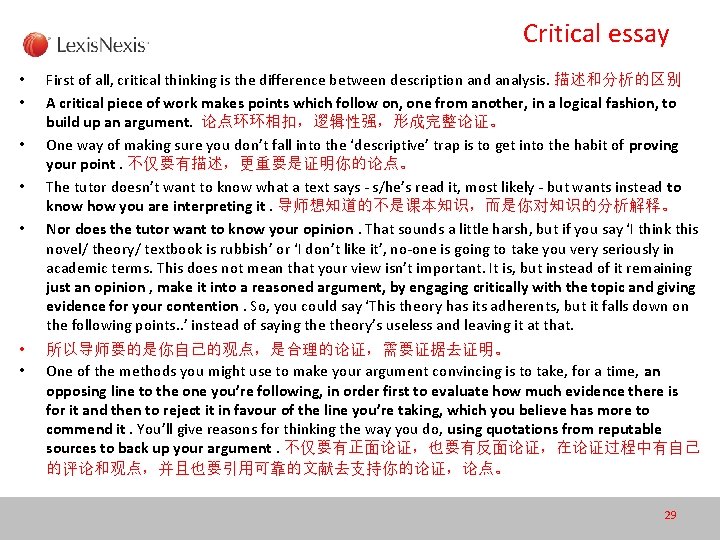
Critical essay • • First of all, critical thinking is the difference between description and analysis. 描述和分析的区别 A critical piece of work makes points which follow on, one from another, in a logical fashion, to build up an argument. 论点环环相扣,逻辑性强,形成完整论证。 One way of making sure you don’t fall into the ‘descriptive’ trap is to get into the habit of proving your point. 不仅要有描述,更重要是证明你的论点。 The tutor doesn’t want to know what a text says - s/he’s read it, most likely - but wants instead to know how you are interpreting it. 导师想知道的不是课本知识,而是你对知识的分析解释。 Nor does the tutor want to know your opinion. That sounds a little harsh, but if you say ‘I think this novel/ theory/ textbook is rubbish’ or ‘I don’t like it’, no-one is going to take you very seriously in academic terms. This does not mean that your view isn’t important. It is, but instead of it remaining just an opinion , make it into a reasoned argument, by engaging critically with the topic and giving evidence for your contention. So, you could say ‘This theory has its adherents, but it falls down on the following points. . ’ instead of saying theory’s useless and leaving it at that. 所以导师要的是你自己的观点,是合理的论证,需要证据去证明。 One of the methods you might use to make your argument convincing is to take, for a time, an opposing line to the one you’re following, in order first to evaluate how much evidence there is for it and then to reject it in favour of the line you’re taking, which you believe has more to commend it. You’ll give reasons for thinking the way you do, using quotations from reputable sources to back up your argument. 不仅要有正面论证,也要有反面论证,在论证过程中有自己 的评论和观点,并且也要引用可靠的文献去支持你的论证,论点。 29
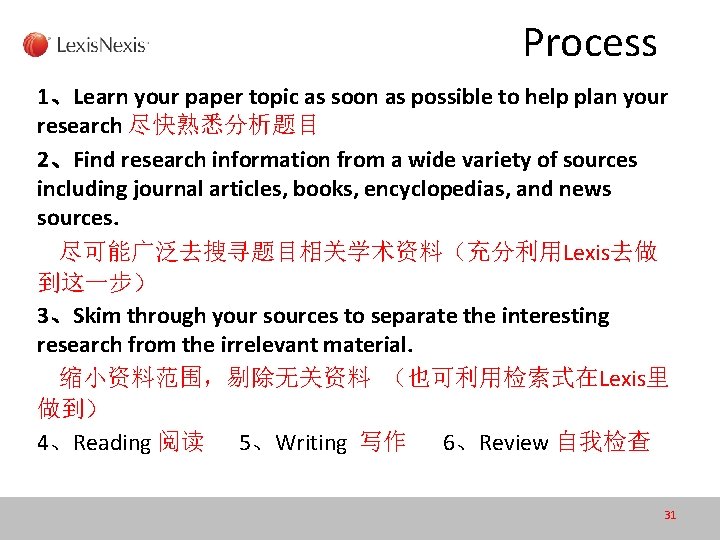
Process 1、Learn your paper topic as soon as possible to help plan your research 尽快熟悉分析题目 2、Find research information from a wide variety of sources including journal articles, books, encyclopedias, and news sources. 尽可能广泛去搜寻题目相关学术资料(充分利用Lexis去做 到这一步) 3、Skim through your sources to separate the interesting research from the irrelevant material. 缩小资料范围,剔除无关资料 (也可利用检索式在Lexis里 做到) 4、Reading 阅读 5、Writing 写作 6、Review 自我检查 31
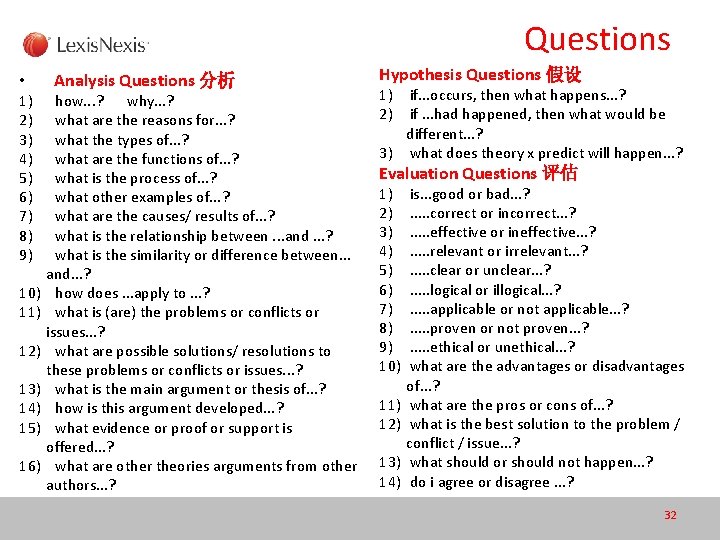
Questions • 1) 2) 3) 4) 5) 6) 7) 8) 9) 10) 11) 12) 13) 14) 15) 16) Analysis Questions 分析 how. . . ? why. . . ? what are the reasons for. . . ? what the types of. . . ? what are the functions of. . . ? what is the process of. . . ? what other examples of. . . ? what are the causes/ results of. . . ? what is the relationship between. . . and. . . ? what is the similarity or difference between. . . and. . . ? how does. . . apply to. . . ? what is (are) the problems or conflicts or issues. . . ? what are possible solutions/ resolutions to these problems or conflicts or issues. . . ? what is the main argument or thesis of. . . ? how is this argument developed. . . ? what evidence or proof or support is offered. . . ? what are other theories arguments from other authors. . . ? Hypothesis Questions 假设 1) 2) if. . . occurs, then what happens. . . ? if. . . had happened, then what would be different. . . ? 3) what does theory x predict will happen. . . ? Evaluation Questions 评估 1) 2) 3) 4) 5) 6) 7) 8) 9) 10) 11) 12) 13) 14) is. . . good or bad. . . ? . . . correct or incorrect. . . ? . . . effective or ineffective. . . ? . . . relevant or irrelevant. . . ? . . . clear or unclear. . . ? . . . logical or illogical. . . ? . . . applicable or not applicable. . . ? . . . proven or not proven. . . ? . . . ethical or unethical. . . ? what are the advantages or disadvantages of. . . ? what are the pros or cons of. . . ? what is the best solution to the problem / conflict / issue. . . ? what should or should not happen. . . ? do i agree or disagree. . . ? 32
Example • Essay Topic: Recognition of Good Faith Principle in the UK Commercial Contract Law or not 诚实信用原则是否被英国商业合同法承认 • How to search relevant sources in Lexis. com? 在 Leixs. com中如何检索相关资料 1) Case 案例 2) 2) Regulation/Legislation/Acts 法律法规(暂无) 3) Journals 期刊文献 33
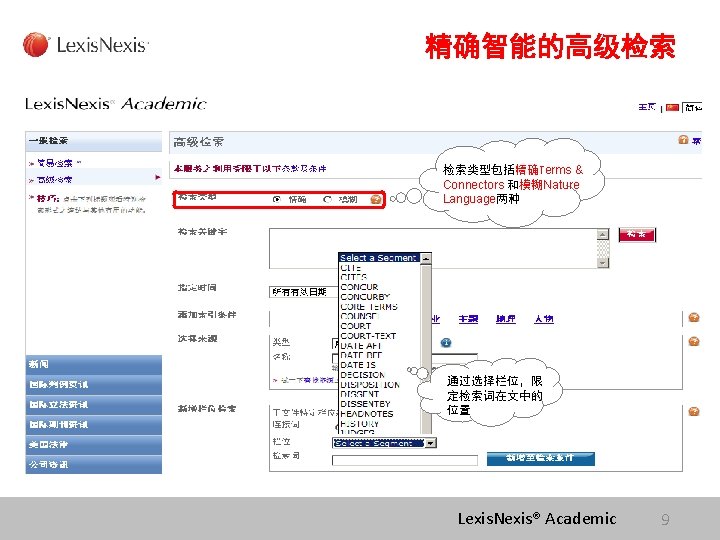
高级精确检索式 • Recognition of Good Faith Principle in the UK Commercial Contract Law or not (自然语言) • 1、good faith principle or doctrine and commercial contract • 2、recognition or adoption and good faith or bona fide or fair dealing and the UK or Great Britain or England or United Kingdom and commercial w/1 contract law • Tips 小建议 • • 检索式越长搜到的越精确结果相对少 可以只用Good Faith 检索Title 小技巧Ctrl+F 在结果中看具体good Faith 在哪 看已找到journal 的reference 34
Lexis. Nexis® Academic 35