Lexile Measures A tool to improve reading in
- Slides: 34
Lexile® Measures A tool to improve reading in English Timothy Klasson, Chief Operating Officer Todd Sandvik, Executive Director of Global Services
Overview Lexile measures can help improve reading in English for your students. § What is a Lexile measure? § What does a Lexile measure mean? § How can I use Lexile measures?
About Us Meta. Metrics created Lexile measures. § Based in North Carolina, U. S. A. § Prominent in educational research. § Focused on linking assessment with instruction. § Services in development, licensing and support. § Growing adoption of our tools worldwide.
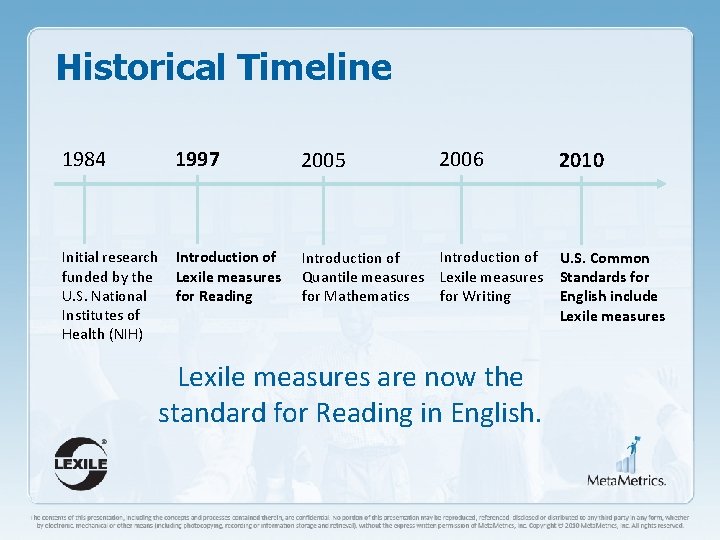
Historical Timeline 1984 1997 2005 2006 Initial research funded by the U. S. National Institutes of Health (NIH) Introduction of Lexile measures for Reading Introduction of Quantile measures Lexile measures for Writing for Mathematics Lexile measures are now the standard for Reading in English. 2010 U. S. Common Standards for English include Lexile measures
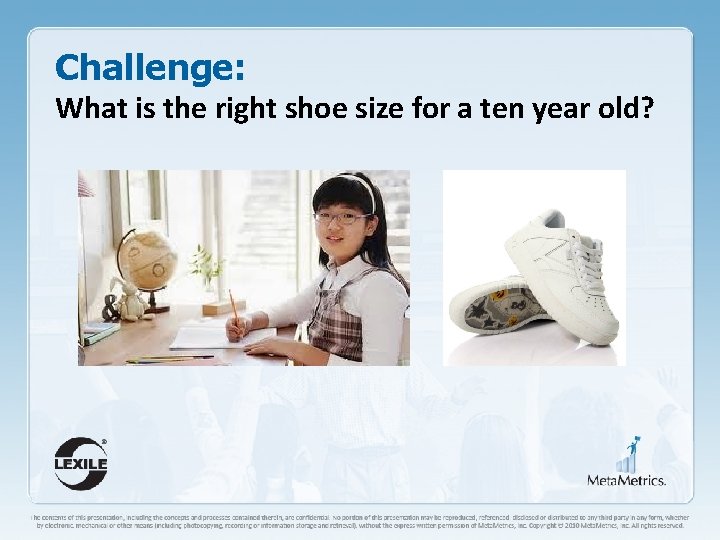
Challenge: What is the right shoe size for a ten year old?
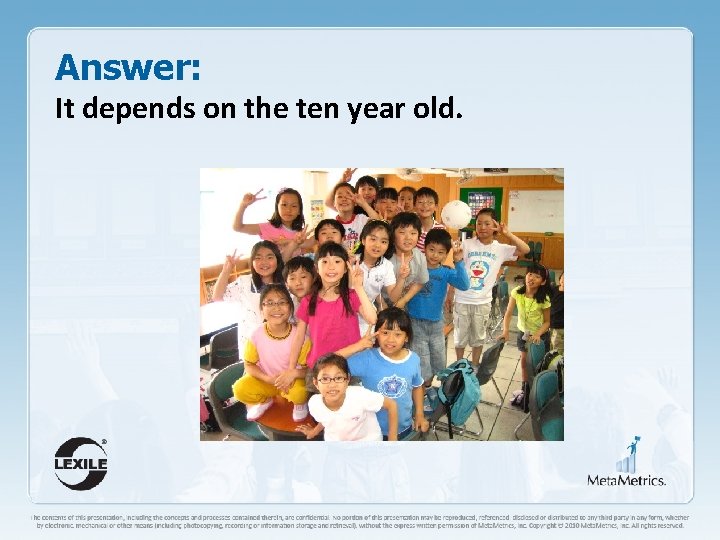
Answer: It depends on the ten year old.
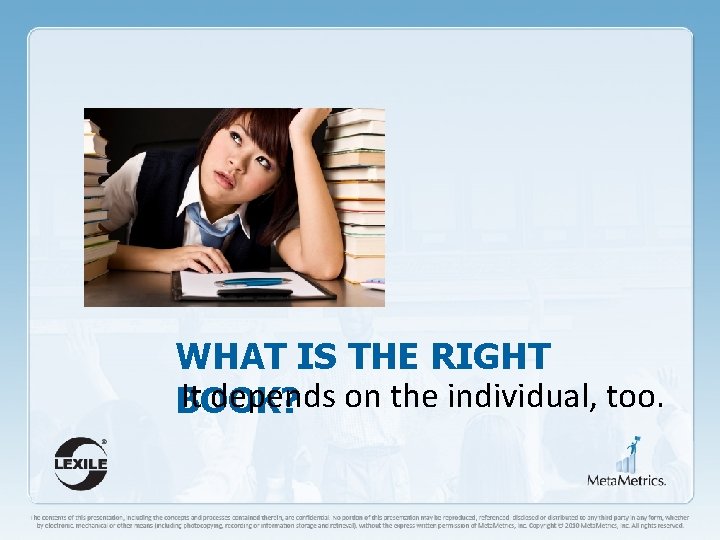
WHAT IS THE RIGHT It depends on the individual, too. BOOK?
Matching readers with text. . . WHAT ARE LEXILE MEASURES?
The Lexile Measure A scientific way to match readers with text § Uses a common scale for measuring individual readers and texts § Enables accurate matching of reader ability with text complexity to enhance learning § Provides authentic views of English reading demands and progress over time
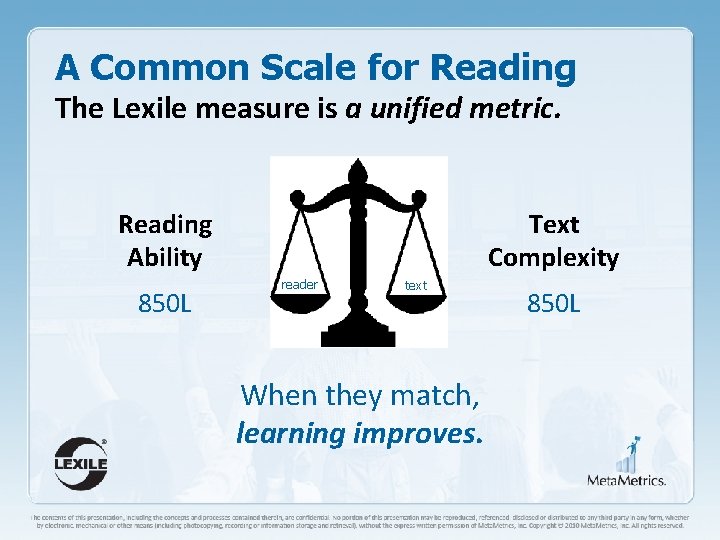
A Common Scale for Reading The Lexile measure is a unified metric. Reading Ability 850 L Text Complexity reader text When they match, learning improves. 850 L
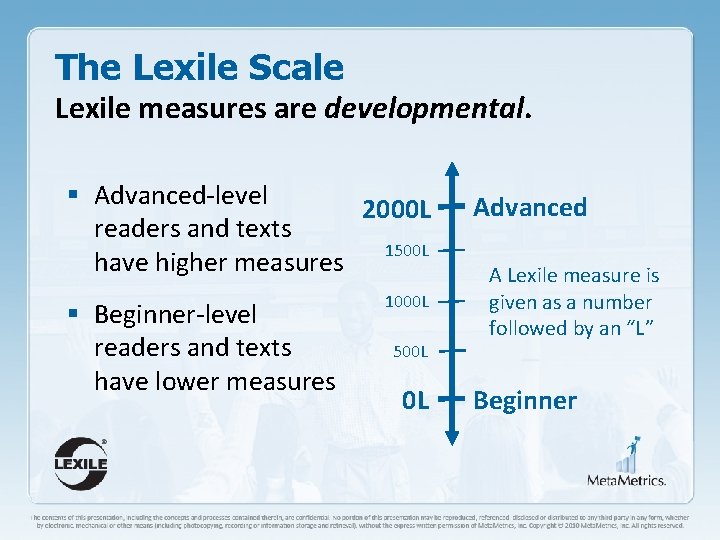
The Lexile Scale Lexile measures are developmental. § Advanced-level 2000 L readers and texts 1500 L have higher measures § Beginner-level readers and texts have lower measures 1000 L 500 L 0 L Advanced A Lexile measure is given as a number followed by an “L” Beginner
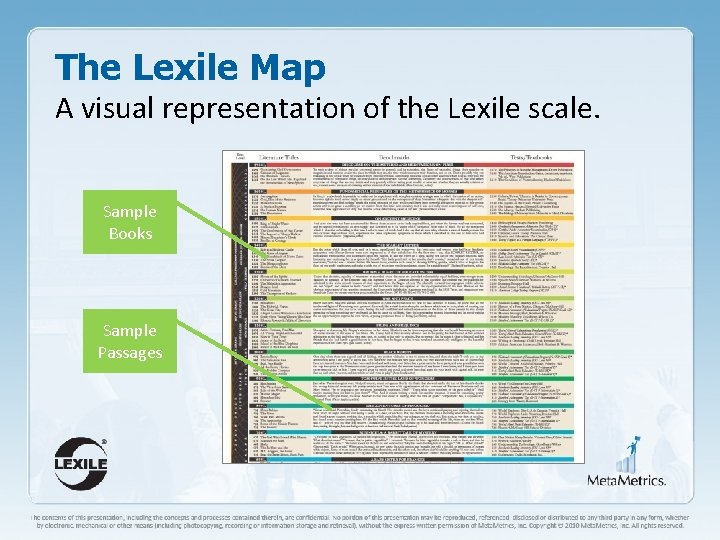
The Lexile Map A visual representation of the Lexile scale. Sample Books Sample Passages
How Are Readers Measured? A reading test determines the Lexile measure of an individual student. § A test that utilizes the Lexile scale for Reading or § A test that has been linked with Lexile measures Millions of students get a Lexile measure each year from a variety of assessments.
Examples of Tests in Korea Several tests that provide a Lexile measure: § English Reading Assessment for Korean Students published by Natmal § Scholastic Reading Inventory (SRI) published by Scholastic § TOEFL and TOEFL Junior tests published by ETS
How Are Texts Measured? The Lexile Analyzer evaluates the complexity of a text to determine the Lexile measure. § Difficulty of the sentence structures – Longer sentences are more difficult. § Difficulty of the vocabulary – Less familiar words are more difficult. Millions of books and articles have received a Lexile measure.
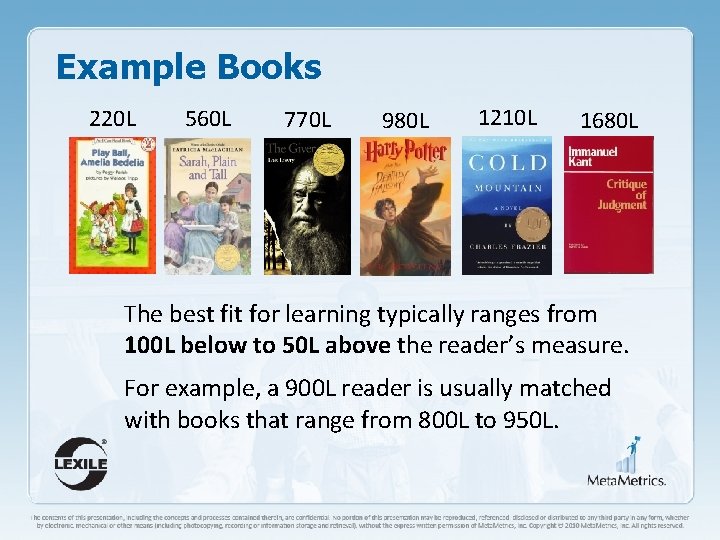
Example Books 220 L 560 L 770 L 980 L 1210 L 1680 L The best fit for learning typically ranges from 100 L below to 50 L above the reader’s measure. For example, a 900 L reader is usually matched with books that range from 800 L to 950 L.
Matching readers with text. . . WHAT DO LEXILE MEASURES MEAN?
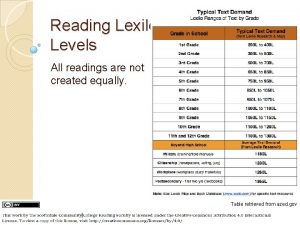
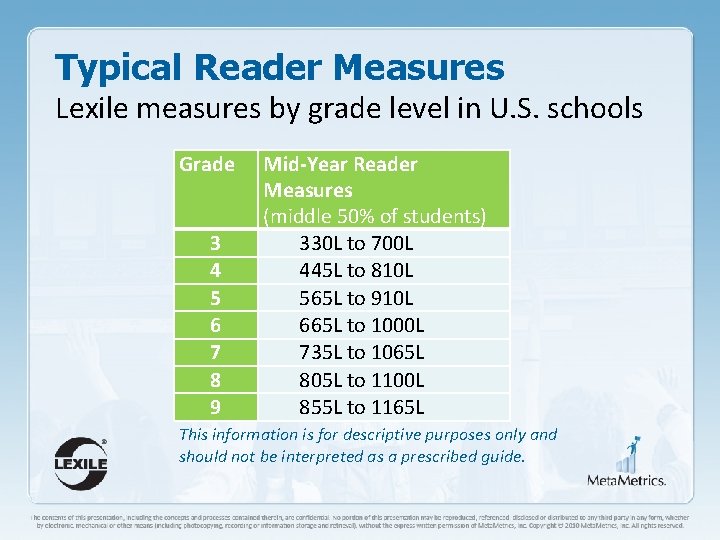
Typical Reader Measures Lexile measures by grade level in U. S. schools Grade 3 4 5 6 7 8 9 Mid-Year Reader Measures (middle 50% of students) 330 L to 700 L 445 L to 810 L 565 L to 910 L 665 L to 1000 L 735 L to 1065 L 805 L to 1100 L 855 L to 1165 L This information is for descriptive purposes only and should not be interpreted as a prescribed guide.
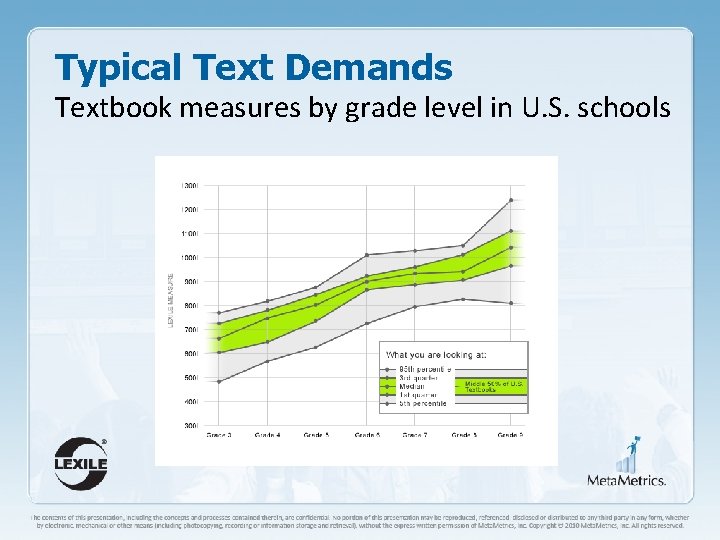
Typical Text Demands Textbook measures by grade level in U. S. schools
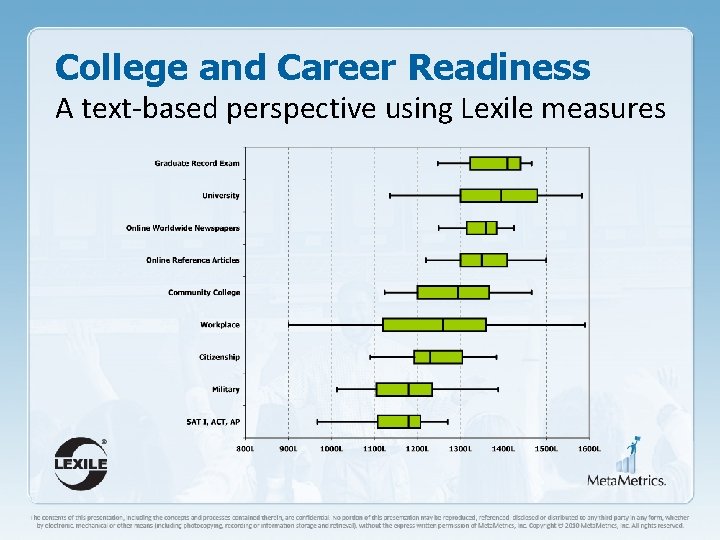
College and Career Readiness A text-based perspective using Lexile measures
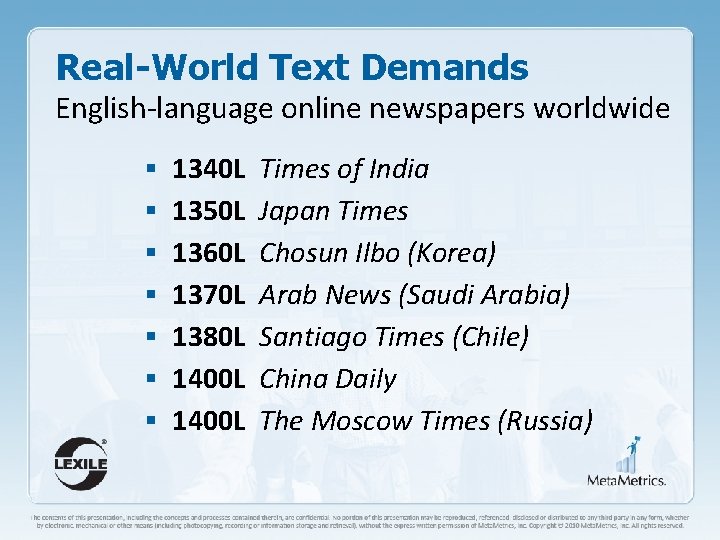
Real-World Text Demands English-language online newspapers worldwide § 1340 L Times of India § 1350 L Japan Times § 1360 L Chosun Ilbo (Korea) § 1370 L Arab News (Saudi Arabia) § 1380 L Santiago Times (Chile) § 1400 L China Daily § 1400 L The Moscow Times (Russia)
Matching readers with text. . . USING LEXILE MEASURES
Free Lexile Resources Useful things you can do at www. lexile. com § Introductory materials and best practices § Lexile Book Database (Find-a-Book) § Lexile Text Analyzer § Research articles and white papers
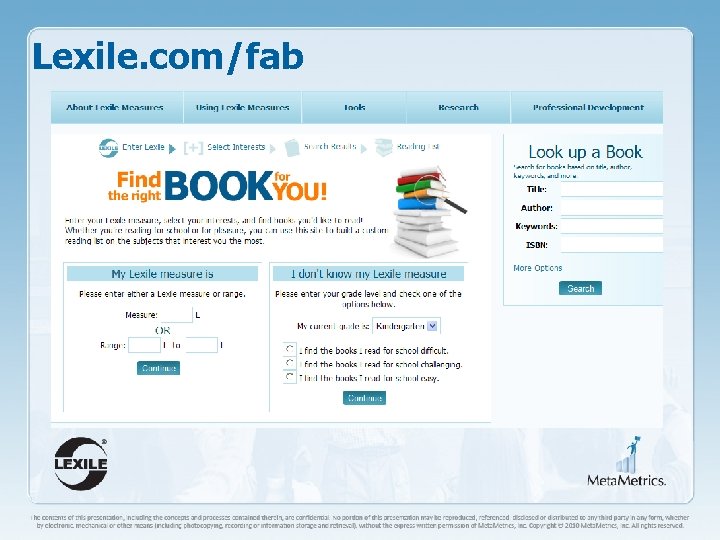
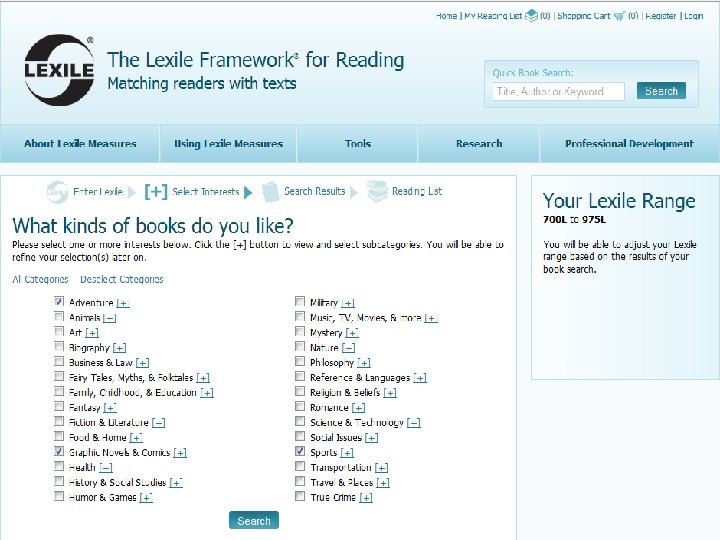
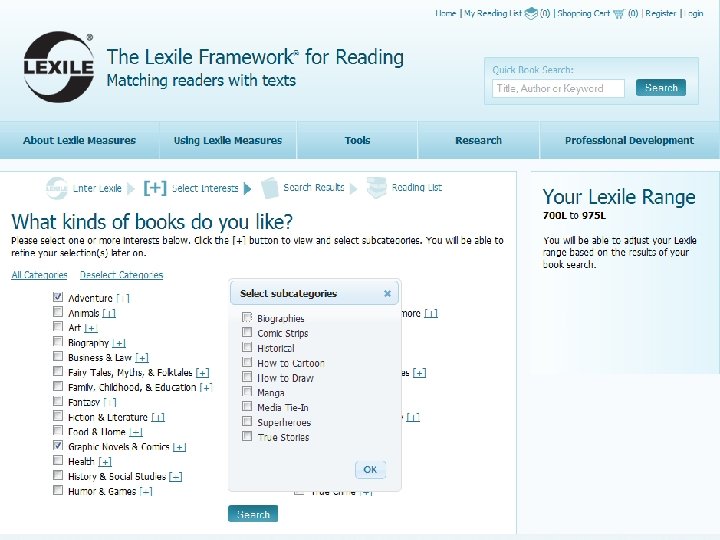
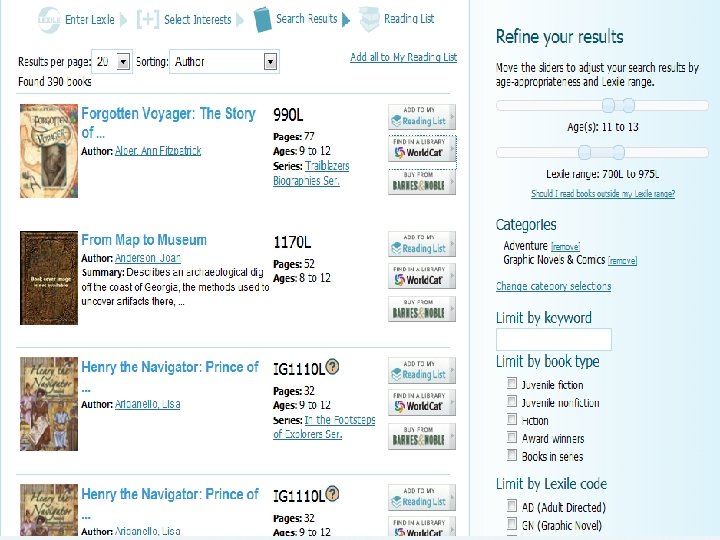
The Lexile Titles Database Browse book titles at www. lexile. com/fab § Free, easy-to-use book search utility § Access the thousands of books that have been given a Lexile measure § Include reading interests to increase motivation and further personalize practice Schools and libraries can license the database for local use.
The Lexile Analyzer Measure text online at lexile. com/analyzer Basic Steps: 1. Create an electronic file of the full text for an article, story, or book 2. Remove all non-prose components, such as headers, captions, and lists 3. Submit the file to the Lexile Analyzer 4. Get the Lexile measure instantly
Differentiating Instruction Use Lexile measures to tailor the classroom § Sequencing classroom materials § Grouping students by reading ability § Exploring special themes or topics of interest § Setting goals and measuring progress § Communicating with parents Encourage more independent reading!
Further Considerations Other factors in matching readers with books § Age-appropriateness of material § Amount of additional support (such as pictures) § Background knowledge Lexile codes help describe qualitative characteristics of books, such as ageappropriateness and intended usage.
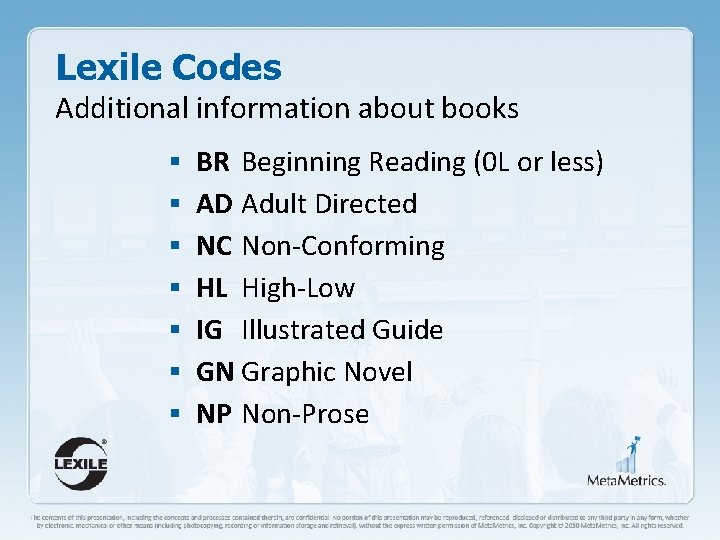
Lexile Codes Additional information about books § BR Beginning Reading (0 L or less) § AD Adult Directed § NC Non-Conforming § HL High-Low § IG Illustrated Guide § GN Graphic Novel § NP Non-Prose
Matching readers with text. . . CREATE A LEXILE-BASED READING LIST WITH FIND A BOOK
Lexile. com/fab
Contact Us For more information. . . Online: § Visit www. lexile. com/feedback to submit your questions to Meta. Metrics. Email: § Timothy Klasson tklasson@lexile. com § Todd Sandvik tsandvik@lexile. com