
Lewis Structures Lewis Structures Covalent molecules form when

- Slides: 23
Lewis Structures
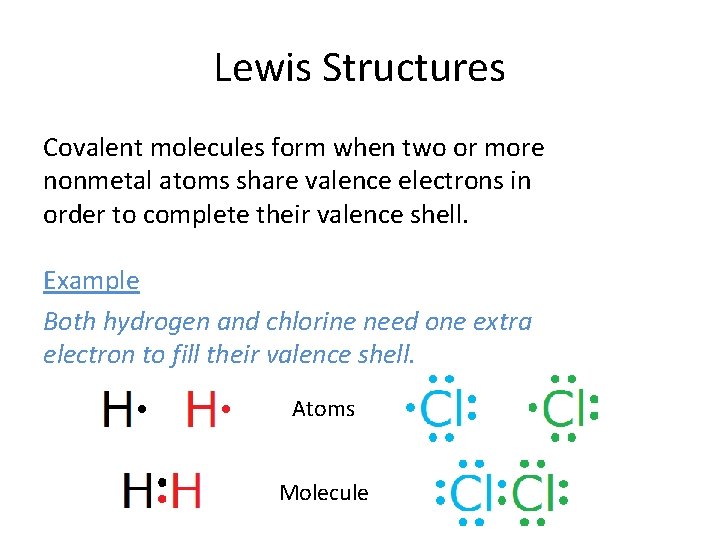
Lewis Structures Covalent molecules form when two or more nonmetal atoms share valence electrons in order to complete their valence shell. Example Both hydrogen and chlorine need one extra electron to fill their valence shell. Atoms Molecule
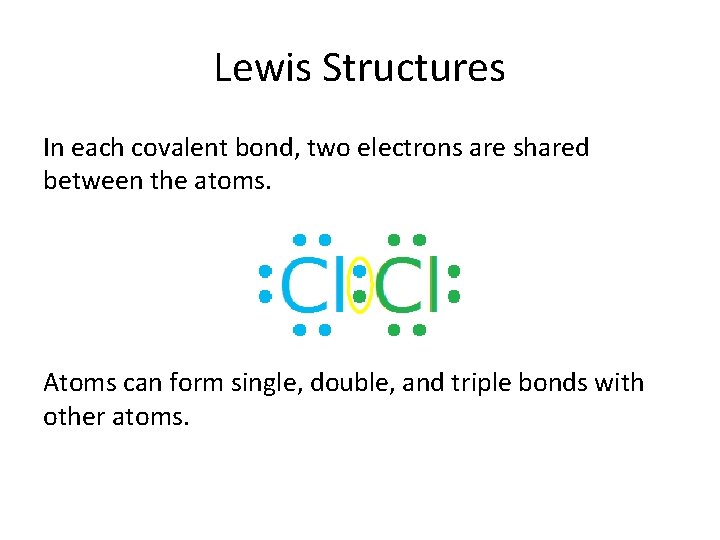
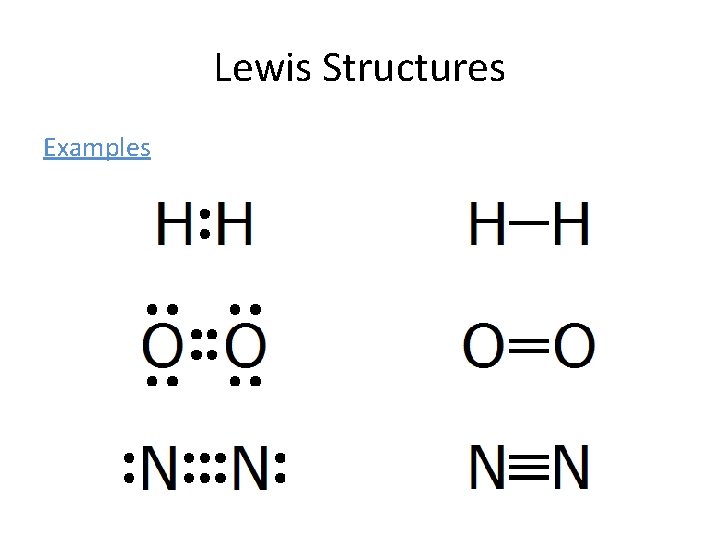
Lewis Structures In each covalent bond, two electrons are shared between the atoms. Atoms can form single, double, and triple bonds with other atoms.
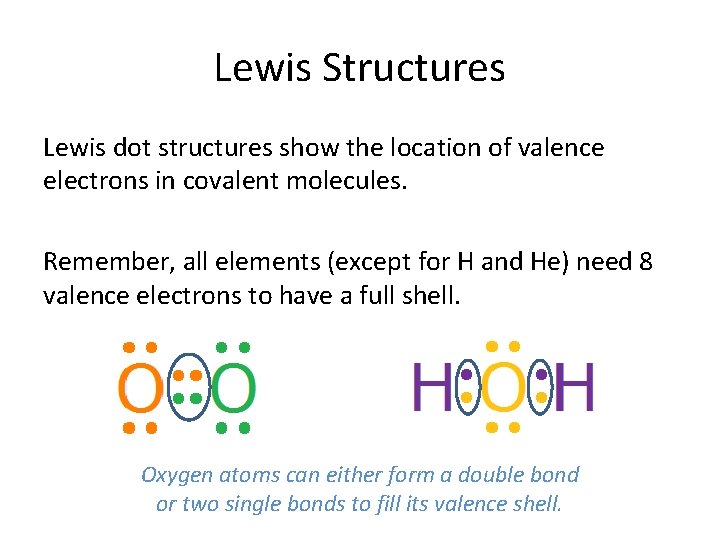
Lewis Structures Lewis dot structures show the location of valence electrons in covalent molecules. Remember, all elements (except for H and He) need 8 valence electrons to have a full shell. Oxygen atoms can either form a double bond or two single bonds to fill its valence shell.
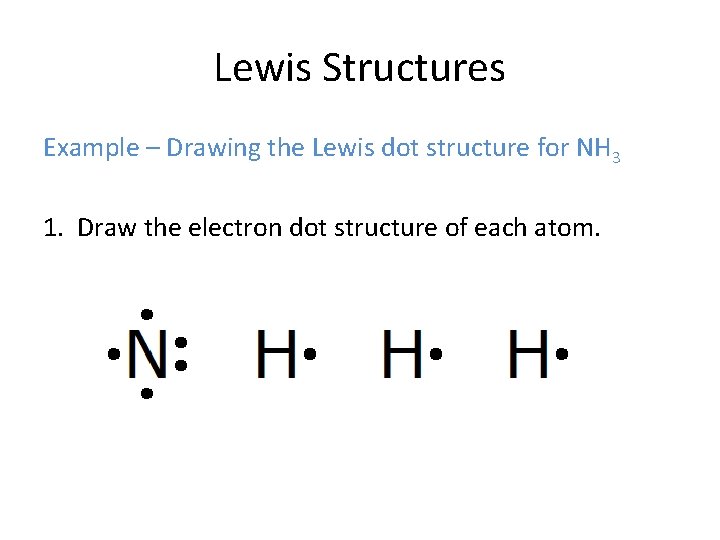
Lewis Structures Example – Drawing the Lewis dot structure for NH 3 1. Draw the electron dot structure of each atom.
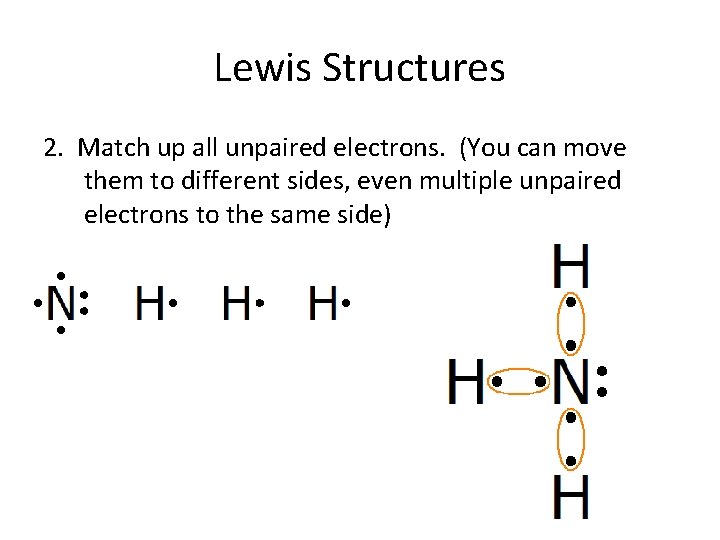
Lewis Structures 2. Match up all unpaired electrons. (You can move them to different sides, even multiple unpaired electrons to the same side)
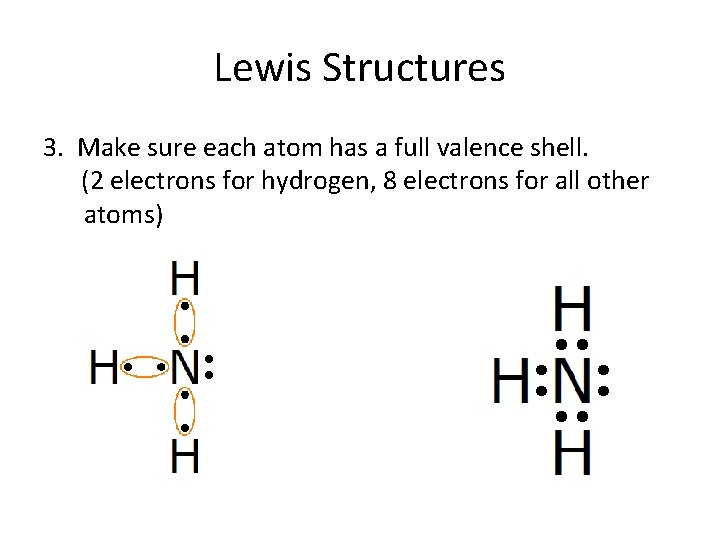
Lewis Structures 3. Make sure each atom has a full valence shell. (2 electrons for hydrogen, 8 electrons for all other atoms)
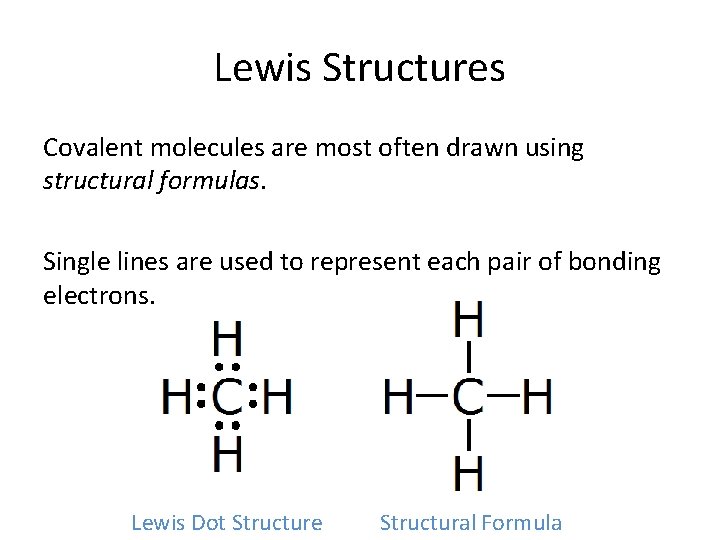
Lewis Structures Covalent molecules are most often drawn using structural formulas. Single lines are used to represent each pair of bonding electrons. Lewis Dot Structure Structural Formula
Lewis Structures Examples
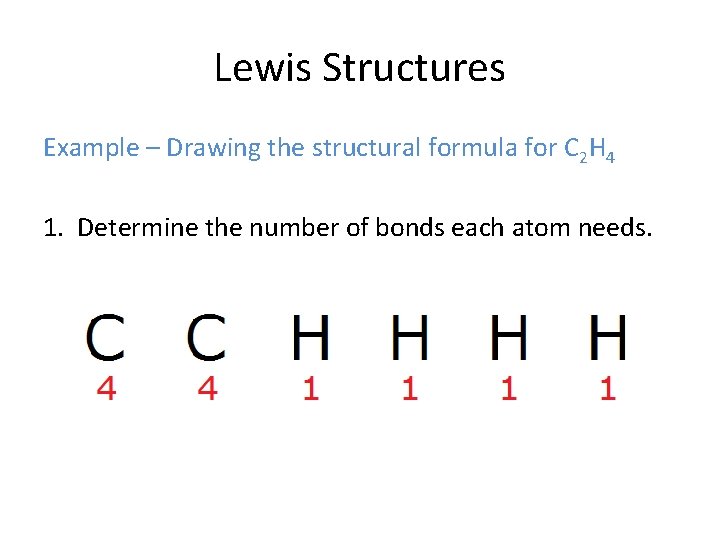
Lewis Structures One Bond Hydrogen Fluorine Chlorine Bromine Iodine Number of Covalent Bonds Needed Two Bonds Three Bonds Four Bonds Oxygen Nitrogen Carbon Sulfur Phosphorus Silicon Selenium Tellurium Arsenic Remember HONC – 1, 2, 3, 4
Lewis Structures Example – Drawing the structural formula for C 2 H 4 1. Determine the number of bonds each atom needs.
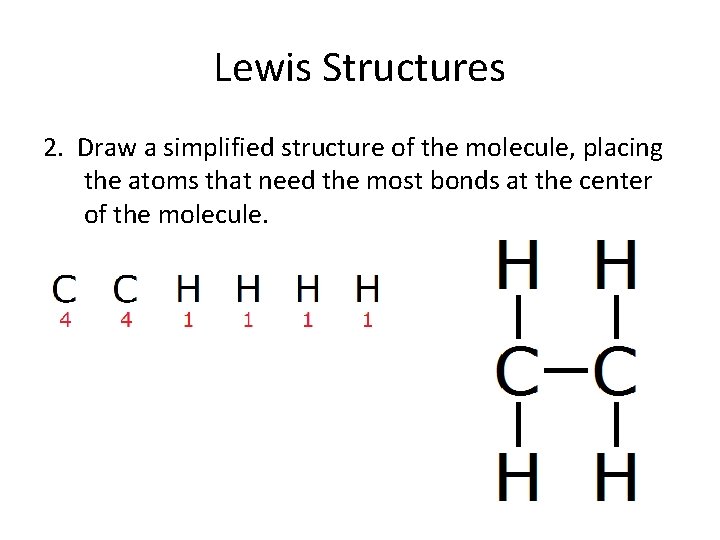
Lewis Structures 2. Draw a simplified structure of the molecule, placing the atoms that need the most bonds at the center of the molecule.
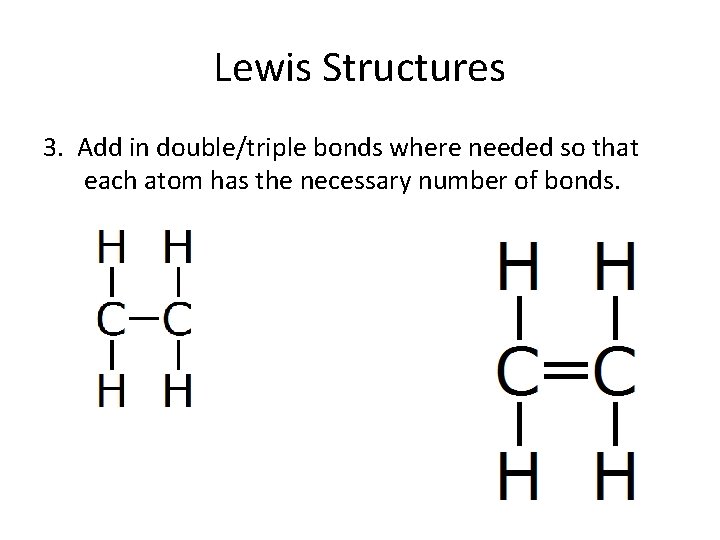
Lewis Structures 3. Add in double/triple bonds where needed so that each atom has the necessary number of bonds.
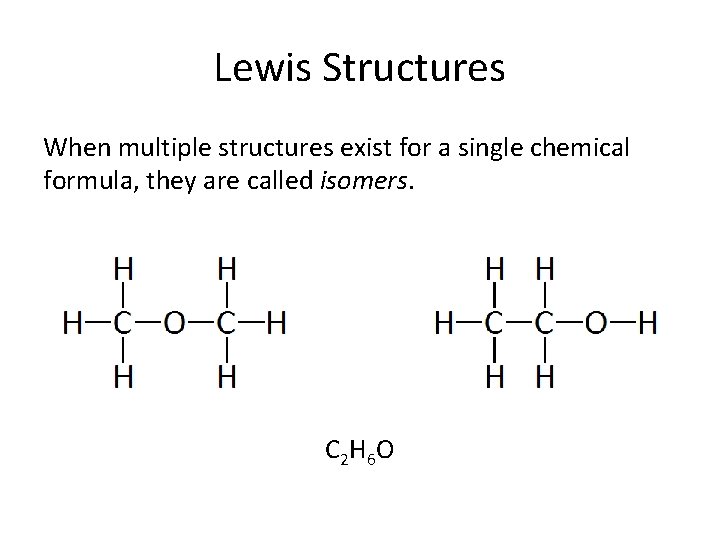
Lewis Structures When multiple structures exist for a single chemical formula, they are called isomers. C 2 H 6 O
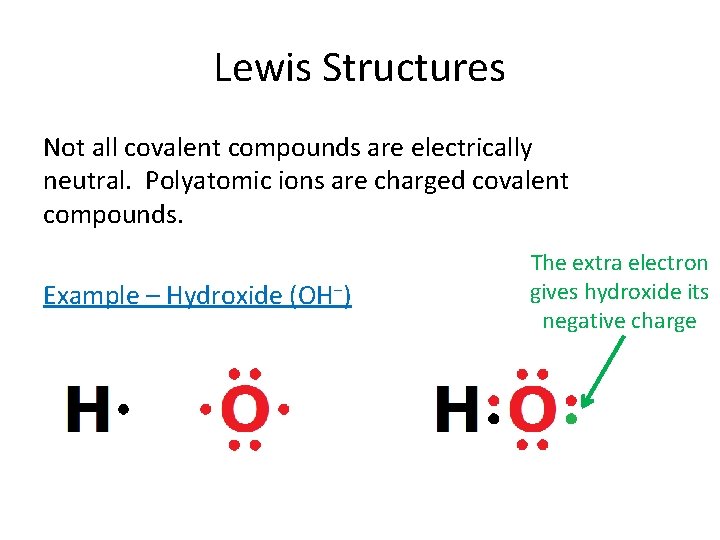
Lewis Structures Not all covalent compounds are electrically neutral. Polyatomic ions are charged covalent compounds. Example – Hydroxide (OH‒) The extra electron gives hydroxide its negative charge
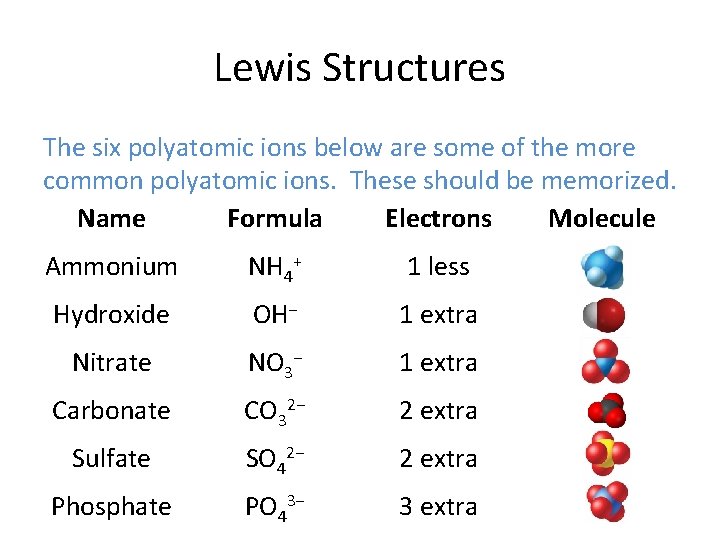
Lewis Structures The six polyatomic ions below are some of the more common polyatomic ions. These should be memorized. Name Formula Electrons Molecule Ammonium NH 4+ 1 less Hydroxide OH‒ 1 extra Nitrate NO 3‒ 1 extra Carbonate CO 32‒ 2 extra Sulfate SO 42‒ 2 extra Phosphate PO 43‒ 3 extra
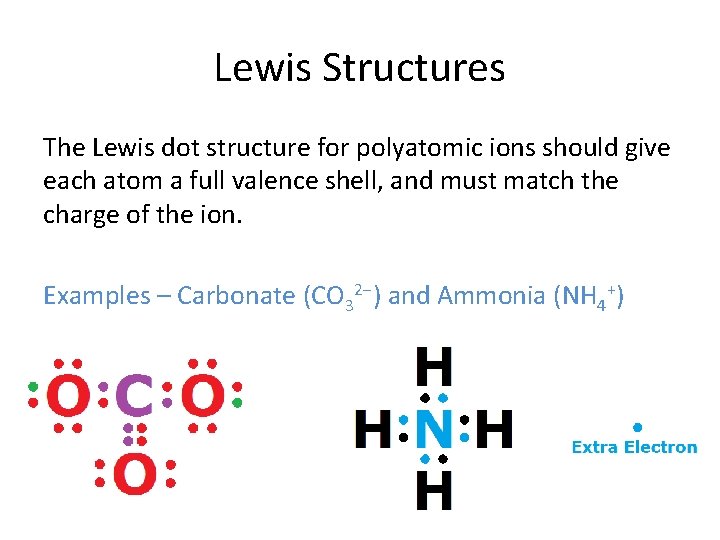
Lewis Structures The Lewis dot structure for polyatomic ions should give each atom a full valence shell, and must match the charge of the ion. Examples – Carbonate (CO 32‒) and Ammonia (NH 4+)
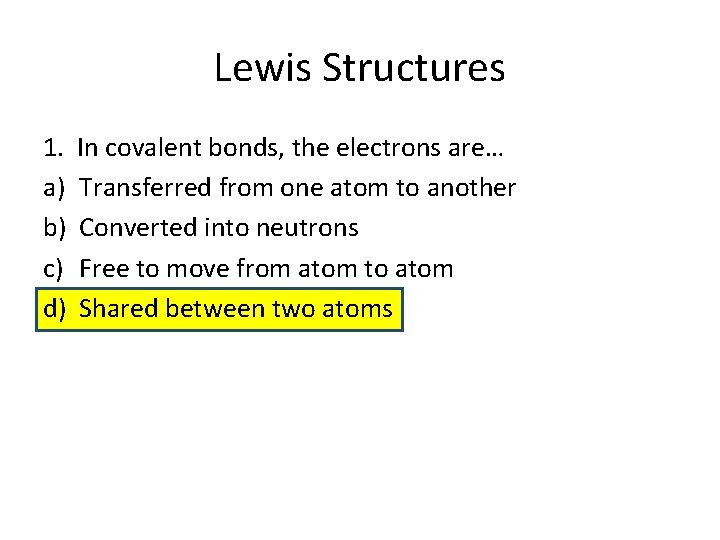
Lewis Structures 1. a) b) c) d) In covalent bonds, the electrons are… Transferred from one atom to another Converted into neutrons Free to move from atom to atom Shared between two atoms
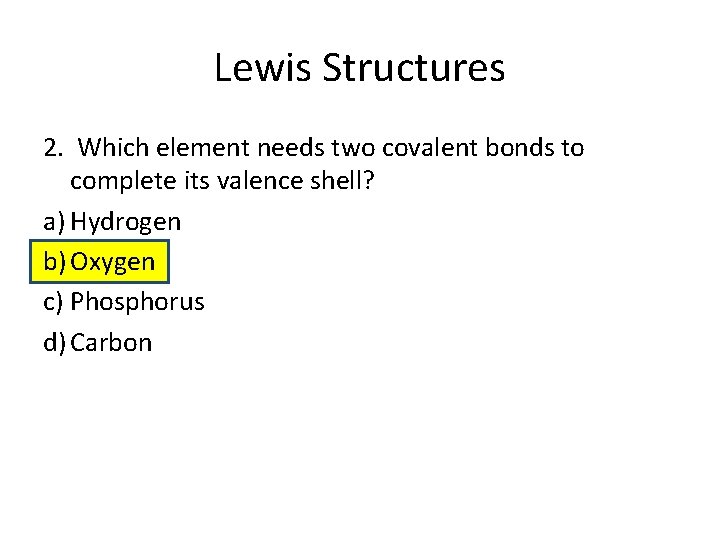
Lewis Structures 2. Which element needs two covalent bonds to complete its valence shell? a) Hydrogen b) Oxygen c) Phosphorus d) Carbon
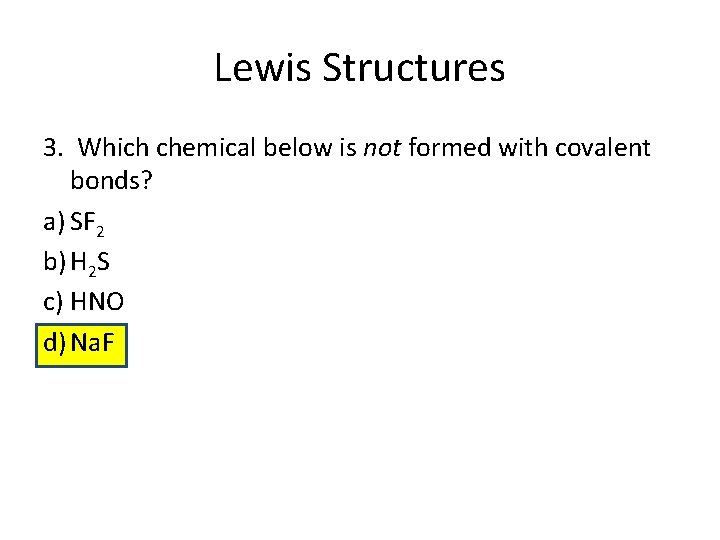
Lewis Structures 3. Which chemical below is not formed with covalent bonds? a) SF 2 b) H 2 S c) HNO d) Na. F
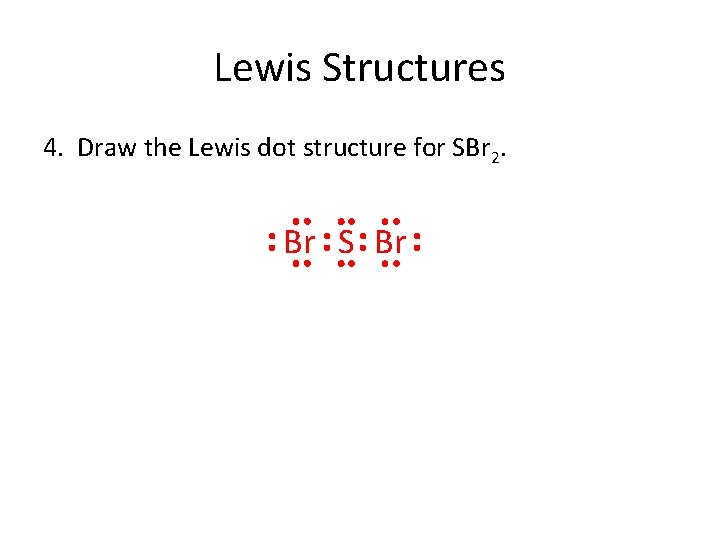
Lewis Structures 4. Draw the Lewis dot structure for SBr 2. Br S Br
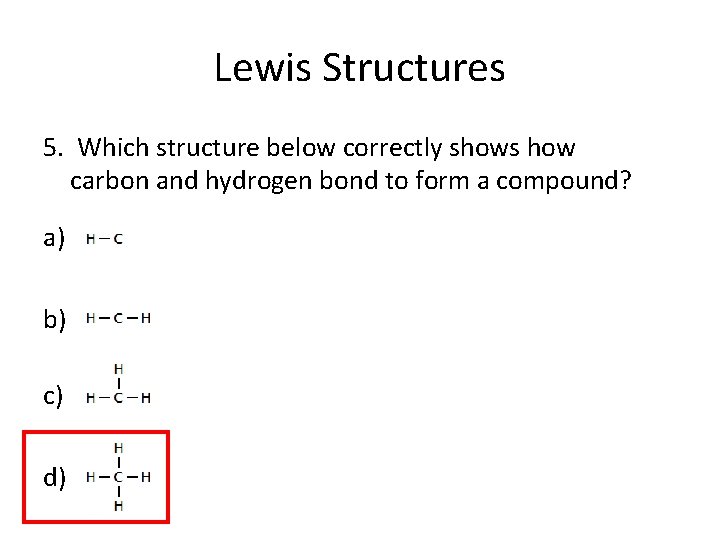
Lewis Structures 5. Which structure below correctly shows how carbon and hydrogen bond to form a compound? a) b) c) d)
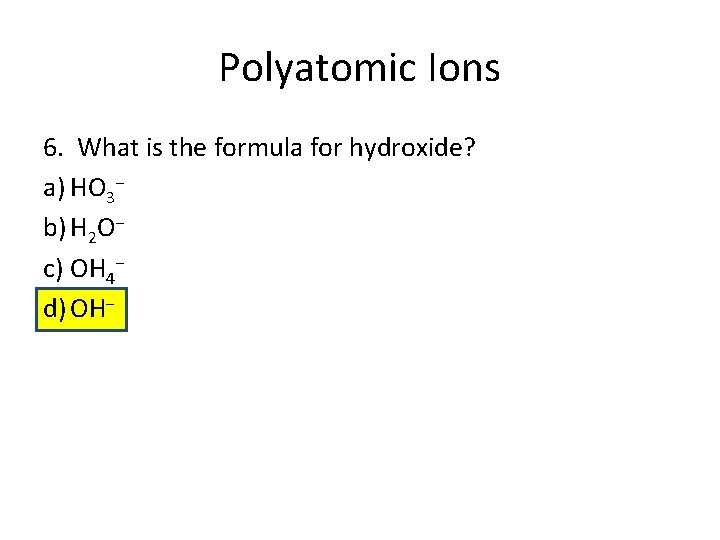
Polyatomic Ions 6. What is the formula for hydroxide? a) HO 3‒ b) H 2 O‒ c) OH 4‒ d) OH‒