
Lewis Structures Ionic Lewis Structures Represent the transfer
- Slides: 6
Lewis Structures
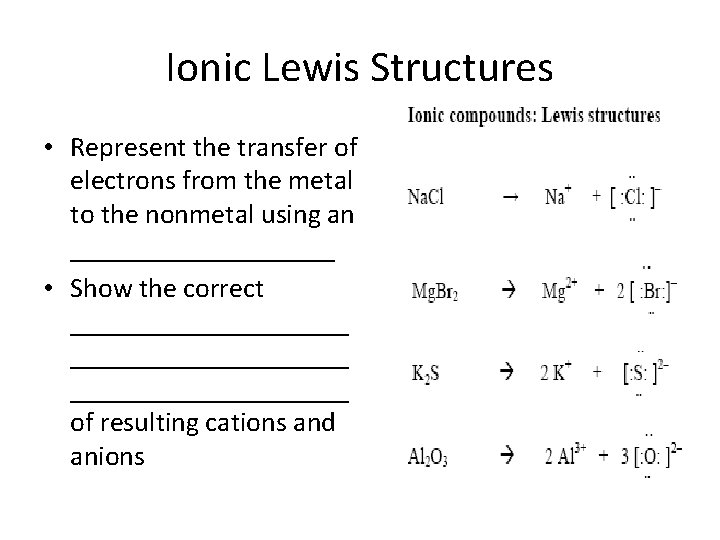
Ionic Lewis Structures • Represent the transfer of electrons from the metal to the nonmetal using an __________ • Show the correct ____________________ of resulting cations and anions
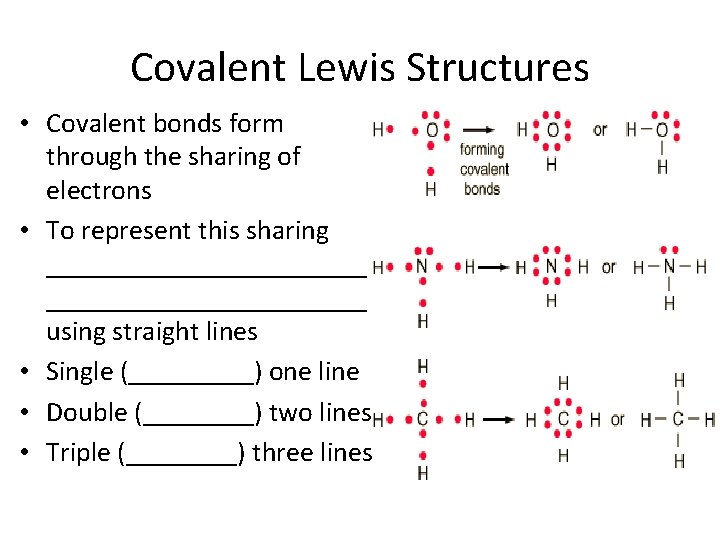
Covalent Lewis Structures • Covalent bonds form through the sharing of electrons • To represent this sharing _______________________ using straight lines • Single (_____) one line • Double (____) two lines • Triple (____) three lines
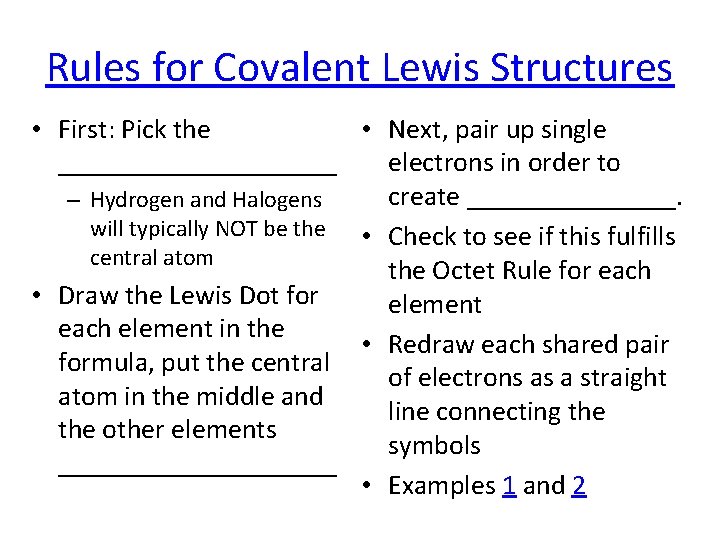
Rules for Covalent Lewis Structures • First: Pick the • Next, pair up single __________ electrons in order to create ________. – Hydrogen and Halogens will typically NOT be the • Check to see if this fulfills central atom the Octet Rule for each • Draw the Lewis Dot for element each element in the • Redraw each shared pair formula, put the central of electrons as a straight atom in the middle and line connecting the other elements symbols __________ • Examples 1 and 2
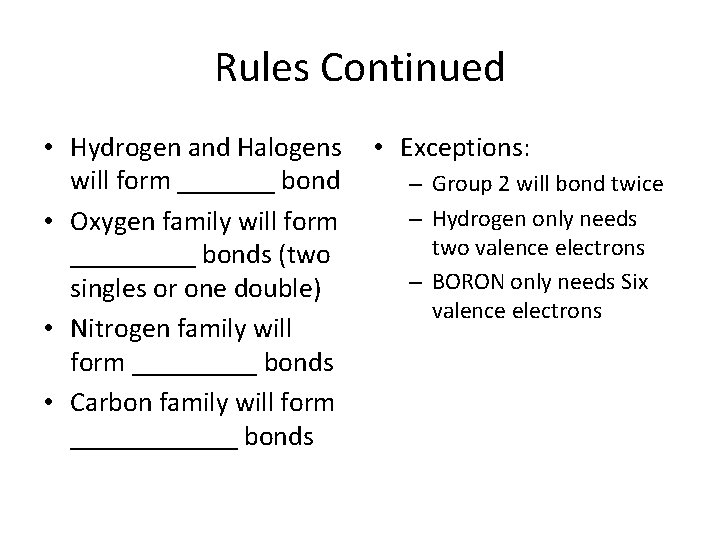
Rules Continued • Hydrogen and Halogens will form _______ bond • Oxygen family will form _____ bonds (two singles or one double) • Nitrogen family will form _____ bonds • Carbon family will form ______ bonds • Exceptions: – Group 2 will bond twice – Hydrogen only needs two valence electrons – BORON only needs Six valence electrons
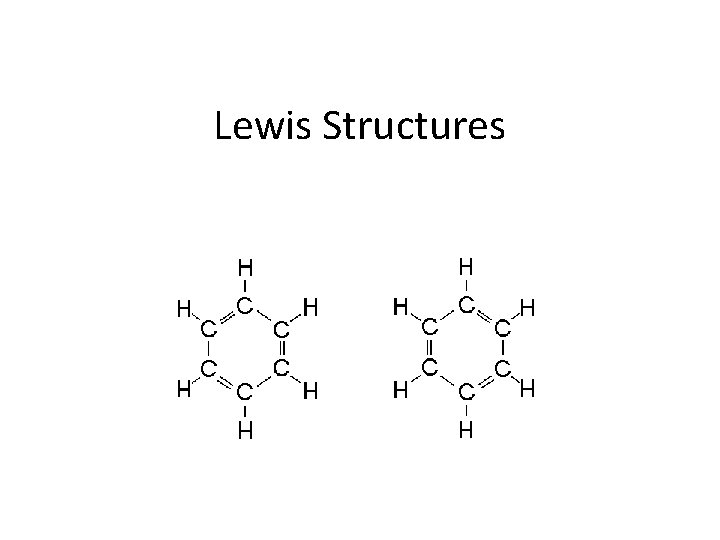
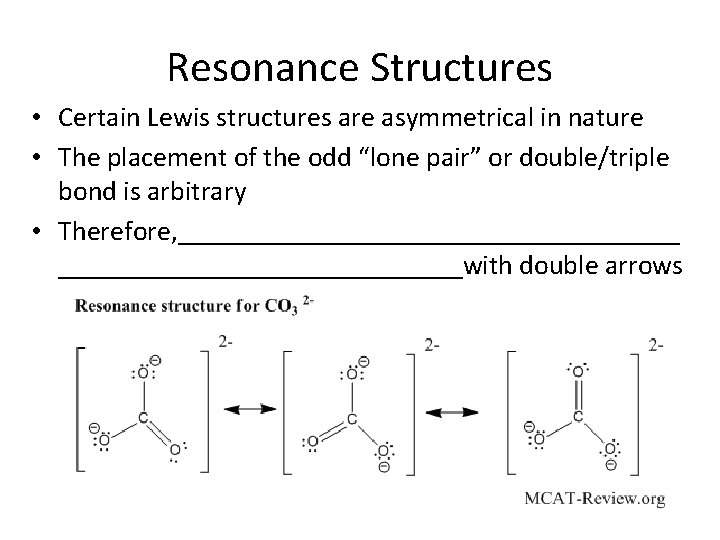
Resonance Structures • Certain Lewis structures are asymmetrical in nature • The placement of the odd “lone pair” or double/triple bond is arbitrary • Therefore, __________________with double arrows