
Leveraging three types of instructional technologies to maximize


- Slides: 46
Leveraging three types of instructional technologies to maximize student learning Emily Springfield, MS Ed, University of Michigan
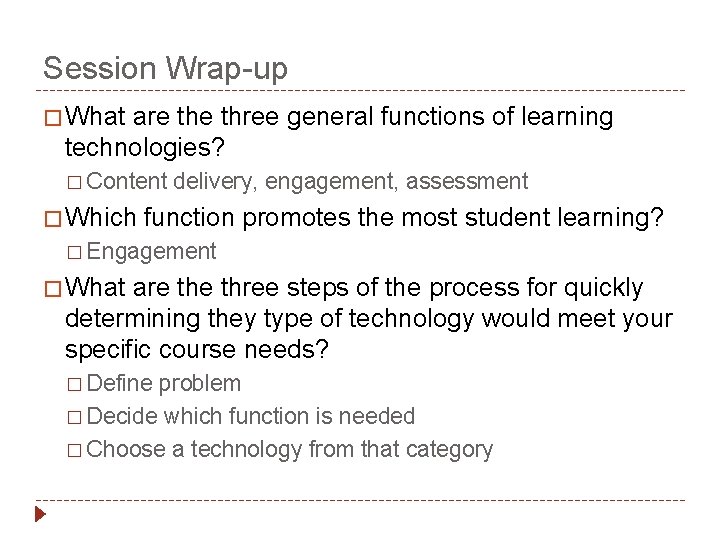
Session Objectives � Learn to categorize learning technologies by function � Learn which function promotes the most student learning � Learn a process for quickly determining they type of technology would meet your specific course needs
Making Sense of Learning Technologies � What does it do? � How is it different? � What are the other options? � Is it worth the time and money? � Is it a good choice for me?
Moving target � New technologies � Updates � New tricks for old dogs � Instead: learn a schema for quickly understanding new technologies
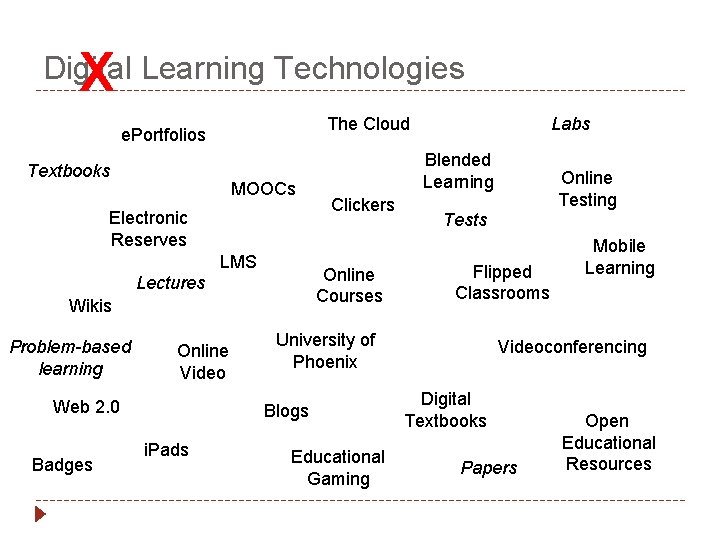
X Digital Learning Technologies The Cloud e. Portfolios Textbooks MOOCs Electronic Reserves LMS Wikis Problem-based learning Online Video Web 2. 0 Badges Blended Learning Clickers Online Courses Lectures Educational Gaming Online Testing Tests Flipped Classrooms University of Phoenix Blogs i. Pads Labs Mobile Learning Videoconferencing Digital Textbooks Papers Open Educational Resources
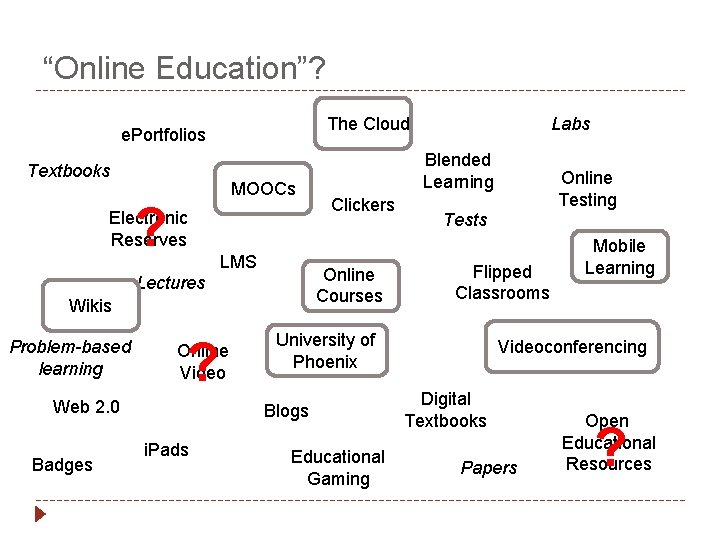
“Online Education”? The Cloud e. Portfolios Textbooks MOOCs ? Electronic Reserves LMS Wikis Problem-based learning ? Online Video Web 2. 0 Badges Blended Learning Clickers Online Courses Lectures Educational Gaming Online Testing Tests Flipped Classrooms University of Phoenix Blogs i. Pads Labs Mobile Learning Videoconferencing Digital Textbooks Papers Open Educational Resources ?
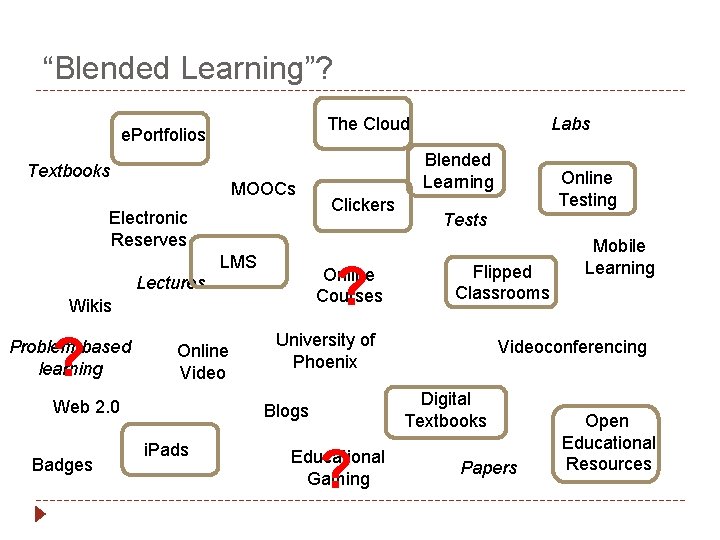
“Blended Learning”? The Cloud e. Portfolios Textbooks MOOCs Electronic Reserves LMS ? Online Video Web 2. 0 Badges Clickers ? Wikis Problem-based learning Blended Learning Online Courses Lectures Online Testing Tests Flipped Classrooms University of Phoenix ? Educational Gaming Mobile Learning Videoconferencing Digital Textbooks Blogs i. Pads Labs Papers Open Educational Resources
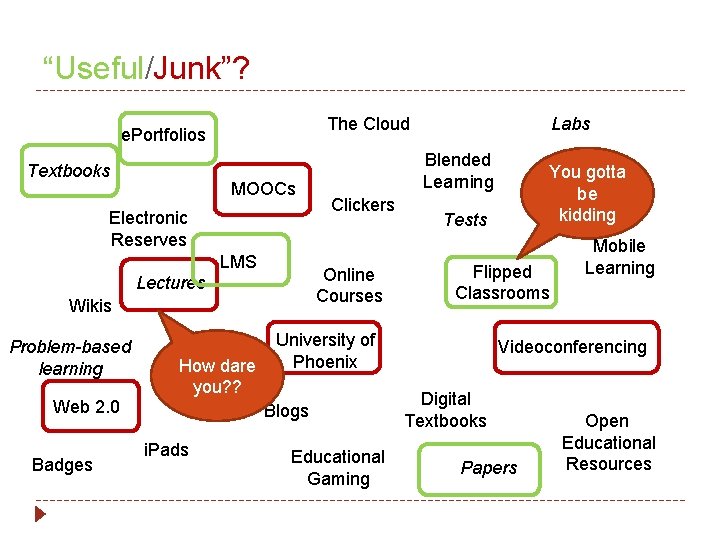
“Useful/Junk”? The Cloud e. Portfolios Textbooks MOOCs Electronic Reserves LMS Wikis Problem-based learning Web 2. 0 Badges Online How Videodare you? ? Blended Learning Clickers Online Courses Lectures Educational Gaming You gotta Online be Testing kidding Tests Flipped Classrooms University of Phoenix Blogs i. Pads Labs Mobile Learning Videoconferencing Digital Textbooks Papers Open Educational Resources
Not really helpful! Because…
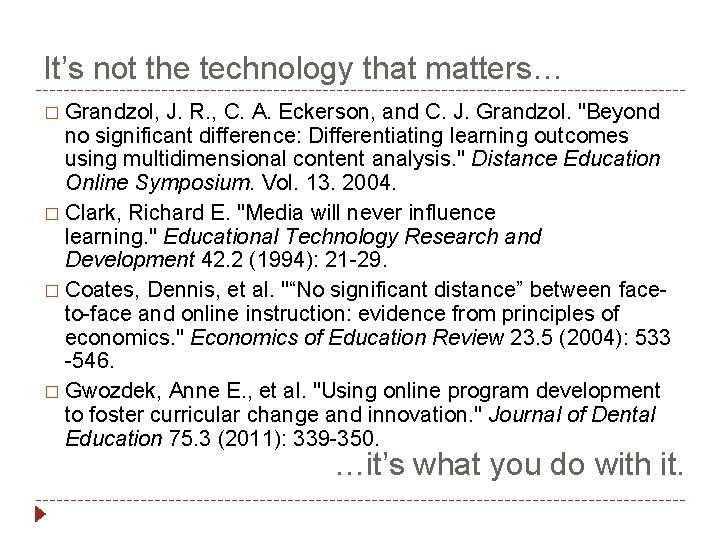
It’s not the technology that matters… � Grandzol, J. R. , C. A. Eckerson, and C. J. Grandzol. "Beyond no significant difference: Differentiating learning outcomes using multidimensional content analysis. " Distance Education Online Symposium. Vol. 13. 2004. � Clark, Richard E. "Media will never influence learning. " Educational Technology Research and Development 42. 2 (1994): 21 -29. � Coates, Dennis, et al. "“No significant distance” between faceto-face and online instruction: evidence from principles of economics. " Economics of Education Review 23. 5 (2004): 533 -546. � Gwozdek, Anne E. , et al. "Using online program development to foster curricular change and innovation. " Journal of Dental Education 75. 3 (2011): 339 -350. …it’s what you do with it.
What we really need Taxonomy based on function
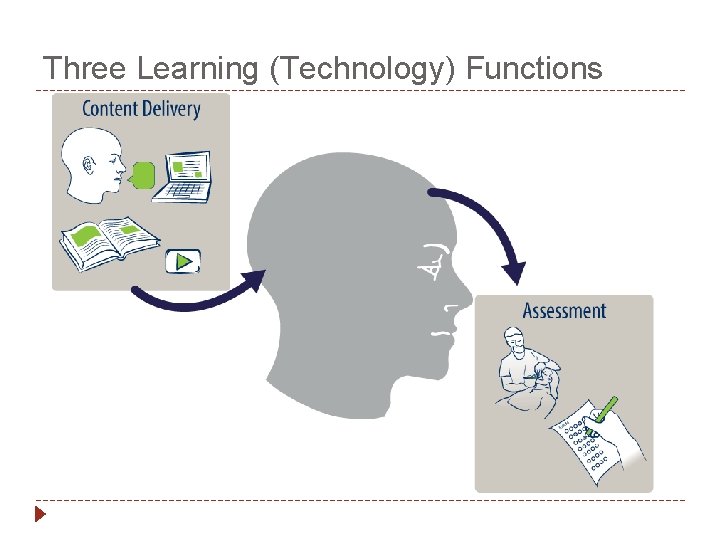
Three Learning (Technology) Functions
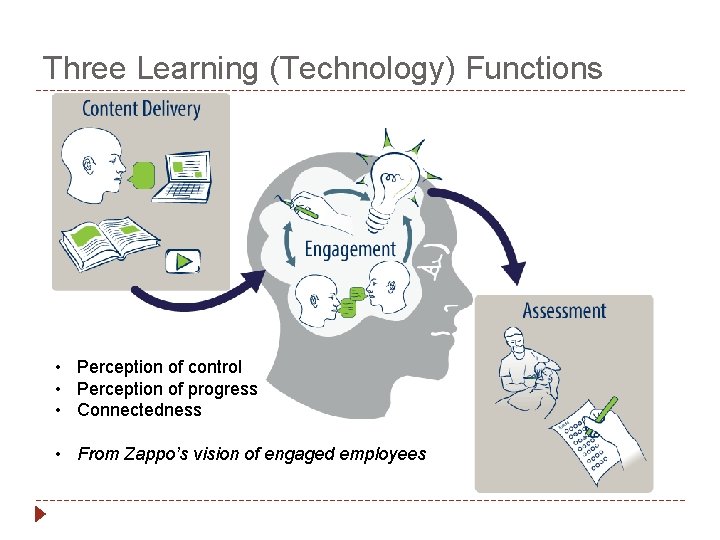
Three Learning (Technology) Functions • Perception of control • Perception of progress • Connectedness • From Zappo’s vision of engaged employees
Your Turn
What function does it serve? � Lets you record procedure demos and play them back � Lets students record themselves doing a procedure and send the video to you � Lets students record themselves and comment on each other’s videos
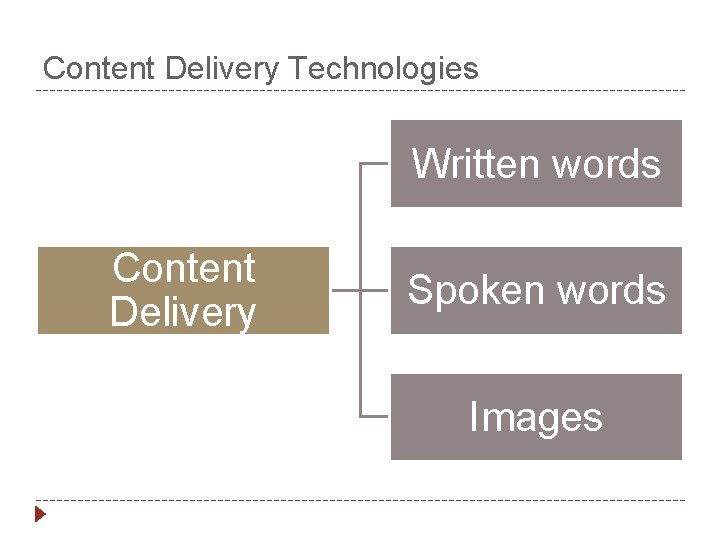
Content Delivery Technologies Written words Content Delivery Spoken words Images
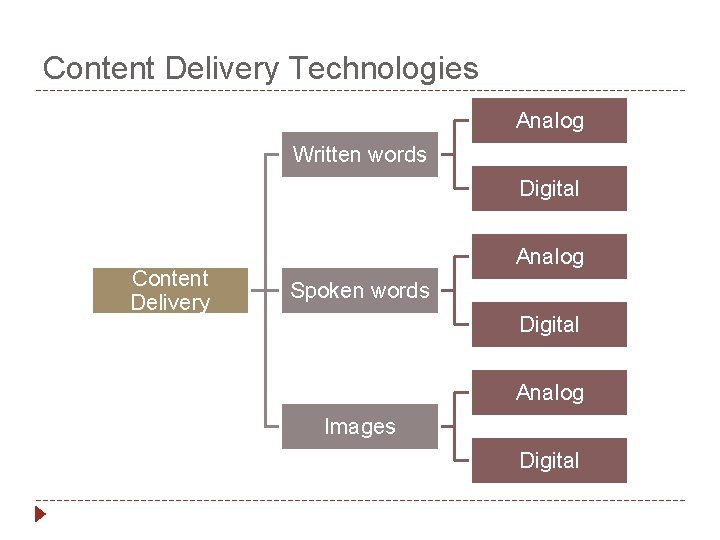
Content Delivery Technologies Analog Written words Digital Content Delivery Analog Spoken words Digital Analog Images Digital
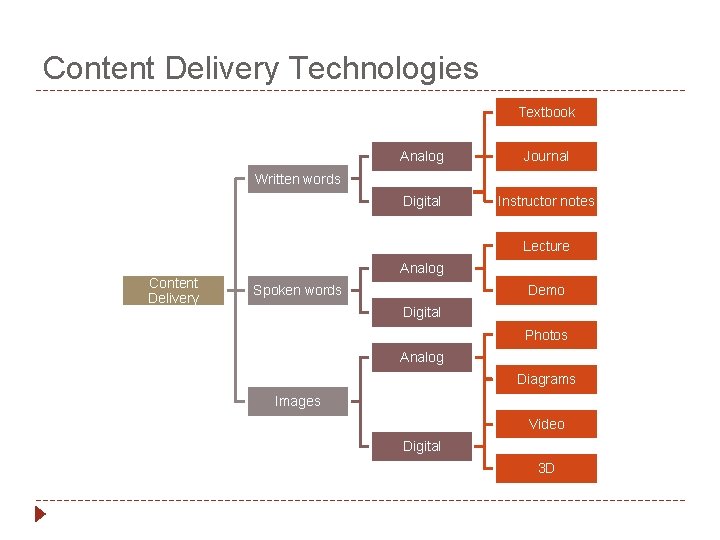
Content Delivery Technologies Textbook Analog Journal Digital Instructor notes Written words Lecture Content Delivery Analog Spoken words Demo Digital Photos Analog Diagrams Images Video Digital 3 D
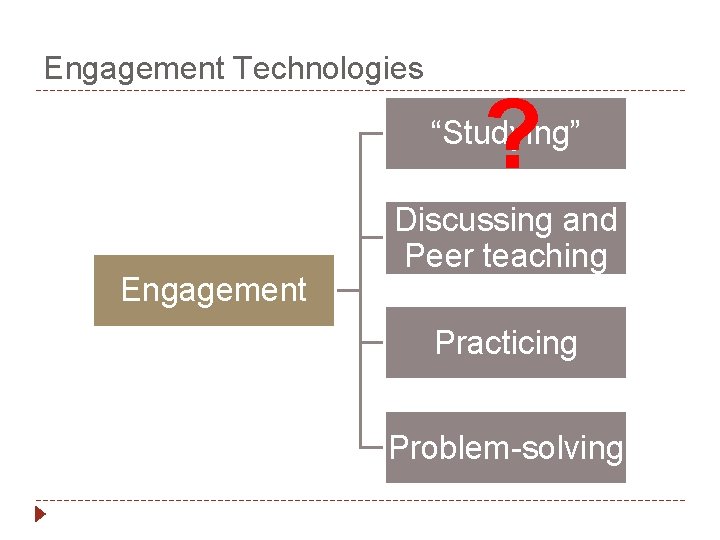
Engagement Technologies ? “Studying” Engagement Discussing and Peer teaching Practicing Problem-solving
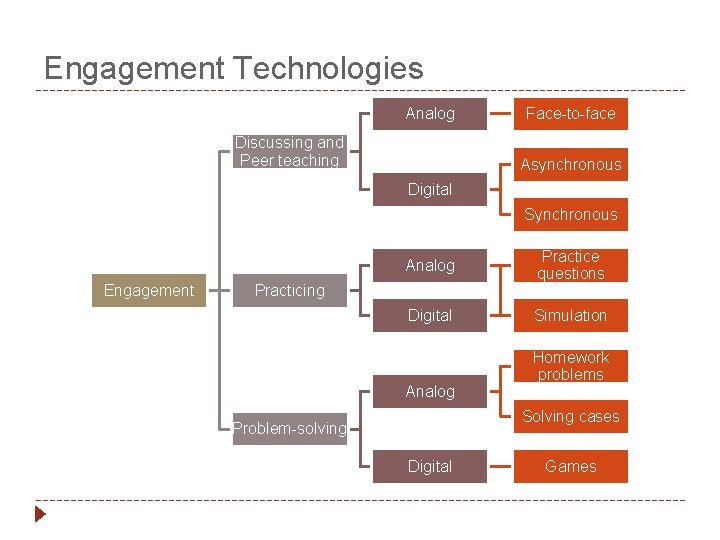
Engagement Technologies Analog Discussing and Peer teaching Face-to-face Asynchronous Digital Synchronous Engagement Analog Practice questions Digital Simulation Practicing Analog Homework problems Solving cases Problem-solving Digital Games
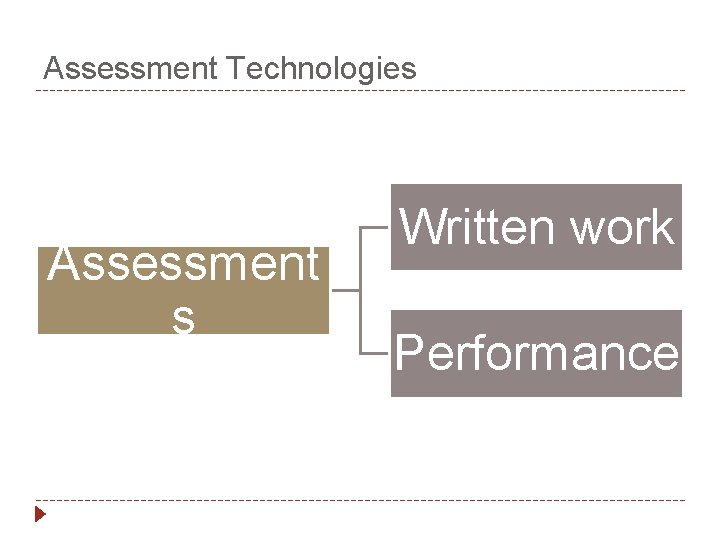
Assessment Technologies Assessment s Written work Performance
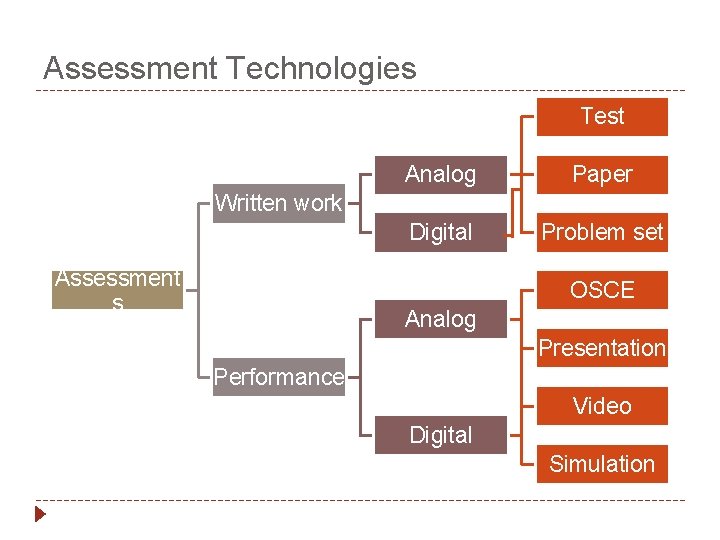
Assessment Technologies Test Analog Paper Digital Problem set Written work Assessment s OSCE Analog Presentation Performance Video Digital Simulation
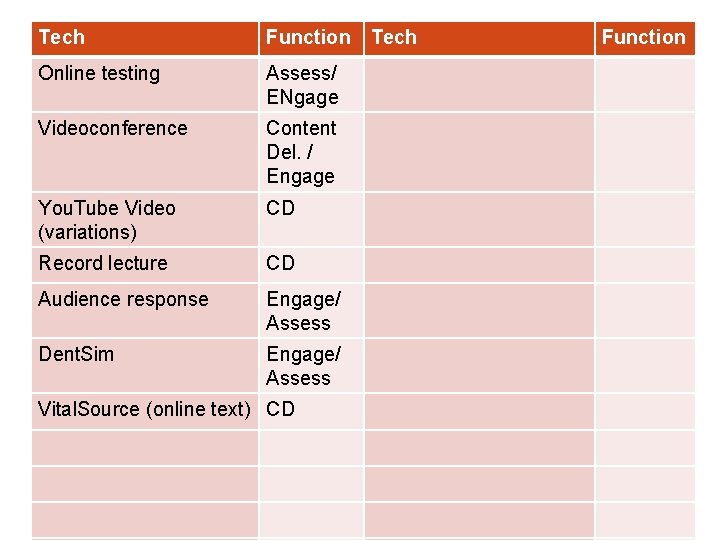
Building a list Brainstorming list of technologies and their functions
Tech Function Tech Online testing Assess/ ENgage Videoconference Content Del. / Engage You. Tube Video (variations) CD Record lecture CD Audience response Engage/ Assess Dent. Sim Engage/ Assess Vital. Source (online text) CD Function
So what? We have categories…how does that maximize learning?
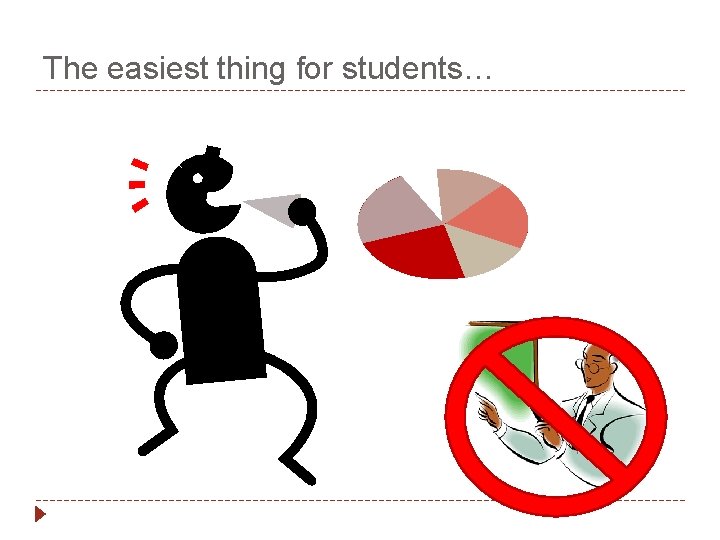
The easiest thing for students…
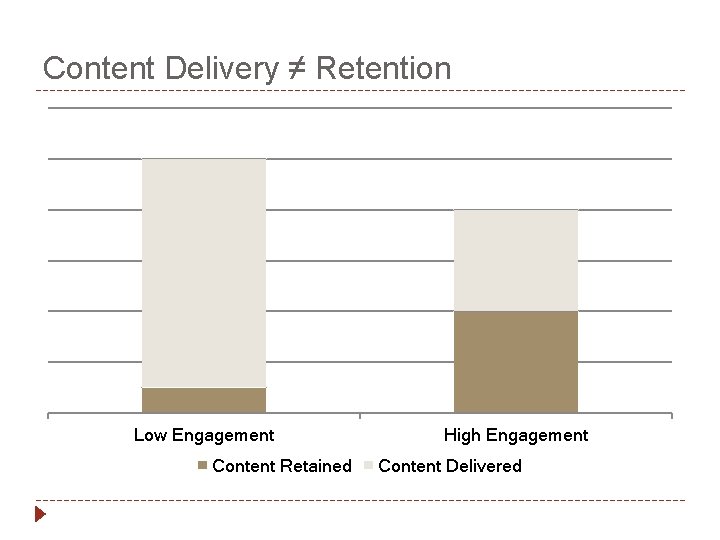
Content Delivery ≠ Retention Low Engagement Content Retained High Engagement Content Delivered
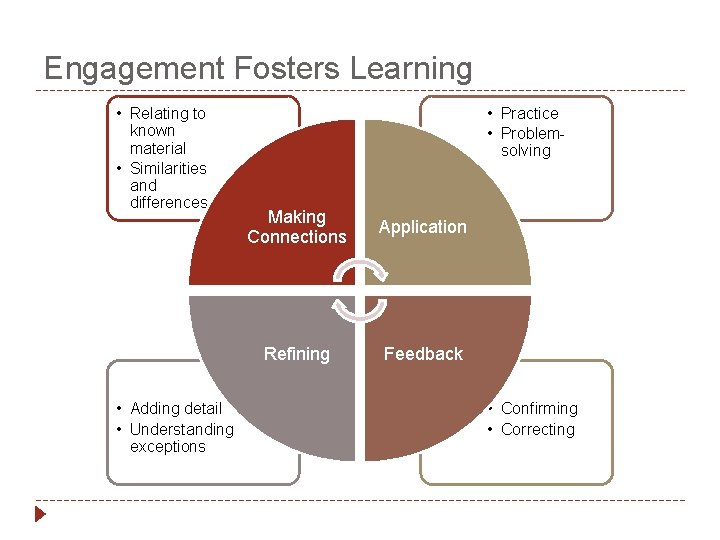
Engagement Fosters Learning • Relating to known material • Similarities and differences • Adding detail • Understanding exceptions • Practice • Problemsolving Making Connections Application Refining Feedback • Confirming • Correcting
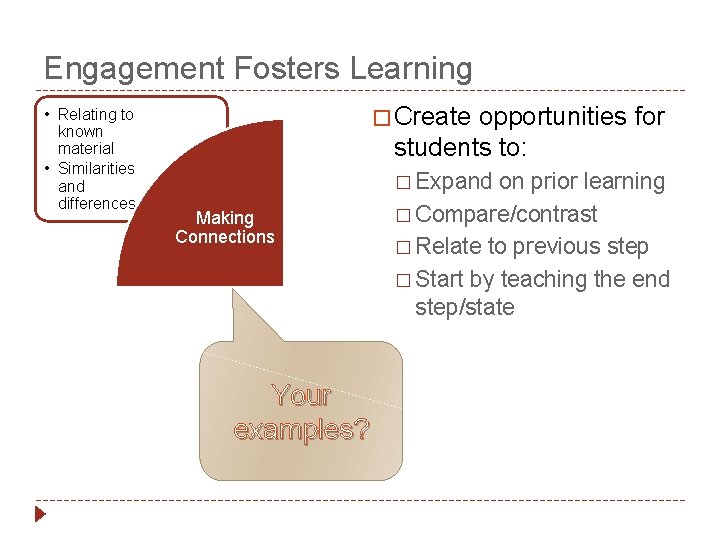
Engagement Fosters Learning • Relating to known material • Similarities and differences � Create opportunities for students to: � Expand Making Connections Your examples? on prior learning � Compare/contrast � Relate to previous step � Start by teaching the end step/state
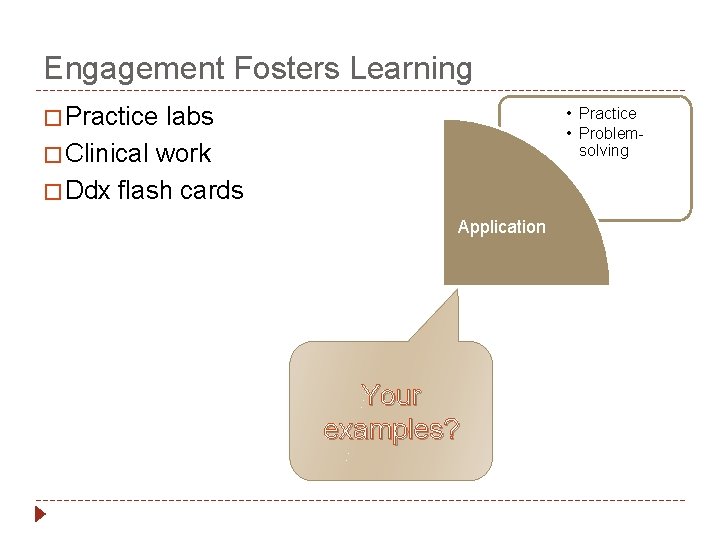
Engagement Fosters Learning � Practice labs � Clinical work � Ddx flash cards • Practice • Problemsolving Application Your examples?
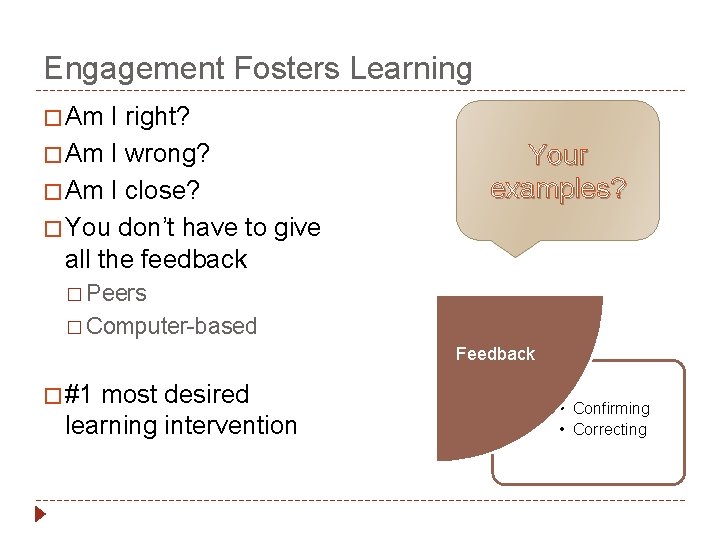
Engagement Fosters Learning � Am I right? � Am I wrong? � Am I close? � You don’t have to give all the feedback Your examples? � Peers � Computer-based Feedback � #1 most desired learning intervention • Confirming • Correcting
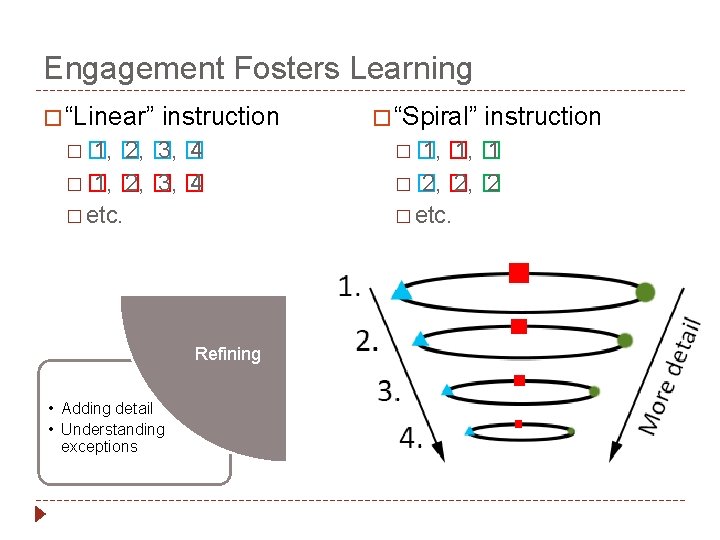
Engagement Fosters Learning � “Linear” instruction �� 1, � 2, � 3, � 4 �� 1, � 2, � 3, � 4 � etc. Refining • Adding detail • Understanding exceptions � “Spiral” �� 1, instruction � 1, � 1 �� 2, � 2 � etc.
Restructuring class time
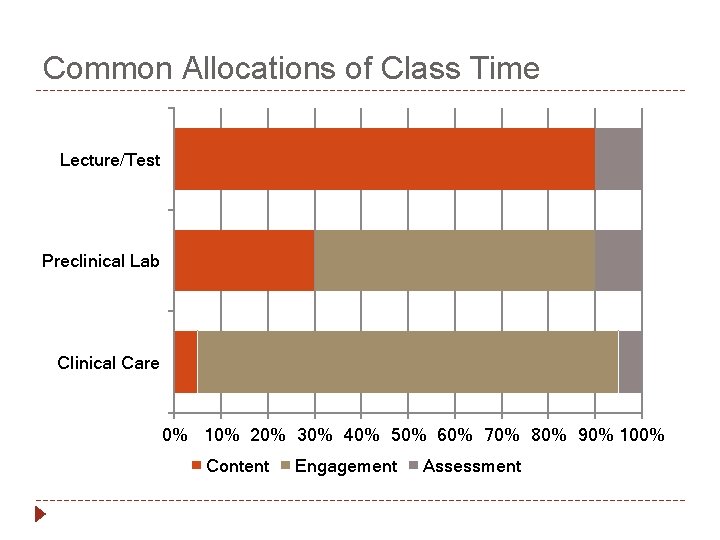
Common Allocations of Class Time Lecture/Test Preclinical Lab Clinical Care 0% 10% 20% 30% 40% 50% 60% 70% 80% 90% 100% Content Engagement Assessment
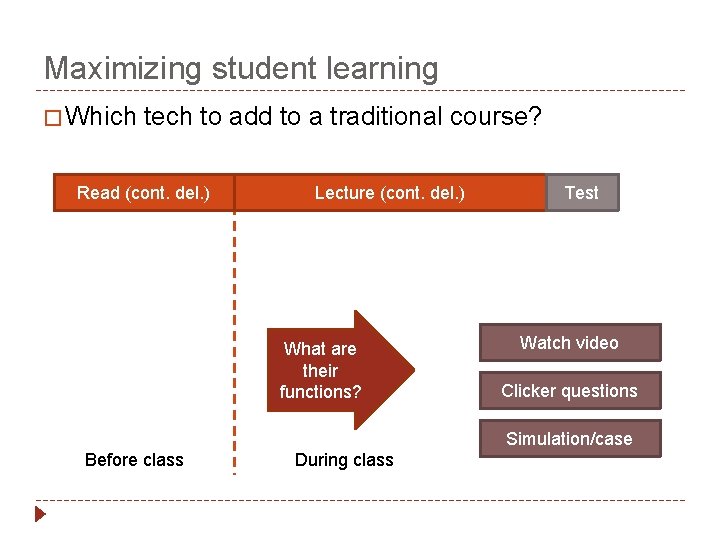
Maximizing student learning � Which tech to add to a traditional course? Read (cont. del. ) Lecture (cont. del. ) What are their functions? Test Watch video Clicker questions Simulation/case Before class During class
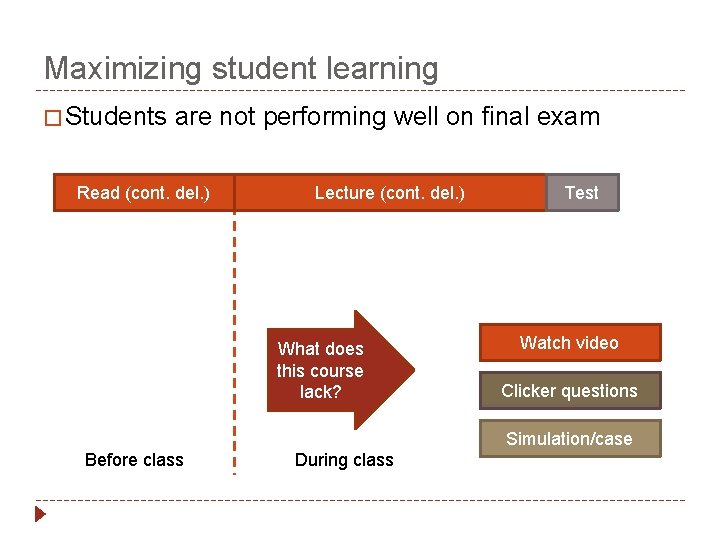
Maximizing student learning � Students are not performing well on final exam Read (cont. del. ) Lecture (cont. del. ) What does this course lack? Test Watch video Clicker questions Simulation/case Before class During class
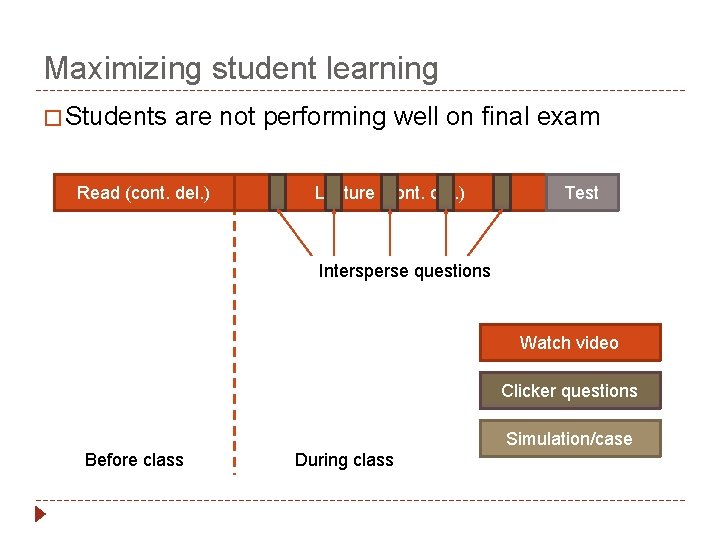
Maximizing student learning � Students are not performing well on final exam Read (cont. del. ) Lecture (cont. del. ) Test Intersperse questions Watch video Clicker questions Simulation/case Before class During class
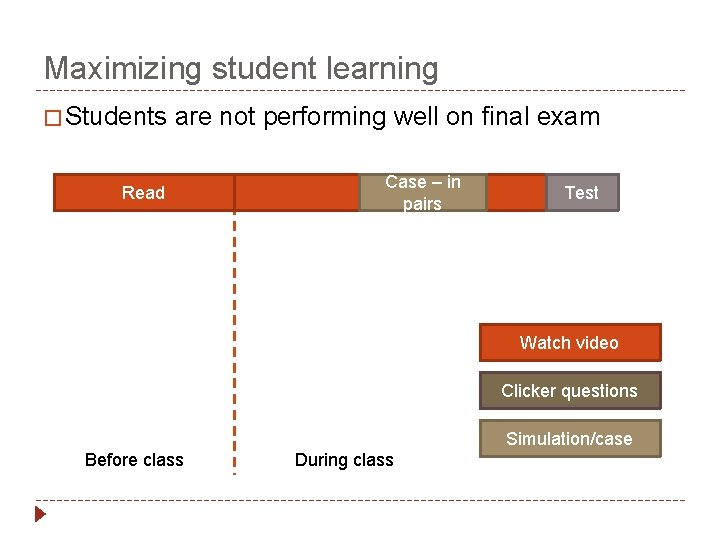
Maximizing student learning � Students are not performing well on final exam Read Case – in pairs Test Watch video Clicker questions Simulation/case Before class During class
Selecting New Technology A method
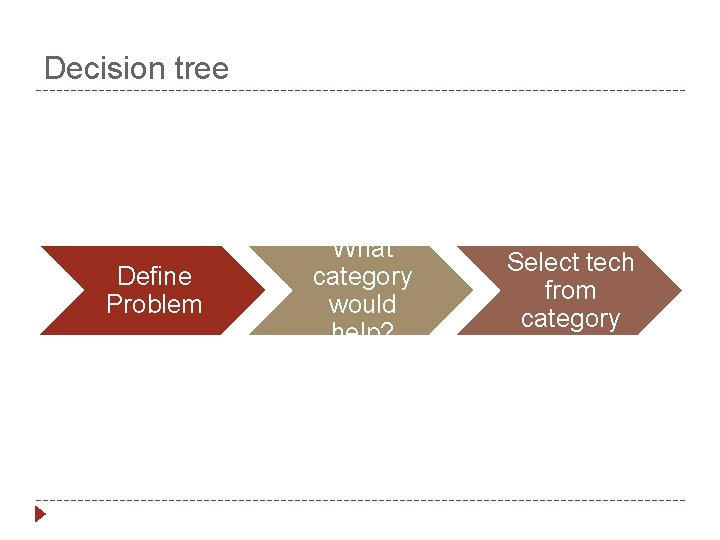
Decision tree Define Problem What category would help? Select tech from category
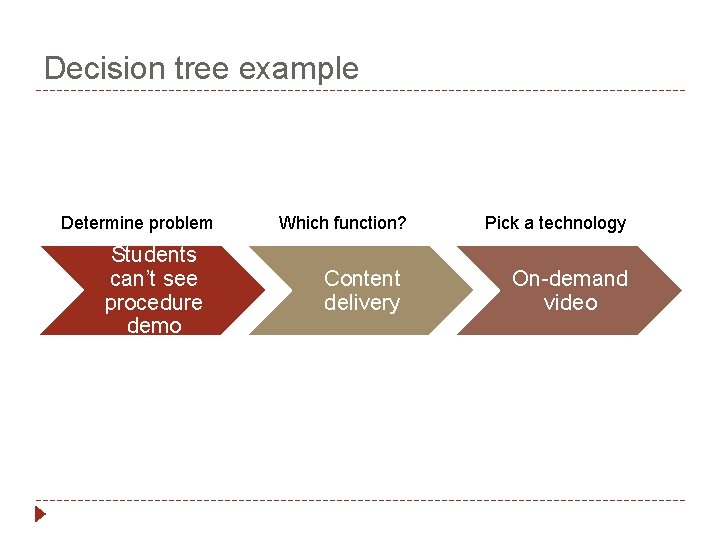
Decision tree example Determine problem Students can’t see procedure demo Which function? Content delivery Pick a technology On-demand video
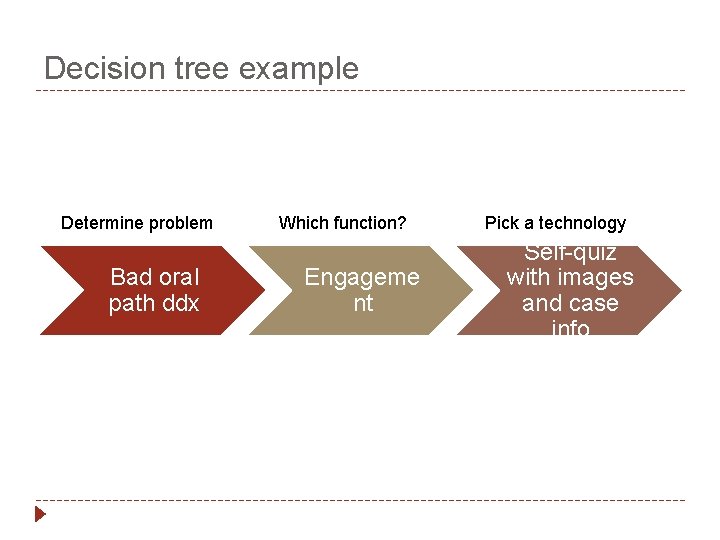
Decision tree example Determine problem Bad oral path ddx Which function? Engageme nt Pick a technology Self-quiz with images and case info
Session Wrap-up � What are three general functions of learning technologies? � Content � Which delivery, engagement, assessment function promotes the most student learning? � Engagement � What are three steps of the process for quickly determining they type of technology would meet your specific course needs? � Define problem � Decide which function is needed � Choose a technology from that category
Questions? Emily Springfield University of Michigan espring@umich. edu
Group Work Your choice of topics!
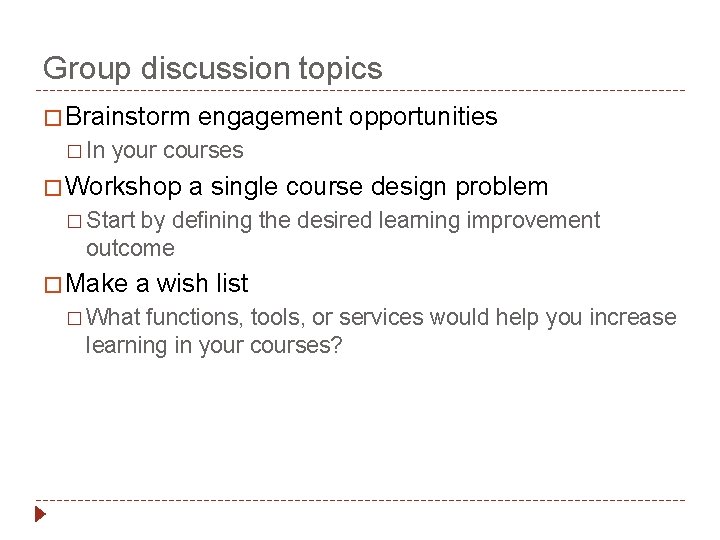
Group discussion topics � Brainstorm � In engagement opportunities your courses � Workshop a single course design problem � Start by defining the desired learning improvement outcome � Make a wish list � What functions, tools, or services would help you increase learning in your courses?