
Leveraging Patient Segmentation to Meet Patients Where They




- Slides: 21
Leveraging Patient Segmentation to Meet Patients Where They Are Kathie Kirkland, PFS Director, Maricopa Integrated Health System Erica Franko, Senior Vice President and Managing Director, Advisory Services, n. Thrive © 2018 n. Thrive, Inc. All rights reserved. RV 08312016
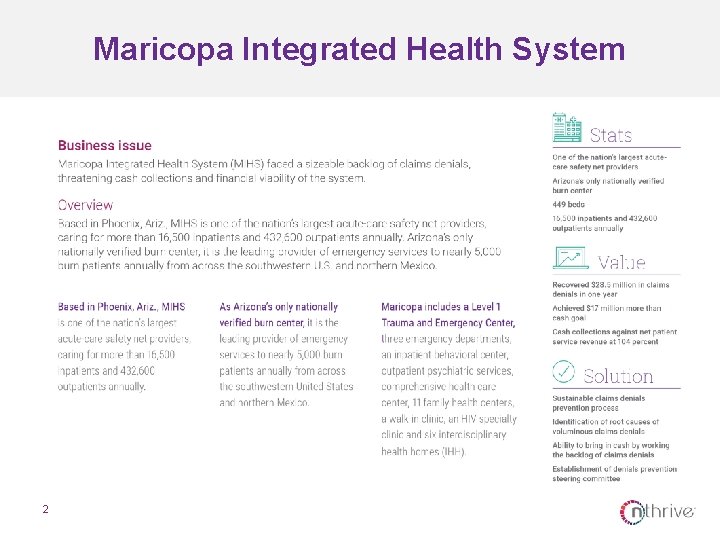
Maricopa Integrated Health System 2
The Situation
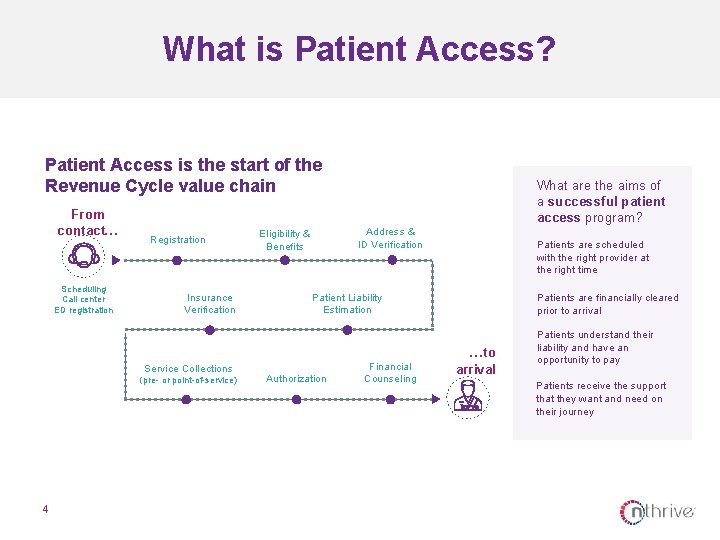
What is Patient Access? Patient Access is the start of the Revenue Cycle value chain From contact… Scheduling Call center ED registration Registration Insurance Verification Service Collections (pre- or point-of-service) 4 What are the aims of a successful patient access program? Address & ID Verification Eligibility & Benefits Patients are scheduled with the right provider at the right time Patient Liability Estimation Authorization Financial Counseling Patients are financially cleared prior to arrival …to arrival Patients understand their liability and have an opportunity to pay Patients receive the support that they want and need on their journey
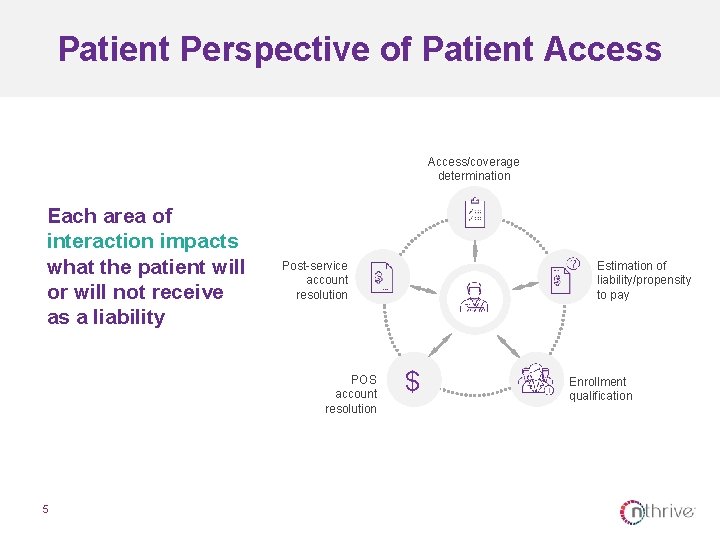
Patient Perspective of Patient Access/coverage determination Each area of interaction impacts what the patient will or will not receive as a liability Post-service account resolution POS account resolution 5 Estimation of liability/propensity to pay $ Enrollment qualification
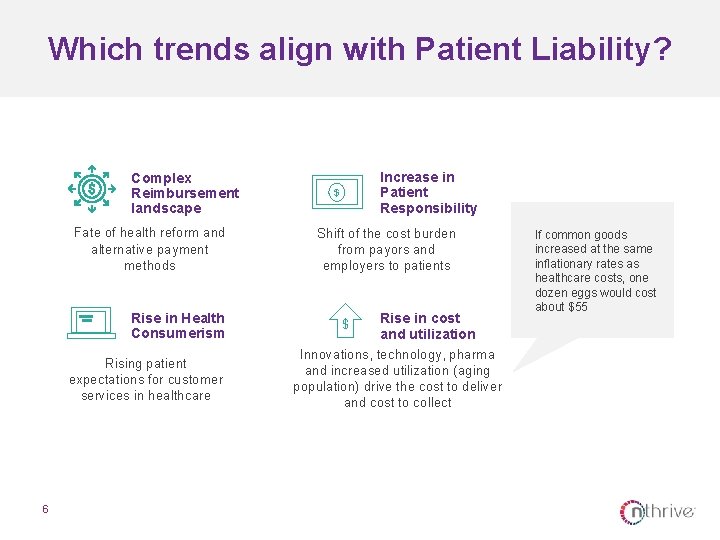
Which trends align with Patient Liability? Fate of health reform and alternative payment methods Rise in Health Consumerism Rising patient expectations for customer services in healthcare 6 Increase in Patient Responsibility $ Shift of the cost burden from payors and employers to patients $ Complex Reimbursement landscape Rise in cost and utilization Innovations, technology, pharma and increased utilization (aging population) drive the cost to deliver and cost to collect If common goods increased at the same inflationary rates as healthcare costs, one dozen eggs would cost about $55
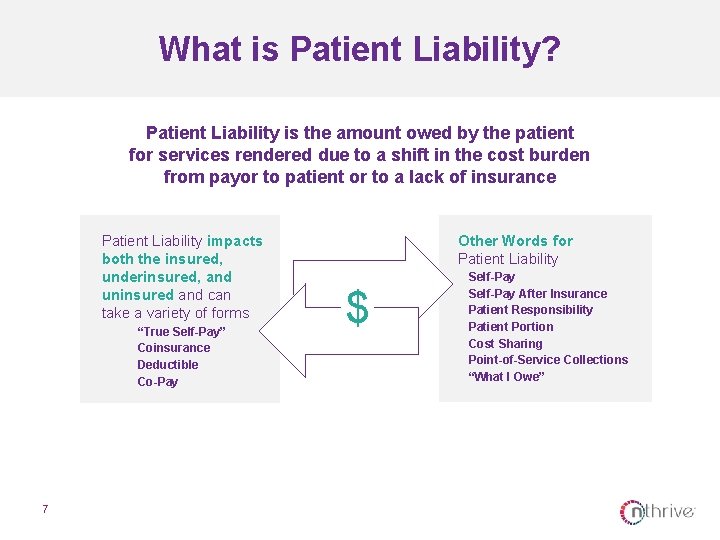
What is Patient Liability? Patient Liability is the amount owed by the patient for services rendered due to a shift in the cost burden from payor to patient or to a lack of insurance Patient Liability impacts both the insured, underinsured, and uninsured and can take a variety of forms “True Self-Pay” Coinsurance Deductible Co-Pay 7 Other Words for Patient Liability $ Self-Pay After Insurance Patient Responsibility Patient Portion Cost Sharing Point-of-Service Collections “What I Owe”
The Affordable Care Act (ACA) expanded coverage 8
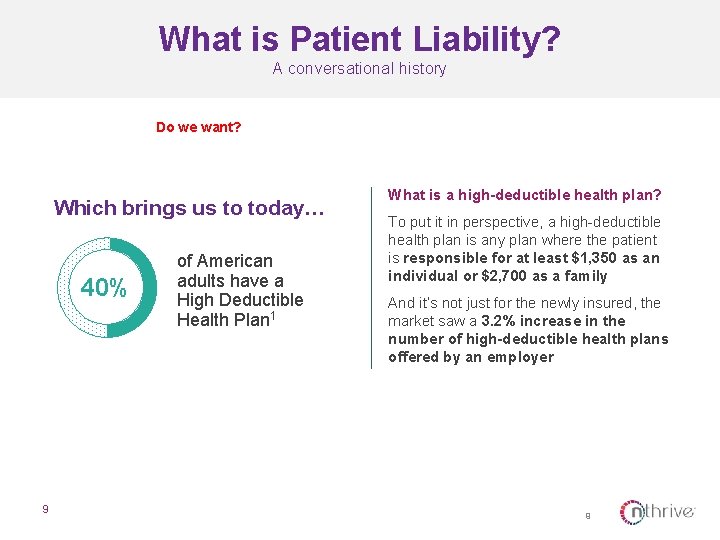
What is Patient Liability? A conversational history Do we want? Which brings us to today… 40% 9 of American adults have a High Deductible Health Plan 1 What is a high-deductible health plan? To put it in perspective, a high-deductible health plan is any plan where the patient is responsible for at least $1, 350 as an individual or $2, 700 as a family And it’s not just for the newly insured, the market saw a 3. 2% increase in the number of high-deductible health plans offered by an employer 9
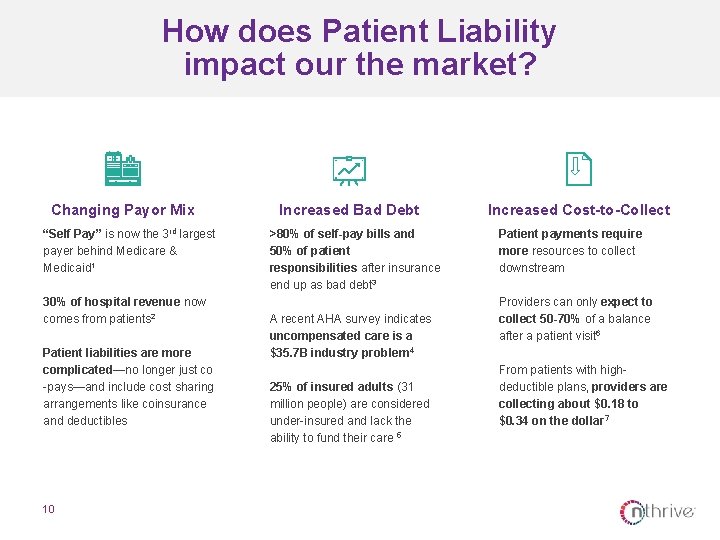
How does Patient Liability impact our the market? Changing Payor Mix “Self Pay” is now the 3 rd largest payer behind Medicare & Medicaid 1 30% of hospital revenue now comes from patients 2 Patient liabilities are more complicated—no longer just co -pays—and include cost sharing arrangements like coinsurance and deductibles 10 Increased Bad Debt >80% of self-pay bills and 50% of patient responsibilities after insurance end up as bad debt 3 A recent AHA survey indicates uncompensated care is a $35. 7 B industry problem 4 25% of insured adults (31 million people) are considered under-insured and lack the ability to fund their care 5 Increased Cost-to-Collect Patient payments require more resources to collect downstream Providers can only expect to collect 50 -70% of a balance after a patient visit 6 From patients with highdeductible plans, providers are collecting about $0. 18 to $0. 34 on the dollar 7
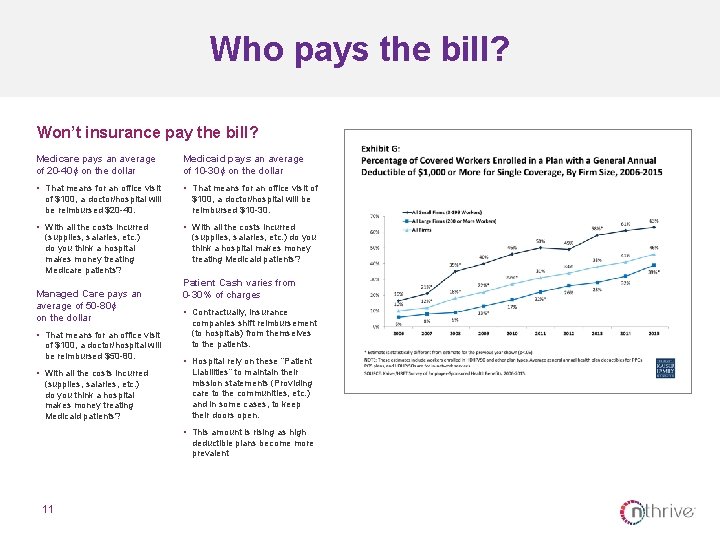
Who pays the bill? Won’t insurance pay the bill? Medicare pays an average of 20 -40¢ on the dollar Medicaid pays an average of 10 -30¢ on the dollar • That means for an office visit of of $100, a doctor/hospital will be reimbursed $20 -40. • With all the costs incurred (supplies, salaries, etc. ) do you think a hospital makes money treating Medicare patients? Managed Care pays an average of 50 -80¢ on the dollar • That means for an office visit of $100, a doctor/hospital will be reimbursed $50 -80. • With all the costs incurred (supplies, salaries, etc. ) do you think a hospital makes money treating Medicaid patients? $100, a doctor/hospital will be reimbursed $10 -30. • With all the costs incurred (supplies, salaries, etc. ) do you think a hospital makes money treating Medicaid patients? Patient Cash varies from 0 -30% of charges • Contractually, insurance companies shift reimbursement (to hospitals) from themselves to the patients. • Hospital rely on these “Patient Liabilities” to maintain their mission statements (Providing care to the communities, etc. ) and in some cases, to keep their doors open. • This amount is rising as high deductible plans become more prevalent 11
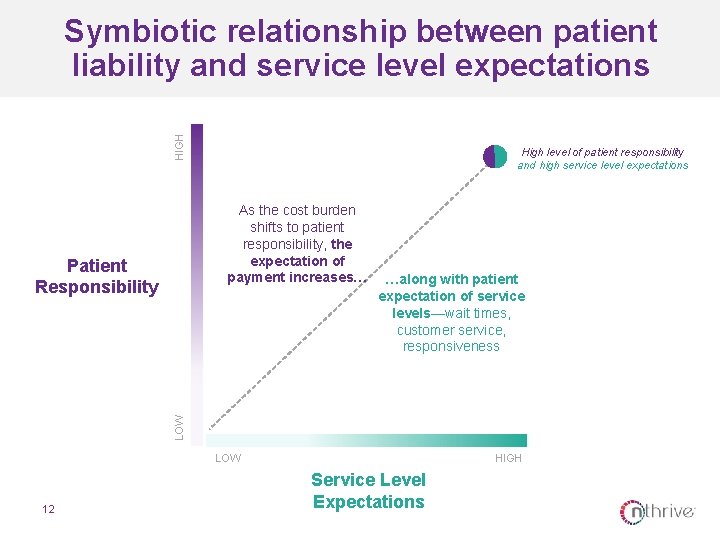
HIGH Symbiotic relationship between patient liability and service level expectations High level of patient responsibility and high service level expectations As the cost burden shifts to patient responsibility, the expectation of payment increases… …along with patient expectation of service levels—wait times, customer service, responsiveness LOW Patient Responsibility LOW 12 HIGH Service Level Expectations
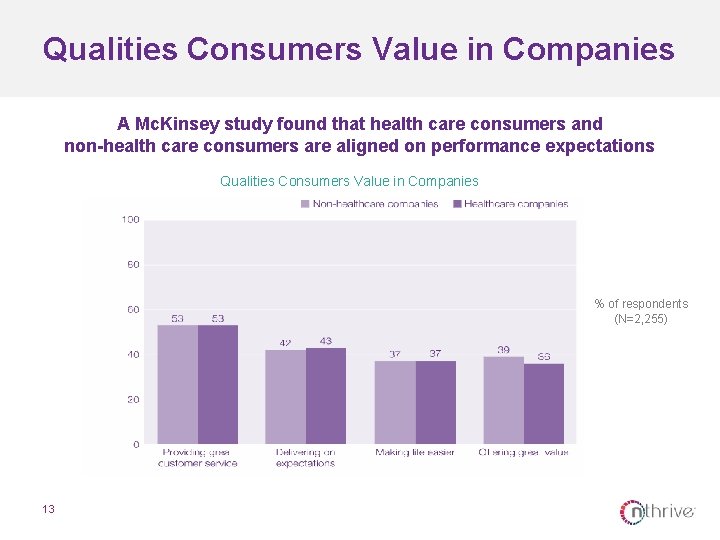
Qualities Consumers Value in Companies A Mc. Kinsey study found that health care consumers and non-health care consumers are aligned on performance expectations Qualities Consumers Value in Companies % of respondents (N=2, 255) 13
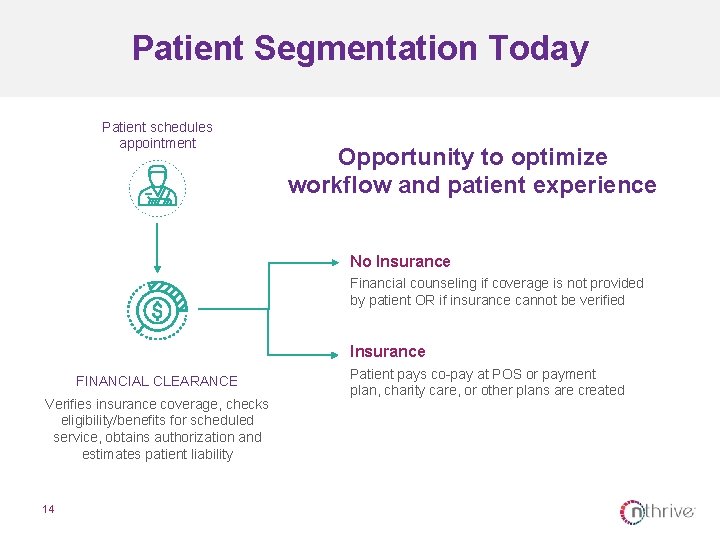
Patient Segmentation Today Patient schedules appointment Opportunity to optimize workflow and patient experience No Insurance Financial counseling if coverage is not provided by patient OR if insurance cannot be verified Insurance FINANCIAL CLEARANCE Verifies insurance coverage, checks eligibility/benefits for scheduled service, obtains authorization and estimates patient liability 14 Patient pays co-pay at POS or payment plan, charity care, or other plans are created
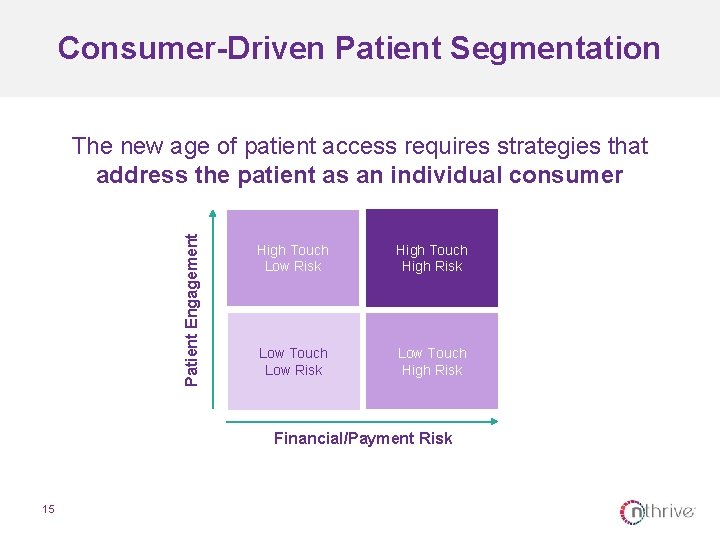
Consumer-Driven Patient Segmentation Patient Engagement The new age of patient access requires strategies that address the patient as an individual consumer High Touch Low Risk High Touch High Risk Low Touch Low Risk Low Touch High Risk Financial/Payment Risk 15
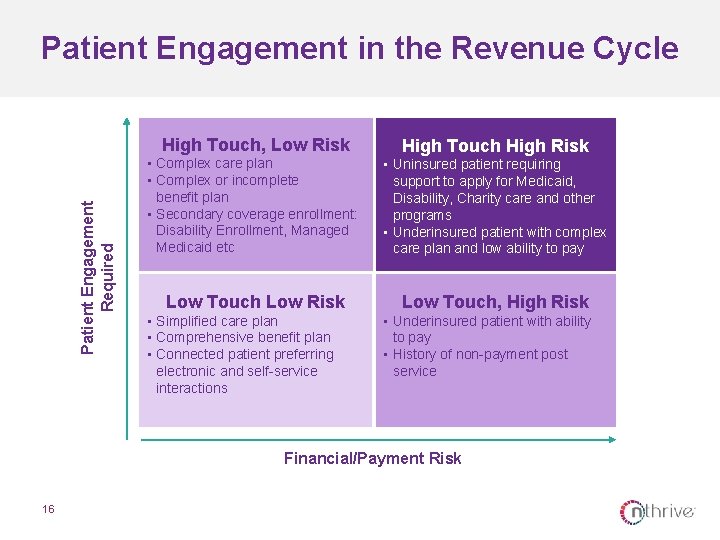
Patient Engagement in the Revenue Cycle Patient Engagement Required High Touch, Low Risk High Touch High Risk • Complex care plan • Complex or incomplete benefit plan • Secondary coverage enrollment: Disability Enrollment, Managed Medicaid etc • Uninsured patient requiring support to apply for Medicaid, Disability, Charity care and other programs • Underinsured patient with complex care plan and low ability to pay Low Touch Low Risk Low Touch, High Risk • Simplified care plan • Comprehensive benefit plan • Connected patient preferring electronic and self-service interactions • Underinsured patient with ability to pay • History of non-payment post service Financial/Payment Risk 16
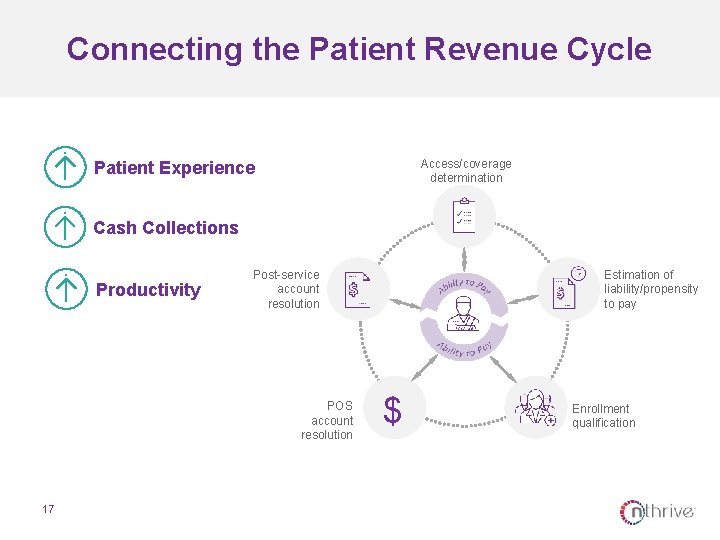
Connecting the Patient Revenue Cycle Access/coverage determination Patient Experience Cash Collections Productivity Post-service account resolution POS account resolution 17 Estimation of liability/propensity to pay $ Enrollment qualification
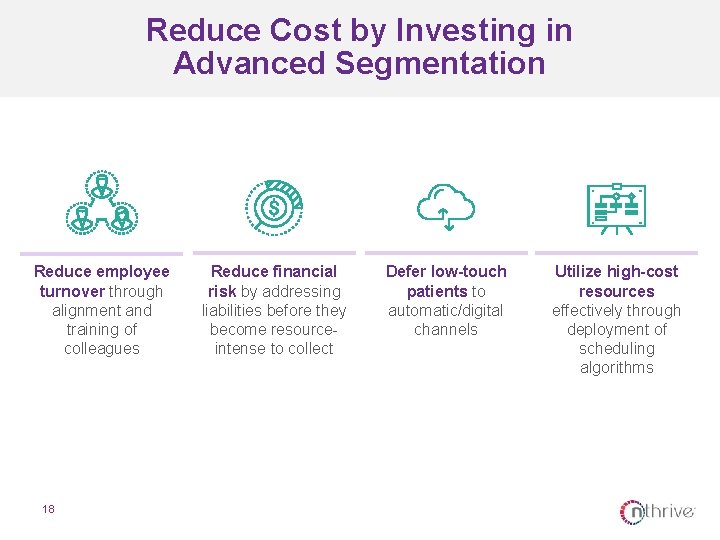
Reduce Cost by Investing in Advanced Segmentation Reduce employee turnover through alignment and training of colleagues 18 Reduce financial risk by addressing liabilities before they become resourceintense to collect Defer low-touch patients to automatic/digital channels Utilize high-cost resources effectively through deployment of scheduling algorithms
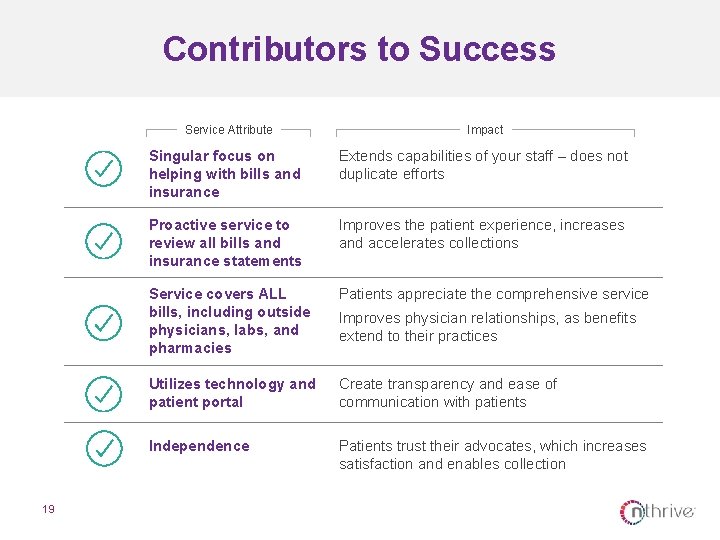
Contributors to Success Service Attribute 19 Impact Singular focus on helping with bills and insurance Extends capabilities of your staff – does not duplicate efforts Proactive service to review all bills and insurance statements Improves the patient experience, increases and accelerates collections Service covers ALL bills, including outside physicians, labs, and pharmacies Patients appreciate the comprehensive service Utilizes technology and patient portal Create transparency and ease of communication with patients Independence Patients trust their advocates, which increases satisfaction and enables collection Improves physician relationships, as benefits extend to their practices
Measuring Success 20
QUESTIONS Erica Franko Senior Vice President and Managing Director, Advisory Services efranko@nthrive. com 21