
Leveraging Existing Traffic Signal Infrastructure to Produce Performance
- Slides: 54
Leveraging Existing Traffic Signal Infrastructure to Produce Performance Measures for System Optimization and Construction Acceptance
Advisory Committee • Study Advisory Committee – Indiana LTAP • Neal Carboneau and John Habermann – Local Highway Departments and Engineering Firms • • Lafayette: Fred Koning Elkhart County: Jay Grossman BFS Engineering: Steve Hardesty BFS Engineering: Tom Vandenberg – Vendors • Traffic Control Corp: Chip Lang • Purdue University Researchers – Principal Investigator: Darcy Bullock – Research Assistants: Ross Haseman and Chris Day
Background What are Traffic Signal Performance Measures? • Using the new generation of signal controllers to monitor and record actual traffic data • Analyzing the data to get a sense of how well the signal is performing, and plan changes • Analyzing the data later to verify that changes worked as planned 3
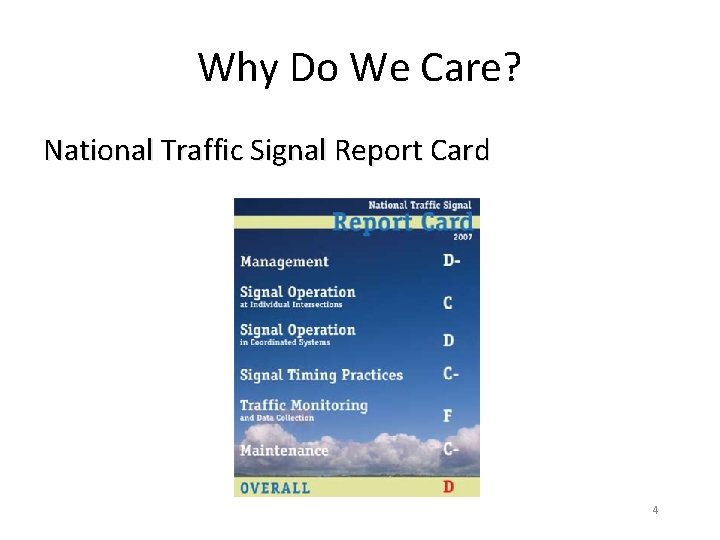
Why Do We Care? National Traffic Signal Report Card 4
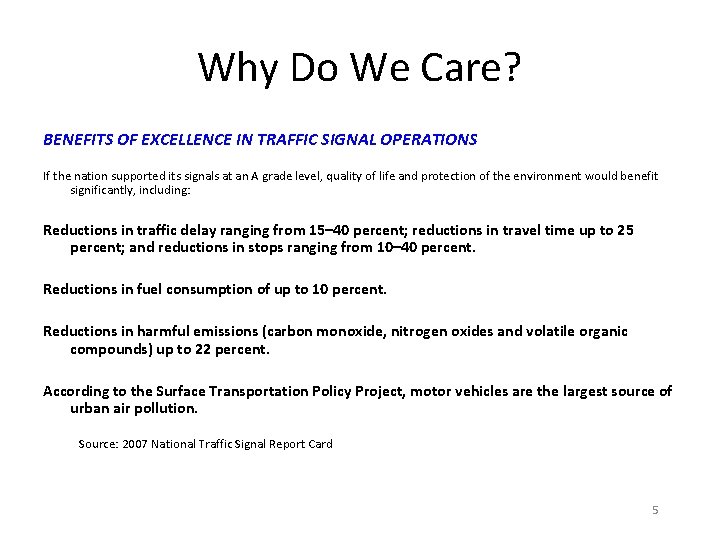
Why Do We Care? BENEFITS OF EXCELLENCE IN TRAFFIC SIGNAL OPERATIONS If the nation supported its signals at an A grade level, quality of life and protection of the environment would benefit significantly, including: Reductions in traffic delay ranging from 15– 40 percent; reductions in travel time up to 25 percent; and reductions in stops ranging from 10– 40 percent. Reductions in fuel consumption of up to 10 percent. Reductions in harmful emissions (carbon monoxide, nitrogen oxides and volatile organic compounds) up to 22 percent. According to the Surface Transportation Policy Project, motor vehicles are the largest source of urban air pollution. Source: 2007 National Traffic Signal Report Card 5
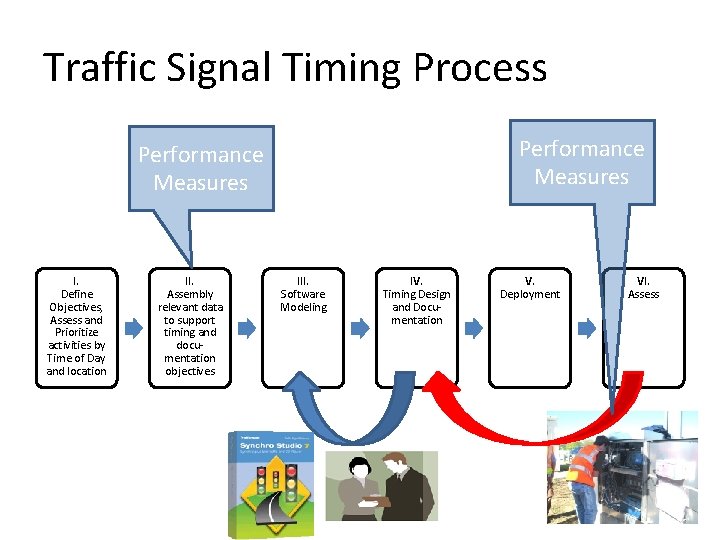
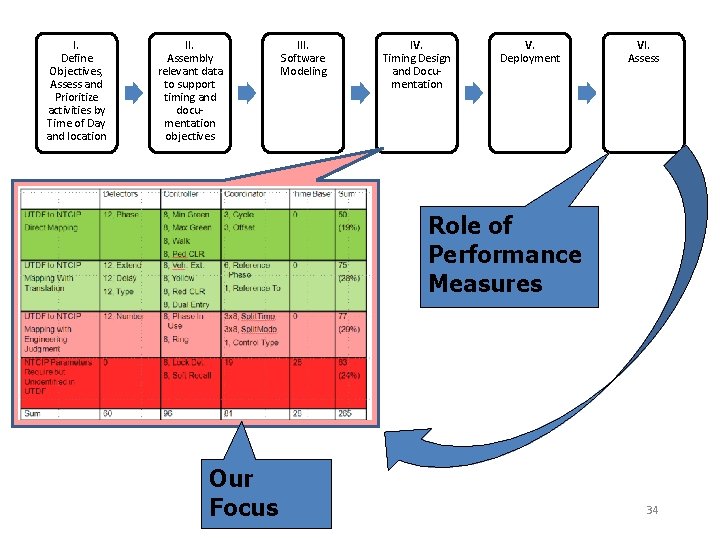
Traffic Signal Timing Process Performance Measures I. Define Objectives, Assess and Prioritize activities by Time of Day and location II. Assembly relevant data to support timing and documentation objectives III. Software Modeling IV. Timing Design and Documentation V. Deployment VI. Assess
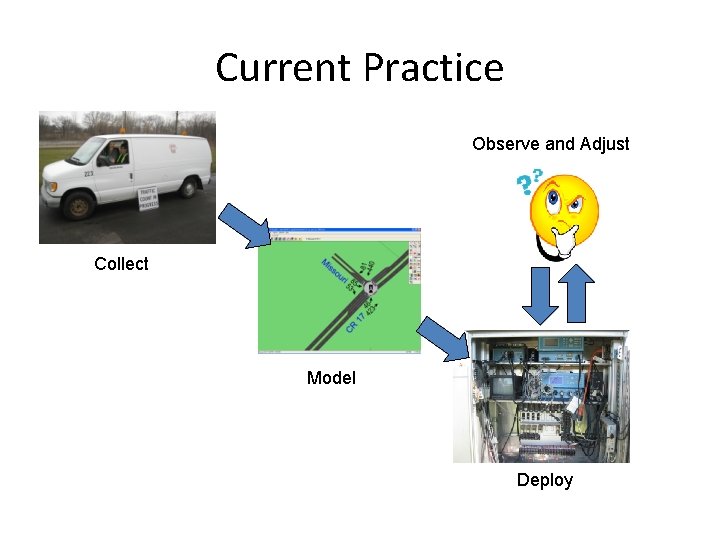
Current Practice Observe and Adjust Collect Model Deploy
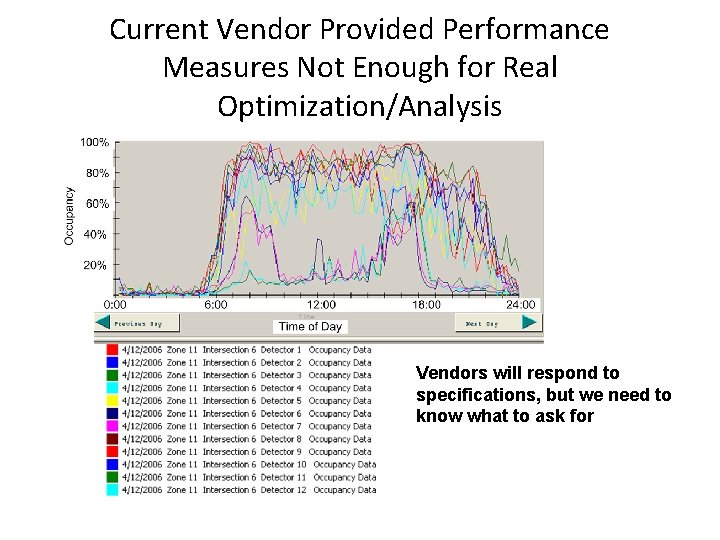
Current Vendor Provided Performance Measures Not Enough for Real Optimization/Analysis Vendors will respond to specifications, but we need to know what to ask for
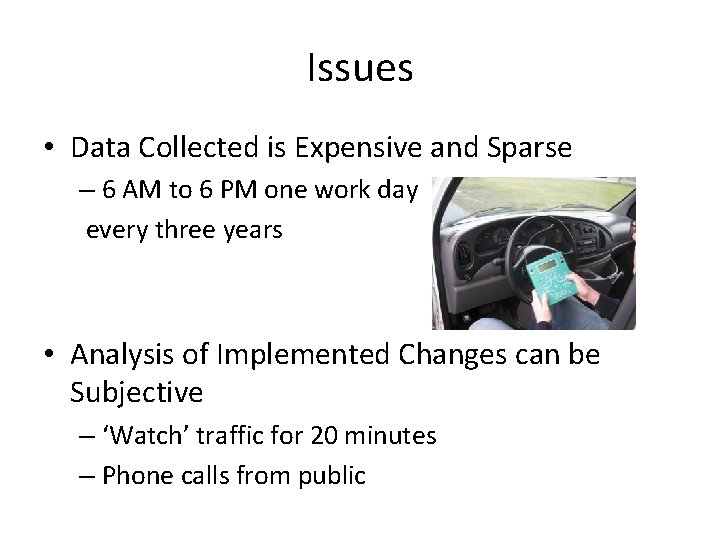
Issues • Data Collected is Expensive and Sparse – 6 AM to 6 PM one work day every three years • Analysis of Implemented Changes can be Subjective – ‘Watch’ traffic for 20 minutes – Phone calls from public
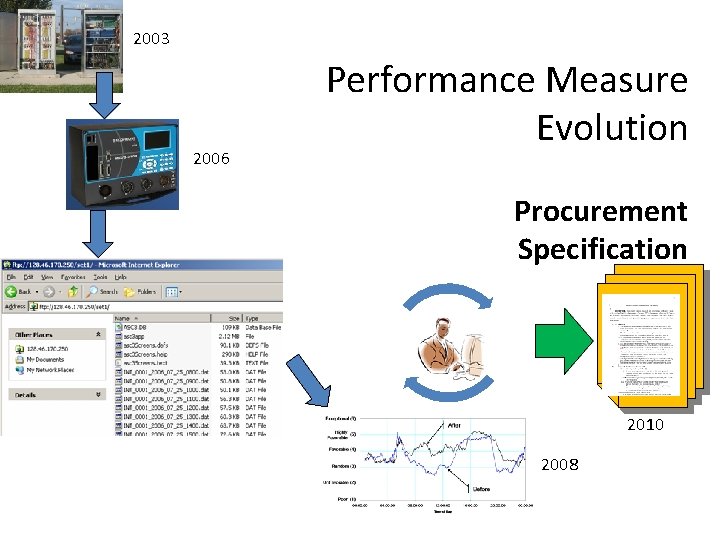
2003 2006 Performance Measure Evolution Procurement Specification 2010 2008
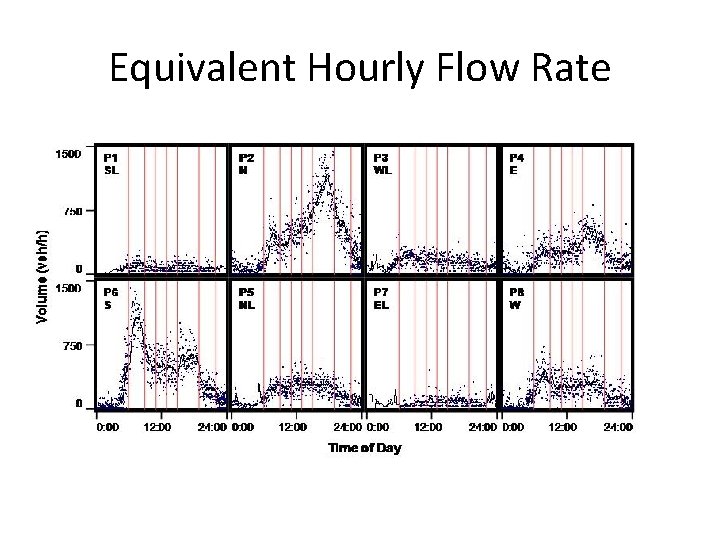
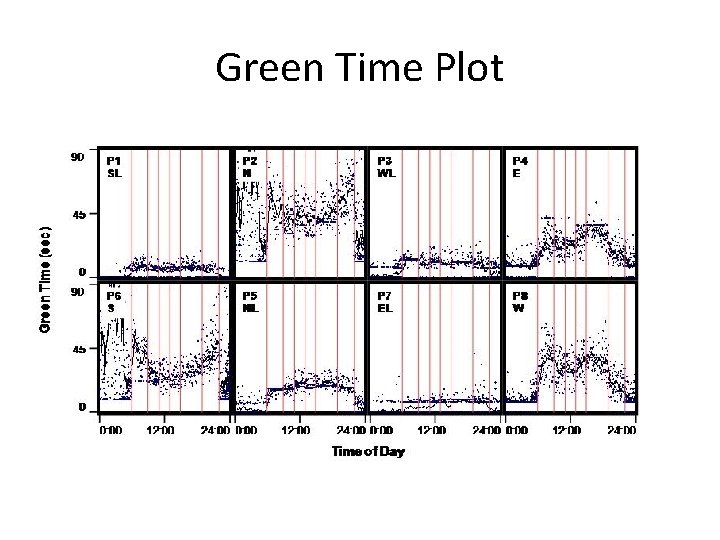
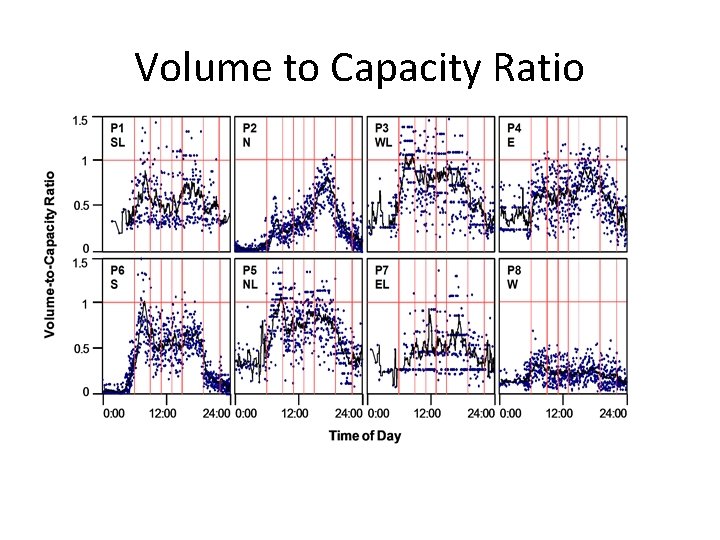
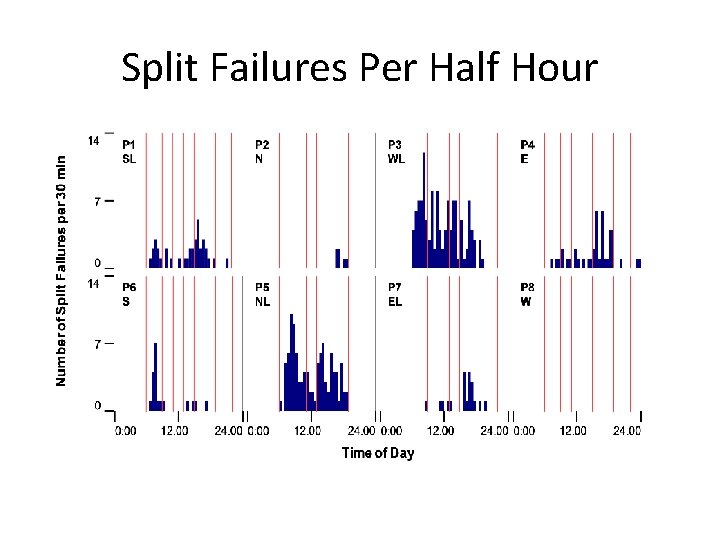
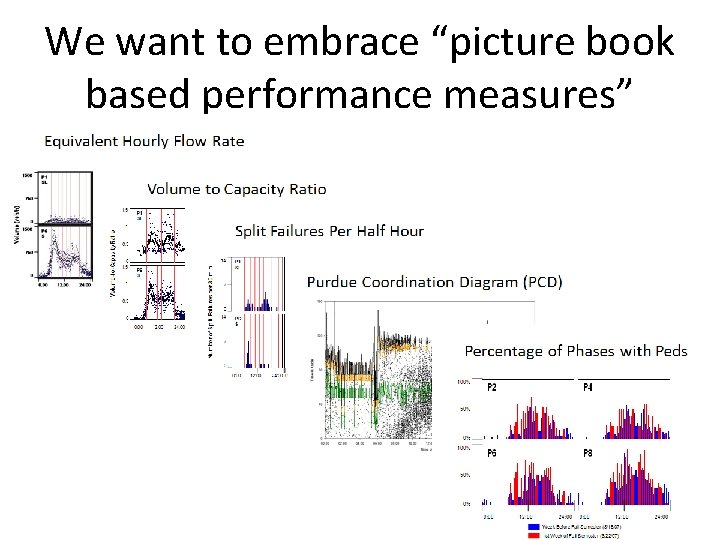
Six Recommended Performance Measures
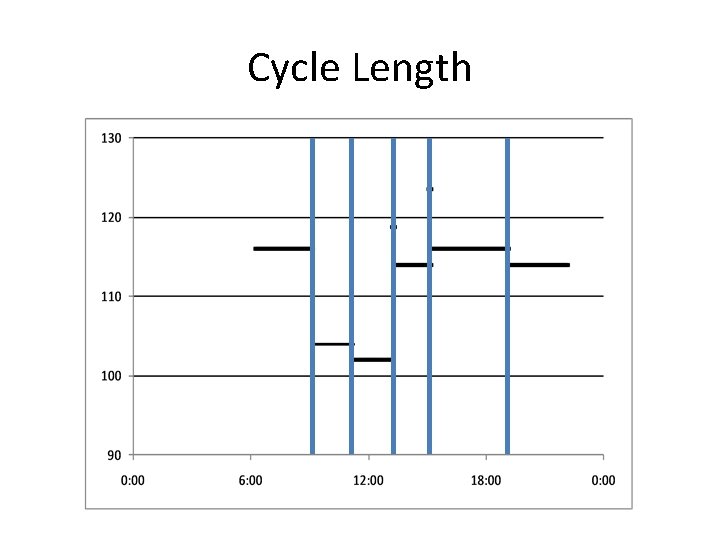
Cycle Length
Equivalent Hourly Flow Rate
Green Time Plot
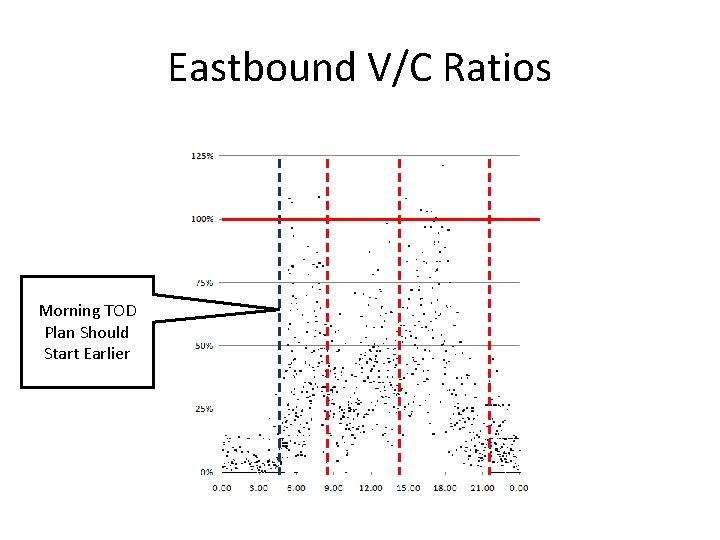
Volume to Capacity Ratio
Split Failures Per Half Hour
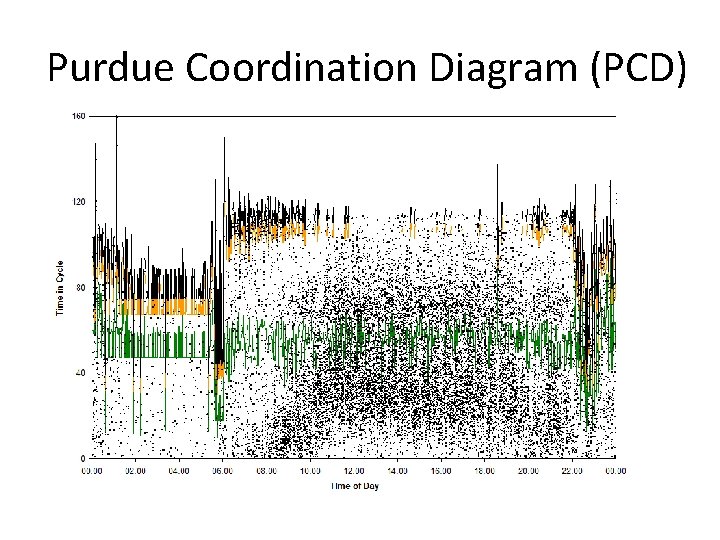
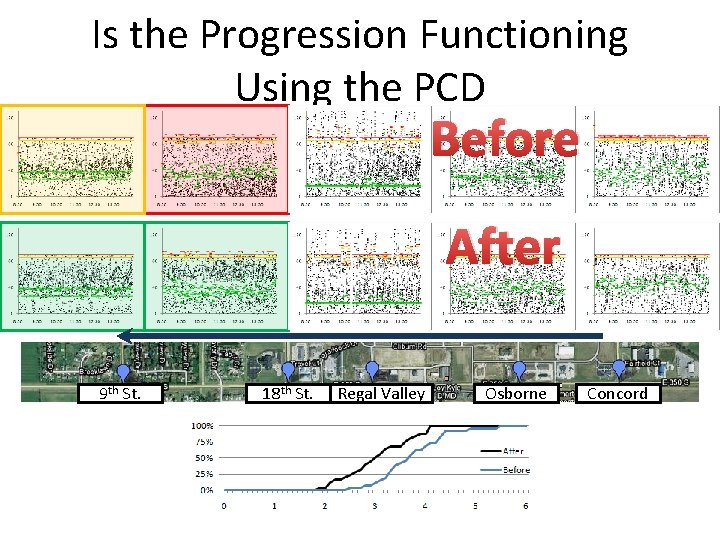
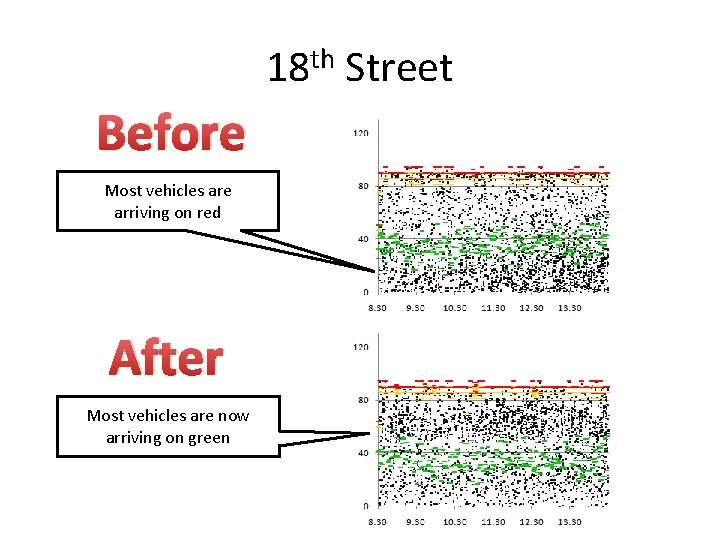
Purdue Coordination Diagram (PCD)
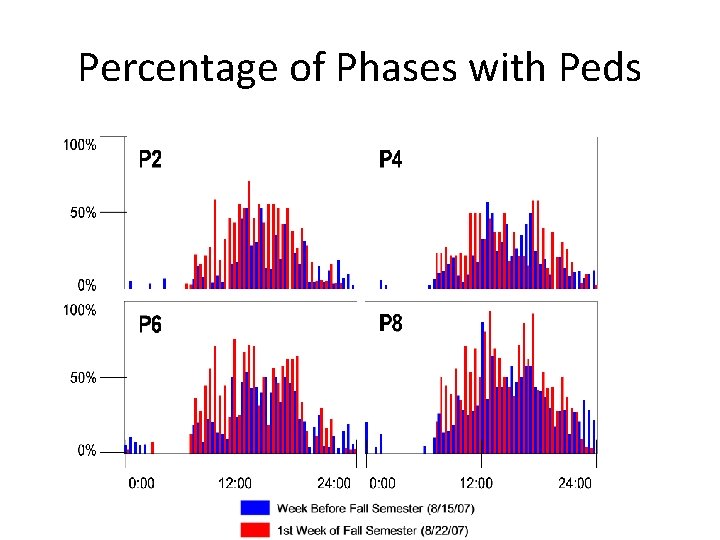
Percentage of Phases with Peds
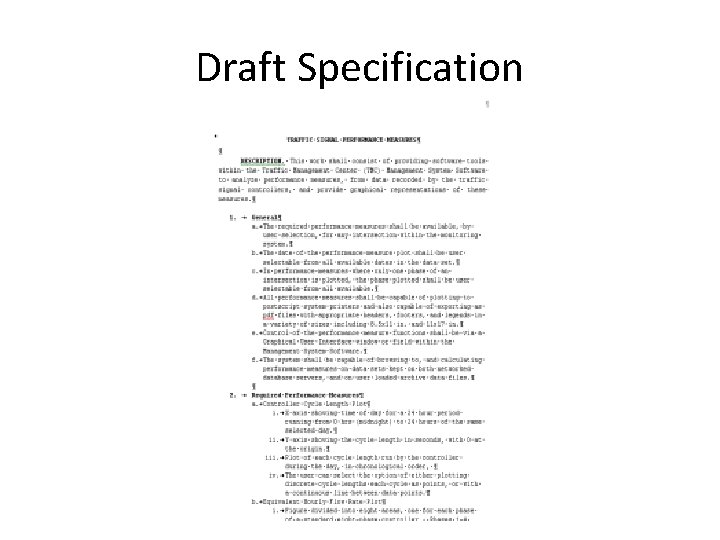
Draft Specification
Indiana LTAP Research Project • Adapt previous research to local agency level • Try performance measures with a wider array of equipment installations • Develop base number of recommended performance measures • Train agencies to implement tools 20
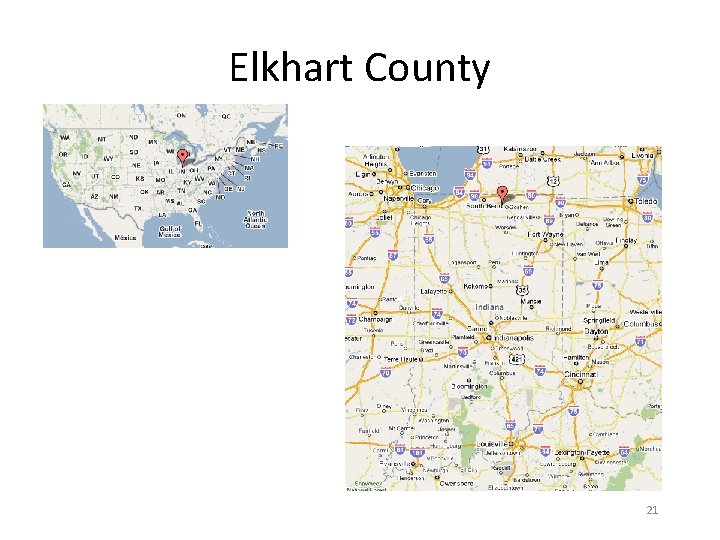
Elkhart County 21
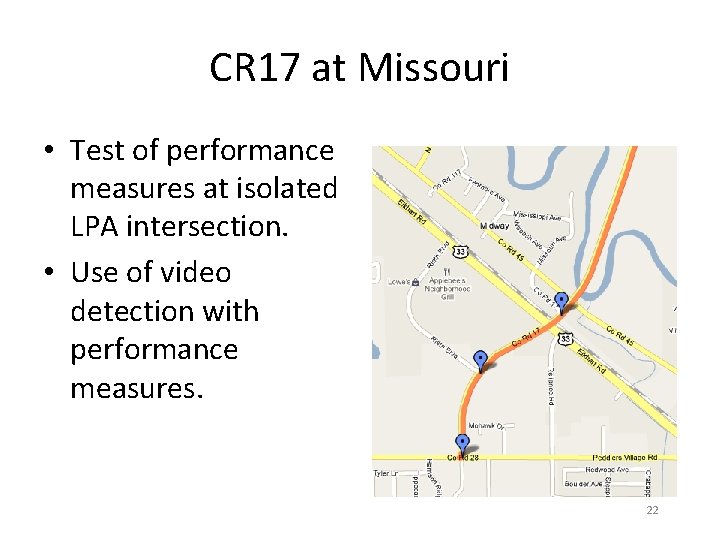
CR 17 at Missouri • Test of performance measures at isolated LPA intersection. • Use of video detection with performance measures. 22
Sample Use of Performance Measures Purdue Progression Diagrams as Changes Were Implemented at CR 17/Missouri
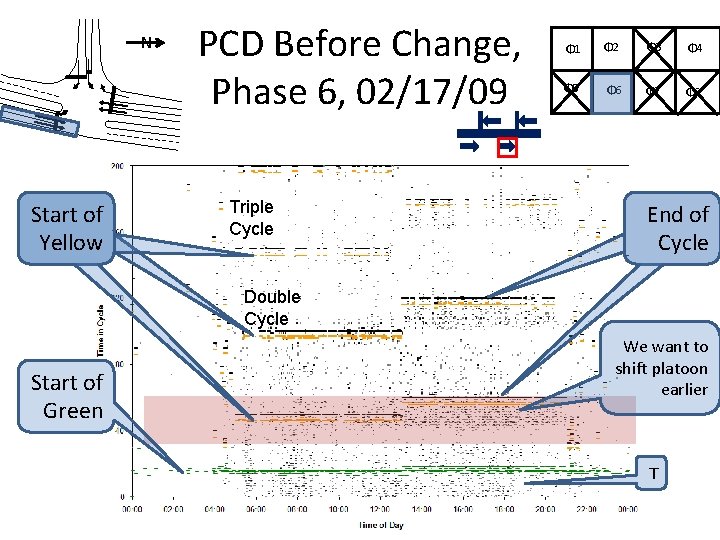
N Start of Yellow PCD Before Change, Phase 6, 02/17/09 Triple Cycle Φ 1 Φ 2 Φ 3 Φ 4 Φ 5 Φ 6 Φ 7 Φ 8 End of Cycle Double Cycle Start of Green We want to shift platoon earlier T
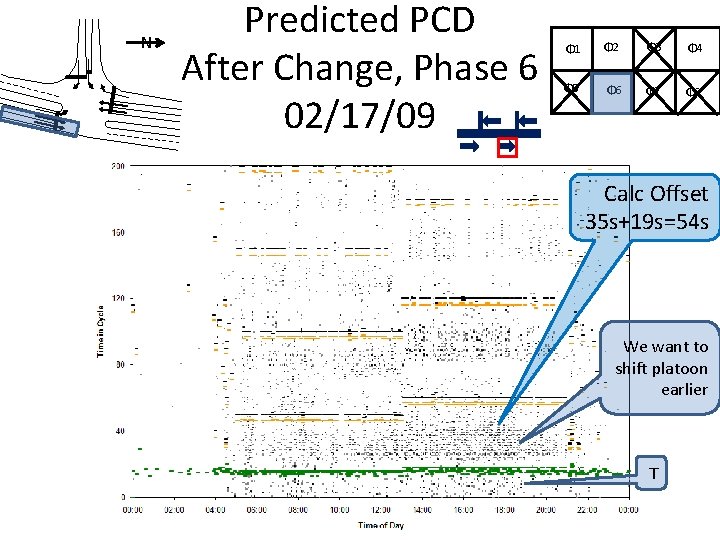
N Predicted PCD After Change, Phase 6 02/17/09 Φ 1 Φ 2 Φ 3 Φ 4 Φ 5 Φ 6 Φ 7 Φ 8 Calc Offset 35 s+19 s=54 s We want to shift platoon earlier T
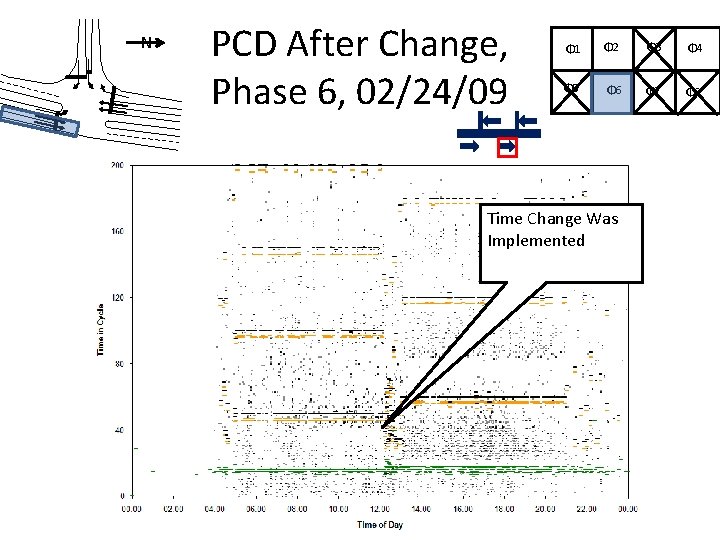
N PCD After Change, Phase 6, 02/24/09 Φ 1 Φ 2 Φ 3 Φ 4 Φ 5 Φ 6 Φ 7 Φ 8 Time Change Was Implemented
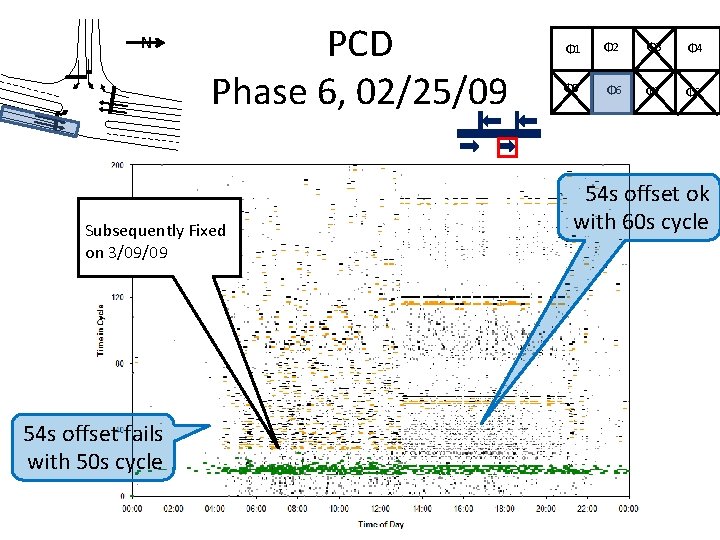
N PCD Phase 6, 02/25/09 Subsequently Fixed on 3/09/09 54 s offset fails with 50 s cycle Φ 1 Φ 2 Φ 3 Φ 4 Φ 5 Φ 6 Φ 7 Φ 8 54 s offset ok with 60 s cycle
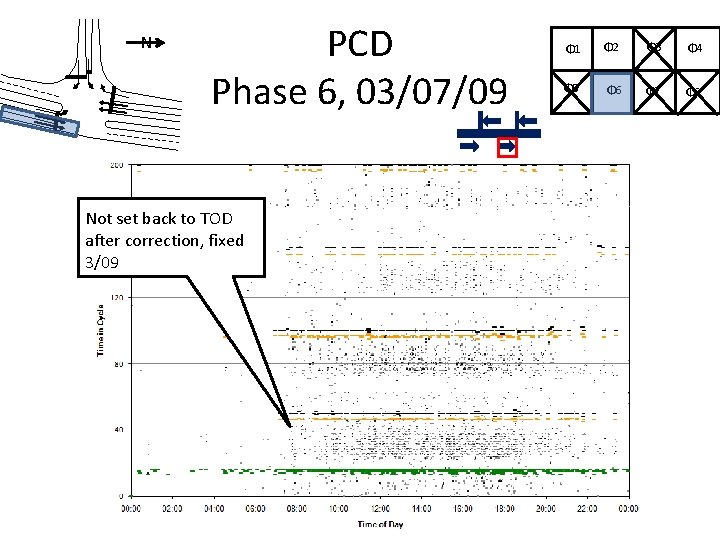
N PCD Phase 6, 03/07/09 Not set back to TOD after correction, fixed 3/09 Φ 1 Φ 2 Φ 3 Φ 4 Φ 5 Φ 6 Φ 7 Φ 8
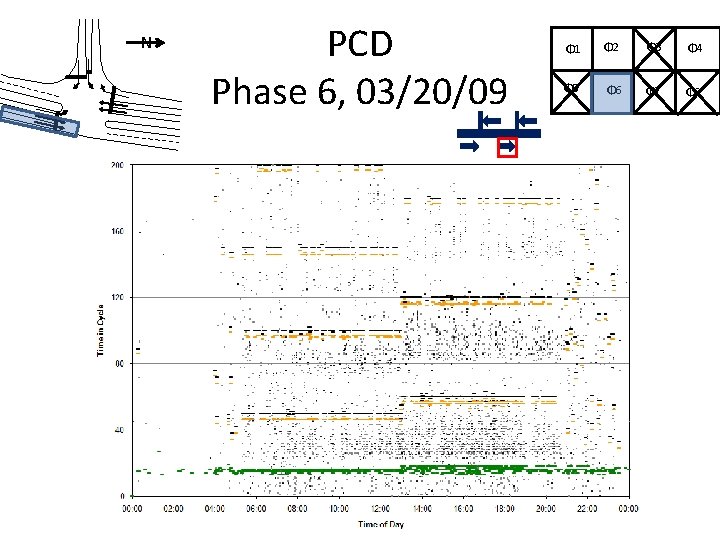
N PCD Phase 6, 03/20/09 Φ 1 Φ 2 Φ 3 Φ 4 Φ 5 Φ 6 Φ 7 Φ 8
Future Work: CR 17 Corridor • Apply performance measures to an LPA corridor • Follow after similar study on Indiana SR 37 30
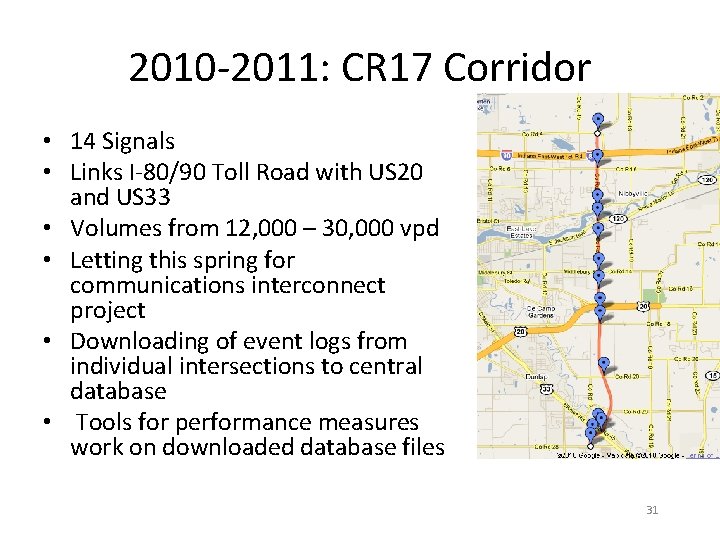
2010 -2011: CR 17 Corridor • 14 Signals • Links I-80/90 Toll Road with US 20 and US 33 • Volumes from 12, 000 – 30, 000 vpd • Letting this spring for communications interconnect project • Downloading of event logs from individual intersections to central database • Tools for performance measures work on downloaded database files 31
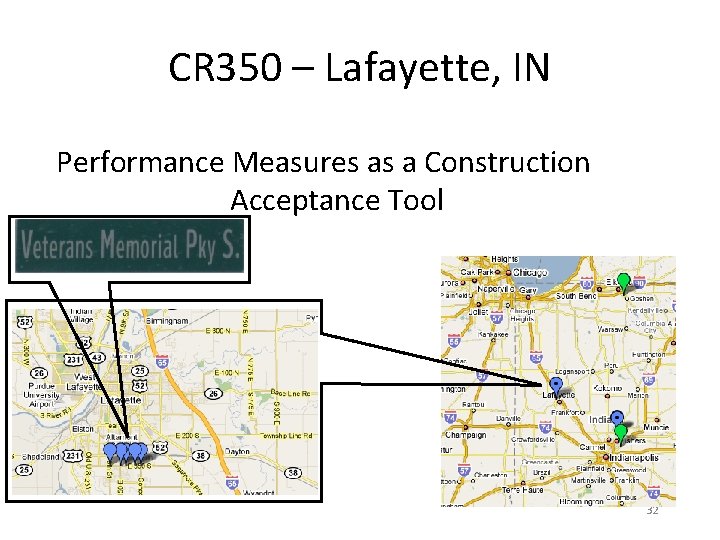
CR 350 – Lafayette, IN Performance Measures as a Construction Acceptance Tool 32
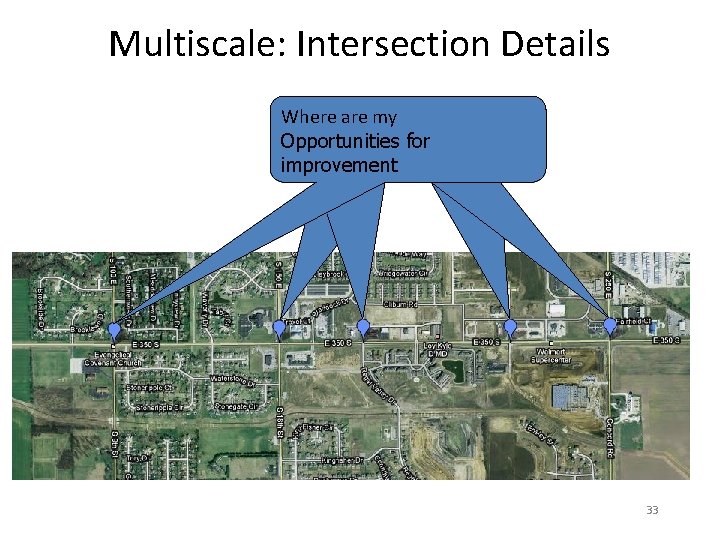
Multiscale: Intersection Details Where are my Opportunities for improvement 33
I. Define Objectives, Assess and Prioritize activities by Time of Day and location II. Assembly relevant data to support timing and documentation objectives III. Software Modeling IV. Timing Design and Documentation V. Deployment VI. Assess Role of Performance Measures Our Focus 34
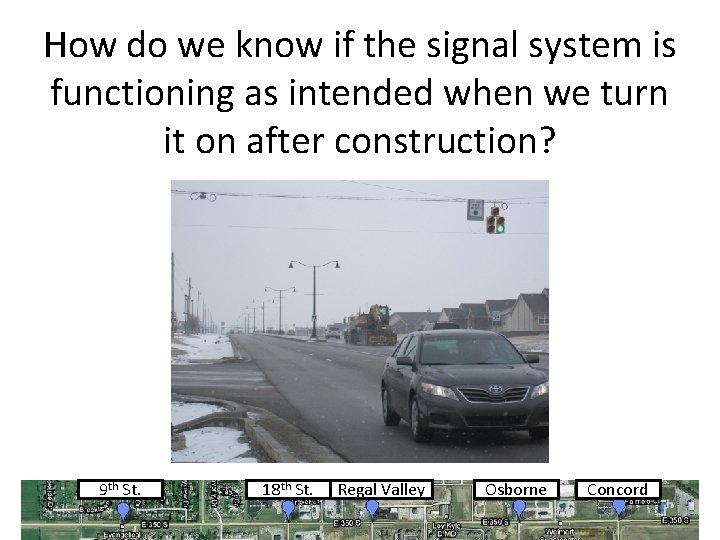
How do we know if the signal system is functioning as intended when we turn it on after construction? 9 th St. 18 th St. Regal Valley Osborne Concord 35
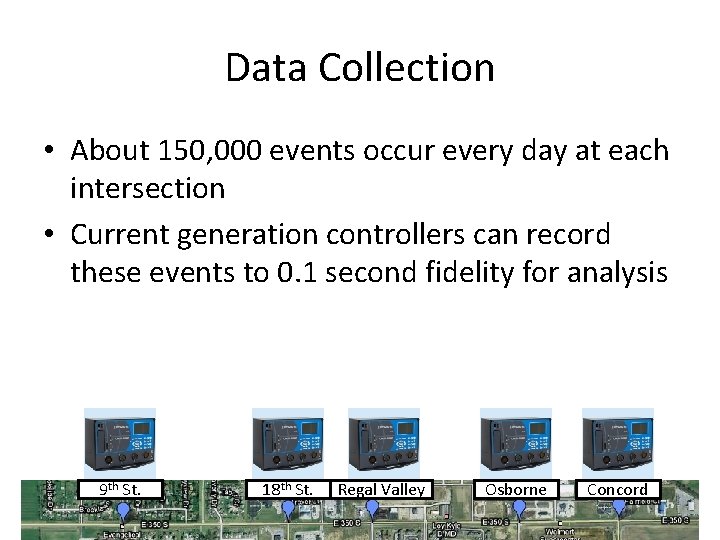
Data Collection • About 150, 000 events occur every day at each intersection • Current generation controllers can record these events to 0. 1 second fidelity for analysis 9 th St. 18 th St. Regal Valley Osborne Concord 36
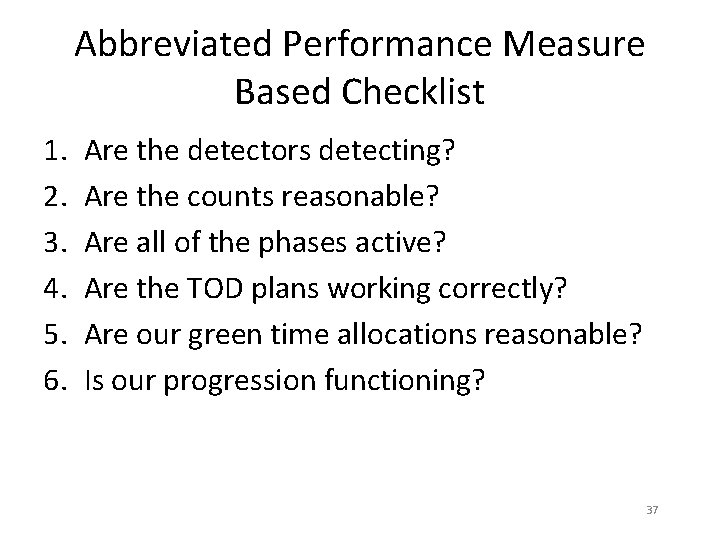
Abbreviated Performance Measure Based Checklist 1. 2. 3. 4. 5. 6. Are the detectors detecting? Are the counts reasonable? Are all of the phases active? Are the TOD plans working correctly? Are our green time allocations reasonable? Is our progression functioning? 37
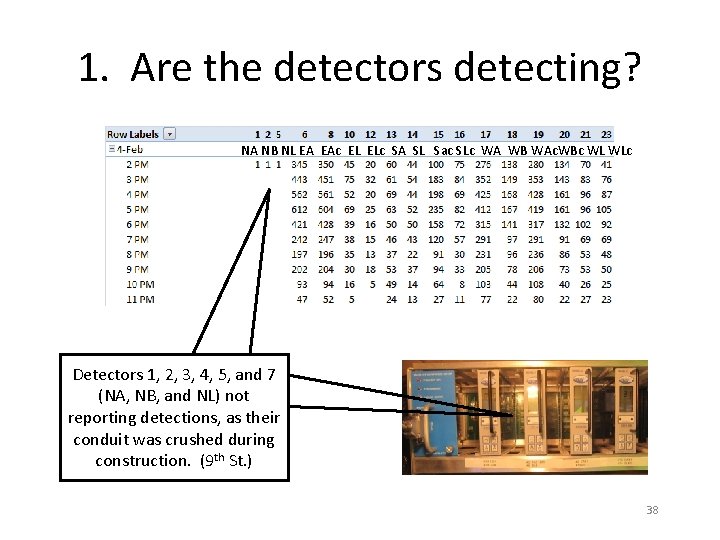
1. Are the detectors detecting? NA NB NL EA EAc EL ELc SA SL Sac SLc WA WB WAc. WBc WL WLc Detectors 1, 2, 3, 4, 5, and 7 (NA, NB, and NL) not reporting detections, as their conduit was crushed during construction. (9 th St. ) 38
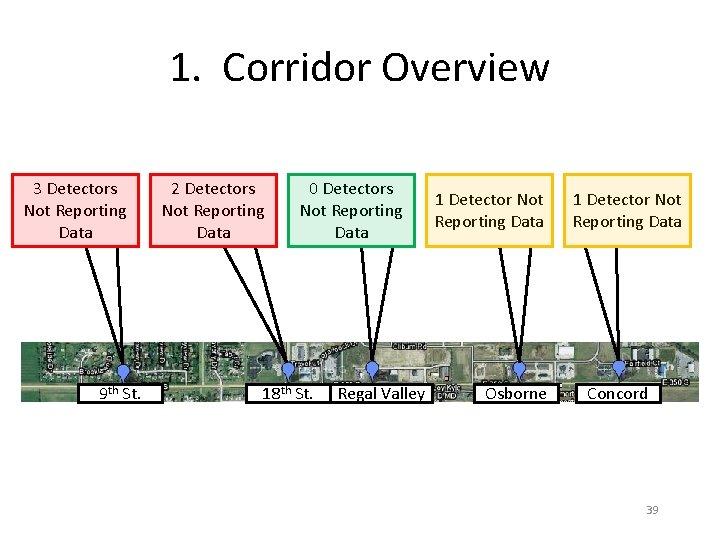
1. Corridor Overview 3 Detectors Not Reporting Data 2 Detectors Not Reporting Data 0 Detectors Not Reporting Data 1 Detector Not Reporting Data 39 9 th St. 18 th St. Regal Valley Osborne Concord 39
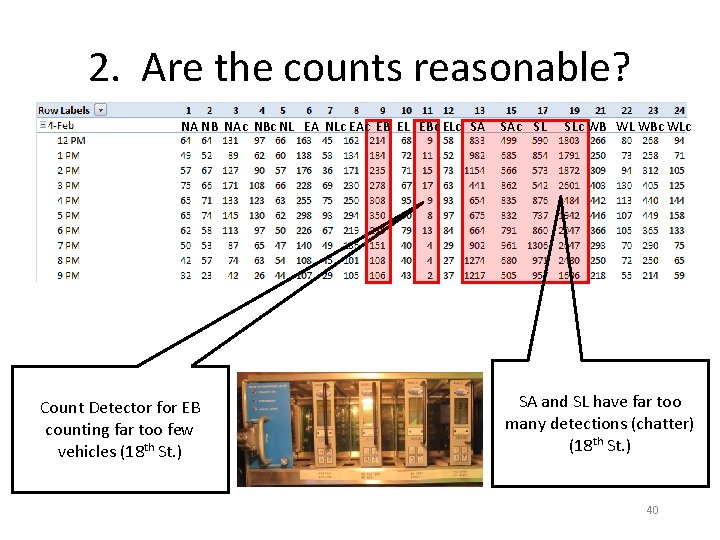
2. Are the counts reasonable? NA NB NAc NBc NL EA NLc EAc EB EL EBc ELc SA Count Detector for EB counting far too few vehicles (18 th St. ) SAc SL SLc WB WL WBc WLc SA and SL have far too many detections (chatter) (18 th St. ) 40
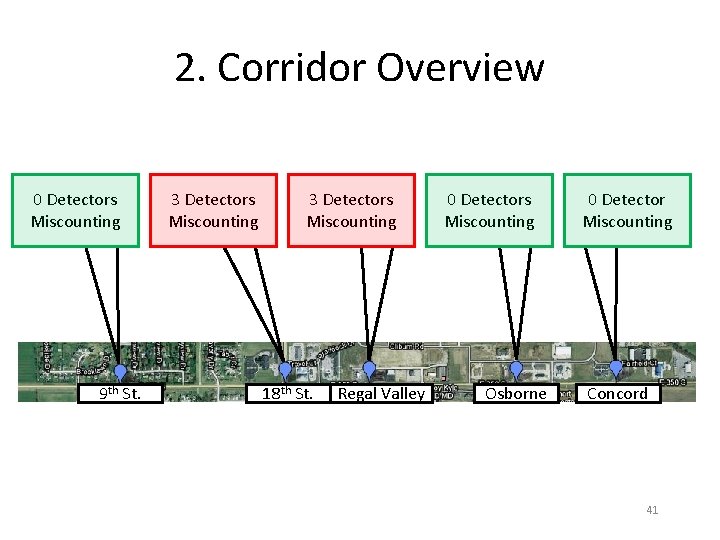
2. Corridor Overview 0 Detectors Miscounting 9 th St. 3 Detectors Miscounting 18 th St. Regal Valley 0 Detectors Miscounting Osborne 0 Detector Miscounting Concord 41
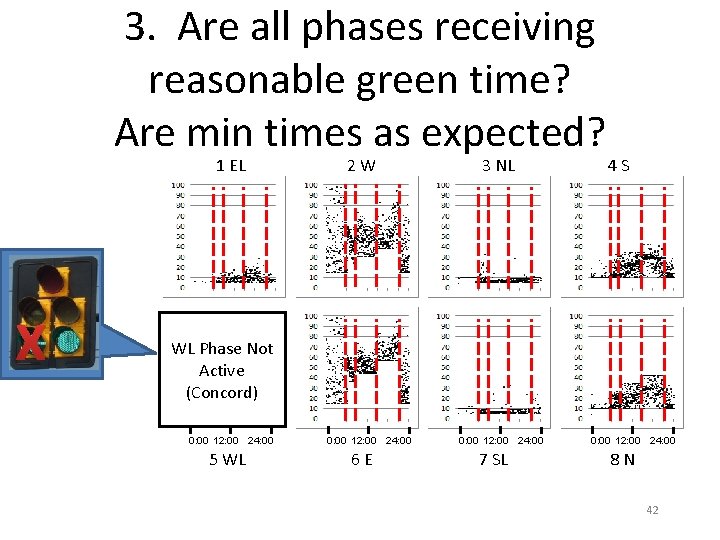
3. Are all phases receiving reasonable green time? Are min times as expected? 1 EL X 2 W 3 NL 4 S WL Phase Not Active (Concord) 0: 00 12: 00 24: 00 5 WL 0: 00 12: 00 24: 00 6 E 0: 00 12: 00 24: 00 7 SL 0: 00 12: 00 24: 00 8 N 42
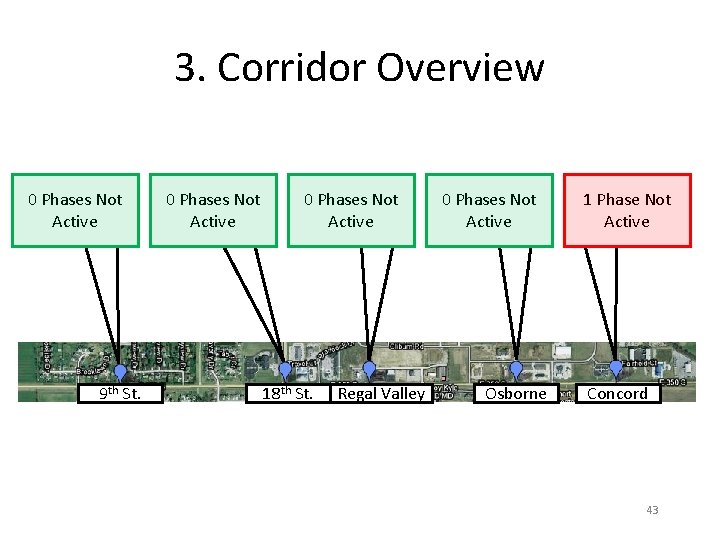
3. Corridor Overview 0 Phases Not Active 9 th St. 0 Phases Not Active 18 th St. Regal Valley 0 Phases Not Active Osborne 1 Phase Not Active Concord 43
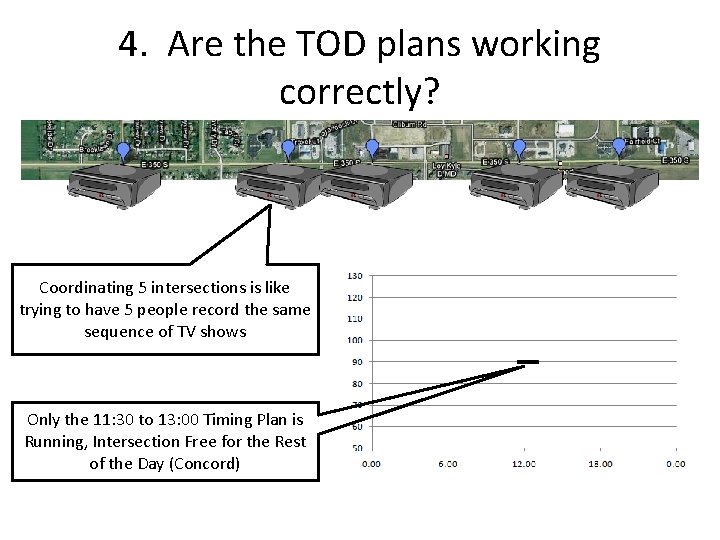
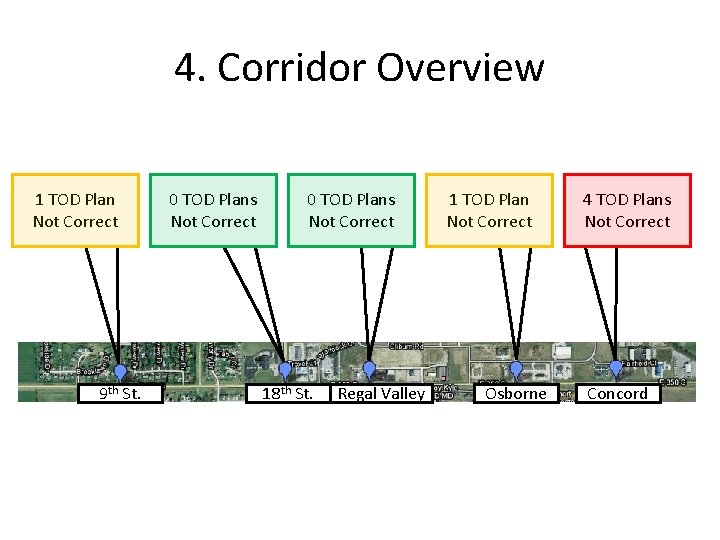
4. Are the TOD plans working correctly? Coordinating 5 intersections is like trying to have 5 people record the same sequence of TV shows Only the 11: 30 to 13: 00 Timing Plan is Running, Intersection Free for the Rest of the Day (Concord)
4. Corridor Overview 1 TOD Plan Not Correct 9 th St. 0 TOD Plans Not Correct 18 th St. Regal Valley 1 TOD Plan Not Correct Osborne 4 TOD Plans Not Correct Concord
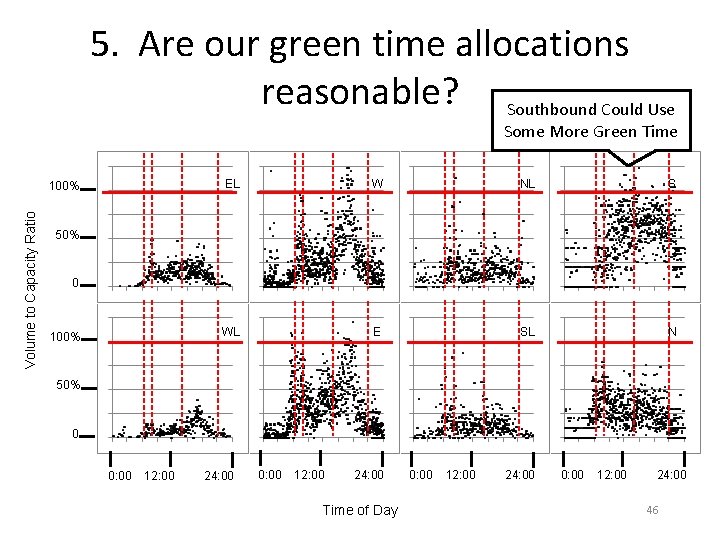
5. Are our green time allocations reasonable? Southbound Could Use Some More Green Time Volume to Capacity Ratio 100% EL W NL S WL E SL N 50% 0 100% 50% 0 0: 00 12: 00 24: 00 Time of Day 0: 00 12: 00 24: 00 46
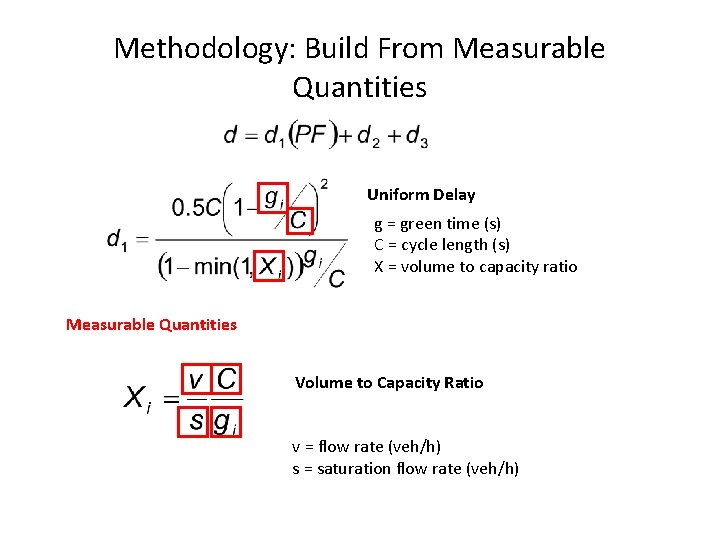
Methodology: Build From Measurable Quantities Uniform Delay g = green time (s) C = cycle length (s) X = volume to capacity ratio Measurable Quantities Volume to Capacity Ratio v = flow rate (veh/h) s = saturation flow rate (veh/h)
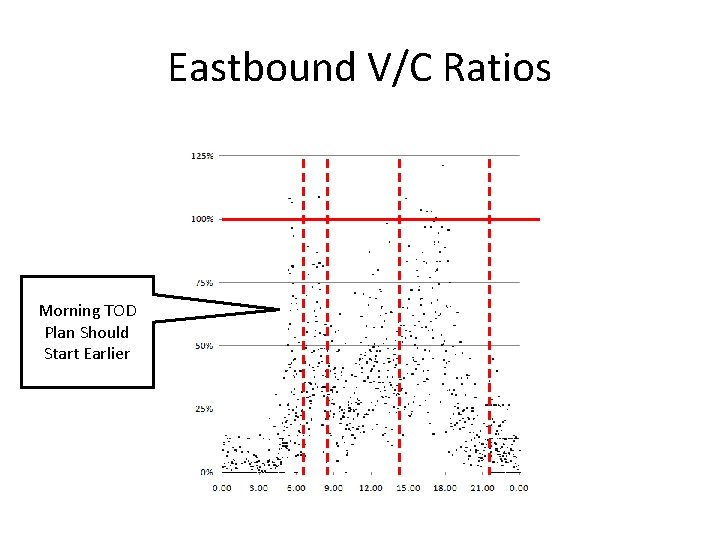
Eastbound V/C Ratios Morning TOD Plan Should Start Earlier
Eastbound V/C Ratios Morning TOD Plan Should Start Earlier
Is the Progression Functioning Using the PCD Before After 9 th St. 18 th St. Regal Valley Osborne Concord
18 th Street Before Most vehicles are arriving on red After Most vehicles are now arriving on green
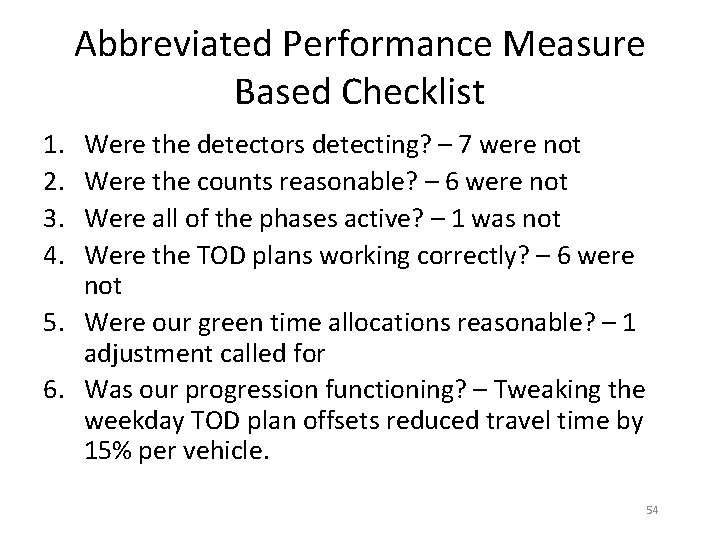
Abbreviated Performance Measure Based Checklist 1. 2. 3. 4. Were the detectors detecting? – 7 were not Were the counts reasonable? – 6 were not Were all of the phases active? – 1 was not Were the TOD plans working correctly? – 6 were not 5. Were our green time allocations reasonable? – 1 adjustment called for 6. Was our progression functioning? – Tweaking the weekday TOD plan offsets reduced travel time by 15% per vehicle. 54
We want to embrace “picture book based performance measures”
Contact Jay Grossman jgrossman@elkcohwy. org